You're listening to Roundtable.
I'm Neil Hongling, joined by Steve and Yuxuan.
Coming up soon.
Every week, there's at least one story that makes you shake your head, sigh deeply or say OK, I need to talk about this.
The soapbox segment today is where we do exactly that.
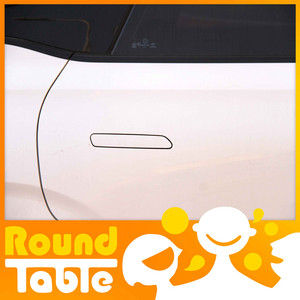
And hidden door handles look sleek.
They signal futurism, intelligence, and electric mobility.
But in a real emergency, design choices can turn into life or death obstacles.
China is now becoming the world's first country to set a mandatory safety standard requiring mechanically operable car door handles, making a shift from design debate to hard regulation.
What pushed policymakers to draw this line?
But first up, the soapbox.
Hear ye, hear ye.
Please gather round.
It's time for the soapbox.
Welcome to The Soapbox, a segment where we pick a story that has been circulating online recently and then share our real opinions standing on the digital soapbox we prepared.
So who has the soapbox for today?
I have.
So first of all, it's about the story of a very, very well-known tourist attraction.
It's called Lingying Temple.
It's in Hangzhou, Zhejiang province in eastern China.
And it's gone viral on social media and, more specifically, a hashtag titled this Lingying Temple is taking action against 380000 no-shows.
You don't often see that headline, temple taking action.
I know.
And also 380,000.
That's a big number.
Yes.
And this topic searched to some of these trending topics list.
And it is a classic case of too much of a good thing leading to some major logistical headaches, because Since the 1st of December in 2025, Hangzhou's Lingying Temple scenic area switched to free admission with online reservations.
Yes, I visited there before.
I had to buy tickets for it, and now it's totally free.
How much were the tickets before?
I cannot remember, but not very expensive.
I think less than 70 yuan.
It's a really huge and beautiful place.
Nice.
Yeah, you got to visit it if you're visiting Hangzhou.
So by January 25th over 16 million visitors had entered the park, up about 20 a year because of this new free policy.
But according to reports from People's Daily, this also triggered a massive wave of no-shows.
And as I said, 380,000 people booked tickets. over a 56-day period, but never actually showed up.
I think a staff member from the cynic spot said on a worse day one-third of those who are well, it's not that one-third of those who booked didn't show up, it's that one third of the no show up.
Well, or the no show up accounts for one third of the entire population visiting the area.
So that's a lot of people.
And then this creates a kind of paradox, because online, when you're booking it online, it shows that fully booked uh yeah, right.
And then, while on-site resources are underused because not that many people are visiting, And then real visitors face long queues or miss out entirely.
On January 3rd, 22,000 people didn't show up who had reservations.
Yeah, you bring up.
Probably the most important point is that yeah, if you go online and you try to book a reservation, you're going to see oh sorry, it's filled.
No more tickets for this particular day.
And then 22,000 people don't show up.
That's 22,000 tickets filled.
They got completely wasted.
I wonder why people won't go.
Well, I mean, it must be the ordinary reasons, common reasons, like something pops up, I suddenly don't have an interest.
And they didn't show up.
What's really interesting is that, because they're taking action, the temple is taking action.
What are some actions they're taking?
So the one-strike crackdown is going to fix this kind of situation.
The authorities are wrote out some very, very stricter rules starting February, the 1st in 2026.
The first of all is a single no-show will result in the account that you register or book that ticket and then individual's ID being suspended from making reservations for 30 days.
Oh, so that's if you do it one time.
And then penalties are accumulative.
A second offense leads to a 60-day ban.
And then a third results in a 90-day ban.
Wow.
But they kind of also clarified the definition of no-show because well, there are cases that maybe I do have some issues and some emergencies.
So if you fail to verify entry by 5 pm on the reserved day without canceling that booking within the required time frame, it is considered as a no-show.
But if you have like um, things that actually happened, you can also call for them or like contact the staffs and tell them and provide with the there's like like paperwork that you had to offer, and then it can be also be cleared of your notion.
So if you have, i mean so, the reason people are booking well, i guess, or or sorry, not showing up is Well, we don't know.
We can speculate, right?
But I would have to guess because it's so many.
There aren't 22000 people with a dentist appointment.
Right.
So it's probably because it's free.
People are just like, oh, yeah, I'm thinking about going.
And let me book first.
Yeah.
See whether or not I'll show up.
Because why not?
Right.
We can't.
Well, sorry, not my soapbox.
I was going to say we can't really blame people for that because they're not technically doing anything wrong.
Yeah.
But we do know.
What we do know is that, within just two days of the announcing of the new rule saying that oh, if you do not cancel voluntarily, you might be looking at a 30 day penalty penalty of not being able to reserve again.
And we are already looking at 1000 reservations voluntarily canceled by users, meaning that they know they can cancel if they do not want to go.
Yeah, they took that message to heart.
Yeah.
And also experts argue that the success of the free-to-the-public policies relies on low barriers to entry combined with high order.
So the goal is to cultivate a kind of contract policy spirit regarding the use of limited public resources.
So this is an interesting news.
I do also have something to say, but Steve's right.
This is Yusheng's soapbox.
Should we let him go first?
We should let him go first.
And then we'll voice our opinions.
Yeah, when I first read this news, my reaction wasn't outrage.
It wasn't even surprise.
It was more like, of course, this feels like very painfully familiar.
Not surprised.
Because this story isn't really about a temple or reservations or some kind of penalties.
It's about something way more basic and way more uncomfortable to talk about, which brings me up onto my soapbox.
We tend to think that keeping your word showing up when you say you will being on time, not ghosting is a small thing, right?
Almost invisible, not heroic, not impressive.
Nobody applauds you for arriving when you said you would.
But that's exactly the problem.
Because trust doesn't collapse in dramatic moments.
It erodes quietly through tiny, no big deal decisions.
I'll book first and decide later.
That's what people think.
They won't notice.
If i don't go, it's free anyway.
Who am i hurting?
Right and suddenly 22 000 mt slots on a single day.
Being punctual, honoring a reservation, cancelling in advance these aren't grand moral gestures.
They're boring virtues, But they are load-bearing virtues.
They hold everything else up.
Public systems only work if we assume people mean what they click.
That yes actually means yes.
When the assumption breaks, what replaces it?
More rules.
More surveillance.
More fiction.
A one to three months of suspension of entry.
That's not where anyone wanted to end up.
And here's the uncomfortable part.
This isn't just a public policy issue.
It's a personal one.
Would you stand a friend up and think, well, it's just free coffee.
Would you miss a meeting and say, it's fine.
They'll survive.
Then why do we suddenly downgrade our standards when it's a system instead of a person?
Some people argue life happens and they're right.
Emergencies happen.
Trains get delayed.
Kids get sick.
That's why cancellations exist.
And that's why appeals exist.
Keeping your word doesn't mean being perfect.
It means being responsible when things change.
At the end of the day, this whole ticket saga isn't about punishment.
It's about reminding us that trust is a shared resource.
Once it's wasted, everyone pays more for it.
So yeah, keeping your word, or 守信 in Chinese, and even something as unglamorous as just being on time, They might not make you look impressive, but without them, nothing impressive works at all.
And that's... is my soapbox.
Thank you.
The crowd loved it.
Well, you go first.
No, you go first.
I have a different opinion.
That's why I want you to go first.
I think Yushun is being very nice and sweet and he is definitely right when it comes to each an individual should veal your words better, more importantly, and you should hold on to it.
We should be able to do all those things, but that is something that i will ask myself to do, ask my kid to do.
I don't think that's something i will ask each and every stranger in the society to do, because I don't have that big a face in strangers in general.
I think the reason we have a social credit score system, we have different types of system to encourage people to do the right thing, to not do the wrong thing, to show up when they promise that they will show up, is precisely because if we rely on human nature, human nature will not.
They might fail you sometimes, and sometimes more than often.
So if we want the general public to form a habit of doing the right thing, maybe the public policy that you shouldn't believe it is not the core of the story should happen first.
For example, if you say yes, you can make a reservation, but you have to pay 5 yuan, and when you show up, that 5 yuan will automatically go back to your system.
It could cure the problem.
If you don't go that way, if you say, okay, if you voluntarily cancel, you can gain 10 points.
And after you gain 100 points, you can have the, let's say, ability to take a lottery in the Linyin Temple system and won your very own personalized little digital souvenir.
Maybe you will cancel when you realize there's something.
So Instead of, well, punishment can work.
Like, no, you cannot come for 30 days.
You're not welcome for the next 30 days.
That works.
But also some encouragement can also push people to the better side.
Yeah, I agree with your idea of that system.
You pay up front.
If you show up, it automatically goes back into your WeChat account.
That's a great idea.
Asking people...
Well, you didn't show up, so show me a doctor's note or something.
Am I in the fifth grade?
Did I miss math class?
What?
And who's dealing with it?
The document.
You're creating a whole lot more work for people.
I do agree.
It's going to dissuade people from missing their appointments.
And I kind of agree with you Yushun, that it can become a habit, maybe if you start oh I'm going to be late for this thing or I skip this thing, whatever.
That might slip into other aspects of your life.
But at the same time, I don't feel any great moral obligation.
You know, if We wake up in the morning and my wife says, oh, I just don't feel like going today.
I'm just not, you know, I'm not up for it today.
I'm not going to say, yeah, but babe, we promised the temple.
I made a promise to the Internet.
Oh, make a promise to a temple.
You're right.
Do you see?
There's still.
Yeah.
I mean, yeah, I don't know.
And there's time you can react.
You've got like you can cancel that reservation before 5 p.m.
That's.
That's because they need to make the slot open for other visitors, that who would like to are actually going there.
So they do have space for you to like finalize your decision.
Or I think it is a very, very good perspective when we kind of also need that kind of policy to regulate the behavior.
Just like, I think it reminded me of another like rule of my favorite spot, Frisbee.
It is a no judge sport.
There will be no judges during the sports.
It's kind of a, The athletes will have to discuss any foul moves.
The captains of the teams will discuss.
Yeah, so basically it is relying on people's faith, as you said.
It's on the spirit.
That's the spirit of the game we would talk about.
So I think ultimately, people will have that kind of spirit when we are having these kind of situations.
And, of course, during the process.
We may need these kind of policies to actually, I think, guide people to the right direction.
You know, I'm going to bring something that Steve is going to say, ah, this again.
Hold on.
Do I have a reputation for being the, oh, whatever guy?
No, no, no.
I'm saying that you don't like every story to be related to artificial intelligence.
But this actually helps because in 2025, there has been an AI model helping with the situation.
But it's not about tourist stories.
It's about catering business, because they also receive some reservation and when guests don't show up they suffer even more than a tourist spot.
So they have an AI trying to kind of like predict how much of a percentage of tourists bookings would not show up, so that they can release those tables to, you know, other diners.
So i think this can work in the situation as well.
Yeah, with the help.
Yeah, i actually think that's a good idea too.
I just yeah, anything other than show me proof that you couldn't make it here today?
I think it's a collective effort.
Each and every one should hold on a little higher moral standard to themselves.
But also the policies can be also smarter and can help with the situation.
Now you're listening to Roundtable coming up next.
China is now the world's first country to ban hidden car door handles.
Why is that?
Stay tuned.
Looking for passion?
How about fiery debate?
Want to hear about current events in China from different perspectives?
Then tune in to Roundtable, where East meets West and understanding is the goal.
This is Roundtable with me, Steve Hatherly, and Yushun.
In 2026, China responded to the fact that many fashionable car designers decided to use invisible car handles on their cars.
And this message is quite clear.
Some design risks are no longer acceptable.
So let's talk about the policy first.
Mm-hmm, uh.
First of all, this policy is requiring, like mechanically operable exterior and interior door handles on new car models starting uh, the first of january in 2027, so there's still time for car manufacturers to design and manufacture the new models.
Of course obviously, it targets the popular design mostly seeing electric or new energy cars of embedded or hidden door handles on the market.
Yeah, I think it was Mercedes-Benz that introduced these types of hidden door handles, but it was Tesla that really popularized and also scaled the design.
And now about 60 of the top 100 best-selling new energy vehicles or models excuse me, in China, as of April 2025 this is from a government website those were equipped with these hidden door handles.
They are really common now.
And some handles we're talking about are the exterior door handles, like the ones outside of the door, and some are those that are inside the door.
So for the passenger already in the car, they use it to open.
I think the problem is also quite obvious.
The problem is that in certain emergency occasions we see that it's impossible, or really hard, or just a little bit harder slower, complicated to open the door.
And that is a hard no now.
Yeah.
Some drivers say that at least 12 out of every 20 passengers cannot open the door without help.
Forcing Drivers to buy some instruction stickers that explain how to press, pull or wait for the handle to pop out.
Yeah, it's a bit ridiculous, isn't it?
You buy a car and you don't know how to get inside.
Especially for passengers who are using these kind of car howling services.
Yeah.
It's just very, very confusing for you to stand outside of the car and not do anything.
And it's an embarrassing moment, too.
It's happened to me, yeah.
So there's that.
But also in cold weather, in colder climates, these door handles that are hidden.
There's a gap, isn't there, between the design and then the use in the real world?
Yeah, because in colder weather in northern parts of China, where we are, for example, they can freeze shut in the wintertime, and then some owners, they'll take things into their own hands, they'll pour warm water on the door or preheat the car into their own.
Yeah, they try to figure it out on their own.
So there have been uh, lots of complaints about these.
Yeah and um, it will also maybe cause some like seriously serious um incident, because The safety is absolutely the thing that we need to consider when designing a car handle and when there are, because many of them rely on electricity, right.
And when there is a car accident and it is malfunctioning I mean the electricity It could be very, very dangerous when you cannot actually just open the door.
Side impact crashes are of particular importance here.
There was a report from a test that found that 67 of the hidden handles the electronic hidden handles successfully popped open after a side impact crash.
And that's compared with 98% for your traditional mechanical handle of the past, if you will.
67% that don't pop open, that's a pretty shockingly high number.
I think it's good enough reason to ban that sleek, fun design, but not safe enough design, because when it comes to human life, it's always, always safety first.
And since we do have a clear implementation timeline, we see industries already responding to it, trying to figure out how to adapt to the situation as quickly as possible.
And as for consumers well, as a consumer myself, I like the fact that I do not have to stand in front of a car and do not know how to open the door.
So the vehicles that are already in use are not subject to this mandatory retrofits and can continue to be driven normally.
But for new cars, many Chinese automakers are adapting this.
Some major automakers, like BYD, NIO or Xiaopeng, have publicly stated that they will provide free upgrade services for existing owners of already sold vehicles.
I think car owners can also pay attention to some of these policy changes and also contact their car dealerships to know the following follow-ups with the new models
China is being the first one, but it's definitely not the only country in the world noticing the situation.
We see more countries, including the United States and other countries in Europe, for example, are looking into the problem and see whether or not they should do something about it.
The cars are serving our needs, and it is our needs that comes first.
And that brings us to the end of today's roundtable.
Deep dives and nuanced views.
We are clearing the table for now, but may the ideas stay with you.
I'm Niu Honglin with Steve and Yuxuan.
Thank you for listening.
Bye-bye.