This BBC podcast is supported by ads outside the UK.
In the shadows and flames, primals will fall, and from the blood and ash, new gods will rise.
Poppy was never meant to awaken, and consequences are devastating, stirring ancient powers from their slumber, transforming Castile and Ciaran in ways the fates couldn't foresee.
The Great Conspirator has returned to stop the primal of death.
The gods have awakened, harbouring blood -soaked secrets, and every choice can undo everything.
The Primal of Blood and Bone.
Perfect for fans of Sarah J Maas and Rebecca Yarrow's.
Available September 23rd. Pre -order today.
This message comes from Greenlight.
Ready to start talking to your kids about financial literacy?
Meet Greenlight, the debit card and money app that teaches kids and teens how to earn, save, spend wisely, and invest with your guardrails in place.
With Greenlight, you can send money to kids quickly, set up chores, automate allowance, and keep an eye on what your kids are spending with real -time notifications.
Join millions of parents and kids building healthy financial habits together on Greenlight.
Get started risk -free at greenlight .com slash iHeart.
This is the Global News Podcast from the BBC World Service.
I'm Jackie Leonard and at 13 hours GMT on Thursday the 31st of July, these are our main stories.
Russian strikes kill at least nine people in the Ukrainian capital Kiev and Washington's envoy Steve Witkoff is meeting the Israeli Prime Minister Benjamin Netanyahu to try to salvage ceasefire talks and help improve the dire conditions in Gaza.
Also in this podcast, the World Food Programme in Nigeria says drastic aid cuts have left a million displaced people at the mercy of jihadists.
It will be much easier for the militants to lure other youths to join them and they spiral the insecurity across the whole region.
And what do we need to know about children and screen time and how to protect developing brains?
We start in Ukraine, where the capital Kiev has come under fire again by a barrage of Russian weapons.
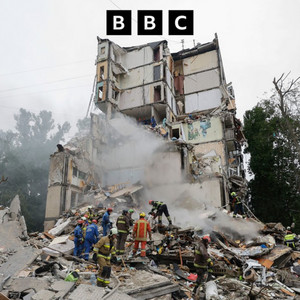
At least nine people were killed and dozens more were injured as drones and missiles hit at least 27 locations.
Several districts of the city were attacked and an apartment block was destroyed.
The dead included a six -year -old boy.
This man was in his apartment when the attack happened.
The main thing is that we're alive, and I hope the apartment will be OK too.
I was just lying in bed when there was a really bright flash, then a very loud explosion.
We'd heard blasts before, but nothing like this.
Our defence correspondent in Kiev, Jonathan Beale, told us more.
There were more than 300 drones fired from Russia towards Ukraine overnight.
Most of those focused on the capital, Kiev.
And it's been a fairly quiet few days, partly because there are thunderstorms, so quiet in the sense, not many Russian strikes going on, but certainly last night it was quite intense.
Also missiles fired, lighting up the sky as they hit the ground, and that orange glow lighting up the night sky.
And there have been significant civilian casualties.
And among those killed includes a six -year -old boy and his mother.
A child of five months has also been injured.
So a very heavy, difficult night for Kyiv.
It's not the first time, remember, this has happened.
But I think the timing is significant.
Yes, it's just a few days after President Trump issued a new ceasefire deadline to Vladimir Putin.
Russia doesn't seem to be taking much notice, does it?
No, it doesn't. And let's be honest, there have been lots of sanctions imposed on Russia and it may have made the economy, how Russian government tries to make its budget work, more difficult.
But at the end of the day, they are able to get around these sanctions.
And the threat of more sanctions from President Trump has clearly not changed the direction of President Putin's war.
And it's not just a war in the air.
It's a war on the ground, too.
And that is continuing.
Yes, that war is continuing.
Russia says that it's made an important advance in the east of Ukraine.
What can you tell us about that?
So this is the claim from Russia about the town of Chaziv Yar, which I've been to many times.
It's an important strategic goal for the Russians because it does give them high ground and it gives Ukraine high ground to defend.
But Russia clearly targeting that city because then they believe they can move on to other cities like Pokrovsk, which is already under huge threat.
And Konstantinivka, so getting more of the Donbass essentially.
So we have seen on social media scenes of Russian flags being raised in Chazivyar.
That said, Ukraine is adamant that Russia does not control Chazivyar in its entirety and that fighting is still going on.
But, you know, this is a pattern we've seen repeated throughout the war where a fierce battle goes over against a town or a city slowly but surely, given that the Russians throw lots of resources, lots of people and lots of them die at taking these objectives, that this looks like it will be the next one to go.
The overnight attack in Kiev did nothing to deter demonstrators who gathered outside Ukraine's parliament building today.
They were holding a rally in support of President Zelensky's bill to restore the independence of two key anti -corruption agencies.
Reversing a bill he introduced only last week, Ukraine's parliament has voted overwhelmingly in favour of it.
BBC Monitoring's Russia editor Vitaly Shevchenko told us more.
It's an amazing U -turn.
Last week, Parliament voted on a bill essentially handing over control of these two key agencies to a political appointee, a Zelensky loyalist. And predictably, that triggered those massive protests, thousands of Ukrainians taking to the streets across Ukraine, saying that this is not what we want.
And also predictably, Ukraine's Western allies have expressed concern.
Now, not one of those MPs who voted to curtail those agencies' authority, well, essentially they did the opposite.
They backed a presidential bill restoring their independence by a huge number, 331, for not a single one against. You describe it as an amazing U -turn.
Has this damaged President Zelensky?
What this vote shows is that he's still very much in control.
He's not a lame duck.
I was listening to the debate in Parliament before this vote and the MPs, they made critical, angry noises saying that we're not going to be dictated, we're not going to follow whatever the EU tells us or the President tells us.
But yet, in the end, they voted the right sort of way.
It begs the question of what was the point in the first place of allowing this to happen?
Damage was done to Ukraine's credibility as a fighter against corruption.
But this vote, pretty much unanimous, is probably the best way of containing that damage.
Can you just explain for us how big an issue is corruption in Ukraine right now?
It has been a huge issue for decades, for generations.
Having said that, over the past years Ukraine's made huge strides, well mainly thanks to those two agencies, in fighting corruption.
Transparency International ranks Ukraine pretty highly in its corruption perceptions index. And over the past years, we've seen numerous examples of high ranking officials being exposed.
And now the fear that caused all these protests and all this concern was that if those agencies were subordinated to a political appointee controlled by the government, years of hard work would have been undone.
Vitaly Shevchenko of BBC Monitoring.
To the Middle East now, and the person Donald Trump entrusts with much of his diplomacy, Special Envoy Steve Witkoff, is back in Israel today.
He's meeting senior Israeli officials to discuss how to get more aid to civilians in Gaza and efforts to kick -start stalled ceasefire talks.
So could this trip be more successful than previous visits, particularly as President Trump has been coming under increasing pressure to intervene in the humanitarian crisis.
Dennis Ross is a long -time former Middle East envoy for the U .S. I think with regard to President Trump, he seems to be more and more concerned about the realities in Gaza.
I don't believe that Prime Minister Netanyahu can say no to him.
That's also one of the reasons I think Witkoff is going out there to impress Prime Minister Netanyahu on what the administration needs to be done.
So there's a climate that is changing here.
I think it's very much in Israel's interest to find a way to end the war.
Obviously, Hamas has a say in that.
But I think if the Israeli position were to change to one in which it would announce that they will end the war, provided all the hostages are released, with the understanding that that if Hamas tries to reconstitute itself, Israel will act again.
I think it would be difficult for Hamas not to release the hostages under those circumstances.
Our correspondent in Jerusalem, Yolande Nel, told us more about Mr Witkoff's visit.
Well, local media are expecting him to meet the Israeli Prime Minister, Benjamin Netanyahu, about now, but we haven't had an official schedule.
He's coming here really at a critical moment, expected to meet different Israeli officials to talk about the ceasefire and hostage release deal.
After efforts to secure this deal really stalled last week, you had both Israel and the US pulling their negotiators out of indirect talks that have been going on for weeks in Qatar.
And in recent days, we've had Israeli officials being quoted threatening punitive action against Hamas if it does not in the coming days accept this deal for a 60 -day truce and returning hostages that is on the table.
At the same time, the deep humanitarian crisis in Gaza.
And we had President Trump earlier this week saying that the U .S. and Israel would team up to set up new aid centers in Gaza.
Now, the White House has not given any information.
Israeli officials have not given any information about what that might mean.
And that's why, against that backdrop, there's a lot of interest in the media reports that we've had that Steve Witkoff could indeed go to Gaza, as he has done once before, since taking up his job, to see things on the ground for himself and to look at those controversial aid sites run by the Gaza Humanitarian Foundation.
And as I mentioned in the introduction, Israel does appear to be increasingly isolated diplomatically.
Certainly more countries like Canada is the latest to talk about potentially recognising Palestinian statehood.
What is the reaction to all of that where you are in Jerusalem?
I mean, I mean, it's just been a sort of consistently angry reaction that's come from the Israeli Ministry of Foreign Affairs, saying that this both harms ceasefire efforts and it gives a reward for terrorism to Hamas.
And, you know, that was a big policy shift announced by Canada, as we've had by other close allies of Israel, France and the UK in recent days.
All of them saying, you know, this is conditional, this move that they're suggesting they could make to recognise a Palestinian state.
late Canadians are talking about it needs reforms to the Palestinian Authority, which governs parts of the occupied West Bank.
But really, this is getting a lot of attention.
Israelis do feel increasingly isolated internationally.
While the U .S. is standing by the Israelis, I've just been at a rally with hostage families calling on Steve Wyckoff to do more to try to get their loved ones released from Gaza.
But there, the people were saying that they felt betrayed somewhat what, because they believe that hostage releases should come before any recognition of a Palestinian state.
Of course, the Palestinians have really welcomed this move.
It's something that President Abbas, the head of the Palestinian Authority, has really been pushing for with other officials, especially those in the West Bank.
For years now, since back in 2014, we had the last direct peace talks between Israel and the Palestinians stalling, with nothing really to replace those in the last decade.
That was Yoland Nel and she was speaking to Ben Brown.
The UN in Nigeria says it will today run out of money needed to continue supporting over a million people displaced by militants.
The Boko Haram group is considered one of the world's deadliest. It has killed thousands of people across northern Nigeria and forced tens of thousands more to flee and seek refuge in UN camps.
But now the World Food Programme says cuts to global aid budgets, including by the US, which was the biggest donor, could leave people hungry and force families back into the hands of insurgents.
Anne Soy reports from Gwoza in northeastern Nigeria.
I'm walking in the middle of the internally displaced persons camp in Gwoza and there are children all around me.
millions of Nigerians across the North East have fled to camps like this one over the last ten years for their safety they are fleeing from militants and just beyond the camp I can see in front of me there are beautiful hills but it can be misleading because just beyond those hills that's where the militants are located and I'm told from time to time they do come into the camps to attack people I meet 40 year old Aisha Abubakar She abandoned her farm and fled from home after her family was attacked I had 10 children in total Six have died and four are alive Some of my children died of illness
While others were abducted My husband was killed too And that means Aisha is entirely dependent on aid It's food distribution day at the camp There are easily hundreds of people here in the shade, women on one side, men on the other they are holding debit cards that are loaded with cash so rather than give them food in kind from the World Food Programme, they get cash and there are retailers here, they have grains, they have cooking oil they have all sorts of food supplies so the internally displaced people will buy the food using their cards, but it's the last amounts they are receiving Our warehouse
are empty. That's Trust Mulambo, the World Food Programme's head of operations for northeast Nigeria.
So you don't have any more to give them?
We don't have any more to give.
The situation is dire and it's desperate.
So if the support that you've been giving these people ends, where does that leave them?
It will be much easier for the militants to lure other youths to join them and spiral the insecurity across the whole region.
For years, Nigeria has failed to tackle the insurgency.
What's clear is that the crisis is not waiting.
Things are getting worse by the day.
I've come to the Hausa Ribe nutrition centre in Gwoza.
I can see dozens of mothers here who have brought their children.
Some of them are sat on a mat, others on plastic chairs waiting for their turn to be seen.
25 -year -old Hawa Badamasi has brought her children here.
She's just received the news from the medics.
Her oldest, Amina, who's three and a half, is malnourished.
I feel so bad. Every mother wants her baby to be healthy.
Hawa and other mothers here do not know it yet, but this clinic, as well as many others in this region, may just close because of funding cuts.
I asked her where it would leave her and her family.
The people are in a difficult situation, and there are no farmers.
When the farmers enter the bush to farm, they get killed.
The aid has stopped, and people are killed in the farm.
What are we going to do with our lives?
We will be in a dire situation with no food and no medicine.
Our survival depends on these essentials.
And as she leaves the clinic, Hawa is given a bag, with the nutrition supplement to take home to continue the treatment.
But this might just be the last batch she receives here.
That report by Anne Soy in northeastern Nigeria.
One of the great fears of modern times is that we are somehow rewiring children's brains by the use of screens.
Rewiring them in a way that reduces their capacity and causes the mental decline that will affect them as adults and so affect all of society.
Australia seems to be leading the way when it comes to direct measures to limit screen time, most recently planning to ban YouTube accounts for under -16s to go alongside bans on TikTok and Instagram, etc. In Britain, recently, an online safety bill was partly aimed at reducing access to pornography.
But what about the wider question of screen time for children, which so many parents grapple with all the time?
Here's our technology editor, Zoe Kleinman.
The reason I started looking into this is because we see so many headlines about, you know, the worries and the fears of screen time.
And there are some scientists who are saying, actually, if you look at this scientifically, the evidence base that we have for all of this is not there and they argue is actually quite flawed. So they say the way in which this data is gathered is generally quite unscientific.
You're asking people to self -report how much screen time they've had and how it made them feel.
You're not necessarily asking them what it was they were doing, you know, on their screens during that time.
Were they doom scrolling or were they learning a language and talking to other friends around the world?
You know, what else was going on in their lives at the time?
And they also say there's issues with correlation.
So, for example, in one big data set, they found there was a small link between increased screen time and depression.
But there was the same statistical link in the same data set between reports of feeling depressed and whether or not the person had eaten potatoes in the last seven days.
So, you know, the argument is that you're sort of looking for something in data that's not really scientifically there yet.
There's also some studies that suggest blue light is really bad for you before you go to sleep.
It stops you sleeping.
But equally, there are others that say, do you know what?
It doesn't make much difference at all.
there really isn't the conclusive evidence scientifically that we might think there is, even though obviously parents will say, well, we can see it.
Yeah, but that's the point, isn't it?
The evidence would be the link.
I mean, and that would put to bed the potato thing, wouldn't it?
Because what is missing with the potatoes is a link between the two.
And that is what a lot of parents think is actually there and is visible to them.
Yeah, and I spoke to one neuroscientist several years ago, actually, who said she thought screens were changing children's brains and this was like a climate emergency situation, you know, that we really should be a lot more worried about it than we are.
But the science has never really backed that up.
One study looked at their brain scans of 11 ,500 9 to 12 -year -olds and didn't find any changes.
You've got to also bear in mind that everything changes your brain.
That's how we learn.
And, you know, that the evolution of our brains happens quite slowly.
One neuroscientist said to me, if our brains change dramatically very quickly in response to environmental factors, we'd be extinct by now because, you know, we wouldn't be able to keep up with our environment around us.
And there are some concerns that by making screens are forbidden fruit, are we driving it underground?
Are we making it harder for children to feel like they can ask for help?
And because there aren't really any consistent official guidelines, so there are lots of paediatric bodies that don't have any screen time guidelines at all.
The World Health Organisation does have some, but it's really more geared around keeping children active rather than keeping them on their screens.
I'll be creating an unlevel playing field here where we're going to have some tech -savvy children and some who aren't, and then when they do get online, they're likely to be more vulnerable.
That said, there are others who say, no, that, you know, there is absolutely no controversy around this.
Screens for children are bad.
One psychologist I spoke to, Jean Twenge, has worked with Jonathan Haidt, who's very well known in this space.
And she says she started out looking at why depression rates were rising dramatically in US teens.
And she didn't set out to prove that smartphones were evil, but it was the only common denominator that she could find.
And she thinks the only answer is to delay them for as long as possible.
Zoe Kleinman was speaking to Justin Webb.
Still to come in this podcast, what archaeologists are learning from the tattoos of a mummified woman discovered in Siberia.
What I hope people take away from it is an increased sense of respect and awe for the people back in the day.
basically a full -time chauffeur.
Fortunately, when it's time to wear your teacher hat, Abeka makes things easy.
Our proven, flexible homeschool curriculum is designed to let your kids retain and build on the knowledge they acquire, setting them up for success later in life.
Abeka. Learning for life begins with the right homeschool education.
Learn more at abekahomeschool .com.
Sonesta Travel Pass is the most rewarding way to travel.
Sign up at Visit synesta .com for instant savings, bonus points, and perks like early check -in and late checkout, room upgrades, and free stays.
Choose from 1 ,100 hotels across 13 brands and unlock their best rates when you book with Synesta Travel Pass.
Here today, roam tomorrow.
Join now at synesta .com.
That's synesta .com.
Terms and conditions apply.
Looking for a little extra confidence this summer?
Symbiotica offers clean, high -quality supplements that support skin, energy, and digestion, especially useful when summer indulgences and busy schedules come into play.
Their liposomal glutathione and liquid colostrum are a powerful duo designed to support gut health and overall wellness from the inside out.
Visit Symbiotica .com and use code IHEART to get 20 % off your subscription order.
That's Symbiotica .com.
A BBC Verify investigation has revealed that the identities of British public sector workers are now being cloned using AI by a Russian -linked disinformation campaign.
An emergency medical adviser from Preston in north -west England was stunned to learn that his voice had been faked in a campaign spreading fear ahead of Poland's presidential election earlier this year.
Olga Robinson has more.
Ambulance service, is the patient breathing?
Earlier this year, Aaron, an emergency service call operator from Preston in England, recorded a video for the NHS, the UK's public health service, about his work during the Easter holidays.
Hello, my name's Aaron, I'm emergency medical advisor.
But, to his surprise, his voice was stolen by a Russian -linked disinformation network to create an AI fake pushing pro -Russian messages.
I have many friends who are paramedics in Poland.
They are terrified of the upcoming election.
I tracked Aaron down on social media and told him his identity had been stolen.
When we finally interviewed him, he told us the fake scared him.
Why would the Russians choose me?
Why would it be me that they've chosen out of all those thousands of videos that are out there on Facebook and Instagram?
In this case, the operation seemed to try and spread fear ahead of the May presidential elections in Poland, which is a staunch ally of Ukraine.
We've also found that the quality of fabricated videos like this is getting more sophisticated.
We've compared the audio of the fake featuring Aaron with his real voice and found that it's similar.
I don't think my friends or family would have been able to tell it was fake.
I think they would have probably believed it was real.
Independent researchers have also helped us to confirm that this is part of an extensive Russian disinformation campaign which BBC Verify and other analysts have been tracking for years.
Previously they impersonated dozens of media outlets, journalists and academics, but now seem to have broadened their tactics to exploit British public sector workers.
Guillaume Custer, the CEO of CheckFirst, a Finnish analytics company that has previously linked the network to Russia, says that the operation keeps evolving.
They are trying something new.
They are, you know, throwing spaghetti on the wall and see what sticks.
Aaron is not the only one to have his identity cloned using AI.
We found at least four other British public sector workers whose videos have been exploited like this.
Luckily, none of their fakes went viral, but there's no guarantee that another one wouldn't.
I warn my little brother and my little sister about using social media sensibly.
So for my video to be used, it's quite scary really.
That report by Olga Robinson.
The military junta which seized power in Myanmar four years ago has for the first time lifted the state of emergency under which it's been ruling the country.
The junta's announced plans to hold an election at the end of the year.
Our Southeast Asia correspondent Jonathan Head explained what the move means.
It's really a technicality, although of course the state of emergency is the fig leaf under which the military has given itself the aura of legitimacy legitimacy, ever since it deposed the elected government of Aung San Suu Kyi four and a half years ago.
You have to remember the Myanmar military, they wrote a constitution under which Myanmar has been operating way back in 2008.
So while many people say they violated it with the coup, they do try to adhere to it.
Under that, they could declare a state of emergency for six months.
So they've renewed the state of emergency every six months.
It's been renewed eight times.
the reason they've not renewed it this time the last one's just expired is because under the constitution you can't hold an election if a state of emergency is in place that means all this talk of an election at the end of the year is serious the military wants to hold an election possibly December, possibly January despite the fact that it doesn't control a lot of the country there's armed insurgency and a great deal of it that a large part of the population is unlikely to take part but they're still pushing ahead and I think this the fact that they've suspended end of the state of emergency
shows that they're set on doing it.
But given all those conditions that you just mentioned, is Myanmar in any state to hold a free and fair election?
Most countries would never hold an election in this state.
It's certainly going to lack credibility of any real kind, particularly as the military's organising it.
The most popular party, Aung San Suu Kyi's party, will not be able to take part.
And they've just passed a pretty savage law that penalises any sort of criticism of the election process, any attempt to disrupt it.
it. And the fact is, there will be disruptions if they try to hold it.
There's no doubt that the various insurgent groups will try to stop it.
They've said it's not legitimate, it shouldn't happen.
Behind Myanmar, though, there is some diplomatic support, partly from China, we believe, not that China approves of much of what the Myanmar military has done, but that China views some kind of election, even if it's deeply flawed, as the only off -ramp from the debilitating civil war that Myanmar is stuck in.
And I think that might encourage the generals to push ahead in in the hope that they come up with some kind of government that can be worked with to find a solution to this ongoing conflict.
Will ending the state of emergency actually make any other difference to normal life?
I doubt it. You know, I think the military has got a very firm grip.
You know, there's extreme violence.
They operate with impunity and much of the country is aerial bombardment.
The war won't stop.
And I think most Burmese won't notice the difference.
That was Jonathan Head.
Now, would you feel safer in a plane being flown by a female pilot or a male one?
New research is suggesting that women perform better than males in some scenarios.
A study by the University of Waterloo in Canada of pilots in their early stages of licensing has shown that female pilots make fewer flight control errors in simulations when stress levels increase.
But that's not the full picture, as the lead researcher Dr Naila Ayala told Priyarai.
Females in these high stress emergency situations tend to perform better even though we didn't find any differences in visual attention which was not at all something that we hypothesised This is about stress levels right?
So what are some of those situations where women are potentially dealing with it better?
This is one paradigm that we looked at in a wider range of nine different scenarios scenarios so four of those scenarios were really easy the nicest skies weather conditions pilots could probably dream of and then another four conditions were a little more difficult now across all those different types of scenarios it was in the last type of scenario which was our emergency engine failure scenario that we surprised pilots with where we started to see differences between female and male pilots there was evidence of female pilots being able to identify the the emergency quicker than male pilots.
There was significant differences in their ability to maneuver the plane and land the plane safely, significantly faster than their male counterparts.
And they were also able to maintain consistent airspeed and not deviate from the recommended airspeeds for final approach and landing compared to their male counterparts, which actually demonstrated significantly larger deviations from what was recommended during their final approach during these emergency scenarios.
But actually, there were some scenarios, I believe, where you found better things about how men were reacting.
Yes, I think what this really shows us is that there's more research that needs to be done to identify these different strengths and weaknesses, and there's more innovation that is also required to be done and integrated into to training organisations and training institutions so that they can actually almost build off of the current training protocols to something that's more adaptive to the individual.
Dr Naila Ayala. And a shout out to my cousin, the airline pilot, Janice Gibson.
Archaeologists have produced high -resolution scans of the tattoos found on a 2 ,500 -year -old ice mummy found in Siberia.
The decorations were on the body of a woman who was preserved in an ice cave. Our science correspondent Georgina Ranard told us more about them.
They're actually really beautiful, I think.
So they're on the arms and hands of a woman who's aged about 50.
She was with the Pazirik people in Siberia in the 5th century BC.
And on the pictures from the scan, you can see these really thick black lines.
They're quite large.
And then the tattoos were a mixture of wild animals battling.
So there's leopards encircling a stag.
The stag's got kind of long back legs and antlers.
Another tattoo shows this This mythical creature, the griffin, so it's half lion, and then it has the head and wings of an eagle.
But my favourite one, actually, is this tiny little rooster with a long neck, and that was on her thumb, which they said sort of shows her flair.
They are very beautiful.
What do we learn from them?
So we knew these ice mummies existed from these caves that were found in the 19th century, but these scans are the first time they've seen the tattoos in sort of very crisp detail.
And they worked with a modern tattooist who himself decorates his own body with these ancient decorations.
And his conclusions mean they think they penciled the design onto the skin first and then used needles probably made from animal bone.
So it's really rare to get this level of detail from an ancient culture.
And the archaeologists are delighted.
So we spoke to Dr. Gino Caspari from the Max Planck Institute about his work.
What I hope people take away from it is kind of an increased sense of respect and awe for the people back in the day.
tattooing is a practice that's very important for a lot of people around the world today and back in the day it was already a really professional practice where people put a lot of time and effort and practice into creating these images and they're extremely sophisticated.
So Georgina how does this art this technique compare with modern tattoos?
So on first glance when you look at the pictures I think they don't look too different from what you would expect I think some people think tattooing is quite modern but lots of cultures around the world indigenous cultures have done it for centuries and clearly we we know that they've been doing it for thousands of years so you'd think oh well probably a modern tattooist could do this quite easily but actually they think that these were quite difficult techniques called hand poking where they're sort of obviously doing it by hand and sort of incising into the skin and if you you think about the conditions
they were working in they lived on the Central Asian steppe probably very cold and windy at times of year and these needles were made from animal bones so they would have needed to be really careful about the risk of infection.
You know we know that when you tattoo there can be blood so I think it was probably a far cry from the sterilized tattoo parlours we think about today.
That was Georgina Ranard and if you'd like to see those images do take a look on the science pages of the BBC News website.
And that's it from us for now, but there will be a new edition of the Global News Podcast later.
If you would like to comment on this podcast or the topics covered in it, do please send us an email.
The address is globalpodcast at bbc .co .uk.
You can also find us on X at BBC World Service.
Just use the hashtag Global News Pod.
This edition was produced by Alice Adderley and Adrienne White.
It was mixed by Chris Lovelock.
Our editor is Karen Martin.
I'm Jackie Leonard, and until next time, goodbye.