BBC Sounds.
Music, radio, podcasts.
Hello, I'm Oliver Conway.
We're recording this at 16 hours GMT on Wednesday the 18th of February.
Progress at Ukraine peace talks but territorial claims by Russia remain an obstacle.
Why the chikungunya virus could be spreading in Europe.
And the first ever YouTube video page is saved for posterity.
Also in the podcast... Lots of different skills.
You have to be a really good, competent downhill skier.
You have to be really competent on the mountain terrain.
You have to be incredibly fit to almost, you know, hill runner type fitness to get up the steep.
The new Olympic sport of Schemo makes its debut on Thursday.
So what is it?
The latest round of peace talks between Russia and Ukraine, which ended today, have been described as difficult.
But Ukraine and the US say progress has been made, particularly between military negotiators.
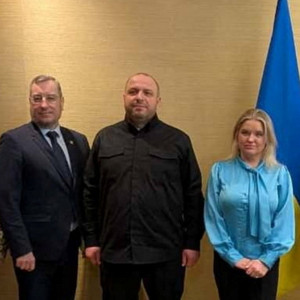
Russia described the meetings in Geneva as businesslike, and the Ukrainian negotiator, Rustem Umarov, had this update.
Security parameters and mechanisms for implementing possible decisions were discussed.
A number of issues were clarified, while others remain under additional coordination.
We are focused on working through the key provisions required to finalize the process.
This is complex work that requires alignment among all parties and sufficient time.
There is progress, but no details can be disclosed at this stage.
The two sides say they will hold further talks when they're both ready.
The main sticking point still seems to be land, with Russia continuing to claim the whole of the eastern Donbass region and Ukraine refusing to hand over any more territory.
The Ukrainians are worried the Americans will try to force them to make concessions in order to secure an agreement with Russia.
Saying, Vladimir Putin has previously offered the Americans 12 trillion worth of deals once the war is over.
Our diplomatic correspondent Paul Adams is in Kiev.
So after two days of talks in Geneva, what's been achieved?
You get the impression that in some ways things are moving forward.
That was the message after the previous round in Abu Dhabi, when Ukrainian officials were emphasizing that in terms of the sort of military to military conversations, progress was being made.
And you get exactly the same impression now that when the two militaries get together and talk about the mechanics of figuring out the line of contact, how a ceasefire might be implemented and so forth, then there is genuine progress.
But of course none of that really amounts to anything until there's a political commitment by both sides sides to do a deal.
And, at the moment, the Ukrainian view is that we simply haven't seen that from Vladimir Putin and that he remains, as he has been all along, committed to a version of a peace with Ukraine which essentially amounts to Ukraine's capitulation.
I think the mood was summed up quite well by a Ukrainian official who was in Geneva, who was asked about how the talks had gone and said they were difficult but they were productive, unless you have super hyped expectations.
I think that pretty much sums it up.
Super hyped expectations that the fighting might stop.
So I guess the fighting is going to continue until something changes.
Yes.
And of course there nothing much does change, because that contact line has been changing very very, very slowly.
I mean, it's a glacial move forward by the Russian side, really, for the last couple of years.
Interestingly, there has been a development in the last couple of weeks which some Ukrainians are getting quite excited about.
And that is because of a decision by Elon Musk's SpaceX Corporation to deny access to the Starlink satellite internet terminals for Russian troops, essentially switching off the entire system and then switching back on only according to a list of units approved by the Ukrainian military.
The effect of that has been that significant bits of of Russia's front line, where the Stalin terminal was playing quite an important role in terms of targeting and coordinating movements, they are now operating as one Ukrainian put it to us slightly blind and slightly deaf.
And there are some signs, and I really, really don't want to overstate this.
There are some signs that the Ukrainian military has been able to take advantage of of this temporary phenomenon in expanding what they call the grey zone or the kill zone.
That is the kind of dangerous no man's land between the two sides.
The Ukrainians feel that they have the ability here, the opportunity perhaps only a brief opportunity to make some progress on the battlefield and to push the Russians back.
This has only been a couple of weeks and we don't really know whether this is working out quite as the Ukrainians hope yet, but it is something that could change the dynamics a little bit.
The European football authorities are investigating claims of racism at Tuesday's Champions League match between Real Madrid and Benfica.
The game was stopped after Vinicius Junior said he'd been abused by the Benfica player, Gianluca Prestiani, who denies the allegation.
The Brazilian forward had just put Real a goal up, which proved to be the winner.
Our sports presenter, Oli Foster, told me what happened.
Very, very ugly scenes during and after this match.
This is the first leg of a playoff between these two sides to get into the last 16.
And, as you said, Vinicius Junior, one of Real's star players, scored an absolutely wonderful opening goal.
That did proved to be the difference between the two sides on the night.
He then went to a corner flag and did a little samba dance, something that Jose Mourinho, which we'll get to in a moment at greater length.
The Benfica manager, said that Vinicius Junior was inciting the crowd, just raising the heat on this.
And before the match restarted, as Vinicius Junior and his teammates went back into their own half, he reacted very, very strongly to what he said was something said to him by the Argentinian midfielder, Gianluca Prestiani, who was saying something different.
You can see this on the TV camera saying something to Vinicius Junior, but then he lifted his shirt over his mouth.
And that is what sparked this response from Vinicius Junior, who then ran to the referee, François Letexier, from France, who then applied UEFA's racism protocol that was brought in a few years ago.
He made the cross signal with his arms, saying to say that the match will be paused because there had been an incident of racism.
Now, this usually happens when things happen from the stands, supporters or chanting of a racist or discriminatory nature.
But this was clearly an allegation from Vinicius Junior that, to his face, Prestiani had racially abused him.
The game stopped for about 10 minutes or so as the referee assessed whether it could continue, whether Vinicius Junior was in the right position frame of mind.
Vinicius Junior actually did play the full 90 minutes.
When the game resumed, Prestiani continued playing, although he was substituted late on.
But a real febrile atmosphere for that last half an hour or so of the match, with the home crowd in Lisbon really on Vinicius Junior's back.
And of course tensions were raised further by a statement from Benfica saying the Real Madrid players couldn't have heard what they claimed to have heard and those comments that you mentioned from Jose Mourinho.
Yeah, lots of fallout on social media.
Benfica putting out a video at a different angle of this alleged incident.
Now Aurelien Chouameni and Kylian Mbappe had corroborated Vinicius Junior's claims of what was supposedly said.
Benfica said look, they were nowhere near so they couldn't possibly comment if anything had been said.
Vinicius Jr. put something out on social media saying racists are above all cowards.
They need to put their shirts in their mouths.
I've seen this all before.
Prestiani saying, I want to clarify that I did not direct racist insults to Vinny Jr.
He must have misunderstood.
And Jose Mourinho has said that Vinicius Junior incited the incident from the very start with those goals celebrations, something that he always does.
Although he did say he listened to both players what they had to say and wasn't believing either of them.
He was just staying out of it and was going to be independent on that regard.
But a lot more fallout to come from this incident, I think, Oliver.
Ollie Foster there.
Investigators looking into the disappearance of Nancy Guthrie, mother of the American television presenter Savannah Guthrie, say they believe she's being held somewhere close to her home in Arizona after being the victim of a targeted kidnapping.
Nancy Guthrie, who is 84 years old, disappeared more than three weeks ago.
David Willis sent us this report.
Officials announce new leads in the desperate search for Savannah Guthrie's mom.
Could a new piece of evidence be the break law enforcement needs?
In the Catalina foothills of northern Tucson, a massive search is underway for a missing grandmother.
How big a case is this?
Massive, okay?
84-year-old Nancy Guthrie hasn't been seen since the 1st of February.
The mother of the popular morning TV presenter, Savannah Guthrie.
Her disappearance was headline news even before a ransom demand was received for 6 million in bitcoins.
We don't see a lot of kidnappings, right?
Especially this is like a new age kidnapping.
Jimmy Williams runs a true crime YouTube channel and is one of the many vloggers and live streamers who've traveled here to chronicle every twist and turn in the investigation.
Usually people want a million dollars in a bag, dropped off somewhere, and then they put it there and then the police run up and grab them.
This is Today with Savannah Guthrie.
Good morning everybody and welcome to today on a very special Monday morning.
The reassuring face of morning television, Savannah Guthrie, has found herself at the centre of a very public nightmare, vacillating from hope to dread in a manner familiar to many of her interviewees down the years.
This time though, instead of asking the questions, she's the one awaiting answers.
We want to hear from you.
And we are ready to listen.
Messages posted to social media have been the family's only means of making contact with the kidnappers, as a ransom deadline came and went with no sign of their mother.
Days later however, detectives landed their biggest break in the case so far chilling images from a doorbell camera showing a masked man on Nancy Guthrie's doorstep, minutes before she went missing.
Was this a targeted kidnapping?
You know I believe that, but the evidence and the case as it unfolds will prove that or prove something else.
But yes, I believe it was.
Sheriff Chris Nanos is leading one of the biggest and most unusual investigations of its kind this country has ever known.
Where do you think Nancy Guthrie is?
I think she's somewhere here in our community.
Locally?
Yeah.
What makes you think that?
I just do.
I don't know why.
I don't have any evidence to prove that, but I just believe that she's somewhere here locally.
As he spoke, detectives were once again combing the dried brush around Nancy Guthrie's home in a desperate search for clues.
Excuse me, can you tell us what you're looking for?
Any leads in the case so far?
I can't talk about it, I'm sorry.
Their presence sending reporters and camera crews into a frenzy.
A lot more people here than it looks like on TV.
Kelly Himes lives nearby and felt compelled to stop by and say a prayer alongside the growing array of flowers.
Nancy could be anyone's mom.
She's the same age as my mom.
She's the same height.
They have the same hair.
They live alone.
I mean, she's so, she resembles my mom so much.
All cases have a progression, right?
A starting point.
The sheriff's initial insistence that everyone was a suspect in this case prompted feverish speculation online about the possible involvement of a family member.
Sheriff Nanos now says any such doubts have been firmly laid to rest.
We really... put them through the ringer.
We not just interview them?
We take their cars, we take their houses, we take their phones, all this stuff.
They have been 100% cooperative with us.
They are victims.
They are not suspects.
It's been two weeks since our mom was taken.
Savannah Guthrie's latest appeal to her mother's kidnappers seems designed to appeal to their better nature, but as the days pass with no word of her whereabouts, any hope of an emotional homecoming is giving way to a growing sense of dread.
And it is never too late to do the right thing.
Savannah Guthrie ending that report by David Willis.
Curling is normally considered a genteel sport, but it's been rocked during these Winter Olympics by allegations that the Canadians who are in the running to win gold have been cheating by touching the stone when they're not allowed to.
Canadians back home are shocked.
Integrity in sport is important, even if you have to call it on yourself.
Curling myself, I think that's like, you should know better, especially if you're in the Olympics.
It's kind of fun, brings a little bit more people to watch curling all the drama because it is a pretty dry sport.
Yeah, as Canadians, we're not supposed to do these things.
I don't know why it's so hard to be sportsmanlike.
Sports is all about fair play, sportsmanship, and without that, it's not sport anymore.
So do I think the finger affects the rock?
No, I do not.
This is not going to affect the rock.
Do I think we have to play within the rules?
Yes.
As long as we are willing to correct it, I don't think it would affect our image overall.
I hope not.
I don't like the way Mark Kennedy handled himself.
But we do have a reputation of being pushovers and being always so nice.
So this kind of maybe is a good thing of reputation.
Canada is known to be a fair play country.
It's one event, one individual event.
If they cheated, then they should be sanctioned.
If they didn't, then let it be, I guess.
Well, Canada's curling team denies the accusations.
But it's not the first Olympics where questions of fair play have been raised.
So why do some athletes cheat?
Professor Steve Peters is a consultant psychiatrist and author of The Chimp Paradox.
I'd like to emphasise that, for the vast number of athletes taking part, we highlight the very small minority who do cheat.
So if you look at the research that's done on it, it boils down to whether people have integrity and morals.
And if you've got somebody who hasn't got that, then if they're able to cheat and get away with it, they will.
If those who have morals, then they regulate themselves.
So what if you don't have integrity and morals?
The fact that you won by cheating is not going to bother you, so you just want to win.
Absolutely.
And over the last 25 years, I was privileged to work in elite sport.
I have dealt with people who have been caught and actually worked with them in an interview.
And they're a mixed group again of people.
Some have no regrets at all.
And they say it was worth it for the reward.
And they also do justification.
You know, it's like everybody does that.
I just got caught.
And you won't reach them because their moral stance isn't there, whereas the people who have morals often say they were influenced either by their peers or it's an outsider, such as a coach or a young person particularly young people they're influenced by parents.
And then it gets very sad that their self-image is defined by their sporting achievements.
And so they've gone into sport without having that balance.
And the work I often do with younger athletes is to try and give them their self-image and defining themselves outside of the achievement.
OK, so that is all about giving them an edge, and if the edge is something that actually is outside the rules, that doesn't matter.
It's a refinement.
Exactly, and it's justified.
Obviously, you can't reach people who keep sticking with what they believe is the truth, and everybody does it.
I just happen to get caught.
Do they see it as cheating?
No, it's justified by saying that, We're all trying to get an edge.
And the idea is they see it.
And it's very bizarre.
And I'm taking a stance to drive the point home.
They see anything in life is OK, provided you don't get caught.
They see it as being people who get caught are the weak ones.
And the whole world is based around an immoral stance.
How do you work with them?
If you're actually working with somebody who has done something, you think look hey, that's outside the rules.
I did quite a lot of work with the police looking at this for county lines.
And I explained to them that when you're looking at the people they're dealing with, we have to divide people into two groups.
And that is those who have moral conscience.
And we appeal to that group.
And talk them through the idea that you know how are you going to feel having got this medal or whatever you're doing.
And in county lines, how would you feel about the damage to people?
You wake up their conscience and that generally they start to regulate and you help them do that.
However, there will be a subgroup of people who do not have that.
So there's no point in appealing compassionately to you.
Know what are you doing to other athletes in this case.
In which case, you've got to state the rules that if you get caught, this is how people see you.
That often affects them.
Because their egos and narcissism comes in.
Have you turned someone round?
Yes.
We're aware that somebody may be going down a route and yes, behind locked doors.
I've talked to them and woken up the conscience and I've explained, once you've done, that the person has self-esteem.
Professor Steve Peters talking to Sarah Montague.
And still to come.
Who would have thought that such an uninspiring unemotional, frankly quite dull video would have managed to create this massive movement that we've seen?
The first ever YouTube video page is saved for posterity.
This is the Global News Podcast.
A group of people deported from the United States arrived in Cameroon early this week.
The deportations have raised questions about an agreement between the two nations.
None of the migrants are reported to be Cameroonian.
Several journalists covering the story, as well as a leading lawyer, were detained in Cameroon on Tuesday.
James Copnell spoke to the detained lawyer, Joseph Awafru, who's advising some of the deported migrants.
I was actually detained between, say, 4pm and 7 and 8pm when I was released, yes.
This alongside several journalists, including Randy Josar, who works for the BBC from time to time?
Correct, correct.
On what grounds?
On the mere grounds that they were on the location, the site where these deportees are being held.
So that suggests this is a pretty sensitive issue for the Cameroonian authorities.
What do we know?
What do you know about the deportees?
I know that they have protective statuses in the United States and that most of them have been granted withholding of removal.
That means that they have met a higher burden of proof that they are more likely than not to be persecuted from the countries from where they come from.
And so, under the 1951 UN Refugee Conventions and its protocols, They should be grandfathered everywhere they go as refugees, because they must have shown a credible fear and even gone beyond in courts in the United States to show that they would be persecuted on one of the five grounds.
That's nationality, race, religion, membership in a particular social group and political opinion.
And these people had met those burdens and were granted those statuses.
And just the mere fact that they are being sent to a third country and not to their country of origin presupposes that the United States recognizes not only its obligations by the convention, but that these people will be persecuted and that they were a great risk of being harmed if they were returned to their own countries.
Which countries are we talking about here?
We're talking variously about Ghana, we're talking about Senegal, we're talking about Angola, we're talking about Ethiopia, we're talking about Sierra Leone Democratic Republic of Congo.
And is it clear to you on what terms, under what agreement, Cameroon is accepting these people?
Not at all.
Not at all.
In fact I have written to the International Office for Migration here in Cameroon asking those specific questions, asking to know the contractual basis under which the United States and Cameroon have this arrangement and how the IOM comes in as an intermediary.
These kind of contracts between nations exist. is a sovereign right, right?
That's above my pay grade to gauge that.
But at least for public knowledge, for clarity.
These are arrangements that are supposed to be in the public, so that people should know what is going on.
And even if they're treaty arrangements, then these treaties should be ratified by at least the Parliament of Cameroon.
And in terms of your clients, these people who have been deported from the US to Cameroon, what are you asking for on their behalf?
We're asking one that the international community, especially the United Nations, that's represented by the Office of the United Nations High Commissioner for Refugees, and then the International Organization for Migration act.
Please recognize that these people are refugees and be granted the rights that are intended to refugees, as granted by the 1951 conventions and its protocols and other regional legal instruments that protect refugees.
And secondly, that because Cameroon has accepted these people as third country deportees, that Cameroon recognises its obligations by international law to respect and protect these people as refugees.
That's all we are asking for.
Joseph Awafru, talking to James Copnell.
One effect of rising temperatures across Europe is the arrival of a more hospitable environment for disease-carrying mosquitoes.
Researchers in Britain have been assessing the incubation time of the chikungunya virus in the Asian tiger mosquito and found the minimum temperature at which infections can occur is lower than previously thought.
That opens up the possibility of the virus spreading across Europe.
Dr Stephen White from the UK Centre of Ecology and Hydrology worked on the study.
This is a virus transmitted by Aedes mosquitoes.
There are two mosquitoes that are principally involved.
So it's Aedes aegypti, which is more of a tropical species, and Aedes albopictus.
Aedes albopictus, which is the Asian tiger mosquito, started invading into Europe, or at least discovered in Europe in 1979 in Albania.
And it's been slowly making its way across Europe, moving with people and also because of climate change.
But this mosquito has now really taken a foothold in places like France and Italy.
And so, as it's a transmitting vector of viruses, we can now see a change in the risk to people across Europe.
And so chikungunya historically has not been in parts of Europe.
It first came up in 2010.
In France, for example, there have only been a handful of cases.
However, last year, this rapidly changed.
And the risks to people in Europe of catching chikungunya is going up because of two things.
One, because temperatures across Europe are rising, but also because you've now established that the virus can be transmitted at lower temperatures.
So therefore, more of Europe is affected during more of the year.
Yes, absolutely.
So what we've done is looked at the key components of how this virus can replicate within the mosquito itself.
And that's incredibly temperature sensitive.
And so what our research shows is that the thermal limit to this transmission is much, much lower than we previously thought.
So that as a consequence, parts of northern Europe are more at risk.
And also in southern Europe, the window at which there is risk will be much, much longer.
So into now spring and also late autumn.
And in terms of what people can do to protect themselves.
Clearly, awareness of covering up, because I think these are mosquitoes that bite during the day.
But in terms of a vaccine, is there one and how widely used is it?
The first and foremost line of protection is covering up.
As you said, it's a daytime biter.
Using insecticides on yourselves is really, really important.
But yes, there are vaccines available.
These are very new, but they have been approved in many parts of the world for further protection.
Are there any particular parts of the population that are most at risk?
Yeah, so those with comorbidities and the young and old, typically.
The disease itself is not a killer as such.
It's more the fact that it's incredibly debilitating.
So it creates arthritis-like conditions, which can in some people last for years.
Dr Stephen White talking to Leila Nathu.
The internet page showing the first ever YouTube video has been saved for posterity by the Victoria and Albert Museum here in London.
It'll be available for viewing from today.
Uploaded in April 2005.
It shows one of the YouTube founders, Javed Karim, on a trip to San Diego Zoo.
The clip, called Me at the Zoo, has had more than 380 million views.
All right, so here we are in front of the elephants.
The cool thing about these guys is that they have really really, really long trunks, and that's cool.
And that's pretty much all there is to say.
Well, the technology journalist Chris Stokel-Walker told Justin Webb it's a moment worth marking.
Yeah, 19 seconds that bequeathed 20 years plus of history that has transformed our lives.
So who would have thought that such an uninspiring unemotional, frankly quite dull video would have managed to create this massive movement that we've seen since?
And obviously now YouTube is a monolith.
It is replacing TV.
It is replacing traditional forms of media.
And increasingly we spend more of our time sat in front of the TV, watching it on those sorts of smart TV apps, rather than through the phones and, as it would have been way back in 2005, through our desktop computers.
And the watch page that is now in the possession of the Victorian Albany Museum, and I say in the possession.
It's difficult with digital things, isn't it?
They've basically recreated it.
Is that right?
Yeah, with the help of a design agency, they have basically replicated what it would have looked like not necessarily on that first day of YouTube either.
They have taken a snapshot of it from December 2006.
So the view and the look of it had adapted somewhat.
But if you go back in time by looking at it through the exhibition, actually there are an awful lot of things that are very similar to the YouTube page that we would recognize now.
So you have in the top left of the screen The video playing the iconic scrubbing through that video that you can do to fast forward.
You also have on the right hand side a range of related videos.
Of course.
Now YouTube throws us into this endless torrent of videos and replays them constantly, more after the other.
So very much a kind of relic of the past, but also recognizable, I think, to YouTube users these days.
Technology journalist Chris Stokel-Walker.
Schemo makes its debut at the Winter Olympics in Italy on Thursday.
It's a cross between skiing and mountaineering and is the newest sport at the Games.
Richard Hamilton has been finding out more.
Hi, my name's Cam Smith.
I'm from Crested Butte, Colorado in the USA.
An official promotional film about Schemo for the Olympics in Milan and Cortina.
It explains what attracts some of the world's top athletes to this gruelling sport.
You have to like that challenge and discomfort and pain of climbing the mountains.
But instead of walking back down, you get to ski.
I think it's so unique because of the climb and the descent and the creativity.
In Schemo, the athletes sprint uphill with sticky material known as skins on their skis to provide traction.
They then remove the skis, put them in their backpacks and continue climbing on foot before a further uphill section on skis.
Once they reach the top of the course, they remove the skins and ski downhill with slightly wobbly legs to the finish line.
The race lasts about three minutes.
Schemo has a long history and its origins can be traced back to army training and an early Olympic event known as military patrol.
Andy Bryce is from the British Mountaineering Council.
It spawns from what we would call military patrol races, which have been around for hundreds of years in the Alps.
And as a sport that's been serious.
It's been around since sort of the early 90s.
It goes back to the the sort of roots of mountaineering.
So when you see people doing ski mountaineering it really looks like they're out in the hills and they they're using different modes of transport to get across the terrain in front of them.
It's really genuinely very exciting.
There's lots of different bits to it, lots of different skills.
You have to be a really good, competent downhill skier.
You have to be really competent on the mountain terrain.
You have to be incredibly fit to almost, you know, hill runner type fitness to get up the steep.
And then also the transitions are incredibly important as well.
I think what people watching it will find most exciting is when you see people transitioning from uphill to downhill and they're taking the skins on and off their skis.
The speed they have to do that is quite incredible.
Military patrol was actually an event at the very first Winter Olympics in 1924 in the French resort of Chamonix.
It later morphed into the more commonly known biathlon, a combination of cross-country skiing and rifle shooting which needs muscly legs, a steady hand and a low heart rate.
Thursday's Schemo races will take place in the resort of Bormio in the Dolomites.
Richard Hamilton.
And that's all from us for now, but we'll be back very soon.
And don't forget our sister podcast, The Global Story, which looks in depth at a single story.
This edition of The Global News Podcast was mixed by Jack Wilfan and produced by Paul Day and Oliver Berlau.
Our editor is Karen Martin.
I'm Oliver Conway.
Until next time, goodbye.