Hi, everybody.
Welcome to Women in Retail Talks, the podcast where C-suite executive women in the retail space share their stories of professional growth leadership development, personal journeys and more.
I'm Melissa Campanelli, the co-founder of Women in Retail Leadership Circle, which is a membership-based community of executive women at leading retailers and brands.
Today, our podcast Women in Retail is coming to you live from our On the Road event in San Francisco.
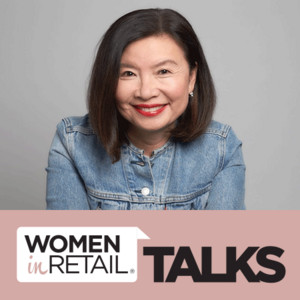
Joining us today for a fantastic discussion and a fantastic conversation is Jenny Meng, who is the CEO of Rothy's, the fast-growing retailer that brings sustainable and stylish footwear to over 3 million fans worldwide.
Serving as independent director on Rothy's board since June of 2022, Jenny joined the company full-time in January and today leads Rothy's business as it scales in retail wholesale, even international.
Before we get started, I'm just going to tell you a quick bit about Jenny's background and her career.
So, prior to joining Rothy's, Jenny held various executive roles at The Gap, including founder and president of Old Navy, which is so cool.
I love that.
From 1993 through 2006, where she led all aspects of Old Navy and its 900 retail clothing stores in the US and Canada.
Then she joined specialty retailer Charlotte Roos, where she was president and CEO and oversaw 600 stores across the US from 2010 to 2019.
And, in addition to Rothy's board, Jenny has served on the boards of Poshmark, Affirm and currently serves on the boards of Levi Strauss, Kendra Scott and the Kaiser Foundation.
Let's start with your decision to join Rothy's, which some might call your second act career, right?
Can you share more about that decision?
When we spoke earlier, I know that you had some ideas and thoughts about that.
Yeah, I was kind of retired, but you really are never retired.
But I certainly wasn't thinking of stepping in as a CEO for sure.
When I left Charlotte Roots, there was a time I was saying, should I go for another CEO job?
And I decided, no, actually I'm really enjoying my board work, so I really focus on boards.
In fact, at one time I had seven boards.
Wow.
And a lot of people are like, how do you juggle all this?
If you know, you ran a company, especially retail.
Actually, being on seven boards is easy compared to running a company.
That's true.
It is true, if you know what I'm talking about.
So you know it was very easy to decide to join the Rothy's board because, first of all, I know a lot of people there.
It's in San Francisco.
It has incredible, you know, mission and purpose.
But, you know, they said, come in and help us consult.
Help us, you know, think about scaling the business, growth.
I'm like, that's the fun part, right?
So I said yes.
The next thing you know, after I step in for two weeks, would you like to be the CEO?
I'm like, no.
In fact, try to convince me a few times.
But to be honest with you finally, I mean, how often do you, you know, get to run a company or a brand like Rothy's?
Truly, it's very special.
And, you know, our mission and purpose is believe in the possible, which is so optimistic.
I mean, taking plastic water bottle, making beautiful shoes.
I mean, that is about believing the possible.
And really, the bottom line was we have an incredible team of people.
And the entire leadership team at Rothy is run by women.
So, I mean, seriously, how often do you get the mission, the product, and a team?
So I really couldn't pass up, you know, that kind of opportunity.
Yeah, that's so great.
And we did talk a little bit about sustainability just now.
Sustainability is such a hot topic.
How do you balance sustainability with growth?
That's always a challenge, right?
You know, I think for Rothy it's very easy because this started recently, the foundation of sustainability already.
I mean the two founders, Stephen and Roth, both of them, actually.
One is an investment banker and one is a gallery owner.
So they know nothing about retail and product, which in a way actually is good, right?
Sometimes, when you know too much, you kind of almost stop yourself saying oh, that's not possible, that's not good, or this is too expensive.
Since they didn't, so they really could see possibilities.
And so they built from ground up, which is crazy.
I mean even being in apparel all these years, I would never think about you know, building and opening a factory.
But again, you know, they had a totally different vision.
And so the factory is in China, Dongguan.
And in fact, it's 30 minutes from where I was born.
So there's some fate in this.
So it's a fact.
So when I went there for the first time, it's probably one of those most beautiful factory I've ever been to.
And I've been to quite a lot of factory in my lifetime.
So it is goalie and is zero waste, which you never see that.
Because everything we do is knit, you know, exactly to the size and the pattern we want.
So there's no wastage.
So I was pretty impressed with this factory.
So really bottom line is our foundation and what we believe in is sustainability.
So it is in our core and in our DNA.
So it's not like, oh, should we be sustainable?
It needs to be that.
And for us, since it's part of it, the most important part for me is, and for the team is is not just about sustainability.
The shoes and product we do has to be stylish, Comfortable, washable, and then sustainable.
I mean, look, you could be sustainable if the shoes look awful and ugly.
It doesn't matter.
People don't buy sustainability just because it's sustainable.
But to me, that's an added benefit.
So it's really not about should it be sustainable, should it be about growth.
Actually, it goes hand in hand.
And we think that is actually our secret weapon.
So I think it's a positive.
Yeah, definitely.
So let's talk about diversity and inclusion.
You mentioned how most of your leadership are women.
So let's just talk a little bit about diversity and inclusion at your company as a leader.
How do you approach these values in your team and why do you think they're essential for a company like Rothy's?
So let me step back, actually even more than about Rothy's.
In my entire career, I was very fortunate to be able to build diversity in my team.
Started at Old Navy.
I wouldn't say it was deliberate, but sometimes diversity and inclusion goes beyond just gender ethnicity, age.
It's really also about experience, skills.
So, I mean, it's a whole host of things, right?
I love, you know, when you see a team that has different opinions and background and have really great conversation and sometimes can be very heated, but those are the best kind of conversation, as long as we walk out and be very alive.
So I saw firsthand at ONV that the diversity in fact I mean I have to say this So we were so diverse.
One time we had a CF, I was interviewing for a CFO, and he was a white male Mormon.
And I said, actually, you probably would be the most strange person in my team.
And I said actually we need to bring a straight male, white male coming in because we need the diversity.
So it's actually the reverse.
And actually, we did actually hire him, and it worked out extremely well.
In fact, we're still in conversations and connections.
So to me, I saw it firsthand.
So I was able to.
But, more importantly, I've been on boards.
That Yeah, I was just going to say you're on so many boards too.
And the two, I would say, really go standard in boards is Levi's and Kaiser.
So I would say my first board was Kaiser, and it has about 14 board members.
You know, Kaiser is a huge integrated healthcare system, right?
And, you know, Of course, there's doctors there.
In fact, when they interviewed me for that, I was deciding on Kaiser and Lululemon.
To be honest with you,
And most people, of course, think I would go for Lululemon.
But when I met the CEO of Kaiser his name is George Huffington I said why would you be interested in me joining your board?
I know nothing about health care.
And he laughed.
He said we have a lot of people that knows about health care medicine, hospital.
We really are not looking for that right.
And i'm like yeah, why would they be interested in me doing that?
He said we are looking for someone that know about people customers, because our patients are consumer eventually.
We need to influence, educate them to make best decision for themselves.
So i joined the board because i thought how interesting is that versus joining lululemon, which is you know another apparel company.
And um, There was doctors lawyers, energy CEOs I mean literally public health care people in politics.
So it was a very diverse board.
And there was five, I think it was five or six women out of the 14.
And it was probably the best education and probably the best board.
Of course, the first year, I'm like, what am I doing here?
I know nothing about what they're talking about.
But eventually, you kind of find your place.
So I saw that, and it was probably one of the best functional board.
And then I also joined Levi's board, and also it's very diverse.
And so I think you have to reflect the board has to reflect the customer that you're trying to serve, and Levi's does that very, very well.
That must have been so interesting to be on.
You know, in those meetings, I'm sure, at Kaiser Permanente, like what, what that was like with everyone having different opinions, but I'm sure it ended up being.
You know, you probably came up with great decisions as a result.
Yes.
Well, I think when you bring different perspective and not everybody needs to weigh in on everything.
Right.
But it's so important to be able to have an open mind and listen, but also be not afraid to state your opinion.
So this is where you get not only a diverse team, but also on boards, and it's important.
And you see the great results.
Yes.
So I would love to dive in a little bit to your background.
We had a great chat before.
This is not all staged.
We actually chatted before this discussion, but we had such a great discussion about your career and how you manage through periods of change and disruption in your career.
You talked a lot about when you worked at the Gap for Mickey Drexler.
So I don't know if you wanted to share some of your thoughts on what you learned from him and how things are different now.
Well, first of all, I think most people – well, first of all, I worked for him for 15 years.
And everybody – if you could work for Mickey for 15 years, you could work for anybody after that.
No, I really have to say it's probably – I have to give him so much credit for what I've learned in retail and merchandising having a point of view.
You know, the old days – I don't want to say old days.
I shouldn't say old days.
Those days – really is about having point of view.
It's all about product, right?
And being a merchant, very much, you know, you are kind of the center of the universe.
You feel like you're the one who's making all the decisions.
We have the most important function and so on and so forth, which maybe at that time is true.
You know, here's what we believe in.
This is what you should buy.
Today is different, right?
I mean, I would say not even today.
10, 20 years, it'll start changing.
It's really about you know, focus on the consumer.
When I say that you know, especially with retailing, you want to control everything, not only the product point of view, but your channel that usually is just retail, and then eventually have online.
And today then, once you focus on the customer and really focus on what is not about pushing what you want them to wear, it's really giving them choices and also pulling them.
What are they interested in?
I think that's probably one of the biggest change.
Being data-driven.
Well, data-driven, but also channel.
It's no longer about controlling the channel that you want to be at.
You have to think about where your customer want you to be at.
So it's not just omni-channel today.
It's about multi-channel, right?
Wholesale.
It's not about opening thousands of stores anymore.
It's opening about the stores where you want to be.
And then there's customers that want to be buying from certain stores that you might want to be in wholesale.
About marketplace.
I mean, I remember when we talked about Amazon, we were like no, we will not be on Amazon.
I said, it's the biggest channel of search.
How can you not be on it?
So I think you have to think about what your customer wants, where they want you to be.
So I was using one example.
So let's say we are in a, and there is a Rothy store, which we only have about 25, 26 stores.
So let's say we're in a Nordstrom store.
So we could be in the same store, but our assortment in Rothy could be much, much bigger right than what Nordstrom would be carrying.
But to me it doesn't matter where they buy it, but they buy it in Nordstrom because they might have loyalty points.
Right.
So to me...
You can't control.
No, actually, I want them to buy wherever they want to buy it.
Right, right.
Or how they want to connect with us.
But before the old days you would never want to be.
You want to be able to control that and say no, I would never sell wholesale.
Right.
Even in the same center, right?
Right, right.
But today, I don't think, those days are gone.
Right, right, right.
And I think you need to be so open-minded.
And especially with data, you could kind of know exactly where you, where you should open store, where you should think about wholesale
So there's so much more openness.
And I think those are the changes that has really happened.
Yeah, yeah.
And as a result of that, we talked, is the importance of having a team that's connected.
Yes.
And everyone needs to feel valued.
So maybe you can talk a little bit about that, too, and how your role as a connector.
Well, you know, as you said, it's you know, this is my second or third go around.
And I think people ask me this all the time, you know, what's your job as a CEO?
And it really depends.
I wouldn't say it's always a cookie cutter, but I have an incredible team.
I mean, from the head merchant, the chief merchant, to market CMO, to store, they all are so professional.
So my job is not to teach them what they're supposed to be doing.
Actually, they know it even better than I do.
So my job is really making sure I can connect all of them and make sure we're very aligned in what we're trying to accomplish together.
And really prioritize.
Make quick decisions, because retail is really reactive too, not just about planning short-term and long-term.
I would say it really depends on the team.
But right now, you know, my job is really connecting, and how could we be bolder, faster than ever before?
Right.
And how do you, going off script a bit, how do you do that?
Like how do you get them to be, how do you motivate them?
You know, to get them to do that, to be bolder and faster.
Well, I think when we're together is really talking about you know what are we trying to accomplish and making sure we're aligned.
When we're aligned, once you're aligned, then you say, how fast can we make that happen?
So you're working together.
And just to give you an example, so I went into consult last August in 2023, right?
And I walked in and I'm like okay, you know there's so many things that we prioritize, but there's really three things I want to focus.
Number one is get sales momentum.
Retail is about momentum, right?
And how do we get the sales going?
Number two is be profitable.
Bottom line is as important as the top line.
If I really believe you, you're not profitable, you're really not a business.
So profitability.
And the third thing is how could we work better together, making sure we all agree.
If you don't agree with that,
And so even in August we re-looked that fourth quarter holiday product because we don't have a factory.
I'm like, we could be as flexible as possible.
And we look at our promotional strategy, because you need to show up to get momentum.
Immediately by October, we start seeing a change, and we have the best holiday we ever had.
That's so great.
So you think about it.
August, you could still say it's not like, oh, it takes another year.
I don't think that way.
Right.
It might not be perfect, but there's always something you can do.
Yeah.
That's awesome.
I love that.
So as a CEO, how do you manage work life balance?
You know, I know that's a ridiculous term at this point, but.
I would just love to know just how you manage your time management or whatever you want to call it.
So, first of all, you know, for me to balance my life is very easy today because my kids are all grown.
But I do remember the days when my kids, you know, I have three kids.
And, you know, family is really important to me.
If anybody out here knows me, they know that.
And I was able to balance.
It is because I first of all, you have to have an incredible supportive partner.
And I do.
And second is that I really believe, you know, I find women could juggle a lot of things.
So I have a pretty, I would say, a framework that I work on.
I'm an early bird, so I get up very early.
I get to work very early in the morning.
So I always have like half an hour to myself.
I could have a cup of coffee, read my email, or read something that inspires me.
And then I, you know, then I start working.
But what's important is, you know, I have back-to-back meetings, as you all know.
I know all of you do.
But I always stop by 530, 6 o'clock, because I want to be home for dinner, always.
And I go home, and I'm very fortunate, of course, having a live-in nanny.
But I always do some cooking, so I feel like You know, being a mom.
You're involved.
But people, everybody at work knows that I am out of there no matter what.
It's because I want to be home.
But, you know, once the kids are in bed, I can sign back on.
I don't work on weekends because I want to make sure I have time for my kids and my family.
And then on Sunday, right after dinner, I'm back into my mode of working.
So I think you have to kind of, whatever works for you.
I'm just saying this is my schedule.
A lot of people would say, well, I don't see that you're very balanced.
I'm like, everybody's balanced life is different.
It worked for me, and I was able to do that, and my kids are all growing.
In fact, I'm a grandmother now.
Oh, congratulations.
So I'm very close to my children, so I still... somehow did something right.
And when people ask me what I'm most proud of, I always say it's not that I started Old Navy, I'm CEO of this.
Blah blah, blah.
I'm most proud that I have a really great family, great kids, because at the end of the day, that's what's important.
And so people that know me, they know I'm actually quite balanced.
That's great.
And that's probably one of the reasons for your success, honestly.
So what advice would you give to women starting out right now to lead in the retail industry?
So I think in retail you have to have an incredible curiosity.
Never stop.
That you know, because you know it's about change and trends, so curiosity goes a long way.
And I also believe in continuous learning.
In fact, I tell people this and I really believe that.
I know less about retail today than I did 10, 20 years ago.
And that mindset makes you hungry to learn more.
And I know, when I wasn't a CEO and being on board, I wanted to stay on top of things so I could be relevant.
You can't be on a board and certainly can't and talk about Navy 20 years ago, because it's not relevant anymore.
Right.
You have to stay on top of things.
So you have to have a sense of that curiosity.
But the last thing I would probably say is and I think someone said it is really do not hesitate to.
You know the old days of being vertical in your career like, keep going step by step.
Obviously, I came from merchandising.
But I think it's so important to go lateral to other functions, to learn new things.
And sometimes you have to go backwards to go forward or go sideways to go forward.
I didn't have that kind of career, but I see the benefit of that.
And I would tell people, don't hesitate.
The more that you can put in your toolbox, the more that you can put in your own experience and skill.
It serves you even better one day if you want to lead a retail company.
Last but not least, if you could, do an international sting, I think that is really, really great.
Because the world is much more global.
And I think sometimes people always say, well, I have family.
But can you imagine bringing your family and live someplace for a year, two, three?
It's such a plus.
So I would also encourage that.
I think there's companies that do that really well, and then companies don't do that very well.
So if you could find a company that really looks at you, know career development, in a really systemic way of moving you in a different direction.
Either department-wise or international or whatever.
Anything that you could to get.
To get different perspectives.
Exactly.
I just think it just serves you even better.
Yeah, that's great.
Okay, so just something really fun.
Okay, ready?
Here we go.
Rapid fire.
What is a fun or surprising skill you have?
Most people wouldn't know.
Well, some people know, if they know me here, i love to cook and bake.
Okay, i mean seriously.
I was in the midst of writing a cookbook and, of course, you know, i gained eight pounds during that six months, so i had to, like stop for a while.
Um, but i i'm kind of halfway through it, so it's still a project that I want to finish.
Oh, that's fun.
Yeah.
You'll have to let us know.
We'll share it with the community.
So what is a fashion trend you wish would make a comeback?
You know I think there was a time that you know there's a lot of people wear denim here, of course.
You know, there's some of you like, you can't wear denim on top of denim.
You have to wear it with something else.
I love the trend of denim on denim.
And so it's now back.
So it's not, I'm waiting for it to come back.
It's back.
Everything needs to come back.
Exactly.
That's fashion.
Of course, being on the Levi's board makes it very easy.
Lots of demo pieces.
What song gets you motivated when you need a boost?
I Will Survive.
Oh, we should have played that when we walked on stage.
Okay.
What is your ideal weekend when you're not working?
My husband and I, my husband actually started a vineyard up in Sonoma.
Oh, wow.
It's called Corbin Cameron after my twins.
And so we go up there.
We have a garden, a vegetable garden.
We have chickens.
You know, this is where I like to hang out and do nothing.
Watch the sunset.
Yes.
And what's the last book you read that you could have put down?
You know, I went on a cruise a few weeks ago for the first time. with my college roommates.
And we've been traveling together.
I would say almost 25 years.
We go every other year.
And we take turns who's planning it.
Because if I was planning, we wouldn't be on a cruise.
But somebody planned it.
And actually, it was great.
I had a lot of downtime.
So I actually bought, I promised myself I wouldn't bring business work book.
So I bought a book that is a Chinese classic that I that I read like 20 years ago, but they did an English translation.
So I thought, okay, I'm going to reread it.
You know how when you go back and reread a book, you learn something new.
So I read the translation.
I'm like, oh, this is really not a great translation because the book was different.
So actually, good thing I brought the Chinese version of it.
So I went back and forth reading that.
So I couldn't put it down.
It was a really great book.
What was it called?
It's called prisoner of beauty, is it okay?
But the chinese name version would be totally different, so it wasn't a great.
Maybe there'll be a movie you can watch exactly but um, you know, that's something i don't normally get to do.
To me is almost like a you know something, indulgence to read something for fun, which it shouldn't be right right right, exactly.
So we should really Make sure that we put that.
You know, not just reading business article and books.
You've got to do something more than that.
Anyway.
Well, I think that's all we have time for.
So thank you so much, Jenny.
It was great to chat with you.
Thanks for listening.
For more information on this podcast, please go to womeninretail.com slash podcasts for show notes.
Women in Retail Talks is available on Apple Podcasts, Google Podcasts, Stitcher, and Spotify.
Make sure to subscribe on our podcast channel page as well.
If you've enjoyed this episode, please take a few moments to rate and review our show.
Lastly, if you're a female retail leader interested in joining our community at Women in Retail Leadership Circle, visit womeninretailcom.
Thanks, and until next time, this has been Women in Retail Talks.