The Conservatives fear the loss of control.
The adventurists look forward to lives made much easier.
The Prochamentists complain about the lack of efficiency while the human taxi drivers are worried about the end of their career.
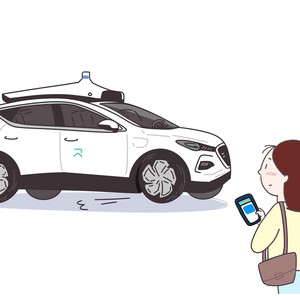
This car now have taken to the roads across many Chinese cities and in recent weeks has triggered a lot of discussions.
What are the most common schools of thought about the application of Robo Taxis?
Hello, I'm Lyming and this is Roundtable today with New Holy and Lee Ye.
Let's try and find a reasonable angle to examine the driverless cars for the moment.
So in recent weeks like I said earlier, there's been quite a lot of discussions about the introduction and application of Robo Taxis across many cities in China, most notably in Wuhan where people, well mostly drivers are complaining that the Robo Taxis are priced so low that it's almost a non-fair competition against them.
So there's a lot of noises, a lot of discussions and we want to capture what are the schools of thought that dominate the discussions these days.
To begin with, let's look at the extent to which the Robo Taxis are being applied in different cities.
It's actually happening around China.
It's beyond Wuhan. It's beyond just this one brand of Robo Taxis.
Yes, it's happening around the country in the way that many cities have designed and designated a piloting area allowing old-o-mobile taxis to function or to operate.
It also has, for example, in Beijing.
There is this, I think it has been here for more than a year.
Actually, when it first started operating here in Beijing, we had the conversation discussion here on the roundtable and our reporter Guoyin has even tried it herself.
It's in the designated area of the...
West Beijing, just a few kilometers from where we speak now.
Yes. The old capital steel factory grounds, they have since evacuated a make room for a park that was held hosted the Beijing 2022 Winter Olympics.
And now it's a place for people to hang out.
I often go there on weekends.
They have a good place. It's a huge lake and then you can kind of skate in wintertime and paddle in summertime.
And so a lot of people go and hang out is quite a fashionable place.
And more often than not, you get to see these free roaming driverless cars.
Yeah. My son would shout out excitedly and say, a lot of daddy that has a driverless car that are waiting for passengers to get on.
Besides that, actually, key locations such as the Icing International Airport and Beijing South real-way station have also opened for autonomous vehicle testing and services.
And it's the same situation in many cities.
That is, we design a certain designated certain area for the driverless cars to test.
Sometimes it's the driverless cars only are working a little bit like a bus with certain routes in the area.
And in this case in Wuhan, it is the robot taxi that's been functioning, that's been operating in this area.
And certainly there are different voices and different stories.
And if you take a look at China's domestic media, actually from July the 10th to July the 24th, we see hashtag related to the specific car brand as well as other robot taxis have gained around 20 million views to 80 million views every single day with these kind of hashtags.
And we'll also see international news organizations, including C&N, BBC Bloomberg and the economists, the publishing articles with this really eye-catching title, synchalding China's robot taxi dreams, sparks, anxiety over losing jobs.
Of course, a designated area with several hundred cars can thread the job of certain of a countless car drivers and taxi drivers.
Of course, what I'm saying here is that yes, this incident is gaining attention.
People are talking about it mostly because not only because of the current situation, but also the future development and how will this industry develop too, so that it does not affect the job, the living of these drivers, the way that certain people are claiming that they're already doing.
And one thing during the discussion about this self-driving taxi or robot taxi is that many customers are surprisingly finding that the service is provided by robot taxi can even be cheaper than ordinary or regular or regular taxi services here in China, which is somehow surprising for consumers.
And I personally, I didn't really have the chance to take a real ride on the robot taxi, but I do try to launch an order a poll of goal.
And currently, as you said, they are only launching their specific services in designated areas here in Beijing, maybe just three or four areas inside the Beijing city.
Shogang Park is one of them.
And also, the high-speed railways.
And also, I think, inside the Baidu industrial park is also one area.
And interestingly, I tried to launch an order which is about seven kilometer trip and it only takes about nine yuan after using coupons.
And one I tried to launch the same order on DD, which is a car-hailing app here in China commonly used.
It takes about 20 yuan. So when you look at media reports about how customers thinking about this businesses offered by robot taxi, they are quite surprised that they can be even cheaper.
And some people are also questioning can those cheap prices do you be sustained in the future?
Because obviously those companies are competing so fiercely and using a lot of, I mean, rolling on a lot of coupons.
And that also involves the cost of this operation of this robot taxi ride.
The price is certainly, at this moment, is not, are not sustainable.
There are two ways to look at this.
On one hand, I looking to a detailed breakdown of a bill that a customer uploaded over the internet and it seems the total price is supposed to be much higher than when you're hailed taxi on these platforms.
It's just at the end of the day, there is huge discounts and coupons being applied to reduce the cost to unrizzamably low prices.
And the other way to look at it is, think of a driverless cost.
It's the cutting-edge technology, the amount of investment into designing and developing the technology.
I'm not personally invested in this as I don't have a clear picture of how much money exactly went into that, but you can really, and decided by a common sense that humongous amount of money have gone into that.
And the news reports say that Baidu has only managed to reduce the cost of each car to about 200,000 yuan per car.
And that is significant from the previous 60,000 per car.
So even with that amount of investment per car, and I think it's a long time before they can make the ends meet in the long term.
So I don't think the prices currently are sustainable, and also there are not to be referenced, because there are not exactly introduced on a massive scale, only a few hundred like 500, driverless cars in Wuhan City, and they plan to raise it to 1000 before the end of the year.
Still, that's not matched to the city's fleet of thousands, if not.
Let me find the number, precise number here.
I believe we in our research paper, there is the number describing the amount of human driving taxis deployed in the city.
Yes, actually, currently there are only a little more than 400 vehicles in Wuhan, and claimed such as 1000 to old autonomous vehicles deployed in Wuhan and 600 million cumulative orders appeared in media, but they're actually very much misleading.
Because here we know that the plan is to reach 1000 vehicles in Wuhan by the end of 2024, and the cumulative orders since November 2021 across 11 cities, not just in Wuhan as reported in the by-duse first quarter, 2024 financial report.
So that's the actual situation, but we understand, I mean, in the age of South media, New media people sometimes would in order to write a good story, neglect the factual content of the story, they would put different info together, make it more sensational.
It's not our responsibility as readers, as viewers, or consumers of the news to identify or to double check whether or not the data are actual, but I think it is our responsibility as a media profession, as a national radio, to give the right information.
And here is the factual information, and the reason that it is making such a big fuss is kind of because of all these misinformation put together creating this huge story, making it a huge story.
For me personally, I am much looking forward to the day that I can just enter a car without a driver and talking to my friends without thinking about whether or not the driver would secretly judge my parenting style.
I know they're not doing that, but as someone who is a bit too sensitive, it's just talking to your kids or talking to your friends in a driverless car is much more comfortable in my opinion.
So I look forward to that day, but I do not think we as in China or the world is there yet.
The technology might already be there, but we do not really have a whole city that is connected, entire city is connected on the cloud with this kind of computing power.
It allows us to have all the driverless cars to drive on the road, being able to talk to each other so that they stop when they have to stop and they speed up when they need to.
And also we do not have a that comprehensive system policy wise or commercial wise allowing these companies to further invest in this industry in this line of service so that they can benefit from it and consumers can benefit from it.
So I think we still have a long way to go.
The city of Wuhan now has almost 30,000 taxi hailed taxis operating in the cities.
And like New Orleans said earlier, there are only about nearly 500 driverless cars taxis.
So they only account for less than 2% of all taxis operating in the city.
So there are no way close to replacing human taxis so far.
Also like the New Orleans said earlier, the technologies are not there yet.
And even industry insiders acknowledge that there are plenty of hurdles to jump over before this is introduced on a massive scale.
And here in China, like we were still talking about this vehicle road, cloud integration that would allow the higher level of automotive autonomous cars to realm the streets.
And we were only talking about level four, right?
That is not the top tier, the second to top tier level of autonomy.
I apologize for the mispronunciation.
So level four means we still need human intervention in the car or remotely and they are operating restricted areas not on the road out there.
Exactly. I think that is a very important message to discuss about in the discussion about self-driving taxi because when speaking of robot taxi, a lot of people can be quite conservative because they imagine it's something that is just then themselves sit in the back seat of the car of the taxi.
But for some people, it can be a little bit scary because they don't see the existence of human drivers in the front seat.
But in fact, what we are seeing, I mean, robot taxi either here in China, but also in US and other countries.
They are just, I mean, robot taxi still requiring remote operators.
And it's something also written in the Chinese guidelines about this self-driving vehicles, especially in public transportation sector.
And in fact, China launched this safety guidelines for autonomous vehicles in public transport last December.
And according to this outline, autonomous vehicles must operate within designated areas and pass road traffic safety assessments in accordance with the law.
That's a basic requirement.
And more importantly, for robot taxi, they just, they must use remote safety inspectors.
And the ratio of remote safety personnel to vehicles shall be at least one, two, three.
And also for self-driving buses, they, there must be like either a driver or a safety inspector on the bus.
So that's the basic requirements from the China side.
So that's why when I think it's, it's deserved to be highlighted here because of what we are talking about robot taxi.
It's far from what we imagine in movies where in scientific or science fiction, the art movies and works.
Definitely. And also I think we are also trying really hard to push for that day to come.
At least I'd look forward to it.
And to remember the previous topics, we talked about intelligent vehicle testers.
Actually, currently the total length of open testing demonstration roads for intelligent connected vehicles in China has reached over 33,000 kilometers with a total testing millage exceeding 120 million kilometers.
The job for an intelligent connected vehicle tester is to ensure the safety before these vehicles hit the road.
And we are now only talking about hitting the road in the designated areas.
And they have to do all these different types of tests on top of the raining day cloudy day dusty day that I've already talked about.
Actually, they are also doing types of tests that that's actually an emergency situation.
For example, they would test the automatic emergency braking performance under a unwanted daredevil scenario, which basically means testing if the vehicle can stop abruptly to avoid or reduce collision, one of a pedestrian suddenly appears ahead.
And these situations are hard to deal with even with a real human driver sitting behind the wheels.
And also you see the test would sometimes, for example, in this particular case, begin with the driver accelerating the vehicle to 40 kilometers.
When the dummy suddenly crossed the road, the test vehicle brake urgently and stopped about one meter away from the dummy.
And the test was would then repeat at the speeds of 50 kilometers per hour, 60 per hour, and also around 100 kilometers per hour.
So making sure that on different scenarios, different occasions, the cars are relatively or actually absolutely safe to be in.
Significant amount of testing is still needed before level five or even higher level of autonomy is allowed for self-driving cars to operate in regular streets.
The industry insider saying that even as they're testing them in real streets, in real traffic scenarios, every day they encounter about 30 percent of what they call margin of computation, meaning 30 percent.
In 30 percent of the cases they encounter something that haven't envisioned, that haven't thought of in a laboratory or in a restricted area.
So I think in order for the technology to mature that level of testing still is important.
And before we move on and last question is to think to envision a future when we have, we can rely on driverless cars and already some passengers who've tried the service are expressing their feedback.
Some of them are glad that the service here, those who are particularly are pointing at the, well, they don't need to worry about the attitude of the drivers when they when they meet certain services, like the degree to which the AC functions and also the gossip that we conduct without being judged by the driver.
That might vary from city to city.
Just by remote status anyway.
Currently, but in the future it won't.
And we know China now has 17 national level intelligent connected vehicle test areas, seven vehicle network pilot areas, 16 double intelligent pilot cities, and more than 7,700 tests to, test to license issued.
And I, the list goes on, but the thing is we are working on making the city more intelligent, putting all the information on the cloud and trying to find a way to integrate the driver, driver full cars and driverless cars and the robot taxis and also the real taxis, the one who enjoy a car without a driver who enjoy a car with a driver.
And we are doing that progress by progress.
And it's just a step by step kind of development plan.
You're listening to round table up next round tables motivation, no Monday.
Welcome back. Let this week let's begin with Lee.
What do you have for us? Well, I actually want to share a quote from my drama that I recently watched during weekend is called Yuan Zilop Principle.
It's a play played by the theater group named The Nine, which is a true extremely popular, especially among young Chinese audiences currently.
And I mean the drama really debates on what is the true meaning of education.
I watched it. I really enjoyed it.
And I want to share this quote from the this drama.
It's a Chinese drama, by the way.
So I try to translate it in English.
It's called Life is a question with more than one answer.
It's actually a line the drama set by the main character to the audience at the very end of this play.
And it's relevant to the plots because I mean the story is not complete.
It basically tells the story happened in a school and a new principle just came and trying to introduce in a series of very strict guidelines.
And policies based on very strict principles.
Yet some teachers and also leaders and also from people in the school, they don't really agree with this policy or principle.
So they just have a debate.
So I think it's really inspiring.
The whole drama is a debate.
Yeah. So I sort of like feel like listening to a round table discussion when I watch this drama because it's all about debate.
And I think it's really useful for me because when you look at this drama, you feel like everyone, they have a different stance and opinion.
And sometimes there isn't really a right or wrong stance.
Especially when you're seated complexity of why they're thinking in this way.
It really helps you a lot.
And you see that everyone will just stick to their own principle.
And especially the one that they consider correct.
However, everyone think their principle is the correct one.
So I think as the this quote, as the main character suggests, life as also what this drama presents is also sometimes a question with no with more than one answer.
Or we can also understand it as life is a question with no answer at all.
So when you when you see this fact, you feel like first we need to embrace diversity.
We need to embrace that everyone just can understand the same thing in a different way.
And I think that can be very helpful on a practical level when you are trying to deal with a lot of issues at workplace or for your interpersonal relations.
And meantime, when you know that life is a question with more than one answer, you also see possibilities.
You also see that you can create your own answer.
You can create on your own path, which also can be inspiring for young people out there because you can just write your own book.
That's what I want to share for this motivational Monday section.
So I think this is rather motivational for people who are likely to go down the rabbit hole and just live the life according to one set of principles.
Because really if if the whole world, if everybody in the whole world adopts the attitude that life is a question with more than one answer, that there wouldn't be any disagreement, there wouldn't be wars, there wouldn't be conflicts.
People wouldn't care about anything.
It's easier to say that, Lyming, but actually knowing that we're biased is important.
Because often more often than not, you would feel like you're right.
You would feel like you have considered everything.
And even for news report, we claim we're not biased, we're balanced and we're fair, but it's really really hard to do that.
And you have to always constantly knowing that you're doing that.
Instead of taking the let's say, believing that you are already doing that.
So I think having the willingness is very important and also feel like making a motivational Monday and inspirational Monday is quite interesting because my quote is rather inspirational than motivating, per se.
Several weeks ago, I talked to we talked here on Roundtable that I would find a work life balance related quote.
And that's what I did. Have you found it?
I found one. You found a quote not the balance.
This and me out. I found the fact that work life balance is a myth.
And here's my quote. That is your answer to the question.
It's a myth. It doesn't exist.
Hear me out. My answer is that work is not the opposite of life.
It is instead a part of life, just as family is, as friends and community and hobbies.
All of these aspects of living have their share of wonderful uplifting moments and their share of moments that drag us down.
The same is true to work.
Yet, when we think of it as an inherent bad in need of a counterweight, we lose sight of the possibility for better.
Treat work the same way you do life by maximizing what you love.
So that is my answer to a quote about work life balance.
Sounds like a protest against a stigmatization of work.
What I'm saying here is we all have to work.
We do at least eight hours of work every day.
And if you treat work as something that you definitely hate, that you cannot extract any happiness, any sense of accomplishment from, then your day must be not as pleasant.
So instead of having a work life balance sheet, what you do need to have is to have a love versus those kind of list.
So try to embrace work. Try to find the things you love in work.
Try to find the things that you enjoy in work.
Try to spend a week listing the things that you like and also the things that you do not enjoy in work and try to make the things you like list longer and longer.
I think the most helpful categories for us are not the work in life.
We should, you know, our goal should be to little by little week by week intelligently and intentionally imbalance all aspects of our work toward the former and away from the letter.
That is towards love and away from growth.
And we can't always do only what we love, but we can always find the love in what we do.
This week, my quote is from Chinese diver and Olympic gold medalist Shi Ting Mao.
She won gold medals in women's synchronized three meter springboard and three meter springboard both at the 2016 and 2020 summer Olympics.
That's four goals in total.
And she said that in Chinese, one person becomes a big one, not because of the gold medalist, but the way he met all the more than the way true.
Don't be a rani fancier.
In English, that means a person grows stronger, not because of a gold medal, but because they do not give up despite all the hardships and regrets along the way.
Think of the Olympic champions.
Think of the winner of competition at the world level.
They have to go through lots of challenges and hardships and the regrets, but they never give up.
At least those who won, they never give up.
So if you want to reach some goal in your life, remember you have to embrace the challenges.
You have to embrace work as well.
That's all the time we have for our table.
Thank you for listening.