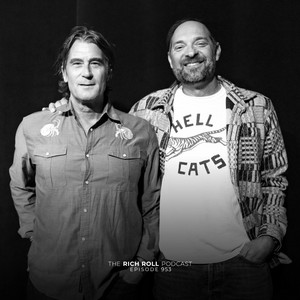
I got news for you.
The holidays are coming.
And with them, all these questions kind of start swirling in our minds about what we're going to give people that we care about.
And honestly, it's really hard because most gifts just end up forgotten somewhere.
But the gifts that actually do get used are the ones that make someone want to use them.
And Ahn does exactly that with their incredible line of high quality running and hiking gear.
Shoes like the Cloud Ultra for trails, the Cloud Runner 2 for roads, the Club Hoodie for recovery days, hiking stuff for exploring nature and the mountains, and even accessories like performance socks caps, hydration packs, backpacks and travel bags that work as amazing stocking stuffers.
So here's the thing.
The real gift isn't the gear.
It's what becomes possible when the gear gets out of the way.
Those early morning runs where your mind just clears that trail you've been meaning to hike, that runner's high, or that silence at the summit when everything just clicks.
Movement changes things.
And sometimes all someone needs is the right gear to make movement more fun, more stylish and more accessible.
So move yourself on over to on.com slash richroll to explore my picks for holiday gifts.
After hosting more than 900 episodes of this podcast, I have noticed a pattern.
And that pattern is that the highest performers don't buy into the latest trendy hacks.
Instead, they obsess on what actually works, which is always the unassuming basics.
And there is nothing more basic than hydration.
But here's the kicker.
Your body can't hold on to water without the right minerals.
Without them, water is just like this temporary visitor.
But Element has cracked the code on this, which is why I've been using it religiously for years.
Zero sugar, no artificial junk, just sodium, potassium and magnesium in the ratios that actually work.
And look, I'm not exactly crushing ultras right now, healing from this surgery, but in some ways I need it even more.
In order to properly recover, I need to treat my body even better than ever so it can heal properly and expeditiously, while also maintaining my focus and my energy levels to rock out all of these podcasts.
Write a book, be a husband and a dad.
And I gotta say, Element keeps my brain firing in a way that water alone can't.
Their new sample pack features their most popular flavors.
Citrus salt, raspberry salt, watermelon salt, that's my favorite, and orange salt.
Eight stick packs total, perfect for finding your favorite or sharing with a friend.
Get a free eight-count sample pack of Element's most popular drink mix flavors with any purchase at drinklmntcom.
Find your favorite Element flavor or share it with a friend.
Thank you.
We're going to begin by asking and answering three specific questions.
The first question is, how do you deal with family holiday gatherings?
I think that's something that everybody is sort of contending with right now.
Hopefully we can provide some guideposts to help navigate that.
The second question is around hitting rock bottom.
What is that?
What does that mean?
What do you do if you are finding yourself in that situation?
How do you emerge out of it?
And the third question is around setting goals and resolutions for the new year, because I think that's something we're all kind of thinking about right now.
After that, we're going to talk a little bit about Adam's brand new book, his novel, American Tiger.
Very exciting out this week.
That sort of conjures a discussion around the relationship between dads and daughters, something I'm familiar with.
Without further ado, let's just get into it.
We're recording this on Monday morning after the Thanksgiving holiday.
So by the time this goes up this Thursday, people are in the aftermath of that experience and they're thinking about the impending upcoming holiday season, of you know whether it's Christmas Hanukkah, et cetera.
How do I make that the best version of what it can be, knowing that I'm going to be immersed in a family scenario, and that tends to be fraught?
Certain things kind of happen every single year.
Can it be different?
And how can I take care of myself in the midst of all of this?
And I think the first thing is that you need to go in with a plan.
You can't just roll the dice and hope for the best and think well, maybe it'll be different this time, even though every single year it's kind of exactly the same.
It's a carbon copy of what happened the year prior.
Obviously, the definition of insanity is sort of doing the same thing over and over again and expecting a different result.
So if you want a different result, make a plan in advance.
How are you going to handle yourself differently this time?
Because the thing is.
I guess the first thing you have to really get your head around is your essential powerlessness over this family dynamic.
Like, you just cannot change or control other people's behavior.
And you have to get to a place of acceptance around that and relinquish your attachment to people behaving differently than they always do and make peace with that.
So there's that acceptance piece, that powerlessness piece.
And, in terms of the plan, I think that that begins with staying out of expectations around other people's behaviors, like this expectation that they are going to behave differently, and making the plan really about controlling the controllables.
And there are only a very few things that you actually can control, which is your behavior and your either response or reaction to what's happening around you.
So it really boils down to you.
And I think we all go into these family dynamics thinking about the other people, like I hope they don't do this or I hope they don't do that.
Or if they say that, then it's all going to go crazy.
And it's very extrinsically focused, rather than accepting the reality that the only thing that you have power over is yourself, right?
So the plan has to be around self-care.
It has to be very self-focused.
All you can do is alter your own behavior, how you act.
And so that really has to be the focus.
In the context of all of that, I think you need to set boundaries.
Just because you're going into a family scenario doesn't mean that you have to be available all the time or just be a sponge for everybody else's behavior that tends to enervate you.
It's fair to set those boundaries, to limit your exposure, to know when to step away, to really know where the exits are.
Like you know, like where, how can I you know if I need to get out of this situation because I'm going to behave badly if I stay in it or I'm going to?
You know, basically it's going to, it's going to be deleterious to my mental health.
Like having a plan for either leaving early, knowing where the exit is.
And not necessarily having to be there all the time to attend all of the gatherings.
Maybe if you're used to going and staying in the same house as everybody else, you know.
Get a hotel if you can, if you can afford that.
Things like that where you're creating some separation and some boundaries.
And that can be scary if you have a habit or a practice of always doing things a certain way because you
That might ruffle some feathers.
You could get resistance for that.
Oh, you're going to do that?
But it's like you have to really...
Stand in your strength with that and let people react how they're going to react.
And you only have to do it once.
And not try to control that.
You do it once, then every year you're the hotel guy.
That's okay.
Let people be mad or whatever.
It's really about like how you're comporting yourself.
Yes.
You know, make sure you're exercising.
Make sure you're taking that moment in the morning for meditation.
Get good sleep.
Like have a breath work practice so that you can keep yourself calm.
Because I think...
The superpower throughout this whole dynamic is neutrality, like extreme equanimity.
That is the goal.
That is the superpower.
No matter what is happening around you, can you remain calm, neutral and equanimous and non-reactive?
The meditation, the sleep, the exercise, all of these things by you.
That Just extra little moment where you can pause before reacting so that you can respond more consciously.
And what comes out of your mouth, how you behave to whatever's going on around you, really dictates the nature of the experience that you're going to have.
And I think that's super important.
Maybe don't drink.
That would be good.
It never seems to make anything better.
You think, well, if I have a few drinks, then I can calm down.
But then your filter is off.
You end up saying the thing you wish you didn't say.
And that just sets a chain reaction off of all kinds of insanity.
So it's really about your relationship with yourself.
One technique that I find extremely helpful in these situations look I've, I have a lifetime of history.
You know lifetime history of like dealing with these sorts of situations.
And even specifically recently, with my mom, you know, succumbing to dementia and having to put her in a memory care unit, like everything, is extremely heightened right now.
And I've just been very focused on how can I be as calm and non-reactive as possible, no matter what is happening.
And the technique that I deploy I've talked about this on the podcast, I think, but it's probably been a long time is just to pretend like everything that's happening is a tv show that you're watching.
Like you can literally like draw, like you know, around your peripheral vision, like like oh, what if it's?
This is just a screen and these are characters in a drama or some kind of weird sitcom, and you know, when you're watching a television show and people are doing crazy things, you don't.
You don't get agitated or stressed or anxious about it.
You, it's sort of entertainment, right.
So can you adopt that stance where you feel like oh, this is just a, these are characters in a show that i'm watching and i have a choice, like i don't need to react to this or personalize everything, because people are just behaving as they always have and they're going to do what they're going to do, and so it's really just up to you how you're going to interact with all of that.
The second thing that I would suggest is, when you're in that moment of agitation, is to remind yourself this is something Julie tells me all the time.
That's very helpful to me.
Everybody is right from their perspective.
So, based upon their lived experience, their information silo, their friend group, whatever it is their worldview that you disagree with, is informed by their personal set of experiences.
And had you lived their life, you would probably see the world the way they do.
And so understanding that everybody is right from their own perspective helps to depersonalize it as well.
And just allow them their experience.
Allow them their opinion.
You don't have to correct it.
You don't have to tell them why they're wrong.
You don't have to prove a point.
And you certainly don't have to win an argument.
I mean, if there's anything to be gleaned from these experiences, if you have a history of them, is that that's pointless?
There is no winning in this situation, but there is an opportunity to be compassionate.
And I think when you struggle to And be in that state of neutrality, like just trying to find a way to be compassionate to these people that you love,
And part of why it's so heightened is because you do care for these people, right?
It's the love that is the flip side of the anger and the resentment.
Like all of those things are informed by each other.
And so adopting this sort of wall of pleasantry and just, you know, letting it all wash over you like a waterfall and being non-reactive and being neutral and being compassionate, I think is... is really the goal here.
And these are all obviously things that are easier said than achieved.
And that's why it's a practice.
But and this is why you know, this is one of the reasons why meditation is such a crucial tool.
Mindfulness practices, breath work, all of these things that can ground you in the present moment and fundamentally lead you to live a more non-reactive life.
So disabusing yourself of The idea that you can control other people, allowing them to have their experience, understanding that they're right from their perspective, trying to find some kernel of compassion and focusing on that, being non-reactive and just adopting this neutral stance.
It's like being a lighthouse.
Like we've talked about this Adam, like just stand there in your strength and emit your beam and be completely detached from whether or not anybody responds to that beam or needs it.
And no matter what is going on around you, no matter how tumultuous the sea is, you remain unmoved in the midst of it.
That's what I kind of I try to do in my family now is I always talk about like finding cruising altitude.
Like to me, it's like staying in cruising altitude.
It doesn't mean be detached or to be, um, to kind of not connect.
It's more like you want to keep yourself in that equanimous state like where you're you're, you're going to be the non-reactive person.
You're going to be the one bringing positive energy.
And I think that that like That is the key to kind of making sure you can control the controllables.
It's the only thing you can control.
What about the people, though, that like aren't worried about the conflict so much?
They're worried more about they're prone to people pleasing.
They're prone to kind of going along with the flow to their own detriment.
They know it's not good for them.
They know it doesn't feel right, but they don't know how to pump the brakes.
They don't know how to kind of assert themselves and create that space.
They don't know how to achieve cruising altitude in a big group of people.
What would your advice be to them?
Yeah, I mean, that's a tricky one.
If you're habituated to accommodate everybody out of fear that you will be marginalized or judged for standing up for yourself, that can be a pernicious trap.
It's something I'm very familiar with as well.
I think when you telescope back from that, The first piece is understanding that all of the accommodation and the people pleasing comes packaged with this idea or this illusion that that that makes you a good person.
You know, it's like I just want everyone to be happy.
And so if they want me to show up, I'm going to show up and I'm going to do all this stuff and I'm going to take the path of least resistance.
On some level, there's value to that, but fundamentally, that is a betrayal of the self.
Like you have allowed your own self to be sublimated out of this idea that if you are just accommodating enough, that everyone will be okay.
And there is a narcissism to that on some level, because fundamentally you're still attached to this idea that you can control other people's behavior and emotions.
If you're just pleasant enough, if you're just accommodating enough, then everything will be fine.
And so, again, you have to disabuse yourself of that degree of control over other people's behavior.
And ultimately, the best thing for you is to honor yourself by setting those boundaries that you need so that you can show up as your best self in those limited circumstances.
And so it's actually a service that you're providing to everyone, because if you allow yourself to be a pinball and just bounce around where everyone else wants you to go, you're going to be frazzled, you're going to be less grounded and you are ultimately going to end up more reactive, so It can be difficult to say hey, you know what?
I'm not going to stay at the house this year.
I'm going to stay down the street in the motel or whatever.
That's a pattern interrupt that may very well ruffle some feathers.
I'm just using this as an example.
But you then have to just allow them to be upset.
I mean, you can say, listen.
I really want to show up as my best self and I just need to do this.
Like, you know, I'll be at all the things.
Don't worry.
You know, I can't wait to see all you guys.
But I'm just going to be, you know, I'm going to stay down the street this time.
And there might be some, you know, reaction to that that you could predict or whatever.
But standing your ground and just allowing them to have their reaction to that, without buying into it.
Uh, that can be hard, but i think you just you have to do that and then you show up and then if you're your better self or whatever um, that all gets forgotten and you've interrupted the pattern and then next time it's easier to do those things.
So yeah, it's hard to overcome the people pleasing instinct, the accommodation impulse, but understanding that that is on some level a self-betrayal and it is a narcissistic impulse as much as it is a communitarian one.
You know what I mean?
Yeah.
I think understanding that makes it easier to take that leap and you can start with something small.
It doesn't have to be some big, drastic thing, but i think it would also avoid making proclamations about it.
You know, like i'm doing this for me.
You know no, just like quietly.
You know like you know, create those little boundaries.
Or you know, make the irish exit.
You know like, just the irish goodbye.
Like you don't have to stay at the party to the very end.
You can be like i need to get back.
Okay, i'll see you guys tomorrow or whatever.
Um, just do what you need to do for your own self-care, and the byproduct of that is not only a better experience for you but a better experience of you for the people that you care about.
I love it.
Can i add two things clean up and get in the kitchen early to cook.
Both ways, you can kind of be a part of the group and you don't have to get caught into any conversation.
Yeah well, that that's a.
I mean, that's the other big piece here, which is be service-minded about it.
Don't go into this like here's what i'm going to get out of this and they're going to finally see me for who i am and i'm going to make sure that they understand that.
Like you know, i need to be respected.
Like, forget about all that.
Like no, just go in.
Like how can i be of service?
How can i contribute?
Oh, i can do the dishes.
Hey, do you need help here?
Yeah, and you can use that as a way to extract yourself from the tricky conversations and situations.
Immune health is one of those things that most people don't really think about unless they're sick or getting sick.
But the real game is promotion played in the daily choices you make when you're feeling just fine.
And that's my approach with Peaks Daily Radiance Liposomal Vitamin C, which I've been taking as part of my morning ritual as well as part of my surgery recovery.
Because vitamin C has antioxidants, of course, which help with collagen production, which is not just for skin health but also wound healing, which is key for me.
Well, among other things, vitamin C reduces inflammation and pain, obviously important in my recovery process.
And what makes this product different is that Peaks liposomal technology protects the vitamin C from your stomach acid.
So it actually gets to your cells intact.
Most vitamin c supplements break down in your digestive system before they can even do any good, and when i switched up, the difference was actually pretty noticeable.
It's got vitamin c plus black elderberry, which supports gut health, and that matters, because 80 of your immune system lives in your gut.
It's buffered, which means it won't bother your stomach.
And it tastes like berries instead of something medicinal that you've got to force down, which obviates the palatability problem with most liposomal products.
And the single serve packets make it easy to take with me.
Get 20% off for life and explore all of Peak's pure ingredient products at peaklife.com.
That's P-I-Q-U-E life.com.
There's this thing that happens in the supplement space where the second something goes mainstream the market gets flooded and quality tanks creatine, sort of going through this right now.
Everyone finally gets that it's not just for gym bros, it's for brain health and recovery and longevity.
But now you've got all these brands pumping out gummy versions that are essentially just candy.
Momentous took a different approach, which is one of the reasons why I love them and why I partner with them.
They spent years, not months years refusing to release a chewable until they could do it without compromising.
And the result of this is Momentous Creatine Chews which meets what they call the Momentous Standard.
The same standard, I might add, trusted by Olympians and pro teams.
Each chew delivers one gram of pure, pure creatine monohydrate single source from Germany, NSF certified for sport, of course, and without any weird artificial stuff.
Now you can keep them anywhere, which removes all the friction that comes with powders and shakers.
So head over to livemomentous.com and use code RICHROLL for up to 35% off your first order.
Look, I've put my skin through a lot over the years, decades in chlorinated pools.
Just way too much Southern California sun basically zero thought about skincare.
And it wasn't really until I hit my mid-50s that I finally kind of woke up and started taking care of my body's largest organ for the first time, which began with On Charge and their amazing, award-winning Red Light Face Mask.
It's equipped with optimal wavelengths of red light at 630 nanometers and near infrared at 850 nanometers, that work at the cellular level to help promote youthful, glowing skin, smoother skin texture and more even-looking skin.
And the best part?
The Red Light Face Mask fits right into everyday life.
Just 10 to 20 minutes a day, totally portable, suitable for all skin types and backed by a one-year manufacturer's warranty.
But Bond Charge isn't just about your face.
Their sauna blanket has been great for recovery.
It's like having your own personal sauna that folds up when you're done.
It's currently the Bond Charge holiday sale, so you can save a massive 25% off.
Just head to bondcharge.com and your 25% off code will automatically be added to your order.
The sale will end on the 31st of December 2025, so hurry and don't miss this massive chance to save big on your favorite Bond Charge products.
Rock bottom.
I heard you on Mel Robbins' podcast talking about hitting rock bottom and you said rock bottom is what you decided to be.
How do you explain that?
I always thought of it as kind of the place you wound up and it was really, truly the end.
But I know that you and I have discussed it a bit.
How would you explain kind of this this gradient rock bottom the way you see it?
Yeah, I mean, you know, rock bottom is a phrase from from the world of recovery.
And it basically means that moment when you're sick and tired of being sick and tired and you're finally ready to give up what you've been doing and try something different.
And I think there is this idea that rock bottom is an objective event that is defined by external circumstances, like when you get fired or you become homeless or name your whatever right.
Like that.
It is this objective thing that happens when suddenly you wake up and you realize like you have to change your life.
And that's not really what rock bottom is.
Rock bottom is a subjective experience that is defined by this sudden surge of willingness to do things differently than you have before.
And you know you and I have talked about willingness before.
Willingness as this sort of you know, force of the universe that descends when it wants to.
You know it's.
It's not something you can just decide to have, but rock bottom is the defining aspect of rock bottom is that it it?
It announces the arrival of willingness that you didn't have prior.
It's not a one-size-fits-all thing.
It's a decision, not a disaster.
And it's this incredible lever or launchpad for transformation, because with that willingness you then have this sudden swell of energy to make changes that previously you were unwilling to.
So rock bottom is a moment of taking responsibility and It's a decision, and it's a lever for transformation.
And if you think of it as an elevator, as a metaphor, like if your life is going in the wrong direction, like your elevator is going down, it could be drinking, it could be anything right.
At any moment, you can step off the elevator.
You don't have to go all the way to the ground, wait until it like, falls all the way to the bottom and hits the bottom right.
You have that opportunity to step off.
But rock bottom is really, you know, before it hits the bottom, that moment when you decide okay, now's the time to step off, because that elevator can always go lower.
Like just because you've hit rock bottom doesn't mean that there isn't a lower moment for you.
And so you see-
For example- It's mythologized, though, as the absolute bottom.
Right, like this is the absolute bottom.
And it never is.
It could always be worse, right?
And so what you see, for example, in AA are, you know, like low, they call them low-bottom drunks.
Like these are people that are, I mean, dude, it got, it was so bad and dark.
You know what I mean?
Yeah, it's just like- From the back alley.
It was just, yeah, it was rough.
You know what I mean?
And you're like, wow, okay, well, they finally turned it around.
Amazing.
And then you have teenagers who, at like 17-, get sober you know where, you know like their life just wasn't that calamitous.
They just had their own rock bottom moment where they realized like i can't live this way anymore.
And um, you know well in advance of their life going completely sideways like make that decision and and course correct.
So yes, it is a subjective experience, but fundamentally the way i define rock bottom is it's that moment when the pain of your circumstances exceeds the fear of finally doing something different.
Again, meaning that rock bottom is when you find willingness which gives you the power to do things you previously couldn't or wouldn't.
And, in my own personal experience, I had much lower moments than the day that I decided to check myself into treatment center, the only difference being that that day was the day that I was suddenly willing to do what the day before I wasn't.
It's defined by this decision that you make, this decision empowered by willingness.
But rock bottom, we also look at it as a negative, right?
Oh my God, he hit rock bottom, like how terrible.
But These things are gifts, because when you hit your subjective rock bottom and you're graced with that level of willingness to do something, otherwise you wouldn't, that is this incredible lever for change and transformation.
And I think we all – you don't have to be some gutter drunk to have a rock bottom.
Everybody in life has rock bottom moments.
I don't think you can escape life without them.
And if you're in such a moment to recognize it as – a divinely inspired experience, custom created for your change and transformation, like it's almost something you should have reverence for, because it has this potential energy to shift your life in magical ways.
And when you can recognize this like oh, you know this, this terrible situation that i'm in, and i know that i've got to make this change, and now i feel like i really want to make the change like like, have an awareness of that, like be present with that, Because I just know in my own experience, like my various rock bottoms, when I look back on them, they're such gifts because they course corrected my life and set me on different trajectories that I would have never explored had I not been in those painful experiences.
You almost have to depersonalize it in a way.
But it's hard when the volume is so loud in your head and the pain is so heavy.
So it's like, It would be helpful to have someone kind of reminding you of that.
It's hard because in those – like the true rock bottom moments, you're alone in your head.
You're like – at least my experience is like you feel alone in your head.
And so how do you depersonalize it and turn down that volume and remember to like have – reverence for this thing.
That is so painful at that time.
You know it's an interesting uh balance.
I mean it's.
It's very difficult.
You know, when you're, when you are in that much pain, you're paralyzed.
Like the idea that like oh, this is the moment where you're going to change and you're going to be all motivated and inspired, is delusional.
Right, like you're, you're completely hamstrung and paralyzed.
Uh, because it is, if it truly is, like your subjective rock bottom, like you can't see your way out of it.
So the lived experience of it is very disorienting.
It's only in retrospect when you can actually see the merit of the whole thing, of the whole enterprise, because there is a hopelessness that that kind of descends upon you.
That is, that is the flip side of the willingness.
I think all i can say about that is that, just like hearing that, like if you just hear this, it instills a little bit of hope that you know there will, there can be a shift um, And you don't have to do anything immediately.
Another kind of like annoying AA catchphrase is like, this too will pass.
It's just like when you're in it, you're like, fuck off, right?
You don't understand my life.
You don't understand how difficult it is for me.
That's not helpful.
And I think in those moments it's about trying to identify the smallest thing that you can do in that moment to leverage that slight degree of willingness to move your life in a little bit of a different direction.
And it can be the tiniest thing, but you have to like plant those seeds and sow them.
And ultimately over time with a great degree of patience, that's really what moves the needle.
I love it.
So rock bottom is really just Like the part of the crag where you get the foothold and you can keep climbing, versus like the actual bottom of the rock wall.
It can be the bottom of the rock wall, but maybe you arrest the slide earlier and you can start climbing again.
If you're in pain and you're wondering whether this is your rock bottom, you can make the decision that it is.
Because I think it's easy to say, well, it could be worse.
Like my friend over here, like he lost everything and his wife.
You know, there's always somebody who is an example of why like, whatever you're doing is not that bad.
You know, like I can keep doing it.
Like I didn't lose my job or I didn't, you know, like they haven't repossessed my car or whatever it is.
So that can be an excuse to keep, you know, perpetuating the bad behavior.
Um, but if you know, like I think, in our heart of hearts, we all know when we're off track and we make these excuses uh, these rationalizations, to give ourselves permission to keep doing the thing we know that we shouldn't be doing anymore.
Right?
And so that's where the decision part of rock bottom comes in.
If you are in pain and you have that spidey sense that you're off track, you don't have to stay on the elevator and keep going down until you're at that lower level where your friend is, or whatever.
You can get off.
And so...
While willingness can come in these lightning bolt bursts where you suddenly have this swell of energy that you didn't have before.
I think to some degree or another, we always have a small amount of willingness.
So it's about identifying the willingness that you have and how to put that into action, to make a different choice in those moments.
I like it.
We are our own worst enemies, aren't we?
100%.
Good to know.
Just remember that.
This is the human condition, is it not?
We are, yes.
This is it.
We have a great degree of clarity when it comes to other people's behavior and what they should be doing differently.
And when it comes to ourselves, we are just unbelievably myopic.
We see almost nothing.
It's interesting.
Yeah.
Almost everyone's an unreliable witness.
Yeah.
You know, very much so.
But you know what happens though, when we're in these moments even if there's willingness, when we're dealing, we're in the storm is that often we're ashamed?
Right.
We're ashamed of how we got there.
We're ashamed of where we are. um we're uh the humiliation is such that when we even look in the mirror i'm speaking personally i remember looking in the mirror and and seeing not seeing something that was positive like i remember seeing someone who was going to be bereft forever you know and a lot of that was shame and i know how toxic it is um how do you recommend people kind of turn the dial down on the shame you know like how does how do you get to the point where willingness is louder than the shame yeah That's a great question.
I mean, I think that is the common experience, right?
We're so embarrassed, we're so ashamed of our behavior, and it's just easier and better to keep it all quiet and to ourselves.
Obviously, that keeps us stuck in the problem and divorced from the solution.
These are all socially constructed ideas, though.
The shame and the embarrassment are a function of social constructs that threaten our standing within our group, within our community, within our village.
And if people really knew what I was like, I would get exiled.
So I can't tell anyone and I'm going to try to figure this out by myself quietly, or I'll just continue to hide from everybody.
But all of these things are at cross-purposes with, And I think the way forward here is to understand that shame can't survive the light.
Like, shame thrives in darkness.
Like, it wants you isolated and alone.
It wants that secret locked up.
Because once it's exposed, shame can't withstand sunlight, right?
And, as scary as it can be, to raise your hand and ask for help or find somebody to talk to, that really is the solution to disabuse you of the shame and the embarrassment that keeps you rooted in the problem.
And so my suggestion is to find somebody that you trust, that you can talk to.
That could be a therapist.
It can be a grandfather or an uncle.
It could be a stranger.
It could be a 12-step meeting.
There's many, many different modalities and avenues to explore with that.
But I think you have got to find somebody That you can communicate with and that you can open up to honestly.
And that's the first piece.
Like there is a catharsis when you finally say out loud this thing that you're afraid to say to another person and you have that experience of of thinking that that person is going to shun you or judge you.
And then, when they accept you or they respond to what you share with them with compassion, that is a first step towards emerging out of the shame spiral that keeps you stuck in the problem.
And once you have a confidant, then you have an accountability partner and you can begin the process of constructing a path, you know, out of that uh, out of that hole that you've dug for yourself.
I like that that's, that's good.
I have so many examples of this.
Uh, you know, we almost had our house foreclosed on, i've had cars repossessed, i've had my credit destroyed.
You know, like financially uh, you know so many things to be embarrassed about and ashamed about as a, as a grown-ass man.
Uh, and in the addiction recovery context, like you know, countless examples of this.
I mean, i remember relapsing in Hawaii after I think I had like 13 years of sobriety.
At the time it was after Ultraman 2011 didn't go well and I kind of made ultra endurance my higher power and I had a slip and I'm so, you know, wrought with to this day like it's still mortifying to me, you know, and in the moment I of that experience, the shame was like so overwhelming, but I had enough experience in sobriety to know that I had to do what my friend, Scotty G, says you do in these situations, which is, if you're gonna eat crow, like eat it hot.
You know like meaning if you, you know you gotta deal with shit right away.
And you know, thanks to my family and Tyler who's here today, like I was in an AA meeting the same day as the relapse that evening and i had to pick up the phone and call my people in recovery and tell them exactly that what had happened, which was it, you know, a very ego deflating thing to do as somebody who was sort of considered himself like a, somebody with a lot of experience in sobriety, who could like go to the rooms and, you know, always knew the right thing to say, and ultimately all of this made, you know, my program all the more stronger because i needed that ego deflation.
And I needed that reminder that there is no cruise control.
And I'd taken my foot off the gas on my program and I had to pay that price.
And that was a life lesson that I needed to learn and ultimately one of great value.
But I was only able to course correct because I was willing to pick up the phone and deal with the shame, the shame emotions right.
By like just exposing them to the light as quickly as I could.
Um, so I think that would be, you know, one example of that.
I mean that was all heightened by the fact that I already turned in my manuscript for finding ultra, which was this story of like addiction recovery, and I couldn't make any changes to it.
And here I had, you know, and then here I relapsed, you know, it was just like, so it was, I was so completely just laid out from that it's almost like something an enemy would do to you yeah like uh what is that called oppo oppo yeah like opposition researchers your opposition came strong yeah um these are not easy things to do.
You know, I don't want to minimize how the the degree of difficulty um that they, that they present.
And so that's why I'm always trying to boil things down to like what is this the the the smallest kind of thing that you are willing to do, and figuring out how to build upon on those tiny little actions.
You know it's funny, cause like there you do, looking back on a, on a, going through something horrible um, you do remember like those little snippets, those little moments where you do see clearly what's happening and you don't just keep tumbling forward, but then you often do.
I mean, i remember, like one one time when one of my worst moments it was like i was going through divorce i felt horrible and uh, i got pulled up.
My buddy was driving me home and we pulled off the freeway.
This is like you think, there's always someone worse off.
We pull off the freeway and there's a guy panhandling, like a guy's wasted, who knows on what high or drunk, and he's like panhandling and he kind of looks at me, sees me and he peers into me and he goes it'll be okay, bro.
Yeah, and that's what i knew.
I wasn't carrying it well, i was not carrying this divorce well, but like that moment didn't, it didn't shift anything for me, you know.
But it could have been, it could have been one of those moments where you're like wait a second.
You know it's not as bad as i think it is um, but it didn't really do it, but like it's just a uh wanted to share one of my rock bottom.
I guess it wasn't rock bottom, i still had to tumble a little bit.
But yeah, i mean, when i, when i think of my, you know, kind of descents into darkness over the years, The rock bottom moments are not the darkest, most dire moments.
Right.
You know, I like speaking of divorce, like I had a marriage that ended on the honeymoon, you know like, and then I had to come back and like deal with the aftermath of that.
Like I didn't want to.
I didn't, I was so deeply, and then I, and that was before I got sober and I had to continue drinking for i can't remember how long, like six or eight months or whatever, because it was.
I was so emotionally debilitated by that that there was no, even though that was really like the nadir of like my career in alcoholism.
I had to continue to drink until i had gotten over the immediate aftermath of that before i could kind of contend with the problem that created it in the first place.
Well, speaking of kind of getting better and and kind of building back.
Uh, We're almost to the point where resolutions are being hatched.
Maybe they're already being hatched.
And so the question, this third question is kind of around.
You know, how do you think about New Year's resolutions?
What are some of the tools that you use kind of going into a new year?
And if you have any goals for 2026?
Yeah.
I have evolved my thinking on this.
I mean, I'm certainly somebody who believes in setting goals and having a strategic approach for achieving them.
I've moved my life forward in many ways by dint of this process, but the older I get, the less interested I am in setting specific goals and focusing my life on achieving them.
And I'm more into the being of it all, in the allowing and letting the universe direct me.
Not that I've transcended the need to set goals and work towards them, but I think I hold goals a little bit more loosely.
And I'm more focused on direction over goals.
I think you can have goals, work towards them.
Either you achieve them or you don't.
But the more important piece in all of that is whether or not you are on a trajectory or on a direction.
So whether or not you achieve that goal, you maintain that trajectory.
Like you, you've set a course for your life and you're kind of un unaffected as to whether the goals along the way are satisfied or not, because you're unwavering in that kind of like focus on the direction of your life.
And I think part of that comes with age and experience.
But I've built my life on the shoulder of setting goals and achieving them.
And I think it's a worthy exercise at this time of year specifically to really reflect deeply on what you want for your life in the coming year and maybe in the coming decade.
Because, as I've said many times before, I think we're all better off thinking of our lives in decades over than years.
I think we wildly overestimate what we can achieve in a year and underestimate what we can achieve in a decade.
And that's part of why things like New Year's resolutions trip us up, because we have an impatient, unrealistic perspective on what we can achieve in a certain period of time.
And we get frustrated when we don't see immediate progress and we allow the externalities of all of that to derail us from just maintaining, like I said before, like a certain direction.
Goals are important.
You can't improve what you don't measure.
And if you're going to set a goal, you should use that SMART acronym, meaning that they should be specific measurable achievable, relevant and time bound.
That's the way to really establish a goal and then work backwards from that time bound moment of achieving it to create all the steps that you're going to need to travel in order to get there.
Those are all good things.
But I think...
What most people don't do is reflect deeply enough on the goal that they're setting for themselves.
I think we set goals reflexively.
I want to lose a little weight.
I want to run a marathon, or oh, I want, I want to make this amount of money or whatever it is like, whether those are impulsed by the culture or our friend group.
I don't know that we spend enough time doing the interior work to try to really uncover the best goal for ourselves.
And that's really a function of how invested you are in having an interior life, right?
So...
That comes with Asian experience also, and there's nothing wrong with setting a reflexive goal and achieving it, because anytime you achieve a goal, you're going to engender more self-esteem for yourself, and that's going to empower you to set more ambitious goals, and there's a self-perpetuating aspect to all of this.
But I think a lot of people set the wrong goals for themselves and then when they peter out they feel bad about themselves without really understanding that maybe it wasn't the right goal for them to set for themselves in the first part.
Spend some time thinking about the values that are most important to you and how this goal that you're contemplating relates to that value.
Because the best goals are ones that are intrinsically motivated, obviously.
And to the extent that your goal is being impulsed by something extrinsic that's going to make it easier for, Or if you achieve it and then afterwards you feel like wait, I don't feel any different.
Right, especially if it's a material goal is going to heal that inner child or fill that void in your soul.
You're going to quickly realize when you achieve it that it doesn't.
And so, yeah, that can precipitate an existential crisis, right?
Next thing you know, you wake up at rock bottom.
We don't want that.
But setting goals are good.
Resolutions are fine.
I think it's something like 80% or 85% of people abandon them by mid-February.
And so why is that?
Is it the wrong goal?
Is it that they were overly ambitious?
Is it that it really wasn't tied enough to their values to make it meaningful enough, such that when there's friction in life, you can't show up for it?
I mean, there's so many things that play into this. uh so that's why again like i'm always coming back to direction like what is the direction you want your life to go on and what are the things that you can be doing every single day that are moving your life on that trajectory that to me is much more important and it goes back to thinking about your life in decades rather than years if i don't lose this much weight by this time or i can't blah, blah, blah.
These things become less important when you're like yeah well, I didn't like exactly do all the things that I thought that I could in the first six months, but like I'm on this path, you know, and every day, like everything in my life took at least a decade, you know, before it started to bear any kind of fruit.
It takes a certain resilience to play the long game.
But if your values are aligned with whatever that trajectory is, then it just becomes who you are.
And it's less about this burdensome thing that you're always having to move mountains to make time for.
Yeah.
I like that.
Because first of all, the year is an arbitrary concept anyway, right?
It's kind of an abstraction.
So then, if the year doesn't really matter and the goal is actually, you actually just want to be better.
You want to get better.
You want to learn more.
You want to love your life more.
That's basically what we're talking about, because goals are, you're just hurtling yourself against the modern world in a way.
It's like this abstraction.
You're just trying to.
I'm i want to achieve this goal because you know i want to see if i can do it.
It's like an experiment and that's fine.
Yeah, that's good, there's value in that.
But sometimes, if it's like i'm going to achieve this goal, you're putting blinders on, because every time you you decide to pursue a goal, you're you're saying yes to one thing and you're saying no to other things.
Right, like you have to say no to a lot of stuff to achieve a goal right yeah, and so What can happen is that you're saying no to things that maybe you actually should say yes to.
And I think when you have those blinders on, you're so focused that sometimes you can't see the forest for the trees.
And the older that I get.
It's sort of like what happens when you hold your goals a little bit more loosely, so that you can pivot when needed.
Because sometimes...
I know that in my life, like I've started out on a goal and then I'm like oh, that's not really what this is about.
I think what I need to be doing is like going over here because I'm feeling this way.
Or, you know, the world is kind of showing up for me in this way that I didn't think that I really, you know, like I didn't really think that my life was going to go this way.
But like this seems to be where there's a lot of energy right now.
Maybe I should pay attention to that.
And if you're so focused on your goal, you're going to miss that.
And A lot of these great things that I've experienced in my life are because I had the awareness to allow myself to hold on to the goal a little bit more loose enough so that I could be aware of that and, like you know, pivot or move, make these little micro adjustments in my life to move in different directions.
And that's about you know being present in your life, like having you know the tool of awareness to you know read the energy of the room, read your internal energy, pay attention to you.
Know what's working and what's not.
Because if you're pursuing a goal and you're just hitting roadblock after roadblock after roadblock.
It's like Matthew McConaughey and his green lights, right?
Like where are the green lights?
Like when you're aware of where the green lights are and you're like I'm going to go over here because everything's flowing, you know over here, even if it doesn't feel like that's where you should be going.
Maybe you just don't know yet that that's the better direction for your life.
And so I think acclimating yourself around the green lights is anathema to holding on or clutching on to goals because you said you were going to do it.
You know what I mean?
So it is this dichotomy.
It's a weird kind of dualism, right?
A yin-yang kind of thing when it comes to goals.
Yeah no, i like that though, like this idea that maybe the goal is to be more present.
Maybe that's your resolution.
I mean it is, it is.
In a lot of ways it's like well, it gets into, you know, it's like okay if i'm gonna like, if i need to make some changes, if i really want to like up, level my life, what are we really doing here?
You know what i mean.
Like oh, i can set a goal and achieve it, but like honestly, all the growth in my life that uh is waiting for me out.
There is a function of moving towards the things that I'm most avoiding.
You know what I mean?
Like avoidance is really the signal uh that is telling you like where your energy should be directed but the thing about avoidance is we avoid it like that's you know we don't like no i'm not going over there i'm going to go over here like we can set goals that everyone will celebrate that are just elaborate ruses to avoid the thing that we actually should be looking at right and so to your point about presence, like if there is a goal, like, well, how can I be more present in my life?
If I'm more present, then I'm more aware of the things that I'm avoiding.
And if I'm present enough, those things that I recoil from and avoid become less threatening.
And I have the capacity to move towards them in a way that otherwise I wouldn't, I think.
And so, yeah, it's almost an anti-goal.
Like, If I'm just present, you're kind of letting go of everything, right?
It's sort of like what if there is no goal and I'm just present with my life and I'm riding the waves of energy and letting life, you know kind of direct me.
So the holidays are awesome.
I think we can all agree on that.
But, you know, not without their irresistible temptations.
Cookies everywhere.
Pie at every gathering.
The sugary fruit thing your aunt made.
And listen, you know i'm not immune uh, but neither is your gut, meaning your microbiome is absolutely paying attention to what's going on.
All of which is why ag-1 matters.
During this extended two-month stretch, you need something to anchor you, and one scoop of ag-1 consolidates your multivitamin, your superfoods, your antioxidants.
This daily health drink takes 30 seconds each, And the NextGen formula is clinically shown to fill nutrient gaps, which is huge when your diet goes sideways for a handful of weeks here and there.
I keep all four flavors around, original, citrus, berry, and tropical.
Cold water first thing in the morning.
Just one baseline thing locked in before everything gets away from me.
And right now ag1 has their best offer ever.
At drinkag1com slash rich roll, you get a welcome kit, a flavor sampler, plus 126 dollars in free gifts at drinkag1com slash rich roll.
I want you to pause for a moment because I want to tell you about my friend RJ.
Now, you might know this guy as the founder and CEO of Rivian.
He's certainly that, but he's really so much more.
He's one of those rare people who actually walks the walk.
I've watched him over many years and I know him to be this incredibly deeply committed person committed to preserving wild spaces while also inspiring people to explore responsibly.
And that's basically Rivian in a nutshell.
Their mission keep the world adventurous forever comes from this understanding that adventure and a healthy planet these are not separate things.
They're the same thing.
Here's what gets me.
Every generation deserves wild places to roam, to climb higher, to run farther, to be changed by the journey.
But obviously that's only possible if we're not destroying those places in the process of getting there.
So yeah, Rivian builds electric vehicles, but really they're building something bigger momentum toward a future where exploration does not come at the expense of nature but actually inspires us to protect it.
It's like Why create the ultimate adventure vehicle if we're not protecting the adventures themselves?
And that's why I'm so proud to align forces in partnership with Rivian.
This isn't just about transportation.
It's about building a world worth exploring for our kids, for their kids and for generations to come.
I remember probably the best resolution I ever came up with for myself was...
I'd kind of gotten out of like my rhythm with nature.
And I think it was January 1st.
I was in coming out of that same divorce part.
I think it wasn't long after that confrontation on the side of the highway.
But I think it was actually it was before that.
It was like several years before that I was coming out of a different breakup and I was like, in this horrible space,
And I decided I just need to go in the ocean every day.
And I hadn't been in the ocean in ages.
This was before my love of the ocean swimming.
So this would have been like end of 2004, beginning 2005.
I hadn't been in the ocean much.
And so certainly not in California.
And so I would just walk from my apartment every morning and jump in.
And that was the thing starting January 1st.
I wanted to do it every day for, I think it was 40 days to see if I could do it.
And that what that ended up doing is sparking my entire journey as an ocean person.
And it wasn't the goal.
The goal was never to become a surfer or an open water swimmer or a free diver or any of that.
The goal was to be in touch with nature.
That was like my resolution.
And looking back, it's probably the most powerful thing I ever did.
And yeah, interesting.
Yeah, I have my version of that.
Like all of the best things that I've done in my life, are not the function of having set a goal to achieve it.
You know, like, my whole career in ultra endurance began similarly.
Like, you know what?
I just want to do things that make my body feel good.
You know what?
I know there's a lot to do, but I'm going to no matter what.
I'm going to go swim or I'm going to go up on this trail in the morning and feel what that feels like.
There was no goal.
It was just a decision to do this thing that I felt compelled to do that made me feel good.
And that set in motion all these other things.
And the podcast.
It was just like Hey, wouldn't it be cool to like?
I was just curious, like let's, let's have a conversation.
Let's see what happens.
And everything that came from it wasn't like I'm going to start a podcast and here's how we're going to launch it.
And in five years, this is what it's going to be.
No, there's none of that.
There was no goal setting to any of this.
I didn't.
Set a goal to like write Finding Ultra.
It happened.
It unfolded naturally out of an act of service.
I've told the story before but, like the best things in life are like byproducts of being service minded and pursuing life with curiosity.
Yeah.
And so I think it's important to contextualize these goals that we set and these resolutions within that framework.
If there's anything, it's like, be curious about your life.
Give yourself permission to do the things that bring you joy.
Reserve judgment and just try new things.
That's a very non, you know, acronym smart, you know, goal.
But, like I think it's quite valorous to you know, adopt that as a general sort of disposition or an ambition for how to think about your energy.
So 2026, what are your goals?
So, like I said, like you know, being present actually, you know, it's like there are these amorphous ambitions like how can I be more present in my life?
How can I be more service minded?
How can I love more unconditionally?
But I think the reason for all of those is the impulse behind all of that is like how can I enjoy this life that I worked hard to construct more, you know?
I mean because i'm always caught up in what's the next thing, or i'm overwhelmed, or there's too much to do, or i lose the joy amidst all the responsibility of it, and it's like it's not this, these are the good times.
Like this is it's not going to get any better than this.
Like it's happening now.
Like i need to find better ways to really enjoy and be happy, you know, in this incredible you know privilege situation that i found myself in.
So that's the big one, but within that, I still have goals and projects.
I'm working on projects.
I have things that I want to do and all of that at the same time.
So I've been thinking about my life in these six-month chunks.
So May 8, I had my back surgery.
And so from May to November, that six-month period, I've just been completely laid out.
I could barely work.
I couldn't do anything.
In terms of exercise, all I could do was walk.
And now, from this past November until May, this next six-month period, I have the green light to resume a modest exercise routine.
So this six-month period I want to focus on returning to a base level of fitness, like sort of getting back not back to where I was, but just rebuilding my body and also completing this book that I've been working on.
And that will bring me to May, which is the one-year anniversary of the surgery.
And then from May to November, I have six months, the next six-month period of time.
And I thought, well, what's in November of next year?
Oh, the New York City Marathon.
Wouldn't it be cool to toe the line at that race?
So, from this upcoming may to november, i'm going to attempt to return to some relationship with running, because i haven't been able to run in many years with the goal of just being able to participate in the new york city marathon.
So it's not like i'm going to go run the moab 240 like.
I just want to experience the ability to run pain-free and enjoy it and and you know be a runner among runners the many, many thousands at the new york city marathon next year.
So that's like that's sort of like my big you know that's a big announcement, it's a pretty practical like.
It's not like that crazy.
But given that you know my surgeon, it was sort of like yeah, i don't think you're going to be running anymore, and like he was pretty, he was not, you know, exactly encouraging.
When i asked him like do you think i'll run again?
Like he basically said you know, there's certain things in your life you've got to retire.
And he kind of bluntly let that hang.
And then, you know, and so I've been sitting with that and I'm like, Well, we'll see about that.
You know, not that I need to go recapture some glories and ultra endurance athlete, but I would like to be able to run again pain free and be able to just do it for the joy of it.
Yeah.
And for no other reason.
Well, I remember what I just saw your recent story on the bike.
I was already inspired by this idea that New York City marathons on your radars is incredible.
Very cool.
Well, you know, it could be a Tommy Riv situation where, you know, I'm just going to walk it.
You know, I don't know what's going to happen.
I don't know what's going to happen.
That'd be cool, too.
You know, I'm hopeful that I'll be able to. be able to run it.
But, you know, time will tell.
Exciting.
OK, so we're talking about this as two guys that have kind of been through a lot and accomplished some things.
But like there's young guys out there, young women who are being fed a line about hustle.
You got to hustle everything.
You got to make some sacrifices to get where you want to get.
You know, you need to shoot for something great.
You need you need to make your mark.
And the only way to do that is is to work hard and start to eliminate some distractions.
And there's value to that advice and they're getting it from all sides now.
It's not just from the parents or from coaches, it's literally every time they turn on a screen they're getting some version of it, because it's kind of gamed by the algorithm, you know.
Acknowledging that that's a thing, how would you then kind of advise uh folks to kind of also incorporate some what you're talking about and with their goals?
Yeah, i mean, i'm of two minds on this.
I mean listen, you're the guy who wrote the goggins books you, You know like there is value in hard work.
Like I have worked very hard to achieve the things that I've achieved in my life.
And I'm very good at compartmentalizing aspects of my life and enduring a fair degree of suffering to achieve the things that I wanna achieve.
And I don't think there's a real shortcut to that.
And if you aspire to do something great in the world and you know, make your stamp, sacrifices involved.
Like there isn't an easy path, like you will have to say no to lots of things and you will have to be pretty regimented about how you live your life.
Like that is just a fact and there's no, There's no way around that honestly.
I say that as somebody who look.
When I was in high school I woke up at like 430 every day to go to swim practice.
I've been doing this for a very long time and playing this long game.
And even within all of that, all of the fruits of my labor took decades to emerge.
And so I think the message that I want to convey is that within this, you have to find a way to make it sustainable and um within the construct of the busy modern life, and it can't intrude too heavily or tread upon the other values in your life that are important, because if they do, it will end up moving you in a direction away from what's really important in your life, or it will just be unsustainable and you'll end up abandoning it.
So when you open up your phone, there's no shortage of like hustle porn videos.
And if you're a young person and you see that it either inspires you or it makes you feel guilty and bad about yourself, and i would imagine that most people have that experience of feeling bad about themselves because they can't possibly live up to the insane you know hustle, porn culture that they're constantly being inundated with, and so that's the flip side of this, like i think that that is doing damage to people, making them feel like if they're not so regimented, you know, down to the like, first of all, all of this is illusion.
These people who are making these videos are not living this way, you know, with the exception of maybe you know David Goggins.
You know, it's like nobody else is actually doing this.
And so first understand that you are consuming a fictitious world.
So these are unreliable narrators.
First of all, not everyone's wired for that kind of.
Some people like David's wired for it or what you know, and you can benefit from adopting some of those principles into your life, but they don't have to monopolize everything, and when they do monopolize everything, they end up blinding you to the other aspects of life that are important and that you need in order to live a fulfilling you know, self-actualized life.
So the important thing is Finding the thing that's meaningful to you, that lights you up, that you have curiosity around, and making a decision to invest your time and your energy around that, and holding on to your timelines loosely or relinquishing them altogether.
Again, it goes back to this idea of direction, like just be on a direction.
You don't have to set these violent goals and like punish yourself if you can't live up to them.
Or create some kind of morning routine or daily regimen that is just superhuman and impossible to sustain for longer than 10 days without falling off the wagon right.
So, what can you devote yourself to that gets you excited when you wake up in the morning?
Obviously, if it animates you, it's easier to stay in it and stay connected to the direction that you're on.
And not everybody has that.
And I think that's another thing that does people of violence like well, i don't have a passion, or like i don't have that thing that i'm excited to wake up in the morning and go after, and like chase, if you don't, that's the thing that you feel guilty about.
But the only way to find that is by engaging with your curiosity, and i think there's some tools that we could talk about that might be helpful to people who are like well, i don't know what my goal should be, or i don't know what gives myself my life meaning, or i feel like i don't have purpose.
It all goes back to investing in your relationship with yourself, like having a healthy dialogue with you.
Know your interior right.
And you know we can talk for hours about meditation and mindfulness practices and the like, but even just physical exercise, anything that connects you to your body and gives you the time and the space for your unconscious mind to wander, where you can reflect,
But I think the real, the sort of principled and most helpful tool that I have found for creating clarity amidst this type of confusion is the practice of morning pages.
And this is something I actually Tim Ferriss tweeted about it the other day, saying like if there's one thing you can do, like morning pages, just like vomiting, you know, three pages every morning for a couple minutes can change your life.
And I retweeted it and said, I concur.
And, you know, a lot of people kind of reshare that.
And I think it's really true.
Like I started this practice of morning pages back in 1999 when I read Julia Cameron's book The Artist's Way, which is a primer on recovering your innate creativity.
And it's this practice of every morning sitting down and writing three pages, not with any agenda, but really just to cut through the cobwebs and just allow yourself to write whatever the pen wants to write without editing yourself.
And it becomes this unlock where you start to see patterns in your behavior.
You start to allow your unconscious mind to spill out onto the page and all of these are like data points that, very subtly and over a long period of time, you know, create a little bit more clarity about what's important to you, what you care about and the decisions that you should be making, the things that you're avoiding right, we're talking about, like all the growth is on the other side of the things that we're avoiding.
This practice has just been absolutely crucial and central in everything that I've been able to do in my life.
And so if you are in that confused space, I don't know what my goal is.
I don't know where to begin with all of this stuff.
That's where you begin.
Yeah.
The only thing I would say is it something you've already said, just to bring back and highlight is that if you don't have a passion, you do have values.
And if you read David's books, everything he's doing is values-based.
And that's the first thing you said is make sure that your direction is empowered or guided by your values.
And so if you don't have a passion, you don't know what you want to do.
I was in that space.
You think of your values first.
And the great thing about David's message is it's really one of personal responsibility and discipline, and these are just things that most people lack, you know.
They lack in huge amounts, i think, and we can all benefit from uh, taking a little bit more responsibility for for our lives and having a little bit more discipline, especially in this distracted world where uh, it's just so easy to, you know, fall into this lullaby of scrolling and netflix, where everything around you is oriented around creating comfort.
Yeah, that's right.
So we talked about a lot of different things.
Can we boil it down to a checklist for people who are interested in kind of getting there with their goals, their direction?
What are kind of like four or five things that people can do?
So, in terms of getting clarity on your goals and really being more certain about the validity of this being the thing that you're going to invest all this time and energy into Self-care, is really where it begins and ends.
You have to be moving your body.
You got to be exercising.
You got to be sleeping well.
You have to be nourishing your body.
You have to be spending time in nature.
You have to be with your community of friends. who are also going to act as accountability partners.
And you've got to get that pen to paper and start with that morning pages practice.
Do not do it on the computer.
You're not dictating this.
You have to literally get a pen and journal and write it out longhand.
As boring and as mundane as all of those sort of things sound, that's really what it's about.
And, I think, being patient, this idea that you're going to get struck by lightning and have this epiphany or you're going to have some degree of certainty also is something that i think we allow to do ourselves a violence.
It's like what dr ellen langer always says, like we ruminate on these decisions and what we need to do is develop a reflex to action.
Instead of worrying about whether you're making the right decision, just make the decision right, like you have to like.
Change is an action-based affair, right.
So if you want to make a change, you have to make these changes and you have to do them decisively.
And we get into this mental, you know kind of masturbation around.
Well, should I do this or shouldn't I do that?
Or, yeah, but if I do that, I don't have the right shoes, so I'm going to have to research that.
And all of these are impediments to action that prevent us from just engaging with change in a tactile and fundamental way that is, moving our lives forward incrementally, every single day.
So release the timelines, invest in your curiosity, get eight hours of sleep, you know.
Try to eat healthy foods, enjoy your friendships and get off the phone.
You know, this is like dumb right, you know, but like we all struggle with these things, none of us is doing it perfect, and give yourself the grace to be imperfect within the construct of like, giving yourself space to make these changes.
I had a whole phone hygiene thing going and it kind of went out the window with book promotion.
Now I'm— Yeah, let me provide the seamless transition from answering these three questions into getting to talk about your new novel.
We're entering into the new year and you have toiled diligently for a long time to give birth to this creative project which is a testament— to you having set a goal that you were going to write this novel and put it out into the world.
So congratulations for that.
It's no small achievement.
I can't imagine writing a novel.
I'll tell you this.
I had to run through a lot of red lights.
It is.
There's a lot of red lights.
Yeah, but you're right here and I've given you a green light.
You know what I mean?
You had enough green lights to be here, right?
Yeah, that's true.
I've got some green lights.
Yeah.
It's sort of like, when do you heed the red lights and when do you ignore them?
Yeah.
You know what I mean?
So this has been a journey of resilience on your part, because there were a lot of roadblocks and plenty of people saying don't do this, or you shouldn't do this, or we're not interested in what you're doing.
And you could read that like, well, they're right.
Maybe I shouldn't be doing this.
And something inside of you felt strongly enough about this to believe in it and believe in yourself to do an end.
Run around these red lights, drive right through them and get a bunch of tickets until you finally got a green lighter.
So so what?
So, before we even get into the book, like what you know, what has that process been of overcoming those obstacles and finding the resilience to you know?
Push through and achieve this goal for yourself.
Oh man, it's, it's, uh, well, thank you, uh, for the compliments.
It was, it was, it was a lot harder than nonfiction that I can say, you know, that's what I can say.
But um, I think there's a couple like the first red lights that I was dealing with were in my head.
So they weren't really red lights.
They were like the doubt, can you do it?
So for a couple of years, it was like, this sucks, this sucks, you suck, this sucks.
That was like many hours a day that I was living in that space.
It's not a real nice space to live, but it is.
It's also not the greatest headspace to be in when you're trying to be creative.
Right.
So what you learn is you have to it's not like it's constant, but it comes up.
Right.
And sometimes it's like in the first couple of drafts, things aren't good.
And so you do need to get like it's knowing, I think, a couple of things.
I had abandoned a novel novel before I'd completed a manuscript before, too.
So I had had experience listening to the doubt and getting off something that was a good project.
So I knew that.
And so it was easier to run those red lights because I knew they weren't really red lights.
They were just it was just myself trying to stop.
This, whatever this was, which was kind of the complete takeover of my body and soul of a story that I really felt like that was kind of coming through me.
I could feel it.
I could see it now from a distance that I thought it was me coming up with this idea.
But in actuality, it's this idea coming through me.
You know, it's kind of like how Elizabeth Gilbert and Ann Patchett had that thing in Big Magic, where Elizabeth Gilbert had an idea and didn't pursue it, or pursued it lightly, and then gave up, and then ann paget wrote a book about the same idea years later.
Um, and so there's actually a story i just heard that's kind of similar to that.
But, to answer your question, i was getting a lot of no's right away and that continued for years and years.
But but there were also some green lights, and the green lights were coming from early readers, from early readers of the manuscript, but they were also coming from the world at large, like there's a There's a one legged crow in this book.
When I thought I divined the one-legged crow on the page, I'd never seen one before.
But then we moved house.
We were still in the middle of, I was still in the middle of writing the book.
I wasn't even finished with it yet.
We weren't even full manuscript form yet.
And April saw a one-legged crow on our block.
And next thing you know, the one-legged crow's in our backyard every day for like a year.
And so that was all happening while we were looking for a publisher for this book.
And we were going through all those red, getting those red lights.
But knowing that this one-legged crow, this ambassador from the crow community, was in our backyard every day, it made it almost impossible to stop at those red lights.
And maybe it's delusion, and maybe it's all quixotic, and maybe it's just me flinging myself against the world as a goal-oriented person, trying to see if this experiment is worth anything.
But I couldn't stop because I knew like to me it's like there had to be some reason that this was happening.
And that's just one story with all of this.
And so I was just driven to tell something that's different.
And like if you look at every.
Every book out there.
99 percent of them are about human beings having a human experience in society or trying to societies keeping them down.
Nation states relationships.
And there's a lot of that in here to the search for identity.
But the difference with this book is is it?
The search for identity doesn't stop at the human level?
The search for identity goes to the nature level, and i feel like what's powerful about that is that there's so much unity in that, and so i was trying to tell a story that is, first of all, entertaining you can.
It's a bit of an escape.
It takes place in 2005.
It's a real story about a tiger in the suburbs of la.
It really happened, i really covered it.
But it also is an opportunity to kind of see your place in the world a little bit differently, and so that's kind of what i was after and Feel like I achieved it.
And so, having written something that I knew was good and getting some green lights that were kind of Almost cosmic, I couldn't.
I couldn't stop at the red lights.
Yeah, the idea of Discerning the difference between what is truly a red light and what is like your internal self-sabotaging Mechanism or your excuse maker.
Yeah, I mean like and and that becomes like tricky it is tricky.
Yeah, I mean I
I had experience, though, with that self-sabotage or that doubt.
I knew how to quiet doubt.
I knew how to not listen to it.
And that's part of the job of the professional writer.
And I think Steven Pressfield talks about this.
That's part of the job is to turn down the volume on the doubt and tune into the job of the day.
And the job of the day is either putting words on the page or to try to get this character going over the pages to make sure this character arc is right.
And if you don't know what you're doing for the job of the day, that leaves a lot of space for doubt.
So part of the job is to zero in.
And that just comes with experience.
I mean, you know, I've been at this in some form for 20 years now.
So it's like I had when I started writing, it would have been 15 years.
But still, that's a lot of time.
And I've had enough success in that period of time to know my way around it.
At the same time, every time you start a book, it's totally new.
And so you never know completely, can I do this one?
You know, so it's also terrifying at the same time.
But like if you have this toolkit, you have a process.
You trust you like the process.
Even the days that are hard, you'll still do it the next day.
And I think that just comes with experience and the habits, you know?
Yeah.
Yeah.
Well, here we are.
Seth Godin says the job of the creator isn't just to create, it's to create and then ship.
Yes.
And so here we are on Monday.
Tomorrow is the official pub day, right?
That's right.
It comes out December 2nd.
American Tiger.
American Tiger.
Available everywhere.
We showed the poster on the last roll-on, some beautiful cover.
And it's basically the story of this motherless nine-year-old girl who sees a tiger outside of her school bus.
No one believes her.
And then you know, sort of, then there's this journey that ensues from that.
That um, you know, is all the things that you said, that you mentioned.
You know about our connection with nature and and uh, you know, what does it mean to be in the modern world?
And this idea that we are separate from yeah, all of these energies and forces right, this idea that we are apart from, rather than a part of nature, which is, you know like, nature's always here.
You know like, we think of it like oh, we're abusing mother nature.
No, mother nature is always underneath and it's coming up through the cracks in the concrete and it's all around us, and so um, that's part of it, you know.
You think you tell the story of a, of a tiger roaming around simi valley.
This, like i said, a true story that happened, and people think of it as jaws like, and that's what people like, first want right, they want the story of this tiger killing people.
It's gonna be a murder, it's gonna be a true crime, That's right.
But this one is, And then you hit him with like this kind of you know Buddhist.
Well, it's more like you know what it's like.
It's like a different Spielberg movie.
But it has Spielberg elements.
You have the, you know, the child with the awe and wonder.
That's right.
And none of the adults believe the kid.
Exactly right.
Exactly right.
And her father single dad is the game warden who ends up being tasked with like figuring out is she telling the truth or not, because she has a you know she tells stories.
But this is not Jurassic Park.
This is where it's different from.
I was thinking more like E.T.
Yeah, it's E.T.
Yeah, that's what it is.
It's really the story of Jay Turn and Bell Turn, the nine-year-old girl and Jay, the father.
And it's really kind of a father-daughter story as he's dealing.
He's a stoic game warden who has an ethos, has value system that drives his life and drives her life at the same time, because she wants to be like him.
But then they have secrets.
You know, like Jay is grieving something and can't bear to talk about it.
And that impacts Belle's knowledge of her mother and who she was.
And that's what kind of drives her lies in the first place is trying to figure out.
You know who am I.
And so it's her quest for identity and his quest to keep the lid on all the pain.
And that becomes the driving force for it.
But at the same time it's like.
It's also just a story of like.
Can you imagine having this precocious nine-year-old daughter?
I mean, and nine is like this crazy age, right?
You've raised two daughters, or raising, like your youngest is still in high school.
I mean, what was their nine-year-old year like?
Do you remember that well?
I mean, yeah, that's a great age.
You know that's the waning years of innocence.
You know where there's a sweetness, you know, and a closeness, you know that I remember that quickly evaporates when you know, with the onset of puberty.
Yes.
You know, I think dads and daughters is a very interesting, dynamic relationship.
And yeah, I have experience with it.
I have a 18-year-old daughter and a 21-year-old daughter, soon to be 22. and they are roller coaster rides you know there's nothing like the the bond that a dad has with the young daughter like at that age like the sweetness you know there's just something really special about that and then it goes haywire for a handful of years and then it starts to come back around and I think what makes it interesting is the dad doesn't quite understand the young female animal, you know, and they're sort of sniffing around each other and curious about each other, but they fundamentally don't understand each other.
You know what I mean?
It creates this Fascination because both of them are yearning for closeness, but they have different languages and they have different kind of constitutional dispositions that sometimes are a mismatch for each other, which creates a fraught kind of confusing relationship, relationship in which each party is trying to figure out, like how can I get closer to this person?
But signals are easily, you know, misinterpreted, you know what I mean?
So it's like, for example, just like you know, like I have an 18 year old and I spent the day in the car with her yesterday and just trying to find ways of like points of connection, like how to get how to like communicate and have this open.
You know kind of channel, an intimate, you know kind of level of communication is challenging.
You know what I mean.
And you just get these glimpses every once in a while where there's an opening and you're like oh, this is the best you know.
And then they go away.
And it goes through different stages of life also.
It's a special kind of relationship, I think.
Yeah.
But here's the main question that I have for you, Adam, about this book.
It's an important one.
Okay.
Turn it upside down.
Yes.
And as you will see on the back there, there is a blurb by me.
And my question is, why is my blurb third and at the bottom?
I didn't have anything to do with this, Rich.
What do you mean?
It's a self-published book, right?
Were you not involved in every decision?
April oversees everything.
After all I've done for you, Adam.
You've marginalized me.
No, no.
I've got Elizabeth Gilbert and you.
That's like the perfect bookends.
Well, congratulations on it.
I'm excited.
So you can get it on Amazon.
Are you going to have it in bookstores?
Oh, yeah, yeah.
At the Painted Porch in Bastrop, Texas.
Yeah, at Diesel here in Brentwood.
I mean, you can get it.
It's going to be at Heritage Goods and Supply as well in california, but any bookstore you want can get it.
So all you have to do if you want it, if you want your bookstore to carry it, is just call them and order it from the bookstore.
They'll get it in.
But if you want it in your favorite bookstore, the best way to, and if you want to get it from them, the best way is to call and order it.
But you can also order it obviously amazon, there's an audible coming.
Yes uh, we've been, which we recorded.
You recorded here at voicing chain.
That's right.
Yeah uh, jason cameolo, the recording engineer, um on that, and he and i've been working on it for for a while now, and so i'm the narrator of it, and so that'll be fun.
That comes out in january, most likely and um, if you look in the acknowledgments, if you get the book, you'll notice that not just rich roll, but the rich roll podcast community is uh, is thanked in it.
And because i can't, the only reason i'm able to do this at all is because of this connection, it's because of being a part of this community, and you know it'd be interesting to see how far we can launch beautiful, good stories, positive stories, into the world, and so that's what you know you've done for me already.
And so I guess that's my only invitation is for us to kind of be in this together.
Because the only way this thing surfaces to the top of the pile is if the people who know who I am and care about the work I've done are involved in that.
And you've been involved in that.
So I want to thank you and thank this community because it's really been amazing.
Thanks, man.
Well, all right.
So everybody get off your butt, order this book, It's a great Christmas gift.
You got your gift sorted.
We're supporting Skolnick.
And like you said, we're in it together.
And speaking of the community support, we forgot to talk about these hats that we have here.
So these baseball hats were created by a fan of the show, Peter.
Peter G. I'm trying to read his last name on this beautiful card that he sent.
I think it's Given.
But either way, Peter, thank you for these.
As you can see, it's got a scuba mask and the Rich Roll podcast logo right next to it.
So this is the official roll-on baseball hat.
This is it.
Which is pretty clever and I appreciate it.
Thank you, Peter.
And this shirt that I'm wearing was a gift from John Price, the union psychiatrist, who I had on the show recently.
And you can see it's got these hermit crabs on there, which is a symbol that he talks about a lot.
It's like the man has to basically shed his shell and grow a new one.
When you grow, you need to expand your shell.
So anyway, thank you for that, John.
Thanks, Peter, for the hats.
All right.
I think we did it.
We're done for today.
We'll see you in 2026.
Congratulations on the book, Adam.
Thank you, man.
American Tiger.
Pick it up on Amazon.
Call your bookstore.
Tell them to stock it.
Audiobook coming in January and more good stuff.
We have lots of exciting stuff planned for 2026 format wise, event wise all kinds of interesting things that we're cooking up right now.
So I'll tell you more about all of that in the new year.
Uh, we're going to be doing more on sub stack and, just you know, live events, all kinds of cool stuff.
So I'll, I'll leave it there for now and have a wonderful holiday, everybody.
And we'll see you in 2026.
Thanks, Adam.
Thank you, man.
All right.
Love you, buddy.
Love you too.
Happy holidays on the book.
Yeah.
Thank you.
Peace.
All right everybody, that's it for today.
Thank you so much for listening.
I really do hope that you enjoyed the conversation, including links and resources related to everything discussed today.
Visit today's episode page at richrollcom, where you will find the entire podcast archive, as well as my books Finding Ultra, The Voicing Change Series and The Plant Power Way.
If you'd like to support the podcast, the easiest and most impactful thing you can do is free, actually.
All you gotta do is subscribe to the show on Apple Podcasts, on Spotify and on YouTube and leave a review or drop a comment.
Sharing your show or your favorite episode with friends or on social media is, of course, awesome as well, and extremely helpful.
So thank you in advance for that.
In addition, I'd like to thank all of our amazing sponsors, without whom this show just would not be possible or, at least you know, not free.
To check out all their amazing product offerings and listener discounts, head to richrollcom slash sponsors.
And finally, for podcast updates, special offers on books and other subjects, please subscribe to our newsletter, which you can find on the footer of any page at richrollcom.
Today's show is produced and engineered by Jason Camiolo, along with associate producer Desmond Lowe.
The video edition of the podcast was created by Blake Curtis and Morgan McRae with assistance from our creative director, Dan Drake.
Content management by Shana Savoy.
Copywriting by Ben Pryor.
And, of course, our theme music, as always, was created all the way back in 2012 by my stepsons Tyler and Trapper Pyatt, along with their cousin Harry Mathis.
Appreciate the love.
Love the support.
And I'll see you back here soon.
Peace.
Plants.