Discussion keeps the world turning.
This is Roundtable.
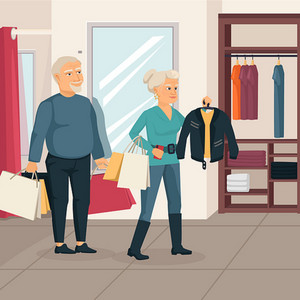
Recent media reports have revealed that elderly people have become a big consumer group of shopping malls in Shanghai, perhaps a demographic that rarely gets looked at as big shoppers.
So why are older folks dominating weak day foot traffic in those shopping malls?
And how do the retailers and malls roll out tailored services and social spaces for them as well as their younger counterparts?
Coming to you from our studios in Beijing, this is Roundtable.
I'm Steve.
And for today's show, I'm joined by Yushun and Yushan.
First on the program.
While Shanghai shopping malls buzz with youth on the weekends, something different occurs on week days, as elderly residents become the primary patrons.
This trend has prompted mall management to fundamentally re-evaluate their operational strategies, moving beyond mere commerce to create inclusive, multi-generational community hubs.
They are now actively designing environments that cater to the social and practical needs of older visitors, while simultaneously ensuring the space remains appealing to the younger generation.
The key question is how these retail centers are adapted, their amenities, their programming and overall atmosphere to successfully serve these two very distinct groups throughout the week.
This evolution reflects a broader understanding of the mall's role as a vital public space in the modern city.
Good afternoon, Yushun and Yushan.
Thanks for being here.
Shopping malls.
I mean, when I was a teenager, I remember going to the mall on Friday or Saturday night was kind of like the thing to do.
Cause you know, we were 15, 16 years old and there's nowhere really to go.
That's that cool.
But staying at home with your parents is definitely not that cool.
So the mall was the place that we used to hang out.
Is that the way it was for you too?
Kind of.
And I usually go to the shopping mall with probably at that age with my classmates.
And we went to some of these stores and not necessarily buy a lot of things, but just to Get into that shopping mall and maybe stay cool, stay warm, something like that.
Yeah, just hang out, right?
There is a shopping mall very close to my old high school.
And that's the favorite place for many of us to go after school, because there's a very cool and nice cinema in town.
So that, yeah, it's just a very popular place.
But I heard you mentioning earlier Steve, that there are more elderly people people visiting the mall these days than young people.
As a matter of fact.
Yeah, and that's happening in shanghai, right.
So let's start there, right.
I was kind of um astonished by the news as well.
Apparently, shanghai elders they are making up a large share of food traffic in the local malls, and that's both on weekday mornings and also during non-peak hours as well.
So a news portal, shanghai observer, says that many of them they actually visit coffee shops and dine in restaurants, enjoy entertainment facilities such as ktv and socializing with other um their of their peers and folks.
Just ktv, by the way, is the singing rooms right, right?
One very interesting case is that 65 year old miss lee actually visits a karaoke with many of her besties for several times a month, as reported, and in That's all located in one shopping mall in Shanghai.
And they just enjoy gathering together and sending their favorite songs together.
Several elders, they even try the VR glasses in the next door smartphone shop within the same mall.
And also the karaoke manager said that they would consider a good business if three out of 10 private karaoke rooms were occupied in the past.
And nowadays, many rooms are actually booked by groups of retirees in their 60s and 70s.
That's awesome.
Yes, so these elders in Shanghai are becoming the main consumer of the malls and karaoke for sure.
Three out of ten would be considered good business before, but now they're almost doubling those statistics.
They must be thrilled, the managers of those singing rooms.
You were surprised by this information, you said?
Yeah.
When we are talking about every time, let's say when we're talking about elders or elder spending.
I think of my grandparents at their 80s.
They barely walk out of their home anymore.
But nowadays, when we talk about say, silver economy or elders, it's more to a relatively younger demographic of elders that's above 60 or 70s.
And who are at their peak time for going out, shopping, and enjoy their life.
And yeah, we're talking about those mostly living in cities with a relatively handsome say, retirement pension, in a way that they are free to say – decide what to spend on, and some disposable income indeed, and many of them don't really have the pressure of taking care of grandchild yeah, in some cases.
So they're kind of like i mean, if you think about the two different demographics, it's kind of like they're going back to their childhood days in a way, because they don't have the pressure of the job During the day they finished with their career.
So they have all this free time.
All their friends have a lot of free time, too.
It's just that they all happen to be in their mid 60s or early to mid 70s, what have you.
And they just want to hang out and have fun with each other.
I love it.
Yeah, but I wouldn't say they're just getting back to the time that they had.
I would say they are cherishing the time that they're owning right now.
Because finally, they have that time and maybe the money to get into all of these shopping malls.
But not only shopping malls, right?
They're going to a lot of these places to enjoy their time.
And I remember I went to some of these teaching lessons. organized by Apple.
They have that kind of lessons like teach you how to take photos, take videos by your iPhone or iPad, that kind of thing.
That was at the mall?
Yeah, in that Apple store, that specific locations.
And I saw a lot of like outer folks enjoying their time there and spending a lot of time learning a lot of these stuff and maybe even asking questions to these specialists.
So and I was wondering yeah, this is actually perfect opportunity for this group of people because they are like, mostly organized during weekdays daytime.
And it could be very hard for a lot of young people who have a job or a daytime job to go to that kind of scenario.
So absolutely.
And they are seeing these kind of opportunities to having the time and money to spend. you spend.
Yeah.
And this is the place where they're doing it.
But is it only in Shanghai?
Are we seeing this in other parts of the country, too?
No, it's not just happening in Shanghai, even though, as of latest reports in August, this phenomenon can be found in malls across Shanghai and is very popular in the city of Shanghai.
But it can be found in other parts of China as well.
For example, in southwest China's Chongqing municipality, where the city's first senior focused store was recently opened for business at a local department store.
So what it offers covers everything from bathing chairs to smart mattresses almost a one-stop solution for all kinds of elderly needs you can find in one store.
So that's pretty cool.
I'll say smart idea.
Yeah, where else?
Oh, in changsha, many like retirees, like 60 year old ling, frequent nearby mosques for like leisure and dining and socializing, and local supermarkets are also adding Something like senior friendly sections, such as clothing shops that design for elderly groups and more resting areas, something like that.
And also nationwide silver economy brands are growing very, very fast.
And one example is the elderly footwear maker.
It's called Zhu Lijian.
They design special shoes for elderly groups, maybe shoes.
More comfortable.
Yeah, more comfortable and better for walking and steadily walking.
And the store of this Zulijian now has more than 3200 outlets nationwide and many insights on major mods, which means they can visit these mods and actually try on.
And I actually saw some of these stores.
They offer quite good services because they will always welcome you warmly and then let you try it on, and Of course I didn't try it on that top.
I saw a lot of people were trying it on.
I was going to ask if you got yourself a pair.
Why not, right?
Shopping malls are seeing the difference in the statistics and obviously stores are noticing the change in the trend and they're responding accordingly, at least for that one particular brand.
Supermarkets too are changing a little bit to reflect this change.
Yeah, they're actively upgrading themselves to better cater to the needs of elderly shoppers as well.
For instance, at one supermarket branch in Changsha there is a dedicated clothing shop for elder customers, attracting many senior shoppers to you know.
Just stop by and maybe get some clothes, apart from groceries.
And yeah, this like... becoming such a more comprehensive place for elders to shop around.
A place for them to spend their money.
Yeah, exactly.
So why are we seeing this change now?
Wow, it's totally because of say, a significant portion of population, that are what we call the elders in China nowadays.
And this is quoting from a recent Xinhua story that China had over 310 million citizens aged 60 or above by the end of 2024.
And that accounts for around 22% of the total population in this country.
So with such a huge demographic, I'll say, Like, why not?
Why not design more opportunities for them to enjoy life a bit better and also count in some good sales to boost say, offline industries or offline shopping industries?
In this regard,
I mean, it is a huge opportunity for revenue from the community.
Right.
The revenue for community elder care, that surged over 30% year on year in the first half of 2025.
Sales of senior nutrition products and health monitors rose over 30% and 7% respectively.
There was also a report from the China Center for Information Industry Development that pointed out that the silver economy, as it's lovingly referred to here it reached 83 trillion yuan.
That's over a trillion dollars in 2024.
And it's projected to hit 20%.
$25 trillion by 2030.
And those numbers reflect and show that this is a group with purchasing power.
So it only makes sense for these shops and these supermarkets and these shopping malls to provide places for the group to spend their money.
And also, I think they are filling a huge gap in the market.
As we mentioned that karaoke industry, right?
Before you had that number 3 out of 10 was karaoke considered as good business, right?
Yeah, that means that actually for this industry daytime, weekdays basically empty, you would, you would think right, and and then this group of people they're getting into these karaoke rooms and actually i remember that i saw the like, like price tag there.
These period of time can be really, really cheap.
So it is a very affordable price for these group of people to visit and they can actually enjoy time and also bring vitality to this industry.
I think this is a win-win situation for both of sides, right?
I saw that the news showing that Shanghai karaoke's weekday morning use jumped from 30% to 70%.
Almost fully booked.
Yeah, serving like 40 to 50 elderly groups daily.
And another mall saw senior memberships rise 15 and revenue grow 20 year on year in the first half of 2025, with seniors driving much of the increase.
And yeah, this is not surprising to me at all.
So in the meantime I saw that Shanghai Observer also noted that another shopping mall in Shanghai.
They saw the number of memberships aged 60 and above increased by 15 compared to the beginning of that year, which means that well, the demand for silver haired consumption in China is highly diverse at this point.
And this is not For me.
This is quoting from Director Peng Xizhe of the Institute of Aging Studies at Fudan University.
By getting a membership, you kind of get discounts of various shops within that same mall, meaning that you can spend presumably longer time in the mall and just stop around and get multiple needs met at the same time.
So yeah, so you can get a membership card to a particular shopping mall that will offer you discounts at various stores within that mall.
That's how that works, i guess, right?
Uh yeah, so if you are looking for a place to hang out and then you have a membership card to that place, then you're probably going to spend your money there.
And not only that, but you're probably going to spend a lot of time there as well.
And the more time you spend in a location, well then, the more opportunity there is for you to spend money in that location.
Because elderly customers tend to get out of the house rather early in the morning, right?
So they're getting to the malls the shops when they open up um at least a lot earlier compared to people who are in school or in the office and to be honest from my like observation it's i think it's more like more seniors bring their grandchildren to maus during these you know hours to uh stay cool stay warm they doesn't necessarily mean that that they're like spending more money each time but still they're still Spending more time there in this shopping mall with the sheer volume of visits, small amounts can maybe add up.
100% true.
Yeah, and then end up driving higher overall spending.
I was curious to know, because this is an issue in the West too, right?
It's the same kind of situation.
Seniors will often go to the mall to kind of hang out and hang out with their friends and walk around and spend some time there.
And I wanted to see some news and I tried to go back as far as I could.
I found an article. from 1994 from the Tampa Bay Times, Tampa, Florida.
So it's a small, small city in Florida in the United States.
And they were talking about exactly the same thing in 1994.
They were saying that malls that time and i think even now, maybe up until now this, this is this is true that retailers, they aim their marketing towards teenagers right, or the youngest generation of of the time, and they frequently ignore the senior customers and the article was talking about the fact that it was a mistake because the senior customers, they have more time and they have more money than teenagers do, so it doesn't make any sense for them to promote their strategies towards teenagers when it's the elderly community, or at least the retired community, who are spending more time and more money there.
It's the same issue, except it was like 30 plus years ago.
Well, from my observation, yes, indeed.
This is exactly what's going on here in China as well, even though it's not back in 1994.
Over 20 years later, it's going on here and we see that a lot of elders going to the malls bringing their kid well, this is how Holin uses it, but it's walking their grandchild let's say not their child, but walking their grandchild in the mall, just seeking some social interactions in the mall.
It's becoming part of their lifestyle, I'll say.
Sorry, one of the things talking about going for a walk in the mall that's one of the services that's offered now in malls certain malls in the West is they'll have walking programs for seniors.
Mm-hmm.
Because malls tend to be rather huge, right?
So they'll have organized walking trips within the mall.
They'll have a dedicated service for that, so that the seniors can kind of get their exercise and go for a walk around the mall.
It's just one of the services they offer.
What's wrong with parks?
Well, if the weather's not cooperating on that particular day, i guess um yeah, and a lot of these uh, uh shopping malls they're offering like discounts uh, to attract more customers, like from elderly groups, and um.
One example is that again, a karaoke in a Shanghai shopping mall offers a special deal costing 79 yuan for four hours in the morning.
The original price is 167 yuan.
It could be really, really affordable during the daytime.
And this attracts many people at 10 a.m.
Well seeing at 10 am.
But such deals can be only enjoyed by tourists, retirees and unemployed people and some freelancers, maybe because of the time or maybe because of the like age restrictions, because they are specially designed perks for elderly group.
Yeah, this would make it competitive amongst the shopping malls themselves.
I guess right, because the customers, once you find your place that you like hanging out, that's going to be your place that you continue to hang out.
Yeah right, so it would be very competitive for the malls to get that customer loyalty established.
So then for the elderly customers these days, are their consumption patterns changing?
I mean, what's the main motivation for them to spend their money or their time in malls these days?
I think I do agree with Yushan on that.
First of all, it's the discounts, because various shops or businesses they open with discounts the senior demographic in their design of customers, and they come up with discounts some only for elderly people, like one shopping mall in shanghai.
They cooperated with card payment giant china union pay to launch a special 30 discount for seniors using social security cards.
I wonder that how that is done, though.
So we kind of had this little chat before the show that they kind of require you to usually, i would assume, is their, their children to combine a payment method, whether it's Alipay or any sort of online payment method, with your Social Security card, so that you can take whatever say, bank account or your Alipay via phone to the mall and, With the Social Security card bound it to your account proving that you're an elder Spender, let's say, you can get that 30 off discount with whatever consumption you make it with inside that mall.
It's just like the Ponderosa.
I know you don't know what that is.
That's the name of the restaurant.
It was my dad's favorite restaurant.
And after he turned six, he couldn't wait for his 65th birthday.
Because after he turned 65, he got 30% off at Ponderosa.
And we already ate there too often.
But after he turned 65 it became like my hangout place, even though i didn't choose your dining room.
Yeah yeah, it was like an attachment of our house, especially yeah, you know same here in one shopping mall.
In another shopping mall, let's say, seniors aged 50 and above can enjoy a 12 discount simply by presenting their id card showing that they're old enough say, to qualify for that.
So it's really nice, first of all, to pay less because of your age.
So that's, I'll say, one of the major advantages to attract these elders to shop in the malls.
Yeah, and I mean, this group...
They don't have as big of a financial burden.
They don't have a mortgage to repay, probably.
Not every situation will be the same, but generally speaking, no car loan to worry about.
The raising of the children and all those costs is long behind them.
So they have all of this steady monthly income from their pension, and then you put that together with their declining expenses as time passes, and then that makes their consumption a little bit more relaxed.
And perhaps they feel as consumers, perhaps they feel a little bit more confident in the spending of their money too.
And actually from my experience most elderly people can more or less manage their own pensions right.
But I wouldn't say, you know, the amount of their pension is particularly that high to make them like buy whatever they want or go to wherever they want, or as high as the leveling Shanghai or Beijing, for example.
Sure, because those are two pretty expensive cities.
Yes.
So for most, I think it's probably like around 2,000 to 3,000 yuan.
While I was seeing the stats from a recent article published by Tech Media Inc.
36 kr.
The median pension in shanghai has already exceeded 5 000 yuan, or 700 dollars city-wide, and the top 10 percent of retirees receive over 8 000 yuan uh, or like more than one thousand and one hundred dollars.
So what we're talking about?
Of course, they have a lot of time and and money, but maybe that is only still also from this group of people.
They are also a small part of this group of people.
I think you touched upon a very important point here, Yushun.
That is, we've been discussing about this phenomenon happening in Shanghai, and especially the urban area of Shanghai, but there is such a gap between the urban area and the rural area.
And in past few years, there's been a lot of studies on this as well.
One would be the fifth China urban rural elderly living condition sampling survey that took place in 2021, showcasing that urban elderly they had an average annual income of over 47270 yuan, that's roughly 6625 US dollars.
But that comparing with the average annual income of the rural side would be around 14,105 yuan.
So there's still such a big gap between the income of the rural and the urban elders.
And I think that also reminds the malls on how to plan their say, marketing strategy, given the different locations they're expanding to.
Because we did mention earlier that there are will be more and more malls opening in various regions across China.
So yeah, when we think about different demographics, especially the average, if not median, salaries being given to these elders in different places of China, that's one key point to think about.
How can you leverage your customers' preferences and how do you attract to different people at different places?
Well, let's talk about that then.
What are the malls doing specifically?
What are the shops doing differently to adapt their services or maybe even their spaces or their marketing to appeal to to an older demographic?
Some of them can be really, really attractive.
I would say there are introducing some affordable packages.
For example, since 2023, many malls offer like 100 yuan one day package and that include like meals for maybe your lunch or your dinner, and that can be like more than 20 dishes of that package, and then you can go to karaoke, go to dancing classes and getting different kind of a socializing or socializing activities and they are quite popular among seniors and also barrier-free facilities we mentioned it before in time integrated like accessibility info into some uh map softwares or in the shopping mall or in these kind of facilities.
And then some malls often also lend free wheelchairs so that you can maybe get more accessible to more places in that area.
And also many malls across China.
They are settling up more say, staff to be there in time in case any incidents happens or any help is needed.
So one example would be a mall in Changsha.
The no barrier toilets there are equipped with an alarm button so that elderly people can call staff for assistance if they encounter difficulties.
And also it's, Very important for malls to clearly label the guidance.
I think there was one very interesting smaller topic we mentioned earlier on Roundtable on just how the symbols of toilets can be so confusing in some malls.
So for this particular case, malls really need to work on how to clearly label everything so that people, including their elder demographic of um customers, can not get confused and just easily shop around.
I'm happy to hear that it's not just me.
Sometimes i don't know which room i'm supposed to go into um having clear sign, the signage um yeah, easily understood but also easily visible.
Right, that's something else that they're doing um in shanghai to make it, to make it easier for the customers um More places to rest.
They're doing that as well.
They're also having lectures for the elderly.
This is happening in Changsha.
What's that all about?
Well, that is more of just classes.
That's free, of course, and also targeting elderly people like video editing.
Why would they need to learn that?
Oh, they're embracing short video.
Really?
A lot.
And some of them are taking short videos by themselves.
And maybe after that, they're not satisfied with only taking videos on short video platforms.
Got to edit it.
And then edit it, making cool and popular among their friends.
That's so diverse for these elders nowadays, too.
Yeah.
It's something that I was seeing from Western shopping malls as well.
And going back to the point that you made earlier, Yushan, about how Apple had these classes.
So the article I read was about having hands-on experiences and learning opportunities for the tech in the shops.
They'll have like little mini classes and an opportunity for the customer to play with use, learn about the product before they purchase it.
It is a genius idea, isn't it?
Because if the customer is there, then there's interest, obviously, in the product.
But a little help on how to use it, a little education there goes a long way.
Yeah.
And also there are photo taking classes, which is kind of cute too, because based on my say, personal network, I've already known a lot of elders who are very keen about taking pictures.
But all they know is using their phone.
Many are interested in taking say, professional photography classes using just high quality profiled cameras, and they don't know where to seek help from.
So with these classes, it's definitely going to, you know, just give them the opportunity to learn.
And also there are many activities that's targeting elderly people nowadays.
So during last year's Double Ninth Festival, or Chongyang Festival, which happens in September, I think it is a festival in honor of the elderly.
So the shopping malls in Changsha.
They also launched an Intangible Cultural Heritage Fair that features a performance of the traditional fire pot, a national intangible cultural heritage that's including traditional fire pot.
So the performance symbolizes driving away illness and misfortune for you, while bringing peace to all households.
That's conveying just blessings of goodwill towards the elderly.
So these kind of activities will definitely draw in more audiences.
That covers the elderly people and give them just really good blessings.
Is there any danger of alienating younger shoppers?
I wonder if malls are creating more and more and more programs to attract the elderly, is there a risk that they'll push away their younger demographic?
Of course, balance is very, very important.
But as far as I see right now, they're will not be like shopping malls putting huge billboards saying we are only designed for, or these activities are only designed for, elderly.
Of course,
So if malls, of course, if they design too many or just solely for these kind of campaigns and events and services for elderly shoppers, younger consumers may perceive that space as not for them, or they may have a, or this shopping mall may be perceived as a shopping mall for elders.
Yeah, it doesn't have to be stated explicitly on a sign outside the mall, but just from the activities themselves the younger people will get a sense like, or just by visiting and seeing the demographic hanging out there.
I think it's not about just labeling one group as consumers or not including another group as consumers, or just giving a clear dividends between the two.
We've seen elders drinking coffee in coffee shops with younger consumers or buying very fun and cutie toys from those.
I don't even know what those are called, like blind box shops that I don't even visit, but they are very keen to buy stuff.
Maybe shopping for their grandparents or for their grandchildren's gifts.
Or maybe for themselves just for fun.
We don't know.
So nowadays I think that's the aim of these modern time shopping malls is to better incorporate themselves, to just
And stay open to all generations of consumers.
And let's try not to label one that's so different from the other, but also giving more opportunities for both.
I just think it's smart, right?
Because the karaoke rooms that we talked about, they're usually empty during the daytime and busy at night or on the weekends.
Well, that goes for shopping malls too.
They tend to be less busy during the daytime hours or the morning hours.
So if you can take advantage of a group of a demographic and offer services that are attractive to that group, then why would you not do it?
I also agree with you, Yushan.
It doesn't have to be exclusively one or the other.
Both can be true.
Both can be had at the same time.
And when you attract these older customers who have their disposable income in their pockets and they are available to spend, then you're creating customer loyalty there.
Because if they go there two or three times a week just to hang out with their friends, maybe they don't spend that much money.
Maybe they do take advantage of the club card that gets them two meals and a dancing class.
But then think about holiday time, when it comes, time to shop for other people, for their grandchildren.
Where do you think they're going to go?
They're going to go the place where they always go to shop.
So you're creating a relationship with each and every customer, which I think is just a really good idea.
Do your grandparents hang out at malls now?
Do they go and take it?
Are they in the group that we're talking about here?
My grandparents used to go to the mall nearby their home back in Urumqi in Xinjiang, because they've been spending decades of their years there.
And that mall kind of grew out with them.
They've seen the multiple updates within the mall and they just feel, like you said, loyal to that place.
And it's a comforting place for them too.
It's their third place, their third space, right?
Yeah, that's very interesting.
But here in Beijing, the community they're staying is not quite close to animals.
So it's not really within their hobbies nowadays.
But yeah, I could totally see the trend if there is one.
My grandparents, they may just prefer hanging out with their friends in the community complex.
They have a huge green area for them to rest and chat and hang out.
Yeah.
My parents and their friends.
They would do the same thing like a community complex, like swimming pool.
Yeah, they'd swimming pool.
They'd all hang out during the daytime.
And then they had classes like tech classes, iPad learning classes, things like that.
Then on the weekend, they would have dance classes.
It was like I compared it to university without the education.
Yeah.
It was just a place for them to have fun.