Respond with phrases.
What are we going to do, chad?
We are going to practice speaking english by responding with simple english phrases.
All right, that's a cheesy opening, sorry about that.
Let's just jump into the practice.
Here's our first phrase.
That was unexpected.
That opening that you just did now Chad, that was unexpected.
Okay.
So here's the situation.
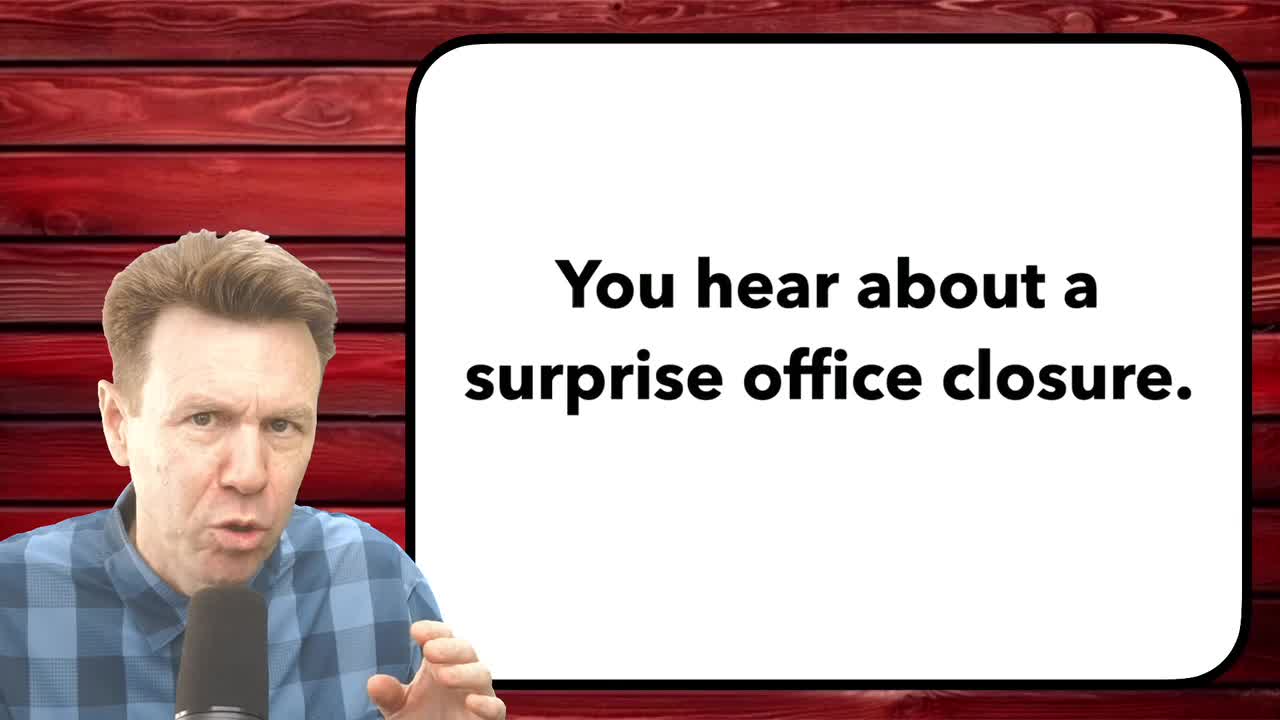
You hear about a surprise office closure.
Your office is going to be closed and you respond.
That was unexpected.
I did not think the office was going to close.
Or you could say, I did not see that coming.
I did not see that coming.
Alright, so here's the situation.
Your friend admits to a secret hobby.
They tell you, I collect antique plates.
And then you say, I did not see that coming.
You collect antique plates?
I just, wow, I did not see that coming.
That surprised me.
All right, that sounds nice.
That sounds nice.
All right, so someone says, hey, guess what?
I'm going on vacation to the beach next weekend.
And you say, oh, that sounds nice.
I want to go with you.
Alright, I'm glad to hear that.
Your friend says their interview went well.
Hey, guess what?
My interview went really well.
I'm glad to hear that.
I'm glad to hear that your interview went well.
All right.
How wonderful.
You're told about someone getting engaged.
Guess what?
So-and-so is getting engaged.
How wonderful.
I'm glad to hear they're getting engaged.
All right.
That's great news.
That's kind of the same thing.
Oh, I thought I was going to sneeze.
Pardon me.
That's not great news.
All right.
Here it is.
Your friend announces they got the job.
They got the job that they applied for.
And you respond.
That's great news.
I'm happy to hear you got the job.
You must be over the moon.
This is similar.
A colleague becomes a parent.
They tell you, guess what?
My wife had a baby.
It's a new baby boy.
And you respond, you must be over the moon.
So this means you must be super excited.
You must be very, very excited.
You are over the moon.
You must be on cloud nine.
This is similar.
Very excited.
Very happy.
Be on cloud nine.
So a friend gets engaged after a long relationship.
Hey, guess what?
We have been dating.
Me and Angela have been dating for nine years.
And we finally got engaged.
We're going to get married.
How did you respond?
You must be on cloud nine.
That is so exciting to hear.
I'm happy for you.
Okay.
That must make you a happy camper.
This is interesting, huh?
That must make you a happy camper.
So here's the situation.
The kid gets an extra scoop of ice cream.
Here you go, kid.
I'm going to give you an extra scoop.
What was the phrase?
Do you remember?
That must make you a happy camper.
That must make you really happy about that.
It's a phrase we use.
I'm sorry to hear that.
This is common, right?
Someone says their pet passed away.
Oh, your pet passed away?
I'm sorry to hear that.
How awful.
A friend describes losing their phone.
I lost my cell phone.
How awful.
I can't imagine living without a phone.
You must be in deep distress.
How awful.
All right, that must be awful.
This is very similar, right that must be awful.
A sibling, your brother or your sister shares a story of being stuck in an elevator and you say that must be awful.
That's kind of weird.
That's a little strange.
I didn't set that one up very well.
I do sympathize with you.
All right, so someone talks about a recent breakup.
Me and Kim, we broke up.
I do sympathize with you.
I'm sorry to hear that.
That's so sad.
So you hear about a friend's difficult family situation.
Your friend has a very bad situation in their family and you respond, That's so sad.
That's so sad to hear about his difficult family situation.
All right.
That doesn't sound good.
Your coworker says the system crashed before a deadline.
You respond.
That doesn't sound good.
Your system crashed before the day, just before the deadline.
Oh man, that doesn't sound good at all.
That sounds like a nightmare.
So you're told about a travel disaster.
It was a disaster.
We missed the airplane.
We didn't get to go, et cetera, et cetera.
And you respond.
Oh, that sounds like a nightmare.
I feel for you.
There's another one.
I feel for you.
Bummer.
Bummer.
You could just say that too.
Bummer.
That's the same.
So a friend couldn't get tickets to a concert.
Oh, I tried to buy the tickets, but they were sold out.
And you say, Bummer.
Oh, I know you wanted to go to that concert.
I did.
That's a bummer.
I can't believe that.
Someone tells you about unfair treatment at work.
They gave them the day off, but they wouldn't give our department the day off.
I can't believe that.
That is unfair treatment.
You deserve a day off.
I can't believe that.
That's messed up.
You could say this also.
That's messed up.
I can't believe that.
That's messed up.
That's not right.
So you hear about someone being mistreated.
So if something's not right, you use this.
Someone has been mistreated and you say, that's messed up.
They shouldn't treat you that way.
Lucky you.
Someone says they have a three-day weekend coming up.
Lucky you.
You have Saturday, Sunday, and Monday off?
That's great.
Lucky you.
Oh, there it is.
Okay.
Well, congratulations.
Your colleague has been promoted at work.
Well, congratulations.
I'm happy to hear about your promotion.
That must be great.
So a friend says they finally moved into their own place, their own apartment.
And you say to them, that must be great.
You got your own place finally.
I know you've been wanting to get your own place.
That must be great.
I'm really happy for you.
You can also say this, I'm really happy for you.
So here's a situation.
Your friend gets admitted to their first choice college.
The college they wanted to go to, they got accepted.
And you say, I'm really happy for you.
I'm really happy for you.
I know you wanted to go there.
That's great.
I'm happy to hear that.
You could say that also.
I'm happy to hear that.
Someone tells you their pet recovered from surgery.
Oh, I'm happy to hear that.
That's wonderful.
I'm so glad your pet recovered from surgery.
I'm happy to hear that.
All right, that's it.
That's our English speaking practice for today with some great responses.
You got to think.
You got to use your brain.
All right.
Good workout.
I'll see you in the next one.