Get Sleepy is a production of Slumber Studios and is made possible thanks to the generous support of our sponsors and premium members.
If you'd like to listen ad-free and access weekly bonus episodes, extra long stories and our entire back catalogue, you can try out premium free for 7 days by following the link in the episode notes.
Now, a quick word from our sponsors...
Fill the bucket and save at AgriVision Equipment.
Buy a bucket for just $3, and everything you pack inside, you save 15%.
Cleaners, grease, hand tools, fluids, adhesives, paint, and more.
Fill the bucket and save at AgriVision Equipment John Deere.
Offer ends 9-30-20-25.
At Capella University, learning online doesn't mean learning alone.
You'll get support from people who care about your success, like your enrollment specialist, who gets to know you and the goals you'd like to achieve.
You'll also get a designated academic coach who's with you throughout your entire program.
Plus, career coaches are available to help you navigate your professional goals.
A different future is closer than you think with Capella University.
Welcome to Get Sleepy, where we listen, we relax, and we get sleepy.
As always, my name's Thomas and I'm your host.
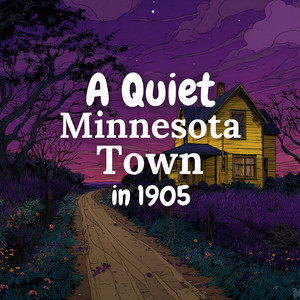
In tonight's sleepy tale, we'll travel back in time to the turn of the last century.
We'll take a look at life in a small town in Minnesota at the dawn of the 1900s.
It was beautifully written by Layla and will be read by TK.
If you'd love more content from Get Sleepy and the very best listening experience, be sure to check out our member subscription Get Sleepy Premium.
Tomorrow night in our weekly premium exclusive episode, join me as I read a sleepy adaptation of an old Spanish fairy tale about a young man who ventures into the forest in search of a missing princess.
To find out more about all the perks of being a Get Sleepy Premium member, like ad-free listening, early access to episodes, discount on merchandise and plenty more, just visit the link in the description.
Thank you so much for your support.
Now my friends, to prepare for our story, take a moment to let the modern world slip away.
Close your eyes and allow your mind to travel away, leaving behind the busyness of the day, knowing there's nothing more you need to do or that you can do to contribute towards the day.
The best thing you can focus on now, for yourself and anyone who relies on you, is to relax and rest.
Let your mind travel away further and further from any sounds of traffic or any activity around you.
Your imagination can act as a portal to another world, another time.
Breathe deeply Enjoying the tranquility of the exhale as you let go of any tension or stress.
And with each breath, imagine a quieter life.
One where night was rarely lit by more than moonlight and the stars, where chills were warded off by wood-burning stoves and thick clothing.
A life that never moved faster than a horse-drawn cart.
And now let's venture there, to a sunny morning in 1905, on the edge of a town in the American Midwest.
This is where our story begins.
Huge leafy trees, shaded unpaved roads.
Rambling wooden houses stood here and there along the streets.
Grassy hillsides rose behind them, dotted with wildflowers.
Horses waited patiently of a couple of the houses, their tails swishing gently now and then stirring the warm late summer air.
Flies buzzed gently, and filtered sunlight dappled the dirt road like speckles on a horse's back.
It was mid-morning on a Monday in early September 1905.
The streets of this Minnesota town were quiet for now, but later they'd be bustling with children running home from school.
The schoolhouse was just a few blocks away. closer to the center of the town.
The town itself stretched out along a wide river, much like a cat stretching out along a sidewalk on a sunny day.
Just fifty-odd years before, this had been wilderness and the area around town was still largely undeveloped.
But in the few decades since its founding, the little outpost had grown into a thriving county seat.
It had a train station, a growing population and all the various shops and businesses needed to support that population.
There was even a grand hotel and theater, including a new stylish restaurant in the hotel whose windows looked out over the river.
This street though, with its smattering of rambling wooden houses separated by open lots, was a good 20-minute walk from the Grand Hotel and the town center.
This street was on the edge of town, with nothing but wildflower-covered hillsides beyond.
A woman stepped out of a kitchen door.
She had a baby balanced on one hip and she carried a pan of used dishwater which she dipped into the dirt.
The woman squinted down the empty street a moment before moving back into the shade of the house.
After a time, a whistle blew.
It was a shrill sound that carried all the way from the mill downtown, beside the blue waters of the river.
The whistle marked 12 noon.
It signaled that it was time for a lunch break for the workers.
And a lunch break for the schoolchildren as well.
Soon, after the whistle pierced the still air, the sound of running feet pattered down the street.
Children rounded the corner, coming from the direction of the schoolhouse.
They wore old-fashioned clothing.
The girls were in dresses with ribbons in their hair.
Long black socks peeked out above scuffed leather shoes.
Older children carried schoolbooks in their arms, some with a strap secured around them to keep them together.
School had only recently started up after the long summer break.
The children's faces still showed the signs of summertime.
A pair of children stopped in front of a yellow house at the end of the street.
They leaned over a water pump in the side yard. and began to pump up water from an underground well.
Spray spurted from the faucet as they pumped, the drops sparkling in the noontime sun.
They held their hands cupped under the stream of water, then ducked their heads and splashed the water over their faces.
They scrubbed the dust of the road from their faces and hands, then shook their hands dry.
They walked up a few steps to bang through the screen door of the house, yelling greetings to their mother.
A woman in a long skirt and a checked apron greeted them. wiping her hands on the epern.
She set down bowls in front of them which held their lunch, although she referred to it as dinner in the local tradition of the time.
The mother and children ate together and the children chattered about their morning at school as they ate.
They talked about their lessons in reading, writing, and arithmetic.
They told about the games they played on the schoolyard.
When the simple meal was done, the children started to gather their books to head back out the door.
Their mother stopped them with a gentle reminder that to wash their dishes.
So they set down their school things and took up the lunch dishes.
These were porcelain bowls, hand painted with local wildflowers by a neighbor.
Hand painting china was a hobby for some ladies of the community.
There ensued a brief, affable squabble over whose turn it was to wash the dishes and whose turn to dry them.
But it was quickly settled and the two children got down to work.
Their chore was soon done.
Then, with shouted goodbyes, they scooted off towards school.
Dust rose from the street as they went, joining a stream of returning students.
And then, the streets were quiet again.
The only sign of the recent burst of activity was the settling dust which circled lazily in the tilting shafts of sunlight that shone between the green leaves of the trees.
The flecks of dust drifted drifted drifted, before settling down again on the packed gray-brown dirt, And then the streets were truly still, apart from a breath of air that stirred the leaves on the trees now and again.
Slowly, the light from the sun changed.
It grew richer and deeper, its morning brightness mellowing into afternoon light tinged with a hint of gold.
The woman emerged from the yellow house then.
Her checked apron was gone now.
It had been replaced by a crisp white blouse, and long sleeves, despite the warmth of the day.
Delicate embroidery adorned the cuffs and collar of the blouse.
It was tucked into long skirts that swished around brown leather boots with buttons, that The woman's hair was swept up into a loose mass on top of her head, with a wide hat pinned securely above.
A spray of dried flowers adorned one side of the hat, which was tilted forward at a stylish angle.
The woman held a card case in one hand.
She turned and set out briskly down the street in the direction the schoolchildren had stampeded some time before.
She looked as though she were headed out to pay afternoon calls on other ladies of the neighborhood.
And sure enough, she turned a corner onto the next street, where she could just be glimpsed traipsing up a walkway to a large white house with a tower on one corner.
She knocked, the door opened, and she disappeared inside.
In the days before telephones, people had to visit neighbors and friends in person when they wanted to exchange information or pass the time.
Visiting someone at their home was known as paying a call or calling on the person.
And to avoid dropping in on each other at inopportune moments, people in Europe and the United States developed a carefully prescribed set of social rules for paying calls.
The accepted rules for calling on someone in 1905, in this Minnesota town, were roughly as follows.
Ladies made and accepted calls in the afternoons.
They would complete household chores in the morning.
Then they would change and freshen up before either going out to make calls or staying at home ready to receive any callers who appeared.
Sometimes ladies even had specific days when they accepted afternoon calls, while other days they went out to call on others.
They carried calling cards printed with their names, precursors of today's business cards.
This tradition apparently began in France during the 18th century and quickly spread across Europe and to the Americas.
If the person being called upon wasn't home, the visitor would leave one or more cards to show they'd been there.
The number of cards they left conveyed a message.
For example, different numbers of cards might indicate a wish to call on different members of the household or invite a return visit from certain household members.
If the person was at home, on the other hand, more traditions kicked in.
Calls were generally supposed to be short.
And there were specific protocols about how long to stay and who should leave first if there were multiple callers.
And then there were further expectations after the call.
The recipient of a visit said, should later return the courtesy by calling on the visitor in their home within a certain period of time, and so on.
Sure enough, the woman in the crisp blouse emerged from the White House with the tower.
Some twenty minutes later, as prescribed by the social conventions, she turned towards her home and walked back up the gentle slope to her own yellow house.
She was there by the time.
Distant voices and running feet announced that school was now out for the day.
She was seated in the shade of her front porch, embroidery in her lap, when the children appeared flying up the street in their eagerness to deposit their books and go play.
The children dropped kisses on her cheeks as they flew in the door of the little house.
The screen door banged gently closed behind them.
The kids formed a knot for a moment of animated discussion.
Then they spread out again, drifting into teams for a game of Red Rover, Red Rover.
The two teams linked hands and then one team called for a player from the other team to come over.
The child hurtled forward, attempting to crash through the linked hands.
The line held firm, though, and he wasn't able to break through.
So, following the rules of the game, he joined forces with that team.
The next player to cross... an older girl, managed to break through the opposing human chain.
The game went on for some time before dissolving into a new game, Kick the Can.
This was followed by Pom Pom Pull Away and a selection of other playground games.
But soon, mothers were calling from doorways.
Supper was ready.
The children scampered off in the direction of their various doorways.
A few rounded corners headed for homes a block or two away.
The children of the yellow house washed up at the pump again, then ran in once more through the screen door.
Their mother was no longer doing embroidery on the porch.
She stood at a cast iron stove in a small kitchen.
A wood fire inside the stove heated its cooking surface, where a large pan sizzled.
Inside the pan, potatoes were frying, giving off an inviting smell.
At that moment, a tall man in a dark suit walked briskly up the street.
He swung a cane.
That was clearly a stylish accessory rather than a walking aid.
The man turned in at the yellow house.
The moment he walked in the door, the children flocked to him.
They flung their arms around him and showered him with kisses.
Their mother was not far behind, untying her apron as she came to greet him.
The evening greetings over.
All the family sat down around the little table in the kitchen.
It was set with a pretty flowered cloth and the painted china plates.
A gas lamp lit the shadows in the kitchen with a cozy light.
The smell of fried potatoes filled the room, along with the sound of excited voices.
The children recounted their day, punctuated by questions and comments from their parents.
The father shared stories from his work in a store downtown and news from neighbors.
Their mother shared news from her visit as well and reminded the children of upcoming assignments for school.
When the simple evening meal was done, the children again helped with the washing up.
And then they dashed back outside once more to play until dark.
A slightly smaller crowd assembled in the street now.
Some of the older children had stayed inside to learn their school lessons, practice piano or help with chores.
But there were still a good number of kids outside.
Plenty to pull together another round of games in the street, which was growing cooler with the approaching dusk.
The sun was falling behind the hills now, and the shadows of the trees and houses were lengthening and growing darker.
Still, the children played on, their laughter and voices echoing, floating through the early evening air and surrounding the quiet houses with joyful noise.
But at last, evening began to turn into night.
A first star appeared in the sky and then a second fainter, but just barely visible in the deepening blue.
And soon small voices rang out with the old rhyme Star light star bright, first star I see tonight.
I wish I may, I wish I might, Have the wish I wish tonight.
The children were quiet for a moment, wishing.
There were wishes for new dolls and toy carts, for luck in games of marbles and speed in races.
There were wishes for young love reciprocated and for success in and goals dear to young hearts.
And then the children began to drift off again.
They called out goodbyes in voices a little more hushed yet, which carried in the still night air.
The sky turned midnight blue and purple.
And the stars appeared in earnest then, sparkling across the sky like a sack of diamonds spilled over dark velvet.
The two children went into the yellow house.
They moved just a little slower now, showing a hint of tiredness from all the day's exertions.
Inside, they climbed a steep wooden staircase from the kitchen to the second story of the house.
This upstairs story consisted of two connecting rooms under the roof.
The ceilings of these rooms were low and sloped, giving them a cozy feeling.
Beds with tall bedposts painted white stood in both rooms.
The beds were spread with colorful quilts.
The second room featured a window that peered out over the street below.
There was a tree outside the window.
Its leaves moved peacefully, almost hypnotically. in the slightly stirring air.
A dollhouse was tucked against the wall in that room and there were two rag dolls neatly arranged on a small trunk.
It was to this room that the tired children came now, They pulled on nightgowns.
Then they hopped into the bed, pulling the quilt snug around them.
In a moment, the mother and father appeared, carrying a gas lamp to dispel the shadows.
They both kissed the children goodnight.
The mother lingered a moment for a few last words with her children.
Then she left, softly, closing the door behind her.
The children snuggled down, Visions of the day dancing in their minds.
They thought of the morning and what the next day would bring.
They listened to the soft rustling of the tree outside the window and breathed the cool night air.
And little by little, their breathing slowed and fell into a gentle rhythm.
And soon they were drifting off to sleep, into the land of dreams that would carry them through the morning.
Thanks for watching!
.
.
.
.
Thanks for watching!
Thanks for watching!
Thanks for watching!
Thank you.
Thanks for watching!