Get the unmissable news stories of the day.
This is the Beijing Hour.
Examining the events that impact and shape China and the rest of the world.
This is the Beijing Hour.
One hour of news and information brought to you every weekday.
Now here's your host.
Shane Biggum with you on this Monday, December 29th, 2025.
You're listening to the Beijing Hour, coming to you live from the Chinese capital.
On today's program.
The People's Liberation Army has begun conducting drills around Taiwan to safeguard China's sovereignty and territorial integrity.
Cambodia and Thailand have vowed to gradually consolidate a ceasefire in their disputed border area, following talks that China hosted.
And China Media Group has released a list of the top Chinese news stories of the year, focusing on the country's major political economic, diplomatic and social developments.
In business, China's plans for its proactive fiscal policy next year.
In sports, a heavyweight clash at the Africa Cup of Nations.
In culture and entertainment.
China Media Group has announced the sub-venues for the Spring Festival Gala.
Now check in the day's top stories.
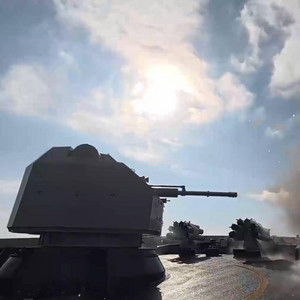
The Eastern Theater Command of the People's Liberation Army has begun conducting drills around Taiwan.
The military says the drills are a stern warning for separatist forces on the island and against external interference.
Chi-Chir has more.
The PLA's new round of military exercises that began on Monday are codenamed Justice Mission 2025.
Eastern Theater Command spokesperson Shi Yi says the drills will focus on a series of subjects.
Starting from December 29th, the PLA Eastern Theater Command is dispatching its Army Navy, Air Force and Rocket Force troops to conduct joint military drills co-named Justice Mission 2025 in the Taiwan Strait and areas to the north southwest, southeast and east of the Taiwan Island, focusing on subjects of sea air combat readiness patrol, joint seizure of comprehensive superiority, blockade on key ports and areas, as well as all-dimensional deterrence outside the island chain.
With vessels and aircraft approaching the Taiwan island in close proximity from different directions, troops of multiple services engage in joint assaults so as to test their joint operations capabilities.
It is a stern warning against Taiwan independent separatist forces and external interference.
And it is a legitimate and necessary action to safeguard China's sovereignty and national unity.
The command also released a map of the droll areas where the forces would conduct live firing activities.
It also published a poster on social media named Shield of Justice Shadowing Illusions.
This is the second exercise of the year following Straight Thunder 2025A in April.
Professor Meng Shanqing from the PLA National Defense University explained the meaning behind the name of the drills.
The code name Justice Mission 2025 consists of two core keywords justice and mission.
Justice embodies the firm resolve to safeguard national sovereignty, oppose external interference and counter taiwan independence separatist forces.
It is therefore inherently legitimate and rational mission underscores the sacred duty to defend national territorial integrity and uphold the fundamental interests, security and well-being of 14 billion chinese people, including compatriots in taiwan.
It represents the solemn commitment to resolutely combat Taiwan independence, separatist forces and external interfering forces, a task that carries a heavy responsibility and a glorious mission.
From joint sword to straight thunder and now justice mission.
The code name has changed, but our resolve, will and formidable hard power remains.
Meng said the Chinese military has placed greater emphasis on the integrated advancement of preparations, military training and combat.
He said the evolution of the codenames demonstrates the strong determination and will of the PLA and sends a warning to separatist forces.
The expert added that the PLA will immediately switch from training to combat mode if the separatists and interfering forces cross the red line.
The ongoing drills follow Washington's announcement of an US11 billion arms sale to the Taiwan region.
The package includes more offensive systems than defensive weapons, such as high-mass rocket launchers, missiles and attack drones.
Beijing has condemned the move, saying China's reunification is unstoppable, no matter how many advanced weapons are sold to Taiwan.
Meantime.
The Fujian Coast Guard says it has organized law enforcement patrols in the waters surrounding Taiwan.
It conducted drills on protection of fishing activities, identification and verification of other ships and interception of unwarranted vessels.
It said the drills tested its jurisdiction capabilities and law enforcement skills.
For the Beijing Hour, I'm Qi Zhi.
A Chinese military expert says the ongoing PLA military drills around Taiwan show tighter encirclement capabilities.
Professor Meng Shengqing from the PLA National Defense University says the drills have put emphasis on blockading vital ports and strategic locations.
He said the two drill areas north of Taiwan are off the coast of Keelung Harbor and would essentially declare a blockade there.
Two others in the southwest include one covering Taiwan's most critical maritime route and effectively seals off ports and major military bases.
The analyst also said there's one in the southeast that would prevent support from external forces.
For more.
Zheng Tao spoke with Senior Colonel Zhou Bo, a researcher at Tsinghua University's Center for International Security and Strategy.
What are the main objectives behind the Justice Mission 2025 exercises?
Well, I think the main purpose is to send a strong signal to the Taiwan Authority, as well as the United States, which has just sold a large volume of arms to the Taiwan Authority.
Because the There was such a big sale announced by the United States a few days ago.
But I really don't think these arms sales would really matter in terms of comparison of military strength across the strait.
Yeah, because the military strength of the PLA is overwhelming, and this is demonstrated especially after Nancy Pelosi's visit to Taiwan.
After that, there is a longer the medium line in Taiwan Strait and we are seeing more and more PLA aircraft flying to the other side.
And we are now seeing also a great increase of military exercises of the PLA around the island in different forms.
But this one reminds me the one that we did after the Nancy Pelosi visit, because it looks like a blockade over the island.
But, generally speaking, because PLA's strength is growing and so is our determination to check these kinds of separatist moves.
So long as these kinds of arms sales continue, we definitely will see increase of PLA's military operations and exercises around the island.
So could you elaborate more on how these drills serve as a warning to Taiwan's current authorities.
What they are buying instead is kind of insurance, American insurance.
But would that really work?
Because the PLA is growing with strength and time is on the side of the Chinese mainland.
So I don't believe they would matter tremendously.
The United States has been talking about how they could turn, hopefully, Taiwan into a porcupine.
But a pork pie would still be very much dwarfed by the elephant, right?
So I don't think it would matter.
But there is a consequence.
That is, if such kind of moves continue, I believe the Italian authority will just find the rope around its neck tighter and tighter.
I think a few days ago, the spokesman from Chinese Ministry of Defense has made it clear that as long as these kinds of provocations were to go on, then they were just to feel more and more pressure.
That was Senior Colonel Zhou Bo, a researcher at Tsinghua University's Center for International Security and Strategy.
A Chinese foreign ministry spokesperson says the country will defend national sovereignty, and this comes after the Chinese military began its drills around Taiwan.
Chen Zeyuan reports.
We talk about and we know that this is the largest ever arm cell package that's approved by the US for Taiwan, barely at 111 billion US dollars.
And Chinese foreign ministry spokesperson Lin Jian said that this is a stern punishment against Taiwan's independent separatist forces seeking independence through forces.
And this is a necessary step taken by China to safeguard its national sovereignty and territorial integrity.
It's worth mentioning that media were asking whether this is directly related to the arms sale.
Lin Jian says, Taiwan question is at the core of China's core interests.
And any egregious provocation across the red line on Taiwan.
Questions will be met with resolute response from China.
And any attempt to obstruct China's reunification will never be succeeded.
And let's take a listen what the foreign ministry spokesperson has to say.
The DPP authorities stubbornly cling to the separatist position of Taiwan independence.
They attempt to seek independence by soliciting US support, even at the cost of turning Taiwan into a power keg and armory.
This fully exposes the DPP authorities' true colors as a troublemaker of peace, a dangerous creator of crises and a warmonger.
External forces' attempt to contain China with Taiwan and arm Taiwan will only embolden the arrogance of Taiwan independence's separative forces and push Taiwan into a precarious situation of potential conflict.
That was a report on the Chinese Foreign Ministry's remarks following the ongoing PLA drills around Taiwan.
The State Council Taiwan Affairs Office says the military drills around Taiwan target separatist activities and external interference and that they are in no way directed at Taiwan compatriots.
It says the drills aim to deter the collaboration of separatists and external forces to disrupt the stability of the Taiwan Strait.
The office says the goal is to safeguard national sovereignty and territorial integrity, protect the core interests of the Chinese nation and ensure the well-being of Taiwan compatriots.
Coming up, Cambodia and Thailand will take a step toward peace following meetings in China.
The best military commander is not he who fights a hundred battles and wins every one of them.
The best military strategy does not lead to the desiccation of the enemy's capital city.
Decoding the Art of War will help you understand why there's no art in war and how Sun Tzu stayed undefeatable using the science of war, with fun stories and insightful breakdown of famous battles.
Find Decoding the Art of War wherever you listen.
We're now 12 minutes past the hour.
Cambodia and Thailand will further enhance communication, deepen understanding and gradually consolidate their ceasefire.
This is according to a communique following the meeting of Chinese Foreign Minister Wang Yi and his counterparts from the two Southeast Asian countries in Yunnan province.
The meeting followed the signing of a joint statement between Cambodia and Thailand agreeing to a ceasefire.
The foreign ministers of the two countries led delegations to meet in Yunnan on Sunday and Monday.
The communique said the two countries will work to restore mutual exchanges, rebuild political trust, achieve a turnaround in relations and maintain regional peace.
Chinese Foreign Minister Wang Yi's vowed continued efforts to rebuild peace between Cambodia and Thailand.
He made the remarks following separate meetings with his counterparts from the two countries.
Yang Jinghao has more.
Lasting peace and regional stability topped the agenda of the meetings.
Chinese Foreign Minister Wang Yi urged both sides to make full use of the face-to-face talks involving both diplomatic and military representatives to maintain flexible dialogue, enhance mutual understanding and build trust.
He said China supports ASEAN in playing its due role and stands ready to assist an ASEAN observer mission in monitoring the ceasefire.
Wang also said China is willing to provide humanitarian assistance to those in need, especially displaced residents in border areas.
He expressed hope that Cambodia would continue to strengthen protection for Chinese citizens and projects in the country.
Cambodian Deputy Prime Minister and Foreign Minister, Praxom Khun, said his country appreciates China's constructive role in mediating the situation, including shadow diplomacy by China's special envoy.
He noted that joint efforts by China and other parties helped pave the way for the ceasefire agreement.
Looking ahead, Song Kun said Cambodia is ready to work with Thailand to fully implement the ceasefire and hopes the engagement will contribute to lasting peace and stability.
During his talks with the Thai Foreign Minister, Sihasek Pongkaku Wang praised Thailand's peace-loving stance and reaffirmed China's commitment to supporting peace by providing an open and inclusive platform for dialogue.
Sihasat said Thailand is committed to achieving a sustainable ceasefire and pursuing genuine peace, and expressed willingness to gradually repair relations with Cambodia.
The meetings also addressed ties with China.
Both Cambodia and Thailand reaffirmed their commitment to the one-China principle and voiced expectations for stronger cooperation and shared development in the years ahead.
The meetings were productive and constructive.
Both Cambodia and Thailand expressed willingness to rebuild trust and bilateral relations.
With continued mediation, lasting peace and regional stability are expected.
That was Yang Jinghao in Wuxi, Yunnan Province.
Coming up, the top China-related news stories of 2025.
Discover the realities and responses to our changing climate With Climate Watch.
Uncover critical issues such as the Messiah Murrah's disrupted wildebeest migration and the drop in the Panama Canal's water levels.
Delve into solutions for a sustainable future.
Tune in to Climate Watch on your favorite podcast platform.
Become more eco-conscious and take action to protect our planet.
That's 16 minutes past the hour.
China media groups released its list of the top 10 China-related news stories of 2025, offering a snapshot of the country's major political economic, diplomatic and social developments over the past year.
The list reflects how China navigated domestic priorities while engaging with a complex and changing global environment.
Wang Zihang has details.
At the top of the list is a key policy document outlining China's next five-year blueprint.
In October, the fourth plenary session of the 20th Central Committee of the Communist Party of China adopted the recommendations for formulating the 15th Five-Year Plan for National Economic and Social Development.
The document calls for building a modern industrial system led by advanced manufacturing, green transformation and improved livelihoods through high-quality employment, education and healthcare.
It also aims to boost innovation, strengthen national security and make new progress in common prosperity and ecological sustainability.
China marked the 80th anniversary of its victory in World War II with a major military parade in central Beijing on September 3rd.
President Xi Jinping reviewed the troops and delivered a keynote address emphasizing the Chinese people's sacrifices and contributions to world peace during the war.
He called on all countries to learn from history, eliminate the root causes of conflict and work together to prevent future tragedies in a world facing growing uncertainties.
Third on the list is the launch of a party-wide education campaign to improve conduct.
The campaign focused on reinforcing the eight-point decision introduced in 2012 to combat bureaucracy, formalism and extravagance.
In mid-December, China announced that its main economic and social development targets for 2025 are expected to be achieved.
The Central Economic Work Conference said the country successfully weathered multiple challenges during the final year of the 14th Five-Year Plan, laying a solid foundation for the next phase of development.
Midway through the list is China's proposal of the Global Governance Initiative, unveiled by President Xi Jinping in September at the SCO Plus meeting in Tianjin.
The initiative calls for countries to work together toward a more just, inclusive and effective global governance system.
It became the fourth major global initiative proposed by China, alongside earlier proposals on development, security and civilization.
Another key moment this year saw President Xi lead central delegations to the western regions of Shizan and Xinjiang to mark major anniversaries.
In August, he attended celebrations for the 60th anniversary of the founding of the Suzhang Autonomous Region, urging efforts to build a modern socialist region that is united and prosperous.
In September, President Xi visited Xinjiang for the 70th founding anniversary of the Uyghur Autonomous Region.
He emphasized the unity, development, cultural progress and environmental protection.
Among this year's notable milestones, China designated October 25 as the commemoration day of Taiwan's restoration.
The move highlights the historical fact that Taiwan returned to Chinese sovereignty in 1945, following Japan's surrender at the end of World War II.
In a major step towards high-quality opening up, China launched island-wide special customs operations in the Hainan Free Trade Port in December.
The new arrangements expand zero-tariff policies and simplify customs supervision across the entire island.
Ordinary passport holders from dozens of countries can also visit this tropical Chinese island visa-free for up to 30 days.
I'm super excited to come to Hainan for the first time.
I've had the best experience coming through immigration here and I love the 30-day visa-free policy.
Another landmark achievement this year was China's progress in technological self-reliance.
This year saw the launch of the Tianwen-2 asteroid exploration mission.
China's first attempt to collect samples from an asteroid.
The country also completed its first emergency manned space launch mission and commissioned the Fujian, its first aircraft carrier equipped with electromagnetic catapults, marking major advances in aerospace and naval technology.
Rounding out the list, the 15th National Games highlighted deeper integration within China's Greater Bay Area.
President Xi Jinping attended the opening ceremony and declared the Games open.
Athletes competed across Guangdong, Hong Kong and Macau, making it the first time the country's premier multi-sport event was jointly hosted by the mainland and the two special administrative regions.
The CMG's top 10 China-related news stories of 2025 reflect a year defined by long-term planning, governance reform, technological progress and expanding regional and global engagement.
For the Beijing Hour, this is Wang Zihang.
At 21 past the hour.
Criticism over the Japanese government's record defense budget is mounting across the country.
The Cabinet's approved a draft budget for fiscal 2026 including defense allocation of around 9 trillion yen, roughly 58 billion US dollars.
It surpasses the current fiscal year's 8.7 trillion yen defense budget.
Residents in Tokyo have held a rally against the plan.
We oppose the Takahichi administration's drastic military buildup and its repeated provocative, bellicose rhetoric.
The Liberal Democratic Party, along with its current coalition partner, Japan Innovation Party, claim that expanding military capabilities will achieve peace, yet in reality, they seek to profit personally from the gains reaped by the Japanese and US defense industries.
This is fundamentally wrong.
They are seeking to repeal Article 9 of the Constitution as soon as possible, and we are resolved to take action to defend it.
Look at Germany and Italy.
Both have undertaken sincere reflections on World War II.
Japan, for its part, currently has Article 9 of its constitution, a provision that explicitly states it will never again wage war or dispatch troops overseas.
For this reason, Japan's national diet and the nation as a whole must strictly abide by the constitution.
Japan's relentless increases in defense spending will, on the one hand, divert funds away from vital social welfare programs.
On the other hand, such hikes are in themselves a form of war preparation.
This is the very outcome we seek to avoid.
I am deeply saddened that Prime Minister Takahichi's remarks have caused distress to the Chinese people.
Yet I hope that the friendship between the two peoples will be upheld.
The Japanese government's act of inciting public sentiment against and criticism of China is what truly sets the country on a path toward war.
Japanese Prime Minister, Sanai Takeichi, has approved an overall record budget of over US780 billion for the next fiscal year.
Supporters call it necessary, while critics warn that it could rattle markets in the country that's already carrying the highest debt burden among advanced economies.
Mira Olu reports from Tokyo.
In Japan, the economy right now is a cost of living story, with prices still rising faster than many households can keep up and real wages struggling to catch up.
For many people, it is not about GDP or policy.
It is about the cost of daily essentials and how much is left at the end of the month.
Because of giving birth, I couldn't work, and because of that our household income went down and expenses went up.
So compared to a normal year, I think there wasn't that much money we could put forward savings.
There is a similar uncertainty in the business community, where companies are dealing with higher costs at home and shifting trade conditions overseas.
The tariff policies of US President Trump changed, so it's hard to tell how things will go.
But coming from a tech background, Kosuke is more optimistic about the future.
Economic support for growth fields like AI, space and deep tech has been announced.
So in my work too, it should be easier than this year.
And it is against this cost-of-living backdrop that Japan's new prime minister is moving ahead with her big fiscal push.
Earlier this month, parliament passed a US118 billion supplementary budget to fund a new stimulus package with about 57 billion US dollars set aside for cost of living support, including tax cuts, subsidies and cash handouts.
Now her cabinet has finalized the budget blueprint for the fiscal year beginning next April.
The draft totals roughly 782 billion US dollars and includes a record increase in defense spending.
Yet Japan's fiscal push is facing growing scrutiny.
Their measures mainly cushion the impact rather than fundamentally lowering prices.
They buy time, but without productivity gains and weight growth.
A household will continue to feel pressure once their subsidies are withdrawn.
If wage rises sustainably, many other programs become more manageable.
Without that, the strategy will struggle to deliver lasting results.
Japan ends the year with higher living costs, a weaker yen and a record draft budget from its new prime minister, Sane Takayuchi.
Her approach is to stimulus the economy through aggressive spending to turn unease into hope.
In her own words,
Some are hopeful that the government's new economic posture will lift wages in the new year and inject much-needed confidence into the world's fourth largest economy.
Others are not so sure.
What remains to be seen is whether these policies hold water in the coming month or whether debt and higher funding costs bite first.
That was Miro Lute reporting.
U.S.
President Donald Trump says a peace deal for Ukraine is close, but some issues still remain.
Trump has met his Ukrainian counterpart in Florida.
Volodymyr Zelensky praised the meeting, saying 90 percent of the 20-point peace plan has been agreed.
Prior to the meeting with Zelensky, Trump held a phone call with his Russian counterpart, Vladimir Putin.
During the phone call between Trump and Putin, the two leaders talked about the prospects for bilateral economic cooperation when the conflict with Ukraine is over.
Dasha Chernyshova reports from Moscow.
Moscow and Washington agreed to establish two working groups, a potential peace agreement.
That's according to Kremlin aide Yuri Ushakov, who commented following a 75-minute-long phone call between the US and Russian presidents before Donald Trump's meeting with Ukrainian President Vladimir Zelensky in Florida.
Moscow says one group will focus on security issues and the other on economic cooperation.
Their parameters are expected to be finalized in January.
The Kremlin says the call, which it described as friendly, was initiated by the US President, Donald Trump, who wanted to talk to his Russian counterpart, Vladimir Putin, ahead of a meeting with Zelensky.
Trump said the conflict in Ukraine must be brought to an end as soon as possible.
Putin agreed to continue the work on the settlements through diplomacy and warned that Kyiv should make a political decision on Donbas the sooner the better, especially given the situation on the front lines.
The Kremlin also said that both Putin and Trump agreed that any ceasefire under the pretext of a referendum would only prolong the conflict.
The two also talked about prospects for US-Russia economic cooperation once the conflict is resolved.
But as diplomatic conflicts continue, Putin also reinforced Russia's position on the ground.
He once again visited a command post over the weekend, meeting with military commanders who confirmed more gains for Russia.
That was Dasha Chernyshova in Moscow.
Ahead of talks between Trump and Zelensky, Russian Foreign Minister Sergei Lavrov said any European troops deployed to Ukraine will be legitimate targets for Russian armed forces.
He also accused European politicians of being driven by ambitions in relations with Kyiv.
He said the EU is disregarding the Ukrainian people and the people of their own nations.
At 29 past the hour.
Turning to the forecast now ahead of the break, and Beijing's down to minus 5 Monday evening.
It'll be sunny and plus 3 tomorrow.
Nanchang's cloudy overnight and tomorrow, a low of 6 and a high of 17.
Elsewhere in Asia, Islamabad's overcast and 9 this evening, then it's a light rainfall in 16.
Vientiane's down to 16 overnight, then cloudy conditions in 27.
Phnom Penh's overcast tonight and tomorrow, a low of 20, a high of 30.
In Africa, Nairobi is getting moderate rainfall and 25 degrees on Tuesday.
Kampala is getting heavy rainfall and 18 degrees overnight.
That's followed by moderate rain with a high of 25 degrees.
It's time for a short break.
So far this hour, the People's Liberation Army has begun conducting drills around Taiwan to safeguard China's sovereignty and territorial integrity.
Cambodia and Thailand have vowed to gradually consolidate a ceasefire in their disputed border area, following talks that China hosted.
And China Media Group has released a list of top Chinese news stories for the year.
Shane Begum with you.
Stay with us here on the Beijing Hour.
Listen up.
Can you hear the heartbeat of our world?
It's vibrant and pulsating with the essence of life itself.
From the stem of trees to the gurgle of rivers.
From the silent strength of mountains to the icy whispers of glaciers.
Even the solid ground beneath our feet.
Right there, in the midst of all, beats the heart of humanity.
What if those other heartbeats were to stop?
Would ours keep on ticking?
Ever wondered what's actually going on in Africa through the perspective of an African?
How are things really going between China and Africa?
What's the narrative of this relationship?
Well, get a perspective with China Africa Talk.
Hear from African diplomats, entrepreneurs, academics, Chinese natives, and more.
Get on our wavelength every week to find out what's real with China Africa Talk.
Find us on your favorite podcast.
We'll see you there.
Examining the events that impact and shape China and the rest of the world.
This is the Beijing Hour, one hour of news and information brought to you every weekday.
Now here's your host.
Shane Bigham with you on this Monday.
Still to come, in business, China's plans for its proactive fiscal policy next year.
In sports, a heavyweight clash at the Africa Cup of Nations.
In culture and entertainment.
China Media Group has announced the sub-venues for the Spring Festival Gallop.
To contact us, you can email radio at cgtn.com or follow our ex-account at cgtnradio.
Now, the check of the day's headlines.
Here's Do Hongyu.
Thank you, Shane.
Starting Monday, the Chinese military has deployed forces from the Army, Navy Air Force and Rocket Force for the Justice Mission 2025 exercises which are taking place around Taiwan.
These drills are part of Beijing's response to US arms sales to the region and also serve as a warning to the authorities under Lai Ching-tue in Taiwan.
Professor Meng Xiangqing of the Strategic Research Institute and the National Defense University stated that the exercises demonstrate the PLA's ability to implement a complete blockade of Taiwan Island.
This blockade is comprehensive.
Every lifeline, including transport routes, is within the scope of this military exercise.
From this perspective, it sends a clear message to Taiwan separatists.
Taiwan independence is a dead end.
The United States recently announced a record-breaking arms sales to Taiwan, valued at US111 billion.
This sale primarily consists of offensive weapons rather than defensive ones.
Additionally, it includes what is termed the Taiwan Tactical Network and Team Awareness Kit, which integrates the island's military system with that of the US, raising the risk of direct conflict between China and the US.
The Chinese foreign ministry has condemned such actions as not only a severe breach of the One China principle and the three China-US joint communiques, but also as blatant interference in China's internal affairs and a direct challenge to China's sovereignty and territorial integrity.
The Fujian Coast Guard says it's organized law enforcement patrols in the waters surrounding Taiwan.
On Monday it conducted drills on protection of fishing activities, identification and verification of other ships and interception of unwarranted vessels.
It said the drills tested its jurisdiction capabilities and law enforcement skills.
China says it firmly opposes Israel's formal recognition of Somaliland as an independent sovereign state and its agreement to establish diplomatic relations with it.
A Chinese foreign ministry spokesperson said China firmly supports Somalia's sovereignty, unity and territorial integrity and opposes any moves that undermine Somali territorial integrity.
Hundreds of people have gathered at a funeral to mourn General Mohammad Ali Ahmad al-Haddad, military chief of western Libya, and four others killed in a plane crash in Turkey.
The families brought the coffins of al-Haddad and two others to a stadium in Misrata, their hometown, where Prime Minister Abdelhamid Debeba, along with military and political leaders, attended the ceremony.
The families will take the bodies for private burial.
The crash occurred on Tuesday when a private jet went down shortly after taking off from Ankara.
Libyan officials blamed a technical malfunction and they continue to investigate the incident in cooperation with Turkey.
Since the 2011 uprising, Libya has remained divided, with rival governments in the east and west, each backed by armed groups and foreign powers.
Australian Prime Minister, Anthony Albanese, has announced the terms of an independent review of the Bondi Beach attack, but he again resisted calls to launch a Royal Commission.
The review will assess whether multiple agencies operated as effectively as possible prior to the attack.
It will also consider what judgments the agencies made and whether any additional measures could have prevented the attack.
Media reports say the review is set to be complete and published by April.
The shooting at Bondi Beach in Sydney earlier this month left 16 people dead, including one of the two perpetrators.
The opposition and some families of the victims have urged the launch of a royal commission, the highest form of inquiry on matters of public importance in Australia.
US officials say two helicopters collided midair in southern New Jersey on Sunday, leaving one person dead and another critically injured.
South City.
Pinot, owner of Apron Cafe and Hamilton Municipal Airport, shared that the pair were regular customers at his restaurant.
They were just at our cafe having breakfast.
They're regulars.
They come in every week or every other week.
They fly in together.
They're very nice people.
They're very kind to all of the workers and staff and all police and fire crews later extinguished flames that engulfed one of the helicopters.
All right, thank you very much.
That was Do Hongyu with Headlines.
Coming up in business, China's plan for its proactive fiscal policy next year.
37 past the hour.
And with business now, here's Wang Ziheng.
Thank you, Shane.
Let's start with the equity markets here in Asia.
The Shanghai Composite closed the day slightly above flat.
The Shenzhen component ended about 0.5% lower.
Stocks related to aircraft, manufacturing and textile machinery led the gainers, while the power and chemical sectors posed its notable declines.
Wang Yin has more.
A bullish global equities mood lifted sentiment in the final trading week of the year.
The Shanghai Composite Index rose slightly, marking its ninth straight winning session.
But the Shenzhen Component Index closed to 0.5% down, and the CSI 300 Index fell 0.38%.
Among local firms with a market cap of at least 150 billion onshore Chinese yuan, Kemper Con Technologies was the biggest leader, adding 42, and Shanghai Pudong Development Bank and China Petroleum and Chemical Corp gained 38 and 36 each.
Notable gains on Monday came from the AI-related sectors, and the infotech sector gained 0.44%.
Shares of humanoid robot concepts outperformed with Swancorp Advanced Materials and KingCo Automation Shanghai, hitting their record highs in the afternoon trade.
Meanwhile, weighing on the markets, the New Energy Vehicle Index and the New Energy sector dropped 185 and 167.
There was one yin in Shanghai.
Elsewhere in Asia.
Hong Kong stocks finished lower on Monday, with the Hang Seng Index dropping 07.
In Japan, the Nikkei dipped over 0.4%.
Exporters fell on the firmer yen world banks gained after a summary of opinions from the Bank of Japan's latest policy meeting, boasted expectations for a quicker pace of interest rate hikes.
The Chinese Finance Ministry has pledged to expand fiscal expenditure in 2026 to ensure a solid start to the country's 15th five-year plan period from next year through 2030.
The National Fiscal Work Conference in Beijing outlined five key priorities, including expanding fiscal spending, optimising the use of government bonds and improving transfer payments to strengthen local government finances.
Authorities will also continue to refine the spending structure by focusing on key areas, while enhancing coordination between fiscal and monetary policies to maximise effectiveness.
The conference emphasised that expanding domestic demand and fostering a robust domestic market will be top priorities in the coming year.
The agenda also highlighted support for technological and industrial innovation, regional coordination, social welfare, green transition and deeper international economic cooperation.
For more insight on China's economic blueprint.
Lily Lu spoke with Liu Jichin, a senior research fellow at the Chongyang Institute for Financial Studies at Renmin University of China.
So let's compare the reason policy framework with previous years.
What shifts do you see in those policy focus that can be reflected in recent financial stability and development reports?
I think the major transformation or shifting of the policy this year physical reform we can find a very special feature.
That means in traditional or before time that all this physical policy mainly are passive measures.
Nowadays, the government, especially the financial minister, try to adopt an active policy.
Active policy means that we do this policy by ourselves according to the demand side, not only from the supply side.
So this is a very important shift of the policy, especially when we have more monetary supply.
Because we know proactive policy means always that more flexibility and more cautious from both sides.
The cautious for against the risky, and flexibility to meet the demands of the SOE or SME in the market.
So by doing so, the combination of this passive and active policy combination, I think the fiscal policy for next year will be more active, will be more efficient, because efficiency is more important.
We are looking at existing tools like tax cuts and special bonds.
What can we expect in terms of new targeted fiscal measures, do you think?
And also, how will the efficiency and precision of fund utilization be enhanced, especially in light of the ongoing financial reforms?
Your question already mentioned that they have different interpretation of the policy.
Because we know that traditional fiscal policies are very, very cautious and also put the risk at the first line.
Nowadays, they put the efficiency, the profit at the first line.
This is quite important. shifting in the policy making.
And actually we know that in some special industry sections we find that many policies could be possible, have more chances.
For instance, tax cut is a very traditional one.
All countries all over the world, they use the same tools.
But we should try to have another thinking or consideration.
For instance, we should for some special companies to have a special relief policy.
The relief policy for pardon.
So-called pardon is that if this company has already, They tax the burden for more than 20 or even five years longer, or even the creditability is not paid to return.
So we should have a very special policy to give more time or even to give this company very special treatment, better relief or pardon this charge or tax that is tax-free, not a tax cut.
That is totally to help the companies to get rid of the burden of the tax in the history.
Because many companies, they are really under pressure of the burden.
So I think we should take more active policies, like the special policy, to treat these companies in order to emancipate or to relax this company from the tax problems.
That was Senior Research Fellow Liu Juqin at China's Renmin University.
Chongqing is stepping up efforts to modernize its industrial system through innovation.
The southwestern Chinese city has built an intelligent traffic control network integrating live data on the ground, with over 6000 networked vehicles.
Chu Wenbo is the head of the Intelligent Connected Vehicle Innovation Center at Western Chongqing Science City.
He says the efforts have inspired breakthroughs in autonomous driving and smart transportation.
Through the construction of such digital infrastructure, we can effectively aggregate the capabilities of multiple platforms, including vehicles, roads and cloud systems, and centrally leverage the data from these platforms.
This allows us to make greater strides in digital urban governance and development, vehicle road integration empowerment, autonomous driving testing and traffic optimization.
It also allows us to build comprehensive data sets to support autonomous driving and smart transportation initiatives.
China's 15th Five-Year Plan proposal mandates the full implementation of the AI Plus initiative, guiding Chongqing's development of intelligent and connected vehicles.
China's industrial economy has seen steady growth this year, with profits of the country's major industrial firms increasing 01 in the first 11 months.
Official data shows, the cumulative growth rate has remained positive for the four months since August.
Industry upgrading has made steady progress.
Profits in the equipment manufacturing sector rose 77, contributing 28 points to overall profit growth and the largest contribution among all sectors.
During the same period, high-tech manufacturing profits grew 10% from a year ago.
Chinese authorities are expecting a daily average of more than 21 million cross-border trips during the upcoming three-day New Year holiday a 224 increase.
Estimates from the National Immigration Administration show that airports in Shanghai, Guangzhou and Beijing will be among the busiest.
Land border checkpoints within the Guangdong-Hong Kong Macau-Greater Bay area will also see a significant increase in passenger flows.
An official says Hong Kong's economy is expected to grow by 32 in 2025, marking the third consecutive year of expansion for the global financial hub.
Financial Secretary, Paul Chan, says the economic performance is better than what they projected at the beginning of the year.
He pointed out that stronger exports and investment have driven the growth.
He also highlighted that Hong Kong's stock market has staged a stellar performance this year.
Chen said the city will further improve itself as the International Financial and Trade Centre, while also expediting the development of a world-class innovation and technology hub.
All right, thank you very much.
That's Wang Ziheng with Business.
You're listening to The Beijing Hour and coming up in sports a heavyweight clash at the Africa Cup of Nations.
Sideline Story brings you all things sports-related.
The hottest topics, latest events, juiciest stories, all with a very personal take.
Subscribe to sideline story podcast for heated sports discussions covering events that are happening in china and around the world.
47 past.
Now turning to sports.
Here's young one.
Thank you, shane.
In the heavyweight africa cup of nations clash on sunday, defending champions code devour were held to a one-all draw by cameron in Marrakesh.
Amad Diallo, scoring for the second game running, put elephants ahead, but Cameron hit back just five minutes later through Junior Chamado.
The result leaves both sides tied.
Atop Group F A disappointed Diallo, who was named man of the match, had hoped for more.
I'm really disappointed for the draw today.
I wanted to win this game.
I wanted to finish this competition with nine points.
But yeah, let's take one point and then prepare the next game against Gabon to finish first in the competition.
Cameron coach David Pangu was pleased with the result against the title holders.
It was a good match.
We planned to play it out this way and there you have it.
We're satisfied with this point.
After all, they're the defending champions, a mature team full of individual talent.
So we'll be happy to take the point.
The draw confirmed Gabon's elimination from the tournament.
In Sundays, the action Algeria secured a place knockout stage with a 1-0 win over Burkina Faso.
Aki Gray scored his first senior goal to give Tottenham Hotspur a vital 1-0 Premier League win away at Crystal Palace on Sunday.
The victory ended Spurs' poor away run and eased pressure on head coach Thomas Frank.
Tottenham thought they had taken the lead earlier through Richarlison, but the goal was ruled offside.
Gray then broke the deadlock just before half-time, heading in from close range.
Crystal Palace pressed for an equaliser in the second half, but Tottenham held firm.
De Wijn lifts the Spurs to 11th on the table with 25 points, while Palace remains 9th with 26.
Lautaro Martini scored a decisive goal as Inter Milan claimed the crucial 1-0 win over Atlanta on Sunday, sending the Nerazzurri into the new year on top of Serie A.
Inter leads the table on 36 points, one clear of City rivals AC Milan and two ahead of Napoli in the tightly contested title race.
Marcus Thuram had the first half goal ruled offside, while Inter goalkeeper Jan Zouma made a superb save to deny Atlanta after the break.
The breakthrough finally came in the 65th minute, when Martinez finished from close range after a defensive error.
Atlanta pushed late on but couldn't find an equaliser.
Football stars, a tennis legend took center stage at Dubai Global Soccer Awards on Sunday night.
Paris Saint-Germain forward, Ousmane Dembele, was named the best men's player, beating teammate Kylian Mbappe and others.
PSG was the best men's team.
In a surprising return, the final award of the night went beyond the pitch.
Tennis great Novak Djokovic received the inaugural Global Sports Awards presented by football icon Cristiano Ronaldo.
The 24-time Grand Slam champion said honour was unexpected.
Honestly, I wasn't expecting this.
I'm a big fan of football.
I came here to obviously celebrate the incredible year that all of the football stars were having, and I was caught off guard, but in a positive way, so I couldn't be happier.
Ronaldo himself won the award for best midfielder a Middle East player, while Barcelona's Lamia Mel claimed three separate prizes.
In an exhibition billed as the latest battle of the sexes, Nick Kyrgios has defeated women's world number one arena Sablanca, in a straight sense, in Dubai.
The light-hearted match featured under-arm serves, dancing and a modified court to level the playing field.
Despite the 6-3, 6-3 scoreline, both players embraced at net all smiles.
Sabalanca said she enjoyed the spectacle and is already looking ahead.
Yeah, I really enjoyed the show and I think not.
I think, I feel like next time, when I play him, I already know the tactic, I know his strengths, his weaknesses and it's going to be a better match for sure.
Kyrgios, the 2022 Wimbledon run-up, who has played only six tour-level matches in the last three years because of injuries, praised the Sabalenka's champion quality.
Hell of a competitor and such a great champion.
Obviously, she's a multiple Grand Slam champion.
And I think seeing someone as great as Irina out here and myself, I think it truly is a spectacle.
And I think this is a great stepping stone forward for the sport of tennis.
Arranged by the players.
The shared agency event was framed as pure entertainment for a younger audience, rather than a revival of the historic gender equality battles of the past.
The so-called Battle of the Sexes was the name borrowed from the 1973 match between Billie Jean King and Bobby Riggs, which King won in straight sense and made her efforts to start a female tour and get equal pay in tennis.
And finally, team Conchita defeated team Li Na 12-5 at Macau Tennis Masters on Sunday.
The two-day exhibition event was captained by Grand Slam champions Conchita Martinez and Li Na, and featured a mixed lineup of rising stars and established players.
Team Lina narrowed the gap early by winning the hit-target challenge, but Mira and Drea were sealed victory for Team Conchita with a straight-sense win over Alexandra Yala.
Uybin extended the lead with a win against Xiang Juncheng, while Ugo Anber closed the event by giving Team Lina a final victory over Alejandro Davidovic for Kina.
Thank you very much.
That's Yang Guang with sports.
Coming up in culture and entertainment.
China Media Group has announced the sub-venues for the Spring Festival Gala.
From north to south, east to west, people in China are chasing their dreams and leaving their mark.
Want to know how they beat the odds and made a difference?
Footprints brings you the true life stories of their journeys.
53 past now, turning to culture and entertainment.
China media groups unveiled the four sub-venue locations for the 2026 Spring Festival Gala.
Harbin Iwu, Hefei and Yibin will host parts of the world's most-watched TV program alongside the main venue in Beijing.
The provincial venues are expected to present a vibrant and diverse cultural showcase during China's most important traditional festival.
The 2026 lunar year is the year of the horse, symbolizing strength and vitality.
First aired in 1983, the Spring Festival Gala remains a centerpiece of New Year celebrations and airs on Chinese New Year's Eve, which falls on February 16th in the new year.
2025 has been a landmark year for Chinese cinema on the global stage.
From the record-breaking success of Nezha 2 to the expanding overseas reach of films like Detective Chinatown 1900, Chinese stories are gaining unprecedented international visibility, signaling a shift in the global box office landscape.
Ryan Addison reviews the Chinese cinema of the past year.
Nezha, long time no see.
2025 is proving to be a breakthrough year for Chinese films overseas.
This year's biggest hit, Nezha 2, didn't just dominate the domestic box office.
It also topped the global charts, earning US22 billion worldwide.
The film follows the fiery mythological hero Nezha as he reunites with a former enemy to stop a looming catastrophe.
Though only around 2 of its earnings came from overseas markets.
It's the first time a Chinese story that requires some cultural familiarity has made such a big global impact.
Next on the list is Detective Chinatown 1900, grossing over $450 million worldwide.
It secured one of the widest overseas releases for a Chinese comedy mystery in years, covering North America, Europe and Australia.
Dead to Rights set during Japan's invasion of China in the 1930s also travelled far after a strong domestic run, raking in around 380 million globally.
It's estimated that China could command nearly 23 of worldwide box office revenue this year, almost matching North America's 24.
It marks a shift in the global film landscape.
But Chinese films still rely overwhelmingly on their domestic audience.
That was Ryan Addison reporting.
A spectacle of light and tradition is drawing crowds in Nanjing.
The annual Lantern Festival is part of the eastern Chinese city celebrations welcoming the New Year and will run from January through early May.
Ding Siwei spoke to the event organizers.
The festival blends traditional lantern craftsmanship with modern lighting.
It integrates Jiangnan New Year customs, the Chinese zodiac culture associated with the Year of the Horse, and classic myths. to create a culturally rich visual experience.
We have enhanced the traditional handicrafts with LED lights and smart interactive features, boosting the lantern's expressiveness.
The park features seven themed areas with 48 distinct scenes revolving around lanterns.
It also showcases intangible cultural heritage lanterns from cities across China, like Foshan and Quanzhou.
A special 40th anniversary exhibition allows visitors to experience the diverse charm of Chinese lantern culture all in one park.
That was Ding Siyue reporting.
57 past now Beijing, down to minus 5 Monday evening.
It'll be sunny and plus 3 on Tuesday.
Nanchang's cloudy overnight and tomorrow, a low of 6 and a high of 17.
Elsewhere in Asia Islamabad's overcast with a low of 9 degrees this evening, then a light rainfall in 16 areas.
Vientiane is down to 16, then cloudy in 27.
Phnom Penh will be overcast tonight and tomorrow, a low of 20 and a high of 30.
In Africa, Nairobi is getting moderate rainfall and 25 degrees on Tuesday.
Kampala will see heavy rains in 18 overnight, followed by moderate rain in 25.
And that's it for this edition of the Beijing Hour.
Making news today.
The People's Liberation Army has begun conducting drills around Taiwan to safeguard China's sovereignty and territorial integrity.
And Cambodia and Thailand have vowed to gradually consolidate a ceasefire in their disputed border area, following talks that China hosted.
On behalf of the staff, Shane Bigum, in the Chinese capital, hoping you'll join us for the next edition of the Beijing Hour and open a window to the world together.
He can't live without the Yellow River in his eyes.
The Yellow River is so noble and elegant.
Both my grandpa and dad made a living from the river.
Would you like to move away from the Yellow River?
I don't think I will.
I love it so much.
The Yellow River, the second longest river in China, is regarded as a shaping force in the history, economy and culture of northern China.
Today, about 100 million people live within its water basin, making up nearly 9 of the country's population.
How is climate change felt at its headwaters?
What are the locals doing to cope with it?
What are the descendants of the boatmen doing?
What has kept some people from leaving their home village by the river?
And what has drawn others back?
Could the fading fishing community revive in a time of digital transformation?
From 2021 to 2024.
Our reporters visited the upper, middle and lower reaches of the Yellow River, Talk to the herders farmers boatmen, fishermen and eco-activists who share a close bond with the river, and present their stories in pictures, podcasts and videos.
All in our 12-part series, The Yellow River Mosaic, available only on CGTN Radio.