As Election Day approaches, NPR's Consider This podcast is zooming in on six states that could determine who wins the White House.
Georgia, Nevada, Wisconsin, Michigan, Arizona, and Pennsylvania.
We'll ask voters in these swing states what matters to them, and which way they want the country to go.
Follow along with new episodes this week on the Consider This podcast from NPR.
You're listening to Life Kit from NPR.
Hey, everybody. It's Marielle.
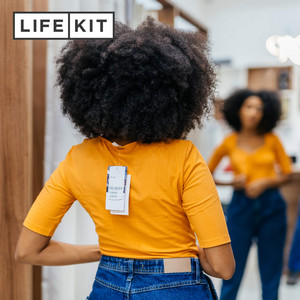
Today, we're talking about personal style when your body changes.
And look, maybe it feels a bit indulgent or shallow to explore your fashion sensibilities with everything else going on in your life or in the world.
But the way our clothes fit us and how we feel in them can have a big effect on our day -to -day lives.
And so when your body changes, especially if that change was out of your control.
The tiny bit of agency that comes with getting dressed in the morning and feeling like you kind of know what's going to happen when you put your pants on or your shirt on and you're going to go out and they're going to look the way that you're used to them looking, having that gone is a big deal.
And that deserves a moment of validation, I think.
That's Sophie Strauss.
She calls herself a stylist for regular people.
I think the thing I realized is styling is this thing that people associate with luxury and wealth and celebrity.
So I thought, well, what makes it clearer to people that I'm for them?
This is a luxury type service that anybody deserves to have.
Sophie's always loved fashion.
She'd often put together little shopping guides for friends.
But she didn't start to think about a career as a stylist until a friend put out an ask on Instagram.
That friend had a friend going through cancer treatment and she was looking for a dress for an event with her husband.
Would anyone want to help her shop?
And I just was like, yeah, that sounds exactly like what I want to do.
Like sort of connecting with style and having an opportunity to see what it means in a moment of flux or trauma or struggle for a person.
And the way that it might be able to sort of reconnect them with their identity or with their sense of joy or expression in a time where their body's not feeling familiar.
So Sophie made a date with a friend of a friend.
They spent the day together and found a dress for her.
And she's been helping people find their personal style, often in moments of big transition ever since.
Her only rule is there are no rules.
Style is the expression of your preferences and personality through your clothes and all that other stuff, the rules, the trends, the body type stuff.
That's not style. That's marketing.
On this episode of Life Kit, reporter Andy Tagle talks with Sophie about how to navigate your own personal style as your body changes, whether you've experienced a big life event like an illness, a pregnancy, an injury, or just the more subtle fluctuations that happen as time passes.
She'll give us tips for understanding your personal preferences, knowing when to shop your closet versus when to invest in something new and help us find the confidence to wear what we want.
This stunning anthology offers original writing and illustrations, interviews, and photos.
And the audiobook includes 52 years worth of interview excerpts with more than 60 legendary artists.
Visit NPR .org slash How Women Made Music to order now.
Hey, it's Mike and Ian.
We're the hosts of How to Do Everything from the team at Wait, Wait, Don't Tell Me.
Every week we take your questions and find someone much smarter than us to answer them.
Questions like how do I safely jump out of a moving vehicle?
How do I dangerously jump out of a moving vehicle?
We can't help you, but we will find someone who can.
Listen to the How to Do Everything podcast from NPR.
On The Ted Radio Hour, Harvard Business School Professor Amy Edmondson says giving negative feedback to employees is the kind thing for bosses to do, even if it doesn't seem nice.
Nice is the easy way out, makes me comfortable in the moment, but it doesn't take care of you and it doesn't take care of the future.
Ideas about making teams work.
That's on the Ted Radio Hour podcast from NPR.
Sophie, there are all sorts of reasons why a body might change.
For me, it was having a baby.
And especially right after, nothing fit right or sat right, even if it did fit.
And it was really overwhelming.
It felt painful. It felt lonely to have a closet full of clothes that were frustrating to wear.
When you're working with clients who are feeling stuck like that, what do you say to help them get unstuck?
The first thing I do is I validate that because access to your clothes and style and being able to sort of put your clothes on and have them feel right is often considered superficial.
You know, like it's not that important.
There's a lot of shame tied up in both your clothes not fitting like they used to and now caring that they don't fit like they used to.
Both of those now bring shame and that doesn't get you anywhere.
And so I always tell people it's really hard.
The next thing that I usually do is we try some stuff on and we identify like, okay, what does fit?
And if it doesn't fit, how far away are we from it fitting?
Is it tailorable? Is it something that maybe we can style in a way that feels close enough to get you through this moment?
So take away one, assess where you're at.
That means actually going into your closet.
I know this step might feel hard depending on where you're at in life and trying things on to learn what fits and what doesn't.
What do you have? What do you need?
Takeaway two is a little squishier.
Sophie says to match your clothes and your identity you have to ask yourself, what do you want your clothes to say about you?
More specifically, what quality is it that you love or that you're proud of or that you're excited about in yourself that isn't coming through when you get dressed right now?
Because clothes are communication and when you put your clothes on and they don't feel right, it feels like opening your mouth to speak and the wrong words come out.
And so I want to know what are you trying to say about yourself?
Not in stylistic terms.
I don't need you to tell me, oh, well I want to look more minimalistic or whatever.
We'll get there. But I want to know, I want to look a little bit more polished.
I'm fun. I'm creative.
And when I get dressed, whether it's fit or styling or whatever, I can't.
I go out and I feel like instead of looking like this, I look like that.
And so that's where we start.
And then it's my job to connect those sort of more abstract, emotional and identity ideas and concepts to more concrete style concepts.
Okay, you want to look more polished?
Well, for example, something I might say is details and an outfit communicate intentionality.
So if you're not feeling polished, why don't we try to find you a couple easy, ready to go details that you can throw on in the morning on top of every outfit that just make it feel like it ties together a little bit.
Maybe that's two nice chunky chain necklaces that you can throw on over your t -shirt and sweats and it's a good bag and it's a little watch that you love.
Those little things, I swear, go a really long way in feeling like you put on a t -shirt and jeans because you didn't have time to having put on an outfit.
Do you have those things in your closet?
Because if you already do have the pieces to make that possible, let's do that with what you have here.
You know, I also want to be conscious of the fact that body changes are not at all exclusive to weight fluctuations or people going through postpartum.
Sophie, what are their body or style changes should we think about?
Yeah, I mean, like I have worked with several clients who are either like recently in remission from cancer or dealing with a chronic illness.
So for those clients sometimes a big consideration are things like sensory triggers.
So for example, if you have a mastectomy scar that is feeling sensitive to fabrics in a way that your skin did not feel sensitive before, or by the way, if you're just somebody with sensory sensitivities in general, just super, super, super common.
It sounds simple, but I'm like, great, let's actually try your clothes on and identify the ones that feel good and the ones that feel bad.
And when they feel bad, let's stop and go, why?
Hmm. I know that sounds like Yeah, duh.
But most people don't do that.
So you go, why is it the fabric composition?
Oh, yeah, it's a wool sweater.
And I used to be able to, you know, handle wool, but now I really can't.
Okay, great. Maybe we offer a cotton sweater that's a little bit smoother and it doesn't have, you know, maybe it's slightly less itchy depending on, you know, the make of it.
Maybe it's not that maybe it's you know what it is.
It's the seams this has darting down the front.
And sometimes that's like, okay, great.
Well, there's, you know, clothing that's actually made seamless now for this exact purpose, like sometimes they're sort of 3d knit or things like that.
Or it's like, let's cut the tag out and you can wear that shirt inside out.
Great. Right? Or let's get you some undershirts.
So take away three, get specific, scientific, even about your likes and dislikes.
Pull out that favorite sweater of yours and really look at it.
What is it exactly that you like so much about it?
The cut, the color, the fabric, all of the above?
And on the other end of the spectrum, those pants you loved in the store but never actually wore?
Spend some time with them.
What's missing? Is it the hug of the waistline or maybe just the feel of the seams on your skin that you don't like?
The shape or utility of the pockets, the flare of the cut, the weight of the fabric.
Dial in on those small details and then use those to inform your styling and your purchasing moving forward.
Sophie says, we're quick to generalize or to give our clothes too much power.
As in, oh, I just, you know, this doesn't suit me.
And I'm like, what does that mean?
You know, they put on a shirt.
I just never wear this because it does, you know, I'm not pulling it off.
I'm like, what is that?
Can you tell me what does that mean that you're not pulling it off?
Well, you know, it's like, it's not really doing me any favors.
And I'm like, can't say more, what is, what does that mean?
And usually quite frankly, what, what people mean by it is it doesn't make their body look thinner.
And that's pretty much the only thing that people really mean when things are supposed to be flattering.
It's not doing me any favors and not pulling it off or they mean that like maybe they're older and they think they look like they're trying to be younger, but those are kind of the only two things.
Um, and so I say, I totally hear you.
I'm trying to help you build the skills to feel confident to know yourself and know your style.
So if you put that shirt on and you're like, this isn't doing me any favors, let's, let's shift first of all the language.
I want you to say this instead.
I don't like this. That simple.
I don't like this. You're no longer the failure.
You're not failing the shirt.
The shirt is failing you.
You don't like it. And it's, and when you say it like that in art, your brain goes, this is subjective.
I don't like this. Somebody with my exact body type could put this shirt on and be like, hell yeah, I look amazing.
So you don't like it.
Now let's figure out why.
You know, I'll often look, where is somebody sort of adjusting the garment, right?
Are they flexing with it at the hem, at the sleeve, at the neck line?
That tells me a lot about whether, you know, what, what might be bothering them.
Are they sort of pulling it away?
Is it feeling too tight?
Do they keep lifting it up?
Go. Oh, well, hmm. I see you're pulling at the, at the hem line.
Are you not liking where it falls on your torso?
Yeah. I feel like I don't know.
I feel like my torso is feeling longer than I want it to look.
Okay, great. Again, that's super subjective.
So nothing right. That's personal preference.
You don't have to have any length you want.
It doesn't matter. Okay.
I wonder if we got that hemmed, like two inches and we'll roll up the bottom.
Do you like that better?
Oh yeah. Okay, great.
You like that better.
What if we tuck it in?
If we don't hem it, what do we tuck it into pants that hit around that spot?
Oh, I like that better too.
Great. Now let's sort of like memorize, that's like, that's a spot you like your clothes to hit.
That's a spot you don't like your clothes to hit.
When you're shopping now, that might be something to look for.
You're starting to get information about your preferences.
I'm hearing a lot of good things.
I'm hearing that that style is very subjective.
You just have to be more specific.
Like I like this thing because of the way that it feels.
I like this thing because of the way that it hits.
You just have to learn your specifics.
Totally. And there's a metaphor I use a lot, which is that people get dressed and shop for clothing as if they were going into a restaurant and ordering food without any idea if they have celiacs, if they're a vegetarian, if they're in the mood for, you know, something springy and light or something
hearty and comforting.
If they like tomatoes or hate tomatoes.
Like you just look at this menu and you're like, ah, and then you're, and then like going into restaurant, your job is like, well over there, she ordered the pasta with marinara sauce.
So am I supposed to order the pasta with marinara sauce?
And well, oh, but I ordered pasta, you know, yesterday I had sushi.
Maybe, you know, am I, am I not staying in my lane?
Like, you know, am I not creating a consistent image of my style?
If I have pasta with marinara today, but I had sushi yesterday.
It's like, we don't do that.
And that's how people get dressed.
I'm just thinking about all of the, all of the crew socks that I've been considering by because I'm a millennial and all I own is ankle socks.
Do you like wearing ankle socks?
Yeah. I mean, all I've ever owned for the past decade is ankle socks.
And I'm like, do I have to make that change now?
Everyone next to me is eating marinara sauce.
So therefore, yeah, I have to.
Is my pesto wrong? My pesto is clearly wrong.
It's time for marinara.
Here's what I'll say about the ankle sock thing is, were you wearing ankle socks because you really like ankle socks or were you wearing ankle socks because that's what was trendy when we were growing up?
Sophie, I don't know what sauce I need now.
I don't know. I don't know if I'm pesto or marinara.
I don't know which socks are comfortable to me.
Let's talk a little bit about shopping your closet and tailoring, especially when you're, when your body is still in a moment of transition.
When is it time to get rid of some clothes?
When is it time to reinvest?
When is it time for a brand new something?
Yeah. So that's really tricky and obviously really individual.
Right. So I'm going to ask you, is it bothering you to see those pieces in your closet or is the, is it okay?
Cause everybody has different feelings about it.
If it's bothering you, I might say, okay, great.
Let's maybe find a box or one of those like vacuum bags and let's take these clothes.
We're not getting rid of them, but maybe let's put them somewhere where they're not in your eye line right now so that you're not opening your closet right now to a closet full of things that don't fit you.
Some people, we have to do that.
That's totally fine.
So then has your body been about this size for a little while?
Yeah. Okay. So then let's, let's build you a wardrobe for this body, right?
Or if they're like, I don't know, I fluctuate a little bit and, but I, I desperately need clothes.
Then we might pivot towards a flexible wardrobe.
Takeaway four. If your body is still in a state of transition, consider opting for a size flexible wardrobe.
For some people that might look like opting for clothing subscription service.
Sophie says she's not a huge fan of these services more broadly, but for anyone who's going through big weight fluctuations in a short amount of time, say postpartum or breastfeeding parents, it may be the best route, at least in the short term.
So you're not buying a ton of clothes you won't need down the line.
Sophie's also a big proponent of shopping secondhand, a cheaper and more sustainable option that may allow you more room to try out different styles and sizes.
If a client needs to add new items to the wardrobe, that's usually where she starts.
Finally, consider exploring specific styles that allow you more flexibility.
This is going to have, you know, a little bit of give or an adjustable feature like a wrap dress or, you know, a waist cinch or a drawstring or shoulder ties, or it's something that sits a little bit freer from the body.
It's bias cut, which means it's going to have a little bit of give without needing to be full of stretch.
It has this fabric composition.
So I have, it's pretty in depth handbook that talks about all of those things one might look for.
Um, to make choices in a moment where maybe your body's not quite done changing, but you're like, I need some new clothes.
So then we might use that to guide how we're shopping for you in that moment.
You know, Sophie, so much of your work is rooted in finding self confidence and self expression, which is a great idea and a great mission, but definitely not always easy to do.
Um, vital advice for listeners for how to let go of fear and just embrace their personal style.
There's two things that I, that I like to share with people.
The first is I ask when was the last time you had a negative thought about a stranger you saw walking down the streets outfit?
If you're like a halfway decent person, probably like not since you were a teenager, because the truth is adult, well -adjusted human beings.
We're not picking apart other people's clothes.
The last time you probably had a thought about somebody's random stranger's outfit on the street was because you liked it.
Oh my God. I love those shoes.
Yeah, exactly. That's what we do.
We're too busy, right?
And sometimes it's not a stranger, right?
Sometimes it might, we might be afraid of, you know, pushback or comments from a partner or a friend or a family member, and that can be more painful.
And the thing that I remind people is think about the state you would have to be in to make a negative comment about somebody's right.
Forget just having a negative thought, but to actually say a negative thing about something somebody else is wearing, you'd have to be in a pretty bad place.
And what I remind people is that if somebody, because I can't promise, oh my God, nobody will ever say a negative thing about what you're wearing.
But if so, if it happens, it's rare, but if it happens, there is no information in that comment for you about you.
All the information in that moment is letting you know that that person is not in an awesome place mentally or emotionally because they're lashing out a little bit.
And that's the only information there.
Our last takeaway, takeaway five, building confidence in your style requires just getting out there and going for it.
I know it might feel scary, but the more you own it, the more stylish you'll feel.
I encourage people to find a low stakes opportunity to wear an outfit that they're nervous about, but that they love, right?
It's not, you don't have to wear something.
You're like, I'm super uncomfortable in this.
Then great, don't wear it.
But if you're, if there's an outfit that you're like, I love this.
I just don't know if I have the chutzpah to do it.
Great. Go to the grocery store in it and come right back and you'll look around.
Did anybody, did anybody point and laugh?
Did the children all gather to stare and point?
No. Right? I was fine.
Okay, great. And you know, like something I sometimes do with clients when we've started with a closet console and it's been really clear that they're really anxious to wear their clothes out, out in the world.
And then we go shopping together.
I will make a point to wear something particularly zany so that they see that it's okay.
And then I swear 90 % of the time, what happens is while they're standing with me, somebody will give me a compliment.
And what I tell them is there is nothing intrinsic to me as a person that makes it so that I'm pulling this off, except that I did it on purpose and I look like I'm having fun.
Right? I'm selling it because it's, it's not like, I'm five four, I'm not a size zero.
Like I'm, I'm just, I'm a person and I'm having a good time with it and I know what I'm doing.
And, and I, I did it because I wanted to.
And that's what makes my clothes look like I have style, not because there's like some secret sauce I have that nobody else can tap into.
That's the sauce. That's the sauce.
That's the marinara.
Cara, we're back to the sauce.
Okay. Let's recap. Takeaway one.
Do a closet audit. What fits?
What doesn't? What do you want?
And what do you need?
Takeaway two, clothes are communication.
So what do you want your clothes to say about you?
And how might that message be different than what they're currently saying?
The disconnect between the two can help you decide how to shift your wardrobe.
Takeaway three. Instead of subscribing to arbitrary fashion rules or trends, get specific about your personal likes and dislikes.
Then use that information to inform your styling.
Do you love the feel of that specific type of cotton shirt?
The way that color complements your skin tone?
Write this stuff down and save it for later.
Takeaway four. If your body's in a state of flux, try a flexible wardrobe.
That might mean using a subscription service for a while or shopping secondhand or investing in pieces that offer some give or room to breathe, like wrap dresses or pants with drawstrings, or all of the above.
Takeaway five. Confidence in your personal style can be built up over time.
Start small, work your way up, and trust in your own sauce.
That was reporter Andy Tagle.
For more Life Kit, check out our other episodes.
We have one on sustainable style and another on decluttering.
You can find those at npr .org slash Life Kit.
And if you love Life Kit and want even more, subscribe to our newsletter at npr .org slash Life Kit newsletter.
Also, we love hearing from you, so if you have episode ideas or feedback you want to share, email us at lifekit at npr .org.
This episode of Life Kit was produced by Claire Marie Schneider.
Our visuals editor is Beck Harlan and our digital editor is Malika Garib.
Meghan Kane is our supervising editor and Beth Donovan is our executive producer.
Our production team also includes Margaret Serino and Sylvie Douglas.
Engineering support comes from Carly Strange.
I'm Mary Elsigara. Thanks for listening.
studies have shown that elections can spike feelings of stress and anxiety.
That's why NPR's pop culture happy hour is there to help you feel more grounded as we talk about the buzziest TV movies and music.
Try a show on HBO's industry or a roundtable on rom coms to take a step back from the news of the day, at least before you plunge back in tomorrow.
New episodes every week on pop culture happy hour from NPR.
Numbers that explain the economy.
We love them at the indicator from planet money and on Fridays we discuss indicators in the news like job numbers, spending, the cost of food, sometimes all three.
So my indicator is about why you might need to bring home more bacon to afford your eggs.
I'll be here all week.
Wrap up your week and listen to the indicator podcast from NPR.