NPR. Whoa. Um. Hey, hey, Robert, it looks like you're trying to walk a balance beam.
It's not as easy as it looks, Adrian.
I mean, I take it you were inspired by the recent Olympics.
The what? No, no, no, I was inspired by the beige book.
Um. Uh, okay, yeah, I should get the gag by now.
You're referring to the government document that we all love, that details the economic conditions around the country.
And with this release of the beige book, you can see an economy very carefully balanced, get it?
Between expansion and contraction.
We have parts of the country where hiring is slowed, or even hiring freezes, but other parts where labor hiring is still chugging along.
And all we gotta do is wait for the dismount.
9 .7. Uh, good enough for gold medal?
Good enough for beige.
It's the beige awards.
Our eight times a year salute to the art and science of telling stories about the economy.
I'm Robert Smith. And I'm Adrian Ma.
We'll be giving out our own medals today for our favorite anecdotes from the beige book.
We'll have one dinner item that will likely be getting much cheaper and something very valuable that is being given away for free.
Ooh, but we'll warn you there is a catch after the break.
There's always a catch.
Support for this podcast and the following message come from Wise, the app that makes managing your money in different currencies easy.
With Wise, you can send and spend money internationally at the mid -market exchange rate.
No guesswork and no hidden fees.
Learn more about how Wise could work for you at wise .com.
Support for NPR comes from NPR member stations and Eric and Wendy Schmidt through the Schmidt Family Foundation, working toward a healthy, resilient, secure world for all on the web at the Schmidt .org.
This message is brought to you by Warby Parker.
Their glasses start at $95, including anti -reflective, scratch -resistant prescription lenses that block 100 % of UV rays.
Try five pairs of frames at home for free.
Go to warbyparker .com slash covered.
This message comes from Wondery and Pineapple Street Studios for the new podcast Hysterical.
Hear about one of the most shocking outbreaks in American history, believed by some to be the most severe case of mass hysteria since the Salem Witch Trials.
Binge the series only on Wondery Plus now.
I always like to remind everyone how this award show works.
There are 12 regional banks in the Federal Reserve System.
Each one carefully studies their local economy and brings back little stories of what they see.
All those anecdotes are collected in the beige book.
We read the entire thing, I swear, and pick out the most interesting items.
Why don't we start with third place?
Third place goes to the Cleveland Fed for a bit of encouraging news.
I'll read it. Overall, community college contacts reported increased enrollment for the upcoming academic year, particularly in part -time and certificate programs.
Some reported that enrollment increased among individuals who left during the pandemic.
Yeah, this is like, this makes me happy to hear, right?
Because community colleges were really suffering for a few years, and it's nice to see people getting back to school, even if it's not to pre -pandemic levels.
And when I talk to economists about education in the U .S., they are always talking about the benefits of community colleges.
They're affordable, they're nearby, and they provide the much -needed training for a lot of the jobs we need to grow the economy.
Okay, onto the silver medal.
I guess it's more good news if you are looking for cheaper prices.
I mean, who isn't, Robert?
If you will, the entry from the San Francisco Fed.
Quote, The supply of produce crops and seafood remained high due to elevated yields from the current season, and stored inventory from the past season for some products, such as salmon.
Now, it doesn't say, but I suspect that this is probably farmed salmon.
And I know fish prices were one of those things that people complained about during inflation, but with excess salmon supply, prices have been coming down over the last few months.
So speaking of prices going down, our first -place winner in this round of the Beiges tells us a story about prices going down so low that they've become negative.
The Beige Award goes to...
Wait, wait, wait. We should play some sort of music.
You know how they play like the national anthem in the Olympics?
Uh -huh. We should play something here.
Okay, all right. Here we go.
The Dallas Fed. Coming to the stage is Miriam Yosef, a business economist at The Dallas Fed.
We spoke to her on Friday.
Congratulations, Miriam.
Thank you. Thank you.
It's an honor to accept on behalf of the Beige Book team here at The Dallas Fed.
Miriam, we haven't talked before.
The Dallas Fed has won before, but you and I have not talked before.
Are you new at the team?
I'm very new at the team.
I've just finished out my year.
So when you join the Beige Book team, what's the number one thing they warn you about?
I think the biggest warning comes with being careful about what anecdotes to select and to include in the Beige Book, because oftentimes you actually have competing anecdotes where one person will be saying one thing and another person will be saying another.
So you really want to pick anecdotes that actually reflect a theme that you're seeing across multiple individuals or multiple organizations.
And here I thought they just picked anecdotes just to win them Beige Awards.
You do suspect sometimes, but I will say that this time the winning Beige Book entry is very subtle, so much so that I had to read it twice before I realized what it was talking about.
It's about natural gas in the Permian Basin in the west of Texas.
I'll read it. Listen carefully.
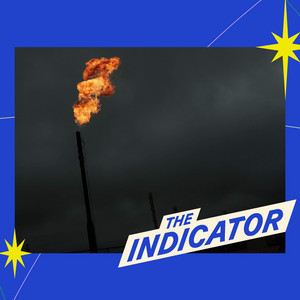
The lack of takeaway capacity has regularly kept local natural gas prices below zero this summer, inflating costs and suppressing profits as producers must pay to have natural gas piped away.
Below zero? Like, they weren't just giving away natural gas.
They were paying people to take natural gas away.
Gas is free in Texas.
Is that right, Miriam?
Yes and a no. Explain this to me.
It's a very unique phenomenon that happens here in our Permian Basin where production of natural gas is actually a byproduct of what they actually want.
They want oil. And so as they drill, natural gas is just a byproduct of that.
And so they have to figure out a way to get it to market.
And usually that's through pipelines.
And there was an unfortunate event where the pipeline construction was delayed.
And so that's when we talk about takeaway capacity.
So takeaway capacity was not matching the production of natural gas in the Permian Basin, so they had nowhere to send it.
They couldn't ship it to markets, basically.
So it goes from this valuable thing to something that you need to get rid of in order to drill for oil.
You've got to put the natural gas in place.
And I take it they're not allowed to just send it into the atmosphere.
No, they're not. Yeah, so if you add this natural surplus gas, you can't just release it.
You have to pay someone to take it.
Eventually, the gas does get used by a customer, but it may take some effort to transport it to another pipeline.
It's like when you hope to sell an old mattress on Facebook Marketplace.
Then when no one wants it, you have to end up paying people to haul it away.
We wanted to know how this was impacting Texas oil producers, so we called up Carr Ingham.
He's an economist and president of the Texas Alliance of Energy Producers.
Well, I wouldn't say it's normal, but it's become somewhat routine in recent years.
Carr says the Permian Basin has seen this big boom in oil drilling over the last 10 years.
And when all of a sudden all these new oil wells came online, they also produced a lot of natural gas.
The crude oil, that's no problem.
They can just haul that away by trucks.
But the natural gas pipelines take a long time to build.
Yeah, I mean, you have to get investors, commitments from gas producers, and a lot of regulatory approvals before you can even break ground for a pipe.
In the interim period of time, between the time that you recognize the problem and that there's a pipeline solution, you've got this issue.
And we've had it for longer now and at a deeper level than we really have had in the past.
Ingham says the new Matterhorn pipeline will be fully operational in the next few months.
So maybe that'll fix things for a while, but it can't be easy.
How much does this affect the bottom line of oil companies in Texas?
Are they drilling less because they have to pay to get rid of the natural gas?
I think that they have to be drilling less because they have to pay to get rid of the natural gas.
I mean, I run these calculations on a monthly basis.
And for all the natural gas that's being produced out there, if it's minus two bucks, you're talking about several hundred million dollars in production value a month out there, you can just take this right off the top revenue line for the crude oil.
Well, it's just a cost of production now.
It was disposing of that natural gas.
But crude oil prices are still relatively high.
And so even with negative prices in natural gas, it's still worth it to pump both out of the ground.
Congratulations again to the Dallas Fed, and a big thank you to Maryam Yosa for alerting us to these unusual circumstances in the Permian Basin.
Thank you so much. We really appreciate it.
You know, I'm thinking about getting a special truck and driving out to these oil wells to see if I can get some of that sweet negative priced gas.
You'd have to get there first.
It's a bit of a trek.
Yeah. Yeah, it's not an easy place to get to.
Robert, it might just be easy for you to load up your truck with some of that cheap salmon.
Still barbecue season, I can do it.
This episode is produced by Cooper Katz & McKim with engineering by Quacy Lee.
It was fact checked by Sierra Juarez.
Cake & Cannon edits the show and the indicators of production of NPR.
If you're hearing this, that means you haven't gone sponsor -free with NPR+.
Join us on the plus side for awesome podcast perks across more than 20 NPR podcasts, including bonus episodes, behind -the -scenes content, sponsor -free listening, and more.
Learn more and sign up at plus .NPR .org and never hear this promo again.
Every day, technology changes how we live.
Shortwave wants you to feel empowered and informed in navigating these new tools, from AI to precision medicine to quantum computing, face the future with confidence.
Listen to the Shortwave podcast from NPR.