It is game time! The Paris 2024 Paralympic Games are officially here, running from August 28th to September 8th.
Ready for 11 action-packed days of inspiring performances and unforgettable moments?
Here we go! And think you're a master multitasker?
Turns out your brain might beg to defer.
We'll dive into the surprising truth about what multitasking really does to your productivity and brain health.
Coming to you live from Beijing, this is Round Table.
I'm Ha Young. For today's program, I'm joined by Steve Hatherly and Yushan.
First on today's show, the wait is over as the Paralympic Flame is lit in Paris.
The world's attention turns to the incredible feats of strength, determination, and skill that are about to unfold.
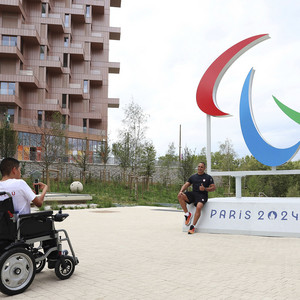
From the stunning architecture of the Paris Olympic Village, designed to accommodate athletes with disabilities, to the array of barrier-free facilities that have been developed across the city, this year's Paralympic Games promise to be a true celebration of inclusion and accessibility.
So, what are the most interesting details about the Paris 2024 Paralympic Games?
Yushan. Well, I was reading just now that this year's Paralympic Games will feature a maximum of 4,400 Paralympic athletes who will compete in 549 medal events.
And it's really fascinating for me to discover that during the quest for medals, they will be playing out all across the beautiful city of Paris.
I've only been there twice, so it really struck me to see when- Only been there twice?
What do you think? I've never had the opportunity.
What do you mean only twice?
Oh my goodness. I mean, for us who had the experience of studying in the UK, which is geographically close to France, it's just kind of convenient to do so.
And again, I was really struck to see blind football matches played, to be played at the foot of the Eiffel Tower.
Well, para equestrian events in the gardens of the Chateau de Vaxelles.
It's like- Excellent pronunciation, by the way.
Thanks, Steve. But I mean, it's just so astonishing to see sports played in scenic spots.
Like, you don't imagine that done a lot in so many other cities around the world.
Absolutely beautiful parts of the city, right?
22 sports in total on the way, blind football, Bauchia, which is a fun one.
Do you know what Bauchia is, by the way?
That's where- Do explain.
They have a white ball at the end.
I'll just explain it very simply at the end, and then they roll different colored balls down towards the white ball.
And the goal is to get your ball as close to the white ball as possible, and that's how you score points.
If you're familiar with curling and it's scoring, it's somehow similar to that.
Right. And in Chinese, it's called di guan xiou.
I have to admit, this is the first time I've seen the Chinese as well.
Bauchia goal ball, that's another fun sport, para athletics, para judo, power lifting, cycling, the list goes on.
And the cycling part, if you're interested to know, that's going to be divided into a cycling track and a para cycling road.
So that will combine all together with 23 different sports for us to watch as the para Olympics get started.
More sports, more tremendous athletes, the best in the world doing what they do best.
Yes, indeed. And we've seen that every year, I think it's kind of interesting to look at, well, not every year, every Olympic or para Olympic event.
It's interesting to look at their slogan, mascots, emblem, or torch, you know, all these things that come with the game, which says a lot about, I suppose, the sentiment, the message that that particular city and country is trying to send to the world.
So anything that stands out in that part of the game.
I think the Phrygian cap would be a good example of the message that they're trying to send, according to Tony Estangue.
Tony Estangue. By the way, he's a three time gold medalist.
He was a slalom canoeist back in the day.
And when asked about, you know, why they chose the Phrygian cap as the mascot, it plays a really important role in French culture for French people.
It's a really well known object.
It's a symbol of freedom.
It's an object that represents mascots all around the world.
And the fact that the Paralympics mascot has a visible disability as well, it sends a strong message and that message is to promote inclusion.
And by the way, if I didn't mention it, Tony Estangue, he's the president of Paris 2024.
Yes, head of the organizing committee.
And yeah, this is a really interesting mascot because for a lot of us not that familiar with French culture, we were wondering, what is that red square thing?
Apparently it is, you know, that cherry red figure and it's based on the symbol of the French Revolution.
So that is quite interesting.
And also we see that for the emblem of this Paralympics, for the first time ever for the Olympic and Paralympic games will be the same.
And the only difference is the Olympic rings or Paralympic agitose.
Logos, right. Yeah, the logo below.
And it wasn't the emblem resembling with like a head shape or the haircut of a very famous Chinese TV host that kind of inspired some discussion online.
I remember reading that from Weibo.
I mean, a lot of Chinese listeners might reckon with that.
Right. Some pretty significant changes coming up to this year's Paralympics as well.
And this is all good news.
It's going to include a record number 235 medal events for women, that's eight more than they had at Tokyo in 2020.
And that number also represents a pretty significant increase, 28% increase on the 183 medal events that female athletes had the opportunity to take part in at the 2004 Paralympic Games.
A couple of more numbers for you.
There's going to be at least 1859 slots available for female athletes, 77 more than Tokyo.
And that record number is almost double the 990 women that took part at the Sydney 2000 Paralympic Games.
All of those numbers mean that there are more athletes competing in more sports for more medals.
And this is good news. And also there's fairness and respect shown in the number of participations between different genders, which I see as a big progress.
I see that as well. And the Paralympics are hosted not before, not during, but after the Olympic Games.
What are the intentions behind this arrangement?
It's a question that gets asked a lot as a matter of fact.
Why not hold the Paralympic Games at the same time as the Olympics or even beforehand?
And you see that question posed a lot in the media.
And I found the answer on the Olympics website as a matter of fact.
You know, it was 40 years after the creation of the Paralympic Games when they signed an agreement in June of 2001.
It was on the 19th of the month of that year.
And that agreement was between the IOC and the IPC.
And that agreement said that they would confirm that the games in Beijing actually in 2008 would be held shortly after the Olympic Games, and it's always been that way ever since.
And the agreement is from both sides, which means they want it to be that way.
Andrew Parsons, he's the president of the IPC.
And he said that creating a single shared event, if they did it at the same time, that would probably diminish the importance of the Paralympics.
This is his quote. He said, the Paralympic Games are a unique time to celebrate Paralympic athletes.
It's their moment. If the two events were merged, these athletes' exceptional performances would be normalized or get drowned out when they deserve our full attention.
Having the Paralympic Games just after the Olympic Games is the most appropriate situation for the IPC.
That makes a lot of sense to me.
And IPC as an international Paralympics Committee.
Not only that, but just logistically speaking, imagine that.
If they combined the two events to be at the same time, the Olympic Village would have 26,000 beds.
They'd have to transport 2,000 people in wheelchairs.
They'd need more stadiums.
They'd need more swimming pools.
And it's just logistically not a realistic thing to do.
Yeah. And also, I think it's great for average viewers in the sense that, okay, there's all that excitement of the Olympic Games.
And hold on, hold on. It's not over.
Yeah. Yeah, there's another build-up coming, right?
Yes. And we see that the designs of facilities in the Olympic Village has been done specifically to adapt to the people with disabilities.
And how has that been done?
Well, so far I see that during the building of the entire Olympic Village, they've already have the idea of accessibility in the mind and just through the entire construction process is the idea to make everything accessible for all of the athletes from every country to just feel at home.
Yeah. They designed it in the beginning.
When they were designing the Olympic Village, they had accessibility in mind.
So they didn't have to do too much.
So what happened was, chronologically speaking, when the Olympics finished, they closed the Olympic Village on August 13th and then they opened it on August 21st.
Kind of like when a hotel, you know, guest check out and then new guests check in.
That's kind of what exactly happened here.
Like I said, it was built with accessibility in mind.
They just needed to fine-tune it a little bit.
And they did make some significant adaptations.
For example, in the outdoor areas, the main task is to mark a few jumps that were not very visible and dangerous for athletes as well.
They put black and yellow stripes down to identify them because they can be stumbling hazards.
They also tried to take care of little mini details.
For example, in the dining areas, they made sure that for people who use wheelchairs, there was enough space under the tables so that they could roll their chairs underneath there comfortably to not disrupt their eating experience.
Yes. And there's this other design about, actually I heard this from you, Steve, about having, let's say in the cafeteria, placing trays, having food on top of trays as athletes carry them and then having a layer of rubber underneath the trays.
It's another fine detail.
Yeah, that's so great. They've done such a tremendous job with the design of the village.
And I actually watched a video, the athletes were really praising it because they were asking their opinions about it.
The rubber thing that you're talking about is that if athletes have to carry their tray, well for some athletes, that's quite uncomfortable.
So they do have extra staff there to assist them, but if they want to put the tray on their lap, they provide them with a thin layer of rubber that sits on their lap, then they can put the tray there so the tray doesn't slip around on their lap.
I mean, these are extremely fine details that they really thought about when they were designing the village for the athletes.
Absolutely. And this all reminds me of in 2008 and also to 2020 when Beijing was hosting the Summer Olympic Games as well as then the Winter Olympic Games.
And then in the Chinese public discourse, I don't think it's that common for people to all focus on the welfare and benefits and just to make lives a little bit easier for the folks living with disabilities.
And then with the construction of the Olympic Village back then, there was a lot of discussion and just light shown on this aspect, especially for just having in mind that your target audience or users, they're going to be on, let's say, wheelchairs.
And then the height of their site is going to be different from an average person maybe.
So there are a lot of fine details that the organizers really put into their mind when they're designing the thing.
Another example is the refrigerators where the athletes can get beverages from.
They made sure that the, how would you describe it?
Like the trays or the levels inside the refrigerator were at a level where the athletes could reach those comfortably on their own.
Actually, Ludovine Munoz is a former French para athlete and Ludovine is the head of integration for Paris 2024.
And Ludovine called the village for para athletes, paradise.
Here's the quote, the goal was to provide the best possible experience for the athletes during their stay, ensuring that they could focus entirely on their performance without worrying about accessibility issues.
And that's why all of those adjustments were made.
Yes. And many of the such adjustments are just like how you would see like Paralympians are in daily lives.
I could just imagine like how convenient it could be for them, especially during the time when they have to attend to trainings and also prepare emotionally and physically and mentally.
All of such equipments will just make things more accessible and convenient for them.
Absolutely. And I wanted to design the village in a way that the athletes wouldn't have to think one time about anything that was inconveniencing them.
And like I said, Ludovine Munoz is a former para athlete.
So being designed by a former para athlete, it's the perfect person to be in charge of a project like that.
Yes. And just as you guys are going through some of these details, it just makes me think that wouldn't it be great?
And hopefully this is the real magic that lies within the Paralympic Games event is that even afterwards, then these designs of inclusivity as well as just this belief in so can be wider promoted.
And it's of course, it's great to see that at this event, there are these wonderful designs and the implementation of such thoughts.
But also, the long game that is what I'm always focusing.
But before we get more into that, I suppose, what inspiring stories can we expect from Chinese athletes competing in this Paralympic Games?
Well, I was just looking at the timeline of China attending Paralympics.
And apparently there's this lady called Ping Ya Li who won a gold medal in the Women's Blind Long Jump event in the seventh summer Paralympics back in 1984.
Oh, 1984. China has been a member of the Paralympics.
And you know what? Like that same year also marks the first time China ever entered the Paralympic Games.
And back then, only about 20 people of a team were sent from China to attend that event.
And let's just see how big the number has grown this year as the data shows that during this year's Paralympics, there are overall 284 athletes will compete in 19 sports and 302 events.
And these over 200 athletes are all from China.
So we see a long way of how China as a country is growing in the path of sports.
Yeah. China's achieved some pretty significant success in the Paralympics as well.
And Pyeongchang in 2018, I went to the Pyeongchang Olympics, by the way, in Korea.
I mean, I was there to watch.
I wasn't in the Olympics.
That was an exciting time.
And the Chinese wheelchair curling team won the first gold medal for the Chinese team in the history of the Winter Paralympics.
Really, really well done there.
Of course, we're in the middle of hot weather now.
We're not going to get any curling this time around.
But still, success for the team, which is great to see.
Right. Yes, indeed. And also, we've seen that the Chinese women's wheelchair basketball team won a silver in the Tokyo 2020 Paralympics.
And that was the best performance of the Chinese team.
And it'd be interesting to see what happens this time.
Yeah. We have a shot at this.
And there's real camaraderie among the Chinese athletes as well, right?
Helping each other out where they can, sticking with each other, which is what you like to see from athletes.
Even within the same country, you know, they're busy with their own schedules.
And of course, they are trying to do the best that they can.
But showing support for others is a nice story to see as well.
Absolutely. Because we've seen with Hu Daoling, he has won many gold medals in wheelchair fencing events.
And he will attend the Paris 2024 Paralympic Games with his student or disciple, Zhong Sai Chun.
That's really cool, isn't it?
Yes. So he'll be, well, I suppose you'll get some real great experience or what do you call those?
The wisdom that's going to be passed on and really practical tips passed down.
I mean, what better mentor could you have actually for that kind of situation?
So lots of eyes are going to be on the Chinese Paralympic team for this big, exciting event.
Lots of great athletes there.
Absolutely. And I was just trying to figure out.
So the Hu Daoling you mentioned is actually the veteran athletes from previous games, right?
Yes. So now we see the legacy passing on from the coaches to the younger athletes also as demonstrated in the Olympic Games and to be demonstrated at the Paralympic Games.
Yes. And we see many examples as such from the Chinese team.
For example, for Yao Jun, this is going to be the seventh Paralympic trip for her.
She's already won five gold medals before.
And this time, well, it is in the Para athletics category.
She has three younger athletes who she helps to train.
Wow. And again, it's another example of having a great mentor like that because I think she already won five gold medals before and she's a world record holder and a Graham Slam winner in major throwing events for Para athletics.
So I wish I could have a teacher like that.
Yes. You too. And how have sports positively impacted the lives of people with disabilities in China and around the world?
And both let's look at physically and mentally.
Well, physically, I was reading about this news of this Para power lifter named Guo Lingling who shares on the internet on how the practicing powerlifting helped her to become a stronger and just a better version of herself and then face all the ups and downs of life in the face.
And because of the sport she's practicing, she made more friends as she mentions and also she traveled around the world and discovered other angles of life.
I think that's a good example of how sports can lift you up as a Para Olympian and also in the meantime, it strengthens your heart and in a way, it changes your life, right?
Yeah, no doubt about that.
I mean, I still think there can be more done for these athletes or even potential athletes because even though there's very little data on how adaptive or how often adaptive exercise machines would be used if they were available in gyms, for example.
There's not a lot of data on that and having these machines in the gyms for these potential athletes, it makes them reluctant to purchase them because they're not sure how long they're going to get or how often they're going to get used.
Also these gyms, that would cost a big investment as well.
A lot of these machines cost as much as 9,000 US dollars, these types of machines that could be used.
So not only does it make the gyms reluctant to buy them because of the cost but because of the, I guess, lack of guarantee of how often the machines will be used.
But we need these types of things.
We need these types of inclusive fitness machines and not only that but trainers as well.
A lot of trainers when you go to the gym in many countries around the world, they don't have the proper training to help people with disabilities to train them.
But my point is, if we had more machines in gyms that were available for people, if we had trainers who had the proper training to train these potential athletes, we could see, we're seeing more athletes now, more para athletes now in this big event, but we could see even more success in the future from athletes from all around the world.
Yes, that is absolutely true.
And here in China we've seen the 14th fitness week for people with disabilities has been launched in the beginning of August and this is one more example of having these special days, special events for a targeted group of people just to raise awareness and also provide some of these really practical infrastructure as well as coverage for those involved and just
to encourage folks to get more involved and also for an average person to, again, raise awareness as part of it too.
Yeah, and that's why I agree with the point about having the Paralympics after the Olympic Games.
Another point that I didn't mention before, people often ask why not have it before the Olympic Games, have the Paralympics first.
And their president said, we don't want that because it'll feel like a warm up or something to the Olympic Games.
And then again, it's all about getting the attention to these athletes that they deserve and that's why they're held afterwards.
And I think it's the right decision.
Yes, and for that fitness week that I just mentioned, we've seen that in Guizhou province, that is in southwest China, there was the Paralympics, sorry, a paramerathon running event which attracted nearly a thousand participants.
And similar activities are crucial to promote awareness and to get people involved in these kind of sports.
And how has China contributed to the global development of sports for people with disabilities through hosting major events, improving accessibility and having all these kind of relevant activities every other month, it feels.
I mean, the way I see it is that we have this whole legal system that's built for this purpose because China's law on the protection of persons with disabilities and also on the construction of barrier free environment is there to just have the idea of people of all different conditions can just join sports and enjoy it is really playing a significant role in the society as
well. It's just to add the inclusiveness of all groups and people of all ages to just join sports and enjoy it and have fun.
So this is a strategy that China is trying to promote.
It has been promoting for quite some time as well.
Yes, and it's really exciting to see all the developments in this area.
And the Paralympic Games are more than just a sporting event.
They're a powerful reminder that disability doesn't define a person.
When we come together to celebrate the incredible achievements of these athletes, it shows the world that people with disabilities are strong, resilient and capable of anything they set their minds to.
It's a message of hope and inspiration that transcends borders and cultures and it's one we could carry with us long after the closing ceremony.