Hello, and welcome to the NVIDIA AI Podcast.
I'm your host, Noah Kravitz. Over the years, I've been to the dentist more times than I can count.
And through all those visits, I've noticed a steady trend towards more advanced technology in the dentist's office.
The one place I've noticed it most is the x-ray machine, or rather the computer monitor that's now replaced the old backlit panels that Dennis used to use for viewing x-ray films.
Technology has made it easier for my dentist to quickly take images of my teeth, call them up on a screen, zoom in on particular spots, compare them to older images and generally get a better handle on making a diagnosis and prescribing treatment.
Well, that's nothing. compared to what today's guest is working on.
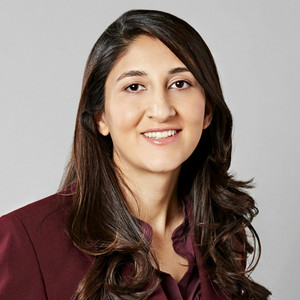
Dr. Warda Inam is CEO of Overgen, a startup using artificial intelligence to help dental organizations improve patient care.
Overjet's AI powered technology analyzes and annotates x-rays for dentists and insurance providers. taking the subjectivity out of x-ray interpretations to improve patient care.
Dr. Anand, welcome, and thanks so much for taking the time to join the NVIDIA AI podcast.
Thank you, Noel. Thank you for having me here.
I want to say up front, I resisted trying to make some kind of a cute joke about how, you know, dentists just get a bad rap because the word dentist comes up and most people think like, oh, I don't want to go to the dentist.
When actually- Dentists are the people who literally put us out of some of the most aggravating, miserable pain that most of us will ever experience.
So First up, shout out to my own dentists and all the dentists out there.
But let's get into talking about Overjet.
Maybe you can tell us a little bit about... the company and, you know, what you're doing to advance the state of the art of dental care.
So at Overjet, we're solving a fundamental problem in dentistry.
And the problem is that you have X-rays, et cetera, that he mentioned, which are sitting computer systems but are unstructured and using computer vision and natural language processing, being able to structure that data so that computers could analyze that information, is fundamental to what Overjet does.
And what's unique about Overjet is that we are able to quantify the disease to be able to determine what treatments are necessary and that really helped in making, uh, better decisions, but also help in automating some of the administrative tasks that need to happen as well.
It sounds like there may be kind of two parts to what you're describing.
There's sort of the back office side tasks that go into running a dental practice or I would assume dental insurance and all of the business stuff.
And then there are the things that the dental practitioners are actually working on.
So maybe to start with that, how does it function from the dentist or the other dental professionals point of view?
The way it helps a dentist while, say, a patient is in the chair is that it helps dentists provide a more comprehensive diagnosis So I know if you try to remember the last time you went to the dentist, you probably healed the hygienist of all that information.
So they were taking x-rays, they were probably probing you and trying to see, you know, if there was any pocket depths and that they could measure which were above a certain threshold and writing that down.
There's no data collection that the hygienist helps you helps the dentist take.
And then the head dentist comes into the office and spends, say, a few minutes looking at all that information.
And now you're talking about say 18 or plus x-rays, all of these data points that the hygienist has collected and really be good comprehensive diagnosis at that time, and then communicate that information to you.
So that's where Overgen helps is that when it comes to that diagnosis things might get missed because you know there's a lot of information that has been presented in a very short amount of time and uh Overdrugs technology can help dentists make that diagnosis better, but also then communicating with you.
So when they're showing you an x-ray, They're showing you a black, gray, white image and you don't understand what radiolucencies mean and, you know, what. these particular things that they're saying to you being apart from the fact that you might need a filling or a crown.
And that's what you can recognize from it.
And so what overjet psychology helps is probably helping making the diagnosis of but also help in communicating that more effectively with the patient with the annotations that are automatically added onto the x-rays, whether it's The gravity is being in red and outlined such that I don't even understand what the... what the dentist is talking about, or bone levels being measured so you can understand what bone loss really means, but also understand how that the disease has progressed over time as well.
So if, for example, there is bone loss happening, you can see that it has grown from a certain millimeters to a certain millimeter, and that can give you a sense of urgency in order to act upon the disease such that you can be in better health.
You know, bone loss is something that I don't think I've ever heard my dentist mention, which hopefully just means I'm doing okay.
But it makes me want to ask, I know periodontal disease is a term I'm at least a little bit familiar with, and obviously cavities, but we won't talk about that.
But are there certain ailments or signs of disease, certain things that overjet is sort of better at or more tuned into surfacing?
And then do some of these correlate with things that you know, human dentists just over time have had a tendency to miss.
And for lack of a better word, I'm not trying to point a finger at Dennis, but.
And so here, when you think about what I said, so the good thing is you're familiar with perinatal disease.
Pernatal disease is one of the most prevalent diseases chronic conditions impacting the U.S. population.
And one of the impacts of chronic prefrontal disease is actually poor loss.
So predominantly school is unchecked. You actually have all of us and you have, you know, tooth loss as well with, you know, you can see how much population is on dentures.
So that is, you know, not everything is coming from periodontal disease, but there is a huge impact of periodontal disease on people losing all their teeth and they're buying dentures later.
But not only that, but it also leads... connects with cardiovascular health and diabetes and other conditions as well.
The fact that a lot of people are not aware of bone loss, et cetera, is also part of the problem. where we are not aware of our oral health and what are the metrics that helps determine our oral health condition as well.
So in terms of what Overjet capabilities allow us to do, we can. determine anything on an x-ray that a dentist can determine as well.
Not every algorithm has been FDA-clear. So we go through algorithm by algorithm, getting them FDA-clear.
There's some things that, for example, some use cases where you do not need FDA clearance.
It might be an insurance use case or some administrative task. for that we can determine, you know, most diseases.
But there is, you know, some which are being used while the patient is in the chair for patient communication. go through the FTE clearance process too.
And we have been, we're the only company in the world who's been cleared for both You mentioned cavities as well as periodontal disease as well through bone level measurements.
And not only... detecting those, but also being able to quantify and outline those.
And so on the back end then, because I want to get into how the technology works or even before that, sort of what prompted you to found Overjet.
But just kind of to close the loop on the back office side and sort of for the, you know, whether it's a private practice or a larger company or then the. the insurance and the dental industry kind of larger.
What, what is Overjet doing on that end?
In general, what Overture is doing is helping improve patient care and patient experience.
Okay. And the way we look at it, anything that impacts patient care experience, we are touching, especially when it comes to clinical and diagnostic data.
One of the important pieces of it is claims of the reimbursements, et cetera, that happened over the not only... helps the dentists provide a better diagnosis and improve patient care, but also it helps in automating some of these administrative tasks so that people can spend more time on doing the high-level cognitive tasks that they can do.
Think about it when you talk about clean processing, you're talking about, is this the right x-ray?
Is this the right tooth number? Is the right treatment happening?
And those things, a lot of those things can be honest.
Not everything can be automated, but a majority of the cases can be.
And overjet technology is being used by a majority of the top carriers now.
So these are top insurance companies, medical, dental, as well as just dental and dental and life carriers who are utilizing Overjet to streamline their operations, to provide better decision-making to their providers in order to improve the care that is being provided to their members.
And so what stage is the company at in terms of working with providers and in what parts of the world?
So we are right now primarily focused on the US.
We are going to be expanding beyond uh, next year, uh, in the U S we have, uh, as I mentioned, all the bears cited, we have, uh, Majority of the adult carriers representing about 75 million members.
And that's a significant portion of the dental insured population.
And here, even on the provider side, we're working with some of the largest dental groups.
So if you have you know, a hundred practices, a thousand practices, you know, being able to utilize what we're just acknowledging to streamline what's happening across our practices is something that is being utilized as well.
So we are the leader in dental AI right now and the provider of droids for dental insurance companies, as well as groups which really care about patient care.
Excellent. And so I assume, well, I don't want to assume, but that The technology works with kind of the existing x-ray technology that dentists are already using?
Yes, so it's an add-on technology that you don't have to replace anything.
You don't have to replace an extra idea that we can work with most and most x-rays and even not even the ones that you were mentioning which are analog and and you might be digging, you know, before the digital extras came along, we can actually analyze all those extras as well.
And there is about... 30% of foreign data that comes to insurance companies is not in pure digital format, but it gets digitized somewhere through scanning and et cetera.
But there might be boxes in the background.
There might be people holding there. and taking images, to being able to process information, you know, which is very, very, or there's a lot of noise in it. be able to process that and build very robust machine learning models that can analyze real-world data, which is messy.
Yeah, so let's get into that. I don't know if you want to start with how you got the idea for Overjet and how the company came to be, or if it's easier to sort of talk about the process of building and training models and gathering data sets, where should we start?
Start with either or. So just in general, and I think for me, over a decade, So I was in the bioimaging space when we started Overjet.
So I was working at the start of QBio doing research. and working with MRI data.
And here I changed my dentist and got a treatment plan, which was very different than what I had received before.
And that got me very interested in dental diagnosis.
Why was this the case? Who was right? Who was not right?
And really... Again, worried about the fact that it was more of an art than science.
And that's where the idea started to stand.
And the question we were asking was that, Can technology help improve that ratio of diagnosis that was existing?
Of course, we start and ending up solving a month bigger problem.
However, that's how it started off from.
And the idea here was that, you know, if we could take these X-rays really streamline and really quantify these conditions such that two dentists looking at a single x-ray can agree on the treatment that were being recommended, then that would be great for patient care.
So with that, the first piece of it was how do we get the data?
Yeah. to actually train our models. And here, I would say I got lucky very...
In the process, well, as the idea was percolating and I was getting deeper into it, I did an Uber ride share and the person I sat next to was also from MIT.
So we started chatting about what I was working on.
And at this time, I had quit my job and was really focused on figuring out this dental problem.
And he basically said he had this dentist friend that I could chat with.
And he set up, I followed up with him. We set up a meeting.
And that dental friend ended up being, he was a professor at Harvard Dental School before and had his own multiple practices.
I got to meet him in the first meeting. I had good advice, but I had access to his data.
And he said, sure. We got our nickel agreement in place. but that time and but the the cool thing here was we had access to hundreds of thousands of uh extras with diagnosis that are what had happened very quickly, and then we use that to train our models.
Of course, with that, we started getting more data from other folks as well.
And we ended up starting to build models enough that we could actually build something useful.
And once we had something useful, then it became easier as well.
I love that it started from a, or not started, but there was a ride sharing success story that kind of gave you that boost.
That's great. Saving money sometimes helps.
Exactly, exactly. Given your background in biomedical engineering, And the fact that as I'm listening to you, I'm thinking about, I've had the opportunity to speak to a couple of other folks on the podcast who are using AI in medical imaging with x-rays and in different capacities.
Did you find a big difference between dental imagery, x-rays, And other sorts of medical imaging that you are familiar with, or maybe even as you were training models.
Is there something or anything particular to... dental imagery that, you know, made this process easier or harder or was just kind of interesting?
Yeah, so I would say something that makes it easier, some things make it harder.
The easier bit would be because you have so much prevalence of dental disease, it's not like... trying to find cancer or other diseases which are much more uncommon where you have to look at a lot of data and find positive cases.
Here, patients do have some kind of dental disease, and it's starting, let's say, cavities.
And multiple of their teeth have cavities as well.
So that helps in demand data, density, etc.
And it's also a region which is, like, pretty limited in terms of its stock.
Like, it's... photo images, et cetera, of the face or when it comes to dermatology, which is, I think, a much bigger challenge.
The challenge here is, or the challenge that we have to face is the fact that there's less standardization, so you don't have just diagonal formats.
You have images being sent in every different format.
So there's a lot of engineering that needs to happen around that.
They mentioned even the quality of their mind varies significantly across different providers because there's no standardization.
So that's the challenge. And also the third, I would say, the challenge would be I think the variation of diagnosis is much higher and it is much higher, which makes sense if you look at why radiologists are more trained to be reading or just x-rays in general or radiographs, that's the field that they're going to.
While dentists are basically surgeons who also read radiographs.
They're kind of doing it all, yeah. They are oral radiologists, but there are like a few hundred in the US.
So they're not, you know, utilized every day on your x-ray.
So- basically general inventors are the primary readers of dental lectures.
And there is a lens training that happens around that as well. resulting in more variation.
And also the environment they operated is much more intense because they have to be making these diagnoses very quickly with a lot of data. in an environment which is not controlled, right?
So the, you know, dental practice, the light is not being controlled.
You're not sitting in a dark room just looking at x-rays.
There's somebody talking to you, somebody's being bold while you're doing an operation.
If you think about it, the dentist is pretty much doing an operation when the hygienist asks them to get up look at the X-rays, make a diagnosis and go back to the counter.
Right, right, right. So that's the kind of environment that they have to deal with and resulting in more variation and more need for this kind of technology as well.
I had read a little bit about that in the notes, but then hearing you discuss it and thinking about my own dental experiences, they're really... wearing the multiple hats and like you said, getting pulled out of the middle of what's essentially surgery in some cases, right?
Dental surgery to go analyze a set of films.
Absolutely. Overjet has been up and running for about three, four years now.
Is that right? Yeah, so we officially were created in August 2018.
Okay. So next month we will be four years old.
Happy almost anniversary. Thank you. In that time...
What's the feedback been like, or sort of what's the process of working with dentists and other professionals in the field as they start to use the technology.
I'm just really curious about what their has been like and adapting to it and sort of, you know, trusting the annotations?
And does the system make... recommendations as far as, you know, we think this is the diagnosis, we think this is the treatment.
I don't know what level of information is coming back to the practitioners.
So here, and I can compare it to my experience with radiologists in general.
So if you look at radiologists, there has been a lot of hesitation from radiologists' side to use the technology, primarily because it is doing what a radiologist does, which is read an x-ray and make a determination on what the diagnosis is.
When it comes to dentistry, dentists, as I mentioned, they wear multiple hats.
They think of themselves as surgeons rather than radiologists.
And they think of the hygienist as the person who collects the DNA, presents it to them in the right way, and then they come in and make a fine diagnosis.
This is what technology helps them do as well, you know, get down there and analyze it, put in the right way for them to make a better diagnosis and then communicate that more effectively into patients.
So there's less resistance there. But generally, why dentists are loving it this much is one is because of the better communication.
Not every dentist is an extrovert who's the best at patient communication and really understanding. everything that the patient wants and by being able to use technology as a supporting tool to communicate more effectively and more quantitatively as well. especially with the newer generation who wants to know more about their health, wants to know why something is happening.
Being able to express it more effectively and help increase case acceptance.
A case acceptance, which is the rate at which a patient might accept the treatments that the dentist is recommending, is pretty low in dentistry.
Okay. mobility is anywhere from 40 to 60%.
And with that, then there's a lot of medically necessary treatments that patients do not get that the dentist recommends.
So that ability to actually communicate more effectively improves that communication that case acceptance rate such that patients accept the treatments that are necessary for them It is something that overseas technology helps them solve.
And that's one of the reasons why they like to adopt this as well.
So I think the adoption rate is much faster. in dentistry than we can see in radiology in general.
But also, I think this is going to be one of the technologies which is going to have a major impact on in dentistry because of the major impact on the case acceptance rate.
We're speaking today with Dr. Warda Anam.
Warda is the CEO of Overjet, a startup that is using AI to help dental organizations improve patient care and patient experience communication, as well as analyzing the x-rays the imagery that's such a big part of diagnosing dental problems If we can, I want to find out a little bit about, you mentioned your time at MIT, how you got into... working with computer science and AI generally, and then also biomedical imaging and everything that led you up to that position.
Again, the ride share wasn't necessarily the fateful day, but I love that story.
But what is your background? Were you always interested as a kid working with computers and interested in medicine?
How did you get started? Oh, absolutely.
So I was always interested in... I think I made my first website when I was...
11 or 12 years old and, you know, found it very exciting when I got my first HTML book and what that meant.
Yeah. And so had been a big creep with computers for a while.
I got into computer vision first time in undergrad when I was working on robotics.
We work on two kinds of robotics, rescue robots and soccer-playing robots and being able to map out areas that... and being able to navigate environments.
So that was my first entry into computer vision.
And then later when I got into grad school, I was more focused on energy and trying to work with clean energy.
And here... although the underlying current was still how to make better systems, smarter systems, where we were written. working on more autonomous systems which could understand what the sources and loads were and how to manage demand more effectively. and then made conscious effort to move into health care.
And as you can see from this transition as well, I'm actually driven by having more and more impact So, you know, starting with rescue robots, going into more clean energy and really seeing that In healthcare, we could really utilize technology to help impact society now.
And that was very exciting to me. And so made a conscious effort, did my post-doctoral fellowship at the Peer Science and Artificial Intelligence Lab at MIT.
We're working on biomedical sensing using machine learning, and then made a transition got recruited at a startup doing biomedical imaging and then started to overjudge.
So that's been my transition. Towards it, for me, I am problem-driven.
So if I am excited about solving a problem, I can wear multiple hats and and learn the things that are needed to help solve it.
Yeah, that's pretty apparent. During this journey, which as I talked to you, I get the strong sense that your own journey of impacting and solving problems is only just getting started.
Is there anything... that as you look back, let's say over the four years now since Overjet was launched, that's really surprised you. whether about the technology side, about dentistry, about the business of founding and growing a startup.
Is there something that kind of leaps out as surprising?
Just in general, I think it is probably one of the hardest things that I've done.
School is easy. Right. doing the startup where the force laid back is real, right?
This is like, you're going fast, you're learning as fast as you can.
But what really matters is the kind of people you've been attracted to.
Join your team and how can you empower them to do their best?
And I think that is, you know, I think I kind of knew it, but you don't really... understand it until you actually experience what that exactly means and how, you know, force the highs really don't impact you, but the lows are where you really grow and and learn and stretch as much as you can and try to learn from this tool.
And you can take it very personally because it is, you know, It's your first baby.
It's your thing that you really put all your energy in.
So it is something that is more emotional than I thought it would be.
Right, right. Now you sound like an entrepreneur from my experience anyway.
So Dr. Nam, looking ahead, Anything that you can or want to share about Overjet's trajectory, whether it's something short-term that you're working on or gearing up to announce. or even kind of longer term where you're looking to take the company and impact the industry over the next few years.
In the short term, we are announcing every few weeks a new major, a company utilizing Overjet.
So we are on that path of announcements that are happening.
But in general, what we're doing is trying to improve patient care and experience and we are serving the stock pairs and providers in order to do so.
But we also feel that this, you know, we can start to connect these together and be able to look at the patient care experience as a whole rather than the siloed areas that it's looked at.
That's what I'm excited about in the short term and in the long term, you know, your mouth isn't separated from the rest of your body. and being able to look at the medical-dental integration piece of it.
We didn't mention in the beginning of how predominant disease is linked to so many other conditions. then back to systemic health, being able to start to connect these dots and move the industry towards more value-based care is something that Gets me excited.
And Overgen is going to play a huge role in making that happen.
Excellent. So I know there's a website overjet.ai and folks can go there to learn more about the company.
Are there other places, other channels online, social media, even white papers and research journals, that kind of thing? where you might direct folks who want to find out a little bit more.
So on our website, whether overjet.ai or overjet.com, if you go there, there are publications there, et cetera, then you'll be able to see There's more articles there as well.
We also have a link on Twitter and LinkedIn that we announce a lot of these things and fresh off the press that people can follow.
Excellent. Well, Dr. Anam, thank you so much for taking the time.
It was a pleasure to talk to you. And I am excited.
I don't have a dental appointment scheduled imminently.
But the next time I do, I'm excited to ask.
Ask the folks there if they've got any experience using Overjet, using AI. to further their practice.
Thank you, Dylan. It was a pleasure talking to you.
Thank you so much. Thank you. Thank you.