Welcome to The Knowledge Project.
I'm your host, Shane Parrish.
This podcast helps you master the best of what other people have already figured out.
Today, we're going to do something a little different.
So far, we've focused on interviews, but I've learned as much from reading biographies as from interviewing amazing people.
That's why we're starting Lessons from Outliers.
Every other week, we'll study an outlier who did remarkable work, from industrialists who reimagined commerce to the irreverent personalities who changed the foundations of their fields.
We'll explore what they did and how they did it.
The goal isn't just to tell interesting stories.
I want to learn the principles, approaches, and patterns that can help me in work and life today.
I want to know the lessons that will help me be a better investor, a better parent, a better partner, and a better person.
The people we'll cover are heroes, and we should celebrate them.
That's not to say that they're all going to be perfect, but it is to say that we're not going to throw out the orange because there might be a little blemish on the peel.
We can learn something from everyone.
Whether you're a regular listener or this is your first time here, I hope you'll join me as we learn what's useful and ignore the rest.
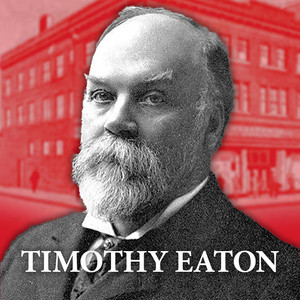
We're starting our new series, Lessons from Outliers, with Timothy Eaton, a Canadian name that might not be familiar to many listeners today, but his innovations fundamentally changed retail around the world and how we shop.
Timothy started his business with an obvious idea that wasn't so obvious at the time.
Tell the truth about your prices and stand behind your products.
With that and many other innovations, he built an empire that would, at its height, commends 60 % of an entire nation's department store sales.
This episode is about how he built that empire, the principles that drove its success and the forces that eventually brought it all crashing down.
Whether you're building a business, leading a team or trying to understand how great companies rise and fall, Timothy Eaton's story offers timeless lessons about innovation, trust and the true price of success.
You'll learn why even the mightiest empires can crumble when they forget the principles that built them and why success, no matter how massive, must be earned and re -earned every day.
It's time to listen and learn.
What Amazon is to the internet age, what Walmart was to suburban America, Eaton's was to a rapidly industrializing Canada, the everything store of its era.
In 1869, almost a century before Jeff Bezos was born, and 50 years before Sam Walton and IKEA drew their first breaths, there was another name that became synonymous with retailing.
Timothy Eaton. Like many of today's entrepreneurs, this young Irish immigrant bet against how things had already been done.
Only his innovation wasn't technology, it was trust.
He would sell everything to anyone at a fixed price with a money -back guarantee.
His slogan, goods satisfactory or money refunded, introduced in 1870.
Sounds obvious today, but in 1870, when every transaction was a battle of wits and buyer beware was the universal law of commerce, this was as revolutionary as one -click ordering would become a century later.
Eaton's was the birth of an enterprise that would become so interwoven with Canadian life that you couldn't tell the story of one without the other for nearly a century.
But like all stories, this one also has an ending.
130 years later, the empire Timothy Eaton and three generations of descendants had built crumbled.
The factors are many, the big ones being a combination of complacency, distraction, and being slow to adapt.
The errors didn't help much either.
At their pinnacle, the Eatons were so dominant that it was regarded as virtually unassailable because of enormous competitive advantages and financial strengths.
They commanded as much as 60 % of all department store sales in the country.
They made so much money that the government told them that they were too profitable.
Seven years later, they would have only 10 % of all department store sales and eventually seek credit or protection.
The store that was once everything to everyone ended up meaning nothing to anyone.
Could this have been prevented or predicted?
Let's explore the story of one of the world's great merchants to see what we can learn.
Picture Toronto in 1869.
No cars, no electricity, no telephones, and most importantly, no concept of shopping as we know it today.
Every purchase was a negotiation, every price a secret, every transaction a gamble.
Shopping wasn't commerce, it was combat, where skilled hagglers triumphed and the unsophisticated buyer was prey.
Into this chaos stepped Timothy Eaton.
With $6 ,500 in cash and what would seem like today like the most obvious idea in the world, tell the truth about your prices, charge everyone the same amount, and stand behind your products.
Where others saw haggling as tradition, he saw it as friction.
Where others saw returns as lost profit, he saw them as investments in trust.
Where others saw chaos as inevitable, he saw an opportunity for a system.
Imagine walking into a store where the merchant sized you up before quoting a price.
Charging a banker double what they'd charge a laborer for the same item, or returning a defective item was met with mockery and shame rather than a refund.
Where buyer beware wasn't just a saying, it was the fundamental principle of commerce itself.
This was the world that Timothy Eaton would change forever.
Timothy Eaton's origin story is less about individual circumstances than the collision of forces that would reshape commerce.
Ireland's poverty story creating waves of ambitious emigrants, Canadian railways connecting previously isolated markets, and an outdated credit -based trading system ready to be disrupted.
Born the ninth child of John and Margaret Eaton, with his father dying before his birth, Timothy's early life was shaped by the harsh realities of 1850s Ireland, where opportunity was scarce and emigration common.
While his formal schooling ended at 13, his real education came during an apprenticeship at a general store in Port Ligon.
There, he mastered retail's fundamental equations, the relationship between inventory and cash flow, the tension between credit and risk, and the delicate balance between merchant and customer.
When he joined the exodus of 150 ,000 Irish immigrants in 1854, he brought two crucial assets with him, an ironwork ethic and a deep understanding of commerce's flaws and how to fix them.
Landing in Upper Canada in 1854, he arrived at a perfect moment of transformation.
Railways were connecting isolated markets, workers were earning regular wages instead of seasonal farm income, and for the first time ever, ordinary people, factory hands, clerks, domestic servants, had predictable money to spend.
While established merchants dismissed these common customers, Eaton saw something revolutionary.
Every butcher boy, snip and snob complained one Toronto grocer was excessively given to dress and wearing rich things and such foolery.
But where others saw vulgarity, Eaton saw validation.
A new middle class with steady income and aspirations.
The economic crisis of the 1850s had exposed the fatal flaw in traditional retail.
In a credit -based system, one failure could trigger a chain reaction of bankruptcies.
But Eaton's solution wasn't to demand cash -only sales.
That would have been impossible.
Instead, he created a brilliant incentive, better prices for cash payments.
This wasn't just clever pricing, it was behavior engineering at scale.
Year after year, his book showed increasing cash transactions.
He was simultaneously teaching customers a new way to shop while removing risk from his business.
More importantly, he was building a system that could grow without breaking.
And the most powerful force behind it all, relentlessness.
Eaton brought the same intensity to retail that Edison brought to invention.
Testing, refining, and competing daily.
His early stores became laboratories where each transaction taught him something new about the future of commerce.
Here's what made him different.
He was a master at observation and combining existing ideas in new ways.
Fixed prices, money back guarantees, direct buying from manufacturers.
These pieces existed in isolation.
Eaton's genius was to weave them together into an unstoppable system.
This pattern is repeated in business history.
The greatest innovations often come not from inventing something new, but taking an existing idea to its logical conclusion with relentless execution.
While others treated money back guarantees as marketing gimmicks, Eaton built his entire business model around trust.
This episode is brought to you by Amazon Business.
We could all use more time.
Amazon Business offers smart business buying solutions so you can spend more time growing your business and less time doing the admin.
I can see why they call it smart.
Learn more at AmazonBusiness .com.
Imagine what's possible when learning doesn't get in the way of life.
At Capella University, our game -changing FlexPath learning format lets you set your own deadline so you can learn at a time and pace that works for you.
It's an education you can tailor to your schedule.
That means you don't have to put your life on hold to pursue your professional goals.
Instead, enjoy learning your way, and earn your degree without missing a beat.
A different future is closer than you think, with Capella University.
Learn more at capella .edu.
When Timothy Eden opened his Toronto store in 1869, it wasn't just another shop, it was a laboratory for testing his theories about the future of retail.
The location was perfect, 178 Yonge Street, at a busy intersection where every merchant dreamed of setting up shop.
The price, however, reflected this.
$6 ,500 for the existing inventory and Goodwill, demanding every single penny that he'd managed to save or borrow.
The store was tiny.
It was just 24 feet across by 60 feet deep.
But what happened inside that small store would change retail forever.
One employee recalled, I have seen Mr.
Eaton standing at the end of a counter watching a customer purchase a pair of stockings.
When she had gone, he would ask whether the goods would go any more rapidly if he offered in groups of two or three pairs at the price reduced in bulk.
Rather than just think he had a better idea, he would test it by the afternoon.
Eaton had discovered discount retailing.
Lower prices drive higher volume and higher volume enables lower prices.
Though you earn less per item, you make more money overall because you sell many more items.
Discount retailing is built on the foundation of fixed prices.
This virtuous cycle which Sam Walton and later Jim Senegal would turn into billion dollar empires at Walmart and Costco was tested behind a counter in Toronto a century earlier.
Timothy Eden was obsessed with details and became a human analytics engine.
He was constantly fiddling with the status quo trying to make something better, testing his ideas, watching, observing, obsessing, experimenting.
This wasn't commerce.
It was the scientific method applied to retail.
Timothy Eaton got up early every day and tried to improve something.
His famous sassing, experimenting.
This wasn't commerce.
It was the scientific method applied to retail.
Timothy Eaton got up early every day and tried to improve something.
His famous cash only policy wasn't born from ideology, came from cold reality.
In his small town days, Timothy knew every customer's story, their harvest prospects, their payment history, their family situation, and even the latest gossip.
But in the big city, with its flood of strangers, he needed a system that would work without the personal knowledge of every customer.
The early days would have broken a weaker man.
The inventory he inherited when he purchased his first store on Yonge Street was what modern merchants would call distressed merchandise, though Timothy's private letters to his brother James used considerably more colorful language to describe it.
He was forced to sell dresses at 15 cents per yard that had cost him 35 cents.
And even at those ruinous prices, the goods moved at the speed of cold molasses.
However, where others saw losses, Timothy saw something different, a chance to build trust through transparency.
Every markdown was advertised openly, with the original and new prices clearly stated.
Even when losing money, he was gaining something more valuable, customer confidence and trust.
While other stores divided their spaces into broad categories, Eaton's created detailed subcategories for better information and shopping.
These were not just departments to help customers know where to look.
They were data streams feeding into an accounting system, allowing him to track every item's movement through his store with unprecedented precision.
Timothy Eaton's obsession with knowing the details no one else was paying attention to created an information advantage long before computers.
When he made buttons its own category, he wasn't just being organized.
He was creating detailed data.
Timothy Eden could tell you how many buttons he'd sold, on which day, how fast they moved, and at which prices, and who was buying them.
His hiring strategy was just as systematic, but with a twist that was a century ahead of its time.
Starting with just four employees in 1869, two men, a woman, and a boy, by 1881, he had 36 sales clerks and 12 seamstresses.
He hired mostly women, not just because they cost less at the time, but because his fixed price system had eliminated the need for aggressive male haggling.
It was an early example of how good systems could create new opportunities by eliminating bad behavior.
His marketing targeted factory paydays with military precision.
He didn't just distribute 40 ,000 flyers randomly all over the city and call it a day.
No, this was a precisely timed operation.
Every detail was mapped.
Which streets to target?
When workers got paid?
Which neighborhoods had the most weekly wage earners?
While other merchants chased wealthy customers with carriages, Timothy built a system to serve thousands with weekly paychecks.
One employee noted that unlike other stores, it was an unusual sight to see a carriage at the door of the store.
He wasn't betting on the rich few with their carriages, he was betting on the many with their weekly paychecks.
He chose volume over margins, the rising power of the working class over the carriage -riding elite.
Eaton's was a place for the working massive, not for the privileged elite.
By 1880, Eaton's success had created every entrepreneur's favorite problem.
His business had outgrown its space.
The store couldn't expand farther without demolishing the church next to it, which was a step too far, even for Timothy's ambitions.
His solution in 1883 was the kind of bet that separates great entrepreneurs from good ones.
He mortgaged everything, literally every penny he had to buy an entire city block for $41 ,000, using $36 ,000 in borrowed money.
For those keeping tabs, that's an 87 .8 % loan -to -value ratio.
He had no room for error here.
But what came next was even crazier.
He announced that he would tear down what locals considered the finest block of retail stores in the entire city and replace it with something entire massive space that would reinvent shopping itself.
He wasn't just betting his business.
He was betting his entire life's work on a vision that only he could see.
Everyone thought he was crazy.
But he went all in.
He went all in on himself.
This is the founder's mentality.
He believed in his idea even when others didn't.
When Reverend John Potts toured the new 25 ,000 -foot location, 20 times larger than the original store, the clergyman was moved to tears.
He said, I am so sorry, Mr.
Eaton, you are ruined.
What will you do with this great barn of a place?
Timothy's response was six words that encapsulated his entire philosophy, fill it with goods and sell them.
The building itself wasn't just architecture, it was retail innovation.
Lightwells topped by skylights pierced through the building's core, allowing natural light to flood all floors.
Crucial in an era where the upper floors were typically dim -lit caves.
But things that work at one scale often break at another.
What worked when an owner could watch every transaction wouldn't work in a massive operation.
This is a lesson modern startups keep learning.
Systems that work for 10 people often break at 100, and what works for 100 can collapse at 1 ,000.
His nephew, John James Eaton, describe the chaos of January 1884.
There was no management.
Everyone was doing as they liked, no connection between one another, and a constant disagreement, a constant quarreling between departments.
It was the kind of crisis that either killed the company or transformed it.
The solution combined family and systems.
Timothy's son, Edward Young Eaton, became partner in 1888, while nephew John James was tasked with bringing order to the chaos.
John didn't just manage, He rebuilt the entire system.
When he discovered employees spending long breaks in the saloon across the street, he fired 40 people in a single day.
Can you imagine that happening today?
The standards were clear and unwavering.
Even when fighting internal fires, external challenges tested Eaton.
When his Glasgow supplier tried to take advantage of him by demanding immediate payment of $6 ,600 and refused future credit, Timothy didn't just solve the problem, he eliminated it.
He created a separate company under his son Edward's name to handle purchasing.
Problems are just opportunities.
This reminds me of the story in Brad Jacobs' book, How to Make a Few Billion Dollars.
And we had Brad on the podcast a while ago, so I definitely recommend you check out that episode.
But at a memorable lunch with his mentor, Ludwig Jesselsson, Brad sat down and he started to unload all of his problems and frustrations.
And Jesselsson listened carefully and then he put his fork down and he just looked at Brad and he said, look, Brad, if you want to make money in the business world, you need to get used to problems because that's what business is.
It's actually about finding problems, embracing, and even enjoying them because each problem is an opportunity to remove an obstacle and get closer to success.
In 1884, Timothy launched something that would change everything, the Wishing Book, though farmers called it the Farmer's Bible.
Calling it just a catalog would be like calling Amazon just a website.
Timothy had built a portal to the modern world for millions of isolated rural Canadians.
Imagine being a farmer hundreds of miles from civilization where your possibilities end at what you can make or trade.
Now suddenly you had access to everything from parish fashions and English tea sets to German pianos.
Need an entire house?
Eaton's would ship you every single board and nail and window with instruction.
And everything came with that revolutionary guarantee, goods satisfactory or money refunded.
Think about this. Before Silicon Valley invented data analytics, Eaton's was using catalog orders to predict demand.
Before FedEx existed, Eaton's had built a delivery network so reliable that Canadian towns planned their mail service around it.
At times of year, when the catalog was being released, there was coordination between Eaton's and the postal service suggestions as to what other goods they should carry and and created new departments based on the feedback they received.
They were solving tomorrow's problems a century early.
Supply chain management, predictive analytics, and last mile delivery.
Timothy ruled with an iron fist in the velvet glove, but both served the system.
Employees quaked in their boots around him, yet the same autocrat would reward Initiative generously.
He wasn't enforcing rules for rules sake.
He was maintaining the standards that made the entire system work.
Even as employees dreaded his criticism, they understood its purpose.
Even as they resisted his autocratic style, they grew under his talent development.
His growth philosophy shows in one exchange.
Mr. M, what do you know about menswear?
He asked the clerk.
Mr. Eaton, I don't know a thing, came the reply.
Timothy responded, good, then you'll learn.
Eaton's was becoming dominant, But Timothy Eaton wasn't motivated by money.
He was motivated by the desire to be the best.
He was relentless. One newspaper described Timothy Eaton this way.
Mr. Eaton is unique.
He is not a man of words or fireworks.
He is modest and retiring to a fault.
Indeed, it is difficult for even an expert reporter to get half a dozen sentences out of him.
But he is a man who does things.
In the language of the motto, he does it now, and he seems to do them in such a way that they become talked about.
Sometimes history turns on a single moment, but decline happens like rust, slowly and then suddenly.
On a crisp autumn day in 1899, Timothy Eaton's horses spooked on the way home.
The resulting broken hip left him in a wheelchair.
But the real impact wasn't physical.
It forced him to hand over his empire before he was ready.
The weight of his empire fell to his youngest son, John Craig, Jack, Eaton, their early conversations about leadership contain a lesson in simplicity.
Jack said to his father, what do I have to say as vice president?
And Timothy replied, can you say yes and no?
Yes, I can do that.
Can you decide which one to say at the right time?
Well, that might be different, but it's all you have to do.
In those eight words, can you decide which one to say at the right time lay Timothy Eaton's entire philosophy of systematic decision making.
Timothy Eaton died on January 31st, 1907.
Jack, who had been running things since 1899, would no longer have the wise ear of his father.
Jack would be different.
Where Timothy had been the system builder who changed retail through discipline, relentless effort, obsessive attention to detail, and adapting to the data, Jack would be the showman who'd expand it through spectacle and scale.
Jack looked the part, 5 '9", chestnut hair with gold highlights, turning heads in his fond colored coats.
His blue eyes and ready smile couldn't have been more different from his father's hardened face.
Jack was the roaring 20s personified before anyone knew what that meant or why it might be dangerous.
This episode is brought to you by Indeed.
When your computer breaks, you don't wait for it to magically start working again.
You fix the problem.
So why wait to hire the people your company desperately needs?
Use Indeed's sponsored jobs to hire top talent fast.
And even better, you only pay for results.
There's no need to wait.
Speed up your hiring with a $75 sponsored job credit at Indeed .com slash podcast.
Terms and conditions apply.
This episode is brought to you by Bank of America.
What if your business could see beyond what is and into what can be?
And what if you had a partner as visionary as you are?
Bank of America gives customers access to trusted experts, real -time insights, and digital tools to make every move matter.
What would you like the power to do?
Visit bankofamerica .com slash banking for business.
Bank of America is proud to be the official bank sponsor of FIFA World Cup 2026.
Jack saw something his father never did.
Shopping wasn't just business.
It was theater. Timothy Eaton built trust through consistency.
scene. Jack Eaton would build an empire through theater.
His first act, transforming the entire floor of Toronto Store into Toyland at Christmas.
But his masterstroke was the Santa Claus parade.
What started small, which was Santa on a packing crate on a wagon, became legendary.
Live reindeer shipped from Labradorm.
Massive floats took months to build.
City streets closed.
The numbers tell the story.
15 ,000 kids riding to Santa by 1919.
But the real story was bigger.
Jack had turned shopping into magic.
The trouble with magic is that it depends on illusion, where Timothy's system had been built on brutal honesty about what customers wanted and what it cost to serve them.
Jack's biggest bet was out west when he proposed expanding to Winnipeg, 1 ,500 miles from Toronto.
His father thought managing it would be impossible.
The gateway to the Golden West wasn't just risky, it was crazy.
But sometimes crazy works.
After all, everyone told Timothy Eaton he was crazy to buy a city block with debt, tear it down, and build one ginormous store.
But picture Winnipeg in 1910.
75 ,000 people and more millionaires than Toronto.
The Hudson's Bay Company, the only real competitor to Eaton's, owned the prime real estate there.
But Jack saw something bigger.
Here's how a local paper described how it was done at the time.
When the decision was reached to locate in Winnipeg, negotiations were set on foot and carried out silently and swiftly until the land required for a century's expansion was acquired.
There was no noise, no flourish, no trumpets.
The transaction was simply carried out and then came the erection of the store.
Not only did the Eaton family move in silence, but they moved quickly.
From the time the first sod was turned to the opening day, it was under a year.
On the first day, tens of thousands of people showed up.
It would only increase.
The scale was mind -boggling.
6 ,000 people were eating daily in their restaurants, from workers' cafeterias to the oak -paneled grill room where string quartets played on lunch served with fine china.
Staff numbers nearly doubled in a week from 700 to 1 ,250.
First -year sales hit 2 .5 million, numbers that would have seemed impossible to Timothy just a decade earlier.
Keep in mind, this is 1910.
This is crazy. 2 .5 million out of a single location.
Over 15 years, it grew like a weed.
Three more stories up, two massive mail -order buildings.
By 1919, Eaton's in Winnipeg covered 21 acres and employed 8 ,000 people.
Eaton's wasn't just a store, but a city within a city.
Jack built his empire by placing pieces on a chessboard.
In 1916, a massive warehouse in Saskatoon for furniture and farm equipment.
In 1917, Regina, standing there during construction, Jack pointed west and said something that would prove prophetic.
There's our future market.
They framed his footprints in the wet cement, a literal impression of the empire building in progress.
At this point, the catalog had become more than a book.
At 588 pages and 9000 illustrations, it was becoming the story of a nation itself.
You could buy anything from $3 .95 fiddles to entire houses for $999 .77.
When a town founded by Canadian Northern Railway in 1917 named itself Eton, later changed to Etonia, it wasn't just flattery, it was recognition that Eton's had become woven into the very fabric of Canadian life.
But Jack's real genius, he didn't just build stores.
He built a community.
Starting in 1911, he created a world inside his company.
Baseball leagues, hockey teams and cricket clubs.
Female employees got something unheard of.
Downtown Toronto, clubs with pools, gyms and libraries.
Summer camp where workers could vacation affordably.
Then came 1919's Golden Jubilee.
The company's 50th anniversary and Jack's boldest move yet.
The five and a half day work week.
Saturday closing year round.
Not just in summer.
This wasn't charity, it was strategy.
Jack knew something timeless.
Happy workers build empires.
By the 1920s, Eaton's controlled an unprecedented 60 % of Canadian department store sales.
When rumors spread of an American buyout attempt, Jack's response became legend.
There's not enough money in the whole world to buy my father's name.
Royal customers didn't just use the catalog, they called it the Bible.
This was the height of Eaton's power.
Below the veneer, however, danger was brewing.
Jack's genius for entertainment and expansion had a bit of a hidden cause.
It slowly diverted focus from the core principles of excellence and value.
Less attention to the details and more to theatrics.
Where Timothy had built an everything store by being the best at everything and adapting to customers, Jack built an empire by being the biggest at everything.
At first, the difference was too small to notice.
However, in business, small differences compounded both positively and negatively.
By the 1920s, Eaton's wasn't just a store anymore.
It was an event. The mightiest empires can crumble when they forget the principles that built them.
When Jack died in 1922, he left behind a dangerous gift.
A seemingly perfect business.
The numbers were incredible.
Sales had exploded from $22 million in 1907 to $141 million in 1920.
The catalog alone brought in $60 million.
They owned 60 % of the entire country's department store sales.
The company was so dominant in the 1920s and early 30s that government criticized their profit margins.
Eaton's developed the strangest corporate pathology ever, a fear of being too successful.
Greg Purchase, their former COO, put it perfectly, store managers could actually get in trouble for being too successful.
Think about that paradox.
In a competitive market where survival requires constant reinvestment, you could be punished for making the company too much money.
How Canadian. By the 1930s, what had started as a slight drift from Timothy's principles had become a widening gulf.
Like a ship that's off course by one degree, it's kind of insignificant at first, but leading to an entirely different destination.
The Great Depression exposed the first cracks in what looked like perfect armor.
While the stores were bleeding money, the Queen Street flagship lost $2 million in two years.
The family kept paying themselves massive dividends of $525 ,555 annually, perhaps giving them the illusion that they owned a money machine when what they really owned required constant reinvestment.
This was when the cancer started.
Real estate and credit operations generated reliable profits which masked deeper problems in the retail operation.
People just were not shopping at Eaton's as much as they used to.
And if there's any law of retailing, you must serve the customer.
Retailing is not for the faint of heart.
It's a difficult business that requires constant vigilance.
As soon as one problem is solved, another services.
Advantages, even ones that seem insurmountable, prove temporary at best.
During the Depression, things started to go off track for Eaton's.
The company made some unforced errors.
Two of which I want to highlight.
First, they put much more focus on high -end customers and much less focus on the everyday working class.
Second, they failed to see how automobiles drove people out of the core and into the suburbs and how that influenced the rise of suburban retail.
The days when Timothy Eden courted the everyday blue -collar customer, handing out flyers to workers who just got a paycheck were gone.
The family had fallen into a trap that still snares successful companies.
They started serving customers like themselves, wealthy ones, forgetting that their wealth had come from serving everyone else.
The Toronto College Street Store tells the whole story.
It was opened in 1930 and it was a monument to wealth that perfectly symbolized not only the time, but how far they'd strayed from Timothy's principles.
There was ivory, limestone, marble pillars, and even a replica of Mary Antoinette's bedroom on the fifth floor.
There was one small problem.
Nobody could afford to shop there.
The company that had invented modern retail and forced all of its competitors to change suddenly had a stubborn resistance to change.
While competitors built suburban stores in the late 20s, 30s, 40s, and 50s, Eaton's clung to downtown like a captain to a sinking ship.
When Canada's first mall opened in Vancouver in 1950, one Eaton's executive dismissed it with a bit of hubris saying, it'll never work.
The rise of the automobile meant that shopping habits were changing.
Suburban malls popped up and with them the rapid growth of discount retailers and big box stores based on low prices and high volumes.
Eaton's wasn't the only retailer with enormous amounts of capital and fixed assets facing sector changing demographic and retailing trends, but they certainly didn't do themselves any favors.
Eatons didn't die from one big mistake, they died from a thousand tiny ones.
Take credit cards. While competitors embraced bank cards in the 1950s, Eatons clung to their own system until 1981.
Their logic showcased the ultimate danger of inherited success.
They confused Timothy's principles with his practices.
They said Timothy believed in cash only, so they had to honor his tradition.
Never mind that Timothy's real tradition was giving customers what they wanted and adapting.
The catalog story perfectly captures how organizations calcify.
While Simpson, Sears revolutionized layouts in photography, Eaton spent months debating page sizes, their biggest innovation of the 1960s, making the catalog smaller, 9 3⁄4 by 12 inches, changing to 8 by 11.
And their whole reasoning, when Housewives stacked catalogs, they'd put Eaton's on top, being the smallest.
This was now their idea of innovation.
How far have you fallen?
The core problem is simple.
Bureaucracy is optimized for bureaucrats, not for results.
It reminds me of something Charlie Munger commented on.
He said, bureaucracy is terrible.
And as things get very powerful and very big, you can get some really dysfunctional behavior.
The numbers tell the story.
Simpson Sears started from zero in 1952, hit 500 million in sales by 1965.
Eaton's 700 million, just slightly ahead, but losing money.
The catalog division lost $2 to $10 million annually.
Same market, same business, same target customers, opposite results.
I want to talk about the period from 1970 to 1985.
Complacent institutions become monuments to their own success.
With less profits, the company invested less in its own infrastructure.
At the same time, competitors started to move into Eaton's core markets with brand new stores.
And Eaton's infrastructure was starting to show the strains of underinvestment.
At the same time, the family was living the good life, buying helipads and yachts.
The contrast had me thinking a little bit about Timothy Eaton and what he would say looking down on his empire that reminded me of something Sam Walton said in his book Made in America.
Some families sell their stock off a little at a time to live high, and then boom, somebody takes them over and it all goes down the drain.
One of the reasons I'm writing this book is so my grandchildren and great -grandchildren will read it years from now and know this, if you start any of that foolishness, I'll come back and haunt you.
So don't even think about it.
I think Timothy Eaton would agree with that.
By the 1980s, Eaton's didn't know what it was anymore.
Was it upscale, mass market?
The stores were as confused as the strategy, ranging from 90 ,000 square feet to 1 million square feet with no clear purpose connecting them.
Then came George Eaton's big idea in 1990.
Everyday value pricing.
No more sales, no more promotions, just like Walmart, except Eaton's wasn't Walmart.
They didn't have control, logistic efficiency, or customer focus.
They had taken Walmart's strategy without Walmart's system.
The disconnect shows in one perfect exchange.
Bill Hughes, an Eatons buyer for decades, accosted George, saying you can't run Eatons like Walmart.
Oh, yes, we can, snapped George.
We don't have to advertise.
Walmart advertises, replies Hughes.
I wanted to see what Warren Buffett had to say about retailing, so I looked it up.
After all, he had owned two department stores at one point.
and exited them as quickly as possible.
As if talking about Eaton's, Buffett said, he wasn't talking about Eaton's, but he could have been talking about Eaton's.
He said, during my investment career, I've watched a large number of retailers enjoy terrific growth and suburb returns on equity for a period and then suddenly nosedive, often all the way into bankruptcy.
His conclusion, a retailer must stay smart day after day.
It was too hard. Munger added his characteristic wit to this commenting on their adventures in retailing, saying it's like the story of a man who buys a yacht.
The two happy days are the days he buys it and the day he sells it.
Retailing can be a good business.
Of course, Costco is a great example of this, which we may cover in a future episode.
It's kind of retail with a twist.
The end of Eaton's reads like a business school warning label.
What happens when you adapt slowly in a difficult business facing a lot of headwinds with a ton of assets that are hard to reposition.
The giant that once owned 60 percent of Canadian retail had shriveled to less than 10 percent.
The company nobody wanted to compete with was now the butt end of jokes.
The company that once made so much money the government told them to stop making money was now losing money hand over fist.
In the mid -1990s, Eaton's entered retail's deadliest spiral.
Falling sales forced inventory cuts, driving away customers who expected selection, causing more and more sales drop.
Getting out of this death spiral is like running in quicksand.
February 1997 brought the final humiliation.
The company that had revolutionized retail by making cash only a virtue now had to beg courts for protection from creditors.
The empire built on paying on cash couldn't pay its bills.
The numbers tell the story better than words.
By 1999, sales had collapsed to 1 .6 billion.
1970s levels. The years lost 72 million.
Meanwhile, their old rival Sears Canada had soared to 5 billion.
Same market, same challenges, same opportunities, same customers.
The difference was simple but profound.
One company understood that success had to be re -earned daily while the other thought it could live off inherited momentum.
It wouldn't be long after this, however, that Sears would suffer the same fate.
As Buffett commented, you have to be smart every single day in retail.
Retail is incredibly difficult business.
Eden's didn't just die.
It left us a timeless lesson about success.
The price must be paid daily.
It can't be inherited.
It can only be earned, relearned, and reinvented.
Risk and hard work might get you to the top, but only hard work and constant vigilance will keep you at the top.
The company that had defined Canadian retail for generations collapsed because it worshipped its past instead of building its future.
It's not just a business failure.
It's a warning. Even giants fall when they forget yesterday's success doesn't guarantee tomorrow's survival.
If you want to take your learning to the next level, consider joining our membership program at fs .blog .com.
As a member, you'll get my personal reflections at the end of every episode, early access to episodes, no ads, including this, exclusive content, hand -edited transcripts, and so much more.
Check out the link in the show notes for more.
Thank you.