Discussion keeps the world turning.
This is Roundtable.
You're listening to Roundtable with myself Ha Young.
I'm joined by Steve Hatherly and Yu Shen in the studio.
Coming up we're right in the heart of the Asmanthus economy season.
I'm talking about Gui Hua, this particular flower.
Let's explore how this beloved flower is blossoming into a thriving industry.
What makes this petite flower so prized culturally and economically?
And let's talk about this new WeChat moment phenomenon.
Where people drop social media posts like they're pieces of the puzzle.
Each one revealing a little more of the picture.
It's all about those planned social media updates.
What is the deal? Want to be part of the action on Roundtable's heart -to -heart segment?
We are eager to hear your thoughts, questions, or sizzling hot takes on news, tech, and life.
Send us a voice memo at RoundtablePodcast at qq .com and you might just hear your voice on our live show.
Our podcast listeners can find us at Roundtable China on Apple Podcast.
Now time to turn the page and discuss something equally captivating.
Is that magical time of year when the enchanting scent and flavor of Asmanthus flowers or Gui Hua sweep across the nation from luxurious bath products to the delicious dish of floral stuffed lotus root.
YUM! This extraordinary flower has single -handedly nurtured the Asmanthus economy.
Let's uncover how this flower has transformed from a seasonal bloom into a year -round business boom.
So what makes this Asmanthus flower or Gui Hua so special?
I mean first we need to know that Gui Hua or Asmanthus flower is one of China's ten traditional famous flowers.
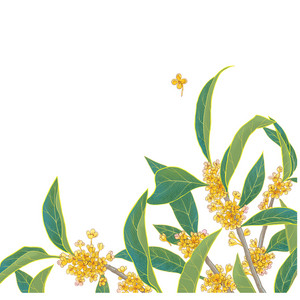
And I know there are various of colors or shapes of this flower but when I hear the word Gui Hua it's just a tiny yellow flower that has petals that are tender and tiny and it's just about the size of your fingertip or half of your the size of the pinky nail.
The petals are? Yeah I mean the entire flower is itself is really small and with each flower usually featuring four petals arranged in a small rounded shape coming in soft creamy yellows and warm orange hues.
So it's just such a cute little thing.
But on top of that what attracts a lot of people to it is its amazing fragrance.
Because here's this Steve in case you haven't smelled the scent of Gui Hua before.
I didn't even know that Gui Hua existed until preparing for our discussion today and not just the Chinese word but Asmanthus I had never heard of before either.
So yeah imagine this here is the smell of Asmanthus flower that's sweet, rich and slightly fruity with notes that resemble apricot, peach and sometimes even a hint of honey.
You sound like a wine sommelier describing at a restaurant what I'm about to sip on.
So you said it's one of ten but would this be and maybe not would this be the equivalent of the cherry blossom except in the fall season as opposed to in the spring or is it kind of a different vibe?
It's a different vibe as it strikes me because when people think about Asmanthus or Gui Hua it's more of an autumn symbolization and also people from especially southern China where Gui Hua is most commonly found will have this strong nostalgic feeling of its scent and you know what I was just about to
get to the part that its special scent that's so fruity so fragrant is what makes it popular among the you know the ingredients for perfumery and tea and just desserts and just anything that you can think of that's sweet and you know nice tasting.
Also all the way until at least one thousand years ago here is these Chinese poet from I think his southern Song dynasty called Lu You who wrote about Asmanthus in his poem Asmanthus fragrance.
So you see even ancient Chinese they write poems that they describe this smell special smell or particular fragrance in between the lines decades and decades like hundreds of years ago.
Yeah yeah by the way Lu You lived in the 12th century so there's a long history in China of appreciating the flower.
Yeah and he's not the only one who wrote about Asmanthus.
It's a new pronunciation for me as well as I always know it as Gui Hua but yeah historically it's well known as such a source of fragrance that people just generally love here in China.
And also you mentioned that Gui Hua is mainly planted in the southern parts of China apparently there are five major areas.
I know this might not register immediately if you don't live in China because this involves geography.
Hangzhou in Zhejiang Province.
Suzhou in Jiangsu and Xinning in Hubei.
Shenning in Hubei excuse me Chengdu in Sichuan and Guilin and Guangxi these are the main five areas and as a northerner which we don't see any major flower that I suppose becomes sort of a signpost of your hometown or region I'm extremely jealous of the southern folks who say that this brings nostalgia to
them especially you know like sometimes we don't appreciate the five senses that we that embodies so much but yeah even with the scent it reminds you of your hometown and that just sounds like a very different kind of place to grow up as I'm a bona fide Beijinger.
I'm used to the congestion to the fumes to the concrete jungle when I'm in nature for more than two days my body's itching I'm like I need to get back to all that pollution I get back to city life you know but for folks you know we chatted with some folks from southern China and then they're used to
growing up with Guihua in the surrounding and more greenery and you know it's also a very different kind of urban landscape southern versus northern city versus smaller cities I suppose.
Is this something I guess you can grow this at home as well in a pot if you want to.
Oh there are actually I think two Osmentas trees, tiny ones, on the first floor of our office building.
Oh really? On the first floor, okay.
So you can do that I never knew.
In the pot. I thought in the pot.
A bonsai tree. Yeah and also Guihua is a huge ingredient in cuisine and today I'm actually at lunch in the canteen there's a dish of yam with Guihua.
Is that what that was?
Yeah all over it. Okay, yeah cool.
I thought about wechatting you but I thought you'd be busy munching on food.
I was munching on that as a matter of fact.
So this has big cultural significance there.
Even here we are in Beijing it doesn't grow here in Beijing by the sounds of things.
It's more of a southern thing but even still we find it in foods.
So not just dishes but also beverages as well.
Oh yeah beverages and desserts and snacks everything.
So um I remember Huyang you mentioned Hangzhou being one of the leading cities who has the who is so rich in growing and harvesting Guihua and I remember last year I went to Hangzhou for a business trip and basically in every local little restaurant they offer such snacks such as othmensa stuffed lotus
root. Just hear that.
Lotus root stuffed with othmensa flowers.
It's like sweet upon sweetness.
And also gluttonous rice.
Okay so do you know what a lotus root looks like Steve?
Tell me. Oh sorry. I might know.
Oh so it might look like a sort of elongated potato.
Okay yeah. But it's got holes in it.
Okay yes yes yes yes yes.
And then we stuffed the gluttonous rice often treated nicely with fragrance into the holes.
It's like the Swiss cheese of vegetables or roots or roots yeah.
But it's far more healthier.
Yep and with the Guihua flavor all over it.
It's really sweet and also it's filling.
And I didn't get to research on the history of that dish but it's a signature dish from southern China.
And you mentioned Hangzhou which was also home to Alibaba a tech hub in China.
But oh it's beautiful.
The famed Westlake has Guihua or us Memphis trees planted along the the river embankment.
And also Hangzhou's city flower is Guihua so yeah.
It makes it a really nice place to go.
Official data proves that.
And also this just one city of Hangzhou has over five million Ozmentus trees and 70 cultivated varieties.
People need to know that well there are over a hundred varieties cultivated nationwide.
And Hangzhou has 70.
So that's why it's it boasts as an especially high quantity and diversity of habitat or origin of Ozmentus trees and Ozmentus products.
So I guess in the south you'll see them all over the city in Hangzhou.
What did you say five million around the city.
So in the south you'll find them in various parts of the city but in the northern parts you're more likely to find them.
In cakes. Or potted or potted plants indoors on the first floors of broadcast buildings.
In the middle well central and northern areas here in China the climate kind of limits the Ozmentus trees growth as well.
So well in some areas in central China such as Hebei province they do have places that specifically grows Ozmentus trees.
I think there is a village that's named after it.
Guihua village the Ozmentus village in Hebei province.
That's you know they just do it as as a living of growing trees and harvesting the flower.
I looked it up to see what kind of use in the west if there's anything that I could find.
Interesting. Yeah about the Guihua.
Did you find anything?
It's for sale almost everywhere.
Like if you look on those types of websites that sell wellness goods and things like this and also potted plants yeah lots and lots of information.
Is Ozmentus oil or Guihua oil popularly used in China I wonder.
I've never heard of it.
I've heard of it in aromatherapy sessions I think.
Yeah. It's for massaging right.
So this is what I did well for massages and more this is what I found.
They said Ozmentus has a sweet and floral scent that many people find relaxing and calming and when used for aromatherapy purposes it may help help to ease anxiety.
They did a study in 2017 and they found that the essential oil from Guihua and grapefruit oil help to reduce anxiety in patients who had undergone a procedure.
It can uplift your spirit.
It can soothe your spirit they say and this is what it said the flower has been cultivated in China for more than 2 ,000 years and it's primarily used in high -end flavorings and perfumes to produce the oil.
It takes 7 ,000 pounds of the flower to produce 35 ounces of Guihua essential oil so it's quite pricey if you want to purchase it in that form.
Yeah and speaking of the oil I think I've also seen it for hair products because there are Chinese brands that features their hair oils for split ends They say it's good for your skin too.
They say it nourishes and softens your skin.
So that's part of the whole economy that surrounds Guihua or this particular petite little flower and I think maybe because China has this rich cultural history of appreciating the flower and therefore it makes these entrepreneurs business operators have rich soil to renovate and come up with new ideas
surrounding the seasonal flower that has made them roll out all this wide array of different products and it becomes kind of a seasonal topic.
Yeah and after all if that region or an area is blessed with osmosis flower or any kind of natural resources then yeah of course people are going to try to be grateful and harvest that as a way of benefiting the local people as well.
That's why we talked about osmosis economy.
Why it becomes an economy is because some areas here in China are so rich and abundant with such natural resources and that's why people are just making those into products that can in turn get back to you know benefiting people's life and also get the cash in as a way to profit the local people.
Yeah in Canada we don't nothing comes to mind for me in terms of a flower or something that shows up in our foods on a seasonal basis but I am reminded of Korea during the cherry blossom season.
Oh it's cherry blossom everything for a short period of time because those flowers only bloom for maybe a couple of weeks and yeah I remember I tried once a cherry blossom latte which I thought was huh that's kind of an interesting thing to find on a Starbucks menu but I gave it a shot but yeah it's
just proof that when these when these flowers bloom and they're only here for a short time people want to take as best advantage of it as they can.
Interesting when you bring up the seasonal limited additions of goods pumpkin spice latte.
You know I've never had a pumpkin spice latte.
I know it's like an American thing right I have no idea what that tastes like.
And then in Canada isn't it the maple leaves syrup?
Maple syrup but that's more of a year -round.
So it's not really seasonal you can harvest the leaves.
About the production I'm sure it's probably done during a particular time of year but it's eaten all year round.
That goes on your pancakes in the morning.
Yeah. And your bacon too.
Oh yeah. Okay that's something of maybe acquired taste from Chinese people.
Probably. Because it's salty plus it's you've got the salty bacon and you've got the sweet maple syrup and also maybe throw some butter on it.
Why not. It's melting together and yeah it's a guilty pleasure I suppose.
But here in Guihua economy apparently because of the popularity of the flower and also it's so ingrained into maybe our tastes as are you know what we prefer.
It's a non year all round thing.
Oh it's an all -year thing.
Yeah. It's I don't mind having the Guihua and glutinous rice stuffed lotus root dish anytime of the year.
Well Guihua is typically harvested or abandoned in the fall season around September and October but the products is generally all year round as well.
And also data from JD .com domestic online shopping platform shows that in the past two months the search volume for osmendous related products has searched by 400 percent sorry 400 percent.
So it's like everybody is looking for it and everybody is getting a bite of it.
I think I'm getting a clearer picture now the products are available all year round but when the flowers bloom and then you've got that nostalgic feeling for many people around the country then it surges in popularity for a short time at least.
Yeah one last question though what if you're somebody who's not into Guihua at all and you happen to live in one of those cities that cultivates Guihua.
Move. Move. Oh my. That's my answer for everything.
Move. I mean sometimes the What if you're allergic?
Move. Sorry. Sometimes the overly oxidized smell of the oil made from osmendous flower can really irritate me too.
Imagine putting on hair oil that has osmendous smell in it and then dry your hair with a hair dryer.
It's like heated and it's everywhere in the room but it's overly oxidized that it smells different so yeah that's when me personally don't like the smell and that's the only way to make me not like the smell but I would imagine yeah you're right what if people are allergic to Poland.
I can't imagine people in the south who smell or in Hangzhou who walk on the street and smell all that trees you know just giving them the fragrance they actually don't want and suffer from it that could be quite inconvenient.
Face mask. I feel like we should be leaving this on a positive note.
Well you know I like to keep people at the edge of their seats and there's always something unexpected on this show.
Coming up have you noticed how some friends drop those perfectly timed updates from their trips like a mini adventure series.
It's called planned or pre -cooked social media updates and why are users doing this stay tuned.
Looking for passion?
How about fiery debate?
Want to hear about current events in China from different perspectives then tune in to Roundtable where East meets West and understanding is the goal.
It's the hour of Roundtable with my love He Young.
I'm joined by Steve Hatherly and Yixian.
In China folks either love or hate pre -cooked meals.
This we've discussed in previous shows and do feel free to visit our archives on the podcast platform of your choice at Roundtable China.
While lauded for its speedy convenience, Wang Xiaowei an associate professor at Renmin University noted that these meals of symbolize the spiritual emptiness and lack of thoughtful presentation that coexist with our material richness of modern time.
Now even WeChat moment updates similar to Facebook posts are getting the pre -cooked treatment.
We're talking about the rising phenomenon of planned social media updates or Yu Jie Peng Yeo Chen where users especially younger folks strategically schedule their posts instead of sharing everything at once and this approach allows them to create a more polished narrative of their experiences enhancing
their profiles and showcasing an ideal lifestyle.
So what do you think is the key motivation to doing this?
It's just another way of posting but a more well planned way.
Like you said He Young people are now increasingly engaging in this practice that I'm still trying to learn to understand that's called pre -cooked WeChat moments.
Let's just go to WeChat moments but this also applies to other social media platforms as well as on Shao Hongshu the red or on Douyin the domestic TikTok.
Well as a matter of fact on Douyin here we hear that pre -made moments challenge is already attracting 942 ,000 viewers and then one example would be that on another social media platform there's there goes a video where a blogger challenges herself to take all the photos of her national day posts in one
day and that has received a hundred and eighty seven thousand likes and in that video of hers she started shooting at 3 p .m.
and continue that all the way until evening time and captured over a hundred and sorry one thousand and five hundred photos in six hours and saying that I enjoyed my entire holiday in advance and you know what people well one of the highly liked comments under that video expressed agreement saying that well
this is really good and you finished it all in one day and that you don't even have to worry about makeup and styling for the next six days.
So this trend is they're posting things that they haven't done yet or they're or posting things after they've already done it but they're releasing it photo by photo by photo slowly over time.
It's more of the latter.
I looked it up because on Instagram this is a big deal.
Oh really? In fact this is considered etiquette on on Instagram.
Oh if you search about Instagram etiquette about like how polite or rude it can be about the timing of your photos there's a whole lot written about that on that topic.
They say on Instagram that if you release too many photos in the same day you're kind of photo bombing or post bombing your followers because it'll be showing up in their feeds multiple times throughout the day and they actually did a study and they broke it down and I thought this was really interesting.
Now this was done from a business point of view as opposed to a personal point of view but I think there's something that we can learn here and apply it to to this discussion.
They searched at 1 ,400 different brands that posted between one and five times a day over a period of six months and this is what they found.
If you release a photo once a day or a post once a day you're likely to have a 3 .39 percent individual improvement on your reach to your audience but here's the interesting part if you post twice a day suddenly both of your posts receive a negative 3 .12 percent reach and it gets worse after that.
Three times a day it goes down to negative 6 .17 percent on the average reach.
If you post too much then you're not reaching your audience and you're going to annoy your audience as well.
Then like in the past sorry I'll just quickly make this point in the past we've seen people who work for social media accounts companies or whatnot they would do this because this employee is gonna be go on vacation or something like that but now we're talking about individual accounts and these aren't
even social media influencers or maybe there's a social media influencer dream in every average person these days that you're doing this.
And also statistics show that social media engagements can become higher especially on the interaction rates for strategically planned posts so if you plan it ahead and release it a certain time afterwards some people take tons of photos and then send them out maybe four or five times in a year's time.
That's one example extreme but yeah that apparently receives better interactions among its viewers.
My friends on social media do this all the time there's somebody posted a picture in Beijing as a matter of fact and I texted oh are you in Beijing now and they said no I was there last month but this is how this is how people do it because if they release all of their pictures in different posts at the same
time then they're not they're not reaching the audience and they're not getting the feedback that they want to get.
Why do you have to post so often?
Because of social media that's what people do that's the point that's the point of it that's what gets people excited.
Does this raise a question about the nature of authenticity in 2024?
Is a carefully crafted online identity less authentic than spontaneous sharing?
It could be a lot of people are worrying if not complaining about it already and personally I believe as long as when you're posting you're being honest and you're being passionate about life then yeah why not but if it's just for show showing then it doesn't have to be that.
People don't like spontaneous showing the live videos or the live photos they're annoyed by those too.
But if it's too curated and too planned then people are also kind of icked by it too.
Can't win. And that brings us to the end of today's show thank you so much Steve and Yu -shan for joining the discussion.
I'm Ha -Young we'll see you next time.