This is the Global News Podcast from the BBC World Service.
I'm Danny Cox, and in the early hours of Thursday, the 25th of December, these are our main stories.
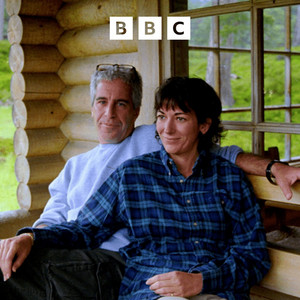
US officials discover another million documents potentially related to Jeffrey Epstein.
Californians evacuate their homes as an intense storm approaches.
And Midnight Mass takes place at the Church of the Nativity in Bethlehem, for the first time since the war in Gaza began.
Also in this podcast.
A look back at the year in AI and The nature of the gift can be great for telling stories.
And I think also very importantly, it can anchor memory.
With Christmas in mind, we learn about the art of gift-giving.
First for the victims of the child sex offender Jeffrey Epstein, his business associates, former friends, among them Andrew, the brother of Britain's King Charles, and the US presidents, Bill Clinton and Donald Trump.
The sheer volume of documents related to him has been overwhelming.
These were in the tens of thousands, but add to this one million more which the authorities in the United States have uncovered.
The Department of Justice has said that because there are so many, releasing them may take some weeks.
I heard more from our correspondent in Washington, Sean Dilley.
Can you even picture what a million documents look like?
We don't know whether they're on some hard drive somewhere, whether there's a filing cabinet full of papers fluttering about under a desk that have only just been discovered.
But these are questions that survivors are now going to want to ask because...
The Department of Justice, the investigative branch of the federal government, didn't publish because the Federal Bureau of Investigation and a federal prosecutor, the attorney general for the Southern District of New York, say hang on a minute, we found a million files.
Now, the Department of Justice say, well, now they're aware of them.
They are going to do the right thing.
They are going to be transparent.
But the questions are, why?
Why did we not know about them?
And if we did not know about these 1 million documents, have we checked under the drawers everywhere else?
Do we know what's in these documents or these photographs?
We haven't got a clue, no chance at all of knowing that.
Now, it could well be that some of these files are duplicate files.
It could be that they're completely new.
To speculate would be absolutely futile because we do not know.
But one thing that is certain is the lawyers that the Department of Justice say will be working around the clock will be comparing them and putting each one through the same test.
Does this identify any victim of Jeffrey Epstein?
If it does, then it's exempt.
Does it relate to an ongoing investigation?
If it does, then it's exempt.
And does it depict any act of sexual abuse?
And again, in that case, it would be exempt.
And all of this leads us straight back to the starting point, well before the Epstein Files Transparency Act was published, is if there are documents that are not being published, what we've not been shown.
And the biggest question and it's an important question is this is if a million files, essentially in the custody of the Federal Bureau of Investigation and a federal prosecutor, can be found from wherever they have.
Are there any other documents that we've not seen and more questions about transparency?
A million documents, it's a phenomenal number.
Why do authorities hold documents like this in the first place?
Jeffrey Epstein is a very high profile individual and the people who are mentioned within it are very high profile individuals.
What happens in these cases invariably is that when people phone up authorities, that could be a police department somewhere and the files are passed on or the Federal Bureau of Investigation.
And they either say they've got information or they provide what is presented as evidence.
A log gets created, files gets created.
Each and every time in the United States that somebody phones up a police department, for example, and says oh, I'd like to talk about Jeffrey Epstein.
They create a record on a system known as the computer-aided dispatch system at police departments and sheriff's departments all around the country.
And there could literally be thousands of calls because there might be something as innocent as Jeffrey Epstein being mentioned in the news, or there's a photograph that's been mentioned.
So each time somebody makes a call to authorities, it could be that law enforcement officers are taking statements, they're taking affidavits in some jurisdictions.
It is every recorded bit of information across so many years.
The first major allegations we're aware of from 1996, but some of the data, some of the material they could have could stretch way back beyond that.
There could be multiple copies of the same documents and, of course, for each and every allegation received, not only do they have to collect the evidence, but there could be investigative findings too.
Sean Dilley in Washington.
More than two years after the Hamas-led October 7 attack, moves have been made to officially investigate the biggest security failure in Israel in 50 years.
But rather than an independent investigation, the inquiry will be politically controlled.
As Sebastian Usher reports, Israel's parliament has approved the first reading of legislation for the inquiry.
The issue of who will be empowered to investigate the attacks on October 7th remains highly contested in Israel.
The schism was clear in the Knesset, with the governing coalition voting to approve the bill, while members of the opposition ripped it up in protest.
Many in Israel believe that the proposed legislation will result in the government having the power to set the mandate of the inquiry.
The Prime Minister, Benjamin Netanyahu, has repeatedly refused the alternative championed by relatives of the victims, among others, which would be to establish a state commission to undertake the probe.
In doing so, Mr Netanyahu's critics say he's going against legal precedent which would see the head of the Supreme Court appoint an independent panel to investigate major state failures.
Sebastian Usher.
Meanwhile, in the Israeli-occupied West Bank, Bethlehem held Christmas celebrations for the first time since the war in Gaza began.
Thousands of worshippers and tourists gathered for midnight mass in the city where the Bible says Jesus Christ was born.
Our correspondent Sharma Khalil says it's a contrast to the somber and restrained mood of the past two years, but the war is still casting a long shadow.
There's just such a buzz about Manger Square full of people, families dressed in their best, children running around and a Santa that was standing in front of the all-famous Christmas tree that was missing for two years and that was lit again for the first time this season.
And I'm looking at it now, with its beautiful red star and its twinkling lights, just opposite the Nativity Church, and the bells were tolling just now.
It's been quite emotional for people in Bethlehem because they felt that they've got their city back almost in this very, very special time of year, because Bethlehem has always been the heart of Christmas, of course, and it was very sad to see it.
People were very sad to see it be a shadow of itself for the past couple of years.
But there was also this thing about...
Gaza and the suffering in Gaza not be far from people's minds.
The fact that the suffering continues even after the ceasefire.
But I spoke to the Reverend Dr. Jack Sara.
He is the head of the Bible College here.
And he told me why it was so important to mark Christmas this season.
I think this is more about hope.
It's more about resilience and more about telling we exist.
We are here.
Christians and Muslims and everyone who lives here wants to declare that we are people who love life.
Every tree lighting Gaza was present, whether it is in the prayers or the mentioning.
And I've been speaking to a Christian Palestinian family that has been sheltering in the Catholic Church in Gaza.
I spoke to Hilda Joseph, a 20-year-old Christian Palestinian.
She's been sheltering there with her parents and two siblings.
And she used to be able to come to Bethlehem, she tells me.
And she describes what Christmas was like before the war.
We used to decorate the tree inside our home to put a nativity sense under the tree.
Also, what do you miss most about christmas before the war?
My home, to be honest, my home, my memories with my family inside our home.
Do you miss bethlehem?
For sure, that's right.
We used to go to bethlehem and celebrating the birth of jesus christ there on the land church, but now we can't go anywhere.
If you have One wish this Christmas, what would that be?
We ask them to keep us in their prayers.
What do you wish for yourself?
There's no personal thing.
The only thing we need is the love and peace in Gaza and all the world pieces, what people here worshippers here in the Nativity Church have also been praying for.
One quick thing to tell you that Hilda told me is that, despite her hearing bombings near the church even after the ceasefire, she says, at least we're inside the church, referring to other Palestinians who might be marking this season, marking Christmas, from tents, especially with heavy rains and downpours, and really, really heavy ones that have hit the Gaza Strip last week.
Many don't even have that shelter.
And this has also been heavy on people's minds here in Bethlehem as they mark this Christmas season.
Shama Khalil in Bethlehem.
Still to come.
NORAD satellites confirm Santa's sleigh is gliding over Kyiv, the capital city of Ukraine and one of Eastern Europe's most historic cities.
We track Santa's journey across the globe.
This is the Global News Podcast.
In the US, it's been a period of intense and unstable weather in California.
A powerful winter storm has struck the southern part of the state, bringing torrential rains and strong winds.
The rain is being driven by a weather phenomenon known as an atmospheric river.
The governor has declared a state of emergency in several counties, including LA, with evacuation centers open for residents told to relocate.
Andres Gutierrez from our partner station CBS sent this update.
Throughout the day, Southern California has been getting walloped by this powerful atmospheric river.
At some points there have been rainfall coming down an inch an hour, and that is fast enough to end up clogging streets and swell as some storm drains.
The biggest concern out here are the burn scars that were created by those wildfires that burned earlier this year in the Altadena area, where I'm at.
The community is still recovering from those devastating fires.
And with all this rain, officials have said that it ends up creating all this debris that they've worked to try to remove.
They have put evacuation warnings and orders in place here in the Altadena area, as well as across the metro over at the Pacific Palisades.
The California governor, Gavin Newsom, has issued a State of emergency in six counties and this ends up implementing, allowing crews to preposition rescue teams and equipment.
The timing couldn't be any worse.
It has put a kink into many plans for families during this, the Christmas holiday.
Communities up in the mountainous region seeing heavy snow as well as strong winds, and there have been numerous crashes.
There is one that is circulating on social media of a FedEx truck that ended up jackknifing, sending packages to all over the road, so some folks may not be getting those Christmas gifts on time.
The heaviest rain is expected through Christmas Day and it is expected to be all wrapped up by Friday.
Andres Gutierrez.
From a Google search to a post on social media.
Artificial intelligence is increasingly embedding into our daily lives.
But not everyone is convinced it's all it's cracked up to be.
The newsroom's.
Will Chalk has covered this issue many times for us over the past 12 months and he's been looking back at the year in AI.
2025 started with a bang for the AI industry.
Has the AI bubble burst?
The world's biggest listed company, Nvidia, slumps nearly $600 billion.
In January, the emergence of a cheaper Chinese rival to ChatGPT DeepSeek caused chaos on the stock markets as US companies realised they weren't the only players in the game.
But DeepSeek's dominance was short-lived, partly because of its ties to China and censorship.
We asked it a couple of questions earlier on.
One was what happened in Tiananmen Square.
It gave us this answer.
I'm sorry, I can't answer that question.
The biggest search engine in the world, Google, also showed off its new AI mode this year.
I'm planning a trip to a strawberry farm with my two kids and we want to find a cafe nearby for one of my kids who's a picky eater.
But I also want free car parking.
That's a lot of things to do in a search, but you can ask all that of AI mode.
Again, trust seemed to be the main concern.
Here is Ian Leslie, an author on human behaviour, speaking to us at the time.
AI chatbots in general are amazing.
And it speaks, if that's the word, with complete confidence.
But in some cases, it's giving you completely mistaken information and presenting it as the truth.
Then there's the thorny issue of artificial intelligence and the arts, which has been in the spotlight more than ever, not least because of this.
It's the most powerful imagination engine ever built.
Sora 2, which can create eerily realistic looking videos of pretty much anything you can imagine at the click of a button and put you and your friends in them too, was released in September.
It made so-called AI slop easier to make than ever, but there were big concerns about copyright.
Dr. Gary Marcus from New York University writes on AI.
He told me it marked a fundamental shift for society.
It leaves us in a society that's going to have trust issues, because I think people are going to learn that you can't really trust video anymore, but we don't really have a replacement.
We don't have a source of ground truth that people share, and I think that's going to be disruptive for society.
The big AI firms are still facing lawsuits from all around the world, largely from the people who own the copyright to the material their models are trained on.
And it's playing out in a big way in the world of music.
Because if you ask an AI generator to make you a song that sounds say, like Ed Sheeran, some would argue that Ed Sheeran deserves some compensation.
It's an issue that came to a head when big record labels, including Warner Brothers, sued the AI music app Suno.
That is, until Warner Brothers changed their mind and decided to work with them instead.
Many in the music world were outraged.
But some see it differently.
Grammy-nominated producer Jamie Rodigan told me there are others who see the app not as a threat but as an opportunity.
I enjoy using AI in the creative process.
If I start writing a piece of music and need an idea or maybe some harmonies, I may upload a track to AI and AI throws me back some different variations or different examples of how the track could develop.
So it's polarising, it's problematic and it's fraught with risks.
But if 2025 proved anything, it's that AI isn't going away.
We'll chalk with that report.
Now, gifts will be on a lot of people's minds today.
Unlike most of us, world leaders receive them all year round, not just for birthdays and Christmas.
Some can be a cure, others a curse.
So what do you give to make a good impression?
Keith Lippert owns a corporate gift company in Washington, D.C.
There are really big differences around the globe when it comes to gifting.
And I think that in Anglo-Saxon cultures we've come rather transactional, whereas in many parts of the world we find relationship building is most important.
What is going on with the gift exchange?
Did you take any effort?
One in particular is when President Roosevelt met King Abdulaziz of Saudi Arabia.
And Roosevelt gifted two gifts.
One, he had a spare wheelchair, which he gifted Abdulaziz.
But perhaps more importantly, Roosevelt gifted Abdulaziz two DC-3 planes, and they became the bases of the Saudi Air Force.
So after that, the Saudis more or less allied with the Americans.
Interestingly, Churchill went and visited Abdulaziz afterwards and he gifted a Rolls Royce, which seemingly was a very generous gift, except because we drive on the right, the passenger sits on the left and Abdulaziz never actually used that car.
Another gift that I think is worth hearing about is a gift that President Carter gifted Prime Minister Begin of Israel during the Camp David Accords, because it wasn't actually going particularly well.
And after a number of days, the Israelis communicated to the Americans that in fact, they were going to leave.
So, as was the practice, there was a gift that was presented to Begin that, Carter took over a silver picture frame with the photo of the three.
So it was Sadat, Carter, and Begin.
But interestingly, Carter wrote on the photograph to his grandchildren, may you see peace in your time.
When Carter gifted Begin this gift in front of people, he visibly trembled.
He went back to his cabin.
And in the morning the Israelis notified the Americans that they would stay and the Accords found a successful conclusion.
You know, when I think about these gifts, there are sort of three really great components.
One is, are you conveying respect?
Two, the nature of the gift can be great for telling stories.
And I think also very importantly, it can anchor memory.
Keith Lippert.
Now let's end with perhaps the best gift giver in the world.
T'was the night before Christmas when all through the house, not a creature was stirring, not even a mouse.
The stockings were hung by the chimney with care, in hopes that St.
Nicholas soon would be there.
NORAD radars have sensed movement near the North Pole.
It appears that the elves have finished loading Santa's sleigh, and Santa has lifted off.
Yep for most of the year.
NORAD, the North American Aerospace Defence Command, tracks potential threats.
But on Christmas Eve it does something very different.
As it has for the past 70 years.
It monitors the skies for Santa's sleigh and reassures children, calling in that he's on schedule and on his way.
On duty is Colonel Kelly Frushour.
NORAD has been tracking Santa since 1955, when a young child accidentally dialed the unlisted phone number of the Continental Air Defense Command, which was a predecessor of NORAD.
So believing they were calling Santa Claus after seeing a promotion in the local newspaper.
And Air Force Colonel Harry Shoup, the commander on duty that night, was quick to realize a mistake had been made and assured the youngster that NORAD would track Santa, although Santa was not present in the CONAD Operations Center and available to chat.
And that's how our tradition was born.
So if I went out to the floor right now, there's tons of Canadians and US military personnel, civilians and then members of the local Colorado Springs community.
The last time I looked at the numbers, we were over 100,000 calls.
So we've definitely gotten a lot of calls today.
Well, I'm looking at the NORAD tracker right now and Santa Claus has almost completed his journey.
He's delivered six billion presents to houses where children are asleep.
His sleigh was last spotted over the Galapagos National Park in Ecuador and is now flying up to the International Space Station.
Thank you very much.
Global News Pod.
This edition was mixed by Darcy O'Brie and the producer was Muzaffar Shakir.
The editor is Karen Martin.
I'm Danny Cox.
Until next time, goodbye.