You're listening to Round Table, I'm Steve Hatherly together today with Lai Ming and Fei Fei.
Coming up, some foods are very obviously good for us.
Carrots? Good. Apples?
Good. Conversely, some are very obviously bad for us.
Pizza? Bad. La Tiao I've learned recently here in China.
Yeah, not good at all.
But then there's the grey area of foods, like bread.
Well, we know it's kind of good, but wait, white bread is not so good.
But what about multigrain bread, is that good or is that bad?
If only we had a food labeling system to let us know.
After that, if you have a child, I'm sure you want to raise them to have empathy.
Of course you do. We don't want to be raising the next generation to be cold and heartless.
Stay tuned, we have some tips for you on how to make sure that your child is in touch with the feelings of others.
Our podcast listeners, that is you, can find us at Round Table China on Apple Podcast.
And also please don't forget, we love hearing from you.
You can send us an email, which is great.
But our favorite way to hear from you is through your voice notes.
So please do send those our way with your thoughts on any of the issues that we discuss here on the show.
Here's how you get in touch, Round Table Podcast at qq .com.
One more time, Round Table Podcast at qq .com.
Now, let's dive into the world of food labels.
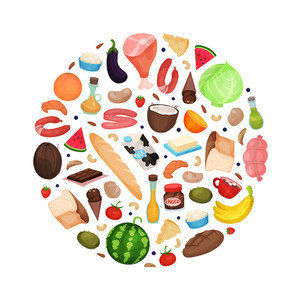
A trip to the grocery store can sometimes be confusing, not in the sense of prices or the location of products, but in the healthiness or lack thereof of the foods that you're choosing to buy.
How healthy is this sauce?
How unhealthy is that cereal?
But what if we could live in a world where food on grocery store shelves was ranked by its healthiness?
Well, in some countries, that world already exists.
Let's dig in to the whos and whys of this topic and find out if this really could transform the way we eat.
Let me ask you, are you label readers or not?
No. You're not at all?
Definitely, yes. Oh, interesting.
Okay, fight. Go ahead.
Please explain. Why do you do that, Fei -Fei?
Because I want to know what I'm putting into my mouth.
And often the case, I think is, for example, with the bread example that Steve just had, some companies will tell you, you know, wholemeal bread is very healthy, but then you check their ingredients.
They have a lot of sugar in it.
So because, of course, maybe the manufacturer want to make the wholemeal bread more easy -easy, more palatable, I guess.
So that's why they add a lot of sugar.
But then that's not the wholemeal bread that I'm looking for, really.
So I definitely will check the ingredients that's labeled on the packages.
Laiming, you're not so much?
In principle, I'm careful with what I eat, but I also live with people who are not, and some things couldn't help, you know?
And also, when I'm really careful, when I'm principled, I live the life of a monk.
You know, I would eat hard -boiled vegetables with no sauce at all, even with a slight kind of salt, and that's it.
So it's not an ideal life that everybody enjoys.
So on occasions, I would like to indulge.
But when you do indulge, you know that you're indulging.
But part of the problem, I think, is when we take a trip to the grocery store, sometimes we're indulging when we don't even mean to indulge.
For example, Feifei, the bread that you're talking about that seems healthy on the surface, but when you dig into what's inside, then you realize it's not so much.
And that's why we're talking nutrient profiling systems today.
It's a very impressive term, Feifei.
What is a nutrient profiling system?
It's basically the system will have clear labels on the front of the packages and assess the food quality based on the nutrient contents.
For example, a lot of countries have this different kind of system.
For example, in France, they have a rainbow -colored system that grading foods from A to E.
It was created in 2017, and it's been adopted by several other European countries, such as Germany and Spain.
So the foods are graded on their nutritional qualities and assigned a letter and a color ranging from a dark green, which is A being the most healthy, to a dark red, which is E being the most unhealthy.
It's almost a grading of whether it is delicious or not.
In a sense, yeah. They have a similar system liming in Australia.
Yeah. It's a five -star system rating foods in half -star increments.
The Health Star Rating, or HSR, is a voluntary front -of -pack labeling system that rates the overall nutritional profile of packaged foods, and assigns it a rating from half a star to five stars.
And this provides a quick, easy standard way to compare similar packaged foods.
The more stars, the healthier the choice, the less delicious.
By May, they are. This goes back to 2014 in Australia, and in New Zealand, they use it as well.
In the UK, they use a similar system.
It's called the Traffic Light system.
In Chile, they use a system that is very, very similar.
In Chile, they have labels that show a stop sign warning consumers when a food contains a high amount of sugar, or salt, or saturated fats.
I don't understand the hypocrisy.
If it's red, if it's a stop sign, why bring them onto the shelf?
What's the point of the market supervisors in bringing them there?
In a perfect world, we wouldn't have to do this.
People would like to indulge.
People like to indulge, and people don't want to indulge, and that's the whole point, right?
Is to make sure that people can make healthier choices.
Now, of all the countries that we just mentioned, France, Belgium, Germany, Spain, the Netherlands, Australia, New Zealand, Chile, in the UK, they all have a similar style of nutrient profiling system.
In America, thus far, they do not have any kind of system that requires any front -of -package nutrition labels.
That could change very soon, though.
The US Food and Drug Administration, they're currently developing these front -of -package labels where it could require corporations to begin printing as early as 2027.
Now, obviously, in America, there is significant opposition from food companies.
Lobbying. Yeah. Because it makes sense, right?
They don't want these types of labels on the front of food.
It hurts their business.
It certainly could have a huge impact on their business, but it is something that's happening around the world, and it's an interesting move.
In America, part of the reason that food companies don't want these types of labels is because ultra -processed foods are...
which, by the way, ultra -processed foods, those are industrially formulated products.
Like, bacon, pickles...
Sugars, salts, hydrogenated fats, all the good stuff, breakfast cereals, microwave dinners, soft drinks.
Today, this is a shocking statistic.
In the United States, ultra -processed foods make up 73 % of the US food supply.
That's from Northeastern University's Network Science Institute.
That's a staggeringly high number, and that's why, in America, they don't have such a system yet, and why there's such opposition to such a system.
So how do they come up...
We're talking about these nutrient profiling systems.
How do they come up with them?
Well, each nutrient profiling system uses different scoring algorithms, but most assign positive points to nutrients and foods that are typically under -consumed, meaning people are not eating them as recommended by the World Health Organization or doctors, such as fiber, fruits and vegetables.
Adversely, negative points are given to over -consumed nutrients like sugar, saturated fat and sodium, which are often added to processed foods, and these points are combined into a single score.
Higher scores indicate healthier foods, while lower scores indicate less healthy options.
Kale, which is rich in fiber, potassium and unsaturated fats, while low in sugar, sodium and saturated fats would earn a high score as compared to, let's say, a slice of bacon.
One individual slice of bacon.
So then how is this different?
Because now currently we have labels on foods, right?
You know, if you pick up...
Traditional factors.
Yeah, you pick up a jar and you can find the label on the back.
So Feifei, how is this nutrient profiling system, how is it different from food labels that we currently have?
Well, the current labels we have normally on the back side of the food packages can help us understand what's inside of what nutrient contents of the food, like calories, like nutrients, like key vitamins and minerals.
But then I guess for a lot of consumers out there, these ingredients and numbers or portions in these tables can be a bit confusing.
So I think... You have to be educated.
You have to be aware.
And especially, for example, here in China, we list every ingredient, including additives in our packaged food.
And that can be very confusing because the name of the chemicals.
And these words are like Russian or...
Yeah. I see the words.
Sometimes I couldn't know how they're spelled in picking.
So it's true. These labels, well, there's that, that the language, these are words that most people don't understand.
But then also the labels are really small and they're difficult to see.
There's nothing convenient about them.
But these nutrient profiling systems, they differ in the sense, I suppose, that it's a...
It's intuitive. Yeah.
It's a single actionable score.
And it's going to be...
And in the countries that it already exists, it's right on the front of the package.
So you don't need to look very hard to find it.
And it tells you immediately, it's easily understandable where it ranks on the healthy or unhealthy scale.
What about processed or ultra -processed foods?
How are those scored?
Well, nutrition, a nutrient profiling system algorithms are all quite similar in their high ranking of unprocessed foods, like beans, nuts, seeds, fruits, vegetables, and whole grains, and low ranking of processed foods, like hard darks, soft drinks, cakes, and cookies.
And so they help people rebalance their diets that have been skewed by food processing or the degree to which the ingredients have been altered.
This is complementary to the NOVA classification system.
That was developed by researchers at the University of Sao Paulo in Brazil and they categorize foods based on their level of processing.
The NOVA system that was developed in Brazil, it's very well accepted.
It was proposed by researchers in 2009 and many researchers have been using that NOVA food classification system to categorize foods based on their level of processing.
That is quite complicated how they do that and how they classify things into four different groups.
It's unprocessed or minimally processed foods where you're looking at milk and meat and eggs and fish.
Then you have processed culinary ingredients, which is vegetable oils, butter, vinegar, salt, and sugar, processed foods like canned vegetables and fruits, and then the ultra processed ones.
These are the ones that tend to taste the best.
These are the breads and rolls and cakes and cookies and donuts and breakfast cereals and burgers and...
All of those things, yeah, exactly.
Here's the question then.
It sounds great, right?
Is this a foolproof system?
Is this something that is infallible?
I've only lived stayed for longer terms in two countries where they don't have systems like this in the US and here in China.
I don't have previous experience of people really seeing the writings on the wall and changing their behavior.
I believe human nature is really precarious.
For someone like me, I've liked to think of myself as somebody who's disciplined, but even for me, I sometimes drink, I sometimes go for processed food, I go for potato chips, I go for barbecues.
I don't know. I think it's too much to ask for average consumers to really be that principled and just act like they're being told or act like they're being warned.
Well, for me, I used to live in Australia for a few years and they do have a rating system of the five star rating system.
Oh, so you've seen this first hand?
I've seen them, but I've never really noticed them because they are not printed in large fonts on the packages.
You have to read very carefully on their packages.
So when you look at the package, it's not that obvious.
No, I didn't notice that until I think after one or two years in Australia and then I start to realize, oh, that's what the stars are all about.
But then I think about even a very beloved muslin that I almost eat every day for breakfast in Australia at that time.
It was rated either four or five star product is quite healthy, right?
But then when I checked the ingredients, they have a lot of sugar in it.
For me, who are looking really carefully to add my sugar intake, I think these star rating systems are not applicable, do not really suit me at that time because they don't tell me that they have a lot of sugar, more sugar than I anticipated.
So I think for consumers who are looking at certain ingredients, who are maybe looking out at sugar intake or carbon hydrates intake or fat that in their food, they still need to read the ingredient tables, not just looking at the rating system.
And this type of nutrient profiling system, it's not perfect, right?
And that's what researchers say, that they need to study it further to assess whether these types of systems influence buying habits or consumption trends and also health outcomes like weight and blood pressure.
But that being said, these systems are promising tools and they can potentially have an impact on consumer behavior.
And it can also spur interest in a topic that maybe people wouldn't have had before.
What's inside their food?
Well, yeah, well, I'm not so optimistic about human beings as a species in overcoming our original or overcoming our intuition because I think millions of years have programmed our body and our brain to crave energy intensive food.
And it might take maybe shorter time, but there's still a significant amount of time in history for us to really be programmed to think healthily and eat healthily.
It's not all on us.
That's for sure. I think supermarkets have a role to play in...
To exacerbate the problem.
Exactly. In us being healthier.
Here's what they did in the UK.
Let's look at the UK as an example.
There's a charity group there called Nesta, and they worked together with a consumer group called WITCH.
And they put out a report and modelling in 2024.
And what they found is that food targets designed for the UK's 11 largest grocery retailers designed to offer healthier food options could have a really tremendous impact on the country's health.
So in order to calculate appropriate health targets for the supermarkets, researchers first determined the healthiness of food sold across the UK's 11 leading supermarkets.
And this was a huge study.
They analyzed 36 million transactions from 30 ,000 different households.
And then they came up with a score to know how healthy or unhealthy the total average of the households' food that they purchased was.
One meaning the least healthy and 100 the most healthy.
The average score in the UK was 67.
Not too bad. Not too bad.
But let's see if it can be improved upon.
What they did next was they modelled the effect on obesity, showing that an improvement in the average score of just two points from 67, if they could bump that up to 69, they would cut obesity by approximately 23 percent over three years, helping four million people to achieve healthier weight and saving
up to 20 billion pounds per year that the National Health Service is associated with in terms of cost.
Only bumping up the score.
Now, what can supermarkets do to help us achieve that 69 score as opposed to that 67 score?
They can put fresh produce, fruit, and vegetables at the entrance of their supermarkets.
So that's the first thing consumers see when they walk into that supermarket.
But only if it's in their own interest.
If they are not making a lot of profit on, you know, on selling the fresh fruits and vegetables, remember, they are very costly to transport and also to maintain.
So I'm not sure. I'm not confident if they are making decisions purely on their return.
I mean, investment in the return ratio, then they would do that.
I'm not sure. That's already happening.
Fruits and vegetables as soon as you walk in.
The problem is you have to find the healthier stuff near the back or in less prominent areas of the grocery store.
In the UK, about 43 percent of foods and drinks located in prominent areas of popular supermarkets are sugary.
And then you've got 90 percent of products on display at children's eye level in UK supermarkets.
Those are classed as unhealthy.
And kids are often telling their parents, buy this, buy this.
That's the sugary stuff that's at the children's eye level.
Supermarkets know exactly what they're doing.
They're designing it so that they can sell more so that they can make more.
And we shouldn't vilify them for that.
But they're also not doing what they can to help us out to make healthier choices.
They need a different set of incentive rather than making money.
A challenge for sure.
You're listening to Roundtable and coming up next.
If you want your child to be empathetic in terms of their feelings to others, stay with us.
Looking for passion?
How about fiery debate?
Want to hear about current events in China from different perspectives?
Then tune in to Roundtable, where East meets West and understanding is the goal.
You're tuned into Roundtable.
I'm Steve. He's liming and she's Fei -Fei.
And for all you parents out there, the goal, of course, is to raise a well rounded individual who's capable of not only identifying their own emotions, but the emotions of others as well.
Being able to take on how others are feeling is essential to relationship building.
But how do we do that?
How can we make our kids feel that sense of empathy?
There are certain things that you can say to your children and we're going to get a couple of tips on those today.
Liming kids, I guess, have to know how to take care of themselves first before knowing how to take care of others.
That's fair, isn't it?
Yes. But oftentimes it's very difficult.
I mean, I raise a very sensitive son and the biggest of my headaches is to help him identify his own feelings and his own emotions.
And then perhaps on certain occasions to act accordingly to the social protocol.
And I think, I don't know, oftentimes parents, very ambitious parents, may have to deal with people and children with different personalities.
In my son's case, like I said earlier, he's very sensitive.
So I usually just, a lot of my attention is given to helping him getting to terms with his own emotions.
Whereas he's being sensitive.
He's quite adept at showing empathy when he's around others.
If you can explain it very carefully to him that this is a situation that's sad and more often than not, he acts even sadder than you expect.
So my advice to parents is to try and know your children to begin with and then on different occasions, show them what to do.
Fabian, how young did you start teaching empathy to your kids?
I don't think I have a really explicit timeline for that, but I think according to some experts, you can teach your children as young as 18 months.
To understand about emotions and empathy.
And I think what really matters is really not just about lecturing, I think, lecturing your kids, you need to be empathetic, but it's more about teaching them what to do in daily practices.
Like seizing these little moments that you notice in life and then sort of show them yourself as a parent what to do.
For example, when you noticed a friend or a family member sick, offer them a glass of water and ask them, care for them.
That's something that the little details and little moments that teaching them subtly about empathy leading by example.
I think it's very, very tricky to to instill empathy, real empathy into any human being.
That's something that's a gift.
You have to be able to feel it.
Great people with great ability to empathize.
They often create very, very touching work in performing arts, in literature.
But this is this is a talent.
This is not something that you can train and acquire.
Well, experts say that you can try to get your kids on the right track at about two to four years old.
But instead of and this is what experts say, instead of starting with empathy, you start with four basic emotions, happy, sad, mad and scared.
And you can teach your kids how to identify those four emotions first.
And you can do that by saying, look at mommy's face, how does mommy feel?
Look at if you have a dog, look at puppy's face, how does puppy feel?
And then ask your child to make that same face to replicate it so that they associate the facial expression with the emotion.
They say that's a good place to start.
Another method is to borrow the nutrient profiling system to use the color coded system.
This is what I'm doing with my son.
It is to define to attribute colors to different emotions and to ask him what color do you think you're experiencing in your emotions?
Oh, I thought you were kidding.
Oh, so what what colors match with what emotions like if you are calm, you are blue, if you are mad, you are red and that kind of thing.
So if you're you're sad, maybe it's a black.
So if he's able to tell you what color he's going through, then it's a way for him to communicate with you what his feelings are.
It's an extra way, isn't it?
So when you start asking your child, how do you feel?
Well, maybe if they can't verbalize their emotions very well, which they can when they're young, then they can use the color to communicate that feeling.
And that's what experts say, too, is to ask them after they identify those emotions, how are you feeling?
The next step in terms of getting your child to feel empathy is to start asking that question about other people.
How do they feel? How do you think?
And you can do this when you're watching a cartoon.
You can do this when you're reading a book with your kids.
They say, how do you think the character feels?
And then after they establish that, then experts say you ask this question.
What can you do to help them feel better?
Same thing, cartoons or characters in a book when you're reading a story at night, if the character is sad, you say, why do you think they feel sad?
What do they need and what can they do?
What can you do? What could you do to help them feel better?
Do you agree with this?
This is what the experts say.
Well, this is what the teacher of my son told us, and that is if he's having problem expressing his opinions, his feelings, then certain problematic behavior might arise.
Like he might resort to violence or hitting other students, that kind of thing.
So if you if he learns how to deal with these emotions, how to express them and especially express them in in words rather than actions, then the next step is that they might find it easier to manage their emotions.
And that reminds me of a very famous cartoon movie called Inside Out.
Oh, yes. Right. Basically tell I think my daughter loves it, that movie because of the four characters that movie gives joy, sadness and anger and fear.
Yeah, that's she started to notice these four characters inside her own head and she started to identify what do you think which character is controlling that person's panel?
At this moment is that joy?
And that's very interesting.
Which so that led to a really interesting discussion between you and your child about identifying feelings.
I should show my son that movie.
Right. And there you go.
That's how you get your kids on the path to be empathetic.
And that will bring us to the end of today's roundtable.
Thank you so much to Laiming and Fei -Fei.
And thank you for sharing your time with us as well.
I've been Steve. Don't forget.
Send your messages to Apple podcast at Roundtable China.
That's where you can find us.