Get the unmissable news stories of the day.
This is the beijing hour, examining the events that impact and shape china and the rest of the world.
This is the beijing hour one hour of news and information brought to you every weekday.
Now here's your host, shane biggum, with you on this thursday, october 9th 2025.
You're listening to the beijing hour coming to you live from the chinese capital.
On today's program, many Palestinians and Israelis are celebrating as the first phase of the new Gaza ceasefire deal has officially taken effect.
China and Italy have pledged closer ties as the country's foreign ministers meet in Rome.
The sixth attempt to end the US government shutdowns failed as Republicans and Democrats struggle to find common ground.
In business, China's consumer sales surged during the National Day holiday period.
In sports, the flame lighting ceremony for China's 15th National Games.
In culture and entertainment, massive box office numbers during the holiday in China.
Now checking the day's top stories.
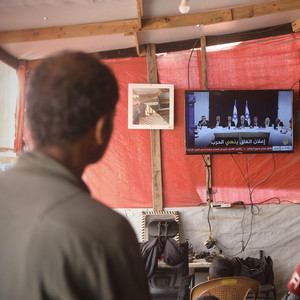
First phase of the Gaza ceasefire agreement has officially taken effect.
Residents in the Palestinian enclave expressed joy after the announcement of the peace plan.
In Tel Aviv, Israelis gathered at the hostages square to celebrate the news.
The latest deal includes an end to the two-year conflict, the release of Israeli hostages and Palestinian prisoners, the entry of aid into Gaza and the withdrawal of Israeli troops to an agreed line.
Hamas has confirmed the deal, but is calling on Washington and guarantor states to ensure Israel fully implements the ceasefire.
Israeli Prime Minister, Benjamin Netanyahu, says he's approving the agreement and has vowed to bring all hostages home.
Mediators say a final draft of the peace deal is underway.
UN Chief, Antonio Guterres, has welcomed the agreement and is calling on all parties to abide fully by its terms.
Indirect negotiations between Israel and Hamas began in Egypt on Monday.
Envoys from the U.S., Egypt, Qatar, and Turkey all joined the talks.
Adele Al-Marouki has more details from Sharm el-Sheikh.
The agreement focuses on the first phase of the US proposal for a long-term ceasefire.
What we know so far is that there is an agreement to release all Israeli hostages from Gaza.
There is an agreement for Israel to withdraw all 48 hostages.
Most of them are dead.
At least 20 are expected to be alive.
The exchange could happen as fast as Saturday.
What will happen next is basically what will be vital for the survival of this ceasefire.
These are topics that include the disarmament of Hamas, rebuilding Gaza, the governance of the Palestinian enclave Gaza who will take over and in what form?
And also the political future of Hamas within the Palestinian enclave.
How will that shape up?
What we know so far is that Hamas has not announced anything regarding disarming itself.
All its previous stances was disarmament will only come with the establishment of a Palestinian state.
How will that unfold?
This is what we're expecting to hear from the mediators once an official announcement is made.
What will happen next during the next couple of days is to fine-tune, and this is just a fraction of a three-phase plan.
The second two-phase are very crucial for a lasting peace in this part of the world.
That was Adele Al-Marouki reporting.
China says it hopes to see a permanent ceasefire in Gaza as soon as possible.
Foreign Ministry spokesperson Guo Jiakun says Beijing advocates the principle of Palestinians governing Palestine and supports the implementation of the two-state solution.
He says China stands ready to work with the international community to achieve a just and lasting resolution of the Palestinian issue and peace and stability in the Middle East.
Displaced Palestinians in Gaza say they hope to return to their homes and resume normal life once a ceasefire takes effect.
We hope from this moment that a ceasefire will take place as soon as possible, because people can't bear the suffering anymore.
The suffering is great.
People can't breathe anymore.
We hope that the negotiations will be successful and bring good news to relieve the people.
People are sick, tired, they were humiliated and faced injustice.
I wish for peace.
I want to live.
I am a man who wants to live, me and my children.
I wish Gaza would go back to how it was and become even better, so we can live there and raise our children.
Today, everyone is advertising for displacement, voluntary displacement and forced displacement.
No, being abroad is not easy.
Our country is beautiful.
We want it to come back and return to us better than before.
Gaza's health ministry says the war has killed more than 67,000 people.
Nearly one-third of them were children.
The United Nations estimates that about 80% of buildings in Gaza have been damaged or destroyed.
The peace deal carries different implications for the leadership of Israel and Hamas.
For more.
Li Dongning spoke with Professor Mateo Capasso, an expert in Middle East studies at Northwest University of China.
Well, President Donald Trump has not talked about the specifics of his peace plan.
He's a 21-point peace plan with very light details on the paper, although it sounds very ambitious.
Do you think the deal could lead to lasting peace in the region?
I think you're right.
The plan remains thin, somewhat vague, and it raises more questions than it answers.
I think there are major problems on the grand scheme of things.
The first one is definitely the question of Israeli withdrawal and stopping the war of aggression on Gaza.
Where and when exactly they will withdraw, how much territory over what timeline?
The plan doesn't say anything.
Then we need to look at history.
When has the United States ever forced Israel to comply with international law?
Decades of UN resolution ignored, agreements violated.
Won't resume its assaults once hostages are out.
The second issue is the disarmament.
Hamas has already rejected this.
Is there going to be a Palestinian state?
Is there going to be an army to defend the Palestinian people?
It's very unlikely.
Third, where are the Palestinians in this?
They had no role in drafting this plan.
Gaza is being said will be run by technocrats, Donald Trump or Tony Blair.
This is not self-determination.
It's control under a different label.
So, yes, the plan is very, very vague at this point.
What this plan actually means for Prime Minister Netanyahu and also Hamas' leadership?
Do you think they will heavily influence their positions currently in their own countries?
Or how would that influence what is going to happen next?
I think for both, this is a very existential and critical moment.
On the one hand, Netanyahu is fighting multiple battles, is facing an ongoing corruption trial.
There are questions about the October 7th al-Aqsa flood operation and the intelligence failures of Israel.
And then there is a far-right coalition backing his government that is threatening to collapse his power.
Smotrich and Ben-Gavir have already explicitly threatened to withdraw over any ceasefire.
In other words, they can bring down his government.
He can try to spin this as a victory before the 2026 elections.
Hostages home, Hamas destroyed Israel secure, basically trying to turn a crisis into a political advantage.
But again, it could easily restart the war all over again.
For Hamas, the calculation is different in a way.
Their leadership is definitely decimated.
The organization faces annihilation because the amount of killing has been massive.
And Trump is offering an exit here.
But what's remarkable is that, despite being military devastated, Hamas has brought back the Palestinian issue on the international stage.
The world has watched Israeli violence unfold in real time, and the Palestinian cause is alive again internationally in ways that it hasn't been since the Second Intifada.
That was Li Dongning speaking with Professor Matteo Capasso from Northwest University of China.
A study from Brown University finds that the US government has spent 21 billion on military aid to Israel or in Israel over the past two years.
The report says most of the weapons Israel is using in Gaza and across the Middle East come from its existing US-made inventory.
Tony Waterman has more details in Washington, D.C.
This is a study that was published by the Costs of War Project out of Brown University and it's really the most comprehensive account of money going to Israel since this war began.
According to the report, 217 billion on military aid to Israel, and that number does not include the tens of billions of dollars in arms sales agreements that have been committed for weapons and services that will be paid for and delivered in the coming years.
Now, according to this report, US arms have been central to Israel's operations not just in Gaza, but also in the West Bank.
And it essentially argues that Israel would not have had the success it has had without the US's help, specifically this military aid.
And the report says that Israel's entire inventory of fighter jets comes from the US.
This includes F-16s, F-35s, as well as its attack and transport helicopters.
We're talking about a lot of big military equipment.
Most of this aid, of course, was provided during the first year of this war.
So that would have been under the Biden administration.
But it has continued even as it is stretched into the second year of war.
And I think that maybe for some Americans it would come as a surprise how much money the US has been given to Israel, especially at a time when you had a lot of Trump supporters criticizing the Biden administration for giving money to Ukraine to fight its war against Russia.
That was Tony Waterman reporting from Washington, D.C.
Israel intercepted another activist flotilla on Wednesday as it attempted to break the blockade on Gaza.
It was the second such attempt in recent days.
Turkish Captain Onur Murat Kolgu was one of the activists on board and he says their goal was to break the illegal blockade on Gaza and open a humanitarian corridor.
The Sumud flotilla was not launched as belonging to any nation or any religious element, but as a completely civilian initiative.
An initiative of civilians from all nations who felt a sense of conscience and humanitarian responsibility.
On our ship, there were people from 14 different nations.
The purpose of the Sumud flotilla is to break the illegal blockade on Gaza, to open a humanitarian corridor and, at the same time, to pressure governments to stop this genocide.
Koglu says a drone attacked their ship and dropped an incendiary device.
On the second day, our ship, the second flagship Alma, was also attacked by a drone.
I barely escaped the bomb by sheer luck.
Later, of course, we intervened in the fire and saved the ship.
Because we were in international waters, we were heading directly toward Gaza.
In other words, we were heading toward Gaza's territorial waters, Palestine's territorial waters.
So, our arrest was completely illegal.
We told them this over the radio.
They warned us, first saying we should not come.
Israeli forces later detained Kogu and sent him back to Turkey.
Israeli forces have intercepted about 40 vessels and detained more than 450 activists involved in previous aid flotillas to Gaza.
Coming up.
The Chinese and Italian foreign ministers call for closer cooperation during meetings in Rome.
China has reportedly paused the purchases of iron ore from Australian mining giant BHP over pricing issues.
Is this a temporary dispute?
How might this incident test the Australian-China relationship, which only began stabilizing recently after years of tension?
Join us on the chat lounge, wherever you get your podcasts, and on CGTN radio as we unpack the causes, the consequences and the shifting power dynamics behind the iron ore standoff.
13 minutes past the hour.
Chinese Foreign Minister, Wang Yishe, held talks with his Italian counterpart in Rome, noting that this year marks 55 years of diplomatic relations.
Wang said the two nations have carried out high-level cooperation for more than half a century and he said the history of exchanges between China and Italy proves openness.
Cooperation and shared development are the right choices for both sides.
The Chinese foreign minister also expressed the country's readiness to work with Italy to strengthen their partnership and explore more cooperation potential in various fields.
Antonio Tajani said Italy attaches great importance to its relations with China and is willing to expand mutual investment in traditional and innovative sectors.
Natalie Carney reports from Rome.
The meeting here in the Italian capital on Wednesday morning between China's top diplomat, foreign minister Wang Yi, and his Italian counterpart, Antonio Tajani, was deemed as quite fruitful.
The two met around 10 am local time and progressed into a closed-door meeting in which they spoke of global issues, including those of geopolitical stability, energy transition and security.
After that, the two co-chaired the 12th China-Italy Intergovernmental Meeting, an opportunity which really provides both countries to develop the tools to strengthen comprehensive strategic partnerships and plan for future areas of cooperation.
Both sides shared a commitment to progressively remove barriers to market access, as well as reaffirmed their desire to intensify economic relations, focusing on sectors that are strategic to both countries' economies.
This was followed by a press conference in which Mr Wang Yi spoke of the long and strong relationship between the two nations.
This year marks the 55th anniversary of the two countries' diplomatic relations.
The steady and healthy development of Sino-Italian relations over the past 55 years is based both on historical exchanges and the need for mutually beneficial cooperation.
Mutual respect openness cooperation, exchange and mutual learning are shared values and embody the wisdom of the two ancient civilizations.
This not only provides a solid foundation for the development of our bilateral relations.
The guarantee also provides a feasible path for the international community to respond to the changes of the times.
Rome has been working quite hard to maintain open and progressive relations with Beijing, after withdrawing from the Belt and Road Initiative back in December of 2023 and voting yes in favor of EU tariffs on the imports of Chinese EVs.
However, following the meetings on Wednesday morning, it does not appear that those moves hindered relations too much.
That was Natalie Carney reporting.
Chinese Foreign Minister Wang Yi also says China-Italy cooperation is full of highlights and mutually beneficial.
Speaking at the 12th joint meeting of the China-Italy Government Committee in Rome, Wang said the two nations have deepened cooperation across multiple fields.
He cited the completion of the China-Italy Lingang Innovation Park, a joint satellite launch and expanding cultural exchanges.
Wang also said, more than 70 Italian firms will join this year's China International Import Expo and China's visa-free policy for Italian citizens will continue.
For the final leg of his trip, the senior Chinese diplomat will visit Switzerland, where he'll attend the fourth round of China-Switzerland foreign ministers' strategic dialogue.
China and Italy have long had a robust economic partnership, leading to growing cultural exchanges.
Both countries are also renowned for having rich culinary traditions.
Over the years, the flavors of each are increasingly appreciated by the palates of the other.
Natalie Carney explores why Chinese food is growing in popularity across Italy.
Hangzhou in Rome's de facto Chinatown is arguably the most famous Chinese restaurant in town.
In part, thanks to its gregarious owner, Sonia, who has become somewhat of a local celebrity here.
But what else keeps pulling in even the most discerning of Italian palates?
I was in China in 2004 and finally, thanks to my dear friend, I managed to find a restaurant here in Italy where the food is as good as what I ate back then in Beijing, Shanghai and other places.
In Rome, the quality of Chinese restaurants is always great.
In this place.
The food is truly excellent and I particularly like the combination of different sweet and sour flavors.
In short, it's very different from Italian cuisine.
But it's been a work in progress, says manager Daniel Yi.
Our menu was created together with our customers, because we provide special menus for holidays, typical traditional dishes, so that you can choose and taste it.
And this created this link, this bridge between the typical Chinese flavors and the Italian palate.
Chinese food became popular in Italy in the 1980s with the arrival of Chinese migrants, primarily from Zhejiang province.
At the time, flavors were made more suitable for Western palates.
There are now more than 1600 Chinese restaurants across Italy, many offering very authentic and spicy dishes.
Chef Gianni Catani has been working with Chinese cuisine for over 40 years, learning from some of China's top chefs.
I must say that they began to appreciate these flavors much more and especially important flavors.
For example, in our restaurant, we make polio kung pao, a spicy chicken.
We do eat a lot of chili.
We make soup, spaghetti, handmade spaghetti, so many things.
Peking duck, another roast with very important flavors that until a few years ago were completely unknown, but now they're very popular.
Gianni is best known for his dumplings, opening Italy's first Chinese ravioli restaurant 11 years ago and expanding across the country.
The growing popularity of Chinese food, not only here in the capital Rome, but in many smaller cities and towns across the country, really reflects a growing appreciation and respect for the cultural exchanges between these two food-loving civilizations.
Buon appetito.
Natalie Carney finding out why Chinese food has been gaining increasing traction in Italy.
Coming up.
The US government shutdown continues following the failure of the latest stopgap funding measure.
He can't live without the Yellow River in his eyes.
Both my grandpa and dad made the living from the river.
The Yellow River Mosaic is a 12-part series of multimedia stories featuring the people who live by the river and share a close bond with it.
Subscribe to Yellow River Mosaic on your favorite podcast platform or visit radiocgtncom for more in this program.
At 20 minutes past the hour, the US federal government shutdown continues into its eighth day with no end in sight.
Democrats have voted for a six-time to block a Republican stopgap funding measure which would reopen government departments.
Uncertainties escalating, as President Donald Trump suggests that 750000 federal employees could permanently lose their jobs.
Jim Spellman reports from Washington, D.C.
The motion upon reconsideration is not agreed to.
For the sixth time, the U.S.
Senate has voted on measures to fund the U.S. government.
And for the sixth time, those bills have failed as the government shutdown enters its second week.
The issues remain the same.
Democrats want to negotiate over health care subsidies, which cover millions of Americans, before they vote to reopen the government.
There is nothing Republican leaders are doing that even suggests they are serious about ending the shutdown or preventing health care price hikes.
And Republicans demand Democrats vote to end the shutdown before negotiations take place.
This shutdown is nothing more than political cover for Chuck Schumer and the Democrats.
We just need a stopgap measure to give us a little more time to get the job of Congress done.
They refuse to do it because they're playing politics and real Americans are paying the price for it.
Every day that the Democrats keep the government shut down is creating more and worse consequences for the American people.
What they've tried to do is hijack this to get $1.5 trillion in new spending.
While Congress is at an impasse, about 750000 federal workers are furloughed and President Trump suggests some won't receive back pay when the government reopens.
But it really depends on who you're talking about.
But for the most part, we're going to take care of our people.
There are some people that really don't deserve to be taken care of, and we'll take care of them in a different way.
Some government services have been cut and the White House has paused billions in funding, mostly for projects in areas controlled by Democrats.
President Trump is threatening permanent job cuts if the shutdown continues.
The White House says it will use money from tariffs to fund a federal food program for nearly 7 million poor children and mothers.
But the longer the shutdown continues, the harder it will be to keep government programs running.
That was Jim Spellman on the follow-up from the latest U.S. government shutdown.
And the U.S. government shutdown has also affected air travel in the country.
It's delayed thousands of flights as more air traffic control and safety staff are calling in sick.
Dan Williams reports from Chicago.
It looks like business as usual at Chicago's O'Hare International Airport, with busy check-in desks and queues at security checkpoints.
But behind the scenes, this airport, like many others across the country, is feeling the strain of the US federal government shutdown.
Federal workers whose jobs are considered essential must continue to work without pay, and that includes air traffic controllers.
But an increase in controllers calling out sick, in a profession already suffering from a staff shortage, has led to thousands of flights nationwide being delayed.
I personally have not been impacted, but I know a lot of people have.
And a lot of people are very angry about it.
That's not right.
They deserve to be paid.
They do a great job.
They help keep us all safe.
And I want to see them paid.
I want this impasse over.
It's already nerve-wracking to fly because of the near misses and in-flight collision and DCA.
So this is just... makes flying all the more anxiety provoking.
The longer the government shutdown continues, the more likely the impacts intensify.
And there are concerns that this further pressure on air traffic controllers could impact safety.
Speaking to the media earlier in the week, U.S.
Transportation Secretary, Sean Duffy, said the situation has created stress for traffic controllers, but was quick to reassure the public over any safety fears.
I want to be clear.
Do I think they're more stressed right now in our towers?
Yes.
Is our airspace unsafe?
No.
If we think there's issues in the airspace, we will shut it down.
We will close it down.
We will delay.
But again, it's creating a ripple effect for our controllers.
Beyond Chicago, some of the other cities seeing staffing-related flight delays include Nashville Boston, Dallas and Philadelphia.
While federal authorities insist their priority is safety they, along with passengers, clearly want to see the budget impasse in Congress come to an end.
That was Dan Williams reporting.
The International Monetary Fund says the global economy is faring better than expected, but it also warned of uncertainty ahead due to US tariff hikes targeting Washington's long-established trading partners around the world.
Owen Fairclough has more.
Six months ago, the International Monetary Fund feared the worst for economies around the world, and especially the US.
Recession risks have increased now to 37%.
But on Wednesday, the IMS managing director was a bit more optimistic.
How is the world economy coping?
Short answer, better than feared, but worse than we need.
US President Donald Trump's declaration of tariffs on just about every trade partner had forced the IMF to tear up its forecasts in the spring.
But many of those duties have been scaled back or postponed.
Global resilience has not yet been fully tested.
And there are some worrying signs the test may come.
And that ongoing uncertainty was underscored on Wednesday, when the price of gold broke 4000 an ounce for the first time.
Its value typically surges when investors worried about the economy look for a safe haven.
Nevertheless, in July the IMF felt optimistic enough about the impact of tariffs to raise its growth forecast, albeit marginally, for this year and next.
Trump and Canadian Prime Minister Mark Carney reflected that optimism when they met on Tuesday to discuss resolving their trade battles.
We don't like to compete because we sort of hurt each other when we compete.
It's a very natural conflict and it's something that we're working on.
The IMF will release its latest forecast for individual countries next week.
That was Owen Fairclough reporting.
Hundreds of demonstrators have marched through downtown Chicago after U.S.
President Trump deployed federal troops to an army training center just outside the city.
Illinois Governor J.B.
Pritzker says around 300 Illinois Guard members and 400 from Texas have been federalized for the area.
He's suing the administration, calling the move unlawful and dangerous.
Trump says the troops are necessary for supporting immigration enforcement and curbing crime.
Meanwhile, the American Civil Liberties Union of Illinois filed a separate lawsuit accusing the Trump administration of using tear gas and projectiles against protesters.
At least seven people have been charged following those clashes.
The number of children displaced by violence in Haiti has nearly doubled, reaching 680,000.
The United Nations Children's Fund has released a report warning that minors are increasingly exposed to hunger, violence and recruitment by armed groups in the Caribbean nation.
The agency's regional director for Latin America and the Caribbean explains.
We are launching a child alert on the humanitarian situation of children in Haiti, and we don't use this term easily.
We have 680000 children in displaced situations, in camps, in situations that are barely possible to survive.
And this is concerning, and we see an increase in cases of violence affecting children.
All this combined with the risk of Haiti disappearing from global public opinion, global media attention and the interest and the priority of the donor community.
This is why UNICEF is launching today a clear appeal to not to forget Haiti, not to forget an entire generation of children and young people.
Overall, about 6 million Haitians, which is half of the country's population, need humanitarian aid, including more than 3 million children.
The report also finds that at least one in four children in Haiti is out of school.
Armed violence has forced about 1100 schools to close this year, while authorities are using 80 others as temporary shelters, disrupting education for nearly half a million students.
Gang violence has driven 13 million people from their homes in recent years, with many now living in makeshift shelters after their communities were destroyed.
The Democratic Republic of the Congo says it remains committed to a political and diplomatic solution to the ongoing conflict in its eastern provinces.
Government spokesperson, Patrick Moya, announced that talks between DRC security experts and representatives of the M23 rebel group will resume soon in Qatar.
The discussions aim to finalize a long-delayed peace agreement and will focus on ceasefire agreements, humanitarian access and the release of all detainees under Red Cross facilitation.
We're at 29 minutes past the hour.
Beijing's getting moderate rainfall overnight, down to 10 degrees.
Friday has some more rain and 13 for a high.
Lengfeng will see moderate rainfall and a low of 8, followed by more rain and 11 degrees.
Nanchang's down to 28 and then sunny and 37 for Friday.
Elsewhere in Asia, Islamabad's 14 overnight, then sunny and 28 degrees.
Vientiane will see a light rainfall and a low of 24, followed by light rain and 33.
Phnom Penh is getting a light rain overnight 24 degrees and then light rain with a high of 31 degrees Celsius.
It's time for a short break.
So far.
This hour, many Palestinians and Israelis are celebrating as the first phase of the new Gaza ceasefire deal has officially taken effect.
China and Italy have pledged closer ties as the country's foreign ministers meet in Rome.
And the sixth attempt to end the US government shutdowns failed, as Republicans and Democrats struggle to find common ground.
Shane Biggum with you.
Stay with us here on The Beijing Hour.
Listen up.
Can you hear the heartbeat of our world?
It's vibrant and pulsating with the essence of life itself.
From the stem of trees to the gurgle of rivers.
From the silent strength of mountains to the icy whispers of glaciers.
Even the solid ground beneath our feet, Right there in the midst of all, beats the heart of humanity.
What if those other heartbeats were to stop?
Would ours keep on ticking?
Ever wondered what's actually going on in Africa through the perspective of an African?
How are things really going between China and Africa?
What's the narrative of this relationship?
Well, get a perspective with China Africa Talk.
Hear from African diplomats, entrepreneurs, academics, Chinese natives and more.
Get on our wavelength every week to find out what's real with China Africa Talk.
Find us on your favorite podcast.
We'll see you there.
Examining the events that impact and shape China and the rest of the world.
This is the Beijing Hour.
One hour of news and information brought to you every weekday.
Now here's your host.
Shane Bigum with you on this Thursday.
Still to come.
In business, China's consumer sales surge during the National Day holiday period.
In sports, the flame lighting ceremony for the 15th National Games in China.
In culture and entertainment, massive box office numbers during the holiday in China.
To contact us, you can email radio at cgtn.com or follow our ex-account at cgtnradio.
First of all check in the day's headlines, and Beijing will host the Global Leaders Meeting on Women.
On Monday and Tuesday next week, Chinese President Xi Jinping will attend the opening ceremony and deliver a keynote speech.
Chinese Premier Li Cheng is on an official visit to North Korea.
He'll attend celebrations for the 80th anniversary of the Workers' Party of Korea.
Premier Li says Beijing and Pyongyang are socialist neighbours connected by mountains and rivers and enjoy a profound traditional friendship.
He says bilateral ties have flourished under the strategic guidance of top leaders of both nations.
The Chinese Premier also says China stands ready to work with North Korea to strengthen strategic communication and maintain close exchanges.
The Chinese Commerce Ministry has decided to impose export control measures on technologies related to rare earths with immediate effect.
The ministry also says foreign organizations and individuals must obtain dual-use licenses before exporting certain rare earths-related items to countries and regions outside China.
China and India will resume direct passenger flights by the end of the month.
Foreign Ministry spokesperson Guajia Kun said the decision follows the meeting between Chinese President Xi Jinping and Indian Prime Minister Narendra Modi in August.
Gua called the move a positive step to promote closer people-to-people exchanges, and he added that China is ready to further facilitate exchanges between the Chinese and Indian peoples.
Serbia has launched regular high-speed train services between Belgrade and Subodica.
It marks the full operation of the country's first 200 km per hour railway line, a landmark project under the China-proposed Belt and Road Initiative.
The 183 km Serbian section of the Hungary-Serbia railway connects the capital with the country's north.
During the promotional period from Wednesday to Sunday, passengers can travel for free.
Rescue teams in the central Philippines have recovered more bodies from the rubble of last week's earthquake, bringing the total number of fatalities to 74.
The offshore quake struck Cebu province at a depth of 5 kilometers, injuring more than 550 people and affecting over 660000 residents.
The tremors also left homes, businesses and infrastructure heavily damaged.
Authorities are urging caution as relief and recovery efforts continue across the region amid the aftershocks.
The Spanish parliament has approved a bill reinforcing restrictions on the country's arms trade with Israel.
The new decree bans all trade of defense and security equipment between the two countries.
Ships and aircraft carrying weapons on their way to Israel are no longer allowed to pass through Spanish territory.
There are exceptions if the ban harms Spain's national interests.
Prime Minister Pedro Sanchez first announced the decree last month, triggering condemnation from Tel Aviv.
In 2024, Israel withdrew its ambassador to Spain after Madrid announced recognition of a Palestinian state.
The world has just seen its third warmest September on record, with global land and sea temperatures remaining unusually high.
According to the EU's Copernicus Climate Change Service, the average global temperature last month was 161 degrees Celsius, about 15 degrees above the pre-industrial level and only slightly cooler than the record-breaking heat of 2023 and 2024.
Sea surface temperatures also stayed elevated, averaging 207 degrees, the third warmest for September, with much of the North Pacific hitting record highs.
Meanwhile, the equatorial Pacific showed near-average conditions, suggesting a neutral El Nino phase.
Arctic sea ice was 12% below normal, and Antarctic ice was 5% lower than average.
California is set to phase out certain ultra-processed foods from school meals, making it the first US state to do so.
Governor Gavin Newsom signed the law Wednesday at a Los Angeles middle school.
The measure orders the state's health department to define which foods are off limits by 2028.
Schools must start removing them by 2029 and complete the phase-out by 2035.
The move builds on earlier bans on synthetic food dyes and comes amid growing concerns over the health risks of highly processed foods, which make up more than half of Americans' calories.
Critics warn the new law could raise costs and limit nutritious options, but supporters say it's a major step toward healthier school lunches.
Coming up in business, China's consumer sales surge during the National Day holiday period.
You're listening to the Beijing Hour.
60 minutes of comprehensive news.
Your window on China and the world.
37 past the hour now.
Turning to business, and here's Wang Zihang.
Thank you, Shane.
Stock markets on the Chinese mainland closed higher on Thursday.
The Shanghai composite was up over 1.3%.
The Shenzhen component gained nearly 1.5%.
The precious metal and the industrial metal shares were among the top gainers.
Wang Yin has more.
The blue-chip CSI 300 index gained 1.47%.
The Shanghai Composite Index added 132 up above the 3900 mark for the first time since August 2015, while the Shenzhen Component Index gained 147.
Shares of Chinese gold miners jumped, tracking a gain in bull and prices.
That hit a record high on Wednesday, while onshore non-ferrous metal stocks rallied more than 8.
Investors have turned to gold as a safe haven amid an extended US government shutdown that could complicate the Federal Reserve's policy decisions.
And the recent euphoria around gold has also boosted shares of other metals and mining companies.
That was Wang Yin reporting.
Elsewhere, the Hong Kong stock market ended lower on this trading day.
The Hang Seng Index decreased nearly a third of a percent.
In Japan, the Nikkei gained about 1.8%.
Consumer sales revenue during the National Day and Mid-Autumn Festival holiday increased by 45 on a yearly basis.
Commodities increased nearly 4% and services went up 7.6%.
Digital products and autos also registered rapid growth.
Demand for tourism, culture, arts and sports services remained strong.
Food and health products maintained steady growth.
For more.
Our reporter Zhou Fang spoke with Zhou Mi, a senior research fellow from the Chinese Academy of International Trade and Economic Cooperation.
First of all, how would you evaluate the 4.5% yearly growth rate of the average daily sales revenue?
Well, if you compare this data of 45 with the September, the total retail sales of the consumer goods, that is 32.
It is about 1.5% higher than that consumption rate.
So in my understanding, that represents that people are really are consuming more in the October and the holidays.
And the second, if you compare this year with last year, in the year of 2024, we only have seven days for the national holidays, but this time we have eight days, so one more day will bring the you know a lot of shops, more profits and also the sales.
According to data from the State Taxation Administration, the growth rate of the service consumption during the eight-day holiday was significantly higher than that of commodity consumption.
In your opinion?
What structural changes does this reflect in China's consumer market?
Well, if you're looking around in the world, when the country have a higher income, the people intended to consume more on the services.
So that is also what is happening here in china.
The chinese consumers are able to have a better and more disposable income.
So they were trying to consume more on the services.
If you are going to consume our goods, you have to wait until the goods are destroyed or out of state.
But if you are consuming our services, that is sustainable.
You can do it once and once again.
So in the previous several months the Chinese government has already pushed the consumers to buy a lot of things.
We cannot just finish everything in the short term.
So the services conceptions may be more sustainable.
And it is also what is happening here in China.
Also, the data highlights strong demand for digital products automobiles, as well as tourism, culture and sports services.
Then what do you think are the main factors driving the outstanding performance in these specific sectors during the holiday?
Well, first of all, I would say that Chinese people have a large population.
We have a very good basis for consuming those things.
And one of the characteristics of Chinese consumers is that they are trying to pursue more innovative products and services.
So, when the digital economy has arrived, people are intending to buy more electronics and also enjoy the services.
And the second reason is that this year, if you're looking around in China, all the local governments are trying to do more festivals, trying to provide better scenarios for the people to consume.
So the high-speed rail is connecting every city and it provides so many conveniences for the people to travel from one place to another.
They are not just enjoying the sceneries, but also to enjoy the you know festivals and the cultures and also share their experiences with their friends.
So the conceptions around china are so, you know, important to for the people, not only for the chinese consumers.
We also have many foreigners come to here to china and they are also a part of a very important contribution for the, for the conceptions and also the sales for the holidays.
There was senior research fellow, Zhou Mi, offering his insights on consumer spending during the National Day and Mid-Autumn Festival holiday.
Now cross-regional passenger trips reached approximately 24 billion nationwide during China's just-concluded National Day holiday.
From October 1 to 8, the country registered a daily average of over 300 million cross-regional passenger trips, a 63 yearly increase and hitting a record high.
Demand for travel options such as small group tours, self-driving trips and family-friendly trips were robust.
Civil aviation passenger volume totaled over 19 million, with waterway passenger volume reaching nearly 117 million.
Xinjiang and Shenzhen have seen record tourist arrivals so far this year.
The two autonomous regions in western China are leveraging unique cultural resources and enhanced infrastructure to attract visitors, amid a nationwide push for high-quality tourism development.
In Xinjiang, autumn has transformed the Tianshan Mountains into a picturesque destination.
Local authorities have added new facilities, including parking lots, lakeside bike trails and camping bases.
The daily number of visitors exceeded 15,000 during the just-concluded holiday period.
In the first nine months, Xinjiang welcomed over 260 million tourists, an increase of over 8.3%.
In neighbouring Shenzhen, Yangzhou Lake has drawn crowds with improved infrastructure.
Baosong Lake received approximately 6000 daily visitors for hiking and sightseeing during the holiday, up 29 from last year.
Xizhang has launched multiple policies and promotional campaigns, including Taste of Xizhang Week, Stargazing in Xizhang and Winter Tours of Xizhang, to support high-quality tourism development.
From January to August, the region received over 57 million domestic and international visitors, an 11 increase.
Smaller cities emerged as favoured destinations during the 8-day National Day holiday.
Data shows that 61% of all tourist visits took place in third-tier cities and below.
Destinations like Pingtan, Aoshan and Wuyuan saw visitor numbers surge over 19%.
Cultural tourism also gained significant momentum, with measures such as those in Xi'an and neighbouring Henan Province reporting more than 30 growth in visitor numbers.
At the same time, shopping districts nationwide saw a 13% yearly increase in food traffic.
Cities like Lijiang and Jingdezhen experienced over 120% growth in commercial area visits.
Hong Kong is quickly emerging as the world's largest offshore wealth management centre.
The city's fast-growing economy and the regulatory environment, known for stability and security, have been attracting investors.
From long-established fine family fortunes to brand new ones minted in AI, global capital is flowing in.
For more, Huang Fei spoke with Jason Fong with Invest Hong Kong.
Hong Kong is on the cusp of becoming the world's largest offshore wealth management hub.
How does hong kong's integration with the chinese mainland factor into global investors decisions to put their money here, china being the second largest economy in the world for any portfolio?
They can't act like that.
And then you know, in the beginning we talked about the legal system one country, two system, the common law and independent judiciary system.
That provided the biggest assurance and faith for international investors coming to hong kong, knowing their personal safety, as well as their asset safety, remained intact in 2024.
We have an influx increment of over 81% of capital rushing to Hong Kong.
And I have to reiterate, investors outside mainland accounted for over 55, proving that Hong Kong is a true international financial hub.
And there seems to be a growing focus on managing new money in the so-called new economy, wealth creation in things like AI and biotech.
What opportunities are you seeing in those areas?
Enormous.
We understand that the AI development, whether it's investors, whether it's user, whether it's the practitioners within the industry, we're all looking at that.
Our nation, China, has been doing so well in many areas.
We're actually leading in the global turf.
Whether new money, old money, any type of money, they can't neglect that huge part of their portfolio.
Those Invest of Hong Kong, head of family offices, talking about what's driving the surge in investment in Hong Kong.
All right.
Thank you very much.
That's Wang Ziheng with Business.
And coming up in sports, the flame lighting ceremony for China's 15th National Games.
Sideline Story brings you all things sports related.
The hottest topics, latest events, juiciest stories, all with a very personal take.
Subscribe to Sideline Story podcast for heated sports discussions covering events that are happening in China and around the world.
47 past the hour.
Turning to sports, and here's Yang Guang.
Thank you, Shane.
Organizers in Guangzhou held a flame lighting ceremony for China's 15th National Games, the 12th National Games for Persons with Disabilities and the 9th National Special Olympics.
Guangdong, Hong Kong, and Macau will jointly host the 15th National Games from November 9th to 21st.
The 12th National Games for Persons with Disabilities and 9th National Special Olympics will follow from December 8th to 15th.
During the ceremony, organizers unveiled the source flame ignited from combustible ice extracted over 1500 meters deep in the South China Sea.
In tennis, the new Medvedev defeated Leonard Tian in three sets to reach the Shanghai Masters quarterfinals.
Medvedev broke Tian's serve in the first set, but had to fight through a tight tiebreaker to win it.
Tian came back in the second set, winning five games in a row, to take it to a tiebreaker, which Medvedev lost due to leg cramps.
The final set was closely contested, with Medvedev breaking at four games all and holding serve to close it out.
Today was fine, but again, as I said last time, I would maybe prefer it would be warmer.
Then it would be maybe tougher for him, but I'm not sure.
I'm happy that I managed to overcome cramps, which I had in the second set.
I thought I was done like in Beijing.
I managed to somehow stretch and it was better, so I'm happy to overcome and win.
Medvedev's opponent in the quarter-finals will be World No.
7 Alex Dominov.
And Wuhan opened World No.
1 Arena Sabalenka and cruised past Slovakia's Rybikas Ramkova to reach the round of 16.
Well, first I was the daughter of China.
Then they called me Queen of Fried Rice.
And then I spoke to Qiwen and she said that they actually called me Tiger.
So many nicknames here in China, but I'm super happy to be back.
I always play my great tennis in China.
I won a lot of tournaments here.
Sablanca, a three-time Wuhan Open champion, remains undefeated in the city since her debut in 2018.
With her 2-1 win on Wednesday, she extended her remarkable winning streak to 18 matches, the longest in the tournament's history.
Chinese veteran Jiang Shuai advanced with a tough three-set victory over Romania's Rana Kirstie.
However, China's Yuan Yue lost to No.
7 seed Jasmine Paolini of Italy.
Yuan took the first set 6-3, but Paolini came back to win 6-4, 6-3.
In football, Saudi Arabia came from behind to defeat Indonesia 3-2 in the 2026 FIFA World Cup Asian Qualifier in Jeddah on Wednesday.
In Group B, the winners earn an automatic spot at the World Cup, while the runners-up will meet next month for a chance at Inter-Confederation playoffs.
Indonesia took lead with an 11th-minute penalty, but Saudi Arabia quickly equalized and then converted another penalty to take a 2-1 lead.
Indonesia will face Iraq on Saturday, while Saudi Arabia plays Iraq on Tuesday.
In other action, Oman and Qatar play to a goalie's draw.
The third team in the pool, the UAE, will meet Oman on Saturday.
Portugal and Atlantis.
Cristiano Ronaldo says He's determined to reach 1000 career goals before retiring.
That is a big motivation for me and I'm still passionate about this.
Some people, especially my family, tell me it's time to quit.
You've already achieved everything.
Why do you want to score 1,000 goals?
You've already scored 900 and something.
What difference does it make scoring more?
But for me personally, deep down...
I don't think like that."
Currently 54 goals shy of the milestone.
Ronaldo hopes to close the gap during the upcoming 2026 World Cup qualifiers against Ireland and Hungary next week.
He also hinted at retiring from club football before stepping away from the national team.
Meanwhile, Ronaldo has become the first footballer to reach billionaire status, with his net worth estimated at US14 billion.
His financial success follows his new contract with Saudi club Adnasa, reportedly worth over 400 million.
And finally, in snooker, home favourite Ding Jun Hui breezed past Northern Ireland's Jordan Brown 5-1 at World Snooker Tour Xi'an Grand Prix.
Advancing to the third round.
The 38-year-old Chinese veteran took the control early, leading 3-0, including a stunning 120-point break in the third frame.
Brown had a chance to pull one back in the fourth, but a costly mistake gave Dean the frame, further widening the gap.
Both players made errors in the fifth, but Brown sealed it to stay in the hunt.
However, more mistakes in the sixth allowed Dean to finish with a 97-point break, securing his win.
Ding will now face England's Louis Heathcote in the next round.
Meanwhile, England's Robert Milkins defeated Chinese world champion Zhao Xintong 5-2.
Zhao claimed the first and third frames, but Milkins quickly leveled score before winning three consecutive frames to seal the victory.
Milkins will face compatriot Jimmy Robertson in the third round.
From east to west, people in China are chasing their dreams and leaving their mark.
Want to know how they beat the odds and made a difference?
Footprints brings you the true life stories of their journeys.
53 past the hour.
In culture and entertainment.
China's film industry enjoyed a stellar performance during the National Day and Mid-Autumn Festival holiday.
Total box office earnings reached 18 billion yuan approximately 250 million US dollars by Wednesday.
Three films led the record-breaking lineup, The Volunteers, Blood and Peace, 731, and A Writer's Odyssey 2.
Box office hits are significantly boosting tourism at locations featured in films.
Chongqing's Yuzhong District, showcased in A Writer's Odyssey 2, is a prime example of this trend, attracting over 56 million visitors and generating over 53 billion yuan in spending during the first three days of the holiday.
Although it's only October, snow has already attracted large crowds to Shanghai, home of the world's largest indoor ski resort.
This year, a major exhibition is showcasing the artist behind Harbin's internationally renowned ice festival.
Zhang Yue has more.
Remember the giant 18-meter snowman that wowed Harbin last winter?
Now Shanghai's Linggang Special Area is showcasing its own icy marvels snow-sculpted replicas of the Lujiazui skyscrapers, including the Oriental Pearl Tower.
It's so amazing again coming inside and then seeing all these things, these landmarks of Shanghai, especially made out of snow, is really cool.
And I just really wasn't expecting to see how amazing it is.
I think that's really cool, because you do always hear about the ice sculpture festival in Harbin and stuff when you come to China.
But that's only such a limited time in the year.
And I've never had the chance to go to Harbin during that time of the year.
So it's kind of nice to see the Shanghai skyline, which I'm so familiar with living here, and things like that.
Visitors to L Plus Snow Park can see these snow sculptures until November 2nd.
The snow artists from Harbin's Ice and Snow World have also built replicas of the Linggang Twin Towers.
Germany's Hohenzollern Castle, Austria's Anker Klok and a statue of Denmark's Hans Christian Andersen.
During the exhibition, there are light shows every day.
L Plus Snow is also holding a variety of snow sculpting activities at irregular intervals.
We're trying to do an N and a Z for New Zealand because we're from New Zealand.
It's been great to come here and experience this.
It's not something that we've ever experienced before or had the opportunity to do.
So this is really fun.
Since its opening in September last year, L Plus Snow has welcomed over one million visitors, with a single day peak of 15000.
That was Jung Yoo-Ae reporting.
More foreign tourists are taking full advantage of China's 10-day visa-free policy.
Tourists in Chongqing were awed by the impressive modern engineering along the route of a river cruise.
I like engineering, so the dam that we came through and the ship lift, that's been just incredible.
I've never seen anything like it in my life.
We come from a very small country, so everything is so big for us.
First day we went for some river rafting, which was nice.
And we had a lot of good food, a lot of different specialities for here.
The homestay that we're currently in has been absolutely wonderful.
Just nice, peaceful countryside roads with nice mountains, nice hills.
So overall, absolutely fantastic.
According to data from the Chunar platform, the number of cities with foreign tourist flight bookings has increased to 171, up by 18 compared to last year.
The top 20 cities with the fastest growth are all third tier or smaller cities.
We're at 57 past the hour.
Beijing's getting moderate rainfall overnight.
A low of 10 for Thursday evening.
Moderate rain and 13 for a high on Friday.
Longfeng will see moderate rainfall and 8 overnight.
And then it's more rain and a high of 11.
Nanchang's down to 28.
Sunny in 37 tomorrow.
Elsewhere in Asia Islamabad's 14 this evening then sunny in 28.
Vientiane will see a light rainfall in 24 overnight then more rain in 33 for Friday.
Phnom Penh's getting some rainfall in 24 overnight then a light rain in 31.
In Africa Nairobi's getting rain in 24 on Friday.
Kampala will see a light rainfall in 20 overnight then moderate rain with a high of 25 degrees.
That's it for this edition of the Beijing Hour.
Making news.
Today, many Palestinians and Israelis are celebrating as the first phase of the new Gaza ceasefire deal has officially taken effect.
And China and Italy have pledged closer ties as the country's four ministers meet in Rome.
On behalf of the staff.
This is Shane Begum in the Chinese capital, hoping you'll join us for the next edition of the Beijing Hour and open a window to the world together.
Find The Beijing Hour at precisely 6 p.m.
Beijing time.
We meet you on podcast and on air every weekday.
The Beijing Hour, your window on China and the rest of the world.
He can't live without the Yellow River in his eyes.
The Yellow River is so noble and elegant.
Both my grandpa and dad made the living from the river.
Would you like to move away from the Yellow River?
I don't think I will.
I love it so much.
The Yellow River, the second longest river in China, is regarded as a shaping force in the history, economy and culture of northern China.
Today, about 100 million people live within its water basin, making up nearly 9 of the country's population.
How is climate change felt at its headwaters?
And what are the locals doing to cope with it?
What are the descendants of the boatmen doing?
What has kept some people from leaving their home village by the river?
And what has drawn others back?
Could the fading fishing community revive in a time of digital transformation?
From 2021 to 2024.
Our reporters visited the upper, middle and lower reaches of the Yellow River, talked to the herders farmers boatmen, fishermen and eco-activists who share a close bond with the river, and present their stories in pictures, podcasts and videos, all in our 12-part series, The Yellow River Mosaic, available only on CGTN Radio.