Wellness looks and feels different for you every day.
Why not help yourself out?
Build a routine with OLLI that supports your wellness needs.
Like getting your daily vitamins and minerals with Ollie's multigummies.
Or keeping your mood upbeat with all the vitamin D and hello happy.
Give your gut health some support with probiotics, and wake up feeling refreshed after taking Ollie's sleep.
Do wellness on your terms, whatever that looks and feels like for you.
Find Ollie at a Walmart or target near you or at Ollie .com.
That's O -L -L -Y dot com.
These statements have not been evaluated by the Food and Drug Administration.
This product is not intended to diagnose, treat, cure, or prevent any disease.
Hey everyone, it's Anna.
Before we get started today, I just want to ask a quick favor.
We are working on our Valentine's Day episode, and we want you to be a part of it.
Can you tell us about THE moment you knew you were falling in love?
Where were you? What was happening?
What did it feel like?
It can be about a relationship you're currently in, or a relationship from the past.
We just wanna know about the moment you could tell, hey, I'm falling in love with this person.
Record your answer as a voice memo and email it to modernlovepodcastatnytimes .com and we may end up featuring it on the show.
One more time, tell us about the moment you knew you were falling in love and send it as a voice memo to We are so excited to hear from you.
If you wanna be included in the episode, your deadline is February 5th.
Okay, let's start the show.
Love now ends... From The New York Times, I'm Anna Martin.
This is Modern Love.
Every week, we bring you stories inspired by the Modern Love column.
We talk about love, sex, friends, family, and all the messiness of human relationships.
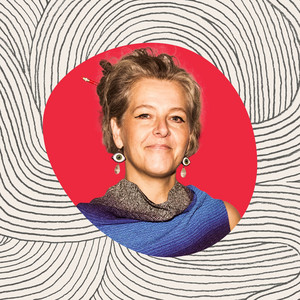
Our guest this episode is singer -songwriter Nico Case.
Case has been making music for nearly three decades, and our songs have always struck me as so personal and emotional.
At the same time though, you can't really tell when Case is writing as herself.
She's referred to a handful of her songs as autobiographical, but she also weaves in fictional characters, animals, even planets.
Case has a new memoir coming out this month and she's clearly ready to share some of the most beautiful and brutal parts of her life.
The memoir is called The Harder I Fight, The More I Love You.
In it, she writes that her parents got together, then split up, when they were very young.
They barely had the money or the time to meet her basic needs.
But what was even more painful was how little attention they gave her.
She describes experiencing neglect in heartbreaking detail, then striking out on her own as a teenager and creating a chosen family through music.
Today, Nico Case reads a modern love essay by a daughter who had to cut her mother out of her life, in order to protect herself.
And case tells me what the absence of her mom, when she was younger means to her now.
Nico Case, welcome to modern love.
Thank you very much for having me.
Your new memoir opens with a scene where you're playing a show somewhere and you write, I you want to know their stories.
What is it that draws you to people you don't know?
I just think they're really surprising.
And I think you can find something in common with pretty much anyone.
I think there's something attractive about every person too.
I mean, there are exceptions, but for the most part, most people have something attractive about them.
And interesting. Can you tell me how you attempt to, perhaps, find that kind of common ground with someone who might seem very dissimilar to you?
Well, it has to be natural.
You can't just bust up to someone and be like, tell me about your childhood.
I mean you could but - Do you eat f onions?
No, you can't. I mean you can, I guess.
But one of the main ways to get people to talk is if you ask them what's good to eat in their city.
And people get really excited to tell you about stuff like that.
Right, right. Or like, where do you go to buy your records if you want to buy from a local person?
I do feel like living in this kind of unguarded way, attempting to connect with strangers, is quite rare for someone who has a public career like yours.
Does it strike you that way?
I'm not really that recognizable.
I have a very, I have a very cubist face and I wear my hair up a lot and I look like a totally different person.
And so... Yeah, and I don't know.
I get away with it, which is fine.
I mean, I'm not like super famous or anything anyway.
People don't know it's me unless they just saw me on stage, I think.
Do you like that? I do.
Because... Because you can go to the grocery store and, you know?
Well I'm a little nervous now because you just told me where you stand on asking people about their childhood when you've just met them, but I hope you'll forgive me because you have written a new memoir that is all about your childhood and you really hold nothing back from your descriptions of what your
early life was like and how hard things were for you living with your parents as a kid, can you just give me a sort of sketch of what life was like for you growing up?
Well, I mean, if it was a school year, I'd live with my dad.
He was a very quiet person, also a drug addict, very depressed, he wasn't awful or mean or anything, he just wasn't really there and I could not get his attention.
You know, we were really poor and we lived in kind of a crappy house that was kind of wet and often there just wasn't anything to eat.
So what I would do is I would just kind of sit around and turn on the space heater and sit in front of the TV and watch Gilligan's Island, which I fucking hated.
I didn't have anything else to do.
You also mentioned in your memoir that you spend, you know most of the time, the school year at your dad's and then you also spend summers at your mom's, and that's kind of where I feel like, you really get a sense, it wasn't just that your parents were checked out you were really neglected and I wonder
you can talk about that period when you were functionally kind of abandoned by your mom for hours.
Yeah, I mean part of it was what was acceptable in the 70's.
you know, there's a lot of Jan X jokes about, you know, nobody raised us.
But my parents had to go to work.
We were poor. So I don't, I'm not mad at them for not, you know, being around, like I understand that they had to go to work in.
Some of it was fun.
You know, some of it was like Huck Finn style, but there were no other characters in the story.
It was just animals, you know, my dogs and my cats and we would go to the river and it was so beautiful.
On that hand, it was really a magical experience, and on the other hand, it was like a kid can only take so much of that a day.
Yeah. It just felt like forever.
but I was just always trying to get people to notice me, my parents, and to even just like be with me.
I kind of thought I was sort of this extra thing that was around that was kind of in the way.
But I didn't think much of myself either.
So there wasn't like some great rebellion at hand, because I hadn't really connected the things.
It was just like this sucks.
You felt discarded?
What were the ways that you would try to get their attention?
I tried to be a really good artist, I tried to be really good at drawing.
I would learn a lot of things and I didn't know I was doing it, like facts about animals, or, you know, what artist a song was by or who played bass on that song or what town that band was from.
Trying to impress them.
Yeah, just like you know, I know a lot about animals or just, you know, just trying to seem useful, somehow.
And did that work? Oh, God, no.
Was this a practice that you continued as a kid, but then into your sort of teenage and adult life as well, trying to get their attention, you and trying to be useful or noticed?
I think I tried that into my late thirties.
I mean there were disconnects here and there, but my dad, I feel I understand him.
Whereas my mother, I don't.
And all I know like I have a lot of compassion for the fact that she had a kid when she was a kid and didn't want the kid.
Like, yeah, I don't blame you being bummed out and depressed, of course.
As a little, little kid, I didn't really understand that, but I don't feel like, I had a loving mother snatched away from me.
I feel like I always, it was always conditional.
Yeah, I mean, it really comes across, I was going to say in your memoir, that sort of feeling of being unwanted is very visceral, for you, and incredibly painful to read about.
And you described your mom, especially having a coldness towards you in multiple scenes throughout the book.
It sucked, but at the same time it's like I thought everybody kinda lived that way.
But then every now and again I would go over to a friend's house or something and I'd be like, wow, they're eating dinner?
And they're talking to each other?
And the parents were around?
And, they have a pantry!
There's a bunch of food in there you can just eat it whenever you want.
Yeah, you know like you're warm in here what?
There's food and stuff and people like you and talk to you and it's cool And I would be really shy But then they would talk to me and I would be like, whoa, I maybe I could live here somehow What did it feel like to know that other families related to each other so differently than yours?
It was It wasn't hopeful It was more like, are you kidding me?
Like, what's going on?
Like why do I live a different way?
I mean, then again, you know, I was also a kid, so I didn't think really hard about it.
There was just, you know, kind of a low grade humming of I just always wanted to get to the next place.
It was like, okay, well I'll get this over with, as in childhood?
Yeah, and maybe I'll get to another place or if I was around my grandmother, I felt wanted, and so it'd be like, okay, well I guess I have six more weeks of school and then maybe I'll visit my grandma.
But you living with my parents wasn't that.
But I've worked through a lot of it.
I've worked really hard to make a space for myself in all that, and to just go, yeah, that was fucked up.
You shouldn't have been there.
Well, I have a lot more questions for you about some of the things that you reveal when it comes to your mom specifically and how you did all that work to process everything that happened to you.
But before we do that, I would love for you to read this modern love essay that you selected.
Is there anything you wanna say to T up the essay while you chose it.
Why it speaks to you?
Well, I chose it because this person is desperate to find forgiveness for their mother, or, I am not.
And I have a very different view of forgiveness and I think that it is a really sacred amazing thing, but in certain situations it's also a total crock, and a responsibility that should not be put on someone who's already gotten through so much.
You do not have to forgive people.
If that's work for you hell no, hell no.
If you find forgiveness, you're incredible.
But if you don't find forgiveness, you're incredible.
It's not something that you need to do to be better.
It's something you find if you're lucky.
But if you want to work on yourself, the goal is not for them.
The goal is for you.
And if forgiveness isn't in there, who cares?
Like some things are unforgivable.
Forgiveness is beautiful, the real thing.
It's kind of like the concept of justice.
It's haunted a lot, but it's like forgiveness and justice are not one thing.
They're kind of an atmosphere and they're a state of being that's very organic and alive.
It's not a thing you reach and then you're there and then you're good.
and it's like, it has to be a systemic, healthy thing.
What a way to prime us for this essay.
If you are ready, I would love to hear you read this.
My Mother the Stranger by Caitlyn McCormick.
What I just said is not a reflection on Caitlyn McCormick either, because every single person's reaction to how their parents treat them is theirs, and it's super valid, and I don't think she's drinking the Koolaid or anything.
I didn't mean it that way.
I'm just saying that's not what I chose.
Totally. No, no. I think that came across.
I mean, what you're saying is forgiveness is important to her, and as you said, that's beautiful.
And if that's something that feels important to you to achieve, then sort of go forth.
You were saying, for you, you found that forgiveness is not something that you are, that you need to give.
I think that was very, very clear.
It was not a remark on her.
Uh, her choices are hers and yours are yours, and I cannot wait to hear you read this in just a moment.
We'll be right back.
My name is Hannah Dreyer.
I'm an investigative reporter at the New York Times.
So much of my process is challenging my own assumptions and trying to uncover new information that often goes against what I thought I would find.
all of my reporting comes from going out, seeing something, and realizing, oh, that's actually the story.
And that reporting helps readers challenge their own assumptions and come to new conclusions for themselves.
This kind of journalism takes resources.
It takes a lot of time.
It takes a lot of reporting trips.
If you believe that that kind of work is important, you can support it by subscribing to The New York Times.
My Mother the Stranger by Caitlin McCormack I found Soph on a nap.
I met her at a red let wine bar in the West Village.
She was exactly as pictured, except warmer, more aglow.
Sheepish and charming, with a full laugh I just wanted to swallow for myself.
She went in for a hug when I approached her.
I already knew she was Australian.
Over text, I made her swear to explain in person how she'd ended up here.
It was the grey mush between Christmas and New Year's – the only time New York feels like finding a quiet, unlocked bedroom at a party.
It matched my mood.
Weeks earlier, I had gone through a breakup that upset me because it didn't upset me.
Heartbreak at 23, I decided, should have felt like a great medieval slaying, like being cut open.
At the wine bar, Soph told me about how her father had met her mother, a born and raised New Yorker, when he was visiting from Sydney decades ago.
Soph was here for a few months to spend time with her mother side of the family while on summer break from veterinary school.
She hoped to move to the city in the fall, finally making good use of her dual citizenship.
And your mom lives in Sydney now, I asked?
Well, she did, so said.
We lost her a few years ago, actually.
I almost asked her to repeat herself.
I wanted to dissect her delivery.
I couldn't believe she had so effortlessly nailed a tone I'd been chasing for the past three years.
In fact, I was so stunned that I told her something than I normally say for the sixth date or the ninth or never.
I had also lost my mother in a way.
We were estranged. I was good at being estranged from my mother, and I was good at making other people feel comfortable about our estrangement.
But I was bad at talking about it.
My mother was an alcoholic and not the covert kind.
She stole, lied, and cheated.
She spoke to me only with cruelty until, eventually, after my parents separated several years ago, I cut her off entirely.
I lived the adult life I did, with a job I loved, friends who loved me, and hobbies and interests, things that eventually my mother had none of, not despite our estrangement, but because of it.
I felt an obligation to be a kind of estrangement poster child, a living, breathing embodiment of, look life goes on!
I went to group therapy and solo therapy I hosted a legendary friendsgiving were guests were required to bring a dish their mother might have prepared.
I joked about mommy issues with both irony and sincerity.
Still it never stopped being hard.
I owed no one an explanation, in theory, yet in practice I did.
I came out as gay often, but I came out as someone without a mother constantly.
I never felt that I had the right shorthand.
She was an unwell person.
But for the first 18 years of my life she had been a beautiful, successful, sparkly person.
She loved me fiercely, and then in only a matter of years she plummeted into a dark cave where none of us could follow.
How were you supposed to let anybody in again after such betrayal?
I had no answer. Every day I understood addiction less.
Its not the same, I said to Soaf that first evening, her mother had died from cancer, I just mean I also don't have a mom.
Its absolutely the same, Soaf said, and like everything else she told me, I believed her.
The next day I hosted a New Year's Eve dinner party.
We ate Caesar salad and French fries and leek soup and drank wine with funky paper labels.
I told everyone that the day before I'd met someone sparkly.
On our second date we walked thirty blocks uptown along the park to my apartment.
Around Strawberry Fields she said an injured bird has a fighting chance if it its grip strength.
She held her finger out to me like a hooked talon to demonstrate.
She would leave in March, so over the next few months I broke all my own rules.
Sof could see me twice in a week, then three times, then four.
Sof could meet my friends.
Sof could come to Tuesday Trivia.
We could be exclusive, but only until she left.
In coming to know Sof, I also came to know her mother, Here was her mother's favorite cocktail bar, her favorite French bistro, her childhood neighborhood.
Not only did Soff know New York at least as well as I did, but she knew it through her mother's eyes.
I envied the way she casually slotted her mother into everyday conversation including in honoring her, as if it cost nothing.
It's different, I said, your mom was sick.
Your mom is also sick though, she told me.
I wondered what it would be like to honor my mother in the same way, to honor her with the kind of absolution we usually reserve for the dead, to mourn not who she had become but who she had once been, and not worry whether it was a grace she deserved.
And so I did exactly that.
I tried to relearn how to talk about my mother, how to say that she was a professional chef by trade, who had served powerful people in cities all over the country, including New York.
That simultaneously, she had been the kind of mother who paid her taxes, blanched her broccoli with good kosher salt, and texted Bitmojis that said, I'm so proud of you.
I started pointing out things that reminded me of her, work clogs worn with dresses, Joan Osborne and Joni Mitchell, any storefront that used to be a Dean in Deluca.
I wished I knew even more.
Like wear so many years ago, our mothers could have passed each other on the street." It was only then, as things go, that out in Arizona my mother entered the hospital for late -stage liver disease.
First, the doctors guessed that she had two or three years.
This became a month.
I booked a flight for a week out.
Then finally, as I took the Subway to Queens to meet Soph's grandmother, it became days.
If you have something to say, now would be the time to come home, my father said, when I got off at the earliest stop I could which happened to be City Field.
When Soaf met me in the parking lot I asked her in so many words and without the prepared speech I had hoped to give to be my girlfriend.
The next day I flew to Tucson.
By the time my plane touched down, after two layovers, my mom was unconscious My relationship with my mother was a movie I had put on pause to leave the room, only to return to find the credits playing.
I haven't decided if this was her version of grace.
I still don't know what I would have said, besides, I love you and I forgive you.
And why don't I know your favourite grenadine cafe downtown?
Why won't I ever know?
— — I have no choice but to believe this was enough.
Like love, there is not much to say about death that hasn't been said before.
It is often a lot of waiting around.
I gathered with aunts and uncles and siblings as my mother lay in hospice.
We discussed whether we liked the eggplant curry we hd ordered better than the chicken.
We played board games and listened to my mother's breathing, Thinking, quieting to hear it slow—ultimately we lost her too.
When I am asked how I'm doing, in that particular limp tone that we use for terrible things, I try on grief truisms like old jeans.
I say I'm fine, and also cut open.
I am like Little Red Riding Hood lost in the woods.
In my best moments though I'm learning to use these questions to continue the work I started, which is to say I used them to talk about my mother.
I attempt past tense.
She was beautiful and successful and sparkly.
She took her chardonnay with ice.
At the end of each day on the phone with my girlfriend 14 hours in the future I I ask her questions.
Did you know I ask with urgency?
About the smell of death?
About old voicemail messages?
About all matters of grief?
Yes, I know. She always says.
She says she likes the idea that someone only dies the last day someone says their name.
I like this truism best of all.
She promises me that we have forever to master talking about it.
But I think we must spend forever trying.
What did it feel like to read that essay?
What comes to mind?
And it felt like I was reading about somebody who was healthy.
And I'm excited for her that she has a really nice girlfriend who is so compassionate and so cool to put a nice runway out for her to do her tap dance on.
You know what I mean?
Yeah. By tap dance, you mean to sort of understand her own loss or her own grief?
Yeah, she's like, go on into my parlor and do all the tap dancing you want and you know.
I'll get it out, and I'll be here and I'll watch, and I'll actually be interested and engage with you while you're tap dancing.
You're reacting to the support of Soph throughout this essay.
You're saying that Caitlyn has this beautiful love that sort of nurtures her through this very difficult period of loss.
Yes, and also, the undercurrent like, she doesn't understand, and she'll never understand, but accepting that you'll never understand.
It's okay. We'll be right back.
I used New York Times cooking at least three to four times a week.
I love sheet pan bibimbap.
It said 35 minutes, it was 35 minutes.
Cucumber salad with soy, ginger and garlic.
Oh my God, that is just to die for.
This Cherokee chili has over 17 ,000 five -star ratings.
So easy, so delicious.
Instructions are so clear, so simple and it just works.
Hey, it's Eric Kim from New York Times Cooking.
Come cook with us. Go to nytcooking .com.
Yeah. So, Nico, can you talk about any parallels between what Caitlin wrote about her relationship with her mom and your own story about your mom?
She's a gnarly drunk.
Mmm, that's about it One one thing in here that really struck me is when she says everyday she understands addiction less and I've never heard it put so simply and It's it's a really really Strong sentence Mm.
And a really strong thought it's like, yeah.
I understand addiction less all the time, too and you know There's all of us that have been abused by people who've really struggled with addiction, et cetera.
And where's our support?
Like there's so much support for people with addiction, which is awesome.
I'm not saying that that's bad.
I'm just saying like, inside I have this inner struggle.
And like in my life and in my body and like in my daily practice, like, no, I do not.
I'm not like begrudging people treatment.
Like, absolutely. And if people have the strength to do that, like please, yes, good.
Safety, your life is important.
We need to save it, you know?
And it's important for people around you, you know?
But I just, I think about all the people who were just abandoned or there's, no, It's just the most hollow place.
It is the loneliest, most hollow place.
And I guess there is support for people who've had parents who are really abusive in that way.
But it's pretty thin and people can find each other and stuff.
But, you know, abandonment is a really big deal.
I feel like I can kind of hear young Nico speaking through, through, that answer, through what you just said.
You said it's a lonely place to be and I can, I sort of, I feel like I hear child you speaking, you know, emotions.
That lonely place never goes away, ever.
You talked about you sort of immediate reaction to this essay was feeling very happy for Caitlyn that she had the support in Well, and I guess I wonder, hearing you talk about the grief that never leaves, the loneliness that never leaves, in your life, have you found a Soaf?
Have there been people that have showed you a different way of being or loving?
Can you maybe talk about someone in specific that you would be able to share?
Well, I have a good friend named Jennifer Brauchaus and she's married to my dear friend John Brauchaus who plays Petal Steele in my band.
And she runs a non -profit organization called peer solutions where she helps kids, help other kids, you know, talk about things like abuse and sexual abuse and like, you know, she has a lot of kids who are trans, and you know, just people from all over the place who have kind of been kind of shoved
aside for whatever reason, like all the reasons that were cruel to people in our society.
And she's just so good at talking about things.
And I remember one day I said something like, yeah, I was really upset.
And she goes, of course you are.
Of course you're upset.
And I remember it kind of gave me whiplash.
I was like, whoa, really?
Yeah. And then I felt like, OK, I just grew a little muscle or something, or some little pocket was filled up in a nice way.
Yeah, what about that was so, what about that was so striking to you?
I watched her be compassionate to people all the time.
And then, you know, she did it to me.
And you know, she went through horrible abuse as a kid, like absolutely surreal, horrible abuse.
And she's really loud about it.
And her loudness, I think is something that made me really accept it when she said, of course you're upset.
And she's not afraid to be loud.
and I always felt really...
What's the word? I just felt like I wasn't the only person who was loud and, because often you feel like you're just screaming underwater and no one can hear you.
And her saying, of course, validating that emotion.
It felt like you were screaming together?
I was like, yeah, I'm not the only person who's like, you're taught this set of values as you're growing up by the television and there's supposed to be American values or whatever, you know, tell the truth and all this stuff.
Nobody wants to hear the fuckin' truth.
You speak the truth, you're fucked.
People just don't wanna hang out with you, like it's too much work.
And I've always been that guy.
You know, I've always been the person who's like, that's fucked up, you know?
It's tough though, you know with a parent for example, speaking the truth to your mother about how you were feeling, or the loneliness you were experiencing.
It doesn't feel like that was something that you were able to do as a kid.
Well, they didn't have the words for it.
Certainly. I have the words for it now.
And, you know, I did speak to her as an adult about those things with the correct words.
It just didn't make any difference.
I was gonna say, what did it feel like when you voiced to your mom?
It just felt like Yeah, it feels like world.
The same water pouring over you that poured over you is when you're a little kid.
You know, just it's like it's just the same bath.
Here we are, it feels like shit.
I think, under certain circumstances I could start crying, but I don't really because I know it's not my fault, but I'm also like she still sucks.
I feel really bad for her yeah and I really you know there's part of me that's like she grew up in kind of impossible circumstances and you know she went through a lot of horrible things and abuse and you know I don't I don't blame her for that at all and I don't blame for her for having me you know
but and it's weird you know people think it's really awful that I talked about this but abortion had just become available at that time and for whatever reason she didn't get an abortion and I'm sure she was scared and she was a kid so like, you know, any choice she made at that point, I wouldn't fault
her for. But as an unwanted child, do not make fucking abortion illegal in this fucking country.
Like I cannot fucking believe where we are right now.
It is disgusting, it is so inhumane and cruel.
To live as an unwanted child is the loneliest nadier.
It is the worst. I would so much rather have given my mother her life than be here now, because I spent my life thinking that I ruined her life, and it's not okay for either one of us.
It is cruel. Niko, can I ask you, when you say, I know it's not my fault, it strikes me that I feel like Caitlyn, the author of this essay, goes through that type of understanding in her own way, where she realizes it's nothing that she did.
This was a disease her mom was battling.
killing, is there a specific moment you can point to in your own life where that really hit you, too?
This is not about me, my mom's behavior towards me is not because of something I did.
Is there a moment that you can point to?
Well, I think I was probably near 40 when I finally just understood what happened, and I was like, oh my God.
I want to believe this whole story so bad that I let the most threadbare lies stand in as the truth for who she was.
But it wasn't who she was at all.
She didn't want to kid.
And the lengths that she went to, to not have a kid, are so extreme that it's impossible not to be offended.
So her parents were not funded by them.
I mean, I'm not really anymore, because they're so outrageous that I almost can't take them personally anymore.
Do you wanna share even just a sort of high -level overview of what those lies were?
You don't need to necessarily...
Well, I thought for my entire life, up until I was about, I guess, 38 or so, that my mom had cancer at one point.
You thought that she had cancer, and that was not true.
No. No, she used a fake...
Faking having cancer to get away from me, as a way to disappear herself from your life.
Yes. And I would ask her about it, and she was, you know, she wouldn't really say much about it.
I'd asked her what kind of cancer she had, but I'd be going to the gynecologist or whatever.
I knew that it had to do with her reproductive system.
So I realized that she had said ovarian and cervical, and she didn't have both.
So I would just think that I forgot, like when I went to the gynecologist and they're like, Well, does your family have a history of these cancers?
I wouldn't remember which one she said to check the box of.
And then I finally realized I wasn't forgetting, she was telling me different answers.
You never had fucking cancer.
Oh my god. I was just like, holy shit, how did I not see it?
What I took away from it was, you wanted to believe in her so bad.
It's like yeah. You wanted to have a mom.
You wanted to have a mom that was coherent, that at some point still wanted you.
Yeah and I didn't want a mom, I wanted her.
I worshiped her. I thought she was the most beautiful, talented person.
I thought she was the coolest thing in the world.
and I wanted to be with her all the time, and I couldn't figure out why I never was, or why she wouldn't come and save me.
And of course she was unhappy, and, you know, absolutely, she didn't really know what to do, but her choices of how to deal with that.
I have no respect for her.
I don't know, I don't...
I...It's been a long time.
I don't wish to contact my mother, and I hope she never contacts me.
Did you ever feel like you had to explain why your mom was absent from your life to other people?
Not at all. Tell me why.
Well, it's not unusual to have grown up neglected or abused.
It's not unusual to have a parent that struggles with addiction.
it's not unusual to have a parent who struggles with mental illness and depression.
So I will say, yeah, my mother was a fucking horrible person and, you know, a really bad drunk.
And, you know, it's, it's unfortunate, but it's a really common thing.
So who cares if I say it out loud?
Maybe someone will hear it and feel like, Oh, you know, it's like the statement, I understand addiction less every year.
Like I felt very, I felt very grateful to Kaitlin McCormick for seeing that because I had a new sentence that was a tool that was like, okay, that is so true.
I understand addiction less and less as well.
Niko, so much of what you shared, I think people listening will have that same experience of having a new sentence or sentences for themselves.
I think you are doing for listeners what Caitlin did for you.
I hope sol. I mean, you know, there are people who listen to me because I write songs and I don't take that for granted and I don't want to abuse that.
Hmm, and if I didn't yell the truth or what I think is the truth then What good was I?
All I ever wanted was to be useful and maybe that's what I'm useful for Niko Case, thank you so much for coming on the show and talking to me today I'm honored to be here talking with you.
Thank you for having me You can find a link to the modern love essay you heard today Caitlin McCormick's My Mother, the stranger in our show notes, and Niko Case's memoir, the harder I fight, the more I love you comes out January 28th.
It includes similar childhood accounts to whatHey shared in this episode, and many other memories from her life.
The Times was not able to reach Case's mother for comment.
Her father is deceased.
This episode was produced by Riva Goldberg with help from Amy Pearl, Davisland, and Emily Lange.
It was edited by her executive producer, Jen Poitend, production management by Christina Joseph.
The modern love theme music is by Dan Powell.
Original music in this episode by Marian Lozano, Pat McCusker, Roman Niemestowe, Dan Powell, and Carol Sabaro.
This episode was mixed by Sophia Landman.
With studio support for Matty Masiello, Daniel Ramirez and Nick Pittman.
Special thanks to MihiPMah Chablany, Neil Goloady and Jeffrey Miranda and to our video team Brooke Minters, Sawyer Roquet, and Eddie Costas.
The Modern Love column is edited by Daniel Jones.
Mia Leigh is the editor of Modern Love Projects.
If you want to submit an essay or a tiny love story to the New York Times, the instructions are in our show notes.
I'm Anna Martin. Thanks for listening.