Discussion keeps the world turning.
This is Roundtable.
You're listening to Roundtable with myself, He Yang.
I'm joined by Yu Shun and Steve Hatherley in the studio.
Coming up, Yunnan province in China has long been known for its stunning scenery and incredible biodiversity.
But lately, something else has taken center stage.
wild mushrooms. With over 900 species sprouting across the region, tourists are pouring in.
And for local communities, it's become a mushroom gold rush.
But when does foraging turn into over -foraging?
And what's the environmental cost of this booming outdoor pastime?
And ever feel Feel like life is just one giant game you never signed up for, where you didn't pick your character, your stats are mid, and the quests just keep getting harder.
Young people are calling it real life, a bad MMO, or massively multiplayer online game.
Let's talk about why a game called Earth Online hits so hard. Our podcast listeners can find us at Roundtable China on Apple Podcast. From the world of entertainment to what fuels your passion, our heart to heart segment is all about you.
Share your thoughts with us at roundtablepodcast at QQ .com or better yet, record a voice memo.
We'd love to hear your voice and share it with the world on the show.
Now, let's move on to the next topic discussion today.
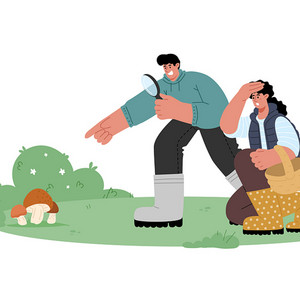
Welcome to the Kingdom of Wild Mushrooms, southwest China's Yunnan province, where every summer the forests explode with life and travelers arrive in droves, baskets in hand, eyes on the ground.
It's mushroom season!
From sour and spicy hot pot to once -in -a -lifetime finds, wild mushroom foraging has become the locality's latest tourism craze.
But behind the picture -perfect hikes and tasty bites lies a more tangled tale.
Environmental stress, food safety risks, and a race to cash in on nature.
So today we ask, when do we, or how do we, savor the thrill without spoiling the forest?
And what happens when fungi goes viral for all the wrong reasons?
Let's dig into this.
mushroom hunts weren't always so big here in China it was just a common way that locals would gather food from the forest so how did this humble practice have gone viral and ranking in reviews views and big bucks first thing in the background that we need to know is that it's rainy season right now right we've now entered that this period of time and even Even here in Beijing, which isn't exactly known for heavy rainfall, you can still feel it.
The humidity. Yes. So in the southern parts of China, the rains are even more abundant, which is creating the perfect condition for mushrooms to thrive.
And then over the past two years, mushroom foraging has become a viral outdoor lifestyle trend in China, offering people a way to maybe escape urban areas and connect with nature.
Similar to camping and small -scale farming, and this trend has brought a tourism boom to previously tranquil mountainous regions of southwestern China's Yunnan province, including cities like Dali, Lijiang, and Xishuangbanna Prefecture.
And these are probably just names to use, Steve, but for people familiar with that area, maybe Chinese people, we think of all these picturesque natural sceneries.
And it's just the exact opposite to the busy city life here.
And they have beautiful lakes, supposedly tranquil pastures and wild forests, which you either love or for someone like me, who's a bona fide city person, I'm a little afraid of because I will not be able to defend myself in the nature.
And last year I went to Xishuangbanna Prefecture on a work assignment and I visited the wild forests where the last 300 wild Asian elephants that live in China, their home is in the wild forests of Xishuangbanna.
And it gives you an idea of the rich biodiversity and beautiful environment Yunnan province possesses.
And no wonder it's where all these 900 different species of mushrooms grow.
And that's become sort of a talking point for this season.
Yeah, and previous seasons, too, by the sounds of things.
So it's not just foraging in general, right?
It's specifically for the mushrooms, and this has gotten so popular.
There was a report on Guangming Daily.
There was one short video platform, and it was called the Yunnan Wild Mushroom Topic, and that topic got over 3 .4 billion video views as of July last year.
That's why I said it's not just this year, right?
It was last year as well, and then they've got related topics like Yunnan Wild Mushroom hot pot and you know wild mushroom cuisine all of those exceeding 200 million views combined so that paints the picture very well then doesn't it you've got this absolutely stunning part of china known for its nature it's now the rainy season uh which means that you're going to have a lot of the things that grow in these beautiful forests having their full growing season including a lot of different species of mushrooms combine that with the tours that are are taking place as well, right?
There are organized tours that take place in Yunnan specifically for mushroom foraging.
Exactly. And, you know, and a lot of people were assigned for these tours.
And some people and more practitioners are in these areas.
You know, in June 2025, a practitioner called Su Mingxue and her husband have run a wild mushroom business in Kunming, which is the capital city of Yunnan.
And in June last year, she launched this new venture, Mushroom Foraging Tours.
And now she leads like two to three groups daily into the nearby hills and turning tourists into these mushroom hunters.
And in last July alone, she welcomed over 800 participants and earned around 200 ,000 yuan.
That's about 28 ,000 US dollars.
Wow, that's a healthy income for some mushroom tours for a month.
Yeah, and also for local people, especially tour operators, maybe this is particularly the high season of earnings because the season only lasts from June to almost September.
They are not solely depending on mushrooms, right?
They have a huge landscape for a lot of tourism points.
Sure, yeah. But for this topic specifically, you mentioned 900 different species, edible species in Yunnan.
There's only 2 ,500 known edible wild mushroom species all around the world.
So if we do some math, 36 % of the global total exists in this particular part of China, and 90 % of all the species in China.
So this is prime mushroom picking season, but it's not all good news, I suppose.
Because if you have these organized tours going into these beautiful nature places, I guess there's bound to be a little bit of downside.
You know, what started as just small groups organizing their own trips has rapidly evolved into a quite lucrative business for tour operators.
And among these operators are just companies focused on, let's say, parent -child educational tours, right?
They can lead these families into the forest and let them learn about the plants and mushrooms and outdoor clubs that offer special mushroom foraging routes during the rainy season.
And even local villagers who just regularly forage and now lead visitors into the mountains.
And compared to previous years in 2024, the number of practitioners involved in this mushroom picking tourist has increased nearly tenfold, while the number of tourists has seen a three to fourfold growth.
Yeah, that's the positive side of it, right?
I mean, and they do this in the States too.
I was on one website that was talking about their program of an eight week forage training program, which included safety and plant identification and culinary uses and so on.
Then I searched in Vancouver.
Vancouver Island has foraging tours.
In Japan, in Hokkaido, they do it.
There's a restaurant in Denmark that was ranked, like, in the number one spot of restaurants around the world.
It was called Noma.
Oh, very famous. Yeah, right?
So everybody knows about this place.
And one of the things that they were best known for is that they would forage their vegetables on a daily basis.
I watched a documentary about that restaurant.
I really wanted to go.
I don't know if it's still running or not.
Yeah, well, let's all put our foodie hat on.
We can't talk about mushrooms without talking about flavor.
And some mushrooms have this title of chicken of the woods.
Yeah, from chicken to the woods to mushrooms that taste like prawns.
Are wild mushrooms worth all the hype?
That's because some of these mushrooms can mimic the taste and texture even of various meats.
And that's why one of the species is called chicken of the woods.
I would say probably it's because it tastes like chicken, right?
Yeah. So it's a vegetarian's favorite.
Oh, yes. And sometimes even better when you maybe let's say it's in a hot pot or a mushroom soup.
Wow. You don't have that word in English.
It's called xian. Oh, actually, they do.
And but it has Japanese origins.
Umami. Yeah. Yeah, so that's like the fourth taste, very xian.
Great, keep luring us and tickle our taste buds.
Side thought, if they call mushrooms the chicken of the forest, do they call chickens the mushroom of the henhouse?
It doesn't sound as appealing.
This chicken really tastes like mushrooms. Sorry, my brain goes to strange places sometimes.
So if we get rid of chicken, we have a different type of...
Perfect response when I go off topic.
Yes, just go straight back to it.
Yeah. So you were talking about, you know, the chicken and I was talking about the prawns and we're actually talking about what mushroom can taste like.
Other like fungi or sets you, you know, resemble skirt steak, lump crab meat, lobster and fat white shrimp, you know, all of these different flavors.
And if you were putting it into like hot pot and different types of Chinese dishes, you can have even different flavors.
But also we do not recommend that anyone to forage and eat wild mushrooms. We have to say that it is quite dangerous if you like are not familiar with the thing that you're eating.
100 percent. Yeah. Yeah.
The reason is because you can run across a lot of different poisonous mushrooms and mushrooms can be poisonous for the same reasons that other plants are.
poisonous, right? To protect themselves from being eaten so that they can reproduce.
Interestingly, some other mushrooms, they use the opposite strategy.
They want to be eaten by animals so they could be spread and reproduced in that way too.
But eating wild mushrooms without knowing what you're actually doing is a very, very dangerous game to play.
And there are numerous numerous poisoning incidents, and even fatalities reported in Yunnan.
And that happens on a yearly basis.
So being careful and knowing what you're doing is absolutely imperative.
So isn't it the reason why the tour operators become kind of important and useful to hire those folks?
Because you have somebody who knows what can be eaten and maybe not.
Yeah, 100%. I mean, when you eat a mushroom that you're not supposed to eat a lot, a lot of bad things can happen to you.
You can get sick and throw up and diarrhea and all these very terrible things.
And then fatalities can happen as well.
And experts will warn against using kind of unscientific or unproven folk wisdom to identify edible mushrooms, like judging it by the color or like the presence of liquid or whether there's a surface cut that changes color or if insects have eaten them or any of those things.
And the reason we have to be careful about that is because a lot of toxic mushrooms, they'll look almost identical to the edible ones.
And that makes visual identification just by looking at it nearly impossible and extremely dangerous for amateurs, for people yeah because we know that there are so many different types of mushrooms and maybe even in one same category two types of mushrooms can be one poisonous or not not poisonous at all so that is why we need to know all of these um you know folk wisdom and not scientifically proved we should not use it one example is that silver needle if you know that you you put silver needle into a mushroom people say if it turned black it's it's poisonous it's totally not that and it's
not scientific at all i asked for an explanation on that this morning can we have a quick one if you don't mind of course well so please it made me laugh because i was imparting just random knowledge but steve was asking what's that silver needle thing right well if you're like me an avid fan of chinese martial arts novels when you were younger.
Well, yeah, like in the ancient imperial court, the emperor would usually have his most trusted eunuch servant to use that silver needle to test on the food that served to the emperor to make sure it is not poisonous.
So nobody's uh trying to murder him yeah so if the needle goes into the food and then it comes out with no other color then it's safe but if it comes out black or changed color then oh steve you should not eat it at all and that's the myth right so don't use that in the forest when you're trying to judge whether a mushroom is edible or not yeah it's interesting yeah it was the least expected but great fun conversation the reason why i want to go to work from time to time another reason to do that.
And so we see that, you know, dinner tables can have mushrooms as a really great dish and Instagram feeds or Xiao Hong Shu feeds as people are showing this on social media.
And well, the downside of this is the forests are really feeling the pressure or pinch. Is mushroom foraging damaging the very ecosystem that's made it possible?
Yeah, actually, a lot of people will say, well, it's the rainy season and mushrooms can grow really, really fast with all of the abundant terrain, right?
Especially when it is in that area of Rhineland.
But over -commercialized foraging doesn't just affect mushroom species themselves.
More importantly is that it's the environment damage caused during picking process that raises serious concerns.
So the growing influx of visitors and commercial activities is disrupting this fragile ecosystems and threatening endangered species.
And botany experts warn that, you know, that kind of huge amount of collection without scientific guidance risks um damaging the ecosystem and wild plant species on the verge of extinction yeah because the trees right they depend on the mushrooms for nourishment um that's one reason to be careful also the tourists they'll go into the forest and they'll dig up mushrooms with things like rakes um or other tools and they won't really realize what they're what they're doing right so if they they don't cover up the soil after they've done it, then that can cause some damage as well.
There's habitat degradation too.
You know, you've got a lot of people going into these areas, right?
A lot of tourists going in there when they weren't there before.
And we're not necessarily supposed to be there, right?
We're not a natural part of that ecosystem.
So the more people that go in there and aren't careful, the more damage that can be done.
Yeah. And just think about this.
the mushrooms are poisonous it can kill you and this is nature's response i think in a way to too many human beings going to places that you're not welcome yeah and i think it's not to say that these tours aren't a good thing i think you know education bringing kids out into the forest and learning about you know the the life that happens in there is a great thing it's just don't go in there and think i can take anything i want and then put it in my mouth you know and everything's is going to be okay you know you might hurt yourself and you might hurt the environment yeah should we set limits
on mushroom foraging as opposed to an outright ban in a place like Yunnan where mushrooms are abundant and foraging is part of local life and important to the local economy how do we strike a balance between tradition tourism and ecological responsibility Absolutely.
And regulatory measures and penalties should be in place.
And local forestry and public security authorities in places like Dali have already stepped up efforts to regulate the practice and prohibiting unapproved entry to some sensitive areas to protect biodiversity and visitors' safety.
And violators may face fines between $1 ,000 and $5 ,000.
That's about $140 to $700.
Yeah, that's a hefty penalty, isn't it?
Anyway, preventing illegal access remains a challenge due to the intermingling of human settlements and protected areas.
And I think regulation is one aspect.
You know, those working in the industry should also take on some responsibility by giving the right guideline to the tourists.
In the excitement of foraging, it's easy to forget that the forest is not just a backdrop.
It's a living ecosystem.
If we truly love the wild, then restraint is a form of respect.
The most sustainable harvest may not be what we take, but what we choose to leave behind.
Coming up when we bring you attention to a video game that does not exist, but is popular among young players.
Stay tuned. Looking for passion?
How about Fiery Debate?
Want to hear about current events in China from different perspectives?
Then tune in to Roundtable, where East meets West and understanding is the goal.
You're listening to Roundtable with myself, He Yang.
I'm joined by Yu Shun and Steve Hatherly on the show.
Earth Online is a fictional game, not a real video game, but a satirical metaphor used by young people to describe real life.
It imagines life as a hyper -realistic MMORPG or Massively Multiplayer Online Role -Playing Game that you are forced to join at birth with no option to choose your character, stats, or storyline.
You can't quit. There's no pause button and the difficulty just keeps scaling up.
So why does this metaphor resonate so strongly with Chinese Gen Z?
what does it reveal about how today's young people feel about agency identity and the pressures of modern life it's it's a one -life game yeah yeah yeah you don't yeah you don't go back to the beginning of the level and start over again right this is this is kind of well it's confusing when you hear it for the first time it's a game that you can't play because it's not a real game all right what are you talking about well this has kind of been on people's minds for a while right where they think, wait a minute, am I playing in a video game here?
Is my life like an actual video game?
And people started joking online that strangers on the street started looking like NPCs, like non -player characters in video games.
They act repetitively, without emotion, and just like they're following an already finished game script.
And then later people started saying that as they gradually realized realized their life was similar to a video game oops maybe i'm an npc to living in a game in some way it is i i think people are using these ways to make their lives easier you know we have so many past surprises in our life and if we're treating them all as just npc and they don't have any human emotions that could probably bring you better moods or something and i think that is how nowadays people are using this way to mock and vent about the let's say frustrations of their life by comparing it to an online game yeah and they
they put a name to the online game right yeah earth on earth online but they're just treating it like a video game but but it's not and they're saying you know they're just making comparisons like oh some characters are born you know really strong and rich and things like that and then other characters they struggle more but But wait a second, I can't build up my defense like you can in a video game.
And they've drawn all these really kind of fun comparisons.
But I guess, I don't know, it depends on your perspective of this, but the fun comparisons can stop at some point and you can start to look at this in kind of a sadder and maybe a little bit more negative light.
Yeah, it's kind of like they're saying that life has been so tough for them that they feel like this game caught live or earth online is just too hard to play and saying that why i have no enough money for this game because i i just cannot afford a lot of things or i just cannot change because for a lot of these kind of rpg games you can change your appearance yeah right and then they're saying oh i can't i can't i can't change my appearance or something like that so this is all in all i think just a a feedback or a mock at their own life attitude yeah it's like a metaphor for life somehow an interesting
corner on the internet yes we don't get to choose our starting point and yes some players start with better stats but over time people find side quests that lead to unexpected places allies never imagined and skills they they didn't know they had.
Life doesn't follow one storyline.
It bends, breaks, and sometimes glitches.
And that's exactly where new possibilities could begin.
This is kind of like a digital venting ground, Earth Online.
When life feels rigged, turn it into a bad game because it can become a way to reclaim a little power through humor, memes, and a shared language.
And that That brings us to the end of today's show.
Thank you, Steve and Yushun, for joining the discussion.
I'm He Yang. We'll see you next time.