Discussion keeps the world turning.
This is Roundtable.
How far can a film take you?
This week in Shanghai the answer is everywhere!
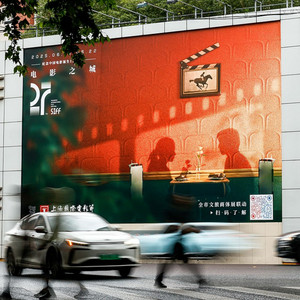
The 27th Shanghai International Film Festival is a global exchange of memory, culture and imagination.
Storytellers from across five continents join in.
We are witnessing cinema as its most powerful.
A shared language that speaks straight to the heart.
Coming to you live from Beijing, this is Roundtable.
I'm He Yang. For today's program, I'm joined by Steve Hatherly and Yu -Hsuan in the studio.
First, on today's show.
When the lights go down, and the screen lights up, borders blur at this year's Shanghai International Film Festival, cinema becomes a vessel for culture, memory and imagination, traveling far beyond where passports take us.
This edition brings together voices from 119 countries and regions from Southeast Asia to the European Union and spotlights Italian cinema in a moving tribute to 55 years of China and Italy diplomatic ties.
Yesterday on the show we rolled out the red carpet and stepped into the dazzling world of the 27th Shanghai International Film Festival held from June 13 -22.
We talked about the scale of this year's event, over 400 films, a record -breaking number of submissions and an impressingly global jury.
But what's really making this year's film festival shine is its deep cultural significance especially the spotlight on Italy, Italian neorealism, emotional epics and yes cinema paradiso.
Italy brought some of its greatest cinematic treasures to Shanghai this year and how is this cultural connection reflected at the festival?
Yeah and as we know and you mentioned that this year marks the 55th anniversary of the establishment of diplomatic relations between China and Italy.
So, this year, the 27th SIFF also launched a dedicated Italian Film Week in this year's film panorama, which I think there is gonna be a lot of Italian movie screenings.
So it will feature over 20 Italian cinematic masterpieces across nearly 100 screenings from neorealist masterpieces like Roam, Open City, to works as odes to cinema and various eras, such as Cinema Paradiso.
Cinema Paradiso. One of the classics, right?
You mentioned that term, didn't you?
Neo -realism. And what that is, they also call it Italian neo -realism.
And it's a fancy word, and it was a film movement that emerged in Italy after World War II about the mid -1940s to the early 1950s.
And it was a reaction to the polished and studio -made films that were being made at the time.
And what they wanted to do with neorealism was to depict the harsh reality of post -war life with real authenticity and social consciousness.
So if you watch a neorealism film, you'll see everyday struggles of ordinary people.
Oftentimes, they'll use non -professional actors.
They'll film it on real streets instead of the fake streets at film studios, things like that.
And what they're trying to do is capture a raw, kind of unfiltered environment.
And then the storytelling for those types of films, they avoid dramatic plots.
They like to use, like, slice -of -life narratives, if that makes sense.
More realistic. Yes, and that's quite different from what we are very familiar with, like Hollywood productions.
Yeah, exactly. I mean, in Neo -realism films the scripts will often be a little bit looser than your typical script, and they'll reflect the way that people really talk with more spontaneity in them too.
Yes. And I would say the emotions are a little bit more subtle, even restrained, which I don't know if it's fair to say as a Chinese person I very much appreciate with some of the Hollywood films or more let's just say commercial films. It's just too on the nose, shoved down your throat, and there's no room for imagination or sort of appreciating the aroma of the wine when it's just shoved down my throat.
Listen a Woody Allen - I don't know if you've ever seen a Woody Alan film before, but I without even knowing who the director is I can pick out a Woody Alan movie because the dialogue is so perfect like every character says the perfect thing at the perfect moment and yeah neorealism doesn't tend to do that at all.
I can totally see the passion from both of you.
Yeah and also just a quickly maybe throw in a thought here how does Chinese cinema sort of fit into this conversation?
Well, of course there are different types of Chinese movies and some tend to lean more towards the neo -realism perspective such as the renowned Chinese director's work, director Jia Zhengkou's work.
And he does, well his most famous films are often done with the handheld cameras, real people, everyday struggles but with the distinctively Chinese context.
And it's really interesting to see how, you know, global visual languages of such different schools kind of come together and learn from each other.
And of course, sometimes, you know, they might have a little spat or something like that, but that's what, you know, global exchange is supposed to be.
And adding to the tribute between Italy and China, There's a renowned world acclaimed Italian director, Giuseppe Tornatore.
In Chinese, you might know him by his surname as Tuanaduole, and he is the President of the Jurors panel this year.
He is a world renowned director, and he served as the President of the Golden Goblet Awards Jury and he headlines the festival's flagship master class series, too.
The fact that he's here it doesn't only reinforce the prestige of of the festival showing that it is indeed world class but it also symbolizes Italy's important role in the celebration as well.
He's from Sicily, he was born in 1956 so he's been around for a little while and he started his journey in film when he was a teenager, and when people talk about the film industry in Italy he's widely regarded as one of the most acclaimed filmmakers he's known for his ability his magical ability to unravel real -world complexities on screen his career he's had a long career it's been over 40 40 years and he's won a lot a of different awards.
I was watching an interview with him before we started the show today, and the interview was from a few years ago, but it was cool to hear him talk about how he got his start in the film industry.
And it wasn't actually directly into movies because he was from a smaller village in the country in Italy.
He started with photography, and when he was talking about that and how that led him to filmmaking, He learned from photography by following people in the street and taking pictures of them.
He was looking for interesting real -life moments in their lives.
And when he saw it happen, he would take a shot of it.
And so when he does his films, that's what he said he was looking for.
He learned through photography how people really move, how people really react in real life, life - again going back to neo -realism, right?
And what he learned from his teenage years, or even earlier perhaps, in photography led to the types of movies and the talent that he had making those movies.
I'm so glad you shared that.
And also just considering this time, you know, with the Shanghai International Film Festival in action right now.
And also you guys, we all mentioned cinema, Paradiso, yeah, Paradiso!
I have tried my best to have a slightly Italian twang to it, um, well Giuseppe Tornatore is the director behind that magical movie and I felt that magic when I first watched it.
Cinema Paradiso as a teenager in Beijing almost 20 years ago, oh my goodness, I'm totally dating myself, um, it absolutely floored me.
Until then, Italy to me was just deep pan fried pizza from Pizza Hut, which as I later found out isn't even an Italian company at all.
But that film showed me something real, the warmth of a small sicilian town.
Watching the little boy Salvador fall in love with movies mentored by a cranky, big heart projectionist named Alfredo, it wasn't just a story about film, it was about growing up, letting go and how memories can flicker on a screen with such aching tenderness.
And that aching tenderness is what I can resonate with despite depicted in a very different style to what I was accustomed to back then.
And it just introduced me to this world that I had no idea about called Italy or a certain period of time through the lens of this particular director with such love and warmth a place I've never been and also just to say a little bit more about the iconic films that Tornatore has made, Malena, or in Chinese it's got the most beautiful translation.
It arrived like a whisper of loss and beauty.
The movie portrays the quiet cruelty of a town, the unbearable beauty of a woman, and the helplessness of a boy who could only watch, reminding me how a town can project such fears and desires onto one woman and that, to a certain extent, I think might run a similar thread as in a Chinese movie called Fu Rongchen and we don't have time to go into great depth into that but it's just wonderful and just eye -opening to kind of experience all of these things and it's through the magic of film, watching them as a young Chinese viewer, it was like a window had opened and the world on the other side was deeper,
sadder, and more beautiful than I could ever imagine, and I am so glad we get a chance to talk about this.
I never have imagined that I'd get this chance.
So what do you think about, you know, the wonders of movies when they cross borders like this?
You know what? To be honest, I'm not that familiar with this name, but you guys were introducing a lot of these films and his famous films, and I absolutely heard some of them, even watched some of them.
But that is the thing.
I think that the International Shanghai International Film Festival is really getting that internationalized.
And it is it is a good proof, I would say, to making this film festival.
You know, it is like judged by international directors and a lot of international films are in this kind of competition or in this film festival.
So it is giving not only Chinese people, but also international citizens to have a peak on the Chinese film industry and also the global film industry.
Yeah, I mean this is just a great opportunity for, this is one of the advantages isn't it of an international film festival is that it's an opportunity for people who are watching the films to get a snippet if you will, of what movies are like from other countries and you get a look at culture there too.
And then there's a whole list of other advantages, cross collaborations and things like that.
But, I mean, talking about Italy, the diplomatic relations between China and Italy have been going for a long time.
It's the 55th anniversary, and that's a milestone and that's a central thread, it became a central thread through the festival's programming.
There was also a press release on the 27th, not just Italy, the year 2025 marks other key diplomatic anniversaries, 50 years of China -EU relations, 50 years with Thailand, And these milestones are expected to boost participation from European and Southeast Asian film industries.
And when we do that, then we can have more exhibitions and more film screenings and more industry networking and co -production opportunities.
These are all the wonderful things that come from a film festival of this magnitude.
And there's more countries.
There's plenty more countries represented here, too.
Yes, indeed. The film festival is a gathering place for a call of peace and coexistence and future collaborations in film.
So how has the rest of the world been showing up at this year's festival?
Yeah. So these anniversaries, I think they serve as a kind of foundation for the increased engagement from no matter it's European or Southeast Asia film companies, through exhibition screenings, networking, and also co -productions at the festival.
Also, this year's festival will also emphasize films from Belt and Road Initiative countries, celebrating both the 10th anniversary of the BRI and the 5th anniversary of the Belt and Road Film Festival Alliance, established by SIFF.
So, there are a lot of film screenings, of course, featuring 15 distinctive films from countries along the Belt and Road route, some previously showcased at prestigious international festivals like Rotterdam and Tokyo.
Screenings run from June 13th to June 27th at Partner Cinemas in Yangtze River Delta Region including Shanghai of course.
Also Nanjing, Suzhou, Hangzhou, Ning Buen He Fei and on -site audiences can vote for the audience choice award and audience recommendation award. That's really cool.
There's films from Chile, Croatia, Hungary, Indonesia, Moore, and you talk about the international aspect of this and we mentioned this briefly on the show yesterday that the jury for the Golden Goblet Award which is the top prize there's 21 members from 13 different countries from Asia and Africa, the Americas, Europe, and I'd like to expand on the importance of that a little bit, or at least what I think is the importance of that.
When you have jurors from different continents then that kind of ensures that the films are evaluated through multiple cultural frameworks, right?
And this is important to cinema.
It's important to art, right?
Because the world is small now.
It's becoming increasingly global.
And when you have these types of cross border collaborations it makes films accessible worldwide.
So when you deliberately diversify your jury then the selection process isn't dominated by a single cultural lens, if I can put it that way.
You've got this exchange of film traditions and storytelling styles and artistic values and all of those things that go into the judging of which movie's going to be the golden goblet winner.
That is such a great point and actually this has made my memory jolt a little bit.
For let's say a decade ago or earlier in history, I remember reading reports about Chinese directors including now renowned Zhang Yimou and you know those of that the so -called fifth generation who are probably in their 70s now saying that in the early years when there wasn't really a Chinese film festival and how they had to go through so much. Let's just stay home.
It's so many hurdles to introduce their movies into the international like foreign, uh, film festivals.
And I think it's actually really important to have a Chinese like the Shanghai International Film Festival or the Beijing International Film Festival to you know showcase to the world and have a platform to also welcome people to see that oh we have really great Chinese films here and we welcome everyone to present their films. What do you have?
And it will be welcomed here for everybody to engage in this kind of global exchange and it is something I believe we need more than ever in today's world.
We mentioned too yesterday that the average age of the jury members is quite young right it's 35 years old and that's a cool thing too because that shift I think when we think about you know a film jury we think well I don't know I think maybe people in their 60s or something or maybe even older who have been in the industry for decades and decades but when you have a younger jury like this from as we talked about all over the world, then you get voices represented that might not typically be represented in film juries before, right?
And that's kind of a shift in the...
and it deserves that representation, of course.
I think it's a really cool idea.
I totally... I do agree with you on this one.
And you point to different parts of the film festival because there is that big golden goblet award that's being decided.
And I think now the judges are probably looking at a lot of these films and trying to decide probably deliberating in a closed room, but that kind of thing.
And also, you've got so many other programs, activities going on.
Yesterday, we talked about how the whole city of Shanghai is lit up.
And you could go watch movies and go to all these various places that you can sort of click on a digital map and visit and all that great stuff, and what are the special programs in the festival that are here to promote global participation and cultural exchange?
Yeah, and I think it has become a kind of a common sense that it will be so many, so many diverse and different activities during, I think, any film festivals right now, not only film screening but also some cultural and history related activities in this city not only in the city that at the film festival is have holding right now but also the whole country and also during this film festival there are gonna be a lot of roundtables well not this one but you know belt and road themed roundtables is having and they will chat and it is kind of a facilitating in -depth discussions on cinematics change
and cooperation under the Belt and Road initiative, covering topics like nurturing young filmmakers, multicultural communications, and opportunities or challenges in international co -productions and I think it is really good because it is not only about you know the film and cultural exchange but also the support and the whole development of the film industry and also the official press release that Film Panorama will initiate a special section titled, Resonance, a brief encounter of Chinese and world cinema curating iconic films from around the world to create a dialog across cinematic history
and highlight the mutual learning and growth between Chinese and also international cinema.
Yeah, that's a fun program.
So what they'll do there, they're going to have 30 landmark films that trace the evolution, the cinematic evolution across aesthetics and genres and different types of technologies.
They'll all be presented.
And that'll help to offer this cross -cultural, what they're calling a screen dialogue that transcends time.
So they'll have Buster Keaton's silent comedy to...
Oh, what's the name?
The early Chinese? Thank you very much. You said that better than I could.
So, you're looking at the East versus the West. Not versus the West, but both the East and the West. And, that runs, that theme kind of runs throughout the festival.
Past, present, dreams, reality, classics, modern films. All creating this type of symphony, if you will.
I like that metaphor, or should I say analogy.
And at the heart of all of this, I think there's one big question.
Can film festivals such as Shanghai International Film Festival really bring the world together?
What role can international festivals like this one play in connecting global voices through film?
You know, it is actually facilitating direct interaction and dialogues through these kind of international film festivals.
Because as we see and as we experience a lot of these activities like post screening, meet and greet sessions are a key feature providing invaluable opportunities for audiences to interact directly with filmmakers and producers, some people like that.
And this direct engagement fosters deeper understanding of the film's cultural contacts And the creators' perspectives And then building connections between different cultures And there are also many activities that combines film with cultural tourism, right?
Which I think not only attract international visitors to come to Shanghai and explore China through films But also I think offer Chinese moviegoers a great chance to travel the world through films And I think it is a really good chance for the moviegoers to explore and experience different cultures in the world.
When you have a festival like this the opportunity to see films from other countries exist that you might not have otherwise had the opportunity to see, right?
These films might not be the big blockbuster films that come from major movie markets from different parts of the world.
So you just get the chance to see it.
And when you get the chance to see it like it happened to you when you were a teenager, Huyung.
It just opens your eyes a little bit wider to art from other parts of the world.
But then you've got the, like I said before, the international collaboration opportunities that brings the world even closer together from an artistic point of view.
There are plenty and plenty and plenty of wonderful opportunities that come from an event like this both from the industry side but also just from a movie lovers site yeah definitely and as an average person who's very busy just like you it's just thinking about you know mundane things like I probably need to move my car to be parked in a place that's not gonna get a ticket very soon anyway shouldn't be sharing that with you but I understand that everybody's got so much going on and you might think who has the time to sit through a slow paced or let's just say differently paced a foreign film
with subtitles. But I think it's actually a worthwhile thing to do and sometimes it's just as simple as being curious about how others in a different continent live, laugh, struggle, and dream.
Yeah and if we stop thinking of films as foreign films You know what I mean?
Movies are movies no matter where they're from.
So when I moved to Korea, it took me a few years to get into Korean movies.
And I'm not saying every Korean movie is amazing, but I had never seen a movie before from Korea.
And when I started watching them, then I started watching more, and I started watching more, and then I got into different directors.
And then I found the director that I really loved.
And then I found another one that I really loved.
And I focused on their films. and I thought wow these these guys are not just great in Korea these are world class, these are world -class directors and my point is when we watch movies from Korea or from France or from wherever in the world then it gives us the opportunity to know that right and not just watch movies in our own language from our own cultures.
Yes, these are actually I think, sorry, leveraging the universal language of film to transcend that kind of geographical and cultural barriers and making people can understand each other.
Yeah so my next step is to do that with Chinese movies now and Chinese directors and find out what's happening.
Oh Steve I've got a three page long front and back recommendation list for you.
We'll start with one.
Okay I believe it is really important for us to watch more of these films, enjoy art from different countries because in a time when the world feels divided or loud with misunderstanding.
These stories remind us that people everywhere still fall in love, care for family, chase dreams, and face heartbreak.
And festivals like the Shanghai International Film Festival, keep that door open frame by frame.
China's film legacy turns 120 and with the big screen, ready to celebrate.
In tomorrow's show, we'll take a look at how cinema has mirrored the heartbeat of this nation and how the stories of the past may light the path for the next generation of filmmakers.
Don't miss it.