Probably we should call it the boo -boo effect down the road.
It's also, I would say, more an emotional economy than a rational economy.
People give it on special occasions.
Even my students, at the graduation of my class, they give it to me.
Very similar to what Shane and Ting showed about fast fashion and being able to turn out really fast. There's certainly a shift from made in China to created in China.
I do have every reason to predict that there's going to be more success stories leveraging Chinese culture.
The chat lounge unpacks views and opinions on hot issues in a more casual way.
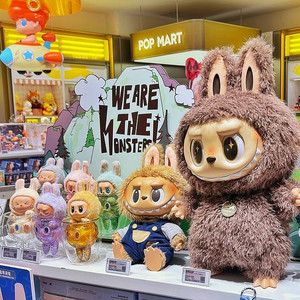
A mischievous little monster packed in mystery boxes is setting off a global craze from Asia to North America.
Laboo, the fluffy, toothy toy from China has fans camping overnight.
Resale prices for the toy are sky high.
So, how did a China made Plushie punch through the thick wall of tariffs and land in America's hottest new stores opening one after another across the country.
What's behind the China -made toys' unstoppable rise?
Welcome to The Chap Lounge, I'm Tae Yoon.
With me to decode how a Chinese toy sensation is thriving, despite trade barriers, are Helen Han, co -founder and Secretary General of the Beijing Club for International Dialogue.
Professor Liu Baocheng, the Director of the Center for International Business Ethics at the University of International Business and Economics, and Su Ramania Bhatt, Founder and CEO of China Trading Desk.
Thank you all for coming to the chat!
A warm welcome! So let s first look at this star here, LaBubu.
All I know is that it s toothy, and to some people, a kind of ugly fluffy toy.
So Helen, I guess you are more familiar with it than the rest of us are, since you have a teenage daughter, right?
The target audience for La Booboo.
So what can you tell us about it?
Yes, my daughter is in her freshman year in the University, but she still adores La Booboo.
Right. This popular designer toy IP created by a renowned Hong Kong artist. and as you know actually I have some colleagues who have younger daughters they even love you know the L 'booboo better so I actually after I got you know the questioning outline I kind of interviewed them through their parents regarding why do you love L 'booboo so much like you make it a weekly routine to go to the, either, the offline stores or the online, you know, we chat mini program to make a reservation for some limited series and they share with me their perspective, perspective from, you know, young children as
well as their parents perspective because their parents also, you know, love La Boerboo either, you know, because of their children love that.
What about you? Yes.
I think I'm fine. i i have many you know hobbies but the book is so cute the boo -boo belongs to you know the monster series known for its blend of fantasy fairy tale elements rebellious spirit and some giving you some healing worms especially when you're in this kind of work or study stress so i think Labubu also holds a very prominent position in popmart brand.
We all notice that the popmart, you know, they enjoy the very good stock market to price growth these days.
And the Labubu is like it's a flagship product from all these if they this brand can provide, in my opinion, and from the eyes of the children of my colleagues.
I think Labubu is not only a companion for them, but it kind of provides you something like you don't need to be perfect in work or study.
You just want to be yourself, and be yourself you can get more security, more comfort, more individualism from your study and from your work, which can give you more innovative ideas because L 'booboo itself is created to be rebellious to be not you know following the routines.
If you, even if you have some principles you have to follow but it gives you some breath, some you know break breaking out of your daily life so that it give you comfort, gives you more security and I think this sense of security can grow with you, even if you're already an adult.
I don't know, one can get so deep a philosophy from such a fluffy toy.
Sibu, I understand you also have a daughter and laboobu is also quite popular in Singapore, right?
What's your interpretation of its attractiveness or its appeal?
Yeah, it certainly is very popular, yeah.
I do have a teenage daughter, a little younger than her length but she is going to secondary and it's been the talk of the town for quite a while now.
My classmates and friends really love it and it's not just Labubu, the entire collection of popcorn like Smithkes and Molly and crybaby.
I think there's so many of these that I have lost track of what she comes back and talks about.
But I think one of the main reasons why I think Labobud is quite popular is because, again as Helen mentioned, it's also a blend of emotional, cultural and aesthetic needs.
It looks cute but also looks very mischievous and precisely because of that it resonates with young adults who seek a more playful norm of self -explanatory but also because of the highly structural society like, Singapore, which is very similar to China.
You want to escape from it.
And then you have all these marketing gimmicks of limited edition and designer branding feeds into Singaporeans appreciation for exclusivity and collectibles.
So they are more attracted to it.
So things like cute culture with an edge and being able to merge that innocence with a hint of rebellion.
All this makes it more more attractive for the young adults, and also it helps that quite recently Lisa from Blackpink also posted on Instagram, so that made it quite wider, and more and more pop culture got into the act, so I think more and more of these teenagers started to really love it, and young adults really started to love it, so it's become very, very popular in Singapore.
Indeed, it's not just Lisa.
I think a lot of other celebrities, like Rihanna, and also in Thailand, the Royal Family, and some of the government officials with senators, who are key opinion leaders, are also ardent buyers of the toy.
So it's already a sensation probably around the world.
So, to Bao Cheng, I think you've got an even smaller granddaughter, right?
How, how popular, according to your knowledge, is the L 'Ebu Bu in China?
I'm a professor of marketing.
We always say that of our product to get its popularity, you need to penetrate with a soul.
For L 'Ebu Bu, the soul actually lies in the art piece and also in the Gnostic stories that it's a wrapped.
so you've got to be able to tell the story behind the representation.
So that's how the product can really last. Otherwise, if it's just a thing, even if it's cute and funny, it won't really last long.
It can only be a splash in a pan.
Second, it must represent personality.
So, La Bobo seems to fit into a number of age brackets, particularly in the Generation Z and the Millennials, particularly for the urbanites where they do not really want to have a lot more children, but rather to have some cats around.
They raise cats. They play with soft toys, and particularly tiny ones.
and the third is that there must be a sense of urgency coupled with thrill with limited additions and also with the blind box and it gives them a certain level of fun and then it is also a sort of social currency where people trade, of course, you know some people would also speculate, well, this is something that can keep in store In the end, it's going to increase the value.
It's a matter of the investment and both on an emotional level and even on monetary level.
So I think the key lies in its marketing game.
It's because you know, the Portmart signed the deal with Mr. Long in 2019.
But we didn't really see a lot of popularity over the years.
But last year, there was quite a boom because it's been endorsed by so many celebrities, and so like Lisa, Jenny and Rosie, et cetera.
So, you know, this is the design of the marketing plan.
And now, if you look through all the Internet connections, it's so popular and they have filled of so many stories and amplified its impact across all sorts of social media.
So, this is really a number of reasons that support such a sort of success.
Right. I was expecting you to explain how your granddaughter and her friends love this toy but you've already given us a good lesson of marketing.
Yes, we've seen actually last year PopMart, the Chinese company that created LaBubu, achieved revenue of over 13 billion yuan, that's nearly 1 .8 billion US dollars, then doubled the number achieved in 2023, and its net profit was 3 .4 billion yuan, or almost 500 million US dollars.
that's up nearly 200 from the previous year, its revenue from China's mainland registered a yearly growth of over 50%.
Yes, you've already talked a lot about how it became popular.
But how come such an expensive plush toy can attract so many Chinese purchasers when the I mean does not seem so rosy.
Not just because of the, you know, the emotional value it has, right?
But yeah. If you look at the toy per se, it is rather expensive.
But in terms of the conception pattern, it is not really pricing beyond affordability.
And it touches sort of the funny part of the purchase behavior where it sounds to be expensive but you're still able to afford it and then you're able to show to other friends that you are a savvy class and you have the taste.
And also the whole collection does offer people the whole variety of choice but then some people they just focus on building a whole series of collections to go to their friends.
And then once you really get into these lines like a collector's fascination, they would rather build the whole thing and continue to show to their friend circle.
And then it is also ostentatious because you attach it to your key rings and you attach it to your bag and some of the fashion clothes, etc., it's really tasty.
And the other interesting issue is that yes, because people's buying behavior is getting more and more cautious, and so therefore, even in the big -ticket items, it can do some saving.
But for this affordable one that is also able to support their social stature and they are waiting to spend such money.
The Chat Lounge unpacks views and opinions on hot issues in a more casual way.
You're saying it's not so expensive but the latest version is priced at some 99 yuan each or some 13 -and -a -half U .S. dollars and if purchased on the second -hand market the price will be obviously higher and they're usually ranging from $18 to more than $130.
Some even too can be like a 30 ,000 yuan that's over four thousand US dollars.
So, who are the main purchasers?
You mentioned like adults, but how many of them are they, you know, like parents adults that they have to buy their children then?
Yeah, I think it's like $20 to $30 on average.
And converting to R &B, there's like $230.
It is too affordable and people give it on birthdays and on special occasions, even my students at the graduation of my class, they give it to me knowing that I have a granddaughter.
order, this is something that is to show that I'm following closely with the popularity trend and then it also gave you a sense of mischief, you know?
An old professor received such a savvy toy, like that, and it also gave people a sense of sharing because I see that some students, they trade with each other, oh you got this one, I got that one, let's match together and let's show to the front circle all together.
So it's just really the social amenity and coercion that they are also able to create.
And the fact again on a marketing skills, you can see that at the constantly the update their websites, their social media and to build a continued attraction and continued thrill into this generation, particularly, the Generation Z and millennials, this does really have a consistent drive into the feeling of such a sort of emotional drive.
Right, Subu, I understand China Trading Desk is very good at analyzing data, so what's your findings here?
If you talk about the popularity, I think one of the things we've also noticed is it's also I would say more an emotional economy than a rational economy.
While the prices, like you said, is not cheap, it is also not very expensive but it's also a premium part of it.
Despite the economic headwinds I think this is thriving because there's an intersection of potential mix of emotional needs.
Again, identity, the fandom part of it comes into play where you have the subculture and private groups that talk constantly about this product.
Scarcity and the reasons for being within that part of it makes it more resonating for people to actually want to purchase it and especially in a society where traditional security like home ownership and job stability is increasingly getting complicated, right?
Premium collectibles, like these, offer some sort of emotional, I would say, sovereignty and some personal way to express their feelings towards having purchased it.
So the value itself doesn't become practical, it's more psychological, cultural and social, which makes it more resilient than traditional consumption patterns.
So, it's more like what's known as like a lipstick effect, right, when consumers reduce overall spending, but they still want something that is affordable indulgence.
Something that they can purchase, not too out of reach, but still an indulgence and not a basic necessity.
Well, talking about the lipstick effect, I guess, Helen, you're more familiar with this, probably.
Yes. probably we should call it a liberal effect down the road because i think the bubble phenomenon speaks deeper of the current social and psychological dynamics not only in china but in the world today because you know facing these ever turbulent world order change major power competition and that this kind of downing of the global economic growth, the bubble and its parent company, Popmar, still generated great profits from its revenue growth.
And performing very well in the stock market speaks something, which I argued since last year not only from pot marks the success, but also from some Chinese cultural products like the blackness wukong's success in the global gaming markets as well as the nerd jazz success in the global box -office markets as well as other cultural products China has already provided to the world, so I despite this deglobalization in the politics, even in economics, especially after the tariff war by the United States, the cultural globalization is still going on through this kind of step -by -step cultural products
that China has been offering to the market, following the very popular K -pop, Korean pop culture, last years, even last decades, provided to the world.
So when we talk about Lebobo, I think it provides emotional value already over the material utility.
It is just not a plush toy that we are talking about.
It's kind of an emotional outlet for many buyers, not only for children, but also for the adults.
And it provides, even though it is quite expensive, over 100 RMB yuan at least to some very expensive, limited series.
But I think it is still kind of accessible luxury for the young kids and even for their parents to purchase the bugle for their kids, To provide a kind of emotional support and the reward and the kind of tool for stress relief for themselves and for their children.
I think this Labouboo phenomena not only provides these kind of economic growth and the rosy emotional value, but also give us very positive energy in a larger sphere.
Mm -hmm, right, indeed, actually.
Subu, Ellen just mentioned that it's not just caused some sensation in China, it's around the world actually in Singapore like you already mentioned, and it's also in America.
Since its first store opening, I guess, a little over one year ago, it's reported some remarkable growth right, particularly in the America where sales revenue experienced an eye -popping increase of around nine hundred percent and in Europe, which grew by about six hundred percent, that's just a phenomenon.
Is that a common phenomenon?
I would say that it is really not a common phenomenon, to see uh, sales increased so much, uh, uh, for, uh, probably a non -native company to grow.
Right. Uh, so it's not, not native to you guys for Europe, uh, but it's, uh, it's done a lot of things that I think is right.
Uh, and that's why it's gone, um, uh, quite wider then it's been able to set quite, um, hi.
Uh, right. And one of the key things, like you mentioned, they've been opening so many stores.
Um, and I, like I mentioned to you When I was in China, I could see that it's pretty much there and every ball, the kiosk and the vending machines are pretty much there in every, I read that it's more than 4 ,000 kiosks around in China.
So I think that's coming up in probably international locations too.
They've opened up stores in places like Paris Louvre where they did experiential.
So they're getting into the act of being at the center of all these cultural activities to bring in and bring in these products that can resonate more with the people that are in these specific positions, right?
And that is creating a very strategic localization and together with the strong brand storytelling and combination of their own IP and collaboration with international artists, they are tapping into the semi emerging cultural trends.
And because of that, they're able to bring in quite a bit of demand for collectibles among the Smedanias and Gen Zs.
And from a point of I think because of the tariff over it, etc. with China, I think they are also going to diversify their supply chain to Vietnam and other places so that it becomes less of a risk.
So this probably would also help them to continue this aggressive or eye popping numbers of growth that we are seeing with them.
You've been listening to The Chat Lounge.
When we come back, check out how China's designer toy industry may further strengthen its cultural identity and attractiveness on the international stage in the future.
Stay with us. The strong wind was howling and whistling.
He was the first Chinese citizen to graduate from in the mid 19th century.
I was born on the 17th of November.
She had prominent features.
Three of us were old enough to lend a helping hand.
He navigated between two vastly different cultures and moved further to realise his dream and promote understanding between the people of China and the United States.
Xie Minxin was a native of Hamyan and realised no danger.
China is really awakening.
Come and join us in discovering the incredible journey of Yong Wang in his autobiography, My Life in China and America.
Check out the audible stories on radio .cgtn .com and all major podcast platforms. Just search for the podcast Books and Beyond and find My Life in China and America.
Welcome back to the chat lounge.
We continue our chat on how a Chinese toy sensation is thriving, despite trade barriers.
As a professor of marketing, can you tell us why it's gaining so much popularity, especially at a time when this tariff war is ongoing?
Is Le Boo Boo exempt from it?
I've been seeing that for a marketing success you need to consider four A's.
One is availability and you beef up the whole series and that's what our Laboubo has been doing and to make it continually available.
Second is accessibility so you are able to penetrate to the target market so that people have access either online or in the brick -mortar stores and so that they have the first -hand experience.
And third is affordability.
It is a rather luxury, much of a luxury, but it is still affordable and people also make more balanced decisions if I cannot really buy an LV bag but I attached with a policeman to such a bag, it seems that I'm still in the luxury circle while I can spend less in the total calculation.
And then attractiveness is something that's always wins because this gave a identity to people and the mysterious part does give people some happy surprise and even delight.
So this is how they really expand their business.
But for global expansion, if that is there to compare with the penetration into the Asian culture, it is still something that they need to make continuous improvement.
Now they have 26 stores in the United States, but that's not really even in proportion as to the number of stores they have in China, in South Korea, in Thailand, et cetera.
And if you look at the main website, on the front page, they also have grammatical mistakes.
So it is really a continuous sort of improvement so that I would expect that they would be more and more professional and more and more computer to a particular culture, not only in the product, per se, but in all the stories in all the surrounding environment they can really set up.
So that they can really have a more sustainable success, instead of doing it in a splash, right?
And going back a little bit to what Helen just mentioned, Helen, you just talked about, it's a symbol of the rising influence of Chinese culture like you mentioned black myth, WooKong, such IPs.
But when it comes to L 'Abouboo if you look at the appearances of L 'Abouboo or PopMart's other IPs you can barely tell they're Chinese at first glance is you know they'd like obvious Chinese aesthetic elements, right Helen?
Yeah I I think you're right exactly it's Chinese but it's beyond Chinese in my opinion.
It's Chinese because the big environment is that you know we have this kind of so -called Guo chao cultural confidence movement.
The rise of Guo chao or national trend celebrates the very localized or Chinese identity which is inspired from our history, from our rich culture in the past, and also the ascetic flavor from the past. But at the same time, the new generation, Generation Z and the millennials in China, they are higher educated, most of them, 99 % of them are university graduates or they are aiming to have even higher graduate diploma.
They know the world better than the generation born in the 1960s or 1970s.
They have a lot of international experiences and they live and study abroad and they come back to China.
So they seek not only the revisit of our national culture, national pride and national history, but also they seek this connection and the connectivity with the international trend as well.
I think that's why it provides kind of longevity for the Guoqiao to be a driving force and also the people are also a driving force as well.
So POBMarks, like you mentioned, and not only Labubu but also Skoll -Pander as well as other IPs, They offer people, the buyers and the creators, a form of self -expression.
Self -expression through their designing.
Self -expression through their purchasing behavior.
Self -stress relief.
And even some other new ways of consumption.
Like sometimes they trade online.
They use social currency in digital spaces.
This create a brand new ecosystem for them to create, to come up with the idea to create, to produce, to connect with their community, to exchange their ideas, to exchange their products and to create and co -build the consumption behaviour, as well as to reverse the culture behind them.
And also there are some new business models engaged like the blind box business model, the IP development and the IP sharing, IP transfer to engage the artists into this ecosystem, as I mentioned.
And also the platforms are ready too, like the Taobao Maker Festival, like the Beijing Toy Show, like the Little Red Book online platforms and communities.
There are so many platforms are ready for them to make this ecosystem stronger and healthier, and also the e -commerce infrastructure is already there.
And this e -commerce infrastructure is very hard to be blocked by the tariff war.
Because of the tariff war, we have Dunhuang Gate already there for the American consumers to easily transfer their purchasing behavior from offline to online, to use our not only TikTok online e -commerce platform, but also this Dunhuang Gate online platform, which has already been there for over 10 years.
And also, as I mentioned, the globalization of the Chinese pop culture is already there.
I somewhat disagree with that, because it doesn't really correlate with the Chinese culture.
It's just a operational success, because the story does not really come from China.
it's based on the Nordic legend and it's only made in China and its look, its behavior and the personality does not really correspond also with the Chinese traditional culture and the fact that Portmart has been really learning all the global management and marketing skills that really make it success.
Look at the Chinese technical products like techno mobile phone, they have been very successful in Africa while the Chinese people do not really give a lot of favor.
So it also shows that the Chinese companies are learning all the global marketing gimmicks so that they are able to penetrate in different generations and identify their niche it.
And also that it's so popular in China within the younger generation because it bears a lot more of the Chinese elements, but rather because it is there to enjoy the universal popularity like the key pop from South Korea, etc. So it means that the humanity is the same, and also the trend setting, either in terms of a culture and in the product, they are getting more and more universal.
For that, I would really give quite a clause for the Chinese companies who are able to understand more of the global culture rather than simply rely on the indigenous, the cultural roots of China.
So, what's the marketing lesson here, be more internationalized when it comes to… Yeah, so you know, one is that under a globalized the cultural trend, the younger generation share a lot more in terms of the identity a product represents, and second is that e -commerce does help a lot, a great deal.
Then the younger generations are getting more rebellious and mischievous, so that's the bubble, how they fit into that.
Also they wanted to build more of the social means of connection, so this is also there to fit universally entire generation.
So that's the story of success instead of their reliance on the Chinese culture.
So you're saying Pop -Mart is just an accidental phenomenon in China.
Well, it really fits both the fact and also the trend because that's exactly the need of such a generation as how they can really manage it in a sort of a more of a calculated and more of the cohesive way, I would really wait and see how they roll out further marketing skills so that they have a longer shelf life with such a generation because you know, these generations, they are very much open to anything that's relatively new and so it's how they really manage it in a more professional way and expand even to other age bracket?
Right. Subbu, what's your take here?
Yeah, definitely I think it is not an accidental phenomenon, right?
But, again, I think there are is this rise from PopMart?
So, first, I think what Helen mentioned, the Guo Cha trend is important to raise up PopMart in China to begin with.
If they had not risen up and if they had not been so successful in China, that might not be a big story outside of China.
They had that foundation and framework built within China to be able to get bigger and be able to bring that same strategy of what is happening within China to outside world not necessarily in terms of creating the product.
So even Labobo had done a lot of different collaborations within China for example creating.
It's one of the best selling product is the mask that that was popularized through Nejia too.
So there has been a lot of these Guoqiao trends that that has had propellant but at the same time within China you have e -commerce and social media that is I would argue is probably far more advanced than the western world and like what Helen was also mentioning things like so Hong shu just really gives you a such a rapid feedback within you know e -commerce and sales that people need to be very fast in being able to make decisions and change product or talk about customer complaints and feedback loops, et cetera, that you need to be very adaptable and fast in being able to do that.
Very similar to what Shane and Taimou showed about fast fashion and being able to turn out really fast. Similarly, Popmart has been able to do that in terms of iterating on different products, bringing out different things, building out a very extensive universe of these products, right?
So, Logogo doesn't stand alone.
I think there's so many other products that together with Logogo, there's this few other brands, so MoMo or a few others.
I think I forgot those names, right?
So, it becomes an entire world within itself, and they've been able to build that very fast and been able to talk about bringing all these different IPs together to create a universe that people can submerge into.
People can play around with it that people can get lost within that imagination of this whole universe.
And that creates a very strong emotional attachment, right.
I've got friends who, even adults who've been purchasing these products and not just one or two, right.
They've been purchasing like tens and twenties packs so that they can try to get those elusive limited edition or build the entire collection of this product so that they have everything from that series.
So that's gotten them hooked onto this.
So that creates a very, very strong, attractive, full for people to continue to purchase Pop -Mart and similar blind box products.
The chat lounge unpacks views and opinions on hot issues in a more casual way.
Indeed. I also want to ask you about according to what you said, did you mean that, you know, This company, Pot Mart, is actually nurtured in the land of the Chinese culture.
So, you're saying if it's not based in Beijing, it can also be as successful as it is now?
Yes. It's really sort of a globility they are really writing on.
The fact they've up with a foreign designer and also writing on the stories from the Nordic culture shows that they have the global vision in that and they capture the rising the spending power of those younger that generation and also the fact also they learned as how they endorse the intellectual property and so that that is able to penetrate in a bigger ecosystem of the buying community and also they taken advantage of the Chinese big manufacturing capacity they can really do it in a large scale, but also they are able to shape new characters in the manufacturing process.
I think more is their viral marketing that really works, so all the social media are really bombarded by their advertising and also more of the vivid stories they are telling.
Celebrity endorsement is always a success so that they are able to take advantage of some top celebrities, showing it in different occasions, et cetera.
So that's something that's continually to beef up their attractiveness.
So therefore, I'm very glad to see that many Chinese companies are really learning to capture the global culture instead of relying on the Gnostic type of way depicting Great Wall or showing panda, etc. But I do see that there'll be further competition coming out of this.
So therefore how they can really further penetrate into the market and how they build a defensive power over their existing market segments.
So that's also quite a challenge.
So now whether they have really reached a climax by this $3 billion sales, that's much to be seen because many more competitors are also on the horizon.
And now they also need to pay attention to the fact that a lot of fake products, counterfeit products, are appearing in the market.
So that has to deal with the challenge of the counterfeit products through the legal system or through their defense of their IP.
So what I'm saying is that they should not be overly optimistic at the moment and they should continue to be able to build more of their attractiveness in the market and also more of the preemptive defense power over their IP.
Then Helen, do you have any different opinion here or?
Yes, I think traditionally, world people, even including Chinese people, regard China as a factory for others ideas.
So thanks to Portmark's success, there is now a wave of Chinese toy designers, studios and even startups that are pushing original IPs and other art toys domestically and abroad.
So I think now Potmark is really, you know, they have deliberate industry evolution strategy.
They have savvy branding tactics and the Chinese growing, I think you know whatever it is from originally, you know expired from either Nordic or Asian inspirations, it shows that China's growing self -power in global consumer culture in the global consumer market.
So Popmart's success actually proved the idea that Chinese pop culture products can become a global lifestyle sensation, not just as OEM suppliers in the past. So it is really a very unique brand and marketing success of aging, aesthetics, subculture, irreverence, and also global sensibilities.
So down the road, I think, hot march is not an accident with so many other, startups in pipeline, like 52 Toys, like Finding Unicorn, like Top Toy, like other platforms, Beijing Toy Show.
I think maybe Popmart can still enjoy its growth in the world market, while other Chinese IP companies can become successful one by one.
Hmm and Pao Cheng, do you actually envision that one day that there is some IPs full of Chinese aesthetic elements that can become a global sensation, then when would that be?
Well, definitely, because China has such a accumulation of its own culture and with wonderful stories.
Wukong is one and Nezha is another one so it's how the business people particularly the younger generation can really capture such an opportunity of entrepreneurship so that they can really create a trendsetter instead of the fat in the world and based based on also the Chinese unique capacity of manufacturing and designing and dealing with large scale.
So from more of the OEM model so that they are able to ride on the Chinese stories and legend, definitely there's going to be more and more of those success stories.
And also the fact that I see the younger generations by having a better interaction with the customers instead of simply presenting a product that's attractive, but also to have continuous engagement by dialoguing with celebrities and also as the consumer base.
So I do have every reason to predict that there's going to be more success stories leveraging Chinese culture, but they are not really totally shining off from the global culture.
And the fact that Libubu also increased on the more of the global stories also shows that they have an open mind like Harry Porter, et cetera.
So it's really the more of the market -driven, but also keeping an eye to all the attractive cultures, be it Chinese, be it Malaysian, be it Nordic.
So, that's the way they should go for continuous success.
Like what the Japanese enemy used to go through, right.
Then last question, how can China's designer toy industry further strengthen its cultural identity and attractiveness on the international stage in the future, to each of you?
Let's begin with Subu, probably.
Yeah. I think one of the key things that we can do is probably there is, you know because of especially old driven and emotionally nuanced form of demand here, they need to focus on you know how to satisfy this.
So rather than just exporting state -backed narratives or a very traditional nationalistic image, you need to have this toy signal more subtler, more global tuned soft culture, where China, like what people mentioned it's not just about copying, it's just not about OEM, but about OBM, original ideas coming in and being able to original brand manufacturing.
So, being able to come up with their original IPs, being able to shape new cultural grammar that speaks across borders where pop art can do for China very similar to say Studio Ghibli did for Japan or K -pop did for Korea, act as a cultural ambassador, but through consumer objective rather than language or performance media, right?
And then being able to especially be tuned towards the global youth, or you could say, you know, kiddads, which is basically kids slash adults, right?
So they're transitioning out into the adult world, but they're still feeling young at heart, are still kids having been protected all along.
This creates themes like social anxiety, fragile identity, etc. So you want to be able to emotionally support this youth at that particular point through these very unique cultural pieces that can frame how this unique identity gets captured, and that could be very, very, very powerful.
And the lack of over Chineseness in these in a very aggressive national sense can make it even more successful.
So it is Chinese in origin but not in assertion.
Right. So you don't need to make it very, very highly Chinese to be able to be successful.
But rather bring in those different subtle elements about China than probably you know things like Limited Edition during those different festivals like Mooncake Festival, etc. being able to bring those cultures suddenly into those committed edition products during different phases could really enhance the image of the software of China.
But at the same time be able to deliver those products in need for those youth around the world.
Make a lot of sense.
And Baoqiang. Yeah, I think one is the global vision, where they can really penetrate into the consumer behaviors in different segments of the market on a global basis.
Two is they are able to continue to entrench their intellectual properties so that they can be able to expand the cultural reality of those IPs and then the more interactive capacity with more of the professional expressions and also to penetrate in the pop culture.
And then on a management side, they need also to consider how they can really have more of a standardized licensing program and a fratized program.
So by integrating these elements, I could see every reason for them to be successful and also to be successful sustainably.
Fair enough. And last, but not least, Helen, please.
I remain curious and humble observation of this growing international acceptance of Chinese pop culture.
And though it's still in a very early and selective stage, but it's certainly a shift from made in China to created in China, as I said.
So Chinese toys or Chinese other cultural products are no longer just to low cost, mass produced goods.
They are now very emotionally resonant, whether it is not expired or Chinese culture in history expired.
but they are globalized and they become to the world.
So, and in the backdrop of these rise of Guochao going global, I think, LABOUGO, as well as other Chinese cultural companies can get more connected with the world market through its more professional marketing and branding strategies, its government policy strategies and its executional tactics.
And also, I think it's better than propaganda or so called propaganda or international publicity.
We now have soft power generated from our Chinese and the blended aesthetics as we discussed.
So this kind of low key soft power is often more effective in my opinion, in building organic global audiences and building the global taste, even for generation Z.
So, down the road, I think it's promising to have more cross -cultural connectivity between China and the world despite the deglobalisation.
And I believe that the Chinese cultural products can succeed not only by mimicking the West's products, but by offering something different, something unique, something original, and they're relatable to the world audience and the consumers.
Well said and quite promising.
And on that note, we wrap up our chat for this session.
Many thanks to Helen Han, co -founder and secretary general of the Beijing Club for International Dialogue.
Professor Liu Baoqiang, the Director of the Center for International Business Ethics at the University of International Business and Economics, and Sue Brahmania Baht, Founder and CEO of China Trading Desk.
For your time and insights, the show is available on all major podcast platforms. Please email us your comments at radio at cgtn .com.
And Tian, thank you for listening.
Join us again next week for more chat at the chat lounge.
Bye for now. You