Today we are going to learn something very powerful.
We will not study like a boring class.
Today we will learn through a story.
So relax.
Listen carefully.
This is Ali.
Ali wants to become a successful YouTuber one day.
But there is a problem.
Ali is confused.
He does not know what he can do.
What he should do? and what he must do.
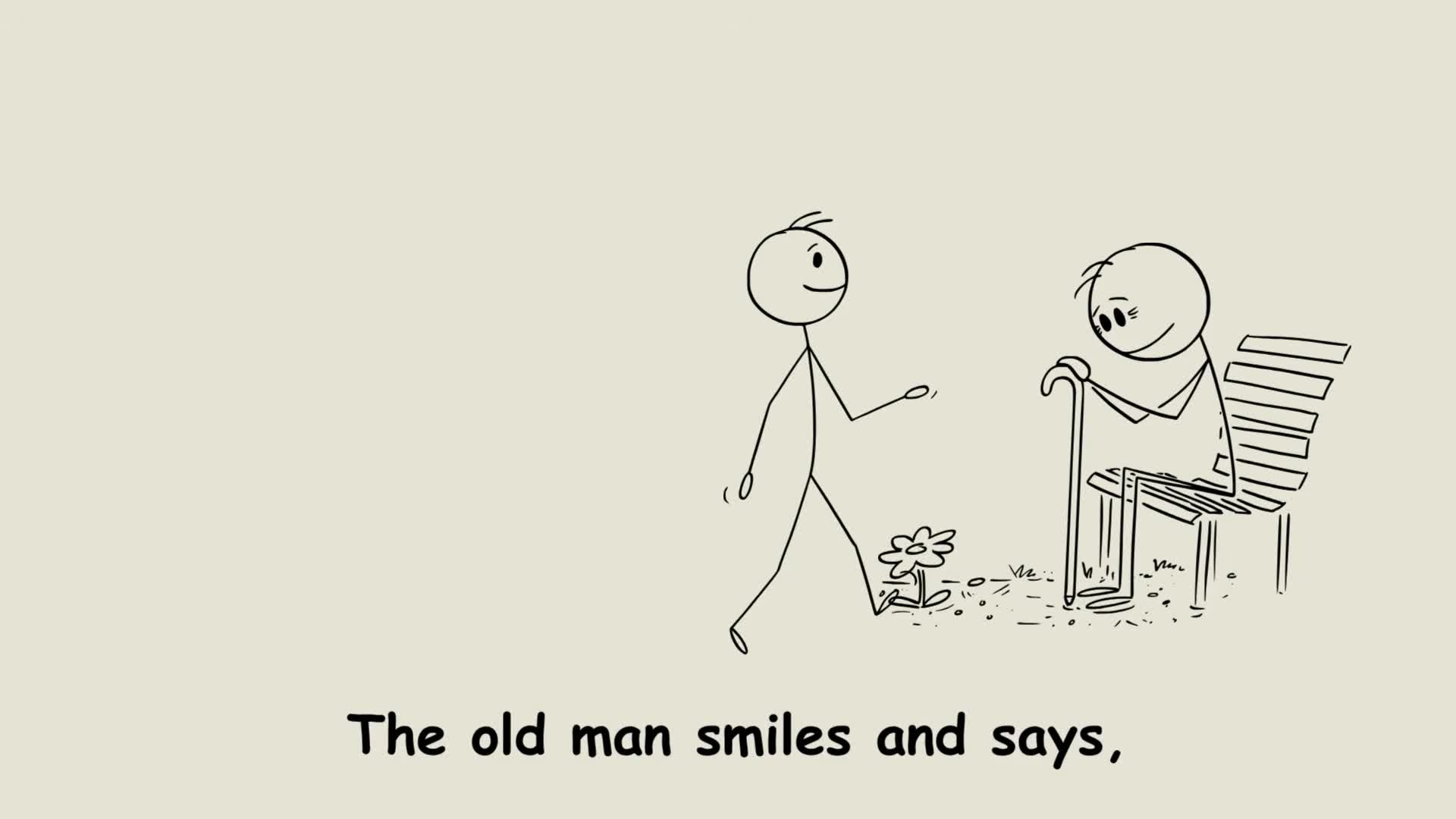
One day, Ali meets an old man in a park.
The old man smiles and says, Son, I can help you.
Ali feels happy.
The old man says, You should work hard every day.
Ali listens carefully.
Then the old man becomes serious and says, You must never give up.
Ali thinks for a moment.
He says, But sir, I am scared.
I feel I might fail.
The old man laughs softly and says, You will succeed if you believe in yourself.
Ali smiles for the first time.
Then he asks, Can I really do it?
The old man replies, Yes, you can.
But you have to start today.
Ali goes home.
The next day, he wakes up early.
He says, I will make my first video today.
He starts recording.
At first he feels nervous.
He thinks, I cannot speak good English.
But then he remembers the old man's words.
I must try.
So he continues.
Day by day.
He improves.
He learns new words.
He practices speaking.
Slowly, people start watching his videos.
After some months, Ali becomes confident.
Now he says, I can speak English.
I will grow my channel.
I must keep going.
And one day, Ali becomes a successful YouTuber.
Now let's understand each modal verb step by step.
Can.
We use can when we talk about things we are able to do or skills we have.
For example, I can speak English.
She can cook food.
Could.
We use could when we talk about past ability, what you were able to do before.
Also, we use could for polite request, asking in a respectful way.
For example, I could not speak English before.
When I was a child, I could run fast.
Could you help me, please?
May.
When you are not sure or when you ask permission politely.
For example, I may go to the market.
She may come late.
May I come in?
Might.
We use might when we think something is possible, but we are not very sure.
It is used for small possibility, less sure than may, for example.
But i might fail, it might rain today, she might not come.
Must we use must when something is very important and cannot be ignored.
For example, You must work hard.
You must not quit.
We must follow rules.
We use shall mostly in questions when we offer help or suggest something.
For example, Shall I help you?
Shall we go now?
Shall I open the door?
Should We use should to tell someone what is a good thing to do.
For example You should study every day.
You should drink water.
He should work hard.
Will We use will when are talking about future plans or making decisions.
For example I will start today, and she will come tomorrow.
I will help you.
Would We use would when are talking about speaking politely, showing desire or imagining situations.
For example, I would like a cup of tea.
I would love to help you.
I would travel the world if I had money.
Now tell me in the comments, what would you like to become in your life?
And write one sentence using, I will.
Because your dream can come true.
And you must start today.