In business, they say you can have better, cheaper or faster, but you only get to pick two.
What if you could have all three?
You can with Oracle Cloud Infrastructure.
OCI is the blazing fast hyperscaler for your infrastructure, database, application development and AI needs where you can run any workload for less.
Compared with other clouds, OCI costs up to 50 % less for compute, 70 % less for storage and 80 % less for networking.
Try OCI for free at oracle .com, slash, N -Y -T.
oracle .com, slash, N -Y -T.
OK, here's this week's show.
From The New York Times, this is The Interview.
I'm David Marchese.
It's not easy to have a clear perspective on a momentous life change, especially one that's just happened.
But in today's episode, that's exactly what I'll be asking Misty Copeland to try to do.
Because in this interview, Copeland is announcing her retirement from the American Ballet Theatre after a 25 -year career there, putting a cap on a groundbreaking and remarkable trajectory.
She grew up in near poverty, her family often without a home of its own, and she didn't even start dancing seriously till she was 13, which is really late for a ballerina.
But despite all that she eventually joined the ABT in 2001 and after a 15 -year climb became the first black woman ever to be named a principal dancer with the company.
She'll be dancing her farewell performance this fall.
Copeland, who's 42, is stepping away from the stage at a fraught time.
The values of diversity and inclusion, which she embodies and works to promote, are under political attack and cultural institutions are being made to reckon with partisan antagonism from Washington.
So there's a lot for her to wrestle with right now, both personally and professionally, as she looks back on a legacy she's leaving behind, and ahead to rest of her life.
Here's my conversation with Misty Copeland.
misty thank you for being here today thank you so much for having me so you have been ramping down dancing for a while I think it's been five years since you gave a performance at the ABT so why does now feel like the time to make an official retirement announcement you know I don't have a clear answer on that It's, you know, this has been, in all honesty, I've wanted to just kind of fade away into the background, which is not really possible.
I think that the legacy of what I've created in terms of the way that I'm carrying so many stories of Black dancers who have come before me, like I can't just disappear.
I think there has to be an official closing to my time at American Ballet Theatre, this company that has meant everything to me and has given me the opportunities and the platform that I have. And so, you know, it was in 2019 that I think I was processing that I think this is the end of this chapter.
And though I wasn't saying it out loud to the world, you know, I've already kind of on to that next place of what I want to be doing.
That answer really laid down a lot of useful track for me.
It touches on a lot of themes that I was hoping to discuss with you, but first, you said 2019 is when you were starting to feel like this part of your story is coming to an end.
What was going on in 2019?
Why did you start to feel that way?
It was the very first time in my career that I felt fulfillment, I think is the right word. And I feel like I got to a point where it was like, I think I've done everything I can on the stage.
And I think that contributed to the way I felt when I was performing.
You know, I don't think that I had the same light that I've had throughout my career.
And without knowing it, you know, the pandemic hit and I had my final performances really in classical works.
And I remember my, one of my last performances of Swan Lake, I think it was the last performance I did of Swan Lake, it was that Wolf Trap in Virginia, the beautiful outdoor like amphitheater and it feeling like the best performance I'd ever had of Swan Lake and I think I had gotten to a place of just letting go of what the critics think.
Even once I became a principal dancer, I was getting so much criticism about whether or not I should be in that position as a Black woman.
Am I technically up for the challenge?
which that technicality, those words are often used with people of color.
And I remember I spent that whole year of 2019, I brought in a new teacher that was literally retraining me because I was like striving to reach other people's standards of what they thought.
And so that final performance I let go and it was an incredible last Swan Lake.
I've always known that I was going to leave on my own terms And that I wasn't going to be, like, being pulled off by my ankles, like, get off the stage, it's over.
I've always known that I wasn't going...
That wasn't going to be my experience.
Nothing you said right at the beginning of your first answer was that it sounded like kind of your natural inclination would have been to just fade away quietly.
Is that telling about the kind of person that you really are?
Hmm. I have this conversation often with my husband in that, you know, I think that I am a performer because it has given me the most beautiful escape and voice and sense of freedom coming from the background that I come from, you know, coming from being houseless for most of my upbringing, not always having, I don't know, I guess a sense of consistent and like parental figures in my home.
And I never wanted to be like in the limelight.
You know, I wanted to be not seen or heard, but there was something that happened when I was introduced to dance that it was the most stable thing I'd ever experienced in my life.
And so, yeah, I don't think that's ever what's kind of like gotten me up every morning or gotten me on stage.
Is this like need for like approval from the audience.
Um, it was, like, I needed to dance.
I didn't need all the other stuff that comes with it.
And the work that I feel like I should be doing now is more behind the scenes.
It might be difficult for you to judge or difficult for you to judge at this point in time, but when you talk about the idea of your legacy, um, do you have a clear sense of how effective that legacy has been?
The way somebody put it to me once is that, You know, on the nights when you were dancing, the house was noticeably more diverse than on nights when you weren't dancing.
Do you have a sense of whether or not that's still the case or whether that will be the case moving forward?
I feel like, to me, it's never been about me.
And it should never have been about me.
I think it should have been about a broader understanding that people from our community, from Black and brown communities are interested and do want to be in these spaces, They just need to see themselves, not necessarily they need to be introduced and feel like it's something that they're being invited into.
And so, you know, I've never felt like I've gotten to this place and I've been given this opportunity because I am the best black dancer to ever exist. Like that is so far from reality.
I think I was the first set American Ballet Theatre to be given an opportunity.
And there's not enough schools, there's not enough access to communities that wouldn't otherwise, you know, be introduced to classical dance and teachers who look like them and healthy and nurturing environments for them to train in.
And that, to me, is the work that needs to be done.
It's there on the ground, and then it's behind the scenes in these ballet companies.
It's the board of directors, you know.
Even for me to sit on the board of Lincoln Center is a huge deal.
This is sort of like a maybe slightly larger philosophical question that connects to a debate that's been around for a long time in the ballet world, but, sort of, on the idea that choreographers might have in mind a certain way for their dancers to look that they feel best brings to life their choreographic ideas.
You know, obviously, we know that race shouldn't be a criteria for that, but there are criteria for that, whether, you know, it's height or muscularity or whatever it is.
So how do you think about the question of when is it okay to be exclusive in pursuit of one's aesthetic ideals?
I think often choreographers or whoever it may be, don't even know what their movement might look like on different body types and different types of people.
And so it's hard to say like, yes, this is okay.
Or it's just your taste, like, do you really know, do you even really know what the possibilities are of seeing your movement that could look even more incredible or bring a whole new idea out of you and make you go even further with you know, choreography but, you know, Black people have been told for generations and generations, like, you all have flat feet, so you're not going to be in pointe shoes, your butts are too big, your thought like all it's like, we don't all look this way and that's not all bad anyways.
And so, you know, I think that it's really about opening your mind to the possibilities of what can be created when you see something done on a body or in a way that you're not used to.
I apologize for moving the conversation in the direction I'm about to move it so early.
But it's impossible for me to listen to what you're saying without thinking of the wider political and social context in which you're saying it.
You know, you're talking about things like the benefits of diversity and representation at a time when, certainly in Washington, the whole notion of something like DEI is being seen as something that is actively to be ramped down.
Has your thinking about the work that you wanna do changed as a result of the world we're now living in?
I don't think that my thinking has changed.
I think that my whole career is proof that when you have diversity in certain spaces or in every space, but in my instance in ballet, there's so much richness, you know, and community that people come together and want to understand each other and want to be a community together.
And I feel like my career is literal proof of that.
You know, thinking of so many young black and brown people that didn't even know that Lincoln Center was a place they could step foot in.
When they see my poster on the front, and it opens their minds up to a whole new world.
To me, it's not just about coming to see me.
It sparks their interest to want to participate and to want to learn more about the art form and whatever may take place at Lincoln Center as well.
But I think that it brings us together.
I think that art is the most incredible way to build bridges, no matter what political party you're in.
Um, yeah, I can't think of a better way to show the power of representation than through my career.
HEINZEL LAMBERT -HENNER And do you feel a sense of embattlement or at all discouraged from, you know, the fact that, uh, you know, things like institutions that explicitly say that are supporting DEI, like risk -losing funding or, you know, federal funding for the arts in general seems under attack?
I think that we're just kind of keeping our heads down and staying the course.
I don't think that it's about creating this big hoopla in public, but I think that continuing to be really intentional about the real work.
And I think that that's being done through Lincoln Center.
I think there are a lot of other institutions that need to follow suit in terms of just— again, I think that it's reflected in the work that we're doing.
I don't think that there's any real shifts or changes that need to be made.
Just continue doing the work.
It's all with the same mission in mind.
And again, I don't think we have to scream it from the rooftops.
It's like you put talent in places that it should be, and you will see diversity naturally or organically happen.
And I think it's fair to say that there's a certain type of historical or cultural nostalgia that suffuses ballet, certainly in the popular imagination.
And that's why companies will program Swan Lake or Giselle or The Nutcracker over and over again, because those are the performances that will sell tickets.
How might the balance be adjusted so that ballet might start to look more different in the future than it currently does?
Even maybe at the cost in the short term of people not buying quite as many tickets as they did.
That's exactly where we need to start.
Solve that problem.
Yeah I think that you have to take the leap and your audience is only as informed as you make them.
And I think that if you just kind of keep perpetuating the same thing over and over again that's all they're gonna know and that becomes their taste.
They're like, well that's what I want to see but how do they even know if that's all they know, if that's all they see?
And so I really think that it's about taking the leap, and, you know, I know it's tough.
I mean, we're not in a time where the arts are being supported, and it's difficult financially for so many companies, especially in the States.
And so, I think that it's a balance.
It's a balance of some risk and then leaning on the things that people will definitely come and see.
And do you feel like the ABT has been taking risks in the way that you'd like them to see?
And here I'm thinking of, you know, there was a couple years ago, there was an op -ed by Gabe Stone Share, I think is his name.
Do you know the op -ed I'm talking about, right?
Where he was a dancer at the ABT and said, yes, there were performers of color, but they were getting cast in comic roles or sinister roles.
It wasn't exactly colorblind casting.
Was that your experience there or do you feel like there's still kind of like a gap in that regard?
Yes, it was my experience a lot when I first joined.
Being the, you know, earthy character, you know, I fought so hard to be given opportunity in classical works.
Because often the Black and Brown dancers were told that's not, you know, we're using you for the more contemporary, the more modern, modern works.
But I definitely think that I've seen a big change at American Ballet Theatre in particular in terms of the way that they view casting I've definitely been a voice in having these tough conversations.
I mean, I remember being in my early twenties and going into the office and speaking to my artistic director and being terrified and not knowing how to really articulate myself, but being really intentional about how I approached the conversations to ask for different roles and to really express, you know, that I feel like this is happening because of XY and Z.
You know, I'm a black woman, I'm the only one here, and I want to be given opportunity and I think I'm not because I'm a black woman.
And to go in there and really be clear and be intentional, but also have grace.
Instead of going in there like, you know, ready to fight, though I think I was fighting in my own way.
And so I think that there has been change made.
but we still have a long way to go.
I want to go back to your specific story.
You know, you grew up in rough circumstances.
There was a lot of, you know, you sort of alluded to this earlier.
There's a lot of instability in various ways.
And then the lifeline for you was finding ballet, which in so many ways is, like, the exact opposite of instability.
You know, it's about discipline and rigor and repetition and structure.
And I did wonder if, as a young person in particular, to kind of go from one extreme to the other.
Where was the quiet time when like you just figured out who you are as a person?
Do you know what I mean?
Well, first of all, I truly think that ballet was this perfect missing piece in my life.
You know, it helped me to develop.
So it's almost like the antithesis of what most people experience when they're in dance, where I feel like a lot of people almost lose themselves and sense of identity, and don't mature, and are socially underdeveloped and all of these things, and I feel like the opposite thing happened for me.
I think that it opened me up and it helped me to understand myself more.
And I was craving consistency.
I was craving discipline.
I mean, I would go from day to day, night to night, not knowing where we were sleeping, not knowing if we were going to have food, not knowing how I was going to get to school if I was going to school.
So to be able to go into a studio every day at 3pm, and know I was going to do plies and tondues and degages and rond de champs.
Like as a child to know what's coming that safety is so important.
And I think that it helped - I feel like I grew and developed as a person immensely in like the first three years of dance.
I feel like it's ingrained in me now, like that structure and that discipline because of ballet, that it's helped me in how I approach everything in my life.
SIMON That was something I was curious about in your memoir, which I think was published in 2014, kind of a long time ago now.
But, you know, in the memoir, you write a lot about growing up and about your relationship with your mom.
And in there, just as there's like a passing phrase, where you just say something to the effect of like, there are times you, back then, when you were writing, still struggle to understand your mom?
What were the things that you struggled to understand?
And do you feel like 10 years later, you understand your mom more clearly?
I think it was having...
Being able to see her point of view and her perspective.
I mean, as a young girl, and, you know, not always knowing why she made certain decisions.
I think those were the things I didn't understand.
When, you know, through my I don't know, eight -year -old eyes, I'm like, but why do we have a home?
Why don't you know, it was like, seemed so simple and clear.
And I think, you know, with age, and as a wife, and as a mom, I definitely have a different understanding of the choices that she made and why, and when you're thinking about six children and just being able to provide for them in some way.
As a single parent that was extremely difficult, I think that I have just more of an understanding that she never really got to grow up or have a real childhood and became a mom at a young And I think, um, you know, being adopted and being an only child and kind of wanting to create her own family, but not really being prepared to do so.
I think I just have a lot more empathy and understanding of why certain things happen the way they did.
You know, in thinking about where you've come from and what you've achieved, the elements of that in a way are very legible, and in some ways, like, sort of easily digestible.
Like we can put your story in a clean box.
You know, there's like a rags to riches element to it.
And then also sort of like a racial groundbreaking element to it.
But it makes me wonder also if there are aspects of where you've come from and what you've achieved that you think like, well, the way people understand me, I get it, but it's a little more complicated than that.
Yeah, absolutely. I think there's been a narrative that's kind of been created and just kind of carried on throughout my career, which is why I think people are often shocked when they see me and they're like, Oh, you're very petite like you look like a ballerina.
And I think the narrative that's been created is really that you know, I don't have the body.
I'm too big. I'm to this, but it's so complex. You know, at 13 years old, the reason that things happened so quickly for me was because because I was so natural.
I had all the right body proportions that they look for.
I had a small head and long legs and long arms and long feet and I was flexible and I was strong.
And then I became a professional dancer and all of a sudden I no longer had the right body type.
So I went from being a prodigy to all of a sudden being like, you're wrong for a dance and you're this and it was like shocking to me, But it was like, this is just crazy that I could go from being this prodigy, this ideal Balanchine ballerina, besides my skin color, to, you know, not being right.
And so up until my final year, you know, 2019 when I was performing, I remember seeing reviews of about me being too big and not, you know, and it's just wild, the narrative that just continues that we really have to pay attention to and kind of use our own eyes and not kind of be told what's in front of us when we have eyes and a brain, and can make those decisions.
So you're now a few months or maybe even more than a few months into preparing to dance again at your final performance, which will be in October of this year.
How has it been physically for you to get back into the swing of things?
It is a nightmare. I'm 42.
I'll be 43 by the time the show happens.
And it's been five years since I've really been physical and all of those injuries that have been there, they're awake and they're angry.
I'm dealing with a lot right now.
I have a torn, a labral tear that happened during my training recently.
And then I found out I have all these other injuries, like old injuries that I never like acknowledged and just danced through.
You know, my doctor was like, I think you should stop dancing.
I'm like, I'm trying.
I'm trying to. I'm not putting pointe shoes back on at this point.
I've decided that I want to go on stage and not be kind of self -conscious of things.
And I've had this mindset throughout my career that a year will go by and I will never be that person again, never be that body again.
I will never move like I did at 13, at 24, at 32.
And so it's just kind of finding comfort in that, that like, this is the new body I'm in.
So it's very humbling but the reason that I've fallen in love with dance is this consistency of being in a studio and feeling the sense of protection without the outside noise and that's been missing from my life over the course of these five years that I've been away from dance.
So it's nice to be back in this kind of protective bubble where you can just focus on what you You know, you're not looking at a phone.
You're just listening to music, and you're moving your body.
And there's something that feels so necessary, like, to have that in my life.
As somebody in his 40s, I can highly relate to the idea that you know, maybe our bodies aren't working exactly the way they used to work for us, but typically any person, let alone a ballet dancer, might be inclined to think of aging as a negative thing in terms of what we can do with our bodies.
Like it's attached to a physical decline, Are there any ways in which getting older and maybe having a different relationship with your body has benefited your dancing?
Mm, absolutely. I mean, that's the thing, I think that especially every ballerina experiences, you know, the older you get, the less you can do physically, but the more life experiences you have to pull from and so, there's something so beautiful about ballerinas as they age.
And so that part's really exciting, again, I get into the studio, and I'm like, I don't care how high my leg is, you know, I don't care how high I'm jumping, I have just like a different purpose.
You know, it's not about, you know, today I didn't do as many pirouettes, or I wasn't on my leg, I wasn't on balance, I, you know, all of these other things that are like a distraction, I think.
So it's to me, it's a beautiful thing to be at this point in my career and to be able to have control over what I'm performing.
that feels really good.
You know, I know that you're a big journaler, or you keep a diary regularly.
Yes, I do. So and I had asked if there was sort of like a meaningful entry that you could share.
I have it in my bag over there.
Can we grab that? Yeah, you can open it and dig through.
I don't know what's in there.
You can just unzip it and just yeah.
I, yeah, I started journaling probably around the same time that I started at the Boys and Girls Club when I was seven years old.
And this one, there's not much in it, but it was around the time that I was pregnant with my son Jackson.
And then right after I gave birth to him that I was going to share.
Yeah, please do. Yeah.
So when was this? April 12th of 2022.
And Jackson was born April 2nd.
So it's 70 degrees and beautiful outside.
The windows are open and there's a breeze moving through the house.
My baby is asleep beside me.
His chest rising and falling.
so gently, it's like watching a little miracle.
Linda was my mother in law.
Linda's in the kitchen cooking and the entire place smells like love.
Olu, who's my husband.
Olu's in the shower and for a moment, everything feels still and full.
I can't believe he's ours.
He's so small and so vulnerable and yet so powerful in how he's changed me.
The love I feel for him is overwhelming.
It's deep, pure and bigger than anything I've ever known.
I've spent so much of my life in motion, chasing perfection, discipline, and control.
But this, this is different.
It's surrender. It's presence.
It's joy. Do you want to talk a little bit about why you wanted to share that particular entry?
Yeah, I mean, I think that it, uh, being a mother and having my son has like, allowed me to let go even more.
And maybe that's why it's been easy for me to transition And easy to, you know, that this is a new part of my identity as well.
And it doesn't have to all be ballerina.
And as a performer, you're so much focuses on you.
And to be able to now not do that and to be giving it to my son and for my family in a different way, it's so fulfilling and it just, it feels like the right time to do it.
Um, I think that's a good place to stop.
Thank you very much. Thank you.
After the break, Misti and I talk again, and I ask her about the confusing place that dance occupies in American culture.
Dance is such an integral part of every culture.
And for some reason, it's not valued in the same way that music is, or fashion is, or food is.
This podcast is brought to you by Thumba, a modern design company that specializes in furniture and home goods.
By stripping away everything but the essential, Thuma makes elevated beds with premium materials and intentional details.
Using the technique of Japanese joinery, pieces are crafted from solid wood and precision cut for a silent, stable foundation.
Assembly takes just 5 -ish minutes, with no tools required.
To get $100 towards your first bed purchase, go to thuma .co .nyt.
That's thuma .co slash n -y -t to receive $100 off your first bed purchase.
Hey, it's Lauren Dragon from Wirecutter, the product recommendation service from the New York Times, and I test headphones.
Sweat is actually conductive because of the saline content in it, so we basically make our own fake sweat and spray it over and over on these headphones to see what happens to them over time.
This is 85 dB of airplane noise.
We're Put them on the ground and kick them over there.
Okay. Go. Are they broken?
No. I have 3 ,136 entries in my database.
Kids, workout, running.
Does it have a connector that's lightning or USB -C?
What version of bluetooth is it?
Does it have FxHD? We have ones that track your...
At Wirecutter, we do the work so you don't have to.
For independent product reviews and recommendations for the real world, come visit us at NYTimes .com slash Wirecutter.
We even have one that's solar powered.
Hi, Misty. Hi, how are you?
I'm good. How are you?
I'm good. I'm good.
Um, so maybe this is something, maybe this is nothing you'll tell me.
So I watched a video of you giving a tour of your lockers at ABT.
And I noticed that there's a sticker on one of the lockers that says, uh, eat right, exercise, die anyway.
Was that sticker meant sarcastically or fatalistically?
Cause I also thought like, oh, that seems to be maybe suggest a skepticism about the dancer's life that Misty Copeland doesn't usually convey.
So tell me about that sticker.
There were other stickers in my locker too.
that were probably worse than that.
I would say that I've been at that same locker since I was 17 years old.
So it's been a long time.
And it definitely, those were during very rebellious times where it was like, I mean, I don't know if you'd say rebellious, but feeling like I was working uphill.
And so there was a lot of that in the beginning, I feel, especially internally, definitely not something I was like screaming.
You know, I, I've always been very introverted.
So it was like I was expressing myself on the inside of my locker.
What were some of the other stickers?
Do you remember? This is so inappropriate.
My boss is like a diaper full of shit and always on my ass.
Oh my gosh. I mean I was young.
This is something that I was also thinking about coming out of the earlier part of the conversation where there's like a little, almost like emotional contradiction that I'm hoping that you can tease out for me, where you really expressed in a heartfelt way like your, your gratitude toward, um, the ABT and how it's been an incredible home for you.
and at the same time, you talk about these feelings of feeling stifled or thwarted a little bit or took you 15 years to rise to the level of principle dancer.
Listen to it, it's almost like you're talking about two different places in a way so tell me about that.
I think that whenever you're, you know, approaching, you know, a situation where things have been done a certain way for forever and change needs to happen, that there's going to be really difficult and uncomfortable times.
And I think that that was 15 years of my career, where I felt like I needed to fully be who I am and not bend and twist to fit what I thought they wanted or what I'm seeing in front of me, which I will never be able to be that because I'm not a white woman and I, you know, I don't fit into this idealized mold of what a ballerina is supposed to be.
And so my relationship with the company, with my artistic director, with the dancers in the company, completely has evolved through that time.
But it took a lot of patience.
Something that I was really thinking about was this sort of wave that's happening of attacks on DEI.
And the way you put it was, you want to put your head down and do the work.
You don't need to be out there shouting from the rooftops.
I just wonder if you could sort of explain that approach a little bit more, because if there were a time to shout from the rooftops, it seems like this is one of those times when maybe there's a fear of backlash or reprisal.
So why the inclination to put the head down and do the work, rather than shout from the rooftop?
Yeah, you know, I go with my instinct a lot.
And during the pandemic, George Floyd, it felt like the time to speak up and shine a light on the injustice that so many have felt for so long and give a really clear perspective and example.
And I think that we're in a place now where it's so muddy.
and I think that, I mean, I don't want to say that yes, like, you know, we're trying to stay away from backlash, but it's like, you lose focus on what the work really is when there's all this other outside noise around it, rather than like I said, you know, you're putting your head down and you're doing work.
Like I'm in these communities and I'm having these conversations and I'm, you know, creating programs programs that will go beyond this administration, and that to me is what's important, is that we keep consistent and doing the work in a way that is not going to, I guess, ruffle any feathers and have focused on us, where there's funding taken away.
It's really complicated.
It is complicated, yeah.
And I think that this is bigger than the language that we're using.
This is not something that has just come about, you know, post -George Floyd, or because of this administration.
Like, this is work that I've been doing since I started ballet.
Like, it's work that's undeniable when you are a minority, that, you know, it just is what it is and you're doing it.
So, again, this isn't this isn't something new, this isn't some trend that we're on.
It's real, important work that's affecting real lives every day.
And when you're in communities talking with people and educating about dance, are the kinds of conversations you're having with people different recently than they were 10 years ago, 15 years ago?
Are the concerns different?
Yes, through our Be BOLD program, through the Misty Copeland Foundation, we're in the Bronx, and we're in Harlem.
A lot of these people with this administration post the pandemic pulled their children out of school for fear of a lot of things, not having citizenship or whatever it is, that they—the fear of ICE—but this is like the one community social outlet that they have. So I guess it is different in a way that like we're having those real conversations like, am I safe to come and take this class?
But this is it. This is all I have. This is like a lifeline.
And it's also a beautiful escape and it's healing.
And it's just so important and necessary, uh, for our society...
for our communities.
I'm also curious about how you see dance's place in the culture, because, you know, I was thinking about how, you know, There are tens of millions of people who love to see viral TikTok dances.
Who knows how many people every Friday and Saturday night are going out dancing all different styles all over the country.
But at the same time, we don't really think of dance as an art form as kind of like venerated or central to the culture in the way that music or film is.
Do you have any thoughts about why as an art form seems to occupy this odd space?
It is so frustrating.
You know, I'm constantly having these conversations, you know, with my producing partner, with my team, you know, through my production company as we're, you know, constantly trying to prove that dance is such an integral part of every culture.
and that for some reason it's not valued in the same way that, you know, music is or fashion is or food is and it's so mind -blowing because, I mean, I could stand in a room and ask how many of you have danced in your life, everyone's gonna raise their hand.
You know, it's a part of our culture and for some reason we don't allow ourselves to like embody that concept and idea, I I mean, so I don't know that I have an answer for that or why we try to resist. To me it's mind blowing in the fact that I sit on call after call and pitch after pitch trying to prove to people that everyone dances and wants to see dance.
It just has to be done the right way and I think with an authentic voice behind it.
Did you happen to read Jennifer Homan's book Apollo's Angels, the history ballet?
I definitely read it, but I think I was very young when I - I think it came out, like, 2010, so it's, you know, 15 years ago or something.
But, so it's this beautifully written, assiduously researched history of ballet.
At the end, and this is in 2010, when the book was published, you know, she basically says she thinks ballet is a dying art form.
There's too much adherence to tradition.
It involves, like, a kind of idealism and self -control that the culture doesn't really value that much anymore, particularly in cynical times.
I don't know what she would say, but my hunch is that I don't think she would say that much has changed in the 15 years since that book came out.
What's your response to that argument?
Yes, I very much remember this, exactly what you just said.
One thing that I wholeheartedly believe in and stand behind is that the ballet technique is one of the most perfect and beautiful things I've ever experienced and I don't think that's the issue and I don't think that that's something that people can't connect with.
It hasn't needed to change in hundreds of years because it's just I think perfection.
And I'm experiencing it in real time again with these young kids that I'm teaching in communities that like there's no connection.
They don't care about ballet.
Their parents are like what?
and showing them the value of the discipline, the value of the technique and how it connects to so many things that they do in their lives.
And I think it has to be fed to us in the right way.
And I think that when it's exclusive and you don't see people that represent a broad range of people and you don't see the real complexity of what a dancer's experience is, but this narrow view where, again, you're this skinny white girl and you're being tortured and abused and you're having an affair with the choreographer and all of these tropes and stereotypes.
It's like if we keep that narrow view and we just keep perpetuating it, then no one's gonna wanna be a part of it.
So I truly believe that it's not a dying art form if we handle it with care moving forward. So when you go onstage for your last performance in the fall, what do you hope you'll feel in that moment that will make that performance be a satisfying ending to this part of your career and your life?
I hope that... You know, I don't even have hopes.
I think that I don't have hopes and dreams for what's going to happen that night.
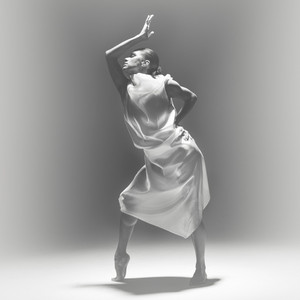
I think that I'm gonna go out there feeling in control of the decision that I've made to do it, the pieces that I'm choosing to dance, the shape that I'm going to be in, because it's like, I only have control over so much. What's so interesting is that after I saw you, I had done the shoot in the morning, and it was the first time I've done a shoot without wearing pointe shoes, really.
I mean, I've done fashion shoots and things like that, but really like a movement shoot.
And I left thinking that wasn't me.
You know, almost like feeling like a fraud.
Like I'm like in my bare feet.
I'm like, I'm used to being on pointe and just like really moving so freely in a way that I know.
And after the shoot, I pulled my pointe shoes out, brought them into class.
I've been on pointe now for three classes and I'm considering wearing pointe shoes for my final performance.
Oh. So I want to allow myself the freedom to do what feels right and feels good because I want to enjoy myself.
That's Misty Copeland.
Her final performance with the American Ballet Theatre will be in October.
This conversation was produced by Seth Kelly.
It was edited by Annabel Bacon, mixing by Sophia Landman.
Original Music by Rowan Nemasdoe and Marion Lizano. Photography by Philip Montgomery.
Our senior Booker is Priya Matthew, and Wyatt Orme is our producer.
Our executive producer is Alison Benedict.
Special thanks to Rory Walsh, Renan Borelli, Jeffrey Miranda, Maddie Masiello, Jake Silverstein, Paula Schumann, and Sam Dolnick.
If you like what you're hearing, follow or subscribe to the interview wherever you get your podcasts.
And a reminder that we have a new YouTube channel where you can watch this interview and many others, subscribe at youtube .com slash at the interview podcast. Next week, Lulu talks with Senator Lisa Murkowski.
I'm David Marchese, and this is the interview from The New York Times.