If you're listening to Roundtable, I'm Nyong Hong -lin joined by Dinh Hong and Brandon Yeats.
Coming up, who knew hotpot could go on a diet?
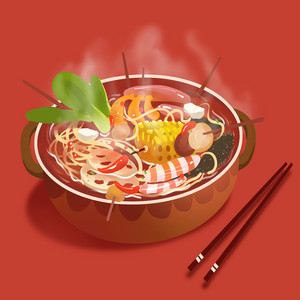
Welcome to the world of many hotpots where the pots are small but the flavors are as bold as ever.
Think of it as Hotpot's younger 20 -year sibling who's obsessed with efficiency, loves comfier belts and has an eye for the Instagram -able.
But are these mini meals a game -changer or just a passing fed?
Grab your chopsticks and let's find out.
And emerging research suggests that prolonged sitting poses significant health risks.
From cardiovascular disease to increased stress, today we'll examine the scientific findings on the dangers of sitting too long and explore practical interventions to mitigate these risks.
But now, hotpot has always been about bringing people together.
But what happens when you take that communal experience and tailor it to the individual?
Enter the mini pot, a symbol of how innovation can breathe new life into tradition.
Yeah, because as the name suggests, I guess the core value of many hotspots really lies in its small size because compared to those traditional hotpot restaurants where everybody shares a large pot, small or mini hotpot features smaller pots catering to individual use.
Basically, you're catering people who are willing to having hotpot alone.
Somebody like me, like me personally, is a big fan of eating hotpot alone at home.
But if you use a very big traditional pot, that's really a waste of energy, a waste of a soup and a water.
So yeah, a smaller sized pot is more economical.
Yeah, I guess one of the benefits of this new trend is that it does allow that family setting of a hotpot or that traditional gathering element of a hotpot meal that allows people to have that but in an individual setting.
Because we're not around friends and family all the time, but of course, hotpots are incredibly delicious and it's also something you want to enjoy alone from time to time.
So I guess from an individual consumer's point of view, and from the company's point of view, it enhances the accessibility of the hotpot form of meals.
I will not assume that everyone listening to Roundtable have tried hotpot.
So let me explain the concept behind it.
It's that you have a basically a huge pot full of broth or soup with different flavor and you have raw ingredient, vegetable, mushroom.
Mushroom I think is a kind of vegetable, but here in China, we have a lot of different types of mushrooms and also meat and also meaty product.
So the meat can be pork, lamb or beef.
It can also be fish meat and you can even make the fish meat into some fish bowl and also we have shrink bowl.
So these kind of meaty products and also soybean product.
So these kind of products are made of soybean, you have them in the shape of noodle, you have them kind of like a tiny little steamed bun, but it's made of soybean.
So all these ingredients can be boiled in the hotpot.
And once you get the ingredients out, you can have dipping sauce.
So now we are seeing different varieties already, you can have different flavor of the soup, you can have different flavor of dipping sauce.
And definitely you can order different types of the raw material we talked about.
They're not raw material, they're more like ingredients.
And here in China, we love, love, love, love hotpot, which is why I think Brendan you mentioned earlier about the smaller sized cooked hotpot.
In Chinese, we call them mala tung.
Basically, it's kind of like you've already boiled all the ingredients that you want and you get them away from the pot.
So there's no boiling, there's no cooking while eating process for those.
But when it comes to these mini products, yeah, it's like that.
But in that case, I do agree with your opinion that a lot of small meals is just not good enough.
I agree. But for these small pots, it's kind of like using smaller sized pot and smaller portion of different ingredients, which means you can try even more types.
So if you go into a regular hot pot restaurant and you order the regular portion of beef, for example, you can only try that one plate of beef because it's simply too much.
Yet if you go into these mini pot restaurants, you'll be able to order one portion and that one portion is significantly smaller than the portion in the regular hot pot restaurant, which means you can order some other types of food as well.
That is another point of the mini hot pot.
Actually, this idea of mini hot pot isn't certainly new to Chinese, as it was first introduced and popularized domestically ever since the late 1990s.
From then, we already see these mini hot pots, but apparently now, for example, as of July 2024, the first half of this year, the number of mini hot pot restaurants nationwide exceeded 50 ,000, accounting for about 10 % of the total number of hot pot restaurants across the country.
And also in the first half of the year, more than 1500 new mini pot related businesses were established.
So we are looking at this genuine love and increasing growing love, especially from the younger generation in the country for mini hot pot.
So Ting Ho has already shared a little about the fact that he believes that mini hot pots are more economical for the definition of these kind of mini hot pots.
Do you think there are other reasons that might drive more, let's say, lovers or more young people to love this kind of mini hot pot?
And also would you find yourself being attracted to it, Brendan?
I think so. I definitely like the idea of smaller portions as a part.
I think the confusion is that when I, for example, think of mini, I think of extremely, extremely small, and I didn't think that that would be appetizing.
You know what I mean?
So I think when it's smaller portions compared to a giant pot, I think the appeal of that is that there's definitely more variety and you can try different things and you can be a lot more experimental when it comes to eating out.
You can go to one restaurant and have a variety of meals that are, instead of one giant pot, you can have four or five different pots and have four or five different flavors, but still a very satisfying meal.
So I think that's what would definitely attract me to a mini hot pot restaurant, for example.
I'm not really sure about the five or six different pots, but definitely five or six different meals.
Multiple, yeah. Yeah.
So I guess in addition to the affordability issue, I guess another reason behind the increasing popularity of this kind of hot pot is about their efficiency and convenience because some of those hot pot restaurants, they use very funny interior designs and really innovative techniques like this kind
of conveyor belt system.
There's basically there is that rotating belt.
It's quite similar to rotating sushi.
Sushi, yes, I was thinking about that.
And in the meantime, there are different types.
You can take down the ones that you like and have them, or you can even enjoy a buffet of hot pot with all the ingredients as long as you like you take them.
You don't have to worry about the price and everything.
So, yes, I agree. It's a very important point.
Yeah. So basically it is about efficiency and convenience.
And I guess it is very, very appealing to the younger generation of consumers and all this kind of franchising.
And actually, one point I'd like to make is that this kind of business model, they lowers the operational costs on a part of these businesses.
Oh, really? I mean, hot pot is already quite cost -effective because you don't need to hire a lot of, for example, a lot of chef.
You do not need to cook the food already.
And many hot pot can make it even better.
Yeah. I guess so because if you think about this business model, actually it reminds me of a book.
There is a book called the McDonaldization of Society, which was written by an American sociologist called George Ritzer, who argues that McDonald has managed to have its customers basically perform tasks that should have been done by waiters, servers, and other working staff.
So I'm paying to cook in the restaurant, huh?
You're making hot pot less attractive to me.
There is a concept here called prosumer, a combination between producer and a consumer.
So I guess when we talk about the hot pot industry, especially those mini pot restaurants, I guess there is a similar picture, especially with those mini hot pots because customers, they tend to choose the flavor of their broth, the dipping sauce flavor, and what they want to cook for themselves, rather
than having a bunch of waiters serving them, I guess.
So under this kind of business model, there definitely there will be further lowered labor costs for the restaurants and really allows for a high degree of standardization.
And therefore, when we have a higher degree of standardization, there will be a higher degree of franchise.
Definitely, and actually we see that the average per customer spending at these rotating mini hot pot restaurants is generally about 50 yuan, that is around 7 US dollars, with some even as low as 4 US dollars per meal.
Cheap but filling with a vast variety of food choices, including sliced meat dishes or sorts of veggies, tofu, fish and shrink balls we mentioned already, and that's quite attractive actually, even if I have to cook while I'm eating.
And I was wondering for you, Brendan, because you've tried hot pot, I know that, and you know that you can customize your dipping sauce.
Is there any other similar practice in other types of, for example, cuisine internationally?
I'm not sure about internationally, I'm not much of an international cuisine aficionado, but I mean in South Africa we definitely have, you know, it's not really an individualized thing that happens at restaurants, but we normally have get -togethers where there will be a big barbecue where people select
their meats, they select their vegetables and they kind of, you know, it all takes place in one area.
But you know, the kind of hot pot restaurant kind of setting in South Africa definitely doesn't happen.
It's the very standard, like, you know, audio meal and that's what you get given.
But there are definitely more informal settings where people kind of get -together and select certain ingredients that go into either a big pot of food that we call a poiki in South Africa, where people select different meats and vegetables and that sort of thing, or we'll get together and have like
a very large barbecue set out, and then people, like I said, can select different meats and, you know, kind of individualize their meals that way.
Yes, that's definitely one thing, because here in China, no matter if you're having hot pot, regular hot pot, or a small mini hot pot, you can definitely customize your dipping sauce.
You can choose your soup, type of soup, the broth, you can then basically customize your dipping sauce.
There are different things.
You have salt, you have soybean sauce, and also you can have, for example, vinegar, sesame sauce.
Some places even offer ketchup, and you can mix them in the proportion that you prefer, basically create your own sauce.
That is also why we see a growing popularity of hot pot here in China.
Actually, this April, the 2023 -2024 China hot pot industry annual development report was released by catering big data research organization, New Catering Big Data.
And according to the report, the revenue of China's catering industry in 2023 reached a new record high of 5 .2 trillion yuan, and that is over 740 billion US dollars, among which the domestic hot pot market reached almost 1000 million yuan, that is over 130 billion US dollars, and it is expected to
surpass one trillion yuan in 2024.
So yeah, a lot of people are loving hot pot.
And one factor that we haven't mentioned just yet for mini hot pot is that a lot of people now enjoy a one -person meal.
That is a growing trend not only here in China, but also internationally, I feel.
That is, of course, you want to gather together with your friends occasionally.
Yeah, right. Yeah. I mean, I definitely, you know, when I get together for a family meal or a meal with friends, it's more the people and the company that I enjoy, as opposed to the meal.
Yeah, yeah, yeah. And just like seeing people that you haven't seen for a while, connecting with family and friends and that sort of thing.
But when I truly enjoy a meal, I'm normally locked away in my room alone, watching my favorite series, you know, that's when I really enjoy a meal.
But when I get together with friends and families, family for a meal, then yeah, the meal is like okay or nice.
But the main thing that I take away from those experiences, like you said, is the conversation and the time spent together.
But I definitely enjoy my meals a lot more when I'm on my own.
Yes. And also you don't share, you don't have to.
Yeah, exactly. So it's not because we have a greater passion for greater food.
Yeah, sometimes. Based on Brandon's logic.
Yes. And also it depends.
For example, if one day you do not want to make an appointment with your friends or family, but you have a crave for hot pot, now you can do that here in China.
No shame, no name. Yeah.
As we've seen, many hot pots might be small in size, but they are making a big splash in the food world.
Whether you're a fan of traditional communal feasts or you're all about that solo dining life, these little pots are cooking up some big changes.
So next time you're craving hot pot, maybe go mini.
You might just find that.
Good things really do come in small packages.
You're listening to Roundtable, coming up next.
Are you ready for some bad news?
You may want to sit down for this.
No, wait. That's a terrible expression to use right now because sitting down for extended periods of time isn't just uncomfortable.
It's also bad for our health and our mood.
Stay tuned to find out the details on what goes on in our body when we sit for long time and what we can do about it.
Stay tuned. Looking for passion?
How about fiery debate?
Want to hear about current events in China from different perspectives?
Then tune in to Roundtable, where East meets West and understanding is the goal.
It's the hour of Roundtable with myself, Neil Hong -Lien, Ding Hong and Brendan Yeats.
So, do both of you feel like you're sitting down for too long, especially in a working day?
Yeah, but I think in China, for example, that's one thing that I noticed when I arrived in Beijing is that I did a lot more walking than I did at home.
And I think that was really good for me.
I walked to the office every single day.
I walked to the grocery store.
I walked to the gym when I went to the gym.
So I did a lot of walking.
And I think in Beijing, it was a little bit easier for me because in the area where our offices are based, it's very, very flat.
So even walking long distances didn't seem to be of great concern.
And even within the office itself, I mean, you know, we often walk up and down the stairs, whether it's to go get hot water or go to the bathroom or go to a different studio.
So I think on a day to day basis, I was just doing a lot more walking than I normally did.
And I think that was very good for my health.
However, since I've returned to Cape Town, it's quite difficult to walk around because things that were kind of within walking distance in Beijing aren't necessarily the case for me in South Africa anymore.
So I'm not really walking distance from the gym.
I'm not walking distance from the grocery store.
I'm also working remotely now.
So I'm not walking to and from the office.
And it's definitely not particularly safe to walk around alone in South Africa, particularly at night, whereas in Beijing, I mean, you can walk around alone 24 seven, no problem.
So I think that that's definitely one of the elements of health that I need to try and figure out since I've returned to South Africa is, you know, trying to get the same amount of steps in that I was getting in Beijing, because I was just, you know, unknowingly doing cardio at a vast rate every single
day in Beijing, and it wasn't a problem.
I actually enjoyed it.
It kind of energized me.
Hmm. Yeah, I feel like it's a problem like this kind of prolonged sitting, that's a, yeah, that's a prevalent problem for office workers for white collar workers.
I know many white collar workers either China or abroad have a habit of, you know, taking physical exercises regularly.
Like for me personally, I would exercise like for one hour on daily basis, but still in my work, I want to keep sitting there for like, how long eight hours, 10 hours a day.
So I am not really sure whether the so called benefits I can reap from my daily physical exercise can really offset can really help with the mitigation of the potential harm that I would possibly gain from prolonged sitting.
Yes, definitely. Actually, we talk about sedentary behavior.
And the definition for this is that it is a highly reduced energy expenditure in a seated or reclined position.
Typical sedentary behaviors, including television watching, gaming, driving, desk bond work, which is what we usually do.
And you see secondary behaviors are associated with a higher risk of cardiovascular disease, type 2 diabetes, and premature mortality.
And the time we spend sitting down in particular has been identified as an independent risk factor in a range of health conditions.
Like Brenda has said here in Beijing, you do have some occasion or some opportunities to walk.
But guess what? Actually, sedentary behavior is distinct from a lack of physical activity.
I know Brenda is a very active person, you are a very sporty guy, you're the really healthy lifestyle.
Yet guess what? Even with proper and sufficient exercise per day, still sit for long hours is bad for you.
So these are like two different types of risk factors.
And so it is really bad for you.
Even if you're getting enough exercise, sitting for too long time is still bad.
So how long is too long?
So I guess scientific researchers would generally agree that somewhere between 120 and 180 minutes of uninterrupted sitting is probably the threshold at which you have probably spent too much in a seated position.
So yeah, and additionally, prolonged sitting is associated with some physical discomfort like stress at work and a higher chance of depression.
So yeah, it's not only associated with your mental health, but also your actual work performance, I guess.
Yeah, so for us, a two hour show might be fine.
Three hour show might be too long, because you can't really stand up and exercise during or in between a show.
So I was wondering for you, Brendan, why do you think people are sitting long hours nowadays?
I think jobs are just becoming more and more, you know, it requires you to sit for longer periods of time.
I mean, we're either working on our laptops or on our computers.
Or for us, we're working in front of a camera working in front of a microphone.
So I just think, you know, in many industries around the world, I think people are just taking on work that becomes less and less physically demanding.
But with that being said, I think there are ways of mitigating that.
I think that, you know, if you consciously are aware of the amount of time that you sit without moving, I think there are ways of countering that, you know, you can get up and take a walk around the office, you can go for a walk during your lunch break.
I mean, I think very basic, you know, little changes that you can make throughout your working day can probably have a big impact on your overall health.
And I mean, that's something that I definitely experienced at the Beijing Office too.
I mean, whenever I, you know, had to go and get hot water for coffee, you know, we would have to walk down two or three flights of stairs, walk to the coffee, the hot water section, walk back, you know, walk to and from the bathroom, walk to and from a colleague's desk.
So I think that even in the office in Beijing, I did a lot more walking than I did working remotely, because obviously at the moment, you know, I'm in my home and everything is within, you know, touching distance, and I don't need to walk to different desks and that sort of thing.
So, but so I think that's something that I need to be aware of when I'm working, I need to figure out ways of how to to get my steps in and I think it's definitely possible.
But when I was working at the, you know, the CMG office in in Xi Jinping, getting in my steps was definitely no problem at all.
Beyond my general exercising, I was getting in a lot of steps daily.
Hmm, so I guess people are sitting more nowadays compared to before, because that's exactly what our society has encouraged.
I'm not sure whether encourage is the right phrase to talk about this, but it's not really anyone's fault, not anyone who is deliberately pushing this phenomenon, but it's just because our society, our daily work -related operation gets more efficient and more complicated.
Yes, it's supposed to be a good thing, because you do not have to work in the field seven or eight hours a day with your skin exposed to sunlight directly or anything.
Yeah, so our time in the space to move around has been definitely squeezed.
So that's one side effect, I would say, of our social and broader economic development.
But that being said, you know, something to bear in mind is that a lot of major corporations around the world, I think, are aware of this problem.
And a lot of businesses are taking the health of their employees a lot more seriously.
So you'll see a lot of businesses encouraging people to exercise more, to get in more steps during the day and actively make time for their employees to do that.
So while I think a lot of the responsibility in terms of not sitting for too long lies with the individual, I think it is definitely also possible for businesses to figure out some sort of system that ensures that all of their employees are not sitting for too long and are able to get in the necessary
steps or just general activity that allows them to maintain their health levels, but also perform for the company at the highest level possible.
Definitely. Actually, now we see a lot of people started to include height adjustable workstations in their daily life, including myself.
Actually, my workstation can be lifted into the air so I have to, so I can stand up and working.
And also I, again, as an example, have wearable technology with my watch properly telling me when to stand up for a little bit, and that helps.
Because today we have figured that sitting for long periods of time is something that, for many of us, is kind of unavoidable.
Oftentimes our jobs require us to stay seated for relatively long periods, but it does not have to be for more than 120 minutes or 180 minutes, which is too long.
So knowing when too long is too long can help you avoid potential health problems in the future and maybe even allow you to avoid the onset of a bad mood.
And that brings us to the end of today's roundtable.
Thank you so much, Ding, Heng, and Brendan Yes for joining the show.
And of course, those of you who are still listening.
Until next time, keep the conversations going and the ideas flowing.
I'm Nihon Hong -win.
Bye -bye.