All right.
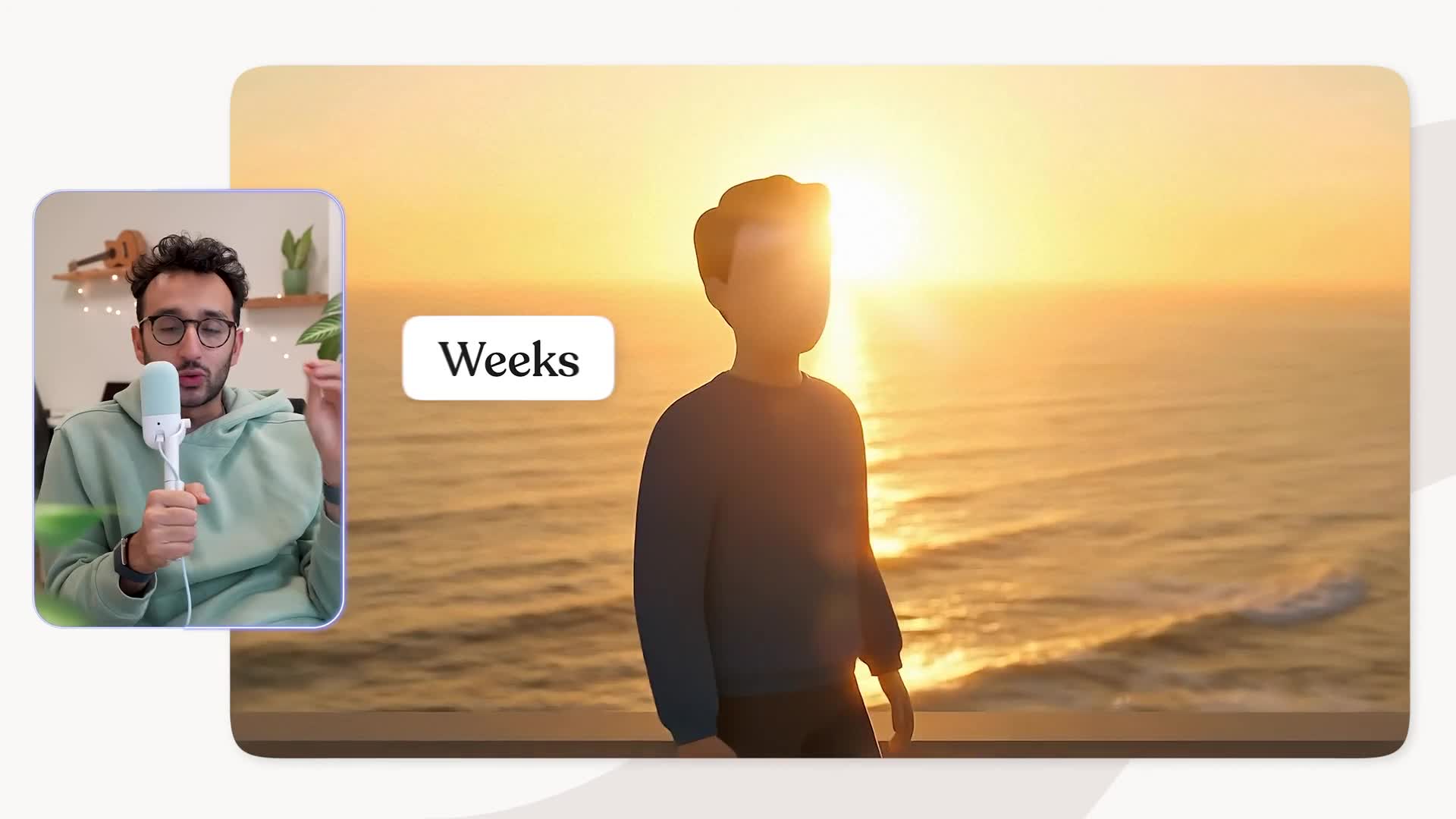
So if you've ever had a big dream, but you have found yourself spending weeks or months, or maybe even years, planning and analyzing and thinking about it and waiting for the moment where everything finally feels ready before you take the first step, then firstly, hopefully this video will help.
And secondly, don't worry, you are not alone, because most of us, without realizing it, are living in a thing that I like to call the prison of certainty.
So in this video, we're going to talk about firstly, where this prison comes from, and it starts with the schooling system.
Secondly, we're going to talk about why success in the real world plays by completely different rules.
And thirdly, i'm going to share a few mindset shifts that have really helped me, that can hopefully help you break through the prison of certainty and actually achieve your potential.
By the way, if you're new here, hello.
My name is ali.
I'm a doctor turned entrepreneur, and i started out my career doing absolutely everything right.
I ticked all the boxes, i got all the grades, i got into a fancy university, i became a doctor And I ended up in a job that society considered successful.
But for me it didn't really have the freedom or the fulfillment, and certainly not the financial independence that I actually wanted.
So it was a long journey for me to break free from that system.
And actually, I've been documenting that journey on this YouTube channel since like 2017.
But now that I'm on the other side and I now coach people on how to build a business and a life they love, there is a pattern that I've started to see with a lot of my students that I think really, really holds them back from achieving their dreams of financial freedom.
And it all relates to this idea of the prison of certainty.
Okay, so the prison of certainty is the invisible jail that most of us never really escape.
And it's a jail that is built from the belief, I can't move forward until I'm sure it will work.
Now, this belief seems very reasonable.
We certainly don't want to waste time, right?
If you're watching this video, you probably don't have an abundance of free time in your life.
Like, of course you don't want to do something unless you have reasonable confidence that it's actually going to work.
Why would you start that business unless you have the right business idea?
Why would you take that risk unless you're sure it's going to pay off?
Because your current situation is probably like okay, it's not like you're in a drastically terrible situation, because in many ways, it's actually easier to escape from a really really, really terrible situation than it is to escape from a situation that's just okay.
This is something known as the region beta paradox, which is that when things are kind of like good enough, it often takes quite a big push for us to make a change.
Whereas when things really suck, then, you know, you've got nothing to lose.
You might as well go for it.
But my argument in this video, and what I hope to convince you of, is that this belief is a prison that will hold you back from achieving your dreams.
And to get there, we need to understand where it comes from.
And that brings us to the idea of the one shot brain.
Now, this is where we can blame the school system.
So what school basically taught us is that life is a series of one shot exams.
Generally, when you are preparing for an exam, you can only take the exam once.
And if you have to retake the exam you're like some kind of idiot, because what the hell is wrong with you that you had to reset the exam.
That's the general attitude around resets.
If you're applying for college or university, you generally have one shot at getting like the application in.
You have one shot at like doing well in the interview.
And these are fairly high stakes situations.
Like for me for my Cambridge Medicine interview.
I prepared so much for that because I only had one shot.
And if I hadn't gotten in to study medicine at Cambridge University, my life trajectory would have been completely different to what it is now.
And so all of the zillions of hours that I spent preparing for that interview and like really optimizing things and really making sure I maximized my chances, all of that was worth it because I had one shot.
And so really, what the school system teaches us, the way all of these kind of artificial games are set up the artificial game of exams, the artificial game of university admissions, all of these games are set up in a way that encourages us to develop a one shot brain, which is where you do loads and loads and loads of preparation and thinking and analysis and planning, because you only have one shot.
Now, this wiring is amazing for passing exams, but it's actually terrible for most things in the real world that involve achieving our dreams.
And beyond the one shot brain, there is something even deeper that this conditioning from school does to our minds.
There is an idea that psychologists talk about, which is defend mode versus discover mode.
Now, this is something I learned from Jonathan Hyde's amazing book, The Anxious Generation.
And basically what he talks about is that when we are kids, by default, we are in discover mode.
We are curious, we are playful, we are open to new experiences.
We are willing to fail.
We have an intrinsic growth mindset.
Like you, very rarely see small kids who are playing, getting really, really worried about failure or trying to make sure they get it right.
In contrast to discover mode, you have defend mode.
This is where you're not like open to new experiences and open and playful and curious.
This is where you're constantly scanning for threats and trying to make sure you're safe and trying to optimize for security and certainty and not taking risks.
And this is where you are terrified of looking stupid or looking foolish or looking dumb and you are terrified of losing whatever you've earned.
And this is a thing that happens to kids as they go through the schooling system.
Often the school system and its obsession with like pass fail and that kind of stuff, and also the kind of social groups we find ourselves in, where you know if you do something that looks dumb, you you're at risk of ostracization from the social group, and especially if you've grown up during an age of social media where like, there's even more of this pressure to try and conform and try and fit in, because otherwise people can be talking about you behind your back, even when you're not in school, like in the weekends and it's in the evenings, and when you're like scrolling your phone in bed and when you're on the toilet.
All of this makes kids switch from discover mode, where they're like open and curious and like open to failure.
And it makes them switch into defend mode, where we're sort of entering our shells and trying to make sure that nothing in the outside world actually harms us.
And this thing, the one shot brain and operating in defend mode, which a lot of us are trained to do from a young age.
This is actually really terrible for life in the adult world because most areas of adult life and business and wealth building and most things that involve you chasing a dream that you have mostly those things are not one shot games.
They're actually infinite shot games.
Now, if you have decided to take action on your goals, one of the most helpful things you can do is make the first step as easy as possible.
Because whether you are starting your first business, or you're putting your work out there into the world in any capacity, or you're finally taking that idea out of your notes app, at some point, you will need a place to put it.
And that is where Hostinger comes in, who are very kindly sponsoring this video.
Hostinger is your one-stop shop solution to build your online presence.
Whether you're trying to create a beautiful website or launching a business, or hosting web apps, Hostinger houses it all in one ecosystem.
We've been using Hostinger for a few years now, and they're the host of all of our different websites.
Their AI website builder lets you go from idea to live website in just a few minutes.
You enter your brand name, you describe what you're building, you tweak things with a simple drag and drop interface and suddenly you're no longer thinking about starting the thing, but you've actually made tangible progress and you have something to show for it.
They've also got built-in AI tools for things like product descriptions and images and email marketing, and they charge 0 transaction fees, which is really helpful when you are just getting started.
Now.
The best deal you'll get is by signing up to their business plan for 48 months, and that gives you access to their entire suite of AI tools and e-commerce, and you'll also get a free domain name as well.
So if you want to make 2026 the year that you finally get your website up and running, head over to Hostingercom.
Slash Ali Abdaal.
You can build your site for just $2.99 a month.
Plus you get an extra 10% off with the code Ali Abdaal.
So thank you Hostinger for hosting our stuff and for sponsoring this video.
Now let's get back to it.
Now there's an analogy that Jeff Bezos, the founder of Amazon, uses for this, which I think is really good.
Now, if you imagine playing baseball, you know whether or not you know the rules of baseball.
You probably know that the ball goes and then you hit the ball with the bat.
When you hit the ball with the bat, there is a maximum number of points you can score, and that number is four.
So you could score zero points if you didn't hit the ball at all.
You could score one or two or three or four.
You cannot score any more than four points.
If you hit an amazing shot and you score a home run, you still only get four points.
But the analogy that Jeff Bezos uses is that in the world of business, it's sort of like playing baseball, but instead of getting a maximum of four points, there is no cap to the amount of points you can earn.
So, for example, you could take a shot and earn nothing.
And take another shot and earn zero points.
And take another shot and earn zero points.
And then your fourth shot could earn you a million points or a billion points.
And so generally, when it comes to following your dreams or like building that business that gets you to financial freedom, or whatever the goal might be, often it just takes one thing to go right for you to really really, really win.
And yet most of us are so scared to take the shot.
We're spending ages polishing the bat and like making sure everything is perfect, etc, etc.
Making sure that no one's going to think we look like a freaking idiot.
Like we're so busy overthinking and planning and perfectionisming all of that stuff.
We don't realize that the more shots you take, the more likely you are to succeed.
It's sort of like if you are dating and you're trying to find the person to marry.
A lot of people these days are just really, really concerned about like going on a date.
Like, unless your physical safety is at risk.
The worst case scenario from a date is that it's kind of a bit boring and it was kind of a waste of an hour or two hours or two and a half hours in the middle of the afternoon or in the evening.
That's like the worst case scenario.
But the best case scenario is that you end up falling in love and you end up getting married.
And then that's like you only need dating to go right once.
And so all of the overthinking that people do around, like going on a first date, is all kind of completely pointless, because who cares how many first dates you go on?
You just needed to go right once.
And it's the same thing if you're trying to build a business that gets you to financial freedom, or start a side hustle or like start creating content.
You actually have unlimited shots on goal and you just need one of them to work.
So we often have people coming up to me at events.
We often have students in our Lifestyle Business Academy who are so concerned about like I really want to start a business, but I don't have the right idea.
And they've spent years trying to think about the perfect idea, failing to realize that, for most entrepreneurs who've made it, it was not their first idea that got them there.
It was like their fourth or fifth or sixth or seventh or whatever the thing might be.
In fact, it's really, really unusual to see an entrepreneur whose first idea was the one that made them rich or made them successful and made them financially free.
And so the thing that separates the entrepreneurs from the wantrepreneurs is the fact that the entrepreneurs are just willing to take shots even when they are uncertain.
Whereas the wantrepreneurs end up stuck in the prison of certainty.
They keep on waiting until they're 100% certain that the idea is going to work.
And until they are 100% certain, they're not going to take action.
But the thing is in the real world.
Once you get outside of the school system, there's no way to be 100 certain of anything at all.
Like back in the days of school, I knew I wasn't going to take an exam unless it was 100.
Certain I was going to get 100 score because the curriculum was finite.
And so if you just memorize the curriculum, memorize the mark schemes, the process of getting 100 in a maths exam is fairly straightforward.
But that does not hold true at all in the real world.
There is almost nothing in which you could have true 100% certainty.
And so really, the people that are operating in the sort of one-shot brain mechanism of school are the ones who stay on the sidelines forever, because they are never 100 certain.
Now, crucially, that is not to say that you shouldn't plan or you shouldn't analyze.
There's another thing that Jeff Bezos talks about, which is, you know, when it comes to making decisions, you want to know fairly quickly is the decision a one way door or is it a two way door?
Is it a one way door that you cannot go back from without incurring massive costs?
Or is it a two way door where actually you can like fairly easily walk back if the decision turns out not to be the right one?
Now, in life, there are some examples of decisions that are one way doors.
For example, you probably want to consider the decision of getting married to be a one way door.
You don't really want to approach that from an experimental mindset of like, Let me just try out marriage and see how it goes.
It's generally in your interest to approach that, at least initially, at least going into it as if this is a lifelong decision, because it's a lifelong commitment you are making.
Similarly, you probably don't want to approach kids as a two-way door decision, right?
If you're going to have kids, you're kind of stuck with a kid and you've got to look after the kid.
So you better be reasonably sure that you want kids before having kids.
But there are very few of those kind of decisions in real life.
Generally, when it comes to the thing that you want to do to follow your dreams let's say it's building a business to get you to financial freedom, almost everything you can do there is a two-way door.
We have students in our Lifestyle Business Academy who are terrified of making their first post on LinkedIn.
And we've had a couple of students who are spending like three hours on their first LinkedIn post.
They've got zero followers on LinkedIn.
The thing they're worried about is that their former colleagues you know, Jane from HR or whatever is gonna see the post and then is gonna judge them.
And so they spent ages overthinking that one LinkedIn post.
And really the thing that we encourage our students to do as part of their lifestyle business plan is that once you pick a social media platform, you're going to post on it every day for the next five years.
If someone's going to take LinkedIn seriously, they're going to post 1800 times on LinkedIn over the next five years.
So why would you spend three hours overthinking the very first post?
Also, If you put the post out there and people don't like it, you can just delete the post.
And then people are like, oh, but nothing's truly deleted from the internet.
But, like bro, that first LinkedIn post you make where you tell your backstory is not the sort of thing that someone's going to dredge up at like an employment interview 10 years later to be like, oh screw you.
You made a LinkedIn post 10 years ago about your life.
Like the amount of overthinking people do for tiny, tiny, tiny decisions is utterly absurd.
And I see this among some of our students in the Lifestyle Business Academy, and we have to kind of nudge them nicely.
We have to coach them through that process because they're not used to this.
They're used to the school system.
They're used to corporate employment where you kind of have one shot and you have to make sure you get the right answer.
But this is completely counterproductive when you're working on your dreams or when you're trying to become an entrepreneur.
Most things in life are two-way doors.
And if it is a two-way door decision, then you wanna make the decision in a small amount of time rather than a large amount of time, because you know you can always reverse the decision.
Now all of this leads to what I like to think of as the overthinking tax.
Every time you overthink a decision, you are taxing yourself.
You're taxing yourself in three ways.
The first way you're taxing yourself is like if we take one of our students, for example, who spends three hours to write a linkedin post because she or he is overthinking the linkedin post, compared to another student who spends 10 minutes to write the linkedin post, it's like there's a massive tax right because entrepreneur a, who spends three hours on it, is spending two hours and 50 minutes more on that one linkedin post compared to the other guy who's just done it in 10 minutes.
Also broadly, we generally find that if you spend less time Working on something like an Instagram post or a LinkedIn post, it actually tends to perform better because it's more authentic and less like in your head.
But that aside, like you've already paid the tax of wasting a ton of time doing something that your competitor or your colleague or someone else would have done in a way less time.
So firstly, there is the tax on time.
Secondly, you pay the overthinking tax in terms of like lost earnings, shall we say.
For example, if you've been overthinking starting a business for seven years and it takes you seven years to get over that initial hurdle to start the business, you are seven years behind the person that just thought you know what.
Screw it, I'm just gonna do it.
And then the third thing is that overthinking is not fun.
Most people say that overthinking is not a pleasant experience.
Now, if overthinking a LinkedIn post for three hours brought you incredible joy and fulfillment and you really approached it like an artisan, like a craftsperson, where you know you recognize that i only need to spend 10 minutes on this, but because i just love the process so much, i'm going to spend another three hours on it.
If that were the case, then i'd be like okay sure, i mean, we all need our hobbies.
For some of us that's playing the guitar or the ukulele, for others of us it's spending three hours writing a linkedin post, and if that's genuinely bringing you fun and fulfillment and joy fantastic, spend three hours doing the thing.
I'm all for smelling the roses, but for the most part, when i speak to people who are overthinking, they are not enjoying the process of overthinking.
So not only are you wasting time overthinking, not only are you wasting money that you could have earned in the money example by overthinking and not taking action, But you're also just not having a good time while you're overthinking, because your brain is in anxiety mode and it's in stress mode and it's in defend mode.
And in general, being in defend mode is not fun.
Being in discover mode is a lot more fun, where we are curious and open and playful, rather than when we're like, oh my God, I have to work really hard to get it right.
And if it's not right, then it's going to suck and I will suck, and then everything will fall to shit and all of that kind of spiraling that the mind likes to do.
So what do we do about this?
Well, the first thing to do about this is to recognize when you are in overthinking mode, when you are in that prison of certainty.
And a question I like to think of for myself is firstly, how much certainty do I currently have and how much certainty do I need in order to make this decision?
I think in Obama's biography, he talked about this autobiography.
He talked about like, as president of the United States, you will always have imperfect information.
And so you have to learn to make decisions with 51% certainty.
And that's interesting coming from the president of the United States, who can press a button and launch a drone and kill a bunch of people.
And talking about how, like 51 certainty, because if you're trying to get more certainty, it's just never going to happen because you couldn't possibly have enough information.
I could be butchering this.
Barack, apologies if I've misquoted you, if you happen to be watching this video.
My bad.
And so it's worth putting numbers on these, right?
It's worth asking yourself, like you know, if you're thinking of starting a business or making your first LinkedIn post.
How much certainty do I need that this post is worth putting out?
And how much certainty do I currently have?
And, in general, I find that, if I think of our most successful students in our Lifestyle Business Academy, compared to the ones who are still like struggling and overthinking, generally the ones who are succeeding are the ones who have a lower threshold of certainty that they need to hit in order to make something happen.
If you're okay with putting something out there with 20 certainty that it's any good or 20 confidence, then you will do way more things than someone who needs 95 confidence in order to do something.
The other question I find super helpful is how much confidence do I need to simply run the experiment?
And this word experiment is something that i'm absolutely obsessed with in my book.
Feel good productivity i talk a lot about it the experimental mindset in the book.
There's, you know, nine chapters, and each chapter has six different experiments you could try.
Now, the nice thing about the word experiment is that whether the experiment succeeds or fails, either way, you have learned something, you've gotten some useful data, and so when you frame things as experiments, that is often a very easy hack to avoid overthinking.
What does it take to just run the experiment?
Could we just try it out and see what happens?
What would it take to just do 10 minute long posts every day on LinkedIn for a week?
Do you reckon we could try that as an experiment?
We find that with our students, when we kind of frame it that way that hey, how about we just run it as an experiment and we see what happens.
Then that framing of it almost always helps them get over the hurdle of overthinking.
Because if you're in defend mode and you're having to get it right, that's very different to being in discover or experiment mode, where you're like you know what, i'm just going to give it a go and if it doesn't work out, that's okay because it will teach me something and i'm just going to keep on trying until something works again.
To our baseball analogy of like all it needs is for like one thing to work, one business idea to be successful, and now you're financially free.
Uh, whereas if you spend ages and ages and ages overthinking, even launching that first experiment, you're probably never going to get there.
Now, a few weeks ago, I was at this entrepreneur's event in California, in Palm Springs, where we did some cool stuff.
We went on hot air balloons and everything.
And the guy running this event is a mentor of mine.
He's a guy called Taki Moore.
And there was a quote he said at the start of the event that really stuck with me, which is that every business grows through a series of experiments.
And the faster you can run cycles of experiments, the faster your business is going to grow.
And he sort of threw that out fairly casually.
And that just really resonated.
And I think it applies to more than just business.
Like for almost any dream you want to go after your goal is probably achievable through a series of experiments.
You have the thing that you need to do.
Let's say, you know, in the context of business, it's like the problem that you have is I don't have a business idea.
So you're like, cool, I've identified the problem.
Then you come up with a hypothesis.
Okay, I reckon maybe starting an AI automation agency could be a good thing.
Then you run an experiment.
You ask yourself okay, what is the quickest, cheapest experiment that I can run to test the hypothesis as to whether this might work?
And then you think, okay, maybe I'll do a deep research query.
Maybe I'll do some market research.
Maybe I'll speak to business owners that I know through LinkedIn and ask them about what their struggles with AI automation are.
Maybe I'll just try building an NA10 sort of workflow over a weekend and just see what happens.
And then, once you've run the experiments, you look at the results of the experiment and you see like okay, what data has that now given you to inform your next move?
And so running the cycle of like identify the problem or whatever the next thing you need to do is come up with a hypothesis.
Run a quick, cheap, simple experiment to test the hypothesis and then report back.
That is often a great way to design a life and or business that you love.
A similar strategy is called wayfinding.
It's from the book Designing Your Life by Bill Burnett and Dave Evans, who are, like Stanford Business School, professors.
And they talk about this question of how to figure out what to do with your life.
Now, how to figure out what to do with your life is unlikely to be something that you can just sit down and think about it for ages and then come up with the right answer.
Usually it requires these cycles of experimentation.
So for example, you might think, huh, I really hate my corporate job.
Maybe I should apply to medical school.
This is something I hear from people a lot, especially people in the US, where you apply to medical school later than when you're in the uk, for example.
So these people are like, all right cool, maybe i should apply for medical school because i think being a doctor might be good.
So really their hypothesis is if i were a doctor, then i will have a better life.
Now, a expensive way to test that hypothesis is to apply to medical school, go to med school, do it for six years, become a doctor, train for 10 years and then see what happens.
That is a very expensive way of doing it because it costs a lot of time and cost a lot of money.
But there are cheaper ways to run that experiment.
You could, for example, do some work experience where you shadow a doctor for a week at your local hospital and see if you like it.
You could contact doctors that you know and you could offer to take them out for coffee or breakfast or lunch.
You know, mostly people are down for a free meal and you could just ask them be like Hey, what's it like being a doctor?
And they'll give you the honest truth.
And you can see like, okay, do I like the sound of this?
These are quick easy, cheap experiments that you can run to gather data on whether you would enjoy being a doctor.
And in the book Designing Your Life.
What they basically say is that this is a process called wayfinding right.
Like you don't really know what destination you wanna go for, because you generally just know I want joy and fulfillment peace, financial independence or whatever in my life.
You don't really have a clear picture of the destination.
But as long as you're like running experiments, gathering data and then reviewing that, and then keep on doing that process, you will end up finding your way, navigating your way to somewhere interesting that will probably be good for you in the long run.
But the people that spend ages and ages and ages thinking about it and just living in their heads and not actually, you know, in the context of business, never actually taking an idea and like trying to bring it to the market, never putting their ideas in contact with reality.
Those are the people that end up stuck for ages.
And then they come up to me at my events being like oh man, I've been dreaming about starting my business for like 10 years.
And I've never taken action because I've got too many ideas and I don't know what the right one is.
And honestly, what I want to tell them is like, bro, you are currently sitting on the fence.
And it's just a bit weird if you're sitting on the fence for 10 years.
Like you could get off the fence in this direction and go for that business.
Or you could get off the fence in that direction and go for that business.
But either way, you probably want to get off the fence and just do something, because the more you bring your ideas in contact with reality, the more real world data you get and the more likely you are to make sensible decisions.
You know, it's like again to use the dating example the people that spend ages imagining in their head what their ideal partner looks like and never go on any dates are very very, very unlikely to find their life partner.
But the people that don't think about it too hard and just go on a lot of different dates will end up gathering a lot more data compared to the people that are overthinking it and sort of stuck in the prison of certainty and will never actually do the thing.
Now, if you're ready to finally stop overthinking and start actually doing the thing that you want to do, then you might want to check out that video over here, which is my evidence-based guide to goal setting.
Once you're ready to take action, click on that video and that will teach you exactly how you can set an appropriate goal and create a plan and a system around that goal to actually achieve it.
So that'll be right over there. and I will see you in that video.
Bye.