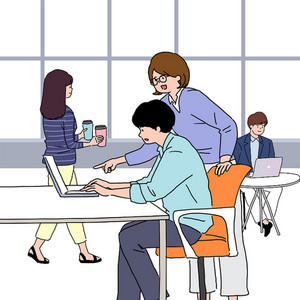
When did buying milk tea for colleagues become one of the most stressful parts of the workday?
Some employees feel trapped in a cycle of mandatory generosity, regularly paying for drinks just to maintain workplace harmony.
We're digging into how peer pressure builds up in flat or traditional hierarchies and whether intentional bonding is really worth the stress.
And, need a boost to crush the weak?
Our special segment, Motivational Monday, is your ultimate adrenaline shot to kick things off strong.
Our podcast listeners can find us at roundtable china on Apple podcast got a question That's keeping you curious from social issues to take and everything in between Let us take a stab at it email us at roundtable podcast at qq .com Emails are fine, but voice memos are always better because it is a listener's favorite now Let's move on to the milk tea topic Ever felt like buying milk tea at work turned from a kind gesture into a silent obligation?
What used to be a fun treat has slowly morphed into a pricey, unspoken rule in some Chinese offices.
Skip your turn and you risk becoming that coworker.
Play along and your wallet cries Boba Tears.
This viral topic has struck a chord online.
Over 11 ,000 internet users have jumped into the chat, pushing taking turns to buy milk tea feels suffocating to the top of Weibo's hotlist. But maybe the real tea isn't just about the drinks.
It's about how we navigate relationships at work, whether you're trying to bond with teammates or figure out how to manage up.
wink -wink, we we discuss how to navigate the workplace hierarchy from interns to execs like a pro.
So how did this happen?
A simple gesture of goodwill to buy milk tea, which is really popular among Chinese young people instead of coffee.
And it turned into a workplace ritual with possible social consequences.
I know, right. I was so astonishing when it felt like this is so alien when I first heard about this like it's supposed to be a good gesture to just simply foster goodwill to team bonding or just feel nice to be around you guys work with you guys by just buying milk tea for say your team but nowadays a lot of the times and especially in company say scenarios more and more people and well employees young employees especially they join this rotation of buying each their milk tea and they are complaining that of course the frequency and cost will escalate as you know the rotation goes on and and turning
this whole nice gesture into an implicit rule rather than just a voluntary treat and yeah i mean we're not talking about how this is a bad thing to treat your colleagues with a cup of milk tea but rather that if you feel anxious if you don't do it that's Just the thing that's been among a lot of the young employees nowadays.
Many workers describe online their feeling of anxiety and social debt, worrying that if I skip my turn, or if I don't take the milk tea from my coworker, then it means that I'm going to be isolated, or if that means I'm not showing enough friend -ship to people around me, I'm not emerging as part of this team, so that's the thing we're talking about today, a lot of those non -task related behaviors becoming performance indicators.
At least for the young employees themselves, they start to grow such type of anxiety over day -to -day colleagues socialization.
I think that's understandable to some extent.
It's kind of a corporate culture thing where every employee feels almost obligated to take imparting these kind of group activities, even though not everyone actually wants to, for example You might not want to drink bubble tea or every day or for that period of time But when you choose not to join these activities You might be considered as like not being a team player or just not filling in as you said isolated this is not only a financial burden for these employees, but also a source of pressure in terms of managing interpersonal relationships and it is creating I think more pressure and it's
not like your work pressure it's about how to manage your personal relationship with their colleagues yeah and milk tea is so fattening everybody knows that right I don't understand why it's still seen as the social currency for maybe Gen Z and China or something like that which is fine but yeah like it's when it becomes not like you know once a season or two seasons I mean once a quarter or two quarters and then you know it happens when it becomes sort of expected oh you know it's that time of the day again first of all that is a lot of if you're buying for the team it's a lot of money yeah yeah
right if it's a small team and it's like a once a year thing or twice a year thing I think people appreciate it a bit more but if becomes sort of like an obligation then I understand it is really annoying and why isn't anybody speaking up on the team?
I bet there are people who are like yeah I belong to the millennial generation only have one or within you know five cups of milk tea I allow myself a whole year.
I'd rather go for coffee.
But but even if it's coffee, I mean, as an older employer, you would know that, I think we've all been there when like I think we should be a little bit more considerate, especially with the younger junior employees.
You can't expect them to pay for this stuff.
Nobody wants this kind of extra expense when you're just entering the work workforce but i suppose for the younger team members they might feel bad if they're well then just don't drink the milk tea when okay am i just being like a really fussy person?
No not fussy I'm just saying that a lot of the comments that's reflected online are pointing to the new hires the new employees the younger ones who perhaps not necessarily know everybody that well And they just simply feel pressurized into conforming and trying not to, you know, being labeled as unfriendly as a newcomer in a way.
So yeah, especially for the younger, new people, then they have the least agency, maybe, they feel.
Maybe they feel to say no to, you don't want to, you know, stand out as the person that is the rule breaker in Immediately when you're joining the workforce, but what about this if your boss?
you know that person's getting paid more than you do is buying a round of drinks for everyone and and Would you feel bad about that nope probably not right?
That's not like every day is this person doing that yeah?
That's kind of a treat from your boss and you would, I think most of the people would happily accept it and treat it as an whatever they call it, team building, or that kind of thing because it is some opportunity that you can actually get to know your colleagues without actually spending a dime.
So this is, I think, reasonable enough to do.
Yeah, so the part where it got everybody talking, it's more like, we're peers, we're working on the same team and somehow people feel pressured to buy a round of milk tea and even, how much is like a cup of milk tea, maybe 20 Yuan or something like that.
It adds up, it really does.
And then folks are finally speaking up but only online and it doesn't sound like they're doing that in the office which is where or maybe this should be happening?
I mentioned the hierarchy of the office because in recent years we've heard of a different type of management that is called bian bing hua gua li, although this sort of flat organizational structure sometimes have been derided in reality as basically not as good as it sounds.
it is a management style where the traditional layers of hierarchy are reduced or even eliminated and I wonder if it was more of a...
most of us are equal, I wouldn't say everybody because you've got, you know, the big boss or whatever, but in a workplace where maybe there is more of this equal footing for people, less layers of management, would people feel less compelled to join some of these milk tea buying activity or some of these things that have become silent stressors for people.
I mean, when you mentioned the flat organizational structure in the company management or team management building, I think it really matters because such structure allows a bigger room for communication and with a more opened up communication environment, whether you're a newcomer or if you're say an older employee, more experienced employee, you will feel that it's your right to speak up in the face of all the stressors that might cause your anxiety such as joining the rotation or not.
And also in flat management system, the employees they're usually given more freedom and responsibility and the focus is on collaboration and mutual respect.
So really social rituals like milk tea rounds might just feel less mandatory in that case.
And we talked about how, we call the flat organizational structure.
It doesn't mean that there is no hierarchy at all.
It's just that it's less of a priority in managing and communicating with each and every one in that system.
So in that case, I would say it's a more ideal way for a small organization to function.
Yeah, like with startups, usually you have a very small group of people who each are doing the jobs of three people and then they really want to pull this company up from the ground and then you can sort of understand what you're saying, Yu Shen.
What do you think, Yu Shen?
Especially in, let's say a young company with a lot of young employees in this company.
Or just simply you and your colleagues can communicate openly, and you have to.
I would say healthy corporate culture.
Everyone understand and know how hard it is to earn money, and I don't think a lot of people would allow that kind of financial burden to appear in this kind of corporate culture.
I wouldn't say every kind of company I think when I was like first getting to a company, and I actually You know proposed that I can you know buy everybody a drink as a kind of gesture gesture as How like get to know everybody?
Better and people are saying no you should not you were just getting to the workforce Yeah, your young you're the youngest on the team.
You should not be paying for this stuff If there is a treat like that, it should be the, let's say, the oldest one or the supervisor's or something like that.
So, I would say it's more about the corporate culture.
If the corporate culture is healthy enough, it wouldn't allow this person or this kind of phenomenon to happen.
That's true, because even in the flat management structure, the pressure to participate in social rituals, such as buying milk tea in rotation, can still exist. it doesn't necessarily have so much to do with the structure itself but more about cultural norms within that workplace environment.
So yeah, absolutely agree with you on that, you should.
So it's more like peer pressure in a way but as an older person on the team, sometimes when, you know, we've had a long day, we've worked so hard and we achieved a sort of quarterly goal or something and without getting like too personal and stuff, umm, for example I'm not married, I don't have a kid to raise and I don't want to have a good time with my colleagues, so maybe if I'm like buying people around or drinks or whatever, I don't expect like returns.
This is like, let's have some fun because, because it's, it's okay for me.
And I know for like, if you have like new parents on the team, I'm not expecting them to pay for this because I know they have a base B to raise and everybody knows how expensive that is, you know, in a big city.
But sometimes, and then people say, oh, but you know, um, you think it's okay and Maybe you have goodwill but the people on the receiving end might feel the pressure to reciprocate and you're creating pressure for the recipient.
So let's just not have milk tea then.
Or just have it every once in a while, especially, when there's something to celebrate together as a team, not that every day on a daily basis and then there's the thin line of whether it caused other people to feel anxious.
Yeah. That's the thoughtful way.
If the anxiety is raised and people feel that they need to give the same or similar type of gesture just so that they be treated equally as a team member then nah, I don't see that as necessary.
Yes, right so quick one last comment from you guys.
How can we eliminate this peer pressure?
If that's not possible, how do we deal with this in a more healthier manner?
Yeah, from my perspective, leaders, they're very important.
They should acknowledge the pressure that social rituals like these can create and establish clear guidelines such as making treating others optional or setting limits on personal spending or creating a company funded budget for group activity.
As I said, maybe just the supervisors can, you know stand up stand up and treat others.
And also I don't think our supervisors very happy listening to them.
They're probably not listening.
Leadership here here round table got something to voice.
But on top of that I think yeah it's very important for whichever say management type is being adopted in your very specific case it's very important to foster open communication among whichever hierarchy of people.
So yeah, once that is done, people would need to worry about things like this and more.
Coming up next, Motivational Mondays!
Yu Shun, what do you have for us?
Yes. So May the 12th 2008, which was 17 years ago a powerful 8 .0 magnitude earthquake hit Wenchuan, Sichuan in southwestern China.
This disaster swallowed up beautiful landscapes, tore apart millions of once happy families so many lives were suddenly lost and the whole country was filled with grief.
Time has helped heal the wounds and brought new beginnings.
17 years have passed and Wenchuan has grown strong again.
Now, we honor life and keep moving forward with strength, and many kids who lived through the Wintron earthquake have grown up to become soldiers, firefighters, and doctors, and many people from Wintron have stepped up in other disasters to help people in need just like others helped them back then.
So it's been seventeen years, we still remember not to reopen old wounds, but to keep that spirit of resilience alive.
we still remember how the whole country came together and we tried to live each day to the fullest. Back then we stood together through life and death.
Now life continues and thrives here.
It's incredibly moving.
And I still remember when the earthquake happened.
It was, of course, you know, a tragic event for the whole nation.
and also at the same time we had the Beijing Olympics coming up soon after that so it was I think also a defining moment for the folks born in the 1980s just as one example of the many generations in this country feeling that you had to sort of pick up the torch and pass it forward and really shoulder responsibility and really there's much you can do for the country.
And it's humbling to hear how the strength and resilience born from natural catastrophes like this one have led to such powerful transformations of people's lives.
And these survivors didn't just rebuild their own lives.
They became pillars of support for others.
So also thank you very much you shouldn't for bringing this up on this very special day and This is a little bit of a Sort of 180 shift in the tone, but it's much like how music can be a source of healing those folks used these years and their hard work and a vision for their lives to heal to do good for others and uniting us in this moment, let's say, of joy.
Pain and everything in between.
And I like to bring to your attention recently on May the 1st, Beijing's own band, New Pants or Sinkus, returned to worker's stadium after a six long year departure.
But this wasn't just homecoming, it was a city wide reunion, a moment where a generation, the kids of the 80s and 90s came back to the heart of their youth, we once shouted their lyrics in school corridors through the tangled wires of CD and mp3 players in sweaty live house crowds and now from the stadium stands we've grown up sure but those rebel hearts still beating loud And this time I saw something kind of special parents bringing their kids dancing side by side New pants embrace them all because growing up doesn't mean growing out of the music that made you and I would like to share One more
thing about new pants why I am obsessed in sharing with you guys This man, they mocked the plastic world and sang for what's real, and it was our protest, our poetry, our pulse of our generation, an antidote for the emptiness of city life, forged from nothing but honesty with a sneer.
And that honesty made 40 ,000 voices burn through the sky, word for word, note for note.
So on this motivational Monday if life feels too artificial too loud or too lonely Remember this you can still burn bright by being authentic no matter what you're doing for a living You can sing your truth until others join in and I feel that's what I've been doing on this show And let's wrap up today's show by playing the song that fits this moment SHENG MING YIN NI AR HUA YUE Life burns bright because of you by new pants.
And that brings us to the end of today's show.
Thank you so much Yuxian and Yuxuan for rejoining the discussion.
I'm Hai Yang and we'll see you next time!