From The New York Times, this is The Interview.
I'm Lulu Garcia Navarro.
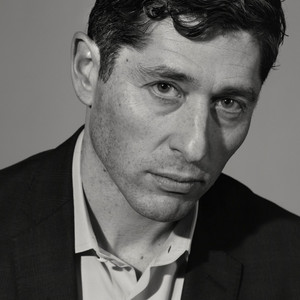
Minneapolis Mayor Jacob Fry knows that what is playing out on the streets of his city will have profound implications for the whole country.
Since December, there's been an influx of thousands of federal agents into Minneapolis as part of what the Department of Homeland Security has termed Operation Metro Surge.
And Fry has had to shepherd a city riven by protests, infuriated by the killing of two American citizens at the hands of ICE and CBP, and shaken by aggressive immigration raids that have left some residents afraid to leave their homes.
I spoke to Mayor Frye on Thursday afternoon, not long after border czar Tom Homan, who's been dispatched to Minneapolis, promised to de-escalate the situation there.
He said in a press conference that there would be a drawdown of agents, only to have President Trump later deny that there was any plan to pull back.
Meanwhile, protests against ICE have now spread nationwide.
And congressional Democrats are pushing for reform of an immigration enforcement agency that they say is out of control.
For its part, the federal government is promising to crack down on the protesters and the Justice Department has opened an investigation into Minnesota elected officials, including Mayor Fry and Minnesota Governor Tim Walz, for what they allege is a conspiracy to impede federal immigration agents.
While there are many differing opinions on what is happening in Minneapolis, it's clear that this confrontation between the federal government, a state and its people is an inflection point.
For the view on how this conflict is playing out on the ground and where it might be headed.
Here's my conversation with Mayor Jacob Frey.
Mayor Frey, thank you so much for being here.
I really appreciate you taking the time.
We are here in Capitol Hill, normally not where you find yourself, but you obviously have been taking meetings today.
You've been at a mayor's meeting, and I want to talk to you about that in a little bit.
But I actually want to start our conversation by asking about a phone call that you had with President Trump earlier this week.
I'd love to get your sense of that conversation and if you can just describe that call to me.
First off, never in a million years did I think that I would be having a phone call with President Trump about this large-scale invasion that we're experiencing in the city that I love.
So none of this feels normal.
Yeah, I had a reach out from the chief of staff in Susie Wiles saying that the president was looking to talk to me.
We had already reached out, maybe a couple of weeks prior, looking to have some form of audience with the president so that we could explain how damaging Operation Metro Surge has been to Minneapolis and continues to be.
A call was scheduled.
Look, it was a relatively collegial conversation.
He was flattering, certainly, at first.
Flattering how?
What did he say?
He said that I was impressive on the television.
In different words, I'm sure.
He watches a lot of TV and watches people's performances.
And what did you say?
Thank you.
I said, thank you.
I said, well, I must've gotten it from my ma, who is from Queens.
And of course we talked about Flushing and Fresh Meadows, where my mother grew up.
And we talked just initially about the East Coast.
And then of course, I made a clear ask that Operation Metro Surge needed to end.
And, without getting into too many specifics, I will tell you there was a broad recognition that the present status is not okay.
What is happening needs to change.
And, of course, there were some changes made, certainly in terms of who is leading the operation in Minneapolis a shift from a combination of Bovino and Noem to Hohmann.
But as far as massive changes in this operation, I'll believe it when I see it.
The troops and the federal agents need to be drawn down entirely.
This operation needs to end because it has been devastating to the people that I care about and I love in my city.
And you imparted that message to the president at that time.
Of course.
The president initially said you had a good call and then he was pretty complimentary right in public.
But he posted that you were, quote playing with fire for not being willing to enforce federal immigration laws, which sounds like a warning.
I mean, how did you take those words?
We were never going to agree and we have not agreed to enforce federal immigration law.
Why?
First off, that's not our job.
I want our police officers doing their own work, not somebody else's.
I want our police officers doing the important work of keeping Minneapolis residents safe, responding to 911 calls, stopping carjackings, preventing murders the work of a police officer in a major city.
You know what I don't want them doing?
I don't want them spending a single minute hunting down a father that just dropped his kids off at daycare, who's about to go work a 12-hour shift, who happens to be from Ecuador.
By the way, this is not some wild out there like radical leftist principle.
This is a concept that even Rudy Giuliani as mayor of New York City adopted.
Why?
Because he wants everybody, including Giuliani, people that are undocumented, to feel comfortable calling 911 when something goes down.
If you see a crime, call 911.
Rudy Giuliani, the radical leftist.
Rudy recognized that when he was mayor, and it's a concept that I think mayors around the country also recognize now.
After that call, Border Czar Tom Homan was dispatched to Minneapolis to replace, as you mentioned, Gregory Bovino, who had been running the operation.
And Tom Homan gave a press conference where he described interactions with local leaders, including you, as moving in the right direction.
The word that has been used is de-escalation.
And I'm unclear what that de-escalation actually looks like, because what the federal government has been asking for is that cooperation.
You're saying it's not going to come.
So what exactly is it going to, practically speaking, look like, if indeed things are going to de-escalate in your city?
Well, let's talk about what cooperation could look like.
We do cooperate with this federal administration and with previous federal administrations on keeping people safe in our city.
So if the goal is to drive down homicides and go after murderers, let's do it.
You know, we have worked with the FBI and the DEA and the ATF and the U.S.
Attorney's Office and successfully driven down crime and specifically shootings to record lows on the north side of Minneapolis.
We're willing to do that work right now.
If they want to have strategic and thoughtful work that is targeted at criminals, the answer is yes.
But why does this have to be about immigration?
Why does it have to be about whether a person has brown colored skin or not?
Well, the point that they're making is that this is about immigration enforcement, which is obviously part of the federal government's job and always has been.
So, again, I guess the question is, I mean, you've talked to Tom Homan now.
What are they asking for and what are you willing to give and vice versa?
What are they willing to concede?
As far as de-escalation goes, they are saying that they will draw down the resources and personnel that they have located in our city which, by the way, is ridiculous and incredibly disproportionate.
We've got 600 police officers there.
They have between three and four thousand federal agents, ICE and Border Patrol.
They are saying and I'm hopeful that they are being honest and candid that those numbers will be significantly drawn down are saying that the way that ice and border patrol has been conducting themselves will change dramatically.
So you know, not these kind of marauding gangs of guys just walking down the street indiscriminately picking people up, but having more of a targeted operation.
And look, you know, this is not about ice doing regular ice stuff.
What we have seen feels like an invasion.
I'm sure you've heard that a judge has said that ICE has violated nearly 100 court orders since its crackdown began in Minneapolis, which makes me wonder if you think you can enforce any agreement really with Homan and the federal government, considering that context.
That's the most dangerous question that anybody can ask, because we are in a world of hurt that goes way beyond any individual safety.
If we are talking about a federal government completely ignoring court orders.
This is a foundational principle of our republic, and the battlefield that we fight on as municipalities and cities around the country isn't one of warfare.
It is one of the law.
The battlefield that we fight on and the battlefield that we are gonna win on is the law.
A precondition of that necessary fight is that once the law has been determined and a court order comes down that it's going to be followed.
And so this is something that I get really intense and really pissed off about.
This is not optional.
You follow the law.
A court order comes down.
That's what this is about.
And we should have everybody, Democrat and Republicans, losing it.
It should be deeply concerning, not from an ideological perspective, but from an American one.
What are the options if they don't do that?
The options you don't even want to think about.
I mean, I see where you're No, just I'm curious.
And again, I'm not criticizing it.
This is the concern.
And I mean, I don't even want to think about what it means if court orders themselves are literally disregarded.
I want to take a step back and talk a little bit about how we got to this moment.
Since President Trump came back into office, ICE and the CBP have arrived in many cities, with differing outcomes.
What was the moment that you realized that Minneapolis was becoming the face of the fight between the federal government and blue states?
I think it's a realization that is still occurring today.
We all get stuck in the local morass of our local politics and our daily lives.
And obviously you know that something wild and unconstitutional is happening in your city, but you don't necessarily know that you're the focal point of all of it.
And I came here today, went to the U.S.
Conference of Mayors, and they all know what's going on.
I talked to a bunch of senators and they're very clear eyed at what is taking place in the city that I love.
Uh, and so I mean I'd say it's a gradual realization, but a lot of that realization came in just in the last several hours.
Is to you know the full scope?
Not that I didn't know it, but it hits you in full.
Um.
The other epiphany or realization, I guess, came when we started hearing about a massive deployment coming to Minneapolis.
At the time, it was to go after our Somali community, which I found then and find now to be completely nuts.
This was off the back of the scandal over fraud at the state level.
That's right.
I remember first off just thinking there was this massive disjoint.
Go after the fraudsters.
There was a substantial amount of fraud that has taken place in Minnesota.
To be very clear, it's real.
It happened.
And in fact, one of your aides was prosecuted for that.
It's very real.
And when fraud like that takes place, you investigate, you charge, you arrest.
And yeah, the fraudster goes to jail as an individual.
They go to jail as an individual.
You don't hold an entire community or, good Lord, an entire city accountable for the actions of some.
You hold the individuals accountable.
And there was this attack, a very broad scale attack, specifically on our Somali community.
And I speculate, and I'm speculating, That somebody from pretty high up in the Trump administration said go to Minneapolis, arrest and deport a bunch of Somalis.
And there wasn't the proper pushback on the directive, only for them to get here and realize they're American citizens.
They're here legally.
They got here on a plane.
They got to Minneapolis on Delta.
And so...
Obviously, then they diverted and started targeting our Latino community and our Southeast Asian community.
And next thing, you know, you've got thousands of federal agents in Minneapolis, not around safety, not even around immigration, but to create a political narrative, to have this political retribution instituted in a city where you've got a local mayor and a governor that do not agree with the president's agenda.
I want to turn to your city and the people of Minneapolis themselves.
We've seen a real network of protests spring up.
Governor Tim Walz has called on people to videotape ICE agents.
And that is, of course, legal.
But do you agree that politicians should be encouraging that?
To tape what's going on?
Look, sunlight is the best disinfectant.
Our police officers have body cameras.
They like using the body cameras because it also protects them.
If they do the right thing, they know that they're going to get supported and they know that it'll be visible to both their bosses, the chain of command and the broader public.
So do I support people actively recording what's taking place in public?
Yeah, I support that.
Absolutely.
I mean, it's called in public for a reason.
Imagine if we didn't have some of these recordings.
Imagine if the shooting that took place recently of Alex Preddy was not recorded for everybody to see.
Then we'd be running with these garbage narratives that are created by the federal government that are false, and we'd all be living in a lie.
I certainly don't want that.
I don't think anybody would support that.
Yeah, those videos have indeed been crucial.
It's how many people saw what happened to Rene Good, Alex Preddy.
But critics accuse the protesters of impeding ICE operations.
And I'm just curious what you think about the tactics that have been employed.
Well, there's a difference between impeding and videotaping.
Haven't we seen both?
Yes, we have.
What I am advocating for, and what I believe Governor Walz said, was by all means, whip out your cell phone and take a video.
The action of having something recorded is not a physical impediment, perhaps a moral one.
And I want that moral impediment there.
One of the things that also struck me about the protest movement is how it's really shown the limits of what politicians can do in some ways, especially at a local level.
I mean.
Earlier this week, Anderson Cooper from CNN interviewed Stella Carlson, a woman who captured video of Alex Preddy being shot and killed, and she said, and I'm quoting here I think people are feeling like there's nobody here to help us.
There's nobody who can step in to protect us.
What would you say to that?
Well, first let me applaud the tens of thousands of people in Minneapolis and in Minnesota that have been just standing up for their neighbors.
And perhaps that's a phrase that gets overly used standing up for your neighbors, but they are doing it in such beautiful form.
And whether that's encouraging constitutional conduct through videotaping and transparency, or that's taking your neighbor to the grocery store that is terrified to go outside, or collecting food and giving it to them, or stand and watch outside of a daycare.
I mean, we have seen so many people stand up for their neighbors and I've never been prouder, Never been more proud to be part of Minneapolis.
And of course, there are limitations on what we're able to do at any level of government.
And there's also those limitations are not just baked in under the law.
It's also baked in on the practical reality of where we find ourselves right now.
Explain.
Not going to outgun the federal government, not to mention that would be wildly dangerous for the very communities that we want to protect.
Nobody wants that.
Now, fortunately, we don't need to fight in a physical format.
We don't want that.
Nobody wants that.
We can fight in a legal one.
We can have the law be the court and the battlefield.
And we believe that we're on the right side of it and we believe it's a battle that we're going to win.
You know, a lot of the focus has been on what's happening to American citizens in Minneapolis.
But of course the government says that this is about immigration and rounding up those who are here illegally.
Do you know how many people have been arrested and how many have been actually identified from the people living in your community?
I mean, what do you know about who's been rounded up?
Not enough is the answer.
No, I do not know.
Look, we get regular report outs.
We have sit reps.
Oftentimes multiple times per day, where we get readouts of those that have been reported through 911.
We get readouts of interactions that we've seen or heard about on the street.
To say that it is disconcerting would be a massive understatement, but do I know the precise number of people that have been impacted?
No, it's way too many.
Staying with the protesters, though you know, Homan at his press conference promised that justice is coming.
I've heard those on the right describe the protesters as a mob.
We've seen the words domestic terrorist use.
We know the federal government has been gathering information on the protesters.
What do you think happens with all that information?
What happens next?
I don't know that I can predict entirely what happens next.
We are big proponents of First Amendment speech, and in Minneapolis, people live by it.
I mean, they are First Amendment enthusiasts.
Protests are a fairly normal thing.
And your First Amendment rights stop at the next person's nose.
And we've made that very clear and where people have crossed the line and it has happened, including last night.
They're arrested.
There's consequence because you can't have that in the city.
But we are seeing the Department of Justice weaponized against people that have done nothing wrong.
We are seeing conclusions drawn from interactions that took place that were entirely peaceful.
Alex Bredy was filming with his camera.
He was trying to help a woman that was in need.
At no point Was he threatening federal agents during that interaction?
And nonetheless, they try to concoct a narrative that just is false.
I just want to also note that there's been new videos circulating that show Alex Preddy spitting at kicking an ICE vehicle 11 days before he was killed.
I mean, do you think that changes anything about his case?
Not the killing.
Are we saying that something that happened 11 days prior justified a fatal shooting 11 days later?
That doesn't make a lot of sense.
You know you have had a pretty difficult run as mayor.
This is your third term.
Since you became mayor in 2018.
You have had to deal with a global pandemic.
Then, in the midst of that, of course, george floyd was killed in minneapolis, and you know it struck me.
At that time you got a lot of criticism from the more progressive left for refusing to abolish the police department, which became a real rallying cry.
Yeah, And your position has aged pretty well politically because the Democratic Party, writ large, has sort of moved away from that position.
And I'm wondering if that's on your mind at this moment as there are calls to abolish ICE.
Yeah, at least from my political past, I have a history of being right a little bit too early.
And obviously over time, the position that I had at the time, which was deep reform and change to a police department that needed it, is now the position that virtually everybody holds.
And by the way, they have reformed and they have changed.
And they're getting credit from some of that police department's biggest critics traditionally, especially when you look at the juxtaposition between the way they act and have been acting and the community relations that they've built out and the way that ICE is conducting themselves.
And now, of course, there's this call to abolish ICE.
And how do you feel about that call?
I think we're talking by each other in a massive way.
I have heard righteous calls for a top to bottom shift in how ICE is operating and they are right.
I have heard that some of the awful conduct and personnel that has permeated this ICE department needs to get uprooted and kicked out, and they are right.
I've heard calls that they need to shift ICE from the Department of Homeland Security over to the Department of Justice, and I think there's a lot of merit to that as well.
But unless the argument is that we should get rid of immigration law entirely, which I do not agree with, then you do need some mechanism to enforce.
You obviously need to change the personnel and the conduct, which has been egregious.
Outside of that, do I favor just getting rid of all immigration and customs enforcement?
No, I don't.
I want to turn to you.
And by the way, I'm not in charge of these decisions either.
I fill potholes.
I'm a mayor.
And I try to operate in reality because as mayors, we operate in the reality business.
And as an executive of a city, we make decisions that have an impact.
You can't just sign on to catchphrases and have that be an effective way of governance.
After the break, I asked Mayor Fry about what it's like to be federally investigated.
Look, I'd be lying if I told you that it wasn't disconcerting.
Of course it's disconcerting when you've got the Department of Justice going after you.
Of course it is.
It's garbage.
It's complete BS.
Earlier this week, Attorney General Pam Bondi told Governor Walz that he could help bring the situation to an end by turning over voter registration records.
I mean, what do you make of that?
What do you think is going on?
Why are those two things connected?
Look, that is wildly unconstitutional.
That serves no place in America.
We should all be standing up and saying that's not okay.
And you don't need to take my word for it.
Literally listen to what they're saying. active threats like turn over the voter rolls or else.
Or we will continue to do what we're doing until you turn over the voter rolls.
Now, that's not something you can do in America.
Now, let me also just note that you've heard, what's his name, Stephen Miller.
I'm going to screw up the exact phrase, but he's talked about this iron law that guides the world.
He's talked about how essentially might is right.
That's what it is.
Might is right.
Might is right is apparently a phrase that he believes in on the international level, as it applies to Greenland, Venezuela.
But is this also a ramification that is being carried out in cities around the country, where the federal government can use its awesome and incredible military power and strength to roll over a city and make local politicians obey on locally enacted policies?
Is this the kind of thing where they can carry out a national plan by coercing localities to do exactly what they want?
That's the kind of bullying and intimidation that is deeply concerning.
I mean.
The undercurrent to all of this is that the Trump administration has opened a criminal investigation into you and Governor Walz, alleging that you conspired to impede federal agents.
As far as you know, where does it stand?
I don't know.
There has been a subpoena that was sent to the office of mayor and that we would have a federal investigation targeting me and Governor Walz and others for doing something.
That is a core responsibility, by the way of mine.
It's written into our city charter that I have an obligation, when I sign that document, to speak on behalf of my constituents.
So if that's the charge, then hey, yeah, I do speak on behalf of my constituents.
Have you gotten a lawyer yet?
Yes.
Are you afraid that this could end up with you in prison?
Look, I've got faith in the institutions that we have in America.
And at the same time, look, I'd be lying if I told you that it wasn't disconcerting.
Of course, it's disconcerting when you've got the Department of Justice going after you.
Of course, it is.
It's garbage.
It's complete BS.
I am confident.
And at the same time, of course, I have concerns.
I'm like, I'm a dad.
I've got a six-month-old.
Actually, today, I believe she's six months old.
Congratulations.
Thank you.
I've got a five-year-old.
She largely doesn't know what's going on right now, but someday we'll tell her.
And when we do.
I want to be able to tell her that our great city and I, as mayor, we weren't intimidated by this.
Mayor, I can hear how much you care about, obviously, your city.
And this federal operation has clearly terrified many of your constituents, regardless of their immigration status.
Some have not left their homes in weeks.
Children are staying home from school.
People are too afraid to go to the doctor.
Even if there's a drawdown of federal agents and it goes back to the way it was before, rebuilding trust is clearly going to be a huge task.
How do you plan to do that?
Keep in mind that we've been building trust in this city, both since 2020 and even before.
We've been building trust with our police department.
We've been building trust in government.
We've been trying to do the necessary reparation to Make sure that the precision of our solutions match the precision of the harm that was initially inflicted.
And so look, obviously there's a hell of a lot of repair that needs to be done with the trust that has been damaged by this federal government.
And at the same time, you know, I've heard a lot of renewed confidence in our police department, for example.
You know, this is a department that, needless to say, has not always been an emblem of community trust, but people are seeing the juxtaposition between the way they're handling things and the way that ICE is handling things.
There are so many elected officials locally and in our state that have stood up in ways that are inspiring.
And the biggest inspiration obviously comes from people.
I get teary every time I talk about this, but it's really amazing the way that people have stood up for each other.
Minneapolis has been a place of heartbreak in the past, but the kind of grit and perseverance that they have collectively shown, not just with words, both really clear actions, is beautiful.
And the pride that is emanating from a city that hasn't always felt it is something that is special in this moment.
I mean, these amazing people in Minneapolis are just showing so well and it's who I know them to be.
You know, in my lifetime I have not seen such an explicit fight between federal and state authorities.
I think people see this and it makes them worry about the state of the country.
Governor Walz gave an interview this week to The Atlantic where he compared what is happening to your city to that first battle of the Civil War at Fort Sumter.
And I'm just wondering what you make of that comparison.
It's terrifying.
I don't think he's saying that the Civil War is going to happen.
I think what he's saying is that a significant and terrifying line is being crossed.
And I would agree with that.
We can't go down that route.
We need to unify as a country.
And I think that's exactly what so many people are calling on us to do right now.
A lot of it is also recognizing the history from which we've come and not to turn our back on it.
It's one of the oldest cliches in the book to see, you know, we're a country of immigrants.
And you come to this country with a recognition that there is that kind of freedom and there is this sort of stability where you don't have a fear of a war being fought based on a different ideological perspective.
So I think it's on all of us to stand up right now to do right.
It's on us as democratic mayors to show that democratically run cities can work.
It's on us to take care of these basics and do them very well.
And it's on the whole country again to love this nation more than you love your respective ideology.
Things have gotten so unbelievably political and ideological over the last 15 years.
Politics has changed dramatically since I first entered in, and it's not like I've been in politics my whole life.
And we need to find a way to prevent this pendulum from violently swinging back and forth.
Mayor Jacob Fry, thank you so much.
I really appreciate your time.
Thank you for having me.
That's Mayor Jacob Fry.
To watch this interview and many others, you can subscribe to our YouTube channel at youtubecom slash at symbol, the interview podcast.
This conversation was produced by Seth Kelly.
It was edited by Annabelle Bacon, mixing by Afim Shapiro.
Original music by Dan Powell, Rowan Nemisto, and Marion Lozano.
Photography by Philip Montgomery.
The rest of the team is Priya, Matthew Wyatt Orme, Paola Newdorf, Jobel Munoz, Amy Marino, David Herr, Whitney Shefty and Brooke Minters.
Our executive producer is Alison Benedict.
I'm Lulu Garcia-Navarro, and this is The Interview from The New York Times.