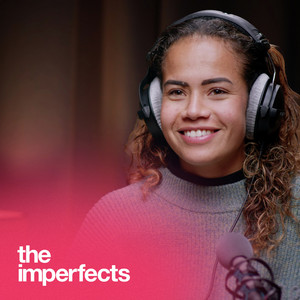
This episode of The Imperfects contains a discussion involving suicidal ideation and self-harm.
If this is something you don't want to listen to right now, then please do skip, but we encourage you to come back when you're ready.
We at The Imperfects would like to acknowledge the Wurundjeri people of the Kulin Nation as the traditional owners of the land on which this podcast was recorded, and we extend our respects to their elders, past and present.
Mary Fowler Day.
There's Fowler, it opens up for the shot!
Oh!
To have this perception of myself that was so solid and so strong, and yet I did still get to that dark place.
I never asked for help during those times.
I didn't want to get angry at myself when I did self-harm.
I look back and I see a younger version of me who thought that that was the right thing for her to do in that moment.
And I'm not going to judge her for that.
There's a lot of pressure put on the person experiencing it to speak up and ask for help.
But I would love so much if people would work on their skills in being able to hold conversations that are heavy.
For a young person to see someone with your success going through things that they're also going through like that is.
That's a way better role model in my opinion.
Not just young people and old people.
And old people too.
This old person.
Us old people.
It's okay, people are messed up.
Maybe you're a little messed up too, and that's fine.
Messed up people have their place in the world too.
The Imperfects invites you into a very safe place.
A place where we share without judgment and drink heaps of vulnerability.
Grab yourself a cup.
This is the Vulnerability House.
Oh, boy.
Oh, boy.
Oh, girl.
Oh, well, yeah, okay, sure.
Gee, why did you throw me in front of the bus?
Come on, mate.
Oh, girl, thank you.
Well corrected.
I kind of believe you, right?
What a pig.
Mary Fowler Day.
It's Mary Fowler Day.
Not officially.
It hasn't been marked on the calendars yet, but to us it's Mary Fowler Day.
It's just so exciting, Mary.
You're coming to us live from Manchester.
I am, yes.
Thank you so much.
It wasn't a cue to sing the Manchester song or anything.
You didn't have to do anything.
That was perfect.
Well, Mary, obviously legendary Matilda.
There's so much to talk about today.
This is a vulnerability house.
You'll be picking a card soon, Mary.
But for the one or two people who've been in a coma for the last I don't know 10 years Hugh, maybe we could explain to that person of two people who Mary Fowler is.
Mary Val is so much more than football, which is pretty astounding, because her football career is incredibly impressive.
Born on Valentine's Day in 2003.
Yes, she's only 22 years old and, as everyone's about to find out, definitely the wisest 22-year-old in the history of the world.
Mary grew up playing football with her four siblings in Cairns.
Mary was selected to play for the Queensland State under-12s team.
At only 10 years old, and by 15, Mary was named in the young Matildas under-20s team.
Mary became the fifth youngest player to ever debut for the Matildas.
On her 17th birthday, Mary moved to France to play for Montpellier.
Is that how you say it?
That was pretty good.
Pretty good.
Not great, but it'll do.
I think the accent was a little bit off.
Montpellier.
That's an accent.
Oui, oui, good.
Oui, oui, good.
Yes, good?
Yes good uh, where she remained until signing with manchester city in june 2022.
Mary has played in two olympic games as a part of the matildas team, in tokyo and paris.
Perhaps most famously, mary was an invaluable team member during the 2023 world cup, where she played with the fearlessness that made the whole country believe.
Mary embodies the spirit we hope for in our heroes humble kind, resilient and beautifully real.
Mary, we are so excited to have you with us today.
Just listening to your bio, does it astound you how much that you have achieved in your life so far?
I mean, it makes me feel awkward when I hear it.
Like a lot of those football moments, like I probably wouldn't have celebrated as like milestones.
And so then when you read it out and it's like, oh, this is Mary.
I'm like, oh, it's like, I probably wouldn't even like look back and see myself like that.
Like, oh, I've done that really.
I'm so bad at like reflecting and being like, oh, you actually did that well.
And that's pretty cool to do that at that age.
It was just always like the next thing for me to do.
So yeah.
Whenever I like hear that stuff, I'm just like I downplay it so much that when other people tell me about it I get really awkward.
But it was really nice.
So we started really well.
So there's been oh boy and that and the bio.
We were just like two strikes.
Well, I mean, I feel like the I'm sure you've talked ad nauseum about the 2023 World Cup, for good reason.
Do you mind if we talk a bit about that?
Because I mean for so many Australians that is really the most recent huge, exciting Australian sporting moment.
How do you reflect upon it?
I mean, there's so many good things to remember from that time.
The team that we had there was such a nice team.
Everyone got on so well that I think that made everything so much more enjoyable, because you wanted to train really hard.
And then, on game day, you wanted to just make sure that you were doing what you could to get the best out of yourself and help the person next to you do the same.
Then, even like outside of it, I have a lot of good like personal memories with like friends and with meeting Nathan and then being able to see the amount of people that came together to watch us and support us.
Like that was a really surreal feeling and amazing to see would give you goosebumps.
But I don't think it was until afterwards that we really realised how many people were watching us and coming together.
Like it was from hearing the stories of other people's experience in watching the World Cup that you got to really start to understand the amount of people that were actually coming out.
So it was really cool.
Like I don't have anything bad to say about that experience.
Like it was like fairy tale, like everything went really well.
Obviously we didn't win, but I think we got...
At least me personally.
I think I got so much more out of that tournament than I maybe would have gotten in the past if I was only focused on seeing it as a successful tournament, if we won it.
Well, we are in the vulnerability house, so we do have the deck of cards here in front of us.
How do we do this with?
We've never done this before.
Well, no.
So for new listeners to the show, I'm sure there's many for this episode.
So, yes, this is a vulnerability house.
And so we have a deck of cards which our guests usually pull from.
And on each one of these cards there is a question which is designed to invoke some sort of vulnerable story or a memory from your life.
And so all we ask is that you pick three cards, read them out, and if one of those cards speaks to you and it resonates with you in some way or reminds you of something you'd like to talk about or share that's vulnerable, then we welcome that.
But because the cards are with us and not in Manchester.
You find Mary, if I just pull out three cards, read them out, and then you can let me know which one, if any.
And if none of them are good, then we can just keep picking cards until you like one, basically.
There's no rules.
Yeah.
Okay.
Sounds good.
Okay.
Here's what I've got.
Okay.
I've got three.
First one is, if you couldn't fail, what would be your next career move?
Next one is, what event from your childhood changed you?
And the third one we've got is, what do you worry about most?
Well, I have a lot to say about the last one because I'm a big overthinker.
You've come to the right place.
If you want to have a lengthy podcast, yeah.
It could be the name of our podcast instead, The Overthinkers.
Yeah, definitely.
Okay, well, yeah, well, that's great.
What do you worry about most?
What does that bring up for you?
I think something that often like pops into my head, that makes me at times like spiral a bit, is the idea that the way that I would like people to experience my presence doesn't line up with the way that they actually are.
And it's this idea of me like wanting to be like a kind person and wanting to be humble and loving.
And then like I just think oh well, what if, like people, like when someone asks them about me, they say something completely different?
And I'm just so oblivious to that because I'm just not self-aware enough to realize that.
So you're sort of saying that you feel like there's a disconnect between the person that you are on the inside, or you're worried that there's a disconnect between the person you are on the inside and the way that people experience you.
I think that because I am in the public eye and I do get articles written about me and people are able to have their opinion about me.
I think it's probably made it a bit harder, like it's made it harder, but also, you know, it's made me have to be a bit more strong in wanting to figure out whose opinion I actually want to listen to.
But it just gets into my head a bit more that I'm like oh, am I actually being true to what I like?
Tell people that I want to be like.
I was just thinking like for people who live a life that isn't in any kind of limelight, so they don't have any external judgment, it's not really a problem that you have to face on an everyday level.
You sort of go through the world behaving say, seeing someone at a coffee shop, then seeing someone at the school drop off and then returning home, and you can kind of move forward, thinking well, I'm never really going to hear how that interaction went or how, And have that come back to me.
Can you remember what it was like when you first... Because you've been... I mean, you're only 22.
You've been a sort of household name, or at least famous for being amazing at football, for quite a long time now.
Can you remember what it was like or a time... The first time you're like, well, this is surreal.
This is weird.
What's happening?
I never really had... positive feelings about being in the spotlight until the World Cup.
Whoa.
Because I think, like you know, as a young person, like going through your teens, like you're already so in your head, about
What the heck's happening?
Like your body's changing and you're like, I don't know what to think of myself.
I don't know if I like myself.
I don't know if people like me.
And so you already have all these thoughts and you're trying to figure them out.
And then I'm like, oh, I'm making my debut for national team.
And now I'm in the media as well.
And now other people have their opinion about me.
Um, and I think the expectation I put on myself, that I thought others were also putting on me, that I had to be like this really um, perfect role model for people, because you know now people are watching and you know kids are looking up to you.
And I think I just really struggled with the idea of kids looking up to me and me having to be this really good role model for them, even though I didn't really know who I was trying to be.
So I think for a long time I was like, I don't like being in the spotlight.
I don't like having this attention.
And then, when I got to the World Cup, it was probably the first time where I felt like I was being celebrated for what I was achieving.
And I remember one of the hotels we stayed at during the World Cup.
Adidas had put the massive image of me on the side of a building.
I think Caitlin Ford was also on one of these buildings.
And it was just like a surreal thing to see that, like I'm like why, why would you want to put my image up there?
And like if I was to ask other people, they'd probably be like yeah, like you deserve to be up there.
But I think I struggled to feel at times like I deserve to be where I am.
And being there at the World Cup was like It just was like a really nice time to be able to sit down and feel like I'm exactly where I'm supposed to be because of the decisions that I have made.
And I can just enjoy being in a place where I do get a bit of recognition and I do get some public attention because of what I've done.
And I do like try to see the other side of it, where when you have someone that you look up to, it is a really beautiful thing because they can give you motivation at times when nothing else does.
And I think it is really important for young people to have role models.
So I try not to be ignorant to how much that could impact someone.
But at the same time, I think, having to always be open and positive about those things when you have your own struggles.
That is what I find sometimes hard.
Which must be really, really tough, because you were so young when you first went to France and to go and become and sort of begin this sort of career as a footballer at was it 17?
17 going to like that is like that's crazy young really to have to be thinking of yourself as some sort of.
I don't know if you're thinking of yourself as a role model at that point, but I imagine the thoughts start to creep in that you're like okay well, now and then, before you know it, you're in the Matilda's squad and then all of a sudden, you're on the world stage and it happens so quickly.
So it's quite young, I think, to have to be reckoning with that stuff.
Yeah.
Like I think that in the early stages of my career, like after I'd made my debut for national team, like I was like thinking about this idea of being a role model and wanting to be this like perfect version of myself so that people would look up to me.
But it like...
Upon reflection, it didn't feel like it came from an authentic place.
It was like you want to be this perfect version of yourself so that more people will look up to you and say that's my role model.
Mm hmm.
Whereas now I'm at a point where I'm like I would rather just be authentic to myself and be true to myself and who I want to show up as in this world.
And if people decide to connect with that version of me, great.
Like that's sweet, but I don't want to be someone I'm not just so that people can follow me.
You mentioned Nathan before.
He's obviously been in the public eye for quite some time now with his career.
Has it been good talking to him about that?
Yeah, it has actually.
And I think, especially at the beginning, it was really helpful to have someone to speak to that could understand what that felt like.
And we still speak about it today because we both have very similar views, where we're like we don't want to turn people down when they come up to us, because we want to be respectful, and we think that's a really beautiful moment to share.
But we also both like really struggle with being able to set those boundaries, when you know we do want to have a bit of time to ourselves.
So it has been really helpful to be able to speak to him about it.
At the beginning, like when our relationship went public, like I really struggled with that because I'm like well, I like to keep my personal life private, especially my dating life.
And at that point, like I hadn't even told some of my like close friends.
I hadn't even told my family.
And it's just such an awkward place to be in where you have people commenting on your life when you haven't even figured out how you feel about that.
But it was nice that from the get-go I could just voice that to Nathan and he was really supportive and he was already quite experienced in that space.
So it did really help.
And I think a turning point for me with dealing with that was us coming together and just being like, look like.
And we just have to decide whether we want to deal with this and how we're going to deal with this.
Otherwise, it might not work because like people are going to have opinions.
We can't tell people not to take pictures, but we can control how we respond to that.
And so we just put like a few rules in place that helped us, but we wouldn't search ourselves up.
And you know, if there were like photographers and stuff around, if we noticed them, like we, we would try as best as we can not to change how we are with each other because of that camera.
Oh, that's hard.
Yeah, it is hard and it gets really awkward, because sometimes you just see them like and they're like a bit sneaky, like they're in a car that's parked down the road and you can just see like the camera, just like just outside of the window.
And then like you get a bit awkward and it is uncomfortable.
Like I don't feel comfortable when the camera is there and when you do spot it.
But I think we just had to bring up with each other that we don't want to change how we act towards each other because of that happening.
God, that's amazing if you can do that.
I feel like I've been around, like there's been a couple of times where I've been with people who paparazzi follow and I've realized that, oh my God, there's paparazzi there and I'm being photographed here.
Collateral in the photos.
And I did not hear a word.
My friend was saying because I'm just thinking like my legs are too far apart.
Why am I standing like this?
This is so strange.
I don't usually have my hands on my hips, but I am now.
I was just so distracted by this camera.
To be able to get used to it.
I don't know if you get used to it or if you just sort of block it out or something.
It's so distracting.
Yeah, I know.
It's such an odd experience.
And we always ask ourselves, we're like, who cares?
Who's genuinely interested in seeing us walk in the park?
So we just try to laugh about it because if you don't laugh, you're going to get angry and I'd rather not give this person control over how we're going to feel in our day. yeah I think it's been really nice the way we've been able to reframe that experience I still would rather it didn't happen um but you know it's just there and it's just something that you you deal with um and it's like in saying that like it's not like we have cameras following us every single day like it's just like the odd one here and there that will just notice and it's just at a moment where you weren't expecting it so then it's a bit uncomfortable um Yeah.
And like most recently, when I went back to Australia, like there was a car following, like the car I was in going to a shoot, and it was like following us the whole way.
And I was just there with the driver.
That was like it was just, he was just picking me up and dropping me off.
Um, and he was the one that brought up to me that like Oh miss like, I just want to let you know like there's a car following us.
And every time I change lane, this car keeps changing with me.
God, it's like you're a spy.
Well, like I was like for a second I was like, oh, that's like kind of scary.
But then I was like, you know, it's just someone trying to take pictures.
And so I was like struggling to explain to him why someone would be doing that.
Then you're in a position to say, I'm actually.
Yeah.
Well, I was just like, oh, I'm just like, I'm so sorry.
Like it's someone with a camera trying to take pictures, like it happens sometimes to me and to my partner.
And he was just finding it a bit hard to understand that.
And he ended up asking me.
He was like look, is it OK if I pull onto the side of the road and ask them what they want?
Yeah.
And I was like, look like whatever you want to do, to like feel more comfortable, I'm happy to do that.
But I think that they are just like people wanting to take a picture and you know you're not going to be able to stop them.
And he's just like, oh, if they want a photo, let's pull over and make it really easy for them.
Let's set up a flash and if they really need a photo, let's organise it.
Yeah, but it's just such an odd experience.
And I think just like saying that to someone that had no idea like who I was and why someone would want to take a picture.
It was almost refreshing to have that experience that I was like yeah, this is weird that someone's following us.
I felt uncomfortable in the car because I'm like well, this guy thinks he's in a car chase now and he's like switching lanes real quick and stuff trying to lose them.
Let's lose the tail.
Literally.
That's what you said before and sort of implied in that.
It's an extremely wise place to be in to be able to say that I don't want to give away.
The phrase I think you used was along the lines like giving away giving them the power, or giving away my power to them to control my day.
Has that been a journey to get to that point of like understanding that you have power in these situations, or not just in that, but in your general life as an athlete, as a human being, that maintaining your power in situations?
Has that been hard to get to that point?
Yeah, definitely.
And I think that's probably one of the biggest lessons I had to learn.
I think, when I was in a really dark place, when I reflected on that, I realised that I was giving that power away to too many people.
And that's why I was feeling so empty and feeling like I didn't have any energy, because I was in situations where now, as the person I am today, I could deal with that so differently and I could still bring my own energy without feeling affected by someone else's.
And I think realising that I did have that power, it changed everything.
And just being a bit selfish about wanting to control that and wanting to take responsibility over the way that I was going to feel, no matter where I was.
And I think it's helped so much in my work environments.
It's helped so much in my friendships because, even if an environment is bad, I can choose the way that I want to respond to it.
And I think I've just realized that, like being able to cut that off and being able to say no actually uplifts me so much, rather than letting people walk over me or wanting to people please, like that is what drains my energy.
And so for me to have standards and want to live by them.
I feel so much happier with that because I'm not like worried that being around certain people is going to make me feel bad about myself.
You know, I think growing up like as a teenager is really easy to people please, because you want to feel accepted.
So yeah, I think just learning that has changed everything for me, because I have the right to feel sad and upset and angry about things.
I have a right to feel those emotions, but I am just as responsible for changing how I feel when I am feeling that.
You don't have to go there if you don't want to.
But I was really moved and thought it was really fascinating reading in your book about your time at Montpellier, about.
It seemed like perhaps that was a time in your life where you were discovering this, living this in a professional way of learning about what power you do have and also, I guess, maybe finding your voice a little bit.
Yeah, definitely.
Like I think those years that I spent there accelerated the growth that I would have loved to have as a person through like my 20s.
And I just got it in such a short window of time.
And so I'm actually really really grateful for having that experienced those years, because it was a pretty unhealthy environment to be in.
And I think I played one game and then COVID hit.
And that was also a bit of a strange experience because I stayed overseas, in France, for the whole of the pandemic.
And I think that was a bit isolating in itself.
But yeah, then at Montpellier in my...
In my first season, there was a lot of foreigners there.
We had players from all over Europe there.
And then the rest of the players were actually French.
And for one reason or another, that was just a lot of divide within the team.
And... we were just losing a lot of games.
And I think there was a lot of blaming, like who you know.
The reason why we're losing is because of this and that.
And just you know anything that's losing that amount of like games, especially when your team is expected to be in like top three um um yeah, things just go a bit to shit.
And it ended up being like a bit of uh, i would say at the beginning, not necessarily um unhealthy, but just not enjoyable, and in the end, like we ended up having to vote on whether we thought the coach should stay or not.
Like we had to write down on a piece of paper whether we wanted him to stay or not and then counted the votes up and there was more votes for him to leave.
So so that was like my entry into my experience at the club, like I actually really liked that coach and we had a good relationship.
But yeah, I just hadn't expected things to change so quickly because often, like for a player, like when you sign at a club um, you sign there knowing the coach and the coach wants you and so you feel valued there.
But if that coach leaves, you don't really know if the new coach is going to value you as much as that coach did.
So there can be a lot of uncertainty around whether you're wanted there or not.
And for my next season, when we did have a new coach.
I was away for a lot of the pre-season because I was at the Olympics.
And I thought being at an international tournament would be of value that you would be bringing.
You know you'd get a lot of development being in these tournaments, especially as a young player.
And then you come back to your team and hopefully you're a better player and you can bring more to the team as well.
And I think that, because I just missed a lot of like the preseason, like we just you know, he decided to go with other players that had been there, which was fine.
But I just think we didn't like really get off on the right foot from the get go.
I was becoming someone that liked to ask questions to get clarity on things, and I don't know if that was maybe perceived as being a bit rude or stuff like that.
So, you know, I just, I guess I brush that off as like me not making like the best of impressions.
Like maybe I just need to stay in my lane a little bit.
But yeah, there were a few moments while there that I was like.
I just feel like I'm getting treated a bit less than
And being a young person there being in a country that doesn't speak my first language, it was hard to be able to have the skills to express the way that I was feeling but also be able to say it well enough in a language that I couldn't speak very well.
I just would have thought that as a young player you'd be a little bit more protected, but I didn't feel like I was.
And then you know so, when I was leaving the club, It wasn't a surprise that I hadn't had the best relationship with the coaching staff.
They wouldn't always speak to me.
Oftentimes they would send messages to my friend to then ask me something.
And I think they excused it by saying that my French wasn't good enough.
But by that point I actually understood more than enough to understand anything like tactically on the field and stuff.
So anything about football, I would have understood.
So yeah, I think like there were things like that where I was like oh, that's like a bit weird and it didn't make me feel very nice about myself because a lot of it felt like it was degrading.
I think, like you know, when a few of those things happen, then you kind of start feeling like all of those moments must mean something.
So there were other moments where I'd be in video sessions with the team and I had scored a goal and the coach would play all the goals at the end, but had missed mine and didn't play mine.
And then, like you know, I remember one moment, like one of the players was like oh, you missed one of them.
And so then he's like, oh yeah.
And then played the last one, which was my one.
And I'm like I don't know, like that could be like an innocent mistake.
I don't want to make something out of nothing, but when you add on, like these other moments where I feel like I'm being, you know, purposely treated differently, moments like that feel a bit intentional, even if they maybe weren't so yeah, I think the like leaving there just summed everything up and it gave me a bit of um peace of mind that I wasn't making this up, because when we left, like all the other girls that were leaving, like they were all also foreigners.
They all received flowers in front of all the fans and my friend and I didn't.
And that we were, like you know, like not really surprised by it, but I think it gave me peace of mind that I was like yeah, I wasn't making it up that they don't really like me.
It wasn't a nice feeling.
And then to go inside and then get given bananas by a teammate, it was like, oh, this is odd.
What do you mean?
Well, when we got into the change room like, there were like a few people obviously asking us like oh, why didn't you receive flowers?
Because everyone knew that we were leaving.
And we were just like you know, we don't know like, but we try not to make like a big deal about it because I wouldn't say we're both very like outspoken.
And then one of the girls like picked up a bunch of bananas and gave it to us and was like oh, you can have these.
And I've said it in the book where I'm like, I don't know, like if there was in any way a scenario where that was well-intentioned.
But to be laughed at in that scenario, be like, like joking about it.
I just think like, even if it was something else, like you'd still feel bad.
Like you'd still feel like oh, like I know it's just flowers, but you guys think it's funny enough not to say that.
I don't think that's good enough.
And instead we joke about it.
Yeah.
And it's another piece of evidence in the book of like, I'm not welcome here.
Yeah.
Exactly.
So yeah, being in Montpelier it taught me a lot when it came to navigating a place that you really don't want to be in, but you have to be in every day.
And I can't say that I was overly good at it while I was there.
Like I spoke to a psychologist for the first time, probably a month before I was leaving.
And that was super helpful.
And she was actually the one to help me begin to reframe some of the experiences I had.
And she tried to give me some tools to go into work every day and still come out feeling like I haven't lost all my energy yet.
So I think Montpelier helped me grow a lot, but it was probably only through like reflecting on it that I've realised what that growth looked like.
But outside of football, living in France, like it was amazing.
And I think that's what made the experience even more confusing, because I was like I actually really enjoy my life here.
I just hate going to work.
So I think that's kind of where balance became so important for me, because I was like I need to be able to make up for that time where I'm going to be feeling like I'm sad and angry and upset.
I need to have stuff on the other side that are making me happy.
And so I began to like really appreciate little things around me throughout my day that could consistently make me smile, because I needed that.
That was like my lifeline in a sense.
I was like, I need things that are going to make me smile.
Otherwise, nothing is.
And that's become really important to me because those things have carried like.
I've kept those things.
And like it's the simplest of things, like a cup of coffee and seeing the art on it like that makes me smile.
And I just appreciate the effort someone puts into that because you could easily make a shit coffee.
And just seeing like really beautiful architecture.
I'm like, that makes me smile because someone's put in a lot of effort to make that look beautiful.
And just little things like that.
They just they.
They make me have a moment where I'm like I guess I see the good in life.
I'm going to start looking at more architecture.
I know exactly what you mean there.
I have, and I don't want to make this about me, but I think it's maybe important to share that my journey with my mental health has been sort of up and down throughout my life.
And I think in my twenties, I had some pretty low points, really low points.
And one of the things that terrifies me um, is because i think, similar to you, like architecture um, a beautiful garden, like these things can really bring me up and when i'm doing pretty well, they provide so much joy.
If i can just jump in quick just to give mary an idea of what josh means by that is, i once walked in.
I saw we were staying at a hotel in in new zealand for some work And I went down to the bar to get a drink and Josh was the only one at the bar.
He was standing against the window looking at the mountains, listening to music, with a glass of red wine, and he had a tear in his eye.
He was like so moved.
It was so beautiful.
So moved.
Yeah, it was a really profound moment.
I loved the view of it and I was really connecting with it.
But what really scares the shit out of me is when I'm not doing well and, to be frank, I think I'm talking about depression here.
I don't get joy out of any of those things and I feel numb to them and I almost get angry at them.
I'm like, and I find that a really.
A bloody nice view.
Yeah.
It's like I get angry at the world and everyone in it, and it's so.
It's such a shit place to be, this place of cynicism, and I've dipped in and out of it for many times in my life.
And I guess I wanted to bring that up to say that I get what you're saying, but have you found yourself in times when those things haven't been able to get you out of those moments?
Yeah.
Thanks for sharing that.
I think it's really beautiful the way that you appreciate things as well.
It's a good way to live.
Yeah.
I think that for me personally because I'm I'm very conscious that I don't want to generalise the experience of what it is like to be feeling depressed or feeling like you're in a really dark place and can't get out of it
So from my own experience, I would say that I've only really had one or two times where I felt like I've been in a really dark place and in a bit of a pit.
That's been a bit hard to get out of.
And I never asked for help during those times.
And on one side I think that that brought me a lot of resilience to know that I can get myself out of that when I am in a really you know low kind of place.
On the other hand, I think it made it a lot harder for me to get out of them because I didn't ask for help.
So it's only been in the last year that I've actually sought help and have started working with a therapist to have a bit more understanding of why I think the way that I think, why I respond to things in the way that I do and how I end up getting myself into such a dark place.
Because what was really hard for me to understand with my own experience is, in general, I think I'm quite a strong-minded person and I don't think a lot gets to me, and that's what I believe about myself.
And to have this perception of myself that was so solid and so strong and yet I did still get to that dark place is just two images of people that just didn't align and it didn't make sense to me how that could happen to me.
I want to ask this because I feel like a discussion around this will help so many people.
It could even be life saving.
One of the things you so when you talk about dark times in your book again so wholeheartedly.
You've mentioned the dark times a few times in this conversation, but it seems to be, I'm guessing, you're referring to the stages of self-harm that you kind of went through.
Um, and I think it's so incredible that you talked about in your book, because I think it's something that we need to.
Probably people who are going through that would feel so incredibly alone and confused.
Um, I'm just interested to hear your, the realizations you've had around that for you personally.
And again, there is absolutely no pressure to answer that question.
I'm only asking just because I think a lot of people probably feel alone in this.
Yeah.
I think that.
I don't only speak for myself when I say this, but I think that there are a lot of people who have experience, or don't have experience, with self harming and with having, you know, suicidal thoughts and being in a really dark place and you want to say something about it, but you don't want to say something wrong.
So you don't say anything, but I can only really like speak for myself.
Um, When I say this, I think that I didn't want to get angry at myself when I did self-harm.
I think that once I did it, I had these feelings of being embarrassed, being ashamed of it, but also being a bit relieved by it.
And I think it's really hard to speak about that to someone that hasn't experienced it because you're like why would you feel relieved by hurting yourself?
You know, there's a lot of pressure put on the person experiencing it to speak up and ask for help.
But I would love so much if people would work on their skills in being able to hold conversations that are heavy.
Because even in this like discussion with you, like I, when I speak about self-harm or I speak about feeling really suicidal, The language that I use is like being in a dark place or being really low, or being in a pit.
And like we avoid the actual thing we want to speak about because there is like a bit of at least for me, there's a bit of shame sometimes in saying that, or there's like this fear of the person I'm saying it to won't be able to handle me actually naming it.
And I think that stops a lot of people from speaking up like speaking about it or being curious about it if you have no experience with it.
And I've just like I've been thinking more and more about this because of writing the book.
And I'm like I just wish there wasn't such a barrier for people to want to understand what it feels like because of being afraid of like saying something wrong.
Yeah.
And I don't know how you change that.
But yeah, I just feel like there's a lot of confusing emotions and there isn't just one thing that gets someone into such, you know, a dark place where you feel like you want to hurt yourself or you feel like you shouldn't be there.
Like it is a really confusing time because you don't want to be there like you want to, you want to be happy like you want to, you know, be outside and hanging out with your friends and stuff, but like you don't feel that way as well.
Like it's really confusing sometimes, like you could have had a great day and then something you know tips you off and now everything in the world sucks.
Um, and I think, just yeah, being able to talk about how confusing that experience can be without feeling embarrassed or ashamed by it um, I think that that's something that I would like to see more of.
It's almost like a message more to the people who are close to people who are going through that stuff to be willing to step up and have uncomfortable, messy conversations.
Yeah, exactly.
Because I get that like if you haven't experienced that, like you might be more inclined to think oh, like that is absurd that you would respond to something in that way.
Like, you know, just grow up or like just, you know, deal with it, like be better.
But I think there needs to be more of an understanding of how that type of response works.
Affects people that are struggling.
People that are struggling, yeah, you really want to encourage them to speak up, but why don't they?
Like what is their call for help usually met with?
And I think a lot of times people are quick to judge or to not like validate someone's feelings because they have an opposing opinion on how someone should respond to something.
That everyone responds to everything so differently and um yeah, I just think like you, just yeah, you every this is literally everyone's first time doing life and Maybe if we were a bit less set in our ways and a bit less set on viewing the world through our own lens, we might be able to understand and be more open to the way someone else is viewing things.
Beautifully said.
Yeah.
I love that.
It's like we're all doing life for the first time because you kind of forget that sometimes.
You kind of think that, like people who are older or something, it's like they have way more experience.
In some ways they do, but...
In the grand scheme of like the history of the world.
It's kind of like some people have walked into the shop a minute before you did and they know the shop a little bit better, but not that much better.
Yeah, that's great.
It's something.
Yeah.
You said, I think very wisely, that everyone's experience is different when getting into such a dark place that you would self-harm in any way.
I wondered if, for people who don't understand what that's like, it would be helpful to hear what kind of state of mind you're in and why.
I guess why you would do it and how you get to a point where you'd feel like that is the only choice in front of you.
I think I want to start by being transparent about the fact that I used to also be someone that could not understand why someone would self-harm.
Because I very clearly remember someone in high school who did physically self-harm.
And they would show classmates their scars.
And my reaction to that was I always felt that it looked like a bit of attention seeking.
And I think it's been really valuable for me to remember that and remember that I felt that way about someone that had self-harmed, because I had no idea why someone would do that.
And then for me to end up in a place where I was doing the same thing, it was like wow, like I thought less of her because she did that, and now I'm doing it.
So I just want to start with that, that like it's not.
Like I have always been really curious to want to understand someone else's pain.
Like I've been very judgmental about that at the start as well.
And having gone through that, I feel a lot more open and a lot more inclined to want to understand why someone would want to hurt themselves or why someone's experiencing a certain type of struggle.
But yeah, I think for me, for the times when I have physically harmed myself, it more came out of a place of wanting to feel relief.
And I know for someone that hasn't experienced it it doesn't really make sense why hurting yourself would feel relieving.
But when you put into the context how dark your mind can get and the thoughts that you can have and how overwhelming that is, the physical pain can feel better than the mental load.
And that's where I was at.
But it doesn't take away the shame or the embarrassment of, that experience.
Once I had harmed myself.
I was now so focused on the pain that I had from that that it did feel a little better in my mind for a bit.
And it took me getting to a place where I hurt myself to realize that something's going wrong like somewhere, like in your head.
You are not, you know, dealing with things well enough to think that you should go and hurt yourself um, and I could realize that straight away that I was like, even though it's bringing me relief, it it didn't feel like um, It didn't feel like something that I thought that I would ever do.
But at the same time, it felt like what I needed in that moment.
And so it is a bit of a complex thing to try and understand because I think for the person that has done it, it's also difficult for them to understand at times.
Like, why would you do that?
Like, after I had done it the first time, I was like, process that a bit.
And I was like, look, like we can't get ourselves back here ever again.
Like it's the wrong thing to do.
But I didn't really try to understand what had gotten me there in the first place.
So I hadn't actually put anything in place to help myself when I did feel like doing that again um, and then I did it the second time and I was like even more confused because I was like we, we said we wouldn't go back here again.
And now we are like, you know, can I trust you like?
Can I trust my mind?
Because clearly, like there's you know, someone's not um controlling the situation.
And Yeah, I just remember feeling a lot of confusion in that time because like, I knew it wasn't the way I should respond to things, but in my mind it felt like the way that I should respond to things.
And yeah, it takes a lot of energy to try and process what you've done and I do genuinely think if I just had someone to speak to about what I was feeling, I probably wouldn't have uh, done it um, especially not the second time.
I think that's a really powerful insight, the talking about i.
I have gotten to put position times in my life where i've, like um hit, hit myself really hard, um and i.
I don't really want to get that again.
I think i've done enough work to get through that.
But I just want to say I know exactly what you mean and I think it's a really pertinent insight that talking to people who you love and who love you doesn't have to be a professional, just people in your orbit, important people in your orbit, is a really good circuit breaker.
It's really – the way you described it.
Mary really helped me understand it a lot more than I thought I did, which is – and I think it's a really important thing to have said and to talk about, because –.
Just simply to understand that if and I know that you don't speak for everyone, but in your situation I'm sure there's others like you that if someone is self-harming physically, it means that what's going on in their brain, in their mind, is so bad for them.
And to see it as like a flare, as like a kind of like a.
It's like a signal that, And for the people around you and around the person who is self-harming, it's like to judge and to get like and I know it's so uncomfortable and scary, but to know that it's like, oh well actually, if you think that's bad pain, then you have to know that what's going on in their mind is worse.
Like that's really helpful to understand.
Yeah.
Yeah, and I think that's really hard to miss because someone can mask things really well like you look at them and they seem fine, so you're like, why would, why would they do that, like.
But yeah, it is really good that you point that out that that is probably the most misunderstood thing about self-harm that you someone wouldn't get to that point unless they thought that that pain would be better than pain that they're experiencing elsewhere.
Yeah, When you talk about self-harm your history of self-harming are you able to do so without shame these days?
I think now I am.
I think because I have almost done a full analysis on why I would do something like that and why I got to that point.
I think the growth I've had from doing that has made me look at that situation without shame.
I look back and I see a younger version of me who thought that that was the right thing for her to do in that moment.
And I'm not going to judge her for that.
But now I'm in a position where I'm like yeah, maybe you know we can deal with things.
A not being able to deal with that in the way that I would, because I've only figured this out because of the growth I had from that experience.
In hindsight, I'm like, yes, I really forgive her for thinking that that's what she needed.
But I also really admire her for realising that she could do better.
And I think that's an important thing to point out, because I think once you get to a place where you feel a bit stronger in dealing with things, you're able to realize that there are certain ways that you respond to things that are maybe not as healthy and are not as good for you.
And I can sit here and say that, like you know, I have like self-harmed physically and I'm not ashamed to you know, say that I have done that.
But I'm really proud of the progress I've made to not do that anymore.
And I still self-harm, probably in other ways and like You know so, at times not eating properly or at times depriving myself of sleep.
And those are things that like I've gotten better at now.
But I think, being forgiving of yourself for dealing with things in that way.
You need that in order to move past it.
But I think also being very accepting of the fact that that's probably not how you deal would want yourself to respond to things that there are better ways to respond to those scenarios.
I think that's also really important to realise because you don't want to stay in that place.
Yeah.
And I touched on it a bit in my book where I asked myself like do I think these dark thoughts ever go away?
And obviously I'm not a professional, so I don't want this to be coming across as professional advice.
But
From my own experience, like I still to this day have like a lot of dark thoughts and I will respond to things and go.
You know, maybe it would be easier if I just wasn't here.
But I think for myself, being able to have those thoughts and not be afraid of them is what helped me not spiral down when I do have them.
Because instead of being consumed by them, I now question them.
And I tried to work out, why are you trying to tell me that that is easier?
What am I avoiding by saying that?
And a big part in that is me realizing that I have to take responsibility for my own life.
And I can't rely on anyone to pull me out of my own shit.
I have to deal with it.
And I can choose not to, but that's also on me.
So yeah, I think like I'm still working on this, but just being able to sit with those heavy emotions and feel like that's okay to do.
That's changed so much for me, because just being able to sit with myself and be like this feels like shit.
Like I don't know what I'm doing.
And just allowing myself to cry and feel that.
I didn't do that before.
I would always shut it down in a box and be like, not get over it.
Like you're being too dramatic.
You know you don't tell people because you're going to burden them and they're going to think you're playing the victim.
But now being like, you know, it's okay.
People are messed up.
Maybe you're a little messed up too.
And that's fine.
You know, messed up people have their place in the world too.
So just realizing that about myself and being like, that's fine.
Like maybe messed up is a bit beautiful as well.
And I see things differently because I have different layers and there's depths to me that other people haven't experienced, and I'm glad that they haven't.
But I don't think that makes me less worthy of living this life.
Yeah.
That is so beautifully said.
And thank you so much for sharing.
That's some pretty deep moments that you shared.
So thank you for that.
I've been there as well and thought those thoughts about myself and have gotten in one occasion a pretty precarious situation that I shouldn't have, because I was feeling so low about myself and I felt like maybe maybe not being here would be the answer.
And um I years later I had a panic attack and that forced me to go start seeing a psychologist and I I told her of this moment in my life.
And I was shocked by her reaction that she was.
I thought it was going to be this thing that like a taboo thing that would scare her and would be like I can't believe.
Yeah.
And she, it was almost a hug.
Like obviously she didn't hug me because she's a psychologist, but it felt like a word hug of saying um, it was almost like Well done.
You've reached a point of interacting with the world that a lot of people don't, and you got through it, and it doesn't mean you're going to do it again.
And it was such a beautiful response for me because it made me realise, as you've said so beautifully, that I wouldn't want anyone to go through that.
But thinking about the world more allows me to interact with the world in a deeper way.
That I'm grateful for, and I don't think I would change that.
Yeah.
Yeah.
I agree.
I don't think I would change it at all which is like when I've spoken to other people around me who have experienced their own levels of, you know, struggle and darkness.
It's such a weird um thing to I don't even know the right way to describe it, but it's such a weird thing to realize that because of that pain you actually connect so much more and that the beauty after pain is that you understand people so much better.
And so when I think about things that happened in my life that were challenging, I look at them and I just think I'm going to understand so much more people now because I've gone through that.
And being able to see the beauty in the struggle has made me less scared of them, because I used to be really scared of being like, when I get that dark thought again, like am I going to be able to get myself out of it?
And just being able to reframe that whole experience has helped me so much.
Yeah.
Um, earlier you talked about wanting to be the perfect role model.
Do you think not allowing yourself to struggle?
Actually, no, I shouldn't.
I've just put that on you.
I should ask the question.
Do you think you were not allowing yourself to be struggling?
And do you think that fight makes it worse as well?
Um, it wasn't that I wasn't allowing myself to struggle.
I just didn't think that people would need to see that.
And I didn't think that as a role model, I could show that.
Because I did still struggle.
And I think, as most teenagers do, like you question so much about the world that it's so like sometimes it is hard to just be like, am I supposed to be here?
And so I did have my own struggles, but I think, because I felt like there were eyes watching, I dealt with a lot of that just on my own and it made me feel like I couldn't show.
I couldn't show people that I was hurting, and people needed to see a version of Mary that was happy and strong and, you know, didn't have any issues.
And it made it incredibly difficult for me to be in front of cameras when I was feeling down, because there was such a big disconnect between the Mary that was It was by herself, when no one was watching, and the Mary that was in front of cameras and was smiling.
I was like being these two people at the same time was so hard to deal with because I was like which one am I?
And I was like I don't feel like I am the one that's smiling in the cameras, but that's who I feel like I need to be.
And I don't feel like I can tell people that when I'm not in front of the cameras I'm really hurting.
And I just realized as time went on that like, as I said, like touched on before, like I was just giving my power away to too many people.
And because I was in the spotlight, I was making myself believe that I couldn't be real in front of cameras.
And now I'm at a point where I'm like, if you're not going to be real in front of the camera, who are you doing it for?
That's quite a shift.
Yeah, it's so different.
But it's like I just realized how much pressure I was putting on myself because of you know you're representing your country.
You're representing your club.
You're representing your family.
You're representing sponsors that you work with.
And I just was like, who is this person representing all those things?
Is that even me?
Or have I made up this version of myself that I think they'll like the most?
And when I stopped giving a shit about that and I was like look, I just need to be me, because I can't deal with being two different people in front of the cameras and off the cameras.
It's too much for me. it's so amazing.
I just love hearing this from someone, from you, but from someone like you, because there are so many people who don't think that, like role models should show weaknesses and that role models should you know be fallible.
But of course you're human.
And and, and I know you know this, but there's no doubt that that for a young person to see someone with your success going through things that they're also going through, that's a way better role model, in my opinion, than the person who is like Superman.
Not just young people and old people.
And old people too.
True, true.
This old person.
Us old people.
Yeah.
But it's just so like it gives so much hope, I think.
And it's just beautiful.
It's beautiful to hear, because there's obviously a lot of people who you know they might roll their eyes when people share their vulnerabilities and share about their dark times and they just might think well, you're a sports person, so just stick to sport or whatever.
Yeah.
But it's like, no, that's not what we're all experiencing.
Yeah.
Thank you.
You in your, in your book um, one of the things that came through was the themes that came through was looking after little Mary, and there's a beautiful photo, one of your friends.
Um well, in fact, I'll let you describe the photo, cause I'd love to hear it in your words.
Yeah.
Um so, one of my, my closest friends um Jada, she made that for me and it's basically a picture of me.
Um, I think this picture would have been for me when I was at the World Cup actually, and I'm hugging a picture of my younger self.
I don't know how she's done it.
She isn't very techie what I would say, but she's ended up creating this really beautiful image of my older self hugging my younger self.
And she made it with the intention of reminding me that sometimes I just need to make sure I remember that that young girl is still inside me and I still need to care for her.
And yeah, I thought it was really beautiful because I think when you look at a picture of someone when they are a kid, I don't know, for some reason you just see them differently.
You're like, oh, like, you know, you've had a whole life.
You haven't always been this person that's in front of me.
And for some reason it makes you speak kinder to them.
And I have it hanging up in my apartment.
I have a little wall that's been dedicated to things that make me feel loved.
And, yeah, that one's in the centre of it because it's like it is –
It's a really powerful reminder for myself.
But I think it's even more beautiful that a friend of mine has made that for me, because she knows me well enough to know that I probably do need that reminder.
That's beautiful.
This is going to sound like a bit of a left-field question, but I'm just so fascinated by this.
Do you love yourself?
When you think about yourself, do you write – I don't mean like – I'm very interested because I feel like – Pretty personal here.
You don't have to answer, but I feel like it's like a progression that people go through, a thing they come to when they've done a lot of work.
I would never usually ask a 22-year-old that question because I feel like –
It's almost unfair, but I feel like you are so reflective and so self-aware and have been through a lot more than most 22-year-olds.
I'll rephrase it.
Do you have generous and warm feelings about yourself when you think about yourself?
Because maybe saying I love myself feels like a big thing to be able to say.
Yeah, I think sitting here today I do feel a lot better about myself and how I show up to the world.
I think that that has been a big journey in itself, because there's a lot of things that go into loving myself.
Like, do I think that I deserve to be where I am?
Do I think that I look beautiful?
Do I think that people love me?
So there's a lot of things that would go into me feeling like yeah, I'm actually happy to be the person that I am today.
I think a big part in me being able to feel that way was me being really forgiving with myself.
And I think in the past, I've just...
I've been more likely to criticize myself than understand why I've done something or why I felt the way that I do.
And so having that ability to forgive and to try to understand has made me see myself as this human, that that is a bit messed up and isn't perfect.
And, and that's fine as long as you keep trying and you're trying to be better.
And that's someone that if I met them, I would like to be in their presence.
And I think as long as I feel that about myself, I'm happy enough to be the person that I am.
Yeah.
I think the reason I thought about that question was and I won't go into the details here, but I went through a lot of stuff over the last 12 months and I was thinking about that very question when you're talking about taking care of your child self because I've told these guys this before, but I did I'm right into breath work at the moment.
I did this hour-long breath work and there were so many very long breath holds and you start to have almost like hallucinating halfway through it or you're having just a lot happens.
Mm-hmm.
And one of the things that happened to me about 45 minutes in was I saw my son walking towards me in his.
I saw an image of my six year old he was six at the time walking towards me in his school uniform and I went to give him a hug and at the last minute it actually turned into me as a school boy, as a school kid at the same age, and I hugged myself.
Yeah.
And it was this really profound moment around exactly what you were just saying then, exactly around seeing you have a much more generous interpretation of a child and you're so much more generous and kind towards a child.
And I had that exact same experience to myself which was quite amazing.
Yeah.
That's so beautiful.
It was weird but, yeah, it was beautiful.
Yeah.
But, like I think the thing with that is that, like with people that you're close to, you're so much more willing to understand and forgive and want to pick them up and make sure that they feel okay, even when they make a mistake.
But then to yourself you're like so critical and you're like oh, you should have known better, and stuff.
But I'm like, everyone like makes mistakes and everyone's going to change.
I'm not going to be the same person next year as I am this year.
And that's perfectly normal.
On that as well, like i think loving myself is like one thing, but feeling loved from others is also something that i'm like.
I really sometimes struggle to believe that, And that's why I have this wall of things that make me feel loved and make me feel like oh, people actually do care about me.
And I think having experienced a dark place where you feel like you can't talk to anyone, having that wall and that reminder that there are people out there that care about me, has been incredibly valuable for me, because it's just another.
I guess, wall of protection for me to not get back to that dark place.
Because when my mind says, oh, no, no one wants to hear this.
I'm like, well, why do you have all these things there?
People have given you these things.
People have written these things about you because they care.
So, you know, I'm calling BS on that thought because that's not true.
Wow.
And you're able to do that in that dark moment.
You're able to kind of like almost reason with yourself.
I was... I have a lot of deep thoughts in the shower.
Don't know why.
But I was in the shower the other day and I was thinking about how I would explain to someone how I protect myself from not getting into such a dark place anymore.
And I explain it to myself by imagining I had this little black box inside of me that in the past had no like no layers, like you know, in the superhero, like movies where, like you know, the superhero is standing there and then he's able to put a shield up.
That's just this bubble of protection and everything's getting fired at them, but it's just bouncing off this bubble.
Well, I just imagine that in the past, like I had no like shields of protection and it was so easy for me to get back, for my mind to be searching around my brain and found your spot, like you didn't hide that well enough.
But now I like have these skills in place that have made it a lot harder for my mind to find where that box is, because I have these walls of protection up, and this love wall is like an example of that, where I'm like that's just another wall and it's like I separate that thought of, like that dark thought from me.
And I'm like, I still have the power to like, I'm fighting against that thought.
And I'm like, I'm going to fight this thought with this tool.
And another one of those tools is like calling my friends.
Like, you know, dark thought thinks that they got me today.
No, they don't.
I'm going to call my friend.
And it's just like I have these tools that I wouldn't have used in the past, but they're actually the reason why it's been hard for me to get back to that place.
That's beautiful.
And also to recognize that you're fighting against that thought, not fighting against yourself, if that makes sense.
Like that thought is outside of you or it's like not who you are.
Exactly.
Yeah you, you're incredible.
So you, in your book, you said um, there's a lot of, there's a beautiful note.
I don't know what age you were when you wrote it, but you said that you aspire to be humble, kind and resilient, and i don't think i've met anyone who lives their values more than you.
You are just yeah, i.
I feel like it's been such an incredible privilege to be able to chat to you, mary.
I know this conversation will help.
I want to say so many young people, but again, just so many people will benefit.
Even old people like us.
Even old people like us will benefit greatly from hearing the wisdom that you've attained in your 22 years.
And you have articulated it so beautifully.
We are just so lucky and so grateful to have spent time with you today.
So we know you have such a busy schedule over there in Manchester.
So thank you for spending time with us today.
And we just think you're the best.
If you've listened to this much of the episode, if you got to the end and you're not going out and buying the book, you're bloody mad.
Yeah.
Yeah.
Bloom.
The book is Bloom and it's extraordinary.
Oh, wow.
Well, thank you.
I really enjoyed being able to chat and I appreciate the the way that you've made me feel comfortable to open up.
And I think that is a hard thing to do for a lot of people.
So thank you.
And I think you're doing a great job at it.
Thank you, Mary.
I will replay that.
That's going on my wall of protection.
Thank you so much, Mary.
Enjoyed this week's episode but want a little more?
Then you might want to know that we have a brand new show called A Little More Imperfects.
Over on Patreon.
For a little bit of money, you'll get access to bonus episodes with the three of us every fortnight, early access to live events, plus other things that we haven't thought of yet, but when we do think of them, you'll get them.
Visit patreon.com forward slash the imperfects.
The Imperfix is not a licensed mental health service and is not a substitute for professional mental health advice, treatment or assessment.
The advice given in this episode is general in nature, but if you're struggling, please see a healthcare professional or call Lifeline on 13 11, 14.