Discussion keeps the world turning.
This is Roundtable.
You're listening to a special edition of Roundtable.
I'm He Young. In the second half of today's show, I want to take you on a journey that is as much about passion as it's about connection.
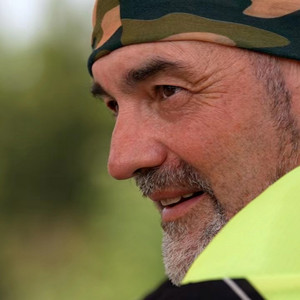
It's the story of Frederick Bowalla, a French BMX coach who has found his second home in China, known affectionately by his writers as a Laofa or the French Papa.
Frederick manages the Guangzhou Provincial BMX team, coaching six talented young athletes in their pursuit of greatness.
Through his unique coaching methods and deep personal investment, he's become a mentor, a friend, and even family to these young riders.
Coming up, we'll hear about how Fredrik Muala's commitment to his sport and his athletes is making an unforgettable mark in the world of BMX racing in China.
2008 was the first time I came to China for the world championship, and I fall in love with China.
This is why I'm still here now.
Meet Friedrich Mohal, a Frenchman who has found his passion and purpose in China as a BMX racing coach.
Mohal is dedicated to helping his BMX riders grow.
Seeing their daily improvement is what he takes the most pride in.
What I am proud of, this is when I can see a rider start to believe me.
Pleasure for me when I can see that.
Our team leader actually, who come from Jojang, he arrived after the other during the first month.
He really doesn't believe me.
If this guy is old, he can't coach.
But step by step, I show him, you can see he increased a little his level.
Coaching this is not just give them exercise, really this is a close relationship between the coach and the rider.
BMX racing is a minority sport in China, far less popular than football, table tennis or badminton.
The races are held on off -road tracks with various bumps and rollers.
In France, however, BMX is well -established, with competitions ranging from amateur to professional leagues and participation across various age groups.
Moala's love for BMX began in his childhood, joined by the sport's blend of bravery and skill.
he transitioned from a passionate fan to a dedicated athlete my story with bmx is very long i started bmx in 1982 my first competition in 1983 but before we doesn't know bmx exists with my friends and their big brother who practiced motocross we go on the motocross field we modify I rode my bicycle,
go on the motocross field to ride with them.
I was not a professional, I was in amateur category, but I really started to arrive to the world level after 2000, cruiser, forty years old.
I was 35! Moor competed in three world championships at amateur level, with his best result being ninth place.
He also won the Indoor World Cup in France in 2009.
Even after retiring as an athlete, BMX has remained a significant part of Moana's life.
Although work and life have occasionally interrupted his involvement, he's never completely left the sport behind.
I created my first club in 1986, I started to coach.
I stopped for the first time competition because I needed to go to the army and go to work.
I started again in 2000 Since 2000, I was no stopping until 2015 until I came to China.
Beijing 2008 Olympics It's the first time the Olympic Games came to China and the first time BMX Racing was introduced into the Olympic programme.
Since its introduction, BMX Racing has been a regular feature at the Games.
That same year, Taiyuan became the first Chinese city to host a BMX Racing World Championship.
Moal was among the global athletes who competed there.
For Frenchmen visiting China for the first time, it was a journey filled with uncertainties.
To be honest, with a lot of friends, we were afraid to come to China because occidental media give a lot of wrong information about about China so even several friends no come to the World Championships they was too afraid to come in China but finally when I when we arrived I I was very very surprised
to see a country totally different what I imagined people very friendly the country very beautiful strong culture and strong development it It was in 2008, just a little before the Olympic Games, two months before.
China already started to open to the world, but it was very new.
We could see a country really in full development and very impressive for us.
Mual vividly remembers an anecdote from that trip that changed his perception of China.
We arrived to the hotel, we put our things in the room.
we go down and I go to the front desk because we wanted to go to to go outside to to visit a little I go to the front desk I asked the woman in the front desk we can go outside she looked at me why why you ask me if you can go outside you know how the policeman no you afraid to go alone you know stupid
questions, and now I laugh a lot but that time I saw in China nobody can go outside alone, a policeman everywhere to control anything impossible to do anything same in the jail, but finally no this is not that totally different than that you can go everywhere you can do what you want you can speak what you
want you can, OK, have limits, same in any country, same in France.
But I really feel more free to do what I want in China than in France.
The visit to Taiyuan was more or less the first experience in China, but it was not his last.
He returned a few times before ultimately deciding to move his life to the country.
I really fall in love with China at that time, and I keep that in the part of my mind.
In 2012, I wanted to change.
I was a little tired to be an IT director in big companies in Paris, in a small office.
I wanted to go outside more.
I remembered China, I searched a new challenge.
Come to China was for me a very strong challenge.
Mouad found his career in China and also started his family here.
He settled down in southwest China's Guizhou province and is affectionately known as Laofa, or the French Papa by locals.
I came back to Shenzhen.
I met my wife, the woman who is my wife now.
She finished to convince me to come in China, so it was my last day, so I came back to France.
but in 2015, I came back in China, and I go directly to Guizhou to start this new life, the mix between business and personal life.
One thing led to another.
Moala was connected to the Guizhou provincial BMX team, and without any hesitation, he accepted the job to coach this young team.
We created our company in Guiyang, And we started to develop extreme sports and to build a different project and to coach different kids to these new sports.
For our project to develop extreme sports, we needed to work with Guizhou government so they finished to know I practiced BMX before.
They already wanted to create a BMX team, but they don't know how to do.
They see I stay in Guizhou when I was in Guizhou so they asked me to help them and to create the team, and to manage the team, and to coach the team, and to start this new team as quickly as possible.
Mo 'ar coaches six riders on the greater provincial team, one of the smallest teams in the Chinese BMX racing league.
They reduced their chronometer, so it's good.
I just don't know how they understand you.
Oh, this is a mix. We have our own language, a mix between Chinese, English, French.
Anybody know, anybody, it's okay.
We created our own language.
Only you guys can understand each other.
Yeah, it's good. Now they will go to rest.
Despite being established not long ago, the team boasts a rider already capable of podium finishes at various national events.
This is why we don't have a lot of riders, because this is difficult.
We already test and recruit a lot of riders, but lots of kids find that too difficult.
After a few weeks, they go by themselves.
From somebody who wants to somebody who can compete onto somebody who can win, have long time.
In China training each day, this is possible to make them arrive to a mid -level, globally in approximately one year, two years, but to make them arrive high level, able to go on the podium or to win, need two, three, four years, and they need to continue to practice, they need to go out of their comfort
zone almost each day to push yourself each day.
This is not easy but this is necessary to be able to increase their level.
Zhang Suntiao from Zun Yi, Guizhou was previously a wrestler before Moala recruited him in January.
Out of 200 candidates, Zhang was selected for Moala's team.
He takes great pride in these achievements.
My previous coach said there is less competition in BMX because not many people choose to take this lane.
I was okay in wrestling on the provincial level, but compared to the elites on the national level, there was clearly a huge gap.
Wrestling is very demanding in one's strength, stamina, and balancing abilities.
So in terms of physical condition, it helped me build a strong body to cope with BMX.
Now I just need to focus on improving my skills step by step.
Zhang fell in love with BMX racing at first sight, and is determined to excel in the sports.
I was fond of riding a bicycle in childhood.
I like adventurous sports and activities.
I was super excited when I first saw a BMX track.
I really wanted to ride on it.
However, transitioning from training to the high -speed demands of BMX racing involves pushing beyond comfort zones and dealing with potential injuries.
We fall almost every day.
It's normal to fall from the bike a couple of times a day.
For those who get a nerve to try new moves, they can fall around five times a day.
But for those who want to take it slow and train more cautiously, their improvement would also be slow.
We truly learned the techniques through those falls, not from just observation or through words.
Only after the falls can you learn where you did wrong and avoid mistakes the next time.
Wang Zhisheng, the youngest rider, is often shy off the track but transforms into a fierce competitor when racing I pretty like the feeling when I practice jumping over the bumps and riding on the rollers When I'm in the air, it's like no one can limit me I feel free Despite his hard work Slow progress
at times nearly led Wang to quit.
There were a couple of times when I wanted to quit.
The first time was in Guiyang, when I just joined the team.
I really missed a home.
But I told myself I won't disappoint my parents, so I stayed.
The second time was during the training here.
I felt I stink in this sport.
I wanted to stop. but Lao -Fa talked me through and taught me how to improve.
That helped me regain my confidence, and I continued.
Mual pushes his riders to their limits, but is equally committed to their safety.
He focuses on steady growth rather than expecting instant results.
Drawing on his IT background, Mual uses a self -developed performance monitoring app to assess his riders, emphasizing a balance between training and rest.
On BMX, it's a sport with high risk, so I can't over -train them.
Even the other teams, they have 20, 30 riders, no problem, they lost one, they have 25 more.
Me, I lost one, this is a big problem.
If I lost my leader, I have nobody else, so I can't over -train them to reduce the risk of this problem.
so I need to make them rest more but this is not bad even the other day he was with a with professional coach from from Sweden on French and another long guy from the UCI they are they also told me Jim they train too much and he's the same the other coach you tell me you why you go to rest ma because I
need have that and have also the method to coach.
Moala still rides smoothly alongside his team, making him one of the field coaches who actively participates in training.
Team member John admires this personal involvement.
Our coach is over 50 years old and he can still ride on the track with us and jump those bumps.
I'm convinced it's the first time I've seen a man in his 50s do something like this.
He's awesome. Muar believes that riding with his team builds trust and allows him to demonstrate BMX skills firsthand, fostering a strong bond with riders.
I don't push them, I don't force them to train.
I try to convince them.
This is not a relationship, teacher, student, same in the Chinese school.
The teacher teaches, the student listens and learns.
It's different. I try to have an exchange with them, to have a different kind of relationship, to win their confidence.
They need to believe me.
So for that, when I coach them, they need to succeed step by step to have a small success.
But to succeed each time, to win their confidence, but also need time.
For that, this is also very different than Chinese coaching.
After dinner, Moal organized a BMX game, where riders balance on their bikes within a designated area, trying to knock each other out.
The game ends when only one rider remains.
Moal often wins due to his experience, but the young riders also manage to put up a fight sometimes adding to the fun and the camaraderie it also means the breaking rights for the rest of the day laughter is filled in the yards just a short ride from the training base is a beach with a stunning sunrise
view Moan occasionally takes his riders there to relax this time he organized a water polo game in the sea followed by beach games these moments of away from the track are a welcome break for the riders...
BMX Racing is deeply family -oriented, and Moala's team reflects this ethos.
Beyond coaching, Moala often takes on a parental role, supporting riders who spend more time training and competing than with their own families.
Yes, this is almost the same as a family.
Plus, I work with my wife, so we are together with the team.
Now this is not always easy.
They need to believe us.
If they can believe us, this is for sure easier to manage the team and to make them perform.
They want to push themselves even in the life out of the training.
But this is also based on the confidence between each other.
I think the The first one, the dialogue we need to speak together.
With my Chinese this is not easy.
Fortunately, I have my wife who speak a lot with them, I explain a lot of things, etc.
I also organize, sometimes, games.
We already go two, three times to the beach, we go to the ballade with the bicycle.
I try to create situations out of the training to make the group closer and stronger.
Zhang Songtao shares the same feeling.
He already takes the group as his second family.
He treats us as his own children.
He's really nice and takes care of us well.
Our team doesn't have many riders, so it's quite manageable.
Sometimes we fool around with each other.
Even though we don't speak the same language, we all get it and we laugh together.
Qi Hui -ling, the only girl on the team, moved from the Shandong team to the Guizhou team just seven months ago.
She quickly adapted and loves the team's atmosphere and training.
Luffa is a very interesting figure.
He often makes faces with us.
He's not very strict with us.
My previous coach was really strict and gave the riders some hard time.
We were kind of afraid of him.
Laufa is totally different.
We get along very well.
But he's also experienced.
He helps us learn the moves quite well.
Laufa has his way of coaching, and we follow his method to make progress day by day.
I'm quite happy with his team.
There isn't much stress.
But sometimes around the matchday, I also have pressure.
I don't want to let Laufa down, and I don't want to disappoint myself.
Most riders come from rural Guizhou, and BMX offers them hope for a better future.
Muan understands their backgrounds and believes their circumstances drive their motivation.
He aims to help them succeed and achieve their dreams.
They come from the countryside, so they don't have a strong knowledge.
for a lot of them this is this is that but have advantage and disadvantage each situation have advantage and disadvantage yes they have only this way they understand if they give up it's finished and here with the team they have I think not a bad life okay they train hard each day but they travel a lot
on they have also good moments.
Zhang Sumtao views BMX as his future and is grateful for Moala's support, aware of the challenging path ahead.
He offered me a way out.
I don't have great grades at school.
Look at us! It's hard, isn't it?
Today is fine. We didn't train that much.
When it's near competitions, we train much more than this.
Every day, our clothes will be soaked with sweats.
Moala's training methods have significantly accelerated his riders' progress.
From knowing nothing about sport to riding swiftly on the track, it just took his new riders a few months.
Mouane says he's impressed but he acknowledges that true mastery takes time.
I was even very surprised to see them use different techniques.
After three months, they use techniques, the kids in France, they start after one year or more.
So yes, they increase their level very quickly.
After that, we need to build their body adapted to the sport to make them continue to increase their level.
Moala's vision extends beyond the provincial team.
He offers advice to other teams, including the Chinese national team, which shares the training base with Moala's squad.
Actually, I focus on the Guizhou team, but I also help a little the Chinese team to explain to them.
I really try to help globally to increase the global level in China, to open a little their mind, to push them a little to go in foreign competitions, particularly in Europe.
Also, to give them other ways for training, to change a little their training ways to to try new things with what they already know is already not bad the chinese riders already have a good level but i can help them with small details to make them win maybe just maybe 10 or 20 centimeters on each bump
but have 20 or 30 bumps on the track.
So if they win 20 centimeters on each, they win 2 or 3 meters.
On 2 on 3 meters, this is already a lot.
So now they arrive to a level, they need to focus on the small things.
They already very strong.
They ride quickly. They have the technique.
Now they need to focus on the details, but also to the strategy on the mind.
Despite China's failure to qualify for BMX Racing at the Paris Olympics, Moal remains hopeful for future success.
He believes that Chinese riders should compete and train internationally to bridge the gap with top global teams.
Actually, the best country for BMX, this is France.
For the Tokyo Olympic Games, for Paris Olympic Games, they are first in the world ranking to win the points.
Actually in France, the French championship is very difficult because a lot of foreigners come in the French teams, in the city teams.
The best Chinese riders will need to go in Europe.
This is the plan, they will select the UCI.
This is the International Cycling Federation.
They come to select six or seven riders to study four years in Switzerland, in the world center, and to compete in Europe.
And that, it is absolutely necessary.
If they want to qualify for the Olympic Games, they can't stay in Asia.
The level is not high enough.
They need to go to compete in Europe, particularly in France.
If they can succeed in France to arrive in the final or something like that, they will be able to win enough points to go to the Olympic Games and to do something well in the Olympic Games.
Moala plans to follow the BMX events and share insights with his riders.
He dreams of one day seeing his team compete abroad.
Sport brings people together, and Moala's BMX journey has deepened his connection with China.
His story continues, inspiring a new generation of BMX riders.
That was the inspiring story of Frédéric Moala, the French BMX coach who's leaving a lasting impact on his team in China.
From his unique coaching methods to the deep connections he's built with his young athletes it's clear that Frederick's influence goes far beyond this sport.
We hope this story has inspired you as much as it's inspired us.
Thank you for tuning in to Roundtable.
You can find us on your favorite podcast platform at Roundtable China.
If you've enjoyed today's show, please leave us a review and share it with a friend.
Got feedback or a topic for us to discuss?
Reach us at roundtablepodcast at qq .com or send us a voice memo and you might just hear your voice on the next show.
That's all for today.
I'm Ha Young. Take care and we'll see you next time.