Discussion keeps the world turning.
This is Roundtable.
Welcome back to Roundtable.
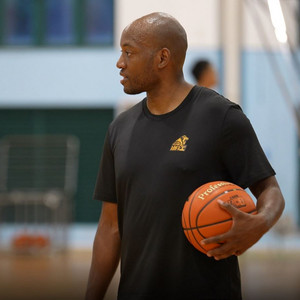
I'm He Young. Now we shift gears and take you to the world of basketball, where the story of French trainer Patrick Hégoulier and his work with the Zhejiang Lions youth team is sure to inspire.
For 16 years, Patrick has been calling China home, first as a player and now as a mentor.
Today, he plays an instrumental role in shaping the dreams of young athletes who aspire to one day play at a professional level.
Patrick's passion, guidance and belief in his players have helped many find their way in the competitive world of basketball.
So sit back and get ready for the story of how one man's dedication is helping youth basketball players in China realize their dreams.
You know, actually, when I came here, I gave myself one year, and then it was two years, and then three, four, five.
You know, you always find something to keep you going, you know.
Patrick Haegulier is a French basketball trainer with Chinese side the Georgian Lions under -17 team, one of the best teams in the country's youth league.
Hagulia used to play in Europe and later in Hong Kong, China, having dreamed of joining a CBA club one day.
Even though Hagulia had a rather quiet career as a player, his dream came true in a different way.
After retirement, he took a different role as a trainer with a couple of CBA teams.
Now with the Georgian Lions youth team, Hagulia is in charge of training the basics of the youth players and teaching them how to use the tricks and combos in real games.
When I was younger, I was always on the court.
The problem is I didn't know how to train.
So I was spending three, four, five, six hours on the court.
I thought I was getting better, but suddenly I wasn't getting better.
So this is why I'm trying to teach those players here.
It's like, you know, if you come here or work with me for one hour, 30 minutes, 10 minutes, you know, you come here to get better, not just to shoot around.
We spoke to Hegulia about his work and his life in China, as well as his role in contributing to Chinese youth basketball development.
You played in Europe before, what does it feel like?
To play in Europe compared to China?
China, Europe is much...I mean I was playing in the UK so I didn't play in those big countries like Spain.
I played in France but I was in the youth, youth team, so my first pro contact was UK.
UK it was developing, it was growing into...right now you have some UK teams like And then you're in Euro cup for me, this is amazing.
But back then, it was, start to, they was trying to build some kind of identity.
So it was okay for me, it was my first job.
I just wanted to get paid.
It didn't matter if it was five euros or 100, 1 ,000.
So for me I was just happy at the time.
I went there, I was like 19, then 19 until 21, and it was good three years, it was good so you know, it was pretty good And now you experience Chinese basketball what's the difference between Europe and China?
Well the fans, obviously the fans in turn of the enthusiasts you know towards the game, the passion towards the game and yeah I will say here that's the biggest difference after, you know basketball rules, FIBA rules here the same, here, obviously, is much more physical than it is.
It's more like you have to try harder to get fouls and get calls.
So that's the main difference.
And, of course, I'm not going to go into the referees.
Yeah, I have to say that surprised me a little, because European basketball is known for physical games.
you're right it's physical but it's fair physical which means like if you get foul you get a foul here it's over physical you know like you need to really work hard to get a foul here so here because I heard the theory was that they want to make the CBA tougher harder so when the local players play
national games national teams sorry they go overseas they are more tough that's the theory I heard so here is stuff how did you choose to move to China move your career to China it's a long story man but so while I was in UK I was dating a lady she was from Hong Kong and after I had injury at my end
of my time in UK so I was like I was back in Europe in Paris for 9 months and I was really tired of Europe at the time.
I couldn't play for 9 months so I had time to think and one time I went on YouTube and I saw a highlight of Angelian you know, back it was before you go to NBA, it was like a tennis highlight and I saw the CB for the first time I said wow the fun is cool, the floor is colorful, everything is cool.
Then I started to have some interest to go to, so maybe I should try Asia you know and so my ex was from Hong Kong so she helped me to get into a summer league, a summer basketball league in Hong Kong.
I did tell him this, you know when I met him a few months ago I told him that he's the reason why I came to China because I saw his highlight and he was very surprised.
What did he say? He was surprised.
He was surprised that a foreigner saw his highlight and decided to come to China.
So he was very happy and surprised.
Right. What was it like when you made the decision?
I mean, you've never been to China before.
Must be a bold decision.
Yes, it is bold. But me, I'm somebody who I don't have to have regrets.
I don't mind if things fail.
That comes from basketball.
I like basketball because basketball teaches you a mindset for life, not just on the court.
And I always wanted to, if I had something in mind, I don't want to live with regret in five years, but what if I went to China, what if I went there.
This is why when I was 19, I had enough positive to play in the UK, I went to the UK.
I didn't really know, I wasn't like oh, I don't know nobody, no I tried.
So even if I go even further, back when I was 16, before Europeans to go to MBA, they had to go through university before, back in the day.
It was very rare to go from Europe to MBA so when I was 15 years old, I want to go to a so much you know I'm in high school play university and I remember I was 15 or 16 years old ask my mom to pay me two camps two camps and I went to you to USA I don't speak English you know but you know see I don't
have I'm afraid I prefer to try and then if you fail at the end I try so I wasn't afraid to come to China me was just another adventure of mine you know and And yeah, it was bold, but you know, it looks like I was right.
Now, 16 years, did you think at that time you can stay in China for 16 years?
No, you know, actually, when I came here I gave myself one year, and then it was two years, and then three, four, five, you know you always find something to keep you going, you know, and uh...
so yeah... and then when you go back, you'll get your 16 years.
It will be 16 years next month.
Maybe another 16 years?
Who knows. Who knows.
Who knows. Now you are with the Guangxi youth team.
What do you make of this team?
How do you like this team?
It's a good team. You know, at Guangxi we invest a lot of resources in developing the youth.
This is why we have one of the best used teams in the CBA.
We are always on top in most categories.
And I like developing the young players and to, you know, help them achieving their dream, you know, to go to the CBA team, to the first team.
So I really enjoy it because I remember myself.
When I was younger, you know, I was a gym rat, which is like you know i was i was always on the court always on the court the problem is i didn't know how to train so i was planning three four five six hours on the court i thought i was getting better but actually i wasn't getting better so this is why
i'm trying to teach those players here is like you know it don't matter if you come here or work with me for one hour 30 minutes 10 minutes you know we have to you know you come here to get better not just to shoot around.
What's your training method towards these young players?
Well, you know, at this age, they have to repeat a lot of fundamentals.
You know, to think they might be, look boring, as you saw earlier, you know, it's not anything fancy.
You know, so I just have to make sure they can drive, pass right footwork, you know, right balance they can stop on a dime, they can just make decisions.
I keep it basic I keep it basic and I want them to have a strong fundamentals so when I go to the next level then they can learn all the fancy stuff but they have to be able to do the basic what is more efficient in the game just like I like to say they have to become like working so when you walk if I
ask you when you walk you don't think about yeah I go right there it's just just walk.
It doesn't work. Yeah, it just walk.
You know? Because you've been doing it since you're 1 or 2 years old I'm pretty sure when you were 1 or 2 years old, you had to, you know, go like this.
At the beginning, it'd fall down because it wasn't and now you just walk and run.
And it's how I see the fundamentals.
You know, at the beginning, yeah, you know, you're thinking about what to do but the more you repeat and then you have to just become the second century and then on top of that, you can build up and go into the most fancy stuff.
So what you do is let them play without any thinking.
They just know what happens next?
No. First, I script it.
First, we script. We script the details, script the reads, and then you make it live, like I was doing earlier, you know, at first, you know, OK, you drive, you pass.
Now, you drive, you have to look.
Does it have the ball or not?
If you have the ball, you know, you make a layup.
If you're on the ball, you pass it quickly.
You know, you have to be able to read.
But first you script it and then you make it, you know, challenging but, you know, having them making a decision.
You said that there are two skills training sessions.
What are they? Oh, yes.
So you have small groups.
So when you have one player, two players, three players, then you spend more time on...
I'm not going to say when you have a large group, you don't spend more time on details.
but you know you is more like personal and you don't have you know it is just that is just playing it's more like individuals it's more individuals now when you have a group training when we have like like I had earlier 8 guards 12 guards now they they do a good training school like game skills where they
have to find all the fundamentals like ball handling change direction passing in a game situation so yes you can pass it be to the wall that's cool or with a use your partner now can you pass in the game situation you can read you know now you can retreat the ball not like they always teach you know
people retreat retreat retreat ball okay that's cool now do you know when to use it after a ball screen when you have to retreat for the ball and then we attack.
So when you have group, you have to make sure the synergy, the movement is smooth, you don't want to have any players waiting too long.
So, this is why we use more game skills when you have a large group and when you have a small group you know it's still game skills but a bit more slow pace and more focused on one player.
It really simulates what happens in the official games, right?
Absolutely. That's the level.
That's the level of play and also of coaching.
If you look at all those social platforms nowadays and all these trainers, all these coaches, most people teach what?
Dribble. Because dribble is something I learned a long time ago when I began to coach.
It's the easiest thing to learn.
You don't need to know the game.
And breathe in the street, right?
Yeah, yeah, yeah, yeah.
Exactly. The street, wherever, you know.
But now the next level is when to use this drill.
Okay crossover. When?
You know what I mean?
Okay. When? Why? And if it cuts you off, what are you doing?
You know? That's the next level.
And at this age, the fundamental I'm talking about is not stationary and this.
The fundamental I'm talking about is in the game.
Do you know how to use the skill?
because everybody here is our players from the U 15 to U 21, they're all skills.
They all have a left hand.
They all can do left hand lay -up.
They all can dribble.
Now can they use this in a game situation?
And this is why we're here, me and the coaches, to teach them this.
How have the players improved with your training?
Are there any specific examples you can remember?
Well, we're a top team.
We're a top team, you know.
We try to always stay in the top of the youth team in all CBA.
So, there's no one player in particular who went from this to this.
Everybody, I mean, we are lucky, everybody is improving.
Everybody at their own pace, but everybody is improving.
toughness, speed, some players last year couldn't dunk.
I don't know if you saw earlier in the game, we had several dunks of players who last year couldn't even do it you know.
So everybody is improving at their own pace and here like I tell everybody it's not so much about how good is the U17, the U19, the U15, it's just to go to the first team is how good you are as individual did you think you are straight coach yes I think I'm a detail coach and strict yes yes yeah I try
to it's a fair street you know fair is not like I hate the players or right that is more about it's not personal no is just a I just know where it takes to to play this game at the high level if you If you're just messing around like earlier.
Some players were messing around.
For me, it's not like I care.
It's just for women.
My job is to get you better.
So by you messing around, you're not helping yourself.
I mean, my career is done.
I mean, I retired already.
It's all of them. So you must let them know this is a serious job?
Oh, yeah. They know it's a serious job.
I mean, they know. No, the thing is like here is a long process in the youth team, they come here some players since they are 13 years old and they will stay here until they are 19, even 20, so it's a lot of years of, and also in the youth team it's not like in the CBA, you don't have seasons, so it's
a all -year practice, you only have a break for Chinese New Year and then you back to the game for one year, so it's always the same.
you know it's always the same two parties per day you know five days and a half a week you know years and years and years and years and years and years I understand some time you know the energy get lower but hey it is uh for me I like to say who can survive who can survive until the end you know because some
will quit someone says to hard or some will you know improve enough and you know this is the part of the game it's also a competition inside the team it is well I want to know yes you You know, Guangxi year 17, we are top three, top one, yes, that's cool, that's a team, that's great, but what about you
though? Do you have what it takes to take it to the next level?
You know they have to see.
Most players who went to the CBA team, at some point in their youth's career, they went to the national team.
Like we had two players just come back from the national team in the year 17.
so you know am I saying those two players will for sure go to CBA I don't know but they have a high chance you know because if you look at how you know how it's working Kobe said a very interesting thing is like it would be great to study the footsteps of the people before you so if you see someone
want to CBA all you have to do is to see his youth career you know and you will see most of them at one point was national team so now in the youth team if I notice the information, I will try to work hard to get international team.
You know, that's how you mean.
It's about studying, you know, studying the grades.
Do you think you have built a deep balance with the players you have now?
Yes, because I speak Chinese.
That's the biggest proof, right?
Yeah, that's the thing, you know, between me and all the trainers.
It's like I can speak some Chinese.
Not all, but I can speak some Chinese enough to get to the players.
This is why I get some connection with some players.
And it's very important.
As coaches, we have the informations, but the players need to trust us enough to want to know and to absorb this information.
So you have to build with players, it's very important, you know.
what's the difference between being a player now and a coach uh which gives you more sense of you know being proud of yourself coach coach because i can't tell everybody yeah i have no shame to say it i'm a better coach and i was a player i am you know i wasn't a great player uh i can't say i was you
know i i i was fortunate to to be able to make a living of it but i wasn't a freak of nature and a crazy player so no as a coach you know I I'm much better I think there are many examples in the NBA like the LA Clippers coach he was not a great player he's definitely a one of the best coaches right
now yeah of course yeah it's very I can't compare myself to NBA player because you know even to make the NBA need to be good me I just played UK France on country in China I wasn't like you know a crazy you know European player but you know as a player I can relate you know because you know when you
when you coach you you you have to be able to teach what you know and doesn't this kill you know this is why not all great players can become good coach because you have it's a skill to study.
I had to study how to teach before when I retired I could even teach how to dribble, how to study and learn how to break it down so a newbie can understand.
Do you call what you have done in China a success so far?
Yes yes because one thing I'm gonna tell you is that when I came to China I want to play in CPA.
Remember what I told you I wasn't good enough, At that time when I came to China to come to play in the CBA as a foreigner, you needed to go through a foreign draft.
You go to Hawaii and you play a draft and then the Chinese team selects you.
You wasn't like now.
So I always wanted to get that draft but it was difficult because you had to be invited and it was tough.
you know, and I call it a success, because you know, I came here to try to play in CBA but 16 years later, I am in CBA but as a coach.
In a different role.
Yeah, as a coach, so, yeah, this is why, you know, I was very emotional, you know.
I even cried at my first CBA contract, because it was like for me, like a full circle, full circle.
When I came here just to play, I was like sneaking into game, to watch games.
12 years later, I made it and I was among where I want to be as a player, so yeah, of course.
Let's talk more about China.
What was your first impression of this country when you came here?
My first impression of this country when I came here was like it's big.
Big country. Yeah, big, the roads are big.
Actually, everything was so big, the streets, the roads, you know, You know, my first two weeks, actually, I stayed in my hotel room.
Because I was coming out, I was afraid I would not be able to come back.
Because I was…everything was so huge, you know?
So yeah, that was my first impression, you know?
Everything is big, you know?
At the time, normally people speak English like you.
So this is why I had to learn Chinese quick because now I've got to be able to do things.
We don't have all these apps to translate to order food, you know?
back then you need to learn new skills to order food from anywhere, restaurant.
It's worth adapt to a new life, right?
Yeah, absolutely. People are friendly, that's my first impression.
And now, kind of has changed a lot.
It did change a lot, but you know, because I've been here, of course, on and off, but I've been here a total of 16 years, so when you're leaving things, for me, things that are normal might not be normal back in Europe, So I see the change obviously, the speed train and everything, the subways and,
you know, the people, you know.
But it's only when I go back home that I realize, you know, how advanced our life are here, you know.
For example, I remember like I used to, it was way before the Apple Watch, but there was like a watch like 16 years ago.
You used to call a phone watch.
It was a phone watch with, not Android with something else, with a phone watch.
and that people in China used to used six years ago and back in Europe, yeah, I know this.
You know, I mean, stuff like this, you know.
So yeah. So you're so familiar with the life now I'm in China.
Then when you go back to France, there may be some reverse cultural shocks.
Oh, reverse culture, just I told you earlier about the basketball, you know fundamentals, the habits, you know.
When you do something for over time, it's a big habit.
so you'd be surprised how many times I'm at home in France and Paris and I want to go out to eat with my friends and I just leave and then halfway I say oh I forgotten my wallet because in France you know it's not that you don't pay for it with your phone just that but here I'm so used to paying everything
my phone so I never take my wallet so you know stuff like that you know I've not thanked you you know yeah so Europe we still have to use a credit card your wallet the cash so yeah stuff like that you know Chinese player Cui Yongxi the NBA summer league do you think now Chinese players are ready to
play I mean some of them are ready to play NBA basketball of course it's about some of them don't want to go or some of them the club don't want them to go but there's many players who who could I'm not gonna say any name because I don't want to start any polemic you know but yeah there's some players
who could I went there you know we didn't go there there's a They're up to themselves, up to the team that play, they want them to do that.
Of course I believe so many players who can go there, even Europe.
I don't know why some players don't go to Europe.
They prefer an NBA, I don't know if it's a money thing, but Europe as well is a good option for them.
Are there voices or concerns that Chinese players are not up to that level?
Well, you know, when you want to improve in life, you have to be around people to challenge you.
That's the only way you can get better.
So that's the reason why I should go there.
To get better, to get beat every day by the Europeans, by NBA players.
And then when you come back here, everything makes it easier.
That's why I recommend them to go there and lose.
And that wraps up the story of Patrick Hégoulier, the French basketball trainer who has dedicated his life to nurturing young talent in China.
Through his guidance, passion and belief in the potential of his players, Patrick is helping his athletes turn their dreams into reality.
We truly wish you enjoyed today's roundtable.
You can find us on Apple Podcast at Roundtable China.
If you enjoyed the show, we'd love to hear your feedback.
Consider leaving us a five -star review and share the show with a friend.
Your support means the world to us.
Feel free to get in contact anytime through email at roundtablepodcast at qq .com.
If you've got thoughts, questions, or even a topic you'd like us to feature, send us a voice memo.
Your voice could be featured on the next show.
and that's it for today's roundtable.
I'm He Young. Take care and we'll see you next time.