Thank you. Welcome back to the AI podcast.
I'm your host, Katie Burke Washabaugh. For the last century, the automotive industry has looked virtually the same.
Similar players, similar powertrains with gradually developing vehicle technology.
However, incredible breakthroughs in both AI and electric vehicles have reignited the industry. bringing new designs, new business models, and entirely new companies.
One of which is Lucid Motors, an EV maker based out of Silicon Valley building intelligent, sustainable, and highly desirable vehicles.
Lucid was founded in 2007 and launched its flagship model, the AIR, late last year to widespread acclaim.
The luxury sedan won Motor Trend's 2022 Car of the Year with industry-leading battery range and fast charging.
And Lucid isn't stopping there. The automaker recently announced Project Gravity, a long-range electric SUV slated for launch in 2024.
A defining feature of Lucid Vehicles is the DreamDrive Pro Advanced Driver Assistance System, which leverages the high-performance compute of NVIDIA Drive to provide a seamless automated driving experience.
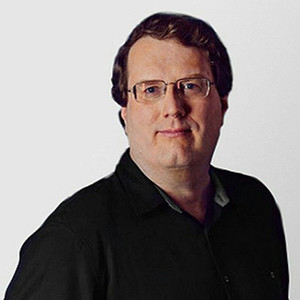
Joining me today is Mike Bell, Senior Vice President of Digital at Lucid. a 16-year veteran from Apple who has worked on the iPhone, iMac, and Apple TV products.
Michael most recently served as the CTO of electric vehicle maker Rivian. before joining Lucid.
Now he is overseeing software development and advanced driver assistance technology for Lucid's future forward lineup.
Welcome to the podcast, Mike, and belated congratulations on the successful launch of the Air.
Thank you, and good morning. Yeah, I was actually, I was talking to my colleague a couple of weeks ago about this interview and they mentioned that they had seen the air on the TV show Goliath, which must have been Pretty exciting for you guys.
I heard the same thing. Yeah, I've not seen it myself, but it's a great product placement.
We have some Really great PR people that get our vehicles in some really amazing places.
Yeah, so Mike, you've been in the, or you've had a long career in the tech industry.
How did you decide to get into automotive?
Well, I mean, I've been a car junkie forever, right?
I like to tell people I've been restoring a 67 Mustang for 30 years and it's almost done.
It's almost done. But, you know, one of the most fun things in Silicon Valley is figuring out how Silicon Valley can disrupt traditional kind of industries.
And boy, the car industry is ripe for disruption.
You know, the cars these days are really suffered to find vehicles Being able to bring the best of Silicon Valley technology to kind of the best of automotive technology is just kind of a dream job.
Yeah, so what specifically have you learned in your tech experience that you've been able to bring to automotive?
Well, you know, one of the advantages I think we have here in Silicon Valley is kind of a sense of urgency and a and a sense of not worrying about it's never been done before.
In fact, that's kind of what gets us out of bed in the morning, right?
So Being able to bring that kind of attitude to an industry that traditionally has moved really slowly and to be able to kind of create a sense of urgency and a pace of disruption that's really more towards Silicon Valley standards is fantastic.
And that's a real advantage for us because, frankly, the rest of the industry, with some notable exceptions, is still kind of doing things the old way.
So it really gives us a leg up on the competition.
Out of curiosity, what about joining Lucid has surprised you the most?
Actually, no huge surprises. I was able to meet and work with Peter and the executive team before I joined and really found them to be you know, phenomenal engineers and with a great vision on what the company could be.
I'd say the only big surprise and in a positive way is how great the first vehicle really is.
You know, sometimes you don't want 1.0 of something.
This is not the case here. I mean, it's a, you know, I think everybody calls it a luxury sedan.
It's a It's a supercar. It's a sports car.
It's like four things in one. And it's so much fun to drive.
I just I get to drive one every day and, you know, kind of chuckle to myself every time I do.
It's such a great experience. Oh my gosh, that sounds amazing.
And you know, on top of kind of that supercar experience thing, in-vehicle infotainment and software also seem to be a major emphasis for Lucid Where do you feel Lucid is more differentiated from the rest of the industry today?
One of the big differences here at Lucid is we do just about everything ourselves in-house.
So there are, whether it's infotainment or motors or inverters or battery packs, You know, there are a lot of people in the industry that kind of buy off the shelf stuff from Bosch or Continental and, you know, slap some metal around it and call themselves carmakers.
We are doing a lot of the engineering work in-house and that really gets back to our Silicon Valley DNA.
And that's a huge differentiator for us because what it means is if we want to make improvements or we want to make slight changes, we have the in-house capability to do it quickly and to do it, you know, many times if we decide to, without relying upon outside people to do that work for us.
And that's such a huge strength. What about in the long term?
As more companies enter the EV space and the industry starts to develop further, how do you see Lucid continuing to differentiate itself.
Yeah, you know, it's all about innovation.
You know, we have the best car on the market.
You know, funny people say we have the best EV on the market.
I think we have one of the best cars on the market.
And it really is through hard engineering work.
It's through doing a lot of the work and the technology ourselves.
And we're just going to keep moving faster than everybody else.
We have a lead and we intend to keep it.
And as you say, the digital experience is a big part of how the customers interact with the car.
And we intend to innovate and stay out in front there as well.
So it's really, we're going to maintain our Silicon Valley roots.
You know, you certainly... appreciate what it takes to build a vehicle because, you know, it's not like that's easy, but We're really going to use that Silicon Valley DNA to accelerate and really kind of bring more and more innovative features to our customers.
Yeah. Speaking of this lead, when Lucid started back in 2007, there was pretty much just one other company committed to EV production.
But now, fast forward to 2022, And virtually every major automaker has made some sort of public commitment to all electric lineups.
How has that affected your competitive strategy?
Well, I mean, I think competition is great.
I mean, certainly I think at the end of the day, there will be a kind of a culling of the number of startups in the market because a lot of them don't have the technology chops to pull it off.
But, you know, competition kind of keeps everybody on their toes.
I love it. I mean, certainly when I was at Apple, you know having kind of the Microsoft being the evil empire as our villain to fight against you know kept us just even more hungry and even even doing better things and I think competition in this space will do the same thing.
I think that you'll just see even more rapid adoption and acceleration of the technologies because of the healthy competition.
Yeah, and on the flip side of that, as this competitive field grows and more and more companies join the space, there are more opportunities for partnerships.
And I know you mentioned that Lucid does a lot of work in-house, but But how do you approach partnerships and where do you decide what to build in-house and where to partner with other companies?
Yeah, you know, that's the million dollar question.
And people ask me that a lot. You know, certainly we don't do everything in-house.
You know, you have to know what you're good at and what I won't say what you're not good at, but what you'd be better off partnering with somebody on.
Where's the strategic differentiation versus... you know, what's just table stakes that there's no reason for you to go invest money in.
It really is a process we think about daily in terms of what's the What gives us the best differentiation for every dollar we spend?
What's going to put us farther out in front?
How do we get to someplace the quickest with the best experience and the best features?
So it's a pretty complicated process. And frankly, we spend a lot of time debating where to partner and where to invest and what to do ourselves.
And zooming into the vehicle itself for a minute.
DreamDrive Pro is a hallmark feature of the Lucid Air.
And for those in the audience who may be unfamiliar, could you walk through a little bit how the system works?
Sure, you know, the entire car is a software-defined vehicle, as people call it, which basically means software drives the entire experience. of 50 computers on board, big and small.
The computers can control and modify and enhance the driving experience in dozens and dozens of ways.
And one of the things that the computers in the car can do, of course, is provide really great driver assistance and safety features.
And we've bundled that up into something we're calling dream drive pro.
And you know, the first, the first set of dream drive pro features are out there.
And, uh, They allow people to have a safer and better driving experience in a lot of situations, including long-distance highway driving.
And the cool part is it's going to get even better over time because over the air update, you know, a lot of people seem to be struggling with it in the market.
But again, coming back to our Silicon Valley roots, We've been doing that in the phone and computer space for 20 years.
So, you know, we have a rock solid over the air update capability in our cars.
And as time goes on, you know, the capabilities of our cars will get better and better at the push of a button, you know, from here, magically customer cars will get new features without them having to do anything.
And what has been the customer response so far to DreamDrive?
You know, in general, it's a fantastic thing.
Customers like what they have, but of course, they always want more. which again, it gets back to inspiring us to move quicker and provide even greater features for our customers.
So far, like I said, it's been well received and we're working on more fun things for customers to use in the coming months and years.
And you mentioned software-defined and this ability to add new capability, and especially given your experience working... in the mobile space as well.
And how do you approach designing this type of system where it's not necessarily finished once it rolls off the assembly line.
It continues to improve, continues to add more functionality.
What's the mindset that goes into designing and building something like that?
Yeah, it's funny. Boy, I could spend a bunch of time on this question, but I'll give you the short answer.
You know, there are a couple of basic tenets.
The first one is over-the-air update, capability doesn't mean it's okay to ship something broken and fix it later.
Over-the-air update capability is designed to fix bugs if you find them. react to customer suggestions and make improvements based on those suggestions.
And Add new capabilities as you see fit.
The other thing, you know, as we look at The fact that software can do anything is because you can do something doesn't mean you should do something.
You know, I've seen automotive manufacturers who've decided to have 15 ways to do everything and a thousand toggle buttons and the customer can decide exactly how they want everything to work.
And I guess that's interesting, but I like a more Apple approach, which is The vehicle should just do exactly what the customer thinks it should do all the time.
It should be adaptive. It should learn. It should do things for you.
You shouldn't have to decide Do my mirrors fold when I'm parked on the left side of a one-way street?
I'm like, I don't know. Like, do what you should do, right?
So we have this mindset of, as we're doing more and more software and refining the software for the vehicle, How do we make it a magical experience?
How do we continue to surprise and delight our customers by making it seem like the car always knows how to do the right thing?
And that's really tough because dumping a bunch of options into a control panel and letting the customer pick everything, that's kind of a cop-out.
That's easy. Making the car know what to do and when to do it.
I mean, that's the magic. And that's what we're after.
In a way, too, I feel like that approach... seems more geared towards safety in the vehicle.
Because I mean, I know when I'm faced with a bunch of different options, sometimes I freeze, sometimes I'm fumbling with the buttons and I don't know what's going on and you're not paying attention to what you're doing.
And it seems like this more kind of intuitive design helps focus the driver in a sense.
Yeah, I think you're right. I see cars that have crazy wraparound screens and all kinds of where you can play YouTube videos and stuff.
That's cool, I guess. But I mean, at the end of the day, you want to make sure that the driver is safe that it's not a distracting experience.
You want it to be a rich experience for when they're parked and maybe when there's a pastor who wants to do something.
But At the end of the day, you want to provide a safe, intuitive driving experience.
And that's really what we're after. So you mentioned earlier that there are some new features in the pipeline for DreamDrive.
Could you give any examples of what could be a future potential update?
No, sorry. I'd love to, but frankly, the marketing guys would kill me.
That's fair. Yeah, we're always looking at ways to, the great thing is we listen to our customers.
We see, the other cool thing is that these vehicles generate gigabytes of data a week.
So we can really understand how the cars are being used.
We can understand if they're being used the way we thought they would be used. and then go really add changes to make the experience better based on the way the fleet's actually being driven.
So, you know, it's a constant state of evaluating the performance and figuring out how to make the experience even better.
Yeah, and it's so antithetical to the way the auto industry has operated in the past, you know, with these years-long product cycles and... things is taking forever to get to the production vehicle.
And it's such a paradigm shift, it seems like.
It is. And it's a real advantage for those of us who, you know, everyone says, you know, you tech people, what do you know about cars?
You know, We don't necessarily know a lot about the mechanics of building the body, but when it comes to user experience and the ability to make a customer happy, Silicon Valley knows a lot.
So you pair that with the amazing automotive experienced people we have here at Lucid and we have this great combination of knowledge that's produced something pretty magical.
Yeah. And I'm looking back at what's been accomplished from 2007 until now.
Where do you see this going? What do you envision for the industry for the next 10, 20 years?
That's a good question. You know, people always talk about EVs and pluses and minuses.
I think, reading the crystal ball, I think the next big step, function, improvement we're going to take here is when battery technology You know, we certainly have here at Lucid have pushed the bounds of software that optimizes battery usage and motors that are the most efficient and powerful on the market and aerodynamics that are both efficient and look good But I think, you know, the next step is going to be when we get batteries, whether it's some of the silicon anode battery technology that's out there, or some of the other things they're being worked on.
When we can get much higher energy density, and we have over 500 miles of range, but say we get to the point where you have 1,000 or 1,500 miles of range, suddenly you have a car that goes forever, or even better,
You have a car that can be much cheaper because you don't need to put as many batteries in.
And suddenly that gets you mass adoption.
You know, the price issue becomes a non-issue for everybody.
So I'm really optimistic that we're going to see some breakthroughs in battery technology over the next, you know, say five to 10 years that will really make this market explode.
What about Lucid? What's on the horizon for Lucid?
We have a whole roadmap of great stuff. And again, you know, it's like one of those, if I told you, I wouldn't say I'd have to kill you.
They would kill me. But I mean, we intend to increase our technology lead.
We intend to produce more vehicles that people love.
You know, we're a Silicon Valley company.
We're hungry. We love what we do. You know, you have a bunch of passionate car people. and a bunch of passionate technology people.
And it really shows, I think, in what we've done.
It's, you know, better, faster, wider audience, mass adoption.
And, you know, I think it comes from Peter and the entire exec team.
You know, it's not just about producing a a great vehicle, but also the environmental benefits, the green benefits we have about getting combustion engines off the road and what we can do to really help with sort of global warming and things like that.
So it's a great side benefit when you when you have a business that's not only a good business, but has benefits for society as well.
Yeah, well, I like the sound of more vehicles.
I'm dying to get into the air. I read all the first drive reviews reviews and so jealous of all the automotive journalists that got to spend time in the car.
And anytime you want to go for a ride, come up to the headquarters now.
I'll be happy to take you out for a spin.
All right. Well, I will be taking you up on that.
Thank you so much, Mike, for your time. We really appreciated having you on and would love to have you on again sometime soon.
Anytime at all. Thank you. Thank you.