A former president found guilty while running for re-election.
For a story, this big, one podcast is not enough.
Here at NPR, we've got you covered from every angle.
You can get the news as it happens and legal analysis on the podcast Trump's Trials.
For all the latest on what it means for the 2024 election, head on over to the NPR Politics
Podcast.
Find Trump's Trials and the NPR Politics Podcast, wherever you get your podcasts.
This is the Ted Radio Hour.
Each week, groundbreaking Ted Talks.
Our job now is to dream big.
Deliver it at Ted Conferences.
To bring about the future we want to see.
Around the world.
To understand who we are.
From those talks, we bring you speakers and ideas that will surprise you.
You just don't know what you're going to find.
Challenge you.
We truly have to ask ourselves why is it noteworthy?
And even change you.
I literally feel like I'm a different person.
Yes.
Do you feel that way?
Ideas worth spreading.
Ted and NPR.
I'm Manouche Zomerodi.
And today we are spending our time together under the sea.
The magic that is under the water, we've only really just begun to explore.
This is Catherine Moore.
And over the years, she's worn lots of different hats.
I have an engineer turned surgeon, turned a global healthcare strategist.
Beyond her professional world, Catherine loves adventure, especially in the ocean.
I have been a scuba diver ever since I was in college.
And I enjoy exploring new things, which occasionally puts you in a dangerous way.
So that brings us to January 1997, the start of what turned out to be a love story.
So it really doesn't seem that way at first.
I had a group of friends who all wanted to get together and go scuba diving and land
exploring in the Galapagos.
And it's an area where there's enormous, pelagic life, whales and sharks and manterays.
And it's diving like nowhere else.
So Catherine and her friends chartered a boat to some of the most remote Galapagos islands.
It was a sunny day.
And we were pretty sure we were going to see a lot of hammerhead sharks.
And they will congregate in very large schools.
So you get in the water and you just calmly sink down to the bottom.
And now you're under the schools and you can look up and see them all.
Wow.
You weren't scared at all.
I had been diving with enough sharks at that point that it was excitement rather than
fear.
Sharks get a really bad rap.
We're not their food.
They're not going to come and just sort of randomly taste us.
So my heart rate was fast, but that was excitement.
I was on the hunt for the beautiful photograph.
So Catherine was there 50 feet down beneath a school of sharks and the surge, the back-and-forth
movement of the water was particularly bad that day.
Yes.
So the bottom wasn't smooth and sandy.
It had some fairly large rocks and a lot of sea life like sea urchins and things like
that around on the rocks.
So that's where I was.
And then I got caught in a particularly big surge.
And I instinctively flung my right hand out because I had my camera rig tucked in my
left arm to brace myself against the rock.
And I wasn't bracing myself against the rock.
I slammed my hand into one of those sea urchins and I felt the crunch kind of travel up my
arm and I pulled my hand back and I could see that there were sea urchins, binds stuck
all the way through my hand.
So you were stabbed essentially under water?
Yes.
What went through your head?
It was absolute disbelief.
I mean, I'm looking at these things through my glove.
You know, I'm not actually looking straight at the skin of my hand.
And so it was surreal.
It didn't feel like that was possible.
It felt like it wasn't my hand.
Catherine Moore continues her story from the Ted Stage.
Now, this is bad.
I mean, obviously, when you have something all the way through your hand, it's kind of
bad anyway.
But in this case, sea urchins have a venom on them that if you've ever tangled with them,
you know that a sea urchin spine and you gives you horrible painful inflammation.
So a adrenaline brain kicked in and I just yanked the spines out.
I don't remember doing it.
I just remember thinking I can't get my glove off with these in here.
I do remember taking the glove off in a big plume of black coming up in front of my face.
And biologist brain now shows up and starts freaking out.
How could all that toxin have gotten into that wound already?
Well, physicist brain then shows up and very calmly explains, no, no, no, we're at 50
feet.
Red wave lengths are attenuated.
That's blood, not black.
And sharks.
So what are you going to do?
So I'm in this cloud of blood and I really at an intellectual level knew that I probably
was not in much danger.
Can you think blood in the water and suddenly it's a feeding frenzy, but no, hammerhead sharks
don't really feed when they're schooling like that.
But I didn't really want to be in the cloud of blood and I didn't really want to go
up through the set of sharks while I was really actively bleeding.
So I used this band that you have on your scuba diving rig and I slipped my hand up underneath
it and I cranked that cummerbund down really hard over my hand to kind of put pressure and
then sort of angled off towards where my body was so to leave that cloud of blood behind.
But so eventually you have to surface, right?
Yes, yes.
You're out of air, the dive is done.
So how did you do it?
So I looked for a not very sharky area, but there weren't any very not sharky areas because
we were in this big upwelling in this big school.
And yeah, leaving, leaving down close to the bottom and swimming up through them and being
in free water felt a whole lot more exposed.
And the temptation to go super fast is really high.
But you can't.
So I just chanted.
They don't feed when they're schooling.
They don't feed when they're schooling.
They don't feed when they're schooling.
All the way up.
Your adrenaline must have been through the roof.
So you get pulled into the boat and you're like, hey, so this thing happened when I was
down there.
I mean, is there venom in your hand at this point?
Well, there's sort of a slime that's on the outside of the spines.
And there were a lot of local ways in which people dealt with getting sea urchin spine
stabs because they can get infected and they can get really quite terrible reactions
to them.
And we were a good two days away from where I could get any sort of formal medical attention.
Oh, wow.
And so the guys who were our local guides were super apologetic, but they said, you know,
you've got to get that as hot as you can.
And if you can do that, you know, we can minimize the possibility that you get an infection
or a really bad reaction.
So I put my hand in water as hot as I could stand and I let it acclimatize a little bit.
And so once it got to the equalization point, they started pouring additional boiling
water into the hot where my hand was.
And so they would bring the temperature up a little bit and, you know, it would really
hurt and it would acclimatize.
And then they put more hot water in and they were just essentially going to go until I
freaked out and took my hand out because the more they could do that, the more likely
I was to not have any bad effects.
Oh, did you, I mean, did it turn you against the ocean in any way where you like, this is
crazy, this is too dangerous.
Were you angry like, no, no, nothing, nothing, nothing.
No, not at all.
Huh, no, no.
I mean, the ocean doesn't care about you, but it also means the ocean isn't malicious.
The ocean didn't do that to me. I wasn't going to feel resentful.
I was a guest and I got hurt, but it wasn't the ocean's fault.
That was my fault.
No, I went diving the next day.
What?
You can keep me out of the water.
Oceans cover almost three quarters of the Earth's surface.
More than 80% of that underwater world remains largely unexplored.
And while those depths can seem vast and frightening, they're also a place of magic,
whimsy, passion, and even love.
So today on the show, a love letter to the sea will dive under the waves to explore connection
and intimacy from the surprising sex lives of fish to villainous snails that will enamour
you and a love story, which brings us to the conclusion of Catherine Moore's run-in
with that sea urchin.
A few weeks later, her hand was starting to heal, all except for one spot which stayed
stiff and painful.
So it turned out I'd broken off a tip of the urchin spine in the joint itself, and that's
why it wasn't getting better.
And so the orthopedist says, you know, we should get this out.
Nothing too urgent, not emergency.
So we scheduled a small surgery for a few weeks out on a Monday.
And on the Friday before I broke my pelvis in a horseback riding accident.
Yeah.
So we kind of postponed that surgery.
My broken pelvis and I were now facing six weeks on the couch.
And I would have gone absolutely insane if it hadn't been for my friends.
Spontaneous parties broke out at my house every night for weeks.
I was fud, I was entertained, it was great.
But that kind of enthusiasm is sort of hard to sustain over the long term.
And eventually it peed her down to just one friend who would send me jokes during the day
and come and keep me company in the evenings.
Someone I got to know a whole lot better during this period of convalescence.
He and I had been friends for about three and a half years at that point and hadn't really
ever thought about a romantic relationship.
But he was one of the most stalwart people.
And our conversations broadened and deepened.
And so I developed the most important relationship of my life while I was convalescing on that
bed.
That was 21 years ago.
And for 19 of those years I have been married to that marvelous introvert who never in a million
years would have approached me under other circumstances.
So this isn't a story about piercings or sharks or boilings or breakings.
It's a love story.
It's a love story with a funny little epilogue.
Now I was weight bearing again.
I could reschedule that surgery.
Get the spine out.
But I didn't need it anymore.
Get the spine out when you break a bone.
Your body scavenges calcium from all the bones in your body.
And from the little sea urchin spine that you happen to have lodged in the joint of your
finger.
So yes, my pelvis is now part sea urchin.
So you don't need to worry though.
That I am not fully human is one of the things that my family loves the most about me.
Thank you very much.
That's Catherine Moore.
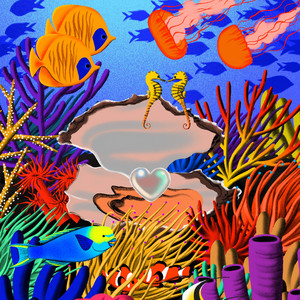
You can go to ted.npr.org to see her full talk along with beautiful illustrations by artist
Natalie Moore, who also happens to be her daughter.
On the show today, a love letter to the ocean.
I'm Manou Shzumarodi and you're listening to the Ted Radio Hour from NPR.
Before we get back to the show, I want to ask you to please consider becoming a member
of Ted Radio Hour Plus.
You'll get extra advice, stories and expertise from Ted Speakers every other week and no
ads ever.
And you'll be supporting public radio.
Listener Support is crucial to keeping us going.
Go to plus.npr.org slash Ted or give it a try right in the Apple Podcast.
Support for this podcast and the following message come from wise.
The app that makes managing your money in different currencies easy with wise.
You can send and spend money internationally at the mid market exchange rate.
No guesswork and no hidden fees.
Learn more about how wise could work for you at wise.com.
I'm Rachel Martin.
After hosting Morning Edition for years, I know that the news can wear you down.
So we made a new podcast called Wild Card where a special deck of cards and a whole bunch
of fascinating guests help us sort out what makes life meaningful.
It's part game show, part existential deep dive and it is seriously fun.
Join me on Wild Card wherever you get your podcasts, only from NPR.
This message comes from crooked media featuring offline with John Favreau.
The former Obama speech writer lets his innate curiosity guide his exploration around internet
culture and its effects.
Listen to offline with John Favreau every Sunday wherever you get your podcasts.
On this week's episode of Wild Card, musician and producer Jack Antonov says growing older
can help soften our insecurities.
I love when you get to that point with some of the things that bother you about yourself
for you, become almost like bored and angry about it.
I'm Rachel Martin.
Listen to NPR's new podcast Wild Card.
The game where cards control the conversation.
This message comes from the Rich Roll podcast.
For over a decade, Rich Roll has been exploring what sparks and sustains personal evolution.
Because change is possible and conversation matters.
Explore the Rich Roll podcast at voicingchange.media.
App.
It's the Ted Radio Hour from NPR.
I'm Manouch Zomeroadie and today's show is a love letter to the ocean.
I have had this song stuck in my head since I watched your talk.
Would it be okay if I played it for you?
Yeah, I'm game.
Romantic sponges.
Do you recognize it?
Nice.
I do.
This is the great Cole Porter's Let's Fall in Love.
Let's do it.
Let's fall in love.
Let's do it.
Let's do it.
Let's fall in love.
Let's fall in love.
Let's fall in love.
Let's fall in love.
Let's fall in love.
Let's fall in love.
Let's fall in love.
Let's fall in love.
Let's fall in love.
Let's fall in love.
Let's fall in love.
Let's fall in love.
Let's fall in love.
Let's fall in love.
Let's fall in love.
Let's fall in love.
Let's fall in love.
Let's fall in love.
Let's fall in love.
Let's fall in love.
Let's fall in love.
Let's fall in love.
Let's fall in love.
Let's fall in love.
Let's fall in love.
Let's fall in love.
Let's fall in love.
Let's fall in love.
Let's fall in love.
Let's fall in love.
Let's fall in love.
Let's fall in love.
Let's fall in love.
Let's fall in love.
Let's fall in love.
Let's fall in love.
Let's fall in love.
Let's fall in love.
Let's fall in love.
Let's fall in love.
Let's fall in love.
Let's fall in love.
Let's fall in love.
Let's fall in love.
Let's fall in love.
Let's fall in love.
Let's fall in love.
Let's fall in love.
Let's fall in love.
Let's fall in love.
Let's fall in love.
Let's fall in love.
Let's fall in love.
Let's fall in love.
Let's fall in love.
Let's fall in love.
Let's fall in love.
Let's fall in love.
Let's fall in love.
Let's fall in love.
Let's fall in love.
Let's fall in love.
Let's fall in love.
Let's fall in love.
Let's fall in love.
Let's fall in love.
Let's fall in love.
Let's fall in love.
Let's fall in love.
Let's fall in love.
Let's fall in love.
Let's fall in love.
Let's fall in love.
Let's fall in love.
Let's fall in love.
Let's fall in love.
Let's fall in love.
Let's fall in love.
Let's fall in love.
Let's fall in love.
Let's fall in love.
Let's fall in love.
Let's fall in love.
Let's fall in love.
Let's fall in love.
Let's fall in love.
Let's fall in love.
Let's fall in love.
Let's fall in love.
Let's fall in love.
Let's fall in love.
Let's fall in love.
Let's fall in love.
Let's fall in love.
Let's fall in love.
Let's fall in love.
Let's fall in love.
Let's fall in love.
Let's fall in love.
Let's fall in love.
Let's fall in love.
Let's fall in love.
Let's fall in love.
Let's fall in love.
Let's fall in love.
Let's fall in love.
Let's fall in love.
Let's fall in love.
Let's fall in love.
Let's fall in love.
Let's fall in love.
Let's fall in love.
Let's fall in love.
Let's fall in love.
Let's fall in love.
Let's fall in love.
Let's fall in love.
Let's fall in love.
Let's fall in love.
Let's fall in love.
Let's fall in love.
Let's fall in love.
Let's fall in love.
Let's fall in love.
Let's fall in love.
Let's fall in love.
Let's fall in love.
Let's fall in love.
Let's fall in love.
Let's fall in love.
Let's fall in love.
Let's fall in love.
Let's fall in love.
Let's fall in love.
Let's fall in love.
Let's fall in love.
Let's fall in love.
Let's fall in love.
Let's fall in love.
Let's fall in love.
Let's fall in love.
Let's fall in love.
Let's fall in love.
Let's fall in love.
Let's fall in love.
Let's fall in love.
Let's fall in love.
Let's fall in love.
Let's fall in love.
Let's fall in love.
Let's fall in love.
Let's fall in love.
Let's fall in love.
Let's fall in love.
Let's fall in love.
Let's fall in love.
Let's fall in love.
Let's fall in love.
Let's fall in love.
Let's fall in love.
Let's fall in love.
Let's fall in love.
Let's fall in love.
Let's fall in love.
Let's fall in love.
Let's fall in love.
Let's fall in love.
Let's fall in love.
Let's fall in love.
Let's fall in love.
Let's fall in love.
Let's fall in love.
Let's fall in love.
Let's fall in love.
Let's fall in love.
Let's fall in love.
Let's fall in love.
Let's fall in love.
Let's fall in love.
Let's fall in love.
Let's fall in love.
Let's fall in love.
Let's fall in love.
Let's fall in love.
Let's fall in love.
Let's fall in love.
Let's fall in love.
Let's fall in love.
Let's fall in love.
Let's fall in love.
Let's fall in love.
Let's fall in love.
Let's fall in love.
Let's fall in love.
Let's fall in love.
Let's fall in love.
Let's fall in love.
Let's fall in love.
Let's fall in love.
Let's fall in love.
Let's fall in love.
Let's fall in love.
Let's fall in love.
Let's fall in love.
Let's fall in love.
Let's fall in love.
Let's fall in love.
Let's fall in love.
Let's fall in love.
Let's fall in love.
Let's fall in love.
Let's fall in love.
Let's fall in love.
Let's fall in love.
Let's fall in love.
Let's fall in love.
Let's fall in love.
Right when it's most important.
Right when it's most important.
So for clownfish, they're often caught and sold as aquarium pets.
And the bigger fish, right, are the ones that tend to be the more attractive for sale.
So if you imagine on a reef you go around and you start pulling off all the big clownfish,
you're taking all the females.
And taking all the females completely disrupts the life cycle of an entire school of clownfish.
You skew the sex ratio.
You're making it harder for those individuals that are left behind to actually find their
mates or you're forcing them to transition in an undercondition sooner than they would.
And that's going to actually decrease the amount of offspring that is being produced.
Which causes a ripple effect for every creature connected to the clownfish.
So just imagine how we are messing with the mating habits of all kinds of marine life.
The ones we know about and the ones we don't.
It's so varied the way that animals have sex in the sea and it's so different
that we really need to take that step back and start to shift the way that we act
and shift some of our behaviors so that we can respect the way that life reproduces there
rather than thwarting them.
All to say we need to know how marine life do it.
And so now let's dive deeper and move from the coral reefs of the South Pacific
down to the cold cold romantic waters off the coast of Maine.
Take Maine Lobster.
They don't look that romantic or that kinky.
They are both.
Here's Mara Hart on the Ted's stage.
During mating season female lobsters want to mate with the biggest baddest males.
But these guys are really aggressive and they'll attack any lobster that approaches male or female.
Meanwhile the best time for her to mate with the male is right after she's molded when she's lost her hard shell.
So she has to approach this aggressive guy in her most vulnerable state.
What's a girl to do?
Her answer?
Spray him in the face repeatedly with her urine.
Under the sea, pee is a very powerful love potion.
Conveniently, lobster's bladders sit just above their brains.
And they have two nozzles under their eye stock, which they can shoot their urine forward.
So the female approaches the males den.
And as he charges out, she lets loose a stream of urine and then gets the hell out of there.
Only a few days of this daily dosing is all it takes for her scent to have a transformative effect.
The male turns from an aggressive to a gentle lover.
By the week's end, he invites her into his den.
Okay, so urine as an afridigiac.
He also kind of a chill pill.
So he invites her in for a nightcap.
That kind of it.
They go for it.
So she will occupy the den with him.
And they'll hang out for a while.
A couple of days they'll hunt, they'll feed, they'll sleep, do their lobster stuff.
And then when she feels that her molt is imminent,
and they go through this wonderful ritual, he sort of bows his head down and puts his big claws out in the sand.
And she sort of rises herself up and she takes one of her big claws and she'll tap him on one shoulder and then the other.
And we call this, yeah, we call this nighting because it really looks like that.
And we are chosen.
And we're pretty sure it means not only are you are chosen but don't go anywhere because all this is about to happen.
Oh.
She then goes to the back of the den.
And for the next few hours, she will molt.
So she sort of slips out of her shelf, if you will.
That whole time, the male guards over her.
He'll walk back and forth from the front of the den to her.
He'll sort of stroke her with his antenna and his walking legs, his small legs.
And lobster's, their taste buds are on their feet on their, those little legs.
So he's actually kind of like tasting her, licking her.
That's where like the kinky part comes in.
So he's sort of guarding over her, tasting her, caring for her.
And then she sort of gives him a signal that she's ready.
And now at this point, she literally is like a blob.
She can't support her own weight. She cannot stand up. She can't really move.
And so he scoops her up using his walking legs and forms almost like a hammock.
And holds her and rolls her over so that they're belly to belly.
Basically in the missionary position.
And sort of cradles her there.
And then he inserts these two special little fins that he, he has sort of at the base of his tail that slot into that pouch.
And he delivers his sperm packet.
And then he very gently leaves her back down.
And that's it. That's the sex.
But then for the next few days, he will guard the front of that den while her new shell is hardening.
And then when she's ready, she stands up.
So thank you very much.
Weaves the den, they probably never see each other again.
And then the next female will arrive at his doorstep and start spraying him the face with her pee.
And the whole thing repeats.
It's like marine erotica kind of like kind of.
So right, you go down a lot of rabbit holes when you're writing a book about sex in the sea.
And I would never want anyone to look at the history of my computer.
I'd be terrified.
So in terms of the role that humans are playing in lobster sex.
I mean, in terms of, I guess I should say disrupting lobster sex.
Like, can you explain that?
Sure.
So the ability for her love potion for her urine to work as a love potion depends on her urine having certain chemical signals.
Right.
And the male having receptors that can receive those signals.
And one of the things that we're doing in the ocean through climate change is we're making the oceans more acidic.
We're actually changing the fundamental chemistry of seawater.
That might scramble the message as it's passing through the seawater.
And we know that more acidic seawater is known to damage certain kinds of receptor cells.
It's affecting smell and chemical signaling in many species.
So imagine if her love potion didn't work.
Right.
That disrupts the whole strategy that lobster reproduction is based on.
And it's not just climate change where this happens.
Right.
If there's a big pollution event, you know, oil spill or runoff from land, that can change the chemical's signature of water.
And in mask or mess up the ability of animals to detect those sets.
Dive deeper and sex gets even stranger.
Fan-fin angler fish live at about 3,000 feet below the surface in the pitch black waters.
And the males are born without the ability to feed themselves.
To survive, he has to find a female fast.
Meanwhile, the female who is 10 times bigger than the male, 10 times.
She lets out a very strong pheromone with which to attract meets to her.
So this tiny male is swimming through the black waters, smelling his way to a female.
And when he finds her, he gives her a love bite.
And this is when things get really weird.
The bite itself triggers a whole bunch of chemical reactions.
And the first is that basically his jaw bone starts to dissolve.
His tissue kind of starts to almost like melt and fuses with her body.
There's circulatory systems in twine.
And almost all of his internal organs start to dissolve.
Wow.
Except for his testes.
His testes actually like kick up into like full blown maturity mode.
And he starts producing sperm.
In the end, he's basically a permanently attached on demand sperm factory for the female.
It's a very efficient system.
But this is not the kind of mating strategy that we see on a farm, right?
I mean, this is weird.
It's really strange.
But if we don't know that these kind of strategies exist or how they work,
we can't know what kind of impacts we may be having.
Even in the deep sea.
Presumably with the angler fish, this must have been one of the hardest discoveries to make.
And if you don't know that these wild procreation activities are going on,
then you can't know when you're impacting them, right?
As humans.
We don't know what we don't know.
Absolutely.
We don't know what we don't know.
So I think there's two lessons there.
First, we have to do is precautionary approach all the time.
Assume you might be doing harm and make sure that when you're putting a new behavior
or new activity into place that you're proving no harm.
And many places on land, if you're going to put up a development
or you're going to allow industry to come in and do some sort of extractive activity,
they have to do an environmental impact assessment.
They have to show they're not going to hurt endangered species or disrupt the ecosystem.
We don't tend to do that in the ocean.
And some of that is because we think the oceans are endless and abundant forever.
Right.
Now we know that's right, that's not the case.
So taking a precautionary approach is really important.
In correcting some behaviors that we know we've gotten wrong.
So things like fishing on spawning aggregations.
So again, for fish who release their sperm and eggs into the water,
many of them form these annual, amazing, huge sex parties.
They're like giant orgies.
And you'll have tens of thousands, if not hundreds of thousands of fish,
that will all gather in one place at one time.
Often it's like a full moon party.
They do it. They love the full moon.
There's reasons for that.
But big full moon sex party.
And while they're reproducing, let them reproduce.
That's not a good time to come in and fish.
Right.
It's easy, right? For the fishers, it's easy because they can catch a lot of the biggest fish all at once.
But you're tapping into the principle rather than taking the interest.
Right. You're actually cutting off the ability of that population
to make more fish for you for the next year.
Do you use these examples and sort of the same sort of sexy language about fish?
Like when you're talking to people who are overfishing or people who might be polluting the oceans.
Like, are you say, like, let's talk about fish sex?
Is that your hook?
I tend to use the fish hook more with folks who I'm trying to get to just care.
Just genuinely start to awaken to the fact that they are connected to the ocean.
I honestly, I can't tell you how many times in bars I've just like struck up a conversation with a stranger over this.
Right. Like it's just, it's great.
You talk dirty.
You talk dirty. You can slide in a little fun factoid.
And then you're often running.
And the thing that's so marvelous is that honestly, people are curious about nature.
They are curious about oceans.
And whether they admit it or not, they are curious about sex.
Everybody is.
And so it's a wonderful bridge to start to engage in those conversations without being heavy handed, without it all being doom and gloom either.
Just talking about collapse of our ocean ecosystems and the threat of climate change, that doesn't inspire.
It doesn't bring solutions to the table.
Right. Instead, it's like, wow, isn't this crazy? And what can we do to make sure that that lobster keep getting to have their kinky sex lives?
Mara Hart is a marine biologist and the author of the book Sex in the Sea.
She's also a conservationist at the nonprofit Future of Fish.
You can see her full talk at Ted.com.
I think it's time to update Cold Porter's lyrics.
I know I was just thinking about that.
I was like, you know, clownfish in there and then amaze, do it.
But they all start males and then transition to females.
And there's this crazy psychological warfare where they control one another's maturation and they're stuck in pre-pubescent limbo.
You know, it doesn't really work, but no.
On the show today, a love letter to the ocean.
I'm Anouche Zamorodi and you're listening to the Ted Radio Hour from NPR.
The economy right now is bewildering, impenetrable, inconceivable.
Not when you have the indicator of our guys in your ears in under 10 minutes every day.
We simplify the complicated news like...
It does inflation drop. What the heck is a SPAC?
Why are trendy little high-fibre sodas suddenly dominating store shelves?
And more, listen to the indicator from Planet Money and NPR.
This message comes from Wondery.
It was the biggest scandal in pop music.
The stars of Millie Vanilli, the Grammy-winning phenomenon, were exposed as frauds.
But none of this was their idea. So who's was it?
Follow Blame It on the Fame on the Wondery app or wherever you get your podcasts.
Wait, wait, don't tell me isn't just jokes about the week's news.
It's also life hacks. For example, here's actor Karen Allen revealing how she got her starring role in Raiders of the Lost Ark.
He said, how well can you spit?
And I just found it coming out of my mouth. I said, oh, I'm gonna hawk them with the best.
On Peter Segal, if you want to increase your self-confidence, then listen to the Wait, Wait, Don't Tell Me Podcast from NPR.
On Wait, Wait, Don't Tell Me, we have very important people on our show and then ask them about very unimportant things.
Here's US Treasury Secretary, Janet Yellen.
We are also reliably informed that among your enthusiasm in addition to a macroeconomic policy is mobile games.
There are some truth in that.
There are some truth in that.
Join us for the NPR podcast that considers all the other things that's Wait, Wait, Don't Tell Me.
It's the Ted Radio Hour from NPR. I'm Anouche Zamorodi.
On the show today, a love letter to the sea.
And we often hear from scientists on the show who adore their research subjects.
But marine biologist Ayanna Elizabeth Johnson is really obsessed with one particular fish.
In 2019, Ayanna gave a talk that was both a declaration of her love for the parrot fish and an urgently to save them in their home.
I want to tell you a love story, but it doesn't have a happy ending.
Once upon a time, I was a stubborn five-year-old who decided to become a marine biologist.
34 years, 400 scuba dives and one PhD later, I'm still completely enamored with the ocean.
I spent a decade working with fishing communities in the Caribbean, counting fish, interviewing fishermen, redesigning fishing gear, and developing policy.
I've been helping to figure out what sustainable management can look like for places where food security, jobs, and cultures all depend on the sea.
In the midst of all this, I fell in love with a fish.
There are over 500 fish species that live on Caribbean reefs, but the ones I just can't get out of my head are parrot fish.
Parrot fish live on coral reefs all over the world. There are 100 species. They can grow well over a meter long and weigh over 20 kilograms, but that's the boring stuff.
I want to tell you five incredible things about these fish.
First, they have a mouth like a parrot's beak, which is strong enough to bite coral, but mostly they're after algae.
They are the lawn mowers of the reef.
This is key because many reefs are overgrown with algae due to nutrient pollution from sewage and fertilizer that runs off of land.
And there just aren't enough herbivores like parrot fish left out on the reefs to mow it all down.
Okay, second amazing thing. After all that eating, they poop fine white sand.
A single parrot fish can produce over 380 kilograms of this pulverized coral each year.
Sometimes when scuba diving, I would look up from my clipboard and just see controls of parrot fish poop raining down.
So next time you're lounging on a tropical white sand beach, maybe thank a parrot fish.
Third, they have so much style, modeled and striped, teal magenta, yellow, orange, polka-dotted, parrot fish are a big part of what makes coral reefs so colorful.
Plus, in true diva style, they have multiple wardrobe changes throughout their life.
A juvenile outfit and intermediate get-up and a terminal look.
Fourth, with this last wardrobe change comes a sex change from female to male, termed sequential hermaphroditism.
These large males then gather heroms of females to spawn.
Heterosexual monogamy is certainly not nature status quo.
Fifth, and the most incredible.
Sometimes when parrot fish cozy up into a nook in the reef at night, they secrete a mucus bubble from a gland in their head that envelops their entire life.
This masks their scent from predators and protects them from parasites so they can sleep soundly.
I mean, how cool is this?
So this is a confession of my love for parrot fish in all their flamboyant algae eating sand pooping sex changing glory.
But with this love comes heartache.
Now that groupers and snappers are woefully overfished, fishermen are targeting parrot fish.
Spear fishing took out the large species. Midnight, blue and rainbow parrot fish are now exceedingly rare.
And nets and traps are scooping up the smaller species.
And then there's my love for their home, the coral reef, which was once as vibrant as Caribbean cultures, as colorful as the architecture and as bustling as carnival.
Because of climate change on top of overfishing and pollution, coral reefs may be gone within 30 years.
An entire ecosystem erased.
We're in the midst of the sixth mass extinction, and we humans are causing it.
We also have the solutions.
Every bit of habitat we preserve, every tenth of a degree of warming we prevent really does matter.
A little bit of good news is that places like Belize, Barbuda and Bonnet are protecting these VIPs, very important parrot fish.
Also, more and more places are establishing protected areas that protect the entire ecosystem. These are critical efforts, but it's not enough.
I am never going to give up working to protect and restore this magnificent planet.
Because I don't know how to give an honest talk about my beloved parrot fish and coral reefs that has a happy ending.
That was marine biologist Iana Elizabeth Johnson. You can find all of Iana's talks at TED.com.
On the show today, a love letter to the ocean, even to its less lovable inhabitants.
We started the hour with a story about sea urchins. We'll end with another terrifying but unassuming creature.
I call them killer snails. I love to call them killer snails. I mean because that's what they do, right? They kill things.
This is Venom scientist Mandy Halford. She studies cone snails, a group of venomous predatory snails found all over the world and at all depths of the ocean.
They are net hunters, so they open their rostrums, which is their mouths really wide. You're going to swallow something and they are. They're going to swallow fish.
They usually eat a school of fish, so they open their mouths really wide in golf the fish and then they start to individually harpoon the fish with venom once they're in their mouth.
They sting the fish, or if you disturb them, they'll sting you, right? Then what happens? How does the venom work?
Inside of venom, you have peptides that are very specific to what they do. I like to say that they target blood brains and membranes.
They come at you all at once and they are trying to shut down or disrupt the normal physiology of the prey so that you're in sort of this excited shop state or the ripping membranes apart.
They are tearing apart with different membranes on the cells. It's very violent. It's very violent in your body.
Your body doesn't know what's hidden. It's designed to be this all-powerful, shock and awe kind of campaign that happens when it's injected into the prey.
Where it's fanning out to hit these molecular targets, hit these iron channels on membranes of cells to disrupt how they would normally function.
You should be cautious of them when you encounter them on the beach because from the source of where they're injected, it starts to get sort of paralyzed.
That paralysis creeps up to your diaphragm eventually and prevents you from being able to breathe normally. You die from that and some also from the heart attack of just realizing that you can't breathe as well.
At this point, I do not feel like writing these things a love letter, but handy you are really deeply in love with these snails and with what they can do.
We think of snails as super villains because they feed on fish, snails and worms and their venom can be lethal to humans too, right? So a snail can kill a human. But we also think of them as superheroes because if we tease out the components in their venom, we can identify their aputics that are very effective against pain and cancer.
That's how we're able to use venom from snails as a superpower for good.
Here's more from Mandy Hallford on the therapeutic properties of venom in her TED Talk.
Sounds like a stretch or maybe even snake oil, but actually while there's snakes involves, the product is legit.
The toxins work with the precision of a Swiss army knife.
Are there other things that I would like to use venom to attack for sure? And one of those is cancer. Cancer tumors are cells and like all cells, they communicate with themselves and their environment around them.
So we would like to find venom components that are very good at disrupting how the tumor cells communicate.
The cancer that we're most focused on right now is liver cancer. We found a compound from a terabret snail that seems to attack liver cancer cells.
And then when we took this compound and we injected it into mouse models that were expressing liver cancer cells, it significantly inhibited the growth of the tumors.
Basically what we think is happening is that the compound is blocking a specific channel, prohibiting the transmission of a specific chemical that leads to downstream signaling that enables the tumor to multiply and draw blood to itself.
So just to sum up the components in venom that kill prey are exactly what makes it possible to target specific illnesses and potentially treat them.
Yes, exactly.
I know that your lab is working on using sea snails for cancer treatments, but there are some other medications made from venom already that are on the market.
Where are we in terms of what is out there, what's gotten approved and what's hopefully still on the way.
So for our peptide, we're still a ways away from getting it into clinical trials because we have to prove the mechanism of how it works and all of that.
But currently there are at least six different drugs that have been approved by the FDA that are on the market that are either the venom peptide itself or derived from venom peptides that you can go and get a prescription from a doctor.
Wow, you can find venom in lots of creatures.
So the venom is found all throughout the tree of life, so you know, steaks, spider scorpions. So the six that are currently on the market, one is from Kohnstnell. It's a pain therapy called preal that they use for chronic pain and HIV and cancer patients.
One from the Brazilian pit viper is Captapro and they use it for hypertension from the heel monster.
And the one from the medicinal leach is Xenotide, which is used to lower blood sugar and diabetes. From the medicinal leach, we find something called angiomax.
They use it for blood thinning. And then we have something from another viper agrostat, which is also a blood thinner and then the pygmy rattlesnake gives you another blood thinner.
So those six. So we've got three snakes, a leach snail and a heel monster.
And the pharmacists you've got there. So what is your hope for them in the next say five to 10 years?
Oh my god. In the next five to 10 years, I think the venom field is going to really explode. I really think we're at a point in which the technology has advanced so much that it's enabled us to be able to study these fields.
Study these organisms in ways that are less invasive. So we don't need as many, right? And also we can get so much depth in terms of what their genes are doing and how the genes are made.
And for that, that I think is the most exciting part is we are interested in looking for things that would give us pain therapies that are non-addictive or looking for ways in which we can talk about treating cancer.
That would be easier for the patient. So looking for selective treatments for cancer that did not have the side effect that all the current treatments have, which is that they're really horrible. They're just as bad as the disease.
So those were our two sort of marching orders when we wanted to use venom for good.
Can we find a pain therapeutic that is not addictive so an alternative to the opioids to address the opioid crisis? And can we identify a cancer treatment that was selected for tumors versus healthy cells so that patients don't have to go through this agony when they're going under cancer treatment?
There's so much more venom out there for us to study. In fact, we think that 15% of all the animals on the planet are venomous.
And I think this is a low estimate given the fact that we haven't surveyed all the animals on the planet.
But nature seems to have found something that she likes and she's repeated it over and over and over again leading to the vast array of animals that we see around us and all throughout the tree of life.
We're in a race to harness all of this venom goodness before we lose the vast majority of animals in our planet.
It's a holistic process. You can't have the therapeutic treatments without having the animals and you can't have the animals without having their ecosystems.
So for me and the snails what it means is we have to save the oceans and because venomous animals are found everywhere we basically have to save the planet.
So do it for the venomous animals if you don't want to do it for yourself.
I want to tie this back to what our episode is all about, which is this idea of our love of the ocean are our need to remind ourselves there are lots of reasons to invest in saving the ocean.
And the reasons that you're describing are kind of appeal to our self interest in many ways, you know, whether we will suffer from cancer or diabetes or high blood pressure. These are all things that humans desperately could use treatment for.
And so we need is this is that an okay reason to want to preserve the oceans? Yes, no, altruism. Altruism is a good thing, but self interest is even better.
And so when one people make the biscuit help me, I want it, then they seem to, you know, behave accordingly.
And so yes, whatever the motivation for saving the oceans, we've got to we've got to do it, right? And in this case these snails are helping to make our lives possible by allowing us to find novel treatments for ailments that are not going away, right?
And if that isn't enough, if it isn't enough to say that, hey, my dad or my mom or myself, who is this cancer patient suffering, and I know a snail that can help that.
And in order for me to get that snail what it needs, I've got to not pollute my ocean. I'm going to say yes to that because I want my mom around or I want to be around myself.
And so I think bringing in the story of how we tie nature and humanity is a powerful one for how we're going to be able to maybe change behaviors and protect our oceans.
That's Venom scientist Mandy Halford. You can see her full talk at TED.com. And there is more of our love for the oceans coming soon. Join us in two weeks for part two on the ocean.
Ideas on how to protect the seas and all the amazing marine life that lives in them. Thank you so much for joining us today to learn more about the people who are on this episode go to TED.NPR.org and to see hundreds more TED Talks check out TED.com or the TED app.
And by the way, if you have been enjoying the show, we would be so grateful if you left a review on Apple Podcasts. It's the best way for us to reach new listeners.
This episode was produced by Rachel Faulkner, James De La Housi, Katie Montellone, and Fiona Geuren. It was edited by Sana's Meshkan Poor.
Our production staff at NPR also includes Jeff Rogers, Diba Mochasham, JC Howard, Christina Calla, Matthew Cloutier, and Janet Ujong Lee.
Our audio engineer is Daniel Schuchin. Our intern is Harrison Vijay Choi. Our theme music was written by Romteen Arablui.
Our partners at TED are Chris Anderson, Colin Helms, Anna Fielin, Michelle Quint, and Micah Eams.
I'm Manouch Zomerodi, and you've been listening to the TED Radio Hour from NPR.
Here is shortwave we bring the wondrous world of animal science to your daily life.
We find inspiration in the cute, gross, incredible, and the surprising.
From queer animal love stories to metaposen whales, we got your dose of critter knowledge.
Listen now to the shortwave podcast from NPR.
When you hear Birmingham, Alabama, you might think about the Civil Rights Movement, but maybe not about baseball.
But as the oldest pro-ball park in America, Rick Woodfield saw the struggle for freedom play out right there on the dirt and grass.
I'm Roy Wood Jr. I grew up in Birmingham, and I'm going to tell you this whole story.
Listen to Road to Rick Wood from WNO and WRKF, part of the NPR Network.
NPR Plus is a new way to support public media and get more from your favorite NPR podcasts like Fresh Air.
Sometimes I'll actually preface the question with if it makes you uncomfortable to talk about if it's too personal, just tell me.
Here's the question.
For behind-the-scenes content, bonus episodes, and more, sign up at plus.npr.org.