Oh yeah, get ready to learn more than 20 everyday English expressions with the newest Disney Pixar movie Hoppers.
Hoppers is about an animal lover named Mabel who transfers her mind into a robotic beaver.
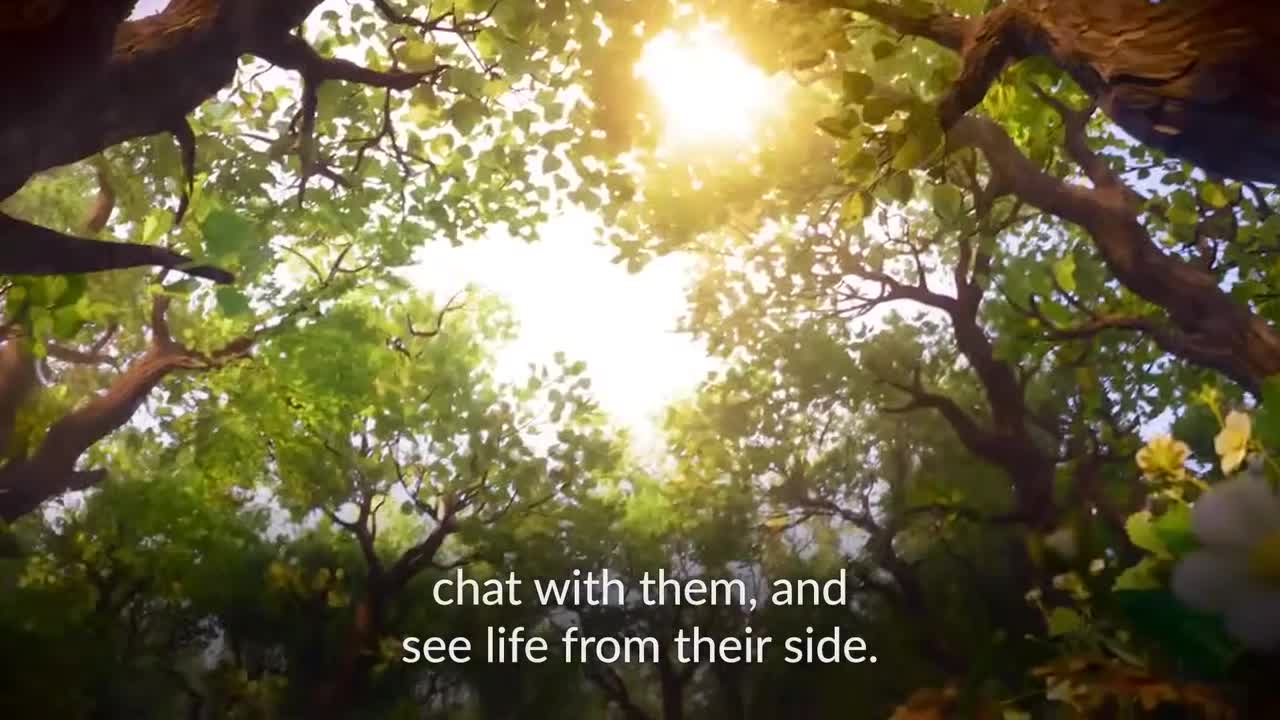
Suddenly, she can hang out with animals for real, chat with them, and see life from their side.
While living among animals, Mabel becomes friends with the Beaver King.
Together they work to stop a corrupt mayor who wants to destroy their natural habitat to build a new freeway.
And here's the best part.
To help you not only learn new expressions we'll cover today but also never forget them, We want to give you access to all the smart flashcards from this lesson for free.
You can practice with them in our app by clicking the link below.
Thousands of learners just like you are becoming more fluent every day and having fun while doing it.
If that sounds like something you'd like, be sure to try out our method.
You only need a few minutes a day to see real progress.
With all these animals living in one little pond, we needed some rules to make it work.
You want to live here, you better learn them too.
But I don't want to live here.
I just want to... Pond rule number one.
Don't be a stranger.
It's harder to be mad at someone if you know their name.
Looking good, Ron.
Oh, thank you, sir.
You too, Fran.
Tom, Laquan, Rosie, Tamara, Prudence, Matty, Pete, Peter, Petey, Sasha, Cat, Matt, Tombo.
Oh, hey there, George.
And hello to you, Steve.
That's pond rule number two.
When you gotta eat...
In the scene we just watched, Mabel arrives at the pond in her robotic beaver body and is greeted by the beaver king, George.
He then takes her on a walk and explains the pond rules.
Let's take a closer look at some of the advanced vocabulary from this scene.
This is a pond, a small body of water smaller than a lake.
In this movie, the pond is the central community where different animals coexist.
Now, these pond rules King George is referring to are the instructions or guidelines for how to live together in this community.
You better, or the full form you had better, is used to give strong advice or a warning.
It means you should, but with more urgency.
For example, you better hurry or you'll miss the bus.
Watch this example.
So let's hear King George explain the first rule.
Don't be a stranger is an expression normally used for telling someone to stay in touch, that is, to keep in contact or come visit again soon, like in this example.
In the scene from Hoppers, though, he just means connect with everyone and be part of the community.
Don't be a stranger.
He explains what he's talking about next.
If you're mad at someone, that means this person has made you angry or annoyed.
It's a common expression in American English.
We are very disappointed in you.
We're mad at you.
Exactly, we're mad at you.
Mad?
In British English, you'll most likely hear be angry with somebody.
Not a good time, Rose.
Don't be angry with me.
Because mad in British English would mean crazy, like in this example.
He's mad.
A hatter?
Yes, I know.
Anyway.
So King George is saying it's easier to treat another person well if you know who they are, if you know their name.
This is actually pretty good advice for life.
He then goes on to demonstrate the attitude he's talking about.
Looking good or looking sharp is a friendly way to greet someone.
Natives say this all the time to compliment the other person's appearance when they need.
And these function as any other casual greeting option like how's it going, what's happening, what's up, etc.
Next, we have pond rule number two, which is when you have to eat, eat.
It's already expected that a predator, like a bear, will have to eat their prey.
They understand that's how nature works.
Now, let's take a look at the final rule.
This is a common phrase.
Natives use to say we're facing the same challenge and we need to support each other.
You'll hear it during difficult times like, for example, during the COVID-19 pandemic, when people used it to encourage solidarity.
Mabel reacts with a question that's actually a good phrase for practicing advanced pronunciation.
See how she linked all those words together?
That's what we call connected speech, the way natives cut, reduce and link words when they speak.
So basically, she's linking how to is, which sounds like how is, then she's linking that to a, which sounds like there, there.
The T here becomes a flap T, or what we call the American T, when it sounds like a fast D.
We heard it before in this line.
So here's how she pronounced this question.
How is that a rule?
How is that a rule?
I wanna hear you try it.
Repeat after Mabel.
How is that a rule?
How is that a rule?
Okay, so moving on, King George explains what exactly we're rolling this together means for this animal society.
Well, it means no matter who you are... No matter means it doesn't make a difference.
Like, no matter where you live, you can stay connected to your friends online.
You could also hear someone say regardless of.
Here's another example.
We used to sing it every night the same time, no matter how far apart we were, and i would do a great job.
Regardless of whatever's pie charts say or what king george says, it doesn't matter if you're big or small, strong or weak, no matter who you are, you always look out for others.
You look out for others who needs looking out.
To look out for someone means to watch over them or take care of them.
Like parents look out for their children or neighbors look out for the elderly.
It's about being protective and caring.
And, by the way, are you like me, and sometimes you just forget new expressions soon after learning them.
Yeah, I thought so.
That's why it's so important to review the words you are learning today.
I know this not only from my own experience learning English, but also because we've taught millions of English learners like you.
And that's what led us to create the perfect solution.
A set of flashcards for this lesson that is available for free on our app.
These will help you remember the new words from this lesson forever.
The reason this works is that we put the science and the right technology behind it.
Basically, the app knows the exact expressions you've learned from all the lessons and just when you're about to forget one, we bring it back to you to practice.
No matter how busy you are, all you need is 10-15 minutes daily for more natural English speaking.
Super easy!
Just click the link in the description below to try the real-life app right now for free, and start getting a bit more fluent every day.
Now we've seen Mabel learning the rules of the pond, but how did she end up in a robotic beaver body in the first place?
Let's go back to a point early in the movie where it all started, the moment Mabel accidentally discovers the secret hopper's technology.
Let's watch. must never fall into the wrong hands.
What is this?
Mabel?
Dr. Sam, you're experimenting on animals?
I'll handle her.
Nisha, no.
I don't know what you think you saw, but I can use you.
You people are sick.
No, no, no.
There's a simple explanation.
What have you done to him?
Mabel, you're holding a robot.
What?
Okay, so first let's take a look at an expression Dr Sam uses.
This technology must never fall into the wrong hands.
Something falls into the wrong hands, it means it gets controlled by people who will use it to do bad things.
For example, if your personal information falls into the wrong hands, hackers could steal your identity.
Or in the final harry potter book, harry tries to prevent the most powerful wand in the world, the elder one, from falling into the wrong hands.
And when Mabel walks in holding what she thinks is a real beaver, her reaction is immediate and furious.
Experimenting on animals means doing scientific tests using live animals as subjects.
Animal experimentation is the actual collocation used to refer to this issue in the real world.
Many people find this morally wrong and cruel, while others argue it's sometimes necessary for scientific progress.
Animal rights activists like Mabel strongly oppose it.
If you say you'll handle someone in a context like this, that means you'll take care of the situation, implying you'll control them, sometimes by force.
See this other example.
What makes you think she'll be there?
I read it in a book once.
Well, cool.
You handle the dragon, I'll handle the stairs.
And in normal context, handle can be neutral.
You could say, I'll handle the paperwork, or can you handle this client?
We just know.
I don't know what you think you saw, but I can...
Here Mabel, means they're disturbed or morally wrong because it seems they've been doing bad things to animals.
She doesn't mean sick as in physically ill.
Sick in this context is a strong insult suggesting someone's behavior is deeply wrong.
You could also say twisted.
Whoa, whoa, whoa, whoa, whoa, whoa, hold on.
What kind of sick planet is this?
Do you remember that connected speech pattern we practiced in the first clip?
Here we have another opportunity to practice with this line from Dr. Sam.
And again, we can hear the American T between the words not and an.
Not an.
Not an animal.
Let's practice one more time.
Here's an important grammar point, something that many learners get wrong.
Why didn't she say, first tell me what is this?
Well, remember this is not a question.
In questions, we invert the subject and verb what is this?
But when it becomes a statement, this subject is followed by the verb tell me what this is.
Another example could be she asked what his name was, not she asks what was his name?
Moving on, let's hear dr sam's explanation of the technology she developed.
We call it hoppers.
First, you should know that to hop means to jump with short, quick movements, like how rabbits hop.
Beavers and bunnies, which we see in the lab, are animals that hop, so the name is a playful pun.
However, this word is also used figuratively in phrases like hop in the car, hop on a call or hop over to the store.
It means to quickly move to or enter something.
And in the movie, the technology lets you hop into a robotic animal body.
Next, the explanation gets pretty technical and packed with big words.
Let's unpack what all of this means.
Proprietary refers to something that belongs to a company or person and that is not openly shared with the public.
For example, Coca-Cola has their own proprietary formula.
It's secret and protected, and only Coca-Cola can use it.
Dr Sam is saying the machine she created or, in her words, the apparatus she created, is a private technology that belongs to her.
It's a proprietary apparatus.
Now, the adjective mindcasting is not a real expression, but it describes what the technology does, casts or projects your mind into something else.
Think of how you can cast your phone screen to your tv.
That's why this google device is called chromecast.
Okay, let's hear what else she says.
We use a proprietary mind casting apparatus to hop or inhabit a lifelike replica.
I don't know what that means.
To inhabit means to live or occupy space.
Animals inhabit forests, people inhabit cities, spirits inhabit bodies and ghost stories.
Here it means your mind enters and occupies the robotic animal body, kind of like the movie avatar, and in fact they joke with this.
In the movie we created a fake animal which makes the other animals think you're an animal.
Yes guys, this is like avatar.
This is nothing like avatar.
Lifelike means appearing very realistic, as if it's alive, even though it's not.
For example, a lifelike painting looks like a photograph and these robots look and act like real animals, even though they're artificial.
And a replica is an exact copy of something.
A replica painting looks identical to the original.
And these robot animals are replicas of real beavers, bunnies, and other creatures.
They are copies designed to look and move just like the real thing.
And with all this technical explanation, it's funny how Dr Nisha simplifies everything in these five words.
We put this into this.
Yes, yes, this into this.
Alright, now are you ready for the final and most important step of the lesson?
We're going to take everything you've just learned the new vocabulary and the advanced pronunciation and put it into practice.
You'll watch the whole scene again, this time without subtitles, and answer some quiz questions.
Are you ready?
Let's do it!
With all these animals living in one little pond, we needed some rules to make it work.
You want to live here, you better learn them too.
But I don't want to live here, I just want to... Pond rule number one, don't be a stranger.
What does King George mean by don't be a stranger?
Tell me more about yourself.
You're acting like a stranger.
Meet and connect with other animals.
It's harder to be mad at someone if you know their name.
Looking good, Ron.
Oh, thank you, sir.
You too, Fran.
Tom, Laquan, Rosie, Tamara, Prudence, Matty, Pete, Peter, Petey, Sasha, Cat, Matt, Tombo.
Oh, hey there, George.
And hello to you, Steve.
That's pond rule number two.
When you gotta eat, eat.
Pond rule number three.
We're all in this together.
Uh, how is that a rule?
Well, it means...
If you are looking out for someone, you are looking outside to see if someone is coming trying to find someone or helping and trying to protect someone.
There.
On rules.
This technology must never fall into the wrong hands.
What is that?
Mabel?
Dr. Sam, you're experimenting on animals?
I'll handle her.
Nisha, no.
I don't know what you think you saw, but I can... You people are sick.
What's another way to say someone is sick like Mabel did here twisted disturbed perverted, messed up, disgusting.
There's a simple explanation.
What have you done to him?
Mabel, you're holding a robot.
What?
See?
Not an animal.
Dr. Sam mentions their proprietary technology.
What kind of technology is this?
It's exclusive and privately owned.
It's experimental and untested.
It's expensive and hard to build or inhabit a lifelike replica body that I don't know what that means.
We put this into this.
Yes, yes.
This into this.
This into this.
Oh yeah, amazing job.
Now, if you are new to this youtube channel, you should know that every single week we make new lessons, just like this one with celebrities, movies and tv series to help you understand fast speaking natives without getting lost, without missing the jokes and without subtitles.
So if that sounds like something you want to be able to do, hit the subscribe button, the bell down below, so you never miss any of our newest lessons.
Remember to go and practice what you learned today on the RealLife English app.
You'll find a special link right in the description below that'll take you straight to this lesson over there.
We got to get out of here before they take me away.
Take you away?
You're going to leave me?
No way.
That's my body you're in.
Oh, okay.
Do you think you can walk?
I don't know.
I failed body test drive like 436 times.
But will you try?
Okay.
I can make this.
Okay, come on.
You're doing great.
Keep going.
Keep going.
I'm just gonna rest here for a minute.
No, no, no, no.
They'll be back any minute.
Come on!
Hey!
Now, push the down button.
Move your... No, careful.
Those figures are my livelihood.