Understanding the human body is a team effort.
That's where the Yakult group comes in.
Researchers at Yakult have been delving into the secrets of probiotics for 90 years.
Yakult also partners with Nature Portfolio to advance gut microbiome science through the Global Grants for Gut Health, an investigator-led research program.
To learn more about Yakult, visit yakult.co.jp.
That's Y-A-K-U-L-T dot C-O dot J-P.
When it comes to a guide for your gut, count on Yakult.
Happy Monday, listeners.
For Scientific American Science Quickly, I'm Rachel Feldman.
You're listening to our weekly science news roundup where we dive into some of the headlines you might have missed last week.
We'll start by checking in on the latest in public health news.
A report published by the Centers for Disease Control and Prevention last week argues that Chagas disease, also dubbed kissing bug disease, is now an endemic illness in the US, Caused by trypanosoma cruzi parasites that lurk in the feces of blood-sucking insects known as kissing bugs.
The disease can cause fevers vomiting diarrhea rashes achiness, loss of appetite and headache for a few weeks or months after infection.
If the parasite isn't eliminated with treatment during this acute phase, people with Chagas can go on to develop digestive problems as well as heart conditions that can prove fatal.
While casual contact won't spread the disease from person to person, transmission is possible by way of blood transfusions, organ transplants and between pregnant people and their babies.
You can also get the disease without a kissing bug bite if you eat uncooked food contaminated with an infected insect's feces.
The new CDC report warns that kissing bugs are now prevalent enough in parts of the US for the illness to be considered endemic, which means it has a constant presence in the country.
In Los Angeles County, for example, experts estimate that 45000 people have Chagas disease and more than 44000 of them are unaware of that fact.
But it's not all bad news in the public health world.
According to a recent report from the CDC's National Center for Health Statistics, last year COVID-19 finally dropped off the list of the 10 leading causes of death in the US for the first time since 2020, though it remains in the top 15 causes.
The country's overall death rate dropped by 38 between 2023 and 2024, which may be due in part to the decrease in COVID deaths.
The fact that drug overdoses fell by almost 27 during that timeframe, reaching their lowest level in five years, could also be a contributing factor.
The one sour note to this news is the fact that COVID vaccines have gotten harder to access for many people under the age of 65.
Late last month, the Food and Drug Administration approved updated COVID vaccines for older Americans and people with certain underlying health conditions, in contrast with previous years, when shots were recommended for everyone six months and older.
Last week, the American Academy of Family Physicians officially recommended COVID vaccines for all individuals aged six months and over, including pregnant people.
The organization joins the American Academy of Pediatrics and the American College of Obstetrics and Gynecologists in issuing guidance that contradicts federal policy.
That conflicting advice isn't just confusing for folks wondering whether or not they should get the shot.
The Oregonian reported last week that in Oregon, which is one of several states that for now requires a prescription to get a COVID vaccine, many physicians are hesitant to prescribe the jab due to potential liability and insurance coverage issues.
Speaking of vaccines, we've got some sunnier health news from down under.
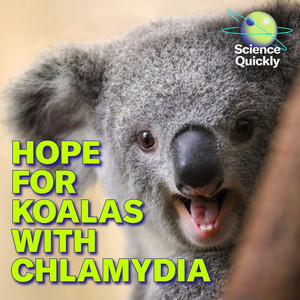
The end of the devastating koala chlamydia epidemic could finally be in sight.
Strains of the bacterium chlamydia pecorum, which experts believe were introduced to Australia by infected livestock in the late 1700s, have absolutely devastated wild koala populations.
While the human version of chlamydia is often asymptomatic, easily treated with antibiotics and is typically only a cause of serious illness if left untreated, infected koalas face a risk of blindness, infertility and even death.
Making matters worse is the fact that antibiotics are a poor treatment option for these animals, as their guts require specific microbes to digest, otherwise toxic eucalyptus, their main food source.
Because koalas develop this necessary aspect of their microbiome by consuming a poop-like excretion from their mothers called PAP.
Curing a female of chlamydia doesn't just have an impact on her own gut, but can have a devastating effect on any of her future offspring too.
But help is finally on the way.
Last week, researchers announced that the Australian Pesticides and Veterinary Medicines Authority approved a single-dose koala chlamydia vaccine for the first time.
The shot has been in development for more than a decade and showed at least a 65 reduction in disease when tested in the wild, according to one of the researchers from the University of the Sunshine Coast.
The researchers hope to make the vaccine available for free, but its success will still hinge on generous government funding, as folks will have to get out there to find and inject koalas in need.
So just keep hanging in there, little guys.
Now let's blast off into space for some physics news.
Yesterday marked the 10th anniversary of the first ever direct detection of gravitational waves.
After a decade in operation, the Laser Interferometer Gravitational Wave Observatory, better known as LIGO, has captured some 300 black hole mergers, with the rate of detection rising dramatically as researchers have improved the system's detectors.
LIGO can now detect changes in spacetime smaller than 1 700 trillionth the width of a human hair.
In another exciting LIGO development.
Using data from one of the more recently observed black hole mergers, scientists have provided the best observational evidence yet for Stephen Hawking's black hole area theorem.
The team published its findings last Wednesday in physical review letters.
Hawking's 1971 theorem establishes that black hole event horizons can only maintain or increase their total surface area over time, never shrinking.
The researchers saw a clear increase in surface area when two black holes merged, going from roughly 240000 square kilometers to about 400000 square kilometers.
They figured this out by observing the ringdown phase, which is a period after black holes have come together, during which the newly formed black hole vibrates like a rung bell.
Studying how the gravitational waves change during this phase allowed the scientists to calculate the mass and spin which helped them find the black hole's surface area.
There was also some exciting space news closer to home last week.
A paper published in Nature on Wednesday reports that a sample collected by NASA's Perseverance Mars rover could contain signs of life.
The discovery comes from an ancient dry riverbed in the Dezero crater, where a clay-rich rock has been found to hold potential biosignatures.
A potential biosignature is a substance or structure that may suggest biological origins, but further investigation is needed to determine whether it was actually produced by living organisms.
The rock contains specks of chemically reduced iron phosphate and iron sulfide, minerals which on Earth are typically thought to be associated with microbial life.
But we also know of other processes that can produce the same substances.
So while the new findings are exciting, we're still in the very earliest stages of potentially proving that maybe life once existed on Mars.
That's all for this week's Science News Roundup.
We'll be back on Wednesday to explore the actual science behind your gut feelings.
Science Quickly is produced by me, Rachel Feltman, along with Fondam Wongi, Kelso Harper and Jeff Delvisio.
This episode was edited by Alex Zaghiara.
Shayna Poses and Aaron Shattuck fact-check our show.
Our theme music was composed by Dominic Smith.
Subscribe to Scientific American for more up-to-date and in-depth science news.
For Scientific American, this is Rachel Feltman.
Have a great week.