To our game dev listeners, are you wondering how to expand your game around the globe?
Well wonder no longer!
Xsolla Payments is a solution built for global game commerce and monetization.
It boosts player engagement with localized checkout experiences using your players' preferred payment methods.
The simple user interface makes it easy for gamers everywhere to pay for your games and in -game content exactly how they want.
Even better they can save their favorite payment methods for quick purchases to help them get back in the game faster.
And you'll love Ixola Payments because of its customizable checkout and integration options, with everything from sidebars and iframes to fonts and images, making the buying process feel like an extension of your game experience for payers.
Ready to go global?
Visit xsolla .pro .aiasp or click the link in our podcast description to learn more.
Hey everyone, I'm Trent Custis, co -founder and studio director at League of Geeks, and you're listening to The Game Maker's Notebook.
Today I've got a real treat for you.
I'm talking to Prokop Yersa.
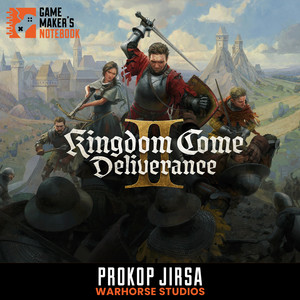
He is the lead designer at Warhorse and they're the developers of Kingdom Come Deliverance and Kingdom Come Deliverance 2.
Now I got to tell you folks I am 50 hours into KCD 2.
I hadn't played the first one but this game has me in an absolute chokehold so I don't hold back in this episode diving into those nitty -gritty design questions and really relishing that opportunity to talk to Prokop about his his experience and his team's philosophies and how they've achieved all of the ways in which they push the genre forward. It's amazing stuff.
But of course, we start the episode off as we usually do, talking about his childhood, how he got into games, which has a love of computer and tabletop RPGs in there.
We talk about his economics degree and how he ended up at Warhorse as his first full -time job, not just in the industry, but in his life.
Then we get stuck into the game.
There's an interesting thing here, an opportunity with Prokop, where he has been a designer on on Kingdom Come Deliverance 1 and then lead designer on Kingdom Come Deliverance 2.
So not only is he in there really deep in the systems and able to talk to them in great detail in regards to process and pillars and influence and how the team is approaching these things, but also how they've evolved from one game to the other and why that is.
So we talk about a lot of that.
First up, we talk about immersion in their gameplay.
How are they creating this immersion?
He has a lot of great tidbits and processes and hints about how they do it at Warhorse.
We talk talk about their quest structure.
We talk about how they create meaningful decisions and morally ambiguous decisions for their players and their quests.
Then of course, the game is a historical RPG.
How do they instill that into their game?
They have a full -time historian on staff.
So we hear all about that process, whether it be the geographical history, characters, or just tidbits about a mill or something.
He goes into a really great anecdote about Henry being a commoner and why that's such a fantastic tool for them and the player in the game.
We talk about immersion and realism a lot through this game and particularly interaction gameplay kcd does a lot of unique forms of interaction especially in the minigames and prokop gives us a peek behind the curtain into the entire process of how they created the blacksmithing minigame and why that unique form of interaction is so important for warhorse and the kingdom come games and we finish up by talking about something quite interesting which is prokop mentions that the team the narrative team is mostly made up of checks.
I write the game in Czech and it's translated to English but the unique charm and tone and perspective that it lends to Kingdom Come Deliverance and that signature cheek or cheekiness that the game has to it.
Folks if you are a game designer this episode is for you.
We get into the nitty -gritty of all those things that I mentioned and more.
I mean when we were doing the notes I said oh we've covered a lot here I didn't even realize.
So So without further ado, settle in.
Here is Prokop Yerissa of Warhorse.
Welcome to the Game Makers Notebook, a podcast featuring a series of in -depth one -on -one conversations between game makers providing a thoughtful, intimate perspective on the business and craft of interactive entertainment.
The Game Makers Notebook is presented by the Academy of Interactive Arts and Sciences, a member driven organization dedicated to the recognition and advancement of interactive entertainment.
Prokop, thanks for joining us here today.
Glad to be here. I've been looking forward to this chat because I had not yet played Kingdom Come Deliverance or Kingdom Come Deliverance 2, and I think as we discussed before, this is kind of a familiar story considering you know the explosive success of kcd2 but i had not gotten around to kcd one for whatever reason right but it was it looked like something up my alley i i understood it i'd followed the kickstart i think i even backed it but i never ended up getting into the game because you know big rpgs especially hardcore ones like yours you know that are heavy on the simulation aspect they're
they're a big investment and then kcd2 comes around and i'm like i'm definitely going to jump in and I'm glad the podcast pushed me over the edge with this episode coming up because it has proven to be one of my favorite rpgs of all time and I was not not ready for like how much that kind of historical aspect of the game really contributed as a strange attractor you know in regards to like the charm that the game has and the offering of something different and unique so let me just start off the podcast with congratulations to you and the the Warhorse team on, and I imagine the first game is fantastic.
My former business partner and now design director at League of Geeks, Blake Mitzi, was obsessed with the first game.
So no doubt that was fantastic.
But KCD2 is incredible.
Congrats. Thank you.
Honestly, it's a nice new year.
It was such a journey for us.
So to finally see it succeed, it really makes us all very happy.
And we're really glad that the game resonates with players because we were afraid that it's too different in the beginning of the journey.
So yeah, we're glad that players appreciate something that's a little bit unique.
Yeah, right? You put all your eggs in that basket and it's real standoff.
All or nothing, really, on multiple occasions.
Great. Well, look, we're going to get into all of that and we have plenty of time to do so, but let's take this podcast right back to the start where we usually do young prop cop hanging out.
Tell me your earliest memory of a video game and not just like the first video game you played or whatever bit, like the earliest memory that was kind of like meaningful or impactful on you, you know, that left a lasting impact that you could say probably contributed to where you are today.
Well, my earliest memory would be probably we got our first computer actually, because in Europe and especially in Eastern Europe, there was a big uh pc culture so there were not that many consoles back there back then so my earliest memory would be probably like warcraft one or the flashback side scoring game it's a french french made as well uh and these games which you know mostly my father played but i you know i was always present it was like new technology and i was really you know So it was magic for me.
So I really, really enjoyed it, even when I was just looking.
But then the games that really influenced me, I would say they're mostly RPGs.
Yep. I was heavily into tabletop RPGs as well, but I'll first talk about the computer RPGs.
So for example, like Fallout 1 or even the Albion RPG, not a well -known game, especially in the West, but it was really good.
from a german studio uh blue by they do the annual games now but back then they're making rpgs did you have any also in eastern europe did you have any like weird homebrew tabletop role -playing games you know like we always find i remember talking to the oh yeah the caves of cud guys were like they weren't allowed dnd in their house because of satanic panic so they had all these like different rpgs that we're talking about went deep into those random like dnd adjacent games What were you role -playing?
Do you remember any of those older games?
Dungeons & Dragons were kind of known in Czech Republic, but not really sold officially in here.
So there was like a locally made table -top RPG called Dragons' Den Perachytopia in Czech, and it was actually our executive producer now in Warhorse was the author of that tabletop RPG.
RPG and it's awesome yeah and it has kind of like a legendary you know status in Czech Republic because it was like the introduction to tabletop RPGs for most of our you know gamers in here but yeah so I played that mostly but then when we are like you know we were inventing new stuff we are even inventing new rules and new you know worlds new characters and I remember that I spent an absurd amount of time crafting this like uh merge of sci -fi and fantasy world and i was i was like really young i was like i don't know 10 years old nine your own little homebrew yes yes yes yes and and it was obviously
completely you know it wasn't good there was like this idea of merging like there was like these uh uh you know um like scientists from like space uh arriving at a planet that you know they're like crash landed there and you know they had to like solve all the stuff with the local inhabitants and with magic and everything it was actually heavily inspired by the albion game which i really okay yeah played back then awesome okay great it's funny i love that anecdote as well about your producer that works with you now like being the author of that rpg i remember see i'm gonna totally remember this wrong
but there was like a tweet that came out of one of the crew at larion that was just like a over their shoulder shot of someone at work and they were like this guy invented experience in video games or something like that our medium is young enough that there's like these folks are still floating around it's so awesome yes Very cool.
Okay, so you're playing a bunch of RPGs, and what this is, this is in your sort of like, teen years or your younger years.
Like, what? Did you have a console?
Was it mainly PC still your dad's PC?
It was mainly PC. But then later on, we got PS1.
Right. So I also delved into like, the console games.
But it was like from my early teens I would say to well it never ended so from my and and the most influential games on like I would say are the RPGs even though I played a lot of other games I have like everything basically but the earlier follows are really influential yeah vampire the eternal bloodlines I still think it's the best RPG ever made so it's it's really a good one and I'm still hopeful that the second one that's being made now will be successful i have some doubts but i'm still you know it's such an important game for me and i still i'll buy it nevertheless i'll buy the most expensive
edition they'll create good yeah it's important to hold out hope for these things absolutely yes yeah and obviously uh then uh i did play some mmorpg's i played a lot of dragon age camelot i played some ultimate online and then obviously the world of warcraft came so it was like a big thing i uh i'm glad that i ended uh early with mmorpgs because they they really you know eat up your your any time you give it oh yeah we'll just eat it up so yeah but so yeah these these these i would say were like really influential i would say balder's gate as well you know arcanum as well well these i i usually
feel that um when a game has like this uh i would say um atmosphere even if the game isn't that good but i feel like the world is really alive and interesting in some way i can get lost in the game even if the gameplay isn't perfect even if the story has some little little holes in it if the world and like the inhabitants of the world feels somehow interesting i get lost and that's why you know i'm uh you know i'm starting to play claire obscure the expedition 33 and i'm kind of feeling i love that game yeah what you said you're only like an hour three hours in or an hour yeah something like that i'm
at the beginning right now but that that feels like the unique, interesting world with mysteries to solve and uncover.
That's something I really enjoy.
Let's stop here for a second.
Let's do a little pit stop here because I'm interested to hear, you've obviously had a lot of...
Look, you've got the hit list to prove you've got the chops to be designing RPGs.
That's all you play by the sounds of things, right?
It's up your alley.
But now being a lead designer and obviously at Warhorse and working on Kingdom Come Deliverance too and Kingdom Come, like one of the things that I felt immediately getting into that game.
So, you know, I get into the game locked up in the stocks, you know, and I'm sort of led out to roam around Trosky and I immediately felt that thing that you're talking about, like that pull, you know, like the tide, the waves at your ankles sort of like pulling you into a world in the mystery and I stumble upon, you know, this little like a bow and a little archery set up like in the bushes, you know, know by the side of the road you know the one and and it just got me you know and i was like and the music's kicking in the soundtrack obviously is phenomenal in the game and it just has this such
a great sense of place and you do such a great job of conveying um the maybe it's just because i'm becoming a middle -aged man that the history the historical aspect is so so appealing you know um but like it's it really is teasing me that there's going to be like a lot of great great historical context in the game as well i'm going to learn something along the way so it's anyway it's like it's teasing me in all these different ways and i can feel it coming but my question for you is in this little pit stop that we've made here is what do you think those elements are that come to grant a sense
of place or grant this kind of immersion as people would this thing that you're feeling right now in claire obscure there's like uh i would say many different approaches to that because obviously for example declare obscure does have a i would say definitely similar or you know it's up to the players to decide maybe even better or or whatever pool to that but i think our approaches are quite different yeah of course right in kingdom come we really wanted the place to feel real there's like um this this strange mix of very like directed main story you know big cut scene actually quite there are some
things you can do differently but quite linear main story with an open world that in which you can do a lot of things by your own we really promote emergent gameplay so there's very very systematic design to most of the features.
And this weird mix of things that you would, on your first glance, would think are opposite to each other is intentional.
And the idea is that you need a world that feels really immersive, maybe even in an MMO.
It was like in one of the, I think it was like a review or a letter sent to us.
And it really struck me that what we did is like it actually worked.
It's when somebody told us, our game is the only game, apart from MMORPGs that the player plays, is where he logs in without any sense of what he will be doing.
He's logging in only to be in the world.
Maybe he'll go hunting.
Maybe he'll craft some swords.
maybe and he only felt this in MMOs but the world felt so like real it felt like a real place to inhabit so yeah that was our approach just quite different I think to what the Claire Obscure guys are doing but our approach was the world needs to be absolutely real and full of things you would like to live experience or just you know be there with the NPCs that should feel as real as possible Love it.
Beautiful answer. I have a follow -up question to that, but we're going to return to our path on your journey towards lead designer at Warhorse and we'll come back to that.
So you're playing these games on PC.
You're also starting to...
You've done your own homebrew tabletop game.
Were you in the modding scene at all?
Were you tinkering around making your own games?
Only really on a small scale.
I did some mods to the Shadowrun RPGs like campaigns but very very small ones i wouldn't say i was like big on modding actually i always took it as a hobby i i never ever imagined how this would be like my career you know even though czech republic especially for the amount of you know people living here has a quite strong industry and game development i would never imagine that i would work in the industry so all my education or everything was like pointed to a different direction and i always took it as a as a hobby so i tinkered a little bit i i think i did some maps to to the original team
fortress if i'm not mistaken but never released anything was really just i wouldn't say i was heavy in the modding scene it was just really just something i did for fun like yeah like a little bit so tell me a little bit about so we've obviously spoken about you playing games recreationally and a little bit of hobbyist stuff but you warhorse is your first job in the games industry right yes so it was actually it's actually my first full -time job what a score i love it that's great good on you okay so talk me through that um how did you come about the position did you study something completely
different are you like a a scientist or like like a civil engineer and then you just fell into this like how do you get through uni if you did that how do you end up here what landed you at warhorse yeah so immediately after my high school i went to university and i was actually studying economics so it's always something different it's always something yeah like it's good for systems design right there you go so and it was like i i even during my university studies it never you know came to my mind that i would like try to get get into the gaming industry it was only when i was finishing my master's
which actually was business administration and you know my minor was financial management so completely like completely different thing yeah well now i'm doing balancing so maybe yes some some of those things were applicable to game but you know there was like a time when uh i actually had everything finished and i was only uh waiting for my master's thesis to get to the thing where you actually present everything so no longer had any any work at my university i was like trying to look around i was like preparing to for job hunting i was all i was already working but it was like little part -time
jobs and you know for or mostly like businesses i was preparing to job but at that moment i saw like on the gaming sites i visited often that warhorse studios studios are hiring it was like really just a you know strike of luck and i just opened that link and i saw that they were hiring basically everything they really needed it was like the complete beginning of the development of kcb1 yeah they really were like was this after the kickstarter or before before even before even before i actually joined warhorse studios like a month before the kickstarter okay yes even before that and they were like
hiring you know artists programmers, scriptors, you know, everybody.
And obviously I couldn't do any of those things.
I was like checking, checking those things.
I would say, damn it, I can't do this.
And I always check what it actually means to do that.
I was like, no, no way, no way, no way.
And then there was like the designer's positions.
I would say like, well, and that was a little cocky, but I was like, well, nobody can actually do that.
so i i i said let's try it and they hired me and it was really crazy yeah so i joined right before the kickstarter i actually helped with the kickstarter quite a lot yep and then it was just you know narrative design at the beginning and then like uh even gameplay design and you know voiceover directing and now well now basically from the beginning of of KCD2, I lead the design department.
So this was, so you would have joined sort of mid 2019 maybe?
Or no, way, way earlier than that.
What am I saying? Yeah, yeah, of course.
When was the Kickstarter?
That was like 20...
I read the wrong note there.
I should know this.
Yeah, we're both Googling.
Right now. Well, right now I'm with Warhorse for 11 years.
All right. Well, there you go.
well it wasn't definitely wasn't 2019 yeah okay so 11 years so we're talking like 2014 or 2016.
yes yes yes amazing okay so and because the kickstarter then went on to you it was it was during that bubble and war horse tobias um is saying the warhorses found in 2011 as well so already around for five years right really amazing stuff now the kickstarter then went on even after wars have been around for this long and then you know obviously bringing people on board the project's hitting up 2016 i remember because we did the amelo kickstarter in like 2014 i remember it was still like quite a decent while after or just kind of after the kickstarter bubble had ended and then you guys came along
and like we're like no it's not over the people still want it yeah exactly one more please yeah let us in yeah give us an extension professor um and you got over a million pounds um greenlighting this game it's just absolutely phenomenal Phenomenal.
So I'm really keen to hear from you.
Let's talk a little bit about KCED1 and that journey.
Obviously you've joined after the, you know, the studio has been around for a number of years, already five years or so.
There's not so much you can speak to there, but once you've come on and you've done the Kickstarter, it's been successful.
Tell me a little bit about what happened immediately after that.
Like, you know, you've got this influx of like, not just cash, obviously, but like community support and almost validation that, again, this idea that you've all gone these crazy checks have like gone all in on right like has been validated by so many people in the industry around you um what was that feeling like and what sort of what stage was at the game at that point in time well for the kickstarter we had vertical slice which i didn't work on basically at all yeah because it was prepared for the kickstarter it was like the uh ratai city and a little area around that you could go to the noihoff
uh night of stable house and there was a vertical slice so there was like a proof that we can do something and it was playable and I think that was the most important for the kickstarter the people that check our kickstarter they see that we have something playable it's not just you know marketing speech it really is something that they can try and after that when we were successful it really was like uh I didn't really realize it back then because for me it was like you know i'm here for just a few months and you know whatever it's a journey for me experience and i'm i'm really exciting whatever
happens but for the uh for the guys that actually created the studio it was all or nothing yeah they really poured everything they had into into the thing and if the kickstarter didn't work out the studio would close it was like immediately the month months after failed kickstarter the studio would close if if that didn't work out there would never be any kingdom come ever so it was really they were like i would say uh a big relief it's something that was felt in the studio yeah and it's funny how often that's the case you know i talk in video games i talk to people from other industries and stuff
and even some folks in film and everything it's it's quite astounding as how especially you know obviously independent game developers or independent studios you're just every game it's like if this one doesn't track i guess that's the end i guess it's over it's kind of like a mad way to work but we often go all in on everything that's the industry you know to be honest it still is it's very very very competitive industry so it can be ruthless yeah so you said um you mentioned when you started you're working on some other things and then you moved into design Tell me about your first moments working
as a designer at Warhorse, the kind of environment there and the sort of stuff that you were working on.
And maybe even as we're going through it, some of the first lessons that you remember learning.
Well, there's so many.
Yeah, it was crazy because, you know, it was really just, you know, it was an indie company, like with everything that goes with it.
you know the the offices they're you know over packed with everything uh you know they're like to some people were you know sitting on the boxes not on chairs like usually not for a long time but you know there were like these things that were like obviously some aspects of that were like bad because you know obviously but really the feeling feeling of just just just you know like few people trying to do their best was really uh motivating I would say everybody there was really like trying to do their best everybody was well aware that if they wouldn't do their best the component would go under nothing
would be made so this like energetic feeling of really trying to do the best game ever even when most of the team were juniors like me There were really only a few senior developers.
So we made a lot of mistakes.
We did a lot of things not as optimal as we could have. But the push and drive of the people to overcome anything was really amazing.
I still sometimes, for example, when we do some retrospectives, for example, how we are doing now, what amount of people we need to do some things.
and I sometimes do like a comparisons to what we did on KCD1 and it's absurd the amount of work we did is like really we did a lot of mistakes you know and KCD didn't really release in the best of states so I'm not saying that you know what we did was the correct way to develop games it definitely wasn't but the the amount of energy and work we did was amazing yeah yeah impressive I mean because let's just talk about the difference in scale between the two projects like how many people were you at the time when kcd1 shipped and then how many people in the studio when kcd2 shipped kcd1 shipped
and we were like i think 130 people yeah okay yeah and kcd when we shipped kcd2 we were like 250 something like that but these comparisons aren't really that fair because we rent up to people at the end of KCD 1 while on KCD 2 we had a lot of people from the beginning of KCD 2 so I would say the average amount of developers on KCD 1 would be like 60, 70 something like that so really the KCD 2 is way way bigger even the game is bigger it's roughly twice the size of KCD 1, maybe a little less but something like that but you know the amount of development ours put into kcd2 is way higher than just
twice and we really you know we were like we uh as i said i'm really proud of kcd1 i think what we achieved is you know amazing given what we had as resources and everything uh but we were really you know the state in which the kcd1 released is something we didn't like so we were really focusing on not repeating that mistake, and gladly, KCD 2 released in a really good state, you know, technical bugs and everything, you know, the frame rates and, you know, on consoles and everything.
It was really, actually, mostly to our, well, not mostly, but also, and a lot of that work goes to our programming department.
They did a really good job.
Yeah, of course. I mean, well, I'm playing it, what, like, three months or, you know, something, four months after to release and it's silky smooth on my xbox series x i'm loving it um all right so now correct me if i'm wrong procop but you did you become a lead designer after like kcd one ship like it was on the dlc or something you you had a big part in the dlc as well but yes basically what happened is that i uh when kcd1 shipped we immediately started working on dlcs and the first dlc uh Was my project it was like the rebuilding of the village Slobberies.
Yeah, we really wanted to give the players something a little bit different, you know, the game was long So we didn't just want to give them a few new quests We really want them to have something a little different than what's in the game.
So I did that and it was Well quite successful.
It wasn't perfect. Definitely not but it was quite successful and we made it in record time time.
So that gave me some credentials that I can organize, not only deliver my work, but work of others as well.
That's that business administration masters finally paying itself off.
Finally, finally, finally.
So then after, I know it was a few months, I know two, three months after that.
And then I became the lead designer of KCD2.
That means that all the narrative designers and all the gameplay designers were my team, basically.
The contents and features, not all features, there were specific teams for combat and for crime.
These two features had their own team because they were the biggest features we had.
Did you say crime? Yes.
Do you have a team for crime?
Yes. That's incredible.
It's a very complex system in the game, I imagine, but I never seen that, of course, you have a team.
That's great. It wasn't the biggest team, but quite a few people were working on the crime.
Yeah, wow. Okay, that's so cool.
I say crime, but it's all the NPC reactions to what the player is doing.
So it's not only the crime.
It's also when you're, I don't know, spells, for example, when you're throwing stones somewhere, and they hear something, and their movement, and the guards and everything.
So we call it crime and spells, mostly crime, I mean, to make it shorter.
But let's be honest, 80 % of the funnest things to do are the crimes anyways.
They did a good job.
Well named, yeah. Our voiceover department was really angry with that, actually, because it took a lot of time to voiceover everything.
But yeah, in the end, it's really funny and it creates a lot of this cool, like, emergent gameplay.
Yeah, it's really great.
Okay. So let's go back to KCD1.
And before we've done the DLC, before you're managing that, I'm keen to hear about the sort of things that you worked on there.
What were the systems that you were looking after?
What was your input in regards to the design there?
Let's talk a little bit about that.
On KCD1, I mostly worked on quests.
Okay, great. Like a lot of, like, actually, a lot of the quests in KCD1 is designed and written by me.
I would say like I don't know fifth of the quests in KCD 1, 4, 5th something like that is my creation both main quests and side quests I did actually main quest is you know Don Barbara which is the creative director on both KCD 1 and KCD 2 together with us he creates like the main storyline the main story beats and some quests are are more this described from this storyline and some are more uh you know up to the uh designer that gets assigned so i did the beginning of kcd1 actually so if you start the game uh the first three quests are mine i did a lot of side quests i did anointing i did i i
i gave personality to a lot of the characters that players know uh i've written a lot of bernard i've written a lot of Johanka which is then later on in the DLCs Matthew and fritz the the guys that people hate and I also these are like the uh you said you don't know the case you want that well but you start at the village basically or where you were where you were born and you have some friends and two of those friends are like they're on the bad path but they're you're there you're honestly good friends so henry is trying through the game there are some quests when you can try to help them but they're
not really good people yeah okay they're not helping themselves let's say that yeah yeah yeah and and it was intentional for players to really you know not like them and and it was successful so everybody when somebody you know was writing on reddit that he really hates these guys i was like yes and you're like yes yes yes success Okay.
Well, let's talk a little bit about the, you know, the anatomy of a quest. Because I'm here, there's no way that you made a fifth of the quests in this, in KCD 1, and then our lead designer leading their, you know, the gameplay and the narrative team and don't have an opinion on quest structure, right?
And like, how quests should be delivered?
So here's your chance to go off here to a bunch of other developers who are making games of similar scale or tiny little RPGs.
I play KCD 2, right?
Right. And something happens continuously where I, because I'm going to ask a few different questions.
Right. So I'm going to talk about decision -making and morally ambiguous stakes.
Right. So something will be happening in KCD where I'm like, oh, okay.
I know exactly how I feel about this situation.
And then I walk into it.
And when the cut scene or the interactive dialogue ends, I'm like, fuck, what am I going to do?
Or like, I'm just standing there.
Like I fully was prepared to walk into this with confidence.
And now I'm like staring at a dialogue option for 10 minutes.
What do you feel goes into a morally ambiguous question?
And that setup for players that doesn't alienate them, or stop them in their tracks too much. Or that how do you even test for something like that to ensure that it is morally ambiguous?
Do you have any kind of thoughts or experience on this stuff?
Yes, but it might be long.
But let's try, let's try.
Yeah, please. the first thing is that we from the beginning we knew that we want to make a game with stories for smart adults let's say we never wanted to dumb down the game for any reason and when when when i'm saying that we make games for adults it doesn't really mean that you know you have to be old or that there's no humor in the game it just means that it should have some depth and that we actually trust our players to really dig deep to invest the time needed for all these plots or for all these characters to really like shine because if if if you wouldn't there's a quite a lot of dialogue
in case you need to yeah and if you just skip that skip all of that if you just keep skipping the dialogue the game doesn't work so we really had to and it was like a conscious decision yes there will be the game will be dialogue heavy and i think a lot of developers or companies don't do that they have like their marketing research that says you know you can't have players in a dialogue for more than two minutes you have to have some gameplay some combat right now and if you do this it limits your options of telling stories or really like give depth to characters.
So that's like one of the I would say axioms of War Wars.
So really like, yes, even if we will lose some impatient players, we will do that.
This is the difference of Kingdom Come.
We are fine with that.
And if you do some playtesting with random players, there will be you know the outcome of that will be that that a lot of the feedback will be no it's too worthy no i am i'm not having too much fun i want more combat i want more something like that and it's a conscious decision to say no we are not completely mainstream game we are we are a game that mainstream can appreciate we're not totally niche but we're fine with not being like the total total mainstream game mainstream adjacent yeah something like that but honestly yes we needed to be a different enough yeah but not too much from the mainstream
we still need you know like the ordinary rpg players to be interested in the game yeah we were always trying to do that with strategy at league of geeks that was exactly our our um goal as well yeah and then there's like like quite a lot of uh things we do with the quests maybe uh i'll give you like a hint and give me like and that's what you would like to dig deep into the one thing is like the quest structure so that means like uh how we think about gameplay how we think about narrative how we think about the assets used this is like some structure about for example how i uh judge whether the quest
will be good or not another is like i would say cultural thing uh about how check people are and check developers and check designers which we basically all the narrative designers are check yeah so this kind of a cultural thing definitely uh influence how we write characters and how you know we view for example the moral ambiguity or even the game actually is uh it has heavy christian influences yeah Yeah.
But Czech Republic, Czechs aren't really that religious.
Yeah. So that can be also an interesting topic.
Yeah. Dig deep into that.
So steer me. What would you like to talk about more?
Well, look, I actually feel an immense amount of pressure now because I'm answering for our listeners.
So I applaud you. You've given me the morally ambiguous question already.
Yes, you see what I'm doing?
I love it. What an example.
But let's start with the structure.
I think I'm really interested to hear about the simpatico that you're almost talking about that comes from everyone on the team being Czech and like knowing, you know, that you all have the same sort of reference and cultural points and the way that you think about, you know, moral ambiguity and things like that.
But let's sort of put a pin in that we can come back to that.
Let's talk about Warhorse's approach to structure.
And the reason why, because I'll give you another little tidbit here, I had this written down for a little bit later is there seems to be a brilliant way that some games and i believe that yours does it really well um manages to really immerse and kind of like drench the structure of their quests and literally i mean like the bones of it the like the gameplay structure of a quest in this context and in this world that you've built and the rich dialogue and when i I say context I mean narrative context of what you're doing that sometimes even the most meaningless is a derogatory word I don't mean it
that way but like meaningless actions that you could be doing like I'm just going to ride from here to there to here and back doesn't feel like you're just making me ride from here to there and here and back and so you also whilst there's a bunch of incredible amazing things that you can do in your quest and you've obviously set up these bespoke completely new interactions to do a bunch of different things from blacksmithing to alchemy to whatever it may be um you also are leaning on some of the tried and true quest structure and tropes of old so i'm very keen to hear about warhorse's kind of philosophy
towards quest quest structure considering how dynamic and like it doesn't ever really feel tired in the game i'm now let's say 50 or 60 hours in into kingdom come and like not the main story i'm like just i'm going left and right and all over the place having a ball um but i'm not really i'm not feeling that need to like skip cut scenes yet or dialogue or that quests are becoming rote or whatever so let's dive into a structure okay so as i said we have like two pillars well two most important pillars and it's uh gameplay and narrative but then we have something that i call asset use and that's
like a slightly less important one but i can talk about it later a little bit as well well let's start with gameplay because it will be easier because it's very similar to what other games are doing but just just just to give you like an example of what we are really aiming for we are well aware even though we are proud of our narrative we are well aware that we are making a game we're not making a movie we're not making a book we're making a game so there needs to be gameplay and the gameplay needs to be very varied so we we have like a list of all the features we have in the game and we we really
push our designers to use as much of them as possible not necessarily that it has to be used but there needs to be a possibility of use in the quest for example you don't have to you know uh use alchemy but there needs to be not in every quest but you think about whether there's a possibility to use some specific potion or just like a quest you know branch where that would be useful for you or where somebody could even just hint that you could use something like this you know that goes with uh stealth and lock picking and you know blacksmith's saying and everything but obviously uh combat stealth
and dialogues are the three most important and i'm talking about dialogues in gameplay we think of dialogues obviously their most important thing is to you know convey the narrative but dialogues are gameplay as well yeah it's a form of gameplay right there's a whole genre of visual novellas and all that sort of stuff right exactly so give me skill checks uh give me ways to go through dialogues that will give you like some bonuses be it like hints for the quest or new items or just new you know experience to some topics you know are you nice to this guy is he i don't know is he selling clothes
so he can tell you something about you know uh clothes making or you know how colors were made in the middle ages that unlocks some codecs and it'll give you some experience to uh you know some skill you have so we think about the game the dialogues this gameplay as well that's maybe a little unorthodox but as i said the gameplay is mostly i would say that all the successful rpg games are thinking the same things and there are like little things that we have and there's a huge list of uh you know best practices and it's like you know try to avoid backtracking and uh you know if there's a skill
check in dialogue try not to skip gameplay completely completely that's for example if you have the option i don't know uh the usual example i'm giving is that if you are approaching a bandit camp and your speech is great try not to avoid the combat completely use your speech for example to persuade some of the bandits to join your side and that way you don't skip the gameplay you still feel like you your other skills were very useful you feel like you know your way of building your character is you know the right way you feel validated but you didn't skip the gameplay you still had that fight
even though if it when it was way easier so that's actually something i feel in the game as i play it that i feel that you have achieved quite well and i hadn't actually realized admittedly i hadn't realized that was what was going on until you've said it right now because you know i think i'm a a big rpg fan as well myself right and you play these games and you invest in like whatever your particular play style might be and there are games that allow you to kind of steamroll particular options or kind of corners of the game collapse under the weight of your specific things that you've invested
your skill points in or your particular character in but there has definitely been moments where i failed a skill check recently and like i had like there were like 10 guys with me to like back me up in combat and i failed a speech skill check because i'm like heavy in speech and like five of them just left because they were like oh that's awkward i don't want to fight with this loser and i was like no and it was just a really meaningful example of what you're saying where speech didn't actually allow me to get out of this encounter entirely in fact you know going about it the wrong way or failing
my speech check made it worse My situation was Super Combat harder.
It was really interesting, yeah.
And this, I'll actually give a little time to this because it might be interesting.
I think we are the only ones in the RPG space that are writing specific lines for failed skill checks.
And they are usually very funny.
And once again, that's intentional and that goes from this design approach that we don't want you to reload we want you to live with your consequences yeah that's also why we have the savior schnapps yeah which is actually yeah yeah we will but it goes from the same thing we we we want you to live with the consequences so that means that the consequences usually aren't that dire even if you fail some skill check it usually well it it never actually fails you the quest. It never locks you out of anything too important.
And that's the same approach with the savior shenanigans.
We really want you, if you, I don't know, fail a lockpick and a guard arrests you, we want you, you know, the penalization for that isn't that high and you can't just quick save and quick load.
So we kind of want you to steer in living with the consequences.
Let's actually, I think it's a really great moment to, to, we don't need to, usually I'll stop here and I'll say, we don't, you know, I'll stop here and say, hey, explain the game to folks.
But I don't think we need to do that.
Your game is, as a lot of people understand, what Kingdom Deliverance is, huge open world RPG set in historical Bohemia, right?
Like 1300s? Yep. It's, I don't know, 1500s, 1403.
1403, all right. Years aren't my strong suit today.
No worries. I got the Kickstarter dates wrong as well.
It was Jan Fancy. Let's say middle ages.
Middle Ages, that's right.
Just like the Kickstarter.
So we said in the Middle Ages.
But the one thing that I do want you to explain for our listeners who may not be familiar with Kingdom Come Deliverance is the save your schnapps and what you mean when you say save your schnapps and you refer to that.
And yeah, please, explain.
Sure, sure. So it's basically the way you can save the game.
The game is always saved when you exit the game.
So you can stop playing any time you want, and your game will be saved.
Save wherever you are, right?
Yeah. But if you want to save and continue playing, you have to use an item, which is a potion.
We call it Savior Schnapps.
You can brew it by yourself in Alchemy.
You can buy it. You can find it.
Especially in KCD2, there's a huge amount of Savior Schnapps in the world.
it's easily you can get it easily but still most of and we see it in the telemetry which we had in our playtests usually the players, even if you have a huge amount of saver schnapps the fact that you have to consume something to save keeps you from saving that much Are you calling me out specifically here?
No, maybe so even if you know you have like i don't know tens and tens or maybe even a hundred of savers at a level at all time this like act of consuming and losing an item keeps you from saving every five seconds which is i think what happens in a lot of other games that you just immediately click save after any anything so you always know you're safe this like the feeling of safety in in other RPGs, is something we deliberately want to, like, erode a little bit.
We want it for you when you're trying to get into someone's house.
We want it for you to feel afraid a little bit.
Will somebody come?
I'm afraid. Or when an event stops you on your road and there will be a bandit, we want for you to feel a little bit afraid.
So, that's intentional.
It was a really hot topic in our offices, whether we should do it whether we shouldn't do it you know difficulty options and stuff like that was really hotly debated but yeah it's it's it's the one thing well it's not the one thing was one of the things that makes kingdom come uh different and even if you don't know why for example some actions in kingdom come feels a little bit more real and a little bit more immersive than other other games i think savorsnaps has an effect on that yeah i completely agree yeah it's it is a you know and i gotta be honest i'm only experiencing kcd2 and i'd be keen
to hear about the conversations in the studio that happened and especially on the design team you know uh between savorsnaps and the way it was utilized and even you know increasing the number of autosaves for kcd2 and everything like that but i feel that weight of that consequence like and i am that player that i have 10 of them in my you know pack at any point in time and then i'll be halfway through combat about to die and i'm like no i should have drank a sagish nap to lose everything um and it happens regularly and the weight is immense from this like you say like they're not hard to come
by i could save every five minutes if i wanted to and just buy a bunch of the next tavern but yeah it's a really beautiful how you've played into that player behavior of you know like kind of like this false idea of scarcity or like hoarding that we have to play it so usually as you said sorry uh there's auto save usually every like 30 minutes yeah so you hardly ever lose any like major amount to play major amount of time yeah so yeah but still you kind of feel if it's not like if you know that you didn't quick save like five minutes ago the feeling of of fuck i have to win this fight otherwise
i'll have to you know go yeah i um i also love there's something specific to casey to d2 we don't need to talk about this but it's interesting is all like you i can never run away from fights as soon as i like turn to run i'm always like struck down in the back of the head as well so i'm forced to stand there and plant my feet and fight to the death um okay let's talk about let's talk a little bit about this save your schnapps thing because i I think it's a great microcosm of a really interesting decision space that you and the rest of your crew at Warhorse found yourself in, in that sort of gap
between KCD1 and KCD2, right?
So you have this incredible set of convictions that you've placed everything in, you've given all you've got into this game, KCD1.
It's come out, it's successful enough.
There's going to be DLC, there's going to be a KCD2, but not everything lands perfectly, right?
in regards to the right balance of and I've got it written down here because this is a topic I'm going to talk about as well is difficulty versus accessibility right is like what is accessible versus what is difficult and what's not difficult right so finding that magic mix there which I've told you before I think you do really well at warhorse but there was a lot of refinement between kcd1 and kcd2 and I think the savior schnapps is a big mark is a perfect microcosm of that so talk to me a little bit about savior schnapps now that we know what it is this potion that you you drink to save your
game um in case they do one tell me a little bit about the reaction from the community um where you felt they were right in their convictions a lot of where the feedback they they said um that you brought on i know that there are a bunch of folks who were like fucking get rid of it you know and you stuck by your guns and you didn't in the second game um so tell me a little bit about working through that sticking to your convictions and sort of knowing when to like ease up the reins a little bit on that for the players i would say i'll start a little bit more generally because you are you are you're correct
that uh we had a strong conviction and basically even validation from kcd1 that the players appreciate games that have a little bit more depth a little bit more complexity and that's basically what happens if you if you if you are adding depth like the new systems that That you can explore.
And you raise the skill ceiling.
You give the players the options.
To really learn things.
And use them. These are cool things.
This is the death. But it usually brings complexity.
And that's the cost of death.
And that means that a lot of players.
Especially in KCD 1.
Where the complexity was front loaded.
At the beginning of the game.
There was this huge bump.
At the beginning of the game.
basically in the first two hours where quite a lot of people trying the game said okay that's not for me it it it might be cool but you know i have other things i need to do i can't remember all those things i can read all i can't get myself into this right now yeah yeah yeah that's like it feels like complicated it might be good yeah i've heard my friends told me it's really good but not for me you know i don't have the time i don't have the mental space i i really so we stuck stuck with the conviction that the depth is good but we heavily invested in like uh really uh giving the player the time
and space to acclimatize with the basics first and then to give him the space to uh explore and you know even the more complicated things so really the beginning of the kcd 2 was something we really did and read it and you know polished multiple and multiple times the the tutorials at the beginning was really uh you know we we wrote those like i don't know five times maybe we really like we're discussing at specific at what time everything should be explained and what do you what does happen should we even for example allow the the player to open inventory for the first time and when should we
allow him to go to the character sheet where he sees all the skills should we show him that there are actually perks and at what time and all stuff like that and whether you know uh some tutorials are set on specific uh time and place in the story and some show up when you first use the use the feature and all of this was really we really tried to do way better than we did in KCD 1 because we saw this huge drop -off of players in KCD 1 because the game felt too complicated and too complex and too demanding.
Yeah, it sounds like you felt it was overwhelming them.
Even though they enjoyed it, it was just too much. Exactly, exactly.
And we didn't want to lower the depth.
We stuck with our guns.
We said, yes, it needs to be complex. There needs to be systems that can be understood and perfected on the side of the player.
But we really tried heavily to make it easier for the player not to overwhelm them.
And that's including the story.
We knew that a lot of players would not have played KCD 1.
And even those that did play it have been like five, six years ago.
So we were really discussing how to give the players enough information at the start of the KCD 2 so they they wouldn't feel lost but not to overwhelm them with you know all the story beats and characters and everything yeah yeah johnny law bomb just filling them in on all the all the stuff that's going down in the first 10 minutes yeah yeah good stuff well you know as a there's a new as a new player to this series like i didn't it didn't feel overwhelming at all it's it is really interesting because you are right like you don't sh you don't shy away from dumping pumping a lot of information on the player,
but it's contextually relevant times, right?
You have these big screens of tutorial hints where it'll explain the system.
I go to do alchemy, and then there's a two -page full screen overlay that will explain in depth what's going on, but it seems to come at the right time and in the right place.
That sounds like it took quite a long time to get right.
Was there a bunch of play testing involved in that and seeing the telemetry come back?
we did quite a lot of playtesting but i think compared to other studios not not nearly as much as some other people are doing yeah from from the playtesting we did there was like actually we were really uh focusing on the beginning of the game so it's like the first two hours but then in the playtesting we felt quite uh well not that steep but when you're first led into the open world you know after the stops as you as you said yeah there some players were overwhelmed there because suddenly and it was intentional we really wanted to the player to feel like nobody so we were successful we were afraid
of you're maybe a little bit too successful because you know you have nowhere to sleep you have nothing you don't even have food to eat you don't have your bed and all of that was intentional we really want to you know give you like the bottom that you could raise from and give you a lot of options how you can you know game experience and items and money and everything, but a lot of players were really, there were some players that you know, like came from the stocks, tried some trivial thing that they didn't understand were crime, for example they kicked a chicken or something like that they
were immediately arrested put into the stocks once again, then they came they came from the store, they were hungry there was a night, they didn't have anywhere to sleep and it was like a little little a little too traumatic that's the reason for example if you remember there's like a beggar woman bara she's shouting at you and she gives you some hints at the beginning yeah we added her after these play test right she tells you she tells you where to get a horse where you can buy things where to get your first bet stuff like that yeah very very helpful i very much appreciated her assistance at that moment
when i was there like just in my trousers coming straight out of the stock so thank you so much were you in the gutenberg region already or you're still in frosk no i've just gotten to gutenberg and let me tell you it's completely overwhelming all over again in the best of ways yeah just a little hint i will not spoil much because we're warhorse and we don't just add characters like a signpost so barra has a continuation of her story in great and i think it's really she she she ended up really like likable character even though her you know conception was just to give hints to the player i just
um had the moment that i think a lot of players in quittenberg will have especially the stealthier ones like myself um i was just stealthing around in a you know a place i shouldn't have been at night after people had gone to sleep in one of the stores and i go down into the basement and then i realized there's just a whole network of tunnels underneath the entire city and i was like what the fuck it was incredible i talk often on the podcast about this brilliance that games have and that we as creators can do where players are constantly coming into a world, into our simulations and they're trying
to test the bounds of those simulations.
And some games like Antechamber from 2012 or whatever or 2013 maybe, really play into this well where that's the whole idea of the game is like changing plays assumptions of where those the bounds of that simulation are.
But there are beautiful moments when we play a game where something happens and then the bounds of that that simulation or our understanding of where it is actually just fly off to the horizon again and you realize you don't know how big this game is you got to check all your assumptions and that was one of those moments it's like as soon as i opened that door and saw there was a network of tunnels under the city i'm like oh my god this game and it's also like our approach to level design and even back to the narrative design one one of the big like cornerstones is that we we really want everything,
every little class, every little area to feel unique somehow.
We really hate filler content.
And it was like the thing, and if you, if I think every designer in every big company always felt the need to do, listen, we need more content.
Let's do more content cheaply.
And this is something, especially it was my strong conviction prediction that filler content really like destroys games or the feeling of gameplay and everything so there is no not even one quest in the game that would but that would feel like a filler content every every little quest every little encounter should feel different and how do you determine i love this we're getting sort of back onto the quest stuff so proc up how would you define filler content or when does it kind of sound your alarm bells that something might might be a bit too filler content when it doesn't have any original idea yeah
if somebody comes with let's do a quest where he will kill this uh bandit gang i'll say fuck no there's there's nothing about it give me give me what's what's new about it what's interesting what what what gives me the reason will i write a reddit post after of this quest the next day if not why are why are we doing that every little thing really needs that some you know some unique idea some unique characters some unique motivations or even uh the uniqueness usually comes from the narrative as i'm saying but not necessarily it could be okay uh the unique part of this quest is for example some
uh item or some perk that makes sense that you will uh get from this quest or a combination of all those or it will guide you to a unique place uh you know or some some place that just has a great view and you know the dialogue in this place would feel epic for example or something but it needs to have something that you will remember let's talk because i think this is something that adds to obviously i was saying at the start of the episode the uniqueness of the game which is the historical context and setting uh you have a historian on staff am i right in saying yes yes actually we have a full
-time historian but a lot of people in other you know know positions in our company as some you know for example one of the designers is archaeologist that's awesome it really is that yeah just yeah great um all right so now the reason why i'm sort of going down this line of questioning is because i i knew it was kind of like one of the game's major selling points right there's a lot of things that are great about the game we're going to talk more about you know other elements we've already spoken about a bunch but i know that this was one of the major ones if not the major one uh but i was just
actually not prepared for how much it is like this magical kind of secret ingredient that kind of brings the whole piece together and makes kingdom come deliverance feel distinctly its own and was contributing to my allure every day to return to the game uh and there are a number of things in the game that are done incredibly well one of which is the codex system right so there is this for our listeners uh as you're moving through the world and you're talking to different people or you finish a quest or you just pass something in the world maybe a mill uh you'll have a little notice that'll be
like just learned about mills or you know just learned about alchemy in the dark ages or whatever um and then you'll will get a codex entry and this codex entry is a beautiful like um what are they called not scriptures um the the type of books similar to like the pentagon style i forget the name of them um but brilliant calligraphy like illustrations um ye old medieval style the technical term by the way that's the scientific technical term um but that's just like one element i mean you're playing through like these major historical events of this time and there are major historical figures that you're
talking to and that are characters in the game so the thing that i wanted to talk to you about here is like what is your process of working with your historian are they in the room like when you're talking about ah that's a bullshit idea for a quest like we need something different um um what's you know are there is there anything we can pull on historically like where does I imagine the answer is at every step of the process at the beginning at the end all the way through but is there a kind of process that you have for it's hard to even say injecting this history into your game because it is the game
so I'm just going to shut up now and I'm going to let you kind of talk about the process of like how this happens at warhorse and how you've made this magic kind of comes alive i think as you said that the the historical aspect or or the reality of that is like in every part of the game but in every part of the game it's it's a little bit different so uh there's obviously like the main story which is like a historical events not well we like fill the gaps not everything that happens in the game is like historical but the the things that we nowhere in the history are really there so that's for for example
the reason you can't kill some people because they survived you know we know we have like a historical you know that you can read about it henry of skeletons didn't kill that person in real life yeah yes yes and just i think it's worth putting a point on this for our and correct me if i'm wrong but just for our listeners the major quests sorry the main quests uh because you've got main quests side quests and tasks similar to like many games but the main quest are what actually drives the events of history forward right yes exactly exactly there's like a the whole story is like a quite a brief
moment in history where quite a lot of important things happened in that region and that's the what's the story is about but regarding from the historical aspect this gives like uh I don't want to use a derogatory term, but marketing feeling of the game.
You can have the cutscene when there will be Emperor's Sigismund and stuff like that.
But this is just like the tip of the iceberg, I would say.
It's really important and it gives us the feeling when somebody's watching a trailer or something.
They will say, okay, that might be something different.
Let's check it out.
It's really important.
It's a good fork, right?
Yeah, it is. It's like cover of a book.
So it draws you in and it's really important and it helps us with telling the main story, definitely.
But then when you dig deep and you're like thinking about new quests, for example, and it's also just one part.
Maybe I'll start with something easier.
As you were saying, when you're like traveling around the mill, you're not on a quest or anything.
You're just traveling around the mill and new codecs will get unlocked about millers in Middle Ages.
And even this part, we felt, is like really interesting because history is not just some, you know, dates and old long dead guys where they like who married who and where was this battle and everything.
It's also very interesting topics, you know.
And, you know, Miller's, for example, might not be the most interesting but learning about whatever, like the type of steel they used, for example, and they're like, you know, Blacksmith's swords or even local customs, you know.
know how was like christianity dealing with the peggy pagan you know rituals that were before how are they blended it's something you would like to read and we give you like these little codexes that are not too long they're usually like one page of of words uh that gives you this like a hint about everything and obviously you can then learn more in you know on the internet if you want yeah there's really you know especially like the for example for me the societal and cultural aspects are something I strongly felt would be interesting to players so you can learn about even you know, prostitution,
sex, marriage, love for example, what that meant back then.
So these are really interesting topics that are not too bookish so this we really wanted to fill all the nukes and crannies of the games with these little things.
So for example, there's also like like NPCs that don't have anything with quests.
For example, just some merchants, for example.
They can tell you interesting things that you can learn and unlock codex. So this is something we felt makes us unique.
But not force. We know there are players that are not interested in this.
So if you just want to do quests, kill bandits, raise your stats, you can.
This is not too oppressive.
it you don't you can ignore it if you want to yeah but regarding the quests uh we usually uh have uh we spend a lot of time in brainstorming phase maybe i can we have like a brainstorming pre -production production and polishing these are our four phases of uh quest development and we spend quite a lot of time in brainstorming phase and we want to have uh you know going back to the narrative we We want to have good motivations for the characters.
We want to have unique characters.
We want to have unique plot beats of the quest, and so the story makes sense.
We want to have that varied in side quests and stuff like that.
But one important aspect in this is that it somehow needs to fit the historical time, but also place.
so for example when you're doing a quest that heavily involves like a poorer region in gutenberg for example we discuss with the historians what does it actually mean like were they really uh only begging or were they like getting some hustle jobs around the city how were the rich merchants you know reacting to them were they immediately like you know cursing at them and this helps us develop the like uh narrative that feels real yeah now one of the things that i love about the codex which sort of dovetails into my next set of questions here which is the classic one but the the example in the codex
is there are entries where you will explicitly tell the player how you have decided to perhaps take some creative liberty on the history of the moment for the good of the game and for the good of the player experience there's a few that i've encountered the one that i wish i had a better example specifically around that affected gameplay but just a cool one that i can reference is you know there's a tavern that you go into and there's a skeleton sitting on a chair in the tap and you then the codex comes up an entry for the skeleton on the chair and you read it and it's actually a true story or this folklore
you know that there's you know these wives played a trick on their drunk husbands and they put a skeleton in the closet and then the men dragged it out all cheering and laughing and you know sat it up at the table with them and then it ended up staying there um and you said that you sort of liked a particular element of that story but you know so you brought in a part of it to sort of add to contribute to the flavor of your world and your game um but there are parts in it where where you explicitly say, we decided to not go this way with historical accuracy because it's a video game.
Tell me about some of the moments that you've come across, because I mean, we, our, our former senior technical designer on Solium Infernum, um, will is, he was, uh, at Amplitude and he talked all the time about the difficulties of making, he worked on humankind, right.
And like making this game that was historical, uh, in nature and having to make those calls.
Because, as we all know, history buffs are famously particular about their history.
Do you have a particular anecdote that you can remember where, as a lead designer on KCD2, you sat down with your historian and your team and you actually had a serious to and fro and had to make some creative concessions or historical concessions for some creative liberties in the game?
Quite a few actually.
I'm just just saying talk about the process you know what's what's it like so many of us don't get to work on these historical games you know just we're just fucking making sci -fi games or something like that you know i would say the first thing as you said the community is the community appreciates uh honesty so if we change something that was like a conscious decision we could have just you know don't say anything about it yeah and it was our conscious decision to say yes we know this was differently we did it for this reasons so it's not completely adherent to actual history i think in the game
as well right like you say in the game it's not just like a post in the forums or a tweet or something like that really is in the codex it you can you know read about it and yeah it really is in the game so we are trying to be as honest as possible but on the on the other hand we are really we know that this is like some part of the game that makes us unique so we go a really really extra length to to be as as precise as possibly these are like the uh the stories some of them are in in kcd1 i mean you for example that some breed of chicken weren't in the uh middle ages so we really changed the colors
of chicken because you know we wanted to feel real then we had some the same thing i think there's some type of roofing that was like a little too advanced so we skipped it but sometimes uh you know in some some historical aspects would really limit your game too much yeah so for example we are all our armors and helmets and weapons are from that age roughly but we know there are some pieces of armors or of so or of some swords are a little too modern.
Like, not 200 modern, 200 years modern, but, for example, like, 50 years more was, like, the first archaeological discovery of this type of helmet, for example, of this type of armor.
So this is where we do quite a lot of Leopardy.
The Alchemy minigame, when we're keeping with the gameplay, is another part where, you know, the potions, especially in KCD2, the stronger potions have some magical aspects So they never allow you to breathe fire or something like that.
We never got that far.
But yeah, they heal you, for example.
But this aspect of RPG is that important that we really had to say, okay, this is still a game.
It still needs to be interesting.
It still needs to be fun to play.
So there are some corners in the features.
But regarding the story, I think the most...
like a good example of that and maybe even a little funny example there's a moment in the main story where henry gets really close to emperor sigismund interesting yeah and there's a hidden opportunity to kill him and we are really discussing this for quite a lot of time and And the game basically, it gives you a new victory screen and the game basically says, okay, you did it, you're really good.
But reload the game.
It didn't happen in the Easter.
You worked in the fabric of space and time.
Exactly, exactly. But this was the moment where we could have just said, no, this can't happen.
But we wanted to give the player the freedom to explore, to try these things and to be successful.
Successful Yeah, so for example eyes, but it's nothing that special.
It's always like the balancing act of how How much will it effect?
Gameplay ordinary tiff and we're going extra length here way more on the historical authenticity than other games But even we do sometime concede and say, okay This is really important for the narrative or for the gameplay.
We can't be that adherent to the realism or the history clock use i've got a friend who's a screenwriter um and he says that you get three lies basically that you can tell that like the the unspoken agreement between the audience and you as a creator is that you can lie to them three times in a movie before like they start going ah that wouldn't happen oh that's not real and i think there's there's kind of like an element of that that you can apply to what you're talking about with kcd right where it's like you have invested so much into this historical accuracy and being so faithful to the setting
and the time and the characters and the historical context and everything um that if you're like hey mr player mrs player i'm gonna hand you a potion that'll help you get rid of those wounds so you don't have to go back and sleep i think everyone's gonna be like yeah that's okay we'll turn a blind eye to that that's fine by us you know it's not breaking that suspension of disbelief with were there any that you had to walk back particularly in gameplay i'm not so much talking about things in the narrative but were there any that you had to sort of like walk back where you took it a little bit too
far even if it was in kcd one or in kcd two where yes there was like and it was not only for the reason it was partly because of the reason you were talking about and partly because of a production time but we had like a uh like a system in mind for wounds that could you know that would be like long -term wounds that would happen to the player and ways to heal them and it felt like a little at first it felt like a little too much it was a busy work but also there was no longer time to implement new features so it's like a makes or beats thing but maybe back to the narrative I realized that there's
one thing that makes our quests and narrative feel real that's not really talked about much but I feel specifically in our game uh henry is not a hero he's not well he's not a superhero he's the commoner right yeah he's a commoner yeah and that's and it's something we did intentionally and i feel that when players they don't even realize that but for example there's never a time or place where some npc that doesn't know you would tell you okay listen i don't know bring this huge bag of gold to that dead guy because in our game it'll never fly because we really want to have the motivations of the player
of the npcs and the player to feel authentic so the npcs a lot of time they are not nice to you yeah and that's really you know that doesn't happen in games that often yeah they don't trust you if you fail something they will curse you uh and stuff like that they really behave like at least we're trying to write them as real people so you have to gain their trust you have to you know you can wrong them and they'll remember that and it can even end badly for some of the of the things and we are not afraid of you know the dire consequences yeah i um i remember i got out of line talking to a particular
lord i was getting a little bit cocky and confident i'd impressed him once before and um i believe the line that he said to me was oh it's very courageous of you to say that let's see if you have the same courage when you're facing the noose and then i and then i just died in literally in the middle of the dialogue the cut scene cut to me being hung in the town square and i was like cool okay guess i should probably watch what i say in these parts i feel like the game does a really great job of because obviously you're a commoner but you're an escort to a knight and a lord right yes um and uh
so you're allowed to be powerful by association um and it can really lull you into this wondrous sense of uh false sense of security sometimes where you find yourself uh getting a little too lippy with one of the local lords and ending up at the gallows so that's also like the like the accompanying system you know the people will greet you based on your reputation based on uh what your clothes look like based on whether you are dirty or bloody or drunk so you also like this in the systemic design you feel like when you when you start basically like a beggar you have nothing and they they don't
like you and even outside of quests you feel like you're progressing even like socially people start to greet you a little bit more uh merrily uh you know they they're not that I don't know dismissive you start to get better prices at shops and you feel like you're raising using even outside the narrative and that's also very intentional i i think what we did well is that you really start as nobody not even like in the gameplay not not only in the narrative and you have like a multiple ways to gain you know reputation items skills experience and you feel like even when you're not on quest when you're
just exploring you feel this like a feeling of gaining power.
I think it's a very powerful motivator, especially at the beginning of the game.
There is something to be said.
When you said that, I thought of a very specific example.
I'm always playing like a kind of, you know, wood elf archer type or something, you know, like rangers.
Oh, that's my character always in these archery.
You started in Oblivion.
That's me, buddy. And I remember the first time I drew a bow in this game, I was like you know, and it's like Like there's a tactility.
It's what you're talking about, right?
You start off as a nobody and that works its way into the actual mechanics of the game as well.
Very viscerally in ways that it isn't in other games, right?
Like maybe your damage is a little bit low, but it's the same bow drawer animation, right?
Here you're kind of procedurally giving me more control literally in my animation of the bow drawer and everything as I shoot, right?
Now that kind of blends into a conversation that I wanted to have with you about the tactility of the game because i feel like part of the game's identity as well at least for me coming to it is uh and my experience with it is this tactility that you have as henry in the world and you know even just the moment when i went to pick up a weapon off the floor i just come off playing blueprints which is a fantastic game but it does the completely acceptable thing where it's like you pick something up it just pops into your inventory whatever it's a puzzle game it's not its focus to be tactile and immersive
in that way but then i start playing kingdom come and henry bends down reaches into the grass grabs the sword right um that then goes through for folks who haven't played the game uh blacksmithing in the game is not just a menu where you press a button and it's done you're literally putting the you know the iron in the forge and you're smelting it and you're hitting it with the hammer and moving the sword up and down alchemy you're like it's it's a whole new form of interaction for all of these different types of gameplay that you've put into the game so there are two things that i want to talk
about here and i'm you're really you've been actually really great at fielding these questions very generally so i'm going to throw this one to you in a very general way okay uh the two types of things that i want you to speak to are one the tip the tactility of the game and your commitment to that and sort of what that gives you but sort of what it holds you back from as well and then secondly i want to hear from you about the process of creating these unique forms of interaction that you know we're not seeing in games before like this is the first alchemy system like yours there's no other exactly
the same as yours it's not done through a menu you know there's you've gone the extra yard to create unique forms of interaction and gameplay for systems that have existed in rpgs for decades in some in some um stages so talk to me a little bit about that process why it's important to you this tactility and this unique form of interaction and how warhorse goes about achieving it yes okay so it it goes it starts with the I would say the urge to have the world as real as possible as I was saying at the beginning we really want you to feel like the world is as real as possible we want you to be in the world
just because the world feels nice and real you know if you want to give yourself a pause from the questing or from you know something else we really want you to just explore and be immersed the immersion is the world we use a lot so it goes from this so if we want you to feel like the world is real we have to make you to really touch everything in the world so you have to really open the doors you have to you know put your hand on the handle and really move the door we really want you to when you're gathering anything when you are uh yeah all of these interactions so and it's hard because it slows
down gameplay you really have to work with your animators because you don't want to spend i don't know five seconds at every door so you really have to like have this blend of it feels real he really touched the door but if you can see uh he like pushes the door a little bit so it gives you the control back a little faster than it would be in in real world basically yeah there's a sweet spot right there it's like it's like a reload in an fps like call of duty or something it's like no way it's ever going to happen but yeah exactly exactly but it feels real enough and feels immersive enough so so this is the reason we
did them and it it influenced our opinion about minigames we said no ui minigames basically yeah so every minigame we're coming up with when we're brainstorming new stuff or when we did that for kcd1 or kcd we always said okay the player needs to be in the world he really needs to touch the things that he's making he really needs to do stuff and it also it makes it extremely let's say uh expensive because it takes a lot of more time to you know develop this than to do just some you know ui many stuff but it builds into this like realism and immersion but yeah it it It takes a lot of time to get
the blend of realism and usability just right.
For example, if you look at the Alchemy and KCD1, Alchemy and KCD2, on first glance, you'd say they are almost the same.
But most of the animations were redone to be a little faster.
In most of the animations now, you can move your head freely, so it doesn't feel that force.
And it's not like you're locked in as much, right?
Yes, exactly. You're not that locked in.
And also, sometimes you can give the task, give the, basically, prompt to do another part of the recipe, even when the previous one hasn't started yet.
So, it feels way more fluent, the second one, even though on the glance it feels the same.
There's been a huge amount of work put in to make it a little bit more agile, a little bit more playable.
And that got in most of the systems in KCD2.
Even those that were feeling similar, you know, the combat system is the prime example, but even those that were not talked about that much, like alchemy, were really improved.
You know, the control of your dog, stuff like that.
Yeah. Yeah. It really is.
It's just something that as a designer, I immediately dove into being like, oh, wow, you know what?
You can just see the tip of the iceberg as a designer and you know that there's an iceberg underneath the water.
You're like, everyone else may not realize this, but good Lord, this process here.
Can you maybe talk me through the process of, because blacksmithing was entirely new for KCD2, right?
Can you talk me through the process of of blacksmithing and like how you go about making a mini game like this does it start with people are you designing it on paper first or are you like actually quickly prototyping things um and when are you folding in different folks like your historian or animators are they there from moment one step us through the process okay so first there's like the idea but uh you know henry is a blacksmith son so we really wanted to do blacksmithing we really wanted to do that for KCD 1 already but there was just no time to really implement it correctly so we said yes
this needs to be in KCD 2 because because obviously and then there was some heavy research you know there was like with the historians and even just the designers were like gathering you know how was swords made back then what was the process what exactly happened in the process process uh what tools they used where they were living where you know how expensive that was how expensive was the where the materials like every little thing is heavily researched so we have like this background of information we can lean on it doesn't mean that's the balancing act of gameplay versus historic authenticity
it doesn't mean that we did everything uh exactly the same for example you can't you know you can only do swords and you know horseshoes and axes and the long weapons in case you do you can't for example you maces even though we wanted to but it was like a very different process of creation so the gameplay would have to be like a completely different and then we try to make like a imagine like a basic gameplay loop so what will actually player input will be.
Not just what really happened and what needs to be the outcome of those steps, but what will be the player's input and whether the player's input will be somehow tactile and fun.
Is there some skill involved?
That's something we strive for.
We really want you to, even if it is just a small thing, when you're heating the blade, it's not like a rocket science.
You need to know the correct color and then you have the three segments when the correct color you need to achieve.
It's not really hard, but you You feel somehow in control, so it's better than just, you know, this is like an animation, you wait for five seconds, and then the actual gameplay will be at the bashing with the hammer.
We want to do every part of that to be gameplay in some way.
Even if it is a really small way, we felt like that when you're in control, it's way better.
And so we have this base idea about what every individual part should be and what the gameplay in every individual idea should be and that's the brainstorming phase and it's basically the same with the quest and even with features in our faith and we go to the pre -production and that means that you are like discussing all of this with uh all the other departments you're heavily involved with programmers obviously but also with animators also with environment artists to say can you actually make for example we we had a lot of discussions how uh the plate can form in real time as you're hitting
it right yeah as we're hitting it so we needed some indication for the player that he's doing it right we were really discussing can can the plate form only on the places when you're beating with the hammer but then there were like issues where only that place would feel like a complete sword and the rest wouldn't there's some like so we couldn't in the end basically so uh so this is the pre -production And when everybody says… And these guys, we are not… In Warhorse, we have a design department that basically we say they are the owners of features and narrative.
It's their responsibility that the outcome will be good.
But it doesn't necessarily mean that they are like the overlords and whatever they say is.
We really invite a lot of feedback from other departments.
I think that's something that works really well in Warhorse.
that the you know be any other department can come up with ideas and they do and we actually say that they should in the pre -production phase they should say whether something should be done better or differently and stuff like that so we gather their feedback and then after pre -production everything is said we have left complete design and we go to the full production we don't really really make uh in engine prototypes sometimes we do uh prototypes in other tools sometimes even like a really basic ones for example for balancing economy we really do just use visual basic in excel for example and stuff
like that so even but usually we don't do that much prototype that's something i think we could improve a little bit yeah incredible stuff yeah it is just The outcome of this effort, like you say, this desire for the world feeling real and balancing the historical with the need for it to still be a game and for it to be usable.
It's just an incredible outcome across blacksmithing, alchemy, all the various things that you're doing in the game.
It's really, really cool to see.
There's a question that I have for you specifically, Prokop.
you've now you've worked on kcd1 as a designer you've then gone on you've done the dlc as you mentioned grab the lead design role you've now been through the duration of kcd2 you've been the lead designer at the helm of this huge rpg that's breaking new ground in many ways that like a number of rpgs don't do like we can release dozens if not hundreds of rpgs of all scales across the industry and some of them don't progress the format forward or the genre forward like you and your colleagues at warhorse have done um and we've seen some phenomenal i mean obviously expedition 33 is great is doing
similar things um caves of card something on the not smaller scale i mean they've been working on that for 17 years but in the smaller scale i guess um he's doing incredible things what about yourself you're now obviously coming off this i'm you've just released um brushes of death right is that what it's called yeah brushes of of Death, the latest DLC, which I'm very keen to dive into.
But I imagine there are things on the horizon or if we're thinking whether it's KCD3 or whether it's any RPG, what is your mind sort of going to the most in regards to Proc Ops big like question to solve or Proc Ops big mission or your own main quest in regards to RPG design?
Is there something that you feel like the industry or the genre or this particular sub genre of RPGs can be doing better or that you would love for yourself or the Warhorse team to really either continue to make great ground in or break new ground in?
I think Just to be clear, I'm not asking for hot scoops, I'm just like, I just mean like in regards to your own personal thought about the craft of design and the medium I personally feel that even just the craft we already have can be improved like we did with kcd1 to kcd2 i still feel there's like a huge there still can be like this uh even on just the evolution side there can be like a lot of things could be done better yeah but i don't think that's the exciting answer i think one thing that i'm thinking about is the better blend of narrative and gameplay for example in kcd2 we did that a little
thing we call chat when you can like uh you don't have to skip to the classical I love that.
So you can talk to people sometimes or reply to people, these quick things, and you feel a little bit more in the world.
Usually, the narrative and the gameplay feels a little bit more, a little too much, I would say, apart.
And we're trying, this was just the little first match to blending those two a little bit more.
For example, you can even do some decisions while in the gameplay.
sometimes when you're riding with people you can talk with them you can choose something but it also dives into just the gameplay when the world fears reactionary people sometimes tell you listen man you stink you should clean yourself and you can tell them yeah sorry sorry or you can tell them basically fuck off I'll do what I want and it gives you some reputation sometimes creates funny situations and I feel on this like front there's definitely more that could be done so you feel like the blend of the narrative and the gameplay a little bit more yeah so i hear what you're saying like you're
interested in whether it be yourselves or other folks sort of pushing into this realm where narrative isn't sort of cordoned off into some like dialogue sequence or where you're actually you're a bunch of control is removed and there is like you know authored cameras or whatever you're talking about a more dynamic system where whilst gameplay is occurring you can have these moments where you're interacting with folks at the narrative very naturally and dynamically yes exactly exactly like that yeah interesting it's really hard because you know the the cut scenes and dialogues gives you like a very
uh cinematic tools that you can use that you can't really use in gameplay so it's not just it's not that easy just to say okay we will not have like the static uh cut scenes and dialogues and everything we'll do in gameplay play because if you would do that there's actually not that much technical limitation in that if you would do that you will lose some of that cinematic storytelling so it really needs to be done a little bit more carefully so we would not lose that yes but i think i think yeah i think more can be done on that it's another tool in the designer's tool belt that could be a little
sharper you're saying a little bit more yes yes yeah okay not to throw out any of the other tools but we could sharpen this one up i love it um okay well look i think it's we've ignored the most exciting news for long enough brushes of death just released what like a week ago two weeks ago congratulations um so it's the latest brushes with death sorry brushes with sorry it's i'm you're getting like my most tongue -tied version tonight also it comes to me before manuscripts is what they're called manuscripts are those lowly books as they call them uh manuscripts so apologies to all of our history
buff aficionados who were like shouting into their headphones earlier on in the podcast episode manuscripts but hey brushes with death has just come out uh why don't you tell our listeners a little bit about the latest dlc uh what they can expect yes so uh just as we do with other quests we came up with i think very very interesting NPC, very interesting character that has a very unique story for the player to discover.
And there's also, so I think if you like the unique quest of KCD, you will love this one because it really is similar quality, but something a little else.
And there's also a companioning feature where because he's a pager with some, you know, let's say tarnished past and uh uh he will be able to paint shields for you so we'll be able to choose your own like uh you know signs and you know symbols and colors and everything so you can really uh get your unique look create your own heraldry so to speak exactly exactly and there's also like we add it to all the quests that are already there or some to the places that while playing the game you will unlock unique symbols so for example yeah i really like the symbol of the whole uh the uh pop in the cutten
bear with the little crude symbol so you can have hell yeah that's incredible um and you've there's now like horseback archery like competitions and horse riding is yeah because we also with every major update we want to give something free to the players so even if you don't buy the dlc there's a lot of balancing updates for example and there's a huge you know change list of things that we've improved but there's also new features and but it's actually even a little new accompanying quests where there's new features one is like horse racing you're racing your horses around the frosky region and there's
also horseback archery so that the very similar thing when you're going around like a custom uh rooms and you have to shoot down uh like uh you know targets and there's also like a quest around that where you can get the new unique rewards like there's some new unique horse items and two new unique perks and it's for free well look let's wrap up there is one thing we've spoken about a bunch of a bunch of different topics and we've actually covered all of my notes that i wanted to talk you about, like we spoke about difficulty versus accessibility, unique forms of interaction and your process behind
that. We spoke about your philosophy around quest structure and Warhorses guiding light there in regards to creating moral ambiguity.
We covered a range of topics.
I really appreciate your insights here.
So there was one thing that I did want to loop back to, which was you were talking about this notion of all of the narrative team being Czech and this kind of unique element that being Czech kind of can bring to your game.
And there is this kind of humour or cheekiness as well in the game that I can only imagine is uniquely Czech as well, right?
It is, yeah. There's been an incredible history, storied history of game development in, obviously, the Czech Republic for many years, like Armour and a bunch of different stuff and out that way.
Mafia, obviously, you know, a bunch of crew from your studio had a bit to do with that.
Tell me a little bit about what you were going to say in regards to like that being the case um that you know the narrative team is all czech and especially the game being set in that particular region and everything yes okay so there's like quite a few things but uh as you're saying we're all the narrative designers are czech and our main translator is an irish guy that's living in czech republic for like 20 years so yes and it is really important because we are we are mostly writing in czech the The primary language which we are writing is Czech. Then it gets translated.
And then the primary language of all voiceovers is English.
So the best voiceovers usually are English.
But the primary language is Czech. And I would say it influences a lot of things.
Czech people have this sense of humor that's a little different, a little more, I would say, like, tongue -in -cheek, dry, cynical.
cynical a little bit cynical interesting yeah you can feel the kind of cynicism in the game in the humor for sure yeah and there's this kind of like and it was similar in the middle ages basically especially in the 15th century it was like this feeling because it was after quite a heavy uh plague strikes like people still remember the plague that were before and this was like also the beginning of the reformation so people are a little bit angry at the church a little bit quite quite a lot actually uh so uh there was like this notion that we are in the 15th century that we are living in the age
that it has all already been good the the you know we are like living in a stage where it's not that good time and place to live but it's like kind of like a cynicism or or the feeling that yeah the life isn't that perfect was there but on the other other hand the people still you know they wanted to live so even though that on the on the on like the surface they are not that inviting or that nice still when you get to know them in the game especially uh they are very friendly and cheerful and you can make a very good you know uh memories with them and it's really similar to check attitude actually
so i think that blend of that That was good.
And also like the display of faith, be it like the Christian faith, which is predominant in KCD too.
But also we have Musa in KCD too, so even some tidbits of like Islam or like the pagan religions are there.
And the fact that we are like very, I would say, analytical with this, and we do our research well, actually made the portrayal, I would say, more real or more understandable without any modern influences, that it kind of works, I would say.
Interesting. As someone watching, we have a show in Australia, a kid's show called Bluey, and it's like one of the biggest shows it's like one of the biggest shows in the world now i think it just like had the most minutes streamed globally like last year um and but it is i cannot say this with an like with enough exaggeration right it is so australian that show okay and it fills us with so much pride that like this show is so australian but yet like apparently it's changing the vocabulary of american children because they're watching this show and they're using all of these australian terms so i
i understand the kind of pride that comes from having a game that is so distinctly a reflection of your national culture and your particular style of humor and everything created by folks you know obviously in your nation then take over the world stage and seeing it sort of you know be so infectious for people from other parts of the world yeah and it's really you know people in our studio are really really proud of that i would say this is one of the main reasons to be proud of that not only the game is financially successful that's obviously super important for every for everyone else but that people
and the players are actually talking about you know this place this time uh about bohemia there a lot of people are visiting actually you know the places that are in the game yeah and it's something it's surreal but it's nice yeah well i just saw i saw on twitter the mayor of gutenberg grant like gave the czech prime minister like the big like not just a copy of the game like the big like it's almost like a square like cubic meter of like physical edition like ps5 copy of the game incredible photo these two politicians like just exchanging this like kingdom come deliverance to gift amazing that's
the mayor of Kuttenberg and he was really enthusiastic about everything and he or whatever we wanted you know research or or done he he was really always helpful so thank you that's awesome hell yeah all right what a wonderful way to wrap it up today shout out to the mayor of Kuttenberg thank you so much for your support um and thank you Prokop I really appreciate uh something so forthcoming um sharing so much of your process uh your your travel and how you got here and then of course um you know being such a great advocate for the rest of your fantastic team over at warhorse congratulations on all
of your success thank you thank you and it's not only my success it's really like the whole team and i i can't thank them enough so thank you guys if you ever if any of you are listening to this thank you thank you for acd2 yeah yeah awesome i mean i like huge effort like you were saying what like 250 people now at the studio or something yes yes incredible stuff and folks if you uh if you have been that play look i don't often do this on the podcast but i'm just going to say because i went through this process over the past few weeks if you have been that player where you play rpgs you've seen
you know of kingdom come deliverance you've thought i should check that out i should play that game and you haven't yet um dive in i mean you will lose a good two to four weeks of your life to this game guaranteed um but you've got to do it and it's i think there's probably no better time than now the game's nice and super polished after this latest DLC that's come out and the updates Brushes with Death.
Grab it while it's hot.
Thanks, Prokop. Thank you as well.
Thank you for joining us for the GameMakers Notebook.
For more information on the Academy of Interactive Arts and Sciences, our podcasts, and our other initiatives, please visit you