Hey everyone.
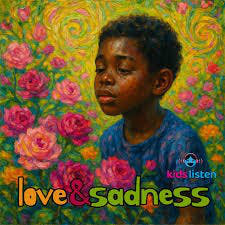
It's Mick from The Past and the Curious and we were excited to be a part of the Kids Listen podcast series Big Emotions, which is really great.
It's really well produced and it weaves together stories from some of our friends like But Why?
And Newsy Paloozy, Who Smarted Story Seeds, and more.
This episode features part of our story about beautiful Jim Key, as the emotions of sadness and love are examined with the help of some of the best kids podcasts out there.
We love Kids Listen and hope that you enjoy.
I'll have a new episode out in just a few days later on this week.
So in the meantime, enjoy.
Hello and a warm welcome.
I'm Jerry Kolber.
You might know me as the trusty narrator of Who Smarted, a show that mixes brains, humor and a lot of heart.
I'm so glad you're here for episode six of our Big Emotions series, where we'll be exploring two feelings that share the same story love and sadness.
Love is a feeling of deep affection for and connection with another person.
It's both tender and powerful.
There are many kinds of love.
We often think of love as something that happens between romantic partners, but there's also the love between a parent and a child, or between friends, or between a kid and a pet.
Love is one of the biggest feelings there is.
It's powerful. joyful, and comforting.
But when love changes or we feel its absence, sadness often shows up too.
Sadness is a deep feeling of loss, emptiness, or longing.
It can arrive when something we care about is missing a person, a place, a routine or even a part of ourselves.
Sometimes sadness comes with tears.
Other times it's quiet, showing up as a lump in our throat or a heavy feeling in our chest.
Even though it can feel uncomfortable, sadness is a helpful emotion.
It lets us slow down.
It helps us understand what really matters to us.
And it can bring people closer, especially when we share our feelings with someone we trust.
Just like love, sadness is part of being human.
And both of these emotions help shape who we are, help us build strong relationships, appreciate the people and places we care about and make sense of the world around us.
In this episode, we'll be exploring some pretty big feelings.
They can be powerful and so can we.
Emotions are useful and they are a source of information.
They're our connection to the world.
So let's get to know them better, invite them in, and create space to choose how we respond to them.
We cannot control the wind, but we can adjust the sails.
You'll hear stories about love in unexpected forms, from ancient heart symbols to a girl and her unlikely best friend, and how sadness though it can be hard, can also make room for growth, gratitude and healing.
This collaboration brings together our community of creators, each offering their own unique perspective on emotions.
Through a morsel from each show, we introduce you to a new creative style.
We hope you discover your new favorite podcast here.
In this episode, you'll hear from a handful of kids' listen shows, and we begin with But Why?
For now, get comfy, settle in, and let's dive into these heartfelt stories about love and sadness.
Emotions.
Our journey into love and sadness begins with a question that might seem simple at first, but opens the door to something much bigger.
Our first episode in this big emotions mashup comes from?
But Why?
A podcast for curious kids, a show where kids ask the questions and grownups help find the answers?
This one starts with a great question from James, age seven.
Why do we draw hearts the way we do when the real heart inside our body looks so different?
And why has the heart, not the brain, become the symbol of love?
Let's listen and find out how a shape became the emoji for one of the most powerful emotions in the world.
This is But Why, a podcast for curious kids.
And today we're curious about hearts how they came to be the symbol of love when, as we know now, it's actually a part of the brain called the amygdala that controls the love emotions.
But also, why do we use a heart shape? that doesn't match the actual shape of a heart organ.
My name is James and I'm from Towson Maryland, and I'm seven years old, and I want to know why do we draw hearts the way we do, when they're nothing like the heart inside of your body?
We're getting answers from Tom and Steven Amidon, two brothers who wrote a book for adults called The Sublime Engine a biography of the human heart.
The heart really became a symbol of human love in the time of the Romans.
So this was about 2000 years ago.
And what happened was there was a saint called Valentine, Saint Valentine.
And he was a Christian in Rome.
So they had to be hiding from the Romans because the Romans didn't like these Christians.
And his job, Saint Valentine's job, was to help people get married.
And so he would arrange these marriages, and that one of the The symbols they used was this heart symbol, which was the secret code that they would use among people who were in love, who wanted to get married and not get caught by the Romans.
Now, why is that funny little heart symbol you see used for love?
Well, there are two theories.
One is that a Greek philosopher named Aristotle had a theory that that's what the heart looked like.
And you may ask, well, why didn't they just look at the heart and see?
Well, because that was illegal.
The other theory is that there was something called silphium, which was this was in the time of the Greeks.
That was a love potion.
And it was believed that it came from a root, you know, like a little plant called silphium that was found in in Libya, in Africa.
And if you took this, you would fall in love.
Well, the silphium, which no longer exists, if it ever did, looked just like the heart symbol we now use on Valentine's, and I Heart New York and all of that.
So those are some of the theories about it.
But the short answer is no one really knows.
That's the worst.
We have so many of those on this podcast.
No one really knows answers.
I have so many questions from that.
First of all so, given what we now know about the heart and what that organ does, and the brain and what that organ does.
And given that we do now know the shape of a human heart Stephen, do you have any idea why we still use that heart-shaped kind of emoji icon that people love so much?
Well, I think it's basically a romantic idea.
I think the further we come to understand the workings of the human body and what our brains look like and so forth, We want to hold on to an idea that we're just not machines.
By that, I mean just like these machines that you can figure out.
Well, there you have it.
We like the idea that the heart is where love lives.
And we like that symbolic shape that we put on cards and candy and use as a kind of shortcut way of saying love.
So maybe the heart shape came from an ancient love potion?
Or maybe it was just a guess from a philosopher who wasn't allowed to look inside the human body?
Whatever the truth is, one thing is clear.
Love is such a big feeling, we've always searched for symbols to help express it.
Whether it's a pink paper heart, a warm hug or a simple I love you text, love can be felt in so many ways.
Even if love begins in the brain, it lives in how we treat one another through kindness attention, gestures and touch.
And that, more than anything, is what makes love so powerful.
What did that clip make you think about?
Have you ever made a card with a heart on it?
Or felt your own heart flutter with excitement?
Or ache with sadness?
Feelings can come up inside us like or a surging wave.
Some gnaw at us, eroding our peace of mind bit by bit.
Some flood in so powerfully they take over, making it hard to think straight or be ourselves.
Either way, they can affect our bodies, our relationships, and even the way we see the world.
So it's important that we listen to them.
How we express our emotions can bring us closer or push us apart.
So the next time you feel that wave of emotions grow, maybe give yourself some room to pay attention.
Let's keep exploring.
Our second stop on our journey through love and sadness takes us back in time to a story about love, patience and a very unusual horse.
This clip comes from The Past and the Curious a history podcast full of surprising true tales from the past.
You're about to meet Dr William Key, a formerly enslaved man who became a self-taught veterinarian, and his horse, beautiful Jim Key.
At first, no one believed in Jim.
He was small, sickly, and didn't look like much.
But Dr. Key saw something special and treated him with kindness, patience and love.
Let's take a listen.
And when Loretta gave birth to a colt, Dr William Key was certain that it would be a strong, brilliant horse.
Was he right?
He was worse than right.
He was wrong.
At least at first.
No one who saw the puny little horse known as Jim Key held any hope for the gangly and sickly creature.
They pointed at his malformed legs.
Heck, Friends and neighbors talked openly about how unlikely he was to survive at all.
Many called him ugly.
Dr. Williams saw these things too, but he never gave up on Jim Key.
There's a reason the horse is not remembered as Ugly Jim Key.
Jim might not have been the racehorse that everyone expected, but there were other special things about him.
Jim Key's unusual nature first showed up not long after Loretta, queen of horses, died.
Without his mother, the young horse was eager for connection.
And after watching how the dogs on the farm interacted with Dr William, the horse began to mimic their behavior.
He even got so good at acting like a dog that he insisted on living in the house with Jim's family and the other indoor pets.
And if you're wondering...
The answer is yes, Jim was housebroken.
But unlike most dogs, Jim could open the door for himself.
Sometimes the urge would strike and he'd just head out for a ramble to the countryside before returning home for dinner or for lights out.
Dr Key began giving the horse some special attention, training him in simple tasks in a barn behind the house.
After accomplishing a task, Dr Key would reward beautiful Jim with an apple that he kept in a drawer.
Something peculiar happened once after Dr Key had finished one of the training sessions and left the horse alone in the barn.
Beautiful Jim must have felt safely alone.
And he must have really enjoyed those apples, because the horse confidently walked over to the desk, opened the reward drawer with his mouth, snagged a delicious apple to chow down upon in solitude.
Dr. William happened to see this through the window.
Opening the drawer to get the apples was impressive, but not totally surprising to the doctor.
However, he was truly startled to see the horse close the drawer afterwards.
The clever creature was covering his tracks.
People thought Jim wasn't worth much, but Doctor Key didn't give up on him and Jim learned to do amazing things.
Their story became so famous it helped inspire others to treat animals with more compassion.
So love isn't always loud or flashy.
Sometimes it's quiet and steady, like believing in someone when no one else does.
Empathy helps us understand how others feel, while compassion inspires us to show care and support.
But it's not just about others.
We can practice compassion with ourselves, too.
By being kind and patient with our own feelings, we learn to accept who we are, even when things get tough.
It takes courage to be gentle with yourself, but it helps us grow stronger and build better connections with others.
Our next clip comes from Newsy Paloozy, a world news podcast for kids that brings surprising and smile-worthy stories from around the globe, including this one about a most unusual friendship.
You'll hear about Lacey, a 13-year-old girl from England who spotted a bumblebee with a crumpled wing.
She tried to help it rejoin its colony, but the bee had other plans.
Let's listen.
Step right up.
Step right up.
Have a go at the lucky dip machine.
The lucky dip machine.
What's it going to be today, eh?
An oddball, no doubt.
An oddball, no doubt.
An odd pet, in fact.
Okay, are you talking about a dancing turtle?
Uh, no, is that a thing?
No, but you said odd pet, so This is a story that actually might ring, or should I say sting, a few alarm bells actually.
Oh, like that pet snake in Austria that made its way into a neighbor's toilet bowl?
Surprising the neighbor with a snake bite in a sensitive place.
Yikes!
No, but that was a seriously funny story.
We're happy to say the bite wasn't bad, but I'm talking about something a little buzzier.
Play the music, Mama.
Thank you.
Once upon a time, just a few days ago, a 13-year-old from Coventry England, Lacey Schillinglaw, spotted a large bumblebee lying in the road while on a walk with her family.
When she scooped up the bee, she noticed it had a crumpled wing.
The poor thing.
But when she tried to put it on some nearby flowers...
Hoping it would find a group of bumblebees which is called a colony that it had come from.
It refused to stay put, buzzing back over to her.
In fact, kind of crawling all over her.
So she tried again.
And again.
And again.
Lace has made a little friend.
Or put it on a rock.
Lace, think it just wants to stay on your darling.
Maybe it's getting more red.
Just keep her with you.
Finally, she just headed home with the creature perched on her shoulder.
Once again, she tried to leave the busy bee somewhere safe in the garden of her house.
But no, the bee refused to leave Lacy's side.
So Lacy gave in.
She brought the bee inside and named it Betty.
Now, when Betty's not sleeping on Lacy's bedside table, she follows the 13-year-old everywhere.
On walks to the shops, outings with her friends, and once to a bowling alley.
Sometimes she buzzes around Lacy's, sometimes she just chills out perched on Lacy's glasses.
That sure gives a new meaning to the term BFF, wouldn't you say?
Lacey and Betty's friendship is an unexpected kind of love.
Gentle, loyal, and full of trust.
Just as Newsy Paloozy shares news to help kids see and care about people and places beyond their own, this story shows how love comes from connection and understanding.
Sometimes love finds us in the most surprising ways.
It doesn't always look like hearts and roses.
Sometimes it hums softly on your shoulder.
And here's something special to notice.
This kind of love didn't come from shared words or grand gestures.
It came from presence, from simply being there every day with kindness and care.
There's a name for this in psychology.
Attachment.
It's the bond we form through repeated, meaningful connection.
Lacey offered safety and attention, and Betty, in her own bee-like way, returned that trust.
This story also shows us how love isn't just something we feel.
It can be something we do through small actions like protecting noticing, checking in and staying close, even when we don't speak the same language.
And what happens when that love changes or fades or flies away?
That's where sadness can come in.
But stories like Lacey and Betty's remind us that the love we share doesn't disappear.
It lives on in memory, in gratitude, and in the ways we show up for others next time.
And just like that, the first part of our journey through love and sadness comes to a close.
But the feelings these stories stirred up, those stay with us.
We've seen how love can look like kindness, like patience, like a bee on your shoulder or a horse you believed in when no one else did.
We've also seen that sadness isn't something to hide from.
It's something that shows us what mattered, what still matters.
Whether it's the shape of a heart, a friendship that surprises you or a memory that makes your eyes sting just a little, these emotions help us connect, remember and grow.
And the best part, you get to carry those lessons with you and share them in your own way.
We'll be back on Thursday with even more stories about love and sadness.
And I'm excited to explore a few of my own loved or teary memories with you too.
Like in all of our episodes, Be sure to stick around after the credits for a very special question.
We hope it sparks a great conversation with someone you love.
And until next time, thanks so much for listening.
Stay curious, stay kind, and remember, big emotions aren't something to fear.
They're something to feel.
This episode has been a Kids Listen collaboration created by Tal Kelly, Jenna Clark and Dr Eileen Kennedy-Moore and hosted by me, Jerry Colbert.
This Big Emotions Kids Listen mashups about feelings is produced by Tal Kelly.
Executive writer, Jenna Clark.
Content director at Sleepiest and Koala Kids.
In consultation with Eileen Kennedy-Moore PhD, an author and clinical psychologist based in Princeton, New Jersey.
A special thanks goes out to all of our contributors.
We placed links to our featured podcasts in this episode's show notes.
Our intro music was created and generously provided by the wonderful Dan Sachs of Noodle Loaf.
You can find full music credits in the show notes.
If you'd like to share your artwork, another powerful way to express emotions is through art.
Email a photo to kidslistenmashups at gmail.com and we will proudly share it on social media.
Educators interested in applying this as an SEL resource in their classroom can find a PDF guide in the show notes.
If you enjoyed this episode, please leave us a nice review or share the show with someone you love.
Thanks for tuning in to Your Emotions as well as our mashup.
And now for our question.
Think about a time when you really really, really loved something maybe a favorite toy, a pet, a person or even a place.
Then one day something changed.
Maybe it got lost or moved away, or things just weren't the same anymore.
How did that feel at the time?
And how do you feel about it now?
If this question got you thinking, let us know in the Spotify comments or leave us a review.
We'd love to hear how it made you feel.
And our very own Dr. Friendtastic will be joining the conversation too.
See you soon.