Over the years at NPR's Fresh Air, we've gotten to talk with a lot of great filmmakers.
Now we've made a playlist of some of our favorites, including Martin Scorsese, Steven Spielberg, Ava DuVernay, Mel Brooks, Spike Lee, Werner Herzog and others.
Find all our new playlists and more at Fresh Air Plus at plus.npr.org.
This is Fresh Air.
I'm Tanya Mosley, and today my guest is Kate Hudson.
She's up for an Oscar for her role as Claire in the film Song Sung Blue, starring opposite Hugh Jackman.
As one half of Lightning and Thunder, a Neil Diamond tribute band,
Here they are together, singing Neil Diamond's 1971 hit, Solomon.
Take my hand, sweet love.
If folks could see, you just started singing as you were listening to yourself.
It's such a joyous song.
Yeah, yeah.
Kate Hudson landed the role of Claire Sardina after Hugh Jackman first saw her sing on CBS Sunday Morning.
He had already committed to the movie and he was so taken by her performance that he texted director Craig Brewer and said I think I just found your Claire.
She was on TV promoting her debut album, Glorious, which she began writing during the pandemic.
And while Hudson is primarily known for her acting, as I was preparing for this interview, I was struck by just how often she's used her voice over the years, singing on screen in Nine performing Cinema Italiano, and on television in Glee, where she played the demanding dance instructor, Cassandra July.
This latest Oscar nomination for Best Actress comes 25 years after she first earned a nod for playing Penny Lane in Cameron Crowe's Almost Famous.
From there, she became one of the most recognizable romantic comedy stars in the 2000s, starring in films like How to Lose a Guy in Ten Days and Bride Wars.
Most recently, she starred in the Knives Out sequel Glass Onion and the Netflix series Running Point about a woman who inherits ownership of a professional basketball team.
The show has been picked up for a second season.
And Kate Hudson, welcome to Fresh Air and congratulations on your Oscar nomination.
Thank you.
It's nice to be here.
I look forward to our conversation.
Yes.
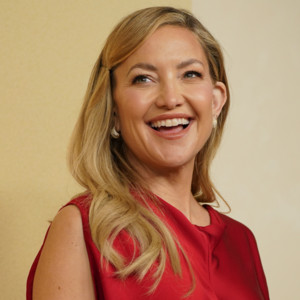
Well, I just had a chance to look at this Oscar nomination luncheon where all of you all are on bleachers and it's like a class photo.
It's almost like a graduation.
It is, it is.
I remember it the first time.
It's actually one of my favorite experiences, because I remember the first time Feeling like oh, you know, we all got to be in one room and it's really just a bunch of people who love to make movies.
It's, you know, there's not a lot of other people there.
It's just sort of celebrating this class, this year of movies.
And when you're a part of that, it's really fun.
It feels it feels really nice.
You mentioned the first time.
It was in 2001, where you were nominated for your role as Penny Lane in Almost Famous.
I put both of those photographs side by side when I saw this most recent photograph.
I mean, you're ravishing in this red outfit and you're smiling ear to ear.
You're also, you have that same energy from 25 years ago.
Yeah.
But there's sort of a pensiveness there in you.
You know, you're the young kid on the block at that time.
How did it feel, with that 25-year separation, being in that room and really sitting with the fact that you're there again?
Well, it feels different.
I've been comparing it to like having my third baby.
You soak in everything very differently.
You take it in differently.
And you have so much knowledge.
I mean, that was one of the great things about the Oscar nomination luncheon was I've worked with two of those costume designers.
I've worked with so many people in the room.
I just... you look around so many producers, like a reunion almost.
Yeah.
The person that was in front of me is Didi.
She was the executive on how to lose a guy in 10 days.
Like you realize that you create a family, that that that in this industry it's a and like in family.
You see all of it.
You see the good, you see the bad, you see the ugly, and it's an amazing and incredible dysfunctional family.
And then every once in a while, you get to celebrate the best of the best of the year.
Well, let's get into the role that you have been nominated for.
Your character, Claire Sardina.
She's a real person, a hairdresser from Milwaukee who performs as a Patsy Cline impersonator by night.
And she and her husband, Mike, create a Neil Diamond tribute band called Lightning and Thunder.
They're everyday people with real battles.
We watch them as they recognize that within themselves and each other.
And in this scene I want to play, the two of you are on a date.
It's before you're married.
And you're sharing your hopes and dreams.
Let's listen.
I'm always going to be an alcoholic, but I've been sober 20 years.
And the other day, it was, well, they call it a sober birthday.
Happy belated sober birthday.
Here's the thing.
With sobriety, you've got to face up to certain truths.
Way to go.
Lightning, 20 years.
All right, I'm not a songwriter, I'm not a sex symbol, but I just want to entertain people and I want to make a living.
I know, me too.
I don't want to be a hairdresser.
I want to sing, I want to dance, I want a house, I want a garden, I want a cat.
So here's what I'm thinking.
I need something big.
I need something new.
And as you put it, nostalgia pays.
That was my guest, Kate Hudson, with Hugh Jackman in the film Song Sung Blue.
What was it about Claire's arc that you felt you understood?
Well, I think part of what's fun about what we get to do is that there's some things we don't understand.
And we have to delve into it and try to portray something that seems further away from your real life than maybe other people would think.
It's like there's not much about Claire's life that I really would personally be able to understand.
The one thing that I do understand about Claire is her longing for love and family, her strong desire for community and her love of music and her love of singing and performing.
Everything else became about honoring her story and really trying to, you know, portray that as successfully as I could and respectfully.
She has ups and downs, but I mean, she...
She really, there's a moment where she actually loses her leg.
And so you had to learn how to kind of move even your body with the idea of wearing a prosthetic.
She deals with depression, ups and downs, all of those things as well.
Addiction.
Addiction as well.
You chose not to meet with the real Claire.
And I wondered is there something that gets in the way of being able to explore those parts of her by not meeting her?
I chose not to research her personally, right?
So I have met Claire and I've spent time with Claire and she's amazing and I love her and it was great.
So when we started filming, I did spend some time with her.
But in the beginning it was important for me and for Craig that you know Craig's story.
Craig Brewer, the director, were making this film that is an adaptation of the documentary.
And he took eight years of their life, consolidated into two.
And my job as an actor is to give Craig the movie he wants.
His relationship to Claire and the family is the intimate one.
And for me, I think it would distract me from being able to give Craig what he needed.
You know, I didn't want to challenge him because I had spent so much time with Claire.
I want to trust my director and what his vision is for his version of their life story.
And then Claire sort of came to set and then we got to meet each other and hang out, and I'd already done all of the work.
And getting to know Claire after that became the validation that we were- That you were on the right track.
On the right track, yeah.
Well, that's the part that's so fascinating to me.
I did ask you the question what was it about the character that really drew you in, that you found that really spoke to you?
But what were the challenges of the character itself that drew you to her, that made you say I want to live in this space and this world and be this person for what she draws out in the story?
I mean, I think, women.
When you read a lot of scripts and you read a lot of the types of characters that are written for women, very rarely do you see ones that hit all the notes.
Mm-hmm.
So you can see things that are down the line.
You can see what someone just sort of said to me, which I thought was a great way of putting it.
They call it trauma porn.
You can see things where it's like okay, we're going to lean into the complication of women and we're going to hit it as hard as possible.
And then you see things that are the opposite.
They're bright and they sort of lack depth and complication because they're seen as being like comedic or funny or one-dimensional.
Thank you.
And very rarely do you see all of them in one for women.
When I see something like this, it's like it's not only just what drew me to it, it's that they're not around like that that much right.
So I got to play the comedy, some sense of humor.
I got to play the love, the love story, the desire.
I got to play being a mother.
And then I got to go into a place of where my life force is taken out of me.
And what that complication is as a mother to not want to be present or exist or live, to be under the throes of addiction and living with intense shame and then trying to fight your way out of it.
It's like very, very rare.
So everything attracted me to that project.
The scary thing is, is that then you risk because this movie isn't one dimensional.
It doesn't hit you over the head with one thing.
It has to walk a line.
Those kinds of movies are so hard to execute.
Because they risk being too earnest or too sentimental, or they risk not being truthful enough in stories of addiction or depression.
How do you make a entertaining, life-affirming story about such an intense struggle of someone's life?
So when you can hit the sweet spot, these are the types of movies I think that live forever.
You know, Kate, in the intro, I mentioned that Hugh Jackman saw you singing on CBS Sunday morning.
And I know you taking on this role, the story is much more complicated than that.
But the fact that he saw you and then texted to Craig Brewer, the director.
I think I just found your, Claire.
Had anyone in the industry ever chosen you for your voice before that moment?
You know, I think Hugh, it wasn't about my voice as much as it is about what I was talking about.
And what I was saying was talking about why I had to make an album.
And Hugh.
To speak for Hugh, you know he would reiterate when he saw it I was talking about my kids.
I was talking about COVID and what happened when I was sort of reflecting on if I was going to die.
Am I happy with my creative output?
I'm very happy with myself as a mother.
I feel like I've made all the right mistakes and all the wrong mistakes.
I feel like I've been really great when it comes to parenting.
I'll tell you, Kate, it's so refreshing to meet a woman who says that because...
Don't we so often like we're always stopping for a moment to say I'm not sure if I was a great mom?
Yeah.
Yeah.
But I like who my kids are.
And so, as I get to know them, I got one an adult.
As I get to know him as his own man and as an adult, I'm really proud of myself for the work I put in for him.
And I am in it with my teenager right now in the best possible way.
And my young girl, seven, like momming is everything to me.
And I'm proud of that output.
Like I put a lot into that.
And so I could say you know, during COVID, if this was it, I felt confident in what I've given my kids so far.
But I couldn't say that about my art.
And that would be my own personal sadness and regret is that I didn't share my writings as a musician.
Whether people like them or not.
I just really was not happy with the fact that I wasn't brave enough to put it out there.
What had been holding you back prior to that?
COVID when you wrote Glorious and the funny story about how the album came together.
But prior to that, what had been the thing holding you back?
Oh, so many things.
There's so many aspects to this.
I mean, number one, I became pretty famous pretty young.
And at that time, you didn't do both.
At that time, if I told everybody I was going to go make an album, everybody would be scared.
If it wasn't a success, it could have been the end of my career.
It's like, don't break what's not broken.
I was very happy.
I met my husband at the time, my ex-husband, Chris.
He's a rock star.
I'll stay in my lane.
I lived music with him.
He was incredibly supportive of mine and always wanted me to sing.
We even like did like little shows where we sang together.
But I was comfortable.
So it just sort of kept taking back seats all the time.
And then all of a sudden I was in my late 20s and I was in my early 30s and I'm in my late 30s.
And I'm like, this isn't coming to me.
Like I'm either going to have to make this happen and be courageous enough to make the leap, or or it's not gonna happen and then I'm gonna regret it.
And that's what happened in COVID.
COVID is such an interesting time because it is the moment where so many of us, the quiet almost made all of those voices inside of us louder.
Yeah, quiet's good.
That story though, about how you came to the album.
Singer-songwriter or songwriter, Linda Perry saw you singing Katy Perry's Firework at a school fundraiser over Zoom.
Tell us that story.
So she saw that and she said, wait a minute.
Yeah, she cold called me and she was like, what the?
And I was like, I didn't know you sang like that.
And I was like, well, I love to sing.
At the time I had already done the thing in lockdown, where I was like I'm just going to say yes to everything.
Oh.
If someone asked me to sing, I'm going to say yes.
I'm not going to be scared of it.
I'm just going to say yes.
Because you had been asked before.
All the time.
Oh, my God.
All the time.
Whether it be... for a charity event or for a telethon or for an award show, even Broadway.
So many amazing people that I love so much and so many directors and people have come to me like, come on, come on.
And I've always been like, oh, I'm not ready.
I'm not ready.
Or no, I don't want to do that.
I don't want to say I'm you know, because I didn't have the like.
It's like being thrown into the fire, right.
You're sort of like, it's not like I'm in a little club or something singing.
It's like you know all of a sudden I'm on a television show in front of millions of people singing and I'm like I don't know if I'm ready for that.
What is the difference between singing versus acting and being in front of millions of people?
Well, no, you have to understand, for me, music is about my writing.
I'm not a performing recording artist.
So, even though I would love to have probably been and done that for me if I was to do music, I didn't want it to be like someone else's music, right.
And I always believed that if I was going to do it, I had to do it properly, like organically.
I wanted to make an album.
I wanted it to be mine.
And music for me, I didn't want it to be like someone else's.
I've been doing that my whole career with acting.
So I felt like if I'm going to do it, I have to focus on it.
I have to take the time.
I have to give it the respect that music deserves and write it myself.
I want to actually play the title track of your 2024 album, Glorious.
And legend has it that you wrote the song first off in 10 minutes.
We did.
Yeah.
Linda, Linda and I. She just started to write.
I was like, I just want to write like a big ballad.
You know, Linda Perry special.
Yeah.
It's like, yeah.
And like...
She sat at the piano and it was like 10 minutes.
We wrote that song so fast.
I want to play it for people.
The clip I'm going to play, you're performing, Glorious, on the NBC show The Voice.
Let's listen.
I came on strong to what I was made of.
I took on life, a bit untamed.
But I could see a restless fire in his eyes.
A love that never came.
Help me get through this tainted longing.
Easy to break.
Your heart has left me again.
Let light shine our last dance.
Then we'll take it to the end and tell how it was glorious.
That's my guest, Kate Hudson, singing the song Glorious, a live performance on the show The Voice.
We'll be right back after a short break.
I'm Tanya Mosley, and this is Fresh Air.
This week on Up First, the State of the Union address is a civic ritual and a political event.
We'll be watching to see how a president with low approval ratings handles the moment.
We are also watching the United States confrontation with Iran.
Listen each morning for overnight developments.
Up First on the NPR app or wherever you get your podcasts.
Greenland has said it is not for sale.
Denmark has said it can't even legally sell Greenland.
And whether Trump can or will or should try to control or purchase a territory that does not want to be sold is one question.
But on Planet Money, we are more interested in how we even got to this moment and how we might gracefully get out of it.
Listen to Planet Money on the NPR app or wherever you get your podcasts.
The hottest technology for Hollywood filmmakers is more than 70 years old.
It's kind of like starting up a lawnmower.
It's like On The Sunday Story, what this vintage film format can help us understand about Hollywood's past and even its future.
Listen now on the NPR app to The Sunday Story from the Up First podcast.
There's a song to your son, to your children.
Live Forever.
Live Forever.
Yeah.
Now that, I mean... I love that song.
The words of the song.
I mean, it's... I'm folding laundry crying thinking about my kids.
I mean, that is your love letter to your children.
That's my... Yeah, it really is.
And...
I remember when Ronnie heard it, she's like, is that song for all of us?
Because I wrote it really because Ryder was going to college.
And I was like, of course.
One of your children said.
Yeah, Ronnie, my little one, was like, is that for all of us?
Like, what's my song?
And I was like, it's for all of you guys.
But Ryder inspired it because he was leaving for college.
And you think about your kids when they go.
You're going to be doing this very soon, right?
Oh, my daughter went this year.
Oh, she went this year.
Oh, so you experienced it.
I experienced it, yeah.
So when I wrote this song, Live Forever, he was leaving.
He was about to leave.
So the song kind of wrote itself.
And I just kept thinking about how our children, they move on and they –
You have to let them go.
But the connection, whether we're here on this earth or whether we pass away, it's just that love is forever.
And so every step of the way, you know, you are like, you know, I got you.
Even when you let them go, you got them.
You're here.
You know, that idea of like, if you need me, I'm here.
You know, what's so interesting about you among so many things Kate, is that we kind of have been following that road, both in your experience as a mother, but then also your experience with your mother, Goldie Hawn.
Watching that happen.
Your career blossom as a child of a famous actress, and then you grow and come of age and then now you were in this position thinking about your kids.
But I wanted to ask you, as it relates to the music side of you.
You've called your music your Hudson side because your biological father is Bill Hudson.
And he was a vocalist for the Hudson Brothers, which was a variety and rock act from the 1960s, 70s.
And a guitar player.
Yeah, guitar, piano, songwriter, singer.
You didn't grow up with him, though.
No, no.
Did you always know that your musical side came from him then?
Were you aware of that as a child loving music that, hey, this might be from my dad's side?
Oh, yeah.
Yeah, definitely.
Definitely.
Because my dad and I, in the early, early years, I got some pretty good experiences with my father.
And, you know, he's a musician.
So our whole understanding of dad was music.
My sister is an amazing musician.
My brother, Zach, great musician.
My half siblings.
My cousin, Sarah Hudson, amazing songwriter.
Writes a ton of big pop songs.
And...
And as a young girl, I grew up in my house and where I grew up with my mom and my stepdad, Kurt.
I had a very different relationship to music than what the house offered.
Right.
So like I didn't grow up in a house where like, there was a ton of vinyl and we were like listening to you know a ton of different albums or records you know or who you know like how my kids grow up where they're just exposed to so much music.
Our house was, you know, filled with music, but in a different way.
So my discovery and my connection to music always felt different than Like it came from somewhere else.
So it was very early on I knew very clearly it was my Hudson side.
Because they were just listening to music and you were like really into music.
Yeah, I mean I had to write music.
Like I'd sit in my room for hours and I'd like rewrite lyrics to other people's songs.
Who were the artists that you loved the most?
I mean all kinds.
I'm a music fan, so...
It's not just one.
I didn't have one inspiration growing up.
But it would go – it would span anywhere from – I remember buying my first Ella Fitzgerald box set to Hank Williams, box set to Jimi Hendrix, to De La Soul Tribe Called Quest, to Radiohead, to –.
Linda Carlisle to the Go-Go's.
I mean, it's all over.
The Cure.
Like, I was all over the place.
I love music.
You know, Pointer Sisters was a big one for me when I was little.
Who were you rewriting?
Everybody.
Not because I wanted to rewrite their music because ever.
It was because I wanted to understand how to write music.
You were dissecting it.
Yeah.
I was like, oh, phrasing is such an amazing thing to hear.
And you hear all these great artists.
And what's always separated sort of the great, like folk writers or, you know singer, songwriters was music, their love of lyrics.
So, like Nebraska, which I love, you know it's fun to have seen that movie this year, but Nebraska was such a great album because it's so lyrically heavy.
You know, Bruce loves his lyrics and I love writers that love lyrics, and So Bob Dylan, Joni Mitchell, Bruce Springsteen, Taylor Swift, like very lyric-driven artists, storytellers.
That's a very different kind of writing than pop music or R&B, you know.
So I get into it.
And so I would just sit and I'd sit in my room and I'd rewrite lyrics to understand lyrics, what like a pop hook, like a lyrical hook, looks like.
Let's take a short break.
If you're just joining us.
My guest is Kate Hudson, Oscar-nominated actress, singer and entrepreneur.
We're talking about her life, her family, and her most recent film, Song Sung Blue.
We'll be right back after a short break.
This is Fresh Air.
Jonathan Haidt's book The Anxious Generation sparked a movement to warn kids and their parents about the harms of social media.
Yes, my claim is that will change brain development in ways that will make you less capable confident, happy and sociable as an adult.
But what do young people think?
Gen Z is just going to think, well, we're cursed.
That's on the TED Radio Hour.
Listen on the NPR app or wherever you get your podcasts.
Is there an acquaintance in your life that you'd love to turn into an actual friend?
And have you thought about saying, hey, we should hang out sometime?
Maybe think again.
The more specific you are, the more likely it is that you're actually going to get together.
You know, pull out your calendar, pick a time, pick a thing to do together and actually follow through.
Listen to the Life Kit podcast in the NPR app or wherever you get your podcasts.
The Trump administration is deporting Cubans in record numbers.
And that's a big shift from decades of precedent.
This year, they have had more experience of being an immigrant group like any other immigrant group.
Listen to Code Switch in the NPR app or wherever you get your podcasts.
Kate, your breakout role, for which you earned your first Oscar nomination in Golden Globe win, was as Penny Lane in Almost Famous.
And I actually want to play a scene from near the beginning of the film.
So the young teen journalist William, played by Patrick Fugate, is at the back door of a concert and the guard is not letting him in.
And a few young women, including your character, Penny Lane, come back to the back door and start talking to William.
Let's listen.
Penny Lane, man, show some respect.
Who are you with?
What band?
Oh, I'm here to interview Black Sabbath.
I'm a journalist.
I'm not a, you know.
You're not a what?
You're not a what?
Not a groupie.
Aw, groupie?
We are not groupies.
This is Penny Lane, man.
Show some respect.
Groupies sleep with rock stars because they want to be near someone famous.
We're here because of the music.
We are Band-Aids.
She used to run a school for Band-Aids.
We don't have intercourse with these guys.
We inspire the music.
We're here. because of the music.
You know, she was the one who changed everything.
She was the one who said, no more sex.
No more exploiting our bodies and our hearts.
Right, right.
Just and that's it.
That was my guest today, Kate Hudson in Almost Famous.
That is one of the most famous scenes, because of course you really lay out who they are and what you do and what you don't do.
We are Band-Aids.
Right.
That's right.
One of my favorite things.
I did this show in San Diego and girls come and they had these little signs that said wear your Band-Aids.
It was so cute.
I loved it so much.
I was like, oh, it's so fun.
Yeah, Penny Lane, man.
I mean you've said that you didn't have to reach very far to get to Penny Lane, which makes sense, learning about you even in this conversation.
But what's a memory that you come back to the most in the filming of that iconic movie?
Oh, there's a million memories.
I mean, there's no most.
The whole entire experience of making that film was...
Not only has it never repeated itself in terms of experience and what that felt like, but it was so special for multiple reasons.
Number one.
Cameron Crowe is brilliant and an amazing person, amazing director to work for as an actor.
I couldn't have asked for.
How lucky was I that I got to work with Cameron Crowe, Like so young, on a role that was so layered.
But it was his life story.
So we were all, again, like Song Sung Blue.
There was this very, like, strong intention to get it right for Cameron.
And everybody was in on it.
We all wanted to get it right for Cam.
And so...
That made it very different than it was six months.
It was a long shoot.
We all got to know each other very well.
We had rock school.
What's rock school?
Rock school was about a month before we started shooting.
The band was learning how to play all the instruments, all the songs.
The fictitious bands.
And the girls were band-aids.
We were hanging around and we'd get them food.
I was bringing Billy Crudup a towel.
We would just hang.
We'd all smoke and live in this alternate space. universe that we hadn't experienced yet.
Kind of like method acting, preparing rock school, preparing you for the real thing.
It's kind of what it was, yeah.
And we were all so young and so fun.
So we were having a great time together.
And then the work was intense.
It was big set pieces, long day's Big crew.
So as much fun as we were having, then we, like anything else, like it's a job and hard, great work.
Was there anything about that experience in particular because I think about the fact that you were nominated for an Academy Award for your performance that you then took with you for the rest of your career.
Because what an experience to have that kind of was a lesson or a device or a thing that you took with you.
Preparation, again.
I think focus.
Cameron is a writer-director.
His words are important to him, as they should be.
And when you're young, you are learning that sometimes a change of a word might not be the right word to change.
Oh, did that happen?
Yeah.
Well, I mean, I think it happens a lot, you know, when you're working and you're like, you know, in the middle of a scene and your brain might flub something and all of a sudden you're saying it in a different way or changing the way that the line works.
When you're working with someone like Cameron, the way he writes is specific to his storytelling.
And then the goal is making that seem effortless again, which can be challenging because Cameron's words are specific.
And so when you get his words right, it's magic.
And then, of course, then you have a career and you realize sometimes what's on the page shouldn't be on the page.
And you got to be able to decipher when that's.
When you're working with the right person to do that with and then maybe being a helpful collaborative partner and changing certain things around.
This is so interesting because you then went on to become...
I don't think it's overstating to say, almost like the rom-com queen.
And you just played those roles really well.
But you've also said that that genre has been dumbed down in a way that you wish that it would be elevated back up to a place.
It's been so dumbed down.
I mean, anybody who... We all know it.
The rom-com genre is a very hard genre to get right because people...
Like they see one formula of a rom-com and then they want to repeat it over and over, and over and over.
Right, because it's like, that worked.
How to lose a guy in 10 days, right?
That works.
Yeah, so let's repeat that.
There is a specific formula, but I find that at the end of the day...
The ones that have succeeded are the ones that are approached like they're going to be, like a critically acclaimed film.
The ones that are really good are good because they're good movies.
They hit all of the notes that make you love what that movie is.
And then the thing that happens that I notice in the business is that they box rom-coms into female comedies.
So any female comedy is considered a rom-com.
And I disagree with that.
You know, Bride Wars isn't a rom-com.
Bride Wars is a buddy comedy.
That's a movie about two women, best friends. who are fighting over a wedding day.
It has nothing to do with their romances.
And see, I put it in the rom-com category without even thinking.
And then everybody does.
Fine.
That's fine.
But rom-com has become the female comedy.
And I don't think it should be looked at like that.
Rom-coms is men and women.
Or it's women and women if you want to make a rom-com about two women.
Or it's men and men.
If you want to make a rom-com about two men, it's about what is love and you want it to feel light and you want it to feel sad and you want it to.
You want to feel all the feels right um, so the best ones are things like as good as it gets sleepless in seattle.
You look at all of the best rom-coms and they're two very intensely well-written male-female or female-female, male-male characters that are telling a story that we all relate to.
That's incredibly human.
So we need to invest in those.
That's what that genre is.
Let's take a short break.
If you're just joining us.
My guest is Kate Hudson, Oscar-nominated actress, singer and entrepreneur.
We're talking about her life, her family, and her most recent film, Song Sung Blue.
We'll be right back after a break.
This is Fresh Air.
On.
Wait, Wait.
Don't Tell Me, it's not so much we get to talk to celebrities, it's that we get to talk to celebrities about other celebrities, like we did with actor Nathan Lane.
I remember having to tell George C Scott that I was leaving the show to do this musical and he said to me you're leaving me to do a fing magic show.
Listen to Wait, Wait in the NPR app or wherever you get your podcasts.
This year on ThruLine, NPR's history podcast.
For generations, an American quest has shaped the world.
Life, liberty, the pursuit of happiness.
Now, 250 years in, what is that pursuit really about?
Join us each Tuesday for an essential new series America in Pursuit from ThruLine on the NPR app or wherever you get podcasts.
You and your mother, Goldie Hawn, you're known for your exceptionally close relationship.
But what's it like building a career?
Was there ever any tension about building a career following your mother?
Like did you ever have a moment of rebellion when you felt like maybe I want to be or do something else?
Oh, as like a – A young person.
Oh, I didn't – honestly –
There was no, there was nothing else to me.
I don't know.
That had nothing to do with like performing.
But when I say nothing else, I mean performance.
So like singing dance, song dance acting, like those, those three things were just like that's what I do.
Like from very early on, if someone was like, if someone was like, you'd be a very good lawyer.
I'd be like, In a movie.
You just always knew.
Yeah.
I always knew, yeah.
And then when you grow up in a house with parents who are not only incredible performers but like amazing producer,
My mother's an amazing producer, trailblazing producer.
My dad is one of the great – process of an actor i've ever witnessed.
Kurt russell yep kurt, kurt russell, let's just call him kurt russell, because it's a fun name to say.
Um, i have a friend who only calls him kurt russell.
It's really funny.
Uh no, i call him pa.
Yeah, he's my pa, but um, his process and what i learned from my dad growing up, i mean, he's got an incredible process of a very caring um process when it comes to storytelling.
So when you grow up like that, and it says something that there's only one of us who's not an actor.
My other two brothers are actors.
They're also very much into storytelling, developing, writing, producing.
That comes from what we were modeled as kids, which was people who really care about telling stories.
When you see that and you're like, oh, so fun.
I mean, we were just kids making movies our whole life.
I just wonder how it is to reflect now you're an accomplished actor and a multitude of other things.
There's a generation that knows you and they don't even know your mom or your dad.
I know.
And so for you to come up with this person who is so well-known as your mother.
You all also look just alike.
You look so similar to now being at a place where We could have had this entire conversation, and I never talked about your mom.
You know what I mean?
Like, was there ever a moment of growing where you could see a future where that would be the case?
And was that ever tension for you, having such well-known parents and then stepping into a career like this?
I never thought of it like that.
I think because we all love each other so much.
It's such a strong unit.
Our family is really a strong unit. outside of the business.
You know what I mean?
Just as a family, it's so strong that I've never thought of it that way.
The only thing for me that was really important was that I really wanted it on my own terms.
And my son, I see my son feeling similarly right now.
There's a lot of opportunities that come.
I think that there is a responsibility to say opportunity does come.
When you grow up in Los Angeles, you got a lot of privileged kids who work in this industry, who have a lot of parents with a lot of power and a lot of access.
So it's like to say that there's not opportunity is to be lying.
But there's something else that comes with it when you grow up in it, which is You also, as an actor, as a performer, you have to be, you have to honor the craft and be good enough to have other people actually want to watch you.
So that part requires like A different type of... Fortitude, yeah.
Right.
It's like going into it, it was like, okay, I just want to do this on my own terms.
I don't want.
I know that when I walk in the room, everyone's going to know, or maybe some of them, maybe they won't.
I have a different last name.
Thank God.
I was so happy about that when I was younger to not have to walk in the room and be a Russell or a Han.
It was nice to sort of not have that be something where, you know, people went, oh.
So that the pressure didn't feel as intense, right?
But you know when they do know that you have to be on your game, you know?
You can't like walk in and not know your lines, or you can't you know which is why I worked so, So disciplined and everything else that I did, like I just wanted to do a good job.
And you know, when you grow up with parents like that, like there's so much modeling that they did, that I take with me.
Right?
Like right now.
I look at this Oscar nomination and I look at my mother and it's an absolute extension of my mother.
I think people who didn't grow up with a parent in the industry still feel like these moments are extensions of their parents and the gifts that they give.
But I have a mom that sees me, sees all of that differently.
She knows what it is.
She knows what it feels like.
She knows the work that goes into it, the time away from your kids that it takes.
She knows how deeply I miss my kids when I'm doing these things.
She knows all of it, right?
And she knows that I know that that's what she went through.
So there's this amazing connection that I get to have with my mom at this time.
She's 80, I'm 46.
How lucky am I that I get to really share that experience with her in that way.
Um, i feel very, very blessed to like have my mom and kurt be the people that like really behind you and he'll set the model for you.
Yeah and yeah, kate hudson, it's been a pleasure to learn more about you and have this conversation.
This is so nice.
Kate Hudson is nominated for an Academy Award for Best Actress for her role in the film Song Sung Blue.
And it don't seem so lonely Tomorrow, on Fresh Air novelist Tayari Jones on her new book Kin, a story of two motherless girls in 1950s Louisiana whose friendship becomes the most powerful bond of their lives.
Jones talks about writing through illness, the loss that inspired this novel and what it means to choose your own kin.
I hope you can join us.
To keep up with what's on the show and get highlights of our interviews, follow us on Instagram at NPR Fresh Air.
Fresh Air's executive producer is Sam Brigger.
Our technical director and engineer is Audrey Bentham, with additional engineering support from Adam Staniszewski.
Our interviews and reviews are produced and edited by Phyllis Myers, Anne-Marie Baldonado, Lorne Krenzel, Teresa Madden, Monique Nazareth, Thea Chaloner, Susan Yakundi, Anna Bauman and Nico Gonzalez-Whistler.
Our digital media producer is Molly C.V.
Nesper.
Roberta Chirac directs the show.
With Terry Gross, I'm Tanya Mosley.