We interrupt your programming with an important PSA.
Happy gut, happy body, happy life. It's important, but to get there, you need a ritual.
Mine starts right here with CDSO1. Because here's the thing about probiotics, and many people don't know this, most of the products out there don't even survive your stomach acid, which is why I was intrigued by Seed because they have this capsule in capsule system, which is designed to safeguard 24 probiotic strains and actually deliver them all the way to the colon with precision where they can be released intact.
Seeds DSL-1 Daily Symbiotic is a two-in-one, meaning both a probiotic and a prebiotic are which was precisely formulated with these 24 strains that are not only clinically studied, but actually proven to survive the digestive journey through your GI tract and stomach But DSL-1 isn't just about your gut.
It's about supporting your entire body, your whole body, from your immune system to your energy levels.
And since starting DS01, I actually have noticed improved digestion and steady energy.
I feel lighter after meals. And I really love knowing that I'm supporting my gut barrier integrity and my immune function.
So go to seed.com slash richroll and use the code richroll25 for 25% off. health, you care about your longevity, you got to start with your gut.
So visit seed.com slash richroll and use the code richroll25.
This podcast is sponsored by Squarespace.
Look, everybody's got a story to tell, experience earned on the field of life, gifts, that are worth sharing, which is something I am consistently encouraging people to do because when we do it, it turns strangers into friends. and creates community where before there was none.
To do this effectively though, you need an online presence.
It's just a fact. But even if you're building one from scratch or have an allergy to technology, there's really nothing to fear because Squarespace's all-in-one platform makes the process incredibly simple with everything you need from claiming a domain to building a super pro website or even when you're ready to scale to a supersonic level. all in one place.
The newest feature is their Blueprint AI, which basically creates a custom website for you in just a few steps.
You tell it about your industry, your goals, your personality and it generates content and design recommendations that actually fit who you are.
But here's the thing that really matters, the real juice.
They make it ridiculously easy to offer services and get paid. consultations, coaching, workshops, whatever, you can showcase your offerings, handle scheduling, send invoices, take payments, and it's all integrated because The world needs what you have to offer, but if people can't find you or easily work with you, it doesn't matter how good you are.
So head on over to squarespace.com slash richroll for a free trial.
And when you're ready to launch, use code RICHROLL to save 10% off your first purchase of a website or domain.
Thank you. The movie is set during six months of sobriety.
And that's one thing that Michael talked about a lot is how there aren't a lot of movies about early sobriety.
There's movies about what it takes to get sober, but...
This movie really is about being early sober and still being an alcoholic and really not knowing how to do it.
And, you know, there were so many poignant moments about that when Michael was telling me his personal story that made me want to tell this story and you know one of them was you know his desperate fear of like never being funny again.
That was your biggest fear in terms of getting sober is like being funny is everything that you were at the time and what you felt like you had to offer the world.
And if you are sober and you can't do that, obviously you made the decision that it wasn't worth living in that moment.
I was downstairs in my basement and My best thinking was, I don't think I want to be here anymore.
You know, so I tried to hang myself and luckily the belt broke.
And the next day was the first day I actually asked for help.
So there was a brief chapter of my life, this period of time in which I was beginning to kind of give my curiosity wider birth to explore new projects and do interesting and different types of creative things. while also looking for kind of ways out of my lawyer career, but also before the full-blown existential crisis meets hell scare incident that basically precipitated the chapter that I'm most well known for, which was my period of lifestyle upheaval and then ultra endurance competition.
But the phase I'm talking about right now is a phase of my life that I actually don't think I've talked about very much.
It all went down when I was working as an entertainment lawyer, no longer in the big giant law firms, but in a small firm that I had formed with a couple friends.
At the time I was working with writers and producers in the then, I think, very exciting independent film space.
And I actually had a fair amount of fun doing this.
Probably the most fun that you could have as a lawyer, at least in my opinion.
I have very fond memories of attending the Sunday Dance Film Festival and being energized by supporting and just by being around young artists, young filmmakers who were so devoted to realizing their dreams.
And there was something very inspirational about that.
I have this one memory that really stands out among many great memories attending the Sundance Film Festival. for the premiere of a film that was called Love, Liza.
And on one side of me, sitting in the audience was my friend Gordy who had written that movie and would go on to win the Waldo Salt Screenwriting Award that year at Sundance for the best screenplay.
And sitting on the other side of me was Gordo's brother, Phil. as in Philip Seymour Hoffman.
And then next to him was their mother, Marilyn, who was a judge in Rochester at the time and somebody I'd become friends with.
And I guess I'm sharing that because this was the kind of experience I realized that, kind of a peak experience that no corporate law firm was ever gonna be able to deliver to me.
And another reason why it was a somewhat enjoyable period of time for me was because it sated the appetite of my inner shadow artist. because I think what I really wanted to do back then was what my clients were doing, which was write and direct low-budget independent movies.
That was too risky, far too scary. Whereas being just in the proximity of other people that were doing it, felt fun but safe, you know, because it gives this illusion of being part of something that you're actually kind of not.
Anyway, this fascination with film that I had wasn't exactly a new idea.
I'd been a PA on sets when I lived in New York City for a couple of years at the beginning of the 90s.
I attended NYU for a filmmaking intensive one summer, but steeping myself in it as a lawyer, began inching me towards stepping more into the art form itself.
So I did what you do when you live in LA, as a requirement, which is to begin writing a screenplay.
So that's what I did in collaboration with my wife, Julie, later with my friend, Drew.
On the script that I would truncate into something that in 2003 I could realize as a short film that I was capable of directing.
That film was called Down Dog, which was like this 15 minute, very broad satire on, The very ripe to be made fun of yoga scene in LA at that time.
And the film's fine, I guess. It's not like I've gone back and watched it.
Parts of it, I suppose, might hold up. But I will say that there was a very brief moment in time back then when this script the feature version of it caught the eye of Matthew McConaughey's then production company called JK Livin.
And it appeared for like a millisecond, like maybe this project would turn into a movie that would get made with Double M in the starring role.
Of course, that all quickly ended. That script ended back up in a drawer and I would get interested in other things, things that would eventually lead me here.
Anyway. I bring all this up only because this little film that I made, Down Dog, ended up playing a bunch of film festivals.
It even won an award here and there. And one of those festivals was the Bend Film Festival in 2005.
And at that festival, the feature that everyone was talking about was this film called The Puffy Chair.
It was a super low budget, lo-fi indie production by first time writer directors, Jay and Mark Duplass, who also happened to be brothers.
I made a point to see it and I knew immediately that the guys behind it were, unlike me, very much the real deal.
Jay was not there in person. He was with the Puffy Chair Film at another festival that weekend, but Mark was, and I got a chance to meet him.
I got to hang out with him a little bit.
And so partly because of that, I've always felt emotionally invested in these brothers, maybe more than I should.
And watching them succeed, seeing them rise to such a high level in the crazy business that is the movie industry has been a real joy for me.
Over the years, these two have made tons of great stuff, but these days they're off doing separate things.
Part of this. sort of conscious uncoupling of sorts in which Mark has gone on to become basically a legitimate movie star.
Jay in his own right, a producer and executive producer on like a zillion television and other projects out there.
He started acting for the first time. You should check him out in season two of HBO's Industry, which is a show where he plays a hedge fund guy, he does a great job.
In addition to that show just being next level, his performance is very unique and memorable.
But the thing that Jay had not done is direct a film all on his own. was this hole in his experience that he began to fill when he came across this improv guy, Michael Strassner, by way of Michael's short comedic videos on social media.
And Michael is also this guy who happens to have this pretty extraordinary addiction and recovery story.
These two connected, Jay and Michael, they concocted a plan to work together and came up with a creative idea for a movie that they ended up co-writing for Stroessner to star in, and for Jay to finally solo direct.
The culmination of this collaboration is The Baltimoreans, which is this really great heartfelt little indie that could with all the elements that bring up all of my Sundance nostalgia.
And a film that is getting not only unanimous raise, but also what is almost impossible for a tiny feature in 2025, which is a theatrical release. meaning you can and should see it immediately in theaters.
So this one is a little bit of everything.
It's an old school, what it was like, what happened and what it's like now.
Miracle of a sobriety story. It's an artist origin story.
It's a... State of the Union on filmmaking and television in the streaming area.
It's about venturing, creative risk, and it's about finding your voice along with all the kind of hows and whys of cultivating and sharing it.
This one plays a little bit like a James Fry, Craig Maude mashup, along with a few other recent guests that fall squarely into the old school. as I've been talking about, is really the direction that I'm interested in moving the show more towards.
More so than I have in recent years, at least, in part because...
I'm a little fatigued. I'm a little bit bored by the recent overemphasis of podcasting on things like protocols for self optimization. this reverse engineering of podcasts that are turning into conversations that are basically predetermined.
I'm not crazy about that and I really want to intentionally fall back in love with what led me to fall in love with this thing so long ago, which is just honest and open ended conversations informed by real life stories, earnest stories that are lifted from real life lived experience.
Because to me, I mean, that's the shit, man.
And I actually think that This is what we're missing.
And right now, especially what I think we need more of, or at least I know that I do, because it leads to what we happen to be lacking, in my opinion, as a culture right now, which is more empathy and more understanding.
So that's what we're gonna do today. And this is what I'm going to focus on more going forward.
So if you're into that, great. If you're not, That's awesome too.
There's lots of other stuff out there for you. but here I'm gonna do my best to keep it true, to be true to what moves me, true to what I think is important when it comes to getting our head around the human condition.
And I think this conversation is exactly that.
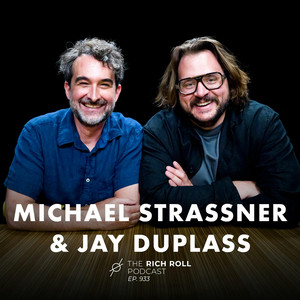
So with that, this is me, Jay Duplass, and Michael Strostner.
So have at it. Well, this is a big moment for both of you guys.
It's your first solo directing effort. And, you know, Michael, obviously this is like a launch pad for you.
So that's gotta be like, you know, It's wild.
Very cool, but possibly deranging also. Keep yourself grounded.
Exactly. But I think Jay, like as an outsider looking in on your career, like you and your brother, you've gone off and you've flexed in all these different areas and you've got your hands in so many different projects. it feels like your compass is pretty well calibrated.
Like there is a pretty solid understanding of like, this is what I do or these are the areas in which I excel and all of the products feel on some level of a piece with each other, even if you're stretching over here or over there.
I believe there's a narrative around the Baltimoreans that this is sort of a return to your roots, but I don't necessarily see it that way.
I just feel like it's, an extension of what you've always been doing.
There's a purity to it perhaps that makes it unique and special.
But like many people, like everyone, like my introduction to you and your brother was the puffy chair.
And I actually, I met your brother in 2005 at the Bend Film Festival when he was there with the movie, because I had written and directed a short film that was also screening at that festival called Down Dog.
It was like this parody of the LA yoga scene.
That's great. And I kind of like palled around with your brother a little bit and got to know him.
And I just remember when I saw that film, I was like, oh, like, these guys are for real, like this is a real movie.
Like they're going places and your brother at that time, he was telling me like, oh, you guys were getting writing assignments already and stuff like that. you're, the foundation of your career was already kind of taking place at that time.
And so that kind of like gave me an emotional connection to like the career that the two of you have been having.
But this movie now, like I was living in New York when Slacker came out and, you know, it was all Hal Hartley and El Mariachi and-
And, you know, then it was Sex, Lies and Videotape and Blue Velvet, these movies that just really changed like my young life. around like what a movie could be.
And there was so much and like earnestness and excitement and possibility during that period of time.
And I would go to Sundance every year and it was just like so exciting to go to these premieres. and see these filmmakers get up on stage and just their dream had come true.
It was just very special. And this movie, The Baltimoreans, very much feels like a movie out of time.
Like it is a movie from that era that shares that DNA.
So was that... like part of the thinking process, like it's anachronistic that this movie, the reviews are incredible.
Everybody's very excited about it. and it's actually getting a theatrical release.
Like a movie like this doesn't go into the theaters anymore.
Like it is like out of time. Like it's this bizarre unicorn.
I mean most independent films don't get a theatrical nowadays, much less one with no movie stars.
I mean Michael is a movie star, people just don't know it yet.
But yeah. Three months from now, possibly.
Possibly, very possibly. Keeping standards low though.
Yeah. Yeah, it is very unusual to have this kind of success with a tiny little movie and I did return to my roots.
I was coming off of a long period of You know, big things in my life happening and it might not be perceptible to other people in the public because we do produce a lot of things and we support people and we're always involved in helping people make. things tv shows movies whatever it may be but you know over the last seven or eight years i've essentially gone through like a um loving breakup with my brother about us making art in a forced march, almost immigrant style way. where we've come to realize that like, you know, I actually still wanna be the Coen brothers on some level.
I'm just gonna do it on my own. I wanna be a writer director.
My brother's more runs a tiny little studio.
Our company is basically a small studio.
It's been like a long journey, but ultimately what led me to Michael and to this project is You know, I was going through that breakup, trying to figure out how I was going to make movies again.
We had the pandemic, which kind of destroyed independent films because a COVID budget on an independent film production is more expensive than the independent film, to do the protocols, basically.
And then we had our strikes, and towards the end of the strikes...
I realized I had not directed a movie in 14 years.
I've been supporting everybody else and making their stuff.
And I just got to the point where I was like, I need to make a movie come hell or high water, which was exactly the place I was at when we made the puffy chair, which is, you know.
At that time, I was like, I gotta do it.
Because that's the thing about Hollywood, which you know well, which you know well, which is like, It's very easy to confuse talking about making movies with making movies.
Yeah. They are not the same thing. And, you know, my brother and I over time. we really forced ourselves into an almost compulsive creativity because, and we even had a philosophy around it, which was just for me and him, but it started coming out and now it's like a,
I guess it's like an independent film mantra, which is make movies, not meetings.
Because even when you get involved in Hollywood, they just wanna talk about stuff and our philosophy even when we have a meeting with the studio would be like, we'd love to make this movie with you we are making this movie on August 15th if you would like to be a part of it that would be fantastic Because we don't want to have to pay for it with the measly $17,000 we can scrounge together.
But we are making it, you know, in Hollywood being essentially a junior high dating scene.
The less you need them, the more they want you.
You know what I mean? Instead of being on your knees and begging.
100%. Being in this weak. from which to negotiate, just being like, we're doing it.
Like, do you wanna get on the bus or not?
Like we're cool, but yeah. Yeah. That's a power move.
It is. It was our own little weird power move.
And so I kind of returned to that place and I also, I knew I was gonna be, I hadn't made a movie in 14 years and Hollywood is, what have you done lately?
And so I just thought to myself, I was like, I need to return to the place of the puffy chair where I can just tell a true story and use the people who are living it.
And I was just thinking about my life and I had gotten to know Michael a little bit via Instagram.
Yeah, how did you guys meet? I was putting up like dumb videos on Instagram.
They weren't dumb, they were very smart and sophisticated, but it was Buffalo Bill talking to his Alexa.
Buffalo Bill, the mass murderer. Yeah, you got a lot of videos up there.
Yeah, exactly. Playing characters and stuff.
So I did this one and also I would do Brene Brown a bunch because I was such a Brene Brown fan.
And, uh, I would play like I would just be talking about like random stuff that she would be like yelling at her husband basically about.
It was like, you know, Steve, you know what I really did?
I went to, I got ice cream the other day.
You know what ice cream stands for? I courageously encourage courage, redeem myself of shame.
And I just saw Jay follow me and I was like, holy shit, like my hero follows me.
Someone I've looked up to for years. I am going like, it was crazy.
I was just like, you know, and I had a short film at the time that I was looking for an actress for.
And I was like, you know what? This guy helps out a lot of people. why not me?
And I just sent him a DM and I was like, Hey, Jay, I'm a huge fan of yours, all this stuff that I listed.
I'm trying to shoot this short film. If you could help, great.
If not, it just means the world that you read this.
That was in September of 2021. He got back to me in February of 2022.
And he was like, dude, I don't check Instagram.
I don't know how I don't know how it works.
I know people think I'm savvy. I'm old and I don't know how social media works. yeah to the point now we're like we'll be together and he's like can you help me post this like i'm trying to make sure it's not cropped out and i was like i got you come here um And he messaged me back and he was like, send me the script.
I sent him the script and he was like, come over my house and I was like, I was doing Buffalo Bill videos and you want me to come over your house where your kids live?
Okay, sure. And we just have this like great lunch.
He helps me with the short. I shoot it. I edit it.
I direct it. And then I come back. And this is like the stuff that like is unheard of in Hollywood, in my opinion.
He took time out of his day to help me. And then we came back for the edit And he stopped and he was like, okay, this is where you cut here.
This is where you... And he just showed me how to do it.
And... God, I'm getting emotional this early.
We're going to cry. Yeah. And it was just the first person that really took time with me, you know, and, um, It was then I took him out to lunch to thank him in December of 2022.
I gave him a Sidney Pollack picture of Tootsie because he said it was one of his favorite movies.
And I told him about my story, how I got sober.
And after that lunch, I put on my manifestations, shoot a movie with Jay Duplass, number two.
Number one's always stay sober every year.
And he calls me up in April and he's like, hey man, I wanna make a movie and I want you to be the star of it.
You wanna do it? yeah, that sounds awesome.
And I would have, I would have, thought that you had been, you know, putting together a script and that on the heels of, you know, like Jay sort of opening his door to you, that that would lead to you then coming to him with a script.
No. And that's not the way it happened. No, it was like, then I came over his house the car that I parked out front here doesn't have AC.
And I showed up to his house shirtless and- I happen to be looking out of the window and I see this, large bear of a man getting out of his tiny little Jetta without a shirt on and using his shirt to fan himself dry. black shirt.
Truly. I was just like, this guy is a living movie right here.
I'm like, first of all, I was like, that's going in the movie for sure.
Yeah. We shot in December though. So that's We shot in December in Baltimore.
That was the one thing we couldn't pull off.
Yeah. But literally, I'm like, I see him out of the corner of my eye and I'm sure I'm like.
Hey, Jay, how are you? Just give me a minute.
You know, just need to get my back dry. And then we just kind of like, I would just kind of tell him like stories and we kind of and then also stories and then locations that we had in Baltimore for free, you know, that we kind of backed this movie in.
And we kind of same as Puffy Chair at the time, that was a movie about my brother and his girlfriend and my brother trying to, make it as a musician and you know we had a touring band we had this tiny town in Maine that Katie was from and you know we had a bunch of And by a bunch, I mean seven.
Seven desperate people like my brother, myself, our actors, our girlfriends, now our wives.
So it was the similar philosophy, which is, you know, Michael had really opened his heart to me and told me what he'd been through.
He already established himself as a hilarious person, but then I learned his, you know, his origin story essentially of becoming sober.
And it just inspired me and, you know, I was like, I think this is it.
And, you know, he's, Michael's originally from Baltimore and, One of his best friends, David Bonnet, was there and was looking for work.
He had been Paul Rubin's assistant and Paul Rubin suggested just died and he was looking for work and had returned to Baltimore from LA and we were just like, I think we can create a movie in Baltimore that's essentially you know, semi autobiographical and it will be, you know, as authentic as a movie could possibly be because ultimately in the end, I'm trying, I want to look, look, we're in the age of TikTok and social media and all this stuff, but like, you and I grew up watching movies.
That was a dominant art form. It was the dominant art form for 100 years.
You too, you too. I mean, I would go to the movies by myself and sit there and just like escape for-
It was like that and drugs and alcohol is what I loved.
But I mean, I am always focused on like, you know, a couple of things, which is like, what can I give people that they need, you know, that people are craving?
And also, how can I platform people beautiful, incredible people who are not being seen and who are not being witnessed and who are inspiring to me and can lift people up and give them a great time in a movie theater.
Michael was it, and I knew inherently that he was scrappy enough to go to Baltimore with me and make a movie on the streets of Baltimore in the middle of the night in freezing, freezing cold weather for no money and just like. make a piece of art and just hope that you know hope and dream that you know it would be seen by people one day and celebrated by people yeah there's like a couple things that stand out for me and what you just shared.
The first thing is like you're approaching it from uh an audience member and and from a perspective of like how can i serve the audience like how can I help uplift this guy who I feel like needs to be seen more and like, how can I serve the audience rather than like, how can I look good as a director You know, it's a service minded approach, right?
Which is obviously like, you know, it's a way of being in relationship with the world.
That's a very, you know, kind of AA. Yeah.
Sensibility. But there's this earnestness in the film, which is rare.
Like it's sort of, there's a sweetness to it.
It's not cynical like our time. It's uplifting and heartfelt and vulnerable. these characters are kind of just laying it all out there unapologetically, you know, and there's real beauty in that.
And you just don't see movies like that anymore. and especially like low budget independent films.
Like it's just, you know, it's, it did like take me back decades to when these were the kind of movies that were coming out all the time.
Yeah, that's been the, the most incredible thing that we've experienced in terms of audience reaction.
I mean, we've only been to film festivals so far and we've We've won an inordinate amount of audience awards.
I've never had this experience before, even with giant, not giant movies, but many of the larger movies that I've made.
And that comment has kept coming back to us is, this is actually the movie I wanna see on a Saturday night. with my partner or with my friends like this is the movie i want this is the movie that will get me back into the movie theater and also like the uh people have come up to me and like said, I want to live in a world where this movie exists.
And like, that's been like the sweetest compliment to me.
Yeah. And the wild part is that, you know, everyone who came to work on this movie, it's really a self-fulfilling prophecy in a way because when you can only pay people the bare minimum, they only will be there unless they wanna be there, unless they really care and need to be there spiritually.
So we had 15 people on the ground in Baltimore, who were just like, crying with us every day as we were shooting these scenes and laughing with us every day and just having the time of our lives, like the experience of making the movie together has been,
Has been... Was for us the way that I think the audience is experiencing the movie.
And that's been... very refreshing because it is so easy to look out into the world and get discouraged.
But like it, it's just a reminder that it's on us to create the beauty and the culture and the joy and the love that we want to experience every day.
Like we are the manifestors of our own destiny.
And at the time, I mean, it's a very cheap movie, but movies still cost money.
The philosophy behind it was kind of like we're going to lose money on this movie.
You know what I mean? We were kind of like, maybe we'll put it up on YouTube or something.
Yes. I mean, it was like, Jay has told me several times, like, we're not going to make money on this.
Yeah. But you're probably like, I don't care.
I'll pay you. Yeah, exactly. Truly. I was like, how much do you need from me?
Like I got a little bit in the savings, you know, whatever.
Yeah, that point of like, take responsibility for creating the beauty you wanna see in the world is similar to like, that speech that your brother gave at South by Southwest about like, no one's coming to save you.
Yeah, the cavalry isn't coming. It's an industry in which there's a lot of gatekeepers and you were just mentioning like, yeah, you gotta raise money, but like that power move of saying like, we're doing this no matter what. speaks to that idea that we're not waiting for permission from any of these people.
And yes, the tools that are available now democratize like access to this kind of storytelling, it still costs money.
It still costs money, but it is so much cheaper.
But you don't need all of these people. And I think there was once just this grand romance about making a studio film. or whatever, being anointed by the powerful people in Hollywood who are kind of pulling you out of the crowd and saying, this is the next guy.
Yeah. That feels like it's gone, which kind of opens it up to everybody to just like go out and make shit.
Yeah, yeah. I mean, making stuff is... it's the most fun thing to do and it does create your own reality and it is exactly what you're saying that I mean most of the people that I know I mean, look, we're considered an overnight success, but by the time I had made the puffy chair,
I was 31 years old. I had made three failed features.
I had made a bunch of shitty short films.
I had finally made a couple of short films that had some traction.
So Puffy Chair was... the last ditch effort for me.
I mean, it was like, I was, I had just turned 30 and I was like, I can't do this to myself anymore.
I can't drag myself through this torture and my family through that.
People were worried about me, you know? Ultimately, I loved making movies.
That's what I loved doing. I just kept doing it.
And everyone that I know that is successful, it's never an overnight success story.
It's attrition. It's It's you know. forging forward when all the signs even tell you, you shouldn't be successful.
This isn't gonna work. I mean, it's similar to what you created. with your podcast.
It's like following people around and going into their hotel rooms with little cameras that you barely knew how to work at the time.
Because ultimately your heart was in the right place and you knew that there were stories to tell that needed to get out there.
That's what I've learned over and over again.
It's weird that I've been doing this for like 30 years.
I mean, I've only been successful for 20 of them.
But the... It's funny because I feel like the answer to every question at a film festival is make an undeniably great film.
Because everyone wants a, how do I get this?
How do I get that? How are we gonna get a tiny movie distributed with no stars at a time when people are saying movies are dead? and independent films are off, off Broadway now.
And the answer is, I don't care. I love this guy.
He has a story to tell. We'll talk about Liz a little bit, but his co-star, Liz Larson.
I fell in love with her. I learned about her personal story and incorporated that.
I was like, this is a story that I just want to tell and I just have to trust then it's going to go into the world.
And contrary to what everyone was predicting... we are actually gonna make money on this movie and we're gonna release it theatrically in movie theaters this fall.
And it's totally insane. It's, you know, I'm sitting here talking like I created this or believe in this philosophy.
But I also doubted. I mean, I told Michael, I was like, we need to be prepared.
This is not gonna To make no money. We need to be prepared to maybe have trouble at festivals.
We need to be prepared for all these things.
We just need to know that like, We wanna tell this story.
It's very, very important to us and we're gonna do this and that's gonna be enough and then we're gonna see where it goes. and the coolest thing was within 24 hours of us premiering at south by i was walking down the street with jay and he got a text and it was like we got our first like offer distribution.
And that ended up being the one. Yeah. IFC.
We're brought to you today by Bond Charge.
Now, it's fair to say that I have subjected my skin to a lifetime of harsh treatment.
Thousands of hours in overly chlorinated indoor pools, extensive sun exposure, and pretty much almost no concern for skin care.
And I would say it wasn't until I was about in my mid 50s that I started doing what I should have done all along, which is taking care of my body's large Oregon.
This shift marked a fascination with the science of skin rejuvenation and in turn led me to the incredible product line from Bond Charge, most notably their Red Light Face Mask.
There's so much cool science behind red light therapy and numerous red light products and brands are available.
But what drew me to Boncharge was their approach to specific wavelengths.
Their red and near-infrared light is designed to rejuvenate your skin at a cellular level.
It's completely non-invasive. Just 10 minutes is all it requires a day. which I do at home, preferably when nobody's looking.
The design is incredibly thoughtful. There's no cords, comfortable, and it's slim enough for easy travel.
We'll see you next time. And use coupon code RICHROLL to save 15%.
Today's episode is brought to We don't often think of eyewear as performance gear until it starts to get in the way.
And if you're like me, somebody who has contended with eyesight impairment, my entire life.
It's a very real thing without a real solution for athletes.
I cannot tell you how many times I've been. constantly shoving my glasses back up my nose, tripping on roots and rocks because I couldn't see them or my glasses had fogged up.
Or what about out on the bike where the treachery is obviously far more intense?
Well, this is why Roka has been a godsend for me.
Approaching prescription eyewear from a performance perspective first, but not at the cost of fashion, I should say. helping not only people like me, but all kinds of athletes, including Tour de France cyclists and Ironman champions with everyday frames designed for movement.
Their secret is their proprietary gecko technology, patented nose and temple pads that grip even more securely when you sweat.
No slipping, no distractions, and they're insanely lightweight.
Most frames weigh less than a pencil, super light, even with prescription lenses.
Beyond the function, the craftsmanship is next level.
Razor sharp optics, durable construction, and a design that actually is beautiful and keeps up with you.
So put them on, feel the difference, and wear without limits.
Unlock 20% off your order with the code RICHROLL at ROKA.com.
That's R-O-K-A dot com. Well, a great story well told is the most powerful thing in the world and can transcend all obstacles ultimately.
And just believing in that and doubling down on that is like inspirational.
But Michael, like you mentioned, okay, the story is semi-autobiographical.
So we gotta do a little bit of what it was like, what happened and what it's like now, because your story is pretty wild.
Yeah. You know, I grew up in Baltimore, Maryland and everyone was always like, Ooh, the wire.
I think it's more like hairspray, you know, not more light and fun.
But you know, grew up with my mom, my dad, two sisters, and then my parents got divorced when I was eight.
And then my neighbors became my step family.
So we kind of had this merger family. And, you know, like...
I just didn't like being like the talk of Towson, like, you know, our smaller, like we were kind of like, everyone was talking about the Strassners and all this stuff.
And also I think I put a lot of that on me, like, you know, I think just like so many other alcoholics and addicts.
Meaning like there's some drama coming out of that house.
And, you know, like it all... It was a little bit of a tough upbringing and then But when I found, ironically enough, I smoked for the first time when I was 10, little weed outside of CVS.
Yeah, it was awesome. It was actually not even behind CVS.
We were at the front door to the right. So just two 10 year olds smoking pot out of an apple in Baltimore, which was really great.
And then the funny thing is the next day I went over my friend's house and I was like, we can smoke any kind of weed because I'm 10 years old.
I don't know what the hell I'm talking about. and we go to the pantry and we get dill weed out.
And we roll that up in computer paper and we smoke that.
And we did not get high, but we like hurt our throats.
And Ms. Pontier came home and she's like, why does it smell like matches in here?
What have you been lighting? But my whole point is once I did it, I couldn't wait to do it again.
And the same thing happened with alcohol.
And then ironically enough, when I was 12, I took five shots, went to a party and then threw up everywhere that night.
My mom picked me up. And went to the hospital, got my stomach pumped at 12.
That's for real. Yeah. And I knew that like I didn't feel well, but I couldn't wait to do it again.
And it was just more of that. And also, the thing that I also realized was I loved drinking and doing drugs, but I also loved making my mom laugh. that was like the two things.
And my heroes were like Robin Williams, Chris Farley, Bill Murray, were all people I looked up to.
There's definitely some Bill Murray in this character.
Oh yeah, for sure. And there's some Farley.
Physicality wise, I love that this movie has physical comedy because I feel like I never see that anymore. and done like actually like not like lowbrow you know but you know and then But the thing is like growing up in Baltimore, there was really never any talk about like, I think now it's more conversational.
But like, you know, I got in a hit and run when I was 19 because I reached down for a Crunchwrap Supreme at a red light and I hit a fire hydrant and then two parked cars.
And then I got out on foot and called my mom and I was like, mom, you gotta come get me.
And she's like, Michael, you have the car.
And I was like, I know where it's parked.
And then I came back and got arrested and everything.
And my best thinking was, I guess I should join a fraternity now.
You know, the opposite of like, maybe this guy's got a problem.
Maybe this guy needs some help. Maybe let's institutionalize this.
Yes, exactly. Absolutely. But like, you know, consequences really didn't happen for me.
You know, I moved out to L.A. and like. To be a comedian, to be an actor.
Yeah, to be an actor and to follow in like the footsteps of my heroes.
You know, I wanted to be on SNL so bad. Like that was all I ever wanted, you know?
And I got that opportunity back in 2017.
I went to New York and tested twice. The second time I tested, I was like, okay, well, I guess I'll be living here.
Like, this is gonna be great. Not sober at the time.
And when I came back, I was just like super depressed and you know, The way the movie starts is, should we give it away or?
Yeah, you can tell how the movie starts.
The way the movie starts is a failed suicide attempt.
I was downstairs in my basement and my best thinking was, I don't think I wanna be here anymore.
On the heels of not getting the SNL. Not getting the SNL, things just not going my way or whatever type of story I had to tell myself.
And I tried to hang myself and luckily the belt broke.
And the next day was the first day I actually asked for help.
I just look back on that and it's like crazy to me that like, it could have went another way.
And I might not have been here. Astronomical odds that you are here.
Yeah, exactly. The other piece that is similar to the story in the movie is... kind of getting booted out of your improv group, right?
Like, was it the Groundlings or Uplift Citizens or what?
Yeah, so basically what happened was I was in the Sunday company there.
And they told me to take a leave of absence and you'll be welcome back with open arms.
So they wanted you to get sober. Yeah, they wanted me to get sober.
And so I did that. And it was like the first time that like consequences were like there, you know?
And when they said that, like, It's the best thing that ever happened to me because I got sober and haven't had a drink since, you know?
Did you go to treatment or did you just like show up at- I didn't have insurance.
Go to a meeting or how did that happen? Went to a meeting.
This guy met me at a Starbucks and he, Like literally, I didn't understand why he was meeting me.
I didn't understand like why he was taking time out of his day.
What's the angle? What's the angle here?
Yeah. And he was like, you know, someday you're gonna do it for somebody else.
And he took me to my first meeting on a Monday And ironically enough, it was like I was driving Uber for one of my odd jobs out here.
I was driving Uber and I picked up somebody at like 7 a.m. in the morning one time, like two years before this.
And I was like, where are you headed? And she's like, I'm just going to like this AA, cause I'm so nosy.
I'm going to this AA meeting. And I was like, oh, I didn't know they do that that early.
That's awesome. Congrats. I hope you figure it out.
Meanwhile, you're drunk driving her probably.
Yeah, exactly. And ironically enough, that's the first meeting I walked into.
Yeah, it was like, did you clock it? Like you remembered like, oh, I remember I dropped somebody off here.
So at least I know where that one is. Yeah.
You know, like I just, I kind of like, I didn't want to be there.
You know, I did not want to be sober. I did not want, because I was all, I was also like so afraid of what life looked like without this thing that I had for so long.
Well, that's a huge theme that I wanna like put a pin in that, cause I wanna dig into that a little bit more deeply.
But before we do that, like I suspect that there is this, you know, you mentioned Farley, right? if you're trying to like mimic your heroes, it's sort of that rockstar thing.
It's like, well, this is the lifestyle, man.
I'm gonna go to LA and it's like, you're trying to live the, like, you know, swingers, the movie lifestyle.
Like you gotta be at these clubs and you gotta, you know, show up, post up and be the guy, be the, center of attention and all that kind of stuff that is like fueling your desire to be seen and recognized.
Yeah, and the way you described your comedy performances at Groundlings, like Michael was known as like, the guy who can like save a sketch with like a topless belly flop.
At any point in time, you know, is just like sacrificing your body, like, you know, just going nuts on stage.
That was a big part of like. There was just this one thing that I did where I was like this Southern gym teacher that just kept on wanting to get into the glory days. would just get like tackled and like sacked.
Like, and I was taking hits on stage and like I had main company members be like, you're not actually like Like there's mats down.
I'm like, no, I'm just taking it, you know?
And it's like, I just love the pain of it.
Like whatever I could do for a laugh, I would do it, you know?
And like, and I also thought that like, I'm more funny when I'm drunk.
Like there's, those go together. Like that's not a thing.
And thank God there's like not any, there wasn't iPhones back in 2020.
16 when I was going to weddings because you know I was the guy who would like put one sock on my and another sock on another appendage and then be like, anyone seen my other sock?
Yeah. Women didn't like that. My buddy's fiancees were like, Michael has a problem.
And You know, it was just like, I just didn't want to deal with it.
I was like, this is, this is what my heroes did.
Like Farley got nude, like Farley did like big physical stuff and like Belushi.
You can just list them off. And ironically in every art form too, that idea that, drugs and alcohol are the portal to creativity.
Like we know that that's not true, but it is a deeply entrenched thing.
And the prospect of having to, to break up with that is terrifying.
It's like an existential crisis. Like I won't be able to do, I have to be willing to not be able to do this thing that I love that brought me here. that I'm so invested in in order to save my life.
100%, and ironically enough, the first book I read when I got sober was The Chris Farley Show.
And the book opens up with him talking to a group of addicts and saying, if he can do it, anybody can do it.
And I was like, I had no idea that he, you know, like tried and like had time. oh, I read that page and I was like, okay, well, yeah, if he could do it, maybe I could do this.
You know, like he wasn't just a, you know, crazy drunk person, you know, and ironically enough too, Tommy Boy was completely sober and it's like the best performance I feel like.
I didn't know that. Yeah. Yeah, so this is like the quiet. kind of lingering behind the scenes throughout the film.
That's like clawing at them. The movie is set during six months of sobriety. and that's one thing that michael talked about a lot is how there there aren't a lot of movies about early sobriety there's movies about what it takes to get sober because all the wildness you know gets to come out in a film but This movie really is about you know being early sober and still being an alcoholic and really not knowing how to do it.
And there were so many poignant moments about that when Michael was telling me his personal story that made me want to tell this story and you know one of them was you know his desperate fear of like never being funny again.
That was your biggest fear in terms of getting sober is like being funny is, everything that you were at the time and what you felt like you had to offer the world and if you're and if you are sober and you can't do that and obviously you made the decision that it wasn't worth living in that moment.
But one of the things that's so amazing about Michael and probably the linchpin of what really made me wanna make this movie is when he told me about his suicide story. and how the belt broke he told me because he was holding a little bit of holiday weight at the time.
Which, you know, the wherewithal of a person to be in tears telling me about the day that he was supposed to die and also make... in a hilarious joke.
I was like, if you don't mind, that's going in the movie.
Of course, you know? And like, I realized when I would start you know, once I had gotten some time in sobriety and like, you know, would start sharing at meetings and such.
And like, I would start like hearing the room laugh about the stuff.
And I was like, oh, like, It's like the first time I heard laughter and sobriety was in the rooms and like seeing people like open up their heart but also like have a room full of alcoholics laughing at stuff you know, and it was just like, this is magic to me.
Oh, I found that community that I have always wanted, you know, and, um, And like I did not do it by myself either.
Like a lot of people helped me get there.
Some of them happen to be mutual friends.
Shout out Scotty G. Always Scotty G. I know he's listening and watching.
He comes up a lot. He's the best. And so at this point you have, so now what do you have like six or seven years?
Seven years, yeah, seven years. And it's been like, It truly has been the most crazy experience ever.
I was saying this the other day. All I ever wanted... was get on SNL, get on TV show and like, that's it.
And like, God, my God, whatever, has taken me on this whole other journey where like, I didn't think we were gonna win the audience award.
I didn't think Baltimore Islands was gonna take me all over the world and all over the country to like show this movie.
That's not what I had in mind at all. And it's been so much better.
And like that's like the most magical thing to me is like, getting to experience this movie with audiences and like hearing them die laughing at like Like I just, I sit in the theater and just like listen, cause it's just the cool, cause I don't know when I'm gonna have this experience again.
And you get to be present. Present, yeah, 100%.
And like, I'm like this kind of creep that like kind of sits in the back and it's just been like the most magical.
Well, it's also an incredible lesson in, in, you know, the idea that the worst thing that could happen to you is maybe the best thing that can happen, you know, getting fired from groundlings, getting, um, rejected by Saturday Night Live.
You know, you've said to me several times that a lot of your friends who have gone on to be on Saturday Night Live have said it's the most Miserable traumatic experience, miserable traumatic experience.
And I want a miserable life so bad. Like, that's what I want.
I want to be. I got to take this misery to the max.
But it's a romantic misery. It is. 100%.
But as you get to know people who are on Saturday Night Live, they're just like...
I almost didn't make it. And you've said several times, like, you really don't think you would have made it.
If I went there when I was still drinking, I would be dead.
Yeah, there's no doubt in my mind because I would have enjoyed the part.
I mean, it would have been the party and everything would have ratcheted up what you were already doing at Groundling Sunday Company.
You're on national television and in your mind, I gotta be high as hell for this to be good. and they're not sleeping, they're not doing any of that stuff.
It's always easy to look through the rear view mirror and say, oh yeah, these horrible things that happened, you know, or... you needed those in order to become the person that you are today.
But of course they're true also like these traumatic, that create all that suffering are grist for transformation.
And on some level, the universe is like, no, you don't get to get that because like you're fucked up, dude.
You know, and until you snap out of it and start, you know, figuring yourself out, like, you know, we're gonna deprive you of these things because you're not ready for them.
You're not prepared for them. I think the thing that gets lost, like we live in a town where there's a lot of inspirational stories of great artists who... who were sort of under the belief that like drugs and alcohol were required in order for them to like share their gift, they get sober and then their careers blossom, right?
But as anybody who's like in these rooms knows like, the only thing that you are guaranteed for not drinking and using is to be sober.
It's not like you do it to get these things.
100%. you're provided with the opportunity to become this more self-actualized person and that puts you in a position to become available for a bigger and more beautiful life.
Like you get the chance to chase your dream because of that, but you're not guaranteed the dream.
100%, I mean like, I heard other people share their morning routines in those rooms and I stole those morning routines from people, you know, like I get up every day at four. and I get on my knees, I make a prayer, I do my meditation, I journal, I read a new chapter of a book every day, I go to the gym and exercise, and then I work for an hour on my work whatever that is, writing, you know, and then I hit a meeting every single day.
And that's all before 830 a.m. And all that stuff.
I feel like is, again, the only way I'm allowed to do that is because I'm sober.
And I think like when I put sobriety first, then the rest of the stuff the cash and prizes don't come, but you're, you can actually work hard and get the things or get the things that you want, the dreams that you want.
You go and chase them yourself with, you know, sobriety on your back.
And then the challenge becomes when you get your dream, which you're getting right now, like how do you, How do you maintain sobriety as your first priority and not suddenly become captured by all the kind of fancy things that are going to be dangled in front of your face now?
Well, I've got to stay grounded. I got a lot of people that keep me humble.
Yeah, exactly. Yeah. I got a lot of people, people that keep me humble, you know, like I've got a great core group of friends that like, just are there for me.
And I also like, I help out a lot of people by offering my time and sponsorship.
And, you know, I personally love when I get a phone call from anyone because it gets me out of my own self and gets me out of like, why am I not going out for that?
You know, all the stuff that the industry that I'm in can take up my whole entire day and get me all crazy.
You know, instead, find a way to be of service, you know, and that can be with my partner, with everybody.
But you know, another cool thing is like the movie had like all my family in it. they keep me grounded a lot too.
And they're like, yeah, you're just from Baltimore.
You're not anything that big, you know? But yeah, Although I think their eyes were pretty wide open at South by Southwest.
Yes, yes. They all come for the... Yeah, yeah, yeah.
Well, it's so funny. I'll do this real quick story.
My... My mom's sitting one seat over from me and she's in the first five minutes of the movie.
She plays Darlene, Brittany's mom, and she's watching.
And she comes on screen and she just goes, oh.
And she forgot she was in it. She was in it, yeah, yeah.
And I was like, come on, mom. And then my dad came to another screening and my dad and my stepmom were so sweet, they came to the Saturday one.
And my dad is just in my ear going, there's Marty, there's Alison, oh, there's Chris.
And I'm like, dad, this is not a private screening.
You can't just be saying everybody that you're seeing on the screen.
And then it was just so cool. Cause like, and like, in all honesty, like this is what's going to keep like. that whole day on saturday we got to do press and do all these things like that i've never done before take pictures and you know get to do all that it was it was a blast The coolest thing about doing that whole was having my family next to me and like watching this movie that we worked so hard on, like seeing that was like. that's my dreams.
Like my mom's finally seeing her son up there on the big screen.
And like, that's, that keeps me here, you know?
Um, except for your brother. Yeah. Yeah. who wasn't able to make it.
Yeah. Which is another big piece in all of this.
Yeah. Yeah. You know, that was a year into my sobriety.
I had a year and two days and I got a phone call from my dad and my dad said, Zach is no longer among the living.
And, you know, like I didn't know what to do.
So I I called up. my sponsor, he came over, he helped me book a flight.
I went home and like, I put my one year chip in the gasket with Zach because he had time in the program too.
And I just like showed up and be of service.
You know, how can I help people there? Um, And it was brutal, you know, like he was 33.
It's like the same age as like, you know, Farley and Belushi.
And like, And he really tried at this. And like, that's the thing is like, I don't understand why I get it and he doesn't.
And, you know, When I came back to L.A., I went to my meeting and I just like was the first hand up raised.
And I just shared, I just went back to Baltimore.
I just had to bury my brother. And I went back to my seat and the guy that had his arms wrapped around me was my friend Zach.
And like, that's God to me. You know, that's Zach saying I'm OK up there or wherever he is, you know, is that.
Yeah. It's like... It's a... It's a messed up disease.
And... You know, like it's been riddled in my family.
Like my granddad died in an accident, a car accident, was drinking and driving, you know?
And... But if I can stay sober, then if people that need it in my family they have someone to call, you know, and I can change the, and it's not, I don't want to have ego involved with like changing the narrative of a family, but like,
I just love being sober so much that I, you know, you could try a living example and, and that's, that, that's powerful in interrupting that kind of generational, uh, kind of continuation of this pattern, but there's, and humility and not being like, oh, I got sober and I moved to Hollywood and now I'm doing my thing. the movie is a love letter to Baltimore and to like these people, like real people are in it, people that you know.
Mostly real people. Maybe because you didn't have to pay them.
But it gives it a real authenticity. And I think there is... there's a maturity and a humility in your performance because on some level, like as a comedian, There is a flex, like you're gonna do your thing and you've got like your bits and stuff like that.
But you're never over... your skis on it.
Like it's never in a like, hey, look at me showy way.
Like it's always very, you know, integrated and germane to, you know, character development and plot.
And it just felt like, you know, a less mature performer given this opportunity would be like, you know, kind of, okay, I'm gonna go, I'm taking it all the way, you know?
And there was that sense of like, this guy could probably push the accelerator on this and he's not doing that.
That's him. Yeah. Or he's holding you back from that.
He's saving you from that fate. Well, he just kind of like, he gave me the best acting note I've ever gotten where it was just like, and it's so such a, you just said you're enough.
Like you're great. Like just stay. in it just be you just be real i mean that's the greatest compliment is you know is that the comedy is germane to the story because What I've found over the years, at least for the kinds of movies that I make, is that if I can tell a real honest story and it's dramatic and people are behaving very naturally.
The comedy that emanates from that it just, it lives in the heart.
You know what I mean? It's not like brain comedy.
I mean, because of course, like a gag is a gag and we'll always laugh.
But like, When the comedy lives in the heart, it just like resonates and it's additive over time.
You know, it just builds over time when you love that person more and more.
And I think it works both ways. I think comedy also opens hearts.
So it's like a symbiotic relationship. But I mean, Michael trusted me and He's inherently just funny.
He's just funny to watch. It's funny to watch him do stuff.
And that's what we really did is just created scenarios for him to operate in and for him to be desperate in those scenarios, because, you know, You certainly in the first six months of sobriety have not shed your desperation yet.
And if anything, it's at a fever pitch because you don't have the alcohol. to mask it.
Obviously you're desperate when you're an alcoholic, but you know, um, so we were just trying to capture that.
And, um, you know, that's a great compliment.
I appreciate that. One of the more popular podcast episodes of the last five years was the one I did on the benefits of sprouting with my very energetic longtime buddy, Doug Evans, who at the time this was back in June of 2020, had just released a best-selling book on the subject called The Sprout Book and has kind of gone on from there to become this sort of chief evangelist of the entire planet on all matters sprouting.
He really hit a nerve in that conversation because ever since then, ever since it aired, I've just been inundated with people sharing photos photos of their sprouting setups, kitchens turned into beautiful sprouting farms, and all these stories of health transformations Doug's message set in motion.
Since then, interest in sprouting has only grown, and this is in part due to growing awareness around the evidence-based science that Dr. Rhonda Patrick shared on my show a while back about the nutritious superpowers of broccoli sprouts, which are loaded with sulforaphane and antioxidants, and other types of sprouts that support our bodily systems and mitochondria in ways that are truly substantial.
And the crazy thing is how easy and inexpensive it is to grow these tiny seeds. like baby broccoli, alfalfa, and lentils, into these tiny plant bunches bursting with concentrated nutrition at home in just a few days' time.
But apparently not easy enough, Doug realized, because not nearly enough people seemed to be doing it.
Doug saw the problem and set about fixing it by founding the Sprouting Company. and creating an even easier all-in-one solution.
What he did is create the world's first high-capacity all-in-one sprouter, making the entire process more convenient, beautiful and super safe and very much affordable.
Now you can pack your plate with living foods high in B vitamins, iron and sulforaphane, one of the most studied plant compounds for cellular health and detox, all for under a dollar a serving.
Pesticide free and guaranteed to grow. The thing that Doug taught me is that sprouts are not a garnish.
They can be a much larger part of a meal, or if you're like Doug, the entire meal.
I put them on salads, of course, but I also blend them into my smoothies and sometimes I just eat them by the handful.
Doug has really created something special that can make a gigantic difference in your personal health that will actually save you money over time.
And the time is right now to check it out because he and the team at The Sprouting Company have put together something special for this community.
10% off to get you started and a free copy of The Sprout Book for the first 1,000 orders.
Just go to thesproutingcompany.com slash richroll and use the code richroll.
In a world that's just absolutely flooded with tech for tech's sake, it's pretty rare to find innovation that truly elevates, that serves And that's why I stand behind On, a brand that's pushing technology forward with intention to create This incredible breakthrough in next gen high performance shoe technology that replaces laces with a revolutionary ultralight single-piece upper that moves with you, not against you.
Tested with elite athletes designed for anyone who values performance without compromise.
Head to on.com slash richroll to experience technology-driven performance wear.
Jay, I really need to know what happened to your career as a running influencer and content creator.
There was a stretch there where you were like sharing your runs every day on Instagram.
And that seems to have precipitously dropped off.
Yeah, I was doing a daily run log. I mean, so first of all, my dad was a marathoner.
I grew up under like, you know, he he was a marathoner in the late 70s and like the special American heyday of American sports. distance running.
I mean, now we're in a bigger heyday, but I was just obsessed with it.
I ran in high school. I didn't run in college.
I went to University of Texas and it was kind of like one of the few schools that I couldn't run at.
Yeah, I kind of came back to running. I mean, I've always run on and off my whole life, but yeah, I was trying to really make a comeback and run every day and I drove my body into the ground.
Mainly just because, as we were talking, I'm a workaholic and I don't have a lot of wiggle room in my life in general.
Like there's just... Being married, I got two kids.
I have a partnership with my brother. I'm making a lot of movies.
I'm mentoring other people to help them make movies.
You got dogs? I got two dogs. I just got really beat up.
And our common friend, Alexi Pappas, has actually offered to coach me.
And I was like, I don't know if I can go there yet.
You know what I mean? Cause it creates a little bit of a accountability, you know, that you might not be able to live up to right now.
Yeah, yeah, and I'm not sure I could live up to it, but I do love it.
It's like... It's kind of my church. I mean, right now it's just walking and jogging and just trying to get out in nature as much as possible.
I did have a lot of people loving just seeing someone run every day.
It was a weird... There's nothing super special about it, but I think there was something, you know... accountability wise about it.
It's just like you wake up and this one guy is gonna run every day, which I did for about six months.
And then I was like, Honestly, my body just broke down and I didn't have the wherewithal or the time or the energy to To get the supports to move through it and to take care of myself as I did it, which is, you know, that's what you need to do if you want to run every day.
Well, this is the dilemma for the ambitious, successful person. who wants to do all things and is very capable in many ways. but you strike me as somebody who over commits themselves.
Like when you look at your IMDB, like I thought I had a beat on like all your projects and I was like, I haven't heard of 80% of these shows that your executive produced.
It's insane. Neither am I. How many things you're involved with.
So like you live inside a very crowded mind.
I would imagine. Yeah, I definitely like my brother and I, you know, we grew up in the suburbs of New Orleans and we We loved movies growing up.
We were obsessed with everything coming down the pipe of HBO.
It was like a momentous day. The day that cable came to our neighborhood.
We didn't know what it meant. We thought like literally a big cable was gonna be laid across our lawns. to bring all these wonderful television shows and movies in particular.
But at that time when we were growing up, it was New Orleans. we basically thought the only way to be an artist was to be like a 60-year-old blues black man touring Europe.
We tried to do that. We failed at that. And then we went whole hog into movies.
And honestly, it felt like, I guess a little bit like immigrants to film culture because we weren't Coppola kids.
We didn't know anybody who made movies. We had no idea how we would access it.
We were just making movies on VHS in the 80s when we were kids.
But we had this kind of lucky moment where I went to the University of Texas in 1991.
And this is when Robert Rodriguez and Richard Linklater each had made a $20,000 feature film.
We didn't have $20,000, but that was an amount of money that we can get our heads around.
Like, oh, that seems doable one day. And...
Rick and Robert were also guys who were walking around Austin, Texas wearing jeans and t-shirts. and going to coffee shops and talking about movies.
And so that's what kind of like, birthed this idea that we could come into this world and like make films and maybe have a career doing it. but it still felt far away.
So this is all just to say that we feel like we don't belong.
I know you've had that journey too. It's just like, what am I doing here? we feel like we invented this thing that we're doing because we kind of were the first generation of like DV filmmakers who, you know, our first feature film, The Puffy Chair was $10,000.
I mean, it was like shot digitally and literally was... the story of our lives in that moment very sean baker style in that moment which is like this is all the money we have.
And this is the only story we have to offer, you know, which is just like, Our pathetic desperation around wanting to be successful and what it means to be in a relationship in your 20s, which is what that film was about.
Yeah, I've spent a lot of time putting my head down and just like, not allowing myself to really come up for air.
And now that I'm 50, I'm like, okay. how can I turn off that impulse, that desperate instinct to just create and to be successful because volume was a big part.
Like you were saying, volume was a big part of us finding our way because We wanted to be the Coen brothers.
I mean, that's what everybody wanted to be in the early 90s coming up as filmmakers.
We failed at that. They're very good at what they do, by the way.
Like don't try to be the Coen brothers, you know.
So it just took us a long time to figure out our style and what we uniquely had to offer.
I'm 52 now and I'm still having a really hard time turning off that desperate impulse to just continuously make things.
And, you know, I mean, I'm, This year has been amazing.
I've acted in a bunch of stuff, but literally four months ago, I had no prospects for any work whatsoever.
I had no jobs. I believe. No, truly. I had no offers at least.
I mean, there's always possibilities and I can create stuff for myself, but I had no offers.
I mean, I was talking to Michael about it like four months ago.
I was like, I was like, you're gonna be fine, bud.
Don't worry. But I, you know, I had no way, I know guarantee to make money.
So. That's kind of what I'm struggling with right now.
A story that works. How do you figure that out?
How do you... How do you know when the story is working, when it is heartfelt and all of those things?
Like this is like a very, art form that I think people fail to fully appreciate.
That's nice. I agree with you and I think that there is a sort of like misperception and that's why there's so much challenge in Hollywood is that because we all watch movies, we can make movies, but it is an incredibly complex art form.
And very specifically what you're saying, like the, the plot of a movie that's actually gonna work.
And that part of that is a lot of experience and a lot of failure, a lot of failure on my part in making movies that you know, like had some fun things and some great scenes and they were funny and stuff, but in the end it didn't like get you there.
It didn't really deliver something that made you look at life in a whole new way.
It's an incredibly tall order. And that's where I spend most of my time is just conceiving a movie, you know, conceiving like what is the structure of a movie what is the scaffolding that's going to build that's going to pay off when you get there and then the rest of it is like sobriety it is constant vigilance and nudges and creating positivity and jumping off of cliffs when you don't know if there's gonna be warm water down there, might be jagged rocks.
And like you guys were saying, like being an exemplar for everybody else as a director, I think one of the best things that you can do is just like, is just like shore yourself up with confidence in the morning.
Not the kind of confidence that's like fake or whatever, but just that just like I believe in this movie, I believe in what we're doing.
And when you believe in what you're doing and you go forth with love, it creates itself.
So it really is, especially on a tiny movie where you're just kind of wandering around Baltimore and you're part, you're parking a white van.
Were you running and gunning or did you have permits and stuff like that?
There are scenes where cars are driving and there's no other cars around.
No control whatsoever. Shut the streets down or something.
I mean, that's one of the, no shutting streets, nothing was shut down.
We have a scene that was filmed. on what's called 34th Street in Baltimore, which is a Christmas tree avenue where all these houses light their houses up and People are just walking around and we just shot there.
And we did dialogue replacement, we did all kinds of stuff.
The amazing thing about Baltimore is that a permit to shoot on the street for a month is $65.
$45. 45. Yeah. Yeah. Yeah. $45. And I told Mark and my producers back in LA and they were like, $45 a day is incredible.
I'm like 45 total. For the entire month.
So as long as you are not in a street, as long as... So it's a very friendly place to shoot a movie.
And that was a big part of it too, is just like being... out of LA, which people are talking about it a lot right now, LA has become very bloated.
It's become very expensive. The permits are expensive.
If you wanna shoot in a drug store in LA, it costs like $30,000 because everyone's savvy and so many big things have shot here.
Part of the movie was also just going to Baltimore so that we could have summer camp and make a movie together on the down low.
I mean, for sure we were in some questionable neighborhoods at three in the morning and I mean, we did some crazy things.
We had to get a Cadillac from a trailer park.
And I was like, I'm gonna get Jay Duplass killed right here.
Well, it's sort of the meta story to the kind of after hours aspect of this movie.
Like there is a sort of, you know, it all takes place.
Like there's this weird adventure at night and all different, they're encountering all different kinds of people.
Well, and even the house at the end of the movie, we had to get another black door that matched...
I don't want to give anything away, but just had to match doors.
And I look over at this woman kind of coming out of the door and I look at her door.
I was like, okay, that's a black door. And I was like, AJ, I'm gonna ask this woman if we can use her house for the end shot.
And went over and I was like, hey, we're shooting a movie down there.
Like, is there any way we could use your... front door and to be the exterior.
She's like, yeah, I'm just hanging out all day.
Love to help out. So like the end of the movie was just like- That would never happen in LA.
That would never happen in LA. No. She was like rearranging plants on people's stoops for us.
She hung out with Liz like the whole afternoon.
Yeah, like our lead actress was like... Didn't they get each other's number?
It was freezing cold, so she was able to...
We used her bathroom. I mean, it was just the whole shoot was an all night adventure in Baltimore, just like the movie is.
It was like, you know, art. our life mimicking art actually, you know, it was like a weird cycle.
And people saying, I mean, that's uncorny, but people saying like, yes, and.
How can I help? And, you know, like that's what I, I mean, I feel like I learned so much about producing from Jay was just like, just call, see what they say.
You know, the worst thing anyone's gonna say is no.
So you might as well just take a shot He took a lot of shots.
He took a lot of shots. You mentioned that for you, Baltimore is much more hairspray than the wire.
I mean, John Waters is the ambassador of Baltimore.
He's the king. Yeah, like there's no contest here.
And he went to a screening, yeah? He was in P-Town.
Had you met him before? First time ever.
He's met my niece because my mom used to work at the Store Limited, which is an old store in Baltimore that shut down this year. he took a picture with my niece at six months old.
So we have a picture of John with the baby and then now me and John, but you know, she, he would come into the store a lot.
And when I first got to LA, my mom was like- Does he like dress up just when he's like walking around?
I want to know what he's wearing on a Tuesday.
What is a day in the life? I mean, very similar, like this jacket, probably like something like this, like cozy.
He's not wearing an ascot and like a purple kimono.
He does. He did get a scarf for his mom like every year for Christmas there.
Like that's what he would always do. But my mom being my mom, she was like, you know, my son just moved out to Los Angeles.
Do you have any advice for him? He wants to be an actor.
And he goes, yeah, tell him to get another hobby.
Did you tell him that story when you met him?
I did. And then he went, I don't know if I said that.
And I was like, you did. My mom would not.
Yeah. But yeah, he was like. Those are the moments, Matt.
Well, he came to the screening and he sat during the Q&A and everything.
And he asked a question during the Q&A, which was like so cool.
He was like, how did you film on 34th Street?
I've been wanting to shoot there forever.
How'd you do it? The technical question.
The technical question, yeah. And I was like, we had a permit that we could shoot on the street and it was all good.
And he was like, oh man, I wish I thought of that.
And then he asked about the key bridge because the key bridge is in it.
That's the bridge that came down a few months after we shot it.
I forgot about that. Yeah, it's wild. We have a sort of iconic, it's sort of our Manhattan Bridge or Brooklyn Bridge shot as an ode to Baltimore, which is the key bridge. which you insisted on getting, even though it was 18 degrees in the middle of the night.
And I was like, let's get it, let's get it.
We gotta get this shot. It's one of my favorite shots of the movie because it just looks so beautiful and it's Christmas Eve night and it's just like stunning.
He asked, he was like, how many months ago did you shoot that before it fell?
And I was like, two months in December. And he was like, you know, the Wall Street Journal called me asking for comment when the bridge fell.
And I was like, what do you want me to say?
I've driven on it. I was like, that's great.
But yeah, it's like it's the coolest thing to like have somebody that's a legend of mine growing up and seeing all his movies and like. him coming to a screening of Baltimore Islands was like, yeah, it's really beautiful.
Yeah. Next level. What are some of your storytelling or filmmaking rules that might be interesting for the average person who's just a movie watcher?
When it comes to like, cause I asked you about like what makes a great story or how do you know when you have a great story?
I mean, my first rule is make movies, not meetings.
All the kids that come to me and they want to pick my brain, they're like, how do you get it done?
And I'm like, you make movies. And their fear is that they're not ready and that they're gonna be bad.
And my answer is always, yes, they are. They're going to be bad. to dispel the myth that someone wakes up in the morning, they go to the bathroom and either a great movie comes out or a bad movie comes out.
I think it is still relatively a new art form.
So for instance, if you had friends who went to art school and were painters in college, there's not a painter in the world that would expect to sell a painting until they've done at least 500.
You know what I mean? At least for like a decent amount of money.
Maybe your friend will be nice to you and give you 50 bucks.
You know what I mean? That's a given that as a painter, you're going to paint 500 paintings before you're actually going to be up in a gallery and people are going to buy your paintings for thousands of dollars, for instance.
I try to tell people just make bad art, make a lot of bad art.
I thought I was gonna be the Coen brothers.
I thought that's what I wanted to be. It turns out stylistically, I'm the total opposite.
I shoot in a documentary style. I work with no control.
I'm out in the street in Baltimore. trying not to get shot while I'm like running down the street filming this man, you know?
Um, And that had to be, I had to be hit over the head with that.
I had to, my sort of origin story for finding out What I uniquely had to offer the world was when I was ready to quit and my brother was like, we're shooting something today.
And we got a tiny video camera and we shot this short film about him trying to perfect the personal greeting of his answering machine and failed to do so and had a nervous breakdown.
That's what happened to me the week before.
For people who aren't intimately familiar with your career though, what gets missed in that is the fact that, yeah, you didn't become the Coen brothers, you know, like you're of the general, you know, there's the Soderbergh, there are these like rockstar directors, right?
And like the aspiring director is like someday, you know, When you don't know what your thing is or your style is yet, you're gonna, of course, like copy the people who inspire you.
But by just like, hey, we're shooting today no matter what, You guys are responsible in large part for actually creating an entire new genre. called mumblecore.
I don't know what your relationship or feelings are about that now, but the Coen brothers can't say that.
Yeah, it is odd that we are the godfathers of a filmmaking movement that we didn't make up ourselves.
You know, it's. But anybody who would create a genre or a movement didn't do so because they were trying to.
It was not authentically. of like sort of outgrowth of whatever it was they were doing.
Like the press and film professors essentially decide what happened.
Yeah, we were at the very early stages of the first time digital video became good enough to look at to where you could actually... broadcast it, you know, and you could actually transfer it to film and it would look decent.
So we were I mean, honestly, it can be And that's a testament to just staying the course.
But like the moment we made our first decent film was the same time that they came out with this camera called the Panasonic AG-DVX100.
I still know it to this day, even though that number is ridiculous because it was a revolution for myself and for so many other people.
And oddly enough. I mean, we premiered the puffy chair at Sundance, but it was oddly enough at South by Southwest four or five other filmmakers just like Mark and me were there with movies shot on that very same camera and they were movies that were very specifically about our lives and the stories that we had to offer.
No one, was there with a movie that costs more than $20,000.
And, um, the press got ahold of it. And, um, they were like, something is happening.
Something is clearly happening here. And, you know, At the time, it felt weird because we were just trying to make a movie that didn't suck, frankly.
That's what we were trying to do. But it was incredible at the time because we got written up in the New York Times as part of a movement and we were being called the godfathers of the movement because our movie had – a lot of legs to it.
And that was odd. And now we're in a lot of textbooks. have a lot of professors calling and they want to interview us because they're writing something strictly academic and they wanna talk to us about it. it's very cool it's very dreamy um but you know what's wild about it is like you know I wanted to be the Coen brothers but I also love John Cassavetes and I
Always wanted to, I just thought it would be so cool to be iconic, but as I'm in it, I don't feel that way.
I'm still just trying to make a movie that doesn't suck.
They would say the same, I'm sure. I think so, I think so.
I mean, because even the greats, I mean, the Coen brothers have some questionable films there, you know, and it is such a tough form.
I know. But it is such a difficult form.
And I think, you know, you gotta have beginner's mindset.
You have to have it because you, No matter what movie you're making, you're this close to making a movie that doesn't work.
Everything has to really come together for something to be. beautiful and transcendent and funny and heartfelt and all the things that you want a movie to be.
Has there ever been a movie or a show that you've been involved in or that you were making? where there wasn't a moment where you were like, this is a fucking disaster.
Like this is never gonna work. Or that first cut or whatever where you're like, this is never going to come together.
It always comes at some point where you're like, oh no. oh no this is this is maybe not going to work we had that moment with the baltimoreans our critical scene which is filmed at a comedy club where Michael and Liz, our two leads, go up on stage and essentially flop and have to figure out how to work their way out of a bad sketch, essentially.
That scene, we filmed it. It was our toughest scene.
We spent two days and two nights filming that scene.
And... it didn't work. It did not work.
And it wasn't a disaster. I would say it made the movie a B.
And Michael and I were like, we want an A plus, we will not.
And so we went back to Baltimore in the middle of the summer to refilm that scene, but it took us months to reconceive it and to figure out what that scene really needed to be.
It's really the linchpin of the whole movie.
And what was the unlock? Like what was the shift that you realized would make it work?
The unlock, which is a little inside baseball, but when you see the film, you'll know was ultimately that like, um, You know, you learn about these movies tell you what they need as you go along.
And the more you can respond, the better.
But what we learned is that And Michael's character helped Liz through the most challenging thing she could imagine doing, which was to go – to her ex-husband's house during Christmas and face everyone so that she could be with her daughter and her granddaughter.
And it's just something that was unimaginable to her.
And we realized that that scene from Michael was the moment where Liz would be there for him and that, um, them just yes anding each other and staying on stage which you know during this movie going back on stage is the thing that he feels like he can't do.
That's over. That part of his life is over.
So she helps him rediscover ultimately that he can be funny, sober, and that And then when it's over, he realizes that it's actually better than it's ever been.
So there were some widgets in that scene that were really challenging in terms of like, Originally, he was funny in the scene, but what we realized is that he had to fail and that she needed to show up for him and the way he showed up for her.
That was a tough reshoot. It was like 100 degrees in that room in the summer.
I had to cut all my high school buddies that were in the last...
Yeah. It definitely works, but yeah, the movie pivots on that.
Like he's gotta be the guy, like unless he... unless he crushes that scene, she's not on board for the whole other part of the movie that follows.
100%, and it really- Had to build more. Yeah, and I'm very confident that we would not have won the audience award at South by Southwest if we had not reshot that, And it was our most expensive scene.
We had 30 or 40 extras. I know it sounds tiny, but it's a lot.
And we did pay. I mean, we paid everyone minimally, but we did pay everybody our SAG minimums just because You know, we want to be, you know, above board.
We can't do what we did on Puffy Chair, you know, where you just Your parents were in it.
Yeah. Well, we still did your parents in it, but we did pay them.
Yes, exactly. If you were making Puffy Chair today or you were, you know, where you were at, you know, prior to making that movie, but, you know, it's...
It's today, like you guys become YouTubers.
Oh yeah, we're YouTubers. You're like, oh yeah, like you would just be making stuff all the time, like you're able, this is the ethos, like you're just making stuff all the time, like, you know, moving forward, moving forward, moving forward. it would have been immediately obvious that YouTube was gonna be the place where you were gonna tell your story.
100%, it would be YouTube. And in fact, Our agents at CAA have recommended many, many times that we start a YouTube channel.
I would watch it. whatever you got. That's really nice.
I mean, maybe that will happen one day, but you know, I think the tricky part too is that, you know, you know, if you create a YouTube channel and you run a YouTube channel, you become the manager of a television channel or a Web channel.
Yeah, exactly. You know, you become. It's a whole thing.
It's a whole thing. And if you're going to do it.
Absolutely. And the thing that I think I've realized more than anything about my life is that my childhood dream of being a writer director has never changed.
You know, I've flexed and I've accidentally become an actor you know and I've I've had to produce my movies and so that they could be made the way that I need them to be made and and then of course like I've been lucky enough to work with a lot of up and coming young people and all kinds of different voices and help them do their thing.
But I think in like the sort of like back nine of my career i'm realizing this is what i really want to do is write and direct films and um And so just I want to put all my creative energy into that, you know, because that giving everything you've got in that is, there's still no guarantee that you can keep going.
Sure. Michael, I'm curious about your perspective on this.
We're in this weird, era right now where movies and television are up in the air, movies are dead, people aren't going to the theaters.
And yet when you turn on your smart TV, it's just like, you just can't believe how much choice you have.
And people are saying like, oh, you know, like there's no jobs, everyone's out of work in LA.
And then you're like, yeah, but who's making the 7,000 shows that, you know, that seem to premiere every week across all of these platforms.
So it's a bizarre time, like, you know, The economic model behind all of this, the engine is very much in transition, but because the gatekeepers have been completely removed, at least on platforms like YouTube, you have, an entire generation of young people who are just making stuff all the time and they're learning intuitively how to tell a good story or what works or what doesn't. and like you're making these short videos on your social media and all of that. which you have to imagine is gonna create a lot of really talented creators who will eventually go on to make feature films or series television or whatever.
We're already seeing some people do that.
Who are those Australian brothers? Yeah, talk to me.
Those guys, they're like the hot new thing.
Don't they have a movie coming out soon?
It was out in June. It's with, what's her face?
I know what you're talking about. It was great, it was great.
And Ava Victor, who has Sorry Baby, it's the big hit out of Sundance this year.
She got a A24 release and she originally was an Instagram influencer who turns out is an incredible filmmaker.
Yeah, but what we haven't seen is what your agent suggested that you guys do.
Like see like legitimate veteran veterans filmmakers, directors who have been in Hollywood forever go to YouTube and make some interesting, cool stuff.
We've done it on a less extreme scale because, you know, our –
The fourth and fifth movies were Hollywood movies.
They were Fox Searchlight and Paramount movies.
They were seven and a half and $10 million respectively.
And at that point in time, we realized, man, We actually enjoy making the little ones better and they make us just as much money because we own them.
Of course, you know, they're big risks, but, you know, so we kind of like receded from like that, The idea is like you go to Sundance with a couple of films and then you start working with Searchlight and then you start working with,
You move up to focus. You know, it's like a very, very clear path of what a lot of people did, but not really a lot like, you know, 25 people because it's a very narrow.
Well now it's just a pipeline to Marvel or DC.
That's absolutely what it was. And my brother and I definitely got offered some really big, crazy stuff. that we turned down because we realized You know, yeah, we were courted by Marvel.
We were courted by like the Fokker franchise.
We were courted by... you know, we were offered the dictator to direct.
There were a lot of people who are very interested in us, not only because we did good dramatic comedy, but we were known as like really good guys who could work with challenging people if need be, you know, cause that's a huge part of this franchise.
Underrated scale. It's a very underrated skill and nobody thinks about it, but you get in Hollywood and you start hearing about it real fast.
And you know, And you feel it, like a lot of these big comedies, for instance, are not about making the best movie.
You have a franchise and your job is not Of course, they want it to be as funny and as heartfelt as it can be.
But your job is actually moving a movie from A to Z over the course of three years without anybody murdering anybody else.
You know what I mean? And there are a lot of directors that are known for their person.
Murder. Yeah. And there'd been personality management, you know, and that was really tough for Mark and me because, um, Big studios didn't really wanna make exactly what we wanted to make at a higher budget.
They wanted to suck us up into their world and use our skills to like essentially get their franchises made, you know, without murder.
And ultimately, we turned away from that because we just did not.
You know, we just wanted to make original art and we had suffered so much and come so far.
You know, we were like, let's go back to our little, you know, pond that we swim in.
It's pretty rare that a director could step into that and maintain like Ryan Coogler can do it, Christopher Nolan did it, but there's a lot of people who kind of got chewed up and that whole thing.
Most people get chewed up. I read something your brother had said, I think it was in a Variety article, it was like, Jay could get offered $500,000 to be an actor in X, But if this other project that's gonna pay him $150 is just 10% better, he'll do that every time.
And then like, you know, like how do you prevent yourself from making those compromises?
Especially it's like, it's expensive to live.
You've got kids and all. I got kids in LA.
Even like the greatest artists, they'll go out and do the one so that they can like put their kids through college or buy their beach house or whatever.
Yeah, yeah. I mean, honestly, keeping my expenses low, I don't buy stuff.
I just don't buy stuff. I just wanna make stuff.
I think having an aesthetic mentality, which I had to have for my first 10 years of my career, I came up in Austin, Texas, making $15,000 a year because that was what I needed to make to keep doing my thing.
But it's also just my temperament. Like I just I want to be a part of beautiful, transcendent art.
And I have learned that what you do begets what you get.
If you are a part of something incredible, people look to that and they will hire you on something beautiful going forward.
I don't know. I mean, it's partially is just like I'm an art Nazi, too.
I mean, I just like I just all I want to do is make art and I want it to be as great as it can be.
And it is challenging at times. And we live on the east side and we keep our expenses low.
I mean, that's been an interesting part of it too because people think that I have way more money than I have because they look at like the IMDB situation.
I'm like, no, my wealth is in... the quality of the stuff that I get to make, you know, and I do make a good living and I feel good about it.
At least five figures. I mean, but for real, like, you know, What happens in Hollywood is you make a lot of money and people start fishing around if they could maybe sue you.
That happens sometimes too. I can't mention things that have happened. people have sniffed around and figured out how much money we actually have.
And they're like, oh, what's that? Your litigation avoidance strategy.
Yeah, litigate, this is, yeah. This is why PSA stay away.
There's nothing to get, you know, I mean, but it is, it is a part of the philosophy of just like, I'm just here to make great art and, and.
And that's what allowed me to... to survive too is just like doing the volume and just making great stuff.
How do you balance having a singular artistic vision with the fact that it is a collaborative medium.
Yeah. And also, a medium in which it's important to, you know, take feedback from the right people.
I mean, this is like an anything, like you run your decisions by other people before you make them, They're like, you should get engaged.
And I was like, okay, I can do it. Early and often that like, maybe your idea isn't the best idea.
You know, Jay doesn't suffer from that problem, uh, But there is a balance between like, this is my vision and this is what I'm doing.
And the fact that there's a lot of other people involved and sometimes feedback makes the And in this case, the story was a collaborative work between the two of you.
You're the most collaborative person I think I've ever worked with. truly this man has no ego and it's like the craziest thing is like, or just an ego that I don't see, you know, like there were no bad ideas.
He was like, yeah, let's throw that in. And after several drafts of writing, some of that stuff left.
But he really does make it ours coming together first, and then it's the cast and crew that before every single day, I've never done this, but Jay sets up like a lineup where everyone's like, he just is like, anybody wanna say anything to start it off?
We do a prayer circle. Yeah, you know, just to get the day going.
Well, it's also because, you know, I do that because making a movie feels like war, you know, and you're trying to like... put laughs and heartbreak into a war zone.
It can't survive. So I try to create just socially a world where everybody is welcome and everybody, if somebody comes to work and their dog died that day, let's hear it because that, that needs to, that's part of a culture that I, that I, you know, really learned with the transparent, the television show that was on.
But, um, But yeah, I mean, wait, what were we talking about?
We're just collaborating. Oh, collaborating, yeah.
And like having a vision. Having a vision.
I mean, look. I think this is how I really feel about it is, The best movies are made by dictators who are very benign and who include everybody else in the process.
And we talked about it earlier. I do believe in serving my audience.
And in particular with this story, I believe in serving Michael's story.
So my... The way that I think about it, and maybe this is like tip number two for up-and-coming filmmakers, is when you start a movie, That movie is 100% yours, or in this case, it's Michael's and mine.
It's his story that I'm telling and we're telling together, and it is 100% ours.
And then every step of the way, it becomes a little bit less.
We hire a DP, we hire a producer and their feedback comes in and we include that and it belongs to them now.
And then Over time, we have a test screening.
You have a test screening down here and now it's, you know, smart people are coming in and telling us what's working, what's not working.
At the very end, the movie no longer belongs to us.
And if you have done your job right as a director, it belongs 100% to the audience.
I think the process of making the film is... is learning how to land this plane in the hearts and minds of audience members, because we've already done our thing.
You know what I mean? It's just like, we've already hugged and cried and laughed and high fives and almost got shot in Baltimore.
You know what I mean? And then by the end it, if it doesn't belong 100% to a stranger in a dark room that you will never have a conversation with, you're not really doing your job.
And I think I... I had, the beginning of my career, I was co-directing with my brother.
So we didn't have that auteurship. It was already we were in receiving mode.
And that's what I... You see something, you know how you feel about it, but you gotta talk to somebody else about it too.
And that really helped train me. And so when I get on set, It's less about, this is how I wanted it.
I want it to be exactly that way. You're not doing what I want.
It's more about sitting back as an audience member And you know, sometimes it's really comfortable.
You have a comfy video village and there's a tent around you.
But sometimes you're just standing on a street in Baltimore and there's questionable activity going on in the street nearby you. and you have a monitor this big, and you have to really get in your mind and be like,
I'm in a movie theater in Pasadena in two years.
How is this affecting me? And that's what I let lead me is like, I guess like being possessed by the audience that will come.
That's the communication. That's what we all forget is this is a communication between Michael and me and strangers in a room that are two or three years away.
And that is a weird, long winded thing to do.
But the more that you just keep that in mind, um, And you're the first audience watching on that monitor.
I'm the first audience, yeah. And if you're not entertained.
If I'm not entertained, we gotta change it.
Yeah, you know. There's something about that that's curious though, this sort of openness that you have to have, this kind of expansive relationship with the thing and being able to kind of imagine what it's gonna look like down the road.
How does that match up with like, I think maybe you're kind of in, prone to obsessiveness, like you have obsessions, right?
Like nobody is doing all these different things unless they like get obsessed with something and just like, you know, so.
It's way too hard. But those are two different energies. right they are like the obsessiveness could make you that dictatorial kind of director yeah it's creator destroyer yin yang is what it is and so similar to it belongs to us and now belongs to the audience and Early is creator, end is destroyer.
So in the early days, it's yes and, it's yes and.
Michael, tell me about this. How did that feel?
What, what, you know, um, why did the belt break?
Um, you know, wait, holiday wait. Yes. Um, There's a mix along the way, constantly creating, constantly destroying.
And in the destruction is... There has to be a ton of love, a ton of love in the destruction.
But yeah, I mean, I'm sure there were plenty of times where I was like, We're going to redo this whole thing.
On our first day of shooting, I was like, we're lopping off the first 10 pages of the script.
How did that feel when I did that? I had to take a nap.
Yeah, very overwhelming, right? Yeah, I was like, oh, let me...
Now, looking back on it, like that scene, we were trying to do something that didn't need to happen.
And that also we can see later on. We can, you know, but yeah, I was like, you know, how are we going to do it?
Like, we're going to start with that? Okay, you know.
It's traumatic. The whole process is traumatic.
I mean, you know, Mark and I, because we failed so much and because we put movies up that didn't work.
You know, I got trained early on as just like by any means necessary.
This isn't about me. This isn't. Here's the thing.
The whole mechanism of filmmaking, everyone wants you to say, we got it and we can move on.
Right? That's what everybody wants. That's what the producers want.
That's what the assistant director who runs the set wants.
They just want you to say that. And if you don't say that, everyone... is in pain because as fun as making a movie is, it's probably three in the morning, people are under slept.
People are having a tough time. You have extras who have never done this before and they're like, I thought it was gonna be two hours.
What the hell is this? Why am I here? You're having personal conversations with extras to convince them to stay.
And what Mark and I realized early on is like, you do not leave until you get it.
And if you have to leave when you didn't get it, you're coming back.
You're coming back. There is a lot of critical- Constant pressure to compromise.
Constant pressure. That's what people are always like, how do you not compromise?
And I'm like, Every minute. You are compromising.
Every decision is a compromise. Every decision is a compromise.
That is 100% correct. But ultimately, it's all about nudges and fighting for the best you can get in that moment.
Sometimes an actor shows up on set and they're supposed to be super peppy and hosting a party. and they are grumpy as hell.
They haven't slept. I thought you were not gonna tell the story.
That's not about you. And sometimes you have to re-rig a scene to work with what somebody has to offer.
And you also have to make sure that it works in the context of the story that you're telling.
So it is a tireless job. It is you know, it's a 16 hour a day job for sure.
And that's if you're lucky, you know. a clip of an actor losing his shit on the set.
It's like important to remember that and contextualize that.
100%. Yeah, and there's that great clip of...
David Lynch, have you seen that where he's just, somebody's like, we gotta move on.
Time, yeah. Who gives a shit about time?
Who gives a shit about time? He's like, I don't care how long a scene is, it's going to be as long as it's supposed to be.
And he's like screaming. And I think like, you know, I don't think, you know, actors sometimes like we're using all of our emotions, you know, like, so, we might not be in the best mood, you know, because we have to do this one thing, you know, that's kind of taking that mood from you.
Yeah, I mean, that's the thing is... I love actors and, and you know, I, whatever they need to do besides abusing other people that gets them to where they need to be, I support it and I love them and I help them along.
I mean, 100%, when I hear an actor losing their mind on set, I've experienced it myself as an actor where your body, if you get yourself in a position where somebody's trying to kill you, onset, which happens all the time, your body doesn't know the difference.
Your body feels like it's Somebody's trying to kill you.
And just because somebody said cut and you have two minutes to walk over to craft services and get yourself a bagel.
Doesn't mean that you've shed the feeling that somebody's trying to kill you right over there.
And they're right over there. you know, that's, um, it's real.
It's very, very real. And in general, I mean, I feel like part of what this movie is about and part of what making art is about and part of what you're trying to create in the world is like, understanding and compassion for whoever is going through whatever they're going through, because everybody's out here doing their best, you know, and in particular with filmmaking.
It's unbelievably challenging. It's unbelievably challenging.
It's shocking that anything gets made at all.
It's shocking. And when something's good.
Yeah. When people come onto a set, Michael's family, when they came onto the set, they were like, I can't believe you guys are out here doing this.
Y'all been out here for three weeks in the middle of the night?
Like... trouncing around Baltimore at four in the morning.
Like, how are you standing? And we're like, cause we're idiots and we love what we're doing.
But it is astounding how hard it is. My dad came on set, I think his call time was like 11.30 at night.
He was like, you need me there that late?
Like, why, like, what are you going to be doing in Baltimore city that late at night?
And I was like, we're shooting a movie, dad.
And then he comes and he did a great job, you know?
Yeah. And yeah, I mean, literally every single one of my family members are like in this movie.
Yeah. There's a difference between improv, and like, you know, pathos and dramatic acting.
Like, did you study that also? Like this, I mean, you've done a bunch of TV and stuff like that, but this is like, This is the first time I've done something that was like full on, like getting to do so many different things.
Like I love doing comedy. It's so much fun.
But my favorite actor is like Philip Seymour Hoffman.
And he could be... a killer in Along Came Polly and make you laugh so hard throughout it and be one of the best actors of all time.
Like and So getting an opportunity to have scenes in this movie that are emotional and dramatic, that's what I love doing.
I went to University of Maryland and studied theater there, which is me and Larry David came out of there.
That's pretty good though. Yeah, yeah. And Kermit the Frog, Jim Henson.
All right. But yeah, like I think and also like, with sobriety, like that shifted a little bit where like, oh, I don't always have to be the funniest guy in the room.
I can just be like, I can show up and be the best listener and be in like... the best actor I can be and serve the scene.
I didn't know whether he could be dramatic or not.
I mean, you had to be wondering. I had a total leap of faith.
It was a total leap of faith. I just got to know Michael and I was like, he has it.
I mean... And we'd get together and tell stories and cry.
And he was emotionally available. Yeah, your sobriety was a huge part of it.
We never would have made this movie if you weren't sober.
It would have been a different story. But also like, I wouldn't have hired an unknown, un-sober person who was having trouble to put at the front of my movie.
But similarly with Liz Larson, our lead actress, you know, that was on Blind Faith.
You know, I met with her, hadn't worked with her.
I've never seen her in anything before. She's a musical theater.
She was starring in Transparent, the musical, and she was stunning and outrageous.
And I was like, I don't know, I've never seen you before I'm gonna work with you and she was like ah that sounds funny and then I called her and we met and she told me her story which is a big part of the film and um And I called Michael after, I said, she's it, we're doing it.
And we didn't do any chemistry read or anything.
I just like... You're just taking the temperature of how people are and what they are like and –
I mean, it's probably... You probably have a similar feeling.
When someone's coming on your podcast, you know when it's going to be wonderful.
And... And I had that feeling about both of them.
Yeah. And getting to work with Liz is like, it made dramatic acting.
So like dramatic acting, but like. that easy because like you just connect with her and it's like you're kind of you're just lost in the moment like you're just there and same with Olivia like you know We got so lucky with Olivia plays your fiance.
Shea Lucardi. There's some good moments with her.
It's pretty funny when she unleashes on you.
She's a killer, man. She goes full in. And then my actual fiance is my love interest daughter.
Oh, wow. Yeah, so. Oh, I didn't know that.
Yeah, and that was like, that was such a fun scene doing that with Brian Mendez and MCAT and Jess. and my niece Zoe.
So Zoe's the little girl in it. If we don't have everybody being solid actors in that, it would have been a disaster. that scene's one of my favorites.
And it's all because of, I mean, Brian got hired the day before he came down and he just did such an amazing job. he's Conway, you know, and when, and we keep that wide shot in with the camo pants.
Cause like that's Baltimore, Baltimore camo, Is a man wearing camo pants and a camo shirt in Raven's camo colors.
I mean, that's. That's an all time costume that guy's got on.
Jay, I mean, you've had your own journey with acting.
I mean, for many years, you were the guy behind the camera.
And then I would see you here and there.
I mean, I watched Transparent some of it, but I didn't watch like all of it.
But where, and I told you as much, like you really left off the screen in industry.
Like that character was unreal, dude. Thank you.
I mean, I've seen a lot of hedge fund types or whatever in television shows, and I love that show industry.
You did something like all your own with that character that made it pretty unique and indelible.
Thank you. Yeah, I started acting when I was 40 years old.
It happened because my friends who were directors, if someone dropped out, they would often hire me.
They were like, look, we need a guy to come, Jay's comfortable on set.
Set, as I was saying, is a traumatic place to be.
Very few people who can really be fully comfortable on set And I'm not totally comfortable, but I've just been on so many that you can really just relax into it.
I would come and do a day player role and I wouldn't try to upsell my role.
A lot of day players will come on and be like, what if I said this monologue in addition to saying, what would you like to eat, sir?
They're definitely gonna bring me back. Yeah, I think they're bringing me back.
So I just started on accident. And eventually it just leveled up and leveled up.
And yeah, during COVID, I got to go to Whales and Shoot Industry, which is this BBC HBO show.
And I... They offered me the role and I it was very unusual role for me to play like a killer, you know, hedge fund guy.
But I. Speaking of Transparent, Transparent was Amazon's first show and we, you know, We thought we were making a web show on the place where you buy your toilet paper at the time.
And six months later, I was at the Golden Globe sitting next to Jeff Bezos, who ran Amazon, who runs Amazon.
And I got to know him. I sort of modeled the character on him a little bit.
And it was interesting because I was able to bring a lot to it for, you know, these Brits, you know, they...
People who come with a lot of money don't have to be nice in England as much as in the United States because money is real old in England.
You know, but yeah, I was able to sort of bring this sort of scrappy killer vibe to that character.
Yeah. And it was kind of a big break in my career.
It definitely showed people, because prior to that, people were casting me for me.
Yeah, you could be in some version of a movie that you would make and it's very familiar, but the industry role was like an extreme departure from that.
Yeah, I had to, I mean, it was the toughest role I'd ever taken.
I mean, that language, it's almost like learning another language when you're speaking hedge fund talk because the creators had come from that world. very inside baseball.
And so you had to know the dialogue so well that you could actually sort of like intimate the emotional value of what was happening because Even as a viewer, it's hard to keep track of exactly what's happening.
It's only because the actors on that show are so good that you can understand it.
That was a pretty wild show and definitely broke my career open as an actor.
What did you learn from hanging out with Jeff Bezos?
Like, what can you share about him? Just a down to earth guy.
You know, what that hang was like. That hang was like, it was an odd experience because everybody...
So early days of transparent, you're talking about 12 people at a table at the Golden Globes, at the Emmys, at the Peabody's.
None of whom had ever been there before.
So we're all just showing up, including Jeff Bezos. know showing up trying to figure out what this is and what this means um you know uh I do.
I mean, very friendly guy, very excited about what we were doing.
You know, I mean, it was a huge windfall for them to have like their first show. do incredibly well.
The main thing that I remember is he would show up and disappear through odd doors.
And we were told that there were helicopters involved.
So even at these events, Like, you know, Brad Pitts at the Golden Globes, guys, and Bezos is going in and out.
He has the special treatment. It's a different thing.
You're a nation at that point. Yes. There's a lot of bodyguards.
There's a lot of security. I mean, it is the operation. is the only thing that I can liken it to is One of my good friends is grandson of Jimmy Carter.
And when he got married, Jimmy Carter came to the wedding.
And like the wedding was... a little bit about my friend John's wedding and mostly about how to get Jimmy Carter in and out of a wedding.
And it's a really wild operation to see –
The Golden Globes is a wild operation, and obviously like a target, they're checking under cars with, mirrors and wands that can detect things.
So just that operation is huge. And then getting Jeff Bezos into it is totally insane.
Then he's just sitting, eating cold food like we are and snacking and just like wondering what's next.
So it was a totally surreal. And then his ear pierces like your submarine's ready.
Yeah. He just disappears through the floor.
Yeah. Yeah. But but no invite to the wedding.
No, no, no. No invite to the wedding. Michael, did you get invited?
I didn't go. I think I was on tier two. Yeah.
Yeah. Okay. Yeah. Yeah. Which was, I believe, apps, serving apps.
Yeah, exactly. If Carrot Top couldn't go, I'd be there.
Okay, sounds good. We were talking a little bit ago about creativity, getting sober and realizing that not only can you still tap into your creativity, it becomes this like, you know, kind of rebirth of it.
But how do each of you think about creativity now?
Like when you, sit down to write, like you're collaborating on this script, but writing is still a solitary act and you kind of have to inhabit a certain state.
Are you a Steven Pressfield, court the muse, get your ass in the chair kind of person? a situation where you're dancing around and acting it out, like how does it work for you?
I think Steven Pressfield's book is actually the one book on screenwriting that's actually of value and of creativity.
It is just about presence. It's interesting because when you were talking about what it meant to be sober and just becoming present and relying on people, other people for your sobriety.
That is kind of how I think about creativity now is like, you know, I mean, it might sound woo woo, but it is really about just creating. trying to be a clear channel for what does God want of me or the God or whatever your higher power is. being of service in terms of like, what does the world need now?
What am I excited about? What is coming through me?
Who else can I serve? Who can be my... co-conspirator, who's a person I want to spend years with making a movie, who do I wanna hang out with?
Who do I love? Who's gonna love me when times get hard?
It's weirdly, I think like, it's like kind of creating the thing that we're all missing now, which is the village, which we have moved away from, and we all live in our pods with our computers.
And if we're lucky, our spouse and our kids.
So I think it's all that feeling of trying to create something that matters and that can be given to other people.
And the older I get, the more that I'm just trying to purify that channel and make it as clean as possible because It's just not about me.
And the more that it's about me, the muddier and grosser it feels.
Of course, there are things inside of me like I needed this movie.
I needed this movie as much as Michael needed this movie. fallow as an artist.
I was scared to direct a movie without my brother.
I was terrified that I was gonna make a movie and it was gonna suck and I was gonna be like, oh, he was the special sauce.
I didn't wanna be, I didn't wanna be. So that's the dark secret, like the insecurity.
Like, oh, you know, they'll finally see that it was just all Mark.
It was all Mark. And Mark is like, I'm, you know, like Mark said, I'm the guy who'll do the $150 movie and I'm, more inward and Mark's very outward in the world.
Yeah, he's much more visible. Much more visible and present and he's a producer by nature and he really likes He, like, he wants to go to South by Southwest and give a talk about all the stuff we talk about.
I'm just like, I'm just having enough trouble, you know. pushing this movie through the eye of a needle you know so i we've always been that way you know where i'm more inward and he's more outward and That's been an interesting part of us doing things separately is us having to become whole people again because you sort of compartmentalize and you he got really good at being outward and I got really good at being inward.
There's been a lot of ink spilled around this relationship evolving.
Yeah, yes. Is there anything you wanna say about that?
Yeah, I mean, you know, I would say that like Mark and I started as two, immigrant kids to Hollywood, you know, who were like linked arm in arm like we talked about and felt like we needed to do everything in lockstep in order to make a splash enough to where we wouldn't have to like go back to Louisiana, go back to New Orleans, which is the story as we know of Hollywood is like people move and then they move back.
They get sent home, you know? And as we progressed, I think our first big hiccup is Mark became a famous actor.
And all I wanted to do was to be the Coen Brothers 2.0 with him.
And that process was very difficult because to get a movie made, you have to obey that movie.
That movie is so much bigger than you. And Mark was very unavailable for a long time. took me a long time to figure out how to navigate that.
I created a TV show called Togetherness and, you know, He was able to star in it and we were able to work on that together. um and over time it took us a long time to realize that at my heart of hearts i just wanted to be a filmmaker, a writer, director, and Mark didn't really want that.
You know, he wanted to be an actor and a producer.
But, you know, We're two guys who felt lucky to be here.
We didn't wanna rock the boat. You know, it was a long, it was like a very loving, conscious uncoupling, but it took a really long time.
It was like a tough, tough process. I felt like he was leaving me early on and he felt like I was leaving him later on.
And it was kind of like getting like a super friendly divorce where we were trying to take care of each other as much as possible. finally at a place now where we run this company together and we still support other people and we support each other in the ways that we can.
But it was it was a long time coming. And, you know, it it was tough on me.
I mean, it definitely the reason why I didn't make a movie for 14 years.
And, you know. Um, it took me, it, that was what was super scary about, you know, making a new movie and, and, you know, um, but.
I just tried to keep it small and trust my heart.
And luckily this thing came out to be a dream come true.
So it's so much more than just, this is my first time directing.
Oh, it's so much more. It's all my worst fears.
Because if you could just get some... momentum with this, then it alleviates whatever weird tension and energy.
It alleviates tension. It will improve your relationship with your brother.
Absolutely. Because if you're both fully expressed. in doing what you're doing, then you can come together.
Then we can come together and actually be brothers and make art when it makes sense for us to make art together.
No, it was absolutely terrifying. And, you know, just – yeah, I mean, you know, the fear is like, yeah, I'm –
Mark is the special sauce. I can't make anything without him.
He doesn't wanna make movies with me, so I don't make movies anymore.
That's honestly was in the back of my head the whole time.
Well, this was the growth and evolution that you needed.
Like you needed to do this as an artist.
For yourself. I did. I deeply, deeply needed it.
And I think similar to how you guys have talked about with AA, like, you know, I...
I had probably seven scripts. They were all more expensive.
I hadn't made a movie in 14 years, so people in Hollywood are like, You gotta make a movie recently to show them that you're a filmmaker and you're still good.
Those movies were more expensive. There were a lot more personal stories about me, which I can tell those stories now, but like, I tried to move a lot of those stories forward and it was a really tough time with the pandemic and with the strikes and the timing just didn't work.
And I just kept retreating, kept retreating, kept retreating.
And it felt like, it felt negative at first.
And then I realized I was coming back to my roots and how I sort of invented this way of making films, which is like using real people and telling their stories and honoring them and doing it handmade. in a small city somewhere or medium sized city somewhere.
Where no one will bother us. Where no one will bother us, exactly.
But it was ultimately, I think, just serving Michael and his story and knowing that It wasn't about me and then I could really focus on him.
That to me was my personal linchpin because...
I don't have that thing in me that's just like, oh, my story needs to get out there.
This needs to be told. I'd much rather serve somebody else.
And Once we got into that pipeline, I was like, it just flowed like that. one of the reasons why I think it's being really well received.
And we should say like, we're recording this before it's out in the world.
We're talking about film festival audiences.
So it's like, These people want to like the movie, you know, but all the reviews are like incredibly good right now.
Yes. I think it speaks to this yearning that we have for something that feels real and authentic, you know?
And the movies are just, they're so big now.
They're so, you know, special effected out and the stories are so... everything is supersized so much that- And every character is perfect.
That we haven't been served, like we haven't been nourished.
Yeah. With just like the human story that we can relate to that reminds us that we're human when we see people that, that look real and feel real because they are real people and they're just having a human problem that they're trying to figure out.
And there was so much value in like casting Michael And he's the guy.
This essentially happened in spirit. And a lot of these events are true.
That was a huge... value to me is because I was after exactly that is like feeling something that is undeniably real and has value.
I think there are some good superhero movies out there, but I said this once at a SAG Screen Actors Guild event, and I thought it was gonna be a lot more controversial than it was.
But I don't think people's thinking was... I'm not trying to say I was so advanced.
I just think people were not quite thinking this way.
But I think... The younger generation is thinking this way.
And my idea around it is that our cultural mythology is broken.
People talk about this across various medium, but I think it's actually most visible in filmmaking because ultimately, Our cultural mythology in America right now is represented in a superhero movie.
And that myth is... There's bad people and there's good people.
We're the good people. And the bad people are very, very scary.
But what we need to do is lift weights and buy more guns and kill all those bad people.
And when we do that, everything will be good.
And nothing could be more broken. Nothing could be more true in terms of our foreign policy.
Nothing could be you know, more dangerous for this world and where we're going.
And you know, I think, you know, you know, not trying to save the world with these tiny little movies, but, you know...
Joseph Campbell said stories are equipment for living and it took me a long long time to understand what that really meant you said it earlier is like you know a story is a way of to change people's minds and change people's culture.
I saw it with Transparent. People had no tolerance for trans people and suddenly, People were watching this show and there was a trans person in their living room and they were laughing and enjoying them and watching them operate in the world.
And so, to be able to contribute to our cultural mythology and to tell stories about people who are trying to recover and two steps forward, one step backwards and making us laugh and falling in love and getting their hearts broken.
And frankly, Using Michael's journey and the courage that he displayed to recover and to stay sober, that is additive to our culture.
And it's additive to your Saturday night when you're like, boy, that was a tough week. because I think the superhero movies feel really good in the moment and then you go home and they just feel so far away, you know, they're not really like nourishing the soul in a way that, you know, stories can I think you're not leaving talking about it you're just like oh yeah that was good right you know yeah yeah and I think the best thing about our movie is that like there's conversation after you know like when we did test screenings like you know like Jay would ask a question and the audience was like split.
And he's like, we have a movie now because now that audience can go and talk about, well, I saw it as this, did you see it as that?
And I don't know. I just personally like I like seeing movies that have flawed characters that are trying to kind of. do their best in their everyday life, but still mess up, you know?
Like... My guy is by no means... No one's perfect.
And that's the whole thing that I think we need to... Because I think so much of the superhero movies, these people are perfect, you know?
Or, you know... Or they have flaws in very simple ways that it just feels like a token flaw.
Yeah. I mean, I think it's very astute.
This actually came up on the podcast I was doing yesterday with this like Jungian psychotherapist and he was talking about how modern culture has been drained of a shared mythology and we've outsourced it to, basically the superhero movies that we see.
And these are the stories that create our kind of sense of meaning in the world, which is, really fascinating, but obviously makes sense when we become more secular and we don't have the kind of community gathering spots spiritual institutions and churches and things like that.
Like what are we gathering around? Well, we're gathering around, the cinema and these ideas that we're all kind of collectively absorbing simultaneously.
But for the filmmaker who does wanna speak to the human condition given the business model of Hollywood right now.
They have to do it within the context of a superhero story.
And there are good versions of that and not so good ones.
So, when I think about that, I think about like what Tony Gilroy is doing with Andor, which I think is just some of the most exceptional storytelling.
Michael Clayton is like one of the best movies ever.
It's my favorite movie. I literally watch it every three months.
It's brilliant. It's like reading the Bible.
I actually saw a clip of Clooney the other day.
He was talking about that last scene where he's driving in the car and they're like, it's some of your best acting ever.
Like, how are you doing this? I saw that clip.
And he was like, well, to be honest with you, we didn't know what we were doing.
This was like the last shot. And Tony was just like, yeah, just go in the car and just ask to go somewhere.
And everybody on the street in New York is yelling, Clooney, Clooney, George.
While that sacred moment was happening. He's just trying not to laugh the whole time.
But it's just incredible for people who haven't seen it.
It's this like very long shot. He's in the back of the cab and it's just driving.
This is the end of the movie. Yeah. Which is like the quintessential, like this is how movies in the 70s ended.
Yeah, yeah. It's definitely like a shout out to that.
It's very effective, but then you hear like, oh, this is, well now, like when you make a movie, what you were saying like, I'm on a street in Baltimore, it's like 2 a.m. and there's a drug deal going on around the corner and the cops are about to come and all that kind of stuff, the reality of that.
But- Kathleen Kennedy should put Tony Gilroy in charge of anything having to do with Star Wars.
Yeah, 100%. for as long as he's willing to do it and he should make every decision regarding that.
I agree, yeah. let's end this with a little insider or inspiration for the aspiring artists.
You know, I think there's one thing that both of you guys share, both of you are people who pretty early in life had a good sense of what you wanted to do.
And I think that's unusual, like that's, Rare, not everybody feels that way, but I think everybody has some kind of creative inspiration.
They wanna give voice to, some idea that they have in any number of ways.
Society doesn't do a very good job of encouraging that.
So how would you give words to that person who's... I mean, it sounds cliche, but like... don't give up, you know, like I had similar to you, like so many jobs that like like didn't go my way, you know, over and over and over again, testing for shows, doing stuff and I'm like, like, why am I still doing that?
Like, you know, that thought of like, is it time to go back to Baltimore?
Is it time to call it? You know, and it just takes one person in the field of Hollywood to be yes.
And then I think Jay even said it to me once, like Hollywood loves being the second yes, you know?
And, you know, like, Just do whatever you like.
Fail. Fail over and over and over again.
Get back up. Fail. Fail some more. But just know that no matter what, if this is what you really wanna do for your life, anything in the creative field, just do it and not worry about what other people are telling you to do or not do, you know?
And I would be remiss if I didn't, since we mentioned Zach earlier, you know, my siblings and, my cousin started a foundation in his name, ZTP Foundation, that helps out people in Zach's age range in Maryland to... to basically like sponsor them to go to rehab.
And so... That's cool. Yeah. And I just wanted to make sure I mentioned that before because, you know, like... especially with sobriety too, like, you know, the term keep coming back, but also like just stay.
Cause like don't leave before the miracle.
Yeah. Yeah. Don't leave before the miracle because right now I am living like the most miraculous life ever.
And it's 100% due to my sobriety. And I'm so grateful, like every day, you know, that like, that that this little tiny movie about my life based on my life and made in my hometown with family and friends and with somebody that took a chance on me, it can happen.
You know, it really can. And it's and I'm living proof.
And I just am so happy. I absolutely love my life today.
And I was this close. to missing it all.
Well, I can't top that. That was pretty good.
That's a good one. That's a pretty good one.
I mean, you can definitely top it. You're like... Oh, yeah.
I mean... I guess the extra piece of advice that I would give for up and coming filmmakers and artists, everyone is a little bit of a riff on the perfect day, which I know you're a huge fan of.
And it's, you know, I call it making good days.
And I feel like my job is just to make the best day I can make on any given day.
And I do a lot of thinking about what's gonna happen tomorrow, the night before.
If something doesn't feel right or if I feel too overloaded, I'll try and slide something to later in the week.
And it's specifically with art making, it really comes down to, are you going to be making art tomorrow? are you gonna do it?
Because like I said, a lot of people like to talk about making art and they don't make art.
It's also way easier to talk about making art making art involves fail, repeat, fail, repeat.
So the other thing that's really tricky, and there's no judgment on this, A lot of people want to have made art.
They want to be at the Oscars. They want to be at the Golden Globes, whatever it may be.
And I'll just put it out here this way is the real artists, most of them don't want to be at those events.
They would rather be at home continuing to make their art.
So yeah, In terms of merging those things, in terms of making a really good day and making your art, even at this point in my life, I find it hard to carve out two or three hours to make art on a Tuesday.
I have to really be concerted about it because, you know, People are banging on your door to do everything in this world, to pay bills, to to move your damn car, to whatever it is that's going on.
People are always banging on your door to do stuff.
And it's never to make an original... earth-shattering piece of art.
No one is doing that. That is up to you.
There's too many emails from your kid's school that you have to read.
How do people do it? I don't know. That could be a full-time job.
It's a full-time job is answering your kid's school's emails and attending their events. and doing fundraising for your kids' school.
But you're happy you had them and you love them.
Absolutely, 100%. As one of my friends said, having children is 51% worth it.
But yeah, I really do believe that, you know, and really be honest with yourself.
It's like, how much art do you want to make in a day?
And really tuning in, because the more that I go, it really is, it's less about making art and more just about me being true to myself. and just witnessing how much art is gonna come out of that.
Because I'm not really interested anymore in forcing art because that creates collapse. overworking creates collapse you know and of course we have to feed our families and we have to do all the things that we need to do but I mean, to me, ultimately it comes down to tuning into who you are and listening to And that's what's gonna tell you what you uniquely have to offer the world because like you said, we all have our heroes and we want to be like them but sometimes we're not like them ultimately or what we uniquely have to offer is not what they have to offer um tuning into that thing is is not what's taught in film school.
It's not taught in our culture. That's why your podcast is so incredible is it helps me tune in to what I'm doing and why I'm here and what gives me life.
I think that's the best piece of advice I can give to any artist.
I mean, he's the killer. He knows what he's doing.
Yeah, it's about integrity with self, like integrating. who you are, like your art is an expression of your authentic voice.
You're not out there to like get invited to a party or, be validated for it.
Like the reward is the work which is a reflection of the inner self.
And I've been to those parties where like I wasn't sober. and we would be writing the biggest screenplay ever, you know, midway through the night, you know, doing all this, like all that stuff. we never talked about that screenplay again.
It's like doing the work and actually- Yeah, because the people who are actually doing the thing are not at the parties because they're doing the thing.
And they're probably invited and they choose not to go because like they're more compelled by, you know, the pull, the yearn to like, express themselves and time's precious.
And if you're doing that at a high level, there are people pulling on you all the time and tempting you with all kinds of delicious offers to go here, do this or that.
Yeah, yeah. Speaking of which, like the movie's not out yet, but is your phone ringing?
Is there like, you know, a little bit of like... activity going on um there's a little way there wasn't before there's a little bit of stuff happening um but not you know nothing nothing crazy yet the movie hasn't come out yet But I just want, I want it to come out.
I want it to be super successful. And all I want for you is to like go back to Baltimore and just walk down the street and you can be like Clooney in the back of the cab with like these.
Strassel. Like hometown hero. Yeah. You know?
Yeah. That would be. We are having a huge premiere in Baltimore.
Oh, you are? Oh, cool. At the Classic Theater there.
Yes, the Senator Theater. On September 10th, I believe.
Are you doing anything here in L.A.? ? Yeah, we're going to have a few events here.
We're going to show some show and videos.
Well, yeah. Oh, yeah. Yeah, you are. If I can get anything out of it.
Of course, of course. if you want to see it again yeah that'd be amazing yeah yeah we're gonna have a few events here we're gonna have premieres in New York we're gonna Michael and I are gonna do an old school roadshow where we go to like 10 or 12 cities, we're gonna do press, we're gonna introduce movies, we're gonna really personalize the experience. that's like a that's like a kevin smith vibe yeah it is yeah we're gonna go like boston chicago austin houston baltimore Nashville, Seattle, and New York.
And they're going to fly us around and we're going to like go and be there in person and, you know, Michael's going to cry on stage after and say he's glad to be alive.
Yeah, I'm super vulnerable. And we've got to thank IFC for...
All that. Yeah, I've seen Saipan films. Yeah, Saipan films have been, Josh has been incredible.
Yeah. Well, you guys did an amazing job.
It's a really beautiful movie. Thank you for having us.
Thank you so much for supporting us. Thanks for spending a couple hours with me, man.
This was great. This is awesome. I made my favorite show.
What are you talking about? Secretly, I wanna just host like a movies podcast.
You could do that, Rich. You could do that.
We'll see. I think so. Appreciate you guys.
Thank you. Yeah. Thanks so much for doing this.
And thanks. Thanks. Thank you. That's it for today.
Thank you for listening. I truly hope you enjoyed the conversation.
To learn more about today's including links and resources related to everything discussed today. page at richroll.com where you can find the entire podcast archive, my books, Finding Ultra, Voicing Change in the Plant Power Way.
If you'd like to support the podcast, the easiest and most impactful thing you can do is to subscribe to the show on Apple Podcasts on spotify and on youtube and leave a review and or comment and sharing the show or your favorite episode with friends or on social media is of course awesome and very helpful We'll see you next time.
And finally, for podcast updates, special offers on books. and other subjects please subscribe to our newsletter which you can find on the footer Today's show was produced and engineered by Jason Camiolo.
The video edition of the podcast was created by Blake Curtis and Morgan McRae with assistance from our creative director, Dan Trey. content management by shana savoy copywriting by ben prior and of course our music was created all the way back in 2012 by tyler pyatt trapper pyatt and harry mathis appreciate the love love the support See you back here soon.
Peace. Bye.