Get the unmissable news stories of the day.
This is the Beijing Hour.
Examining the events that impact and shape China and the rest of the world.
This is the Beijing Hour.
One hour of news and information brought to you every weekday.
Now here's your host.
Ken Liu with you on this Friday, January 23, 2026.
You're listening to the Beijing Hour, coming to you live from the Chinese capital.
On today's program, Chinese President Xi Jinping holds a phone talk with his Brazilian counterpart, calling on the two countries to better defend the interests of the global south.
Japan dissolves the lower house of parliament and prepares for a snap election.
And President Donald Trump says the US is negotiating a deal to secure what he calls Washington's total access to Greenland.
In business, China ranks among global leaders in active AI patterns.
In sports, China releases its athlete lineup for the Winter Olympics.
In culture and entertainment, a new regulation to promote nationwide reading in China.
Now checking today's top stories.
Chinese President, Xi Jinping, is calling on China and Brazil to better defend the interests of both countries and the global south.
During a phone call with Brazil's Luis Inácio Lula da Silva, President Xi said China and Brazil are important members of the global south and constructive forces in maintaining world peace and stability.
He urged both sides to safeguard the central role of the United Nations, as well as international fairness and justice.
He said China is willing to remain a good friend and partner of countries in Latin America and the Caribbean.
On bilateral relations, President Xi said China will promote high-quality development with high-level opening up and provide more opportunities for China-Brazil cooperation.
President Lula expressed Brazil's readiness to elevate ties and strengthen cooperation among BRICS member countries.
China's economic growth is holding up across key sectors, from manufacturing and trade to services, innovation and consumer spending.
Officials say what they call the economic basic plate remains steady.
In 2025, China's GDP surpassed 140 trillion yuan, meeting the 5% growth target.
Despite the global headwinds, why does China's economy remain strong?
First, manufacturing.
China has the world's largest and the most complete manufacturing system, ranking first globally in value-added output for 16 consecutive years.
The service sector now accounts for over 577 of GDP, supported by the world's largest digital infrastructure, from broadband networks to cloud computing.
And trade also tells a compelling story.
In 2025, total imports and exports reached over 45 trillion yuan, marking nine consecutive years of positive growth.
And it's not just about volume, it's about quality.
High-tech sectors rose 13.2%.
Green products, including wind turbines and the new three, surged between 27 and 48 percent.
China trades with more than 240 countries and regions, with around half linked to Belt and Road partners, helping cushion the impact of global shocks.
And at the same time, policy support at home remains precise and accurate.
Looking ahead fiscal measures include extending consumer loan subsidies through 2026.
Providing service sector loan support for digital and green industries up to 10 million yuan per company.
And in addition to that, new growth engines are gaining momentum.
China's RD spanning now exceeds the OECD average, marking a clear shift toward innovation-led growth.
And last but not least, consumption is on the rise.
Jewelry, smartphones and other discretionary goods are selling briskly, signaling demand is upgrading, not merely recovering.
And no wonder investors are taking notice.
Goldman Sachs projects the MSCI China index to rise by 20 by the end of 2026 and the CSI 300 index is anticipated to climb 12.
So China's economy is not standing still.
It's absorbing pressure, upgrading its structure, and unlocking new momentum.
From green fields to factory floors, from experts to technology labs, every sector is contributing to its economic growth.
That was Zheng Qunying on China's economic performance.
Coming up, Japan dissolves the lower house of parliament and prepares for a snap election.
Discover the realities and responses to our changing climate with Climate Watch.
Uncover critical issues such as the Maasai Mara's disrupted wildebeest migration and the drop in the Panama Canal's water levels.
Delve into solutions for a sustainable future.
Tune in to Climate Watch on your favorite podcast platform.
Become more eco-conscious and take action to protect our planet.
Now it's six minutes past the hour.
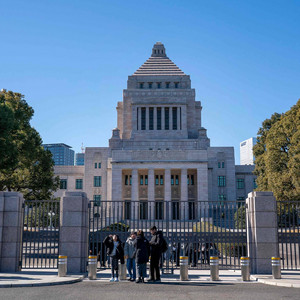
The lower house of Japan's national diet has formally dissolved ahead of a general election on February 8th.
The official campaign will start on Tuesday, creating a mere 16-day campaign period, the shortest in Japan's post-war history.
Prime Minister Sana Takaichi announced on Monday the decision to dissolve the House of Representatives.
The move aims to capitalize on her cabinet's current high approval ratings.
Her decision came amid the government's increased military spending and rising living costs.
Last month, Takaichi's cabinet approved a record national budget of around US780 billion for the 2026 fiscal year, inflating the country's debt.
The main opposition, Constitutional Democratic Party, has joined forces with Komeito, aiming to contest a ruling coalition.
The new coalition advocates for the three non-nuclear principles sustainable economic growth and realistic diplomacy and defense measures.
From Tokyo, here's Terence Tereshima.
Seeking a stronger mandate for a new coalition government, Prime Minister Sanae Takeuchi said she will dissolve the lower house for a snap election.
Currently, the head of the Liberal Democratic Party, who holds no majority in either the House of Representatives or the House of Councillors, serves as prime minister.
In the last House of Representatives election we saw the judgment of the people based on the premise of the LDP-Komeito coalition government.
Now the framework of the coalition government has changed.
Precisely for this reason, I have chosen the path of directly confronting the will of the people, rather than acting based on the convenience of political establishment.
Public reactions are mixed.
An Asahi newspaper survey showed that 50 of respondents opposed the snap election, while 36 support it.
When there is a change in prime minister, I always thought that it is necessary to get an endorsement from the public.
I've been wondering why this hadn't been done until now.
It makes it more clear for all of us to understand the government.
I think it is a good timing for the prime minister.
I think she is hoping to strengthen the government while she still has a high support rate.
Opposition parties criticize Takaichi for pushing through her own agenda, causing delays in passing the fiscal 2026 budget.
Past administrations have always considered dissolving the diet at the start of a session to be extremely risky.
In the case of an extraordinary diet session, it's acceptable because it's extraordinary.
However, during a regular diet session, there is the major task of passing the budget by March.
To set that aside and proceed with an election suggests it's being done for self-serving reasons.
From our perspective, it inevitably appears that the dissolution is motivated by self-interest.
Sanae Takeuchi outlined a number of policy pledges, including a proposal to suspend 8 consumption tax on food for two years.
She emphasized addressing livelihood security and rising prices through what she called crisis management investment and growth investment to promote economic growth.
The plan also includes active spending to create jobs, boost household consumption and create tax revenues.
It all sounded good, and I thought it was wonderful.
But when I thought about it more carefully, I wondered if some of the pledges are actually doable.
The cost of living is just too high.
Since I don't expect the wages to increase anytime soon, I wish the government could at least do something about the rising prices.
Experts warn that an expansionary fiscal policy and investment-driven strategy could further weaken the yen.
A weaker currency would push up prices, especially for imported food and energy, with all costs also expected to rise.
Given Japan's heavy reliance on imports, this could increase market unease and lead to additional government deficit bond issuance.
Analysts also say it may be too soon to call an election following the party's last defeat.
The LDP has yet to fully resolve its slush money scandal and public distrust continues to linger.
An Asahi Shimbun service shows the LDP's support rate hovering at 29, trailing behind Prime Minister Takaichi's personal approval rating.
The LDP will likely struggle in districts that might potentially see politicians that were involved in the slush fund scandal making a comeback.
On the other hand, places where we might expect a new and younger generation untainted with past scandals.
The LDP might secure votes.
This is the first time the lower house has been dissolved in January since 1992.
There are only 16 days from the dissolution to the voting day, putting heavy pressure on the district governments to prepare for the election.
That was Terence Tereshima in Tokyo.
Some members of the upper house of Japan's national diet have joined citizens in Tokyo in protesting the lower house's dissolution, the country's military build-up and Prime Minister Sino Takahashi's remarks on China's Taiwan region.
Isn't it weird for Takeichi to dissolve the House of Representatives from the beginning of the cabinet meeting?
What else has she done other than make remarks that trample the Constitution and the law on the so-called survival-threatening situation?
If she obtains a majority, she will say that she carried out her mission again and move forward with amending Article 9 of the Constitution.
She may go so far as to deploy the military in the context of the so-called survival-threatening situation.
Recently, the political posture and danger of Takahichi's regime has become very obvious.
She promises over and over that she will carry out positive fiscal measures, but she would rather continuously issue treasury bonds and spend the money on defense rather than invest in people's livelihoods.
She is also irresponsible when it comes to diplomacy.
Our ties with China have worsened because of her remarks that the Taiwan contingency would constitute a survival threatening situation for Japan, and she hasn't even retracted her words.
The ruling coalition holds only a slim majority in the lower house and remains a minority in the upper house.
For more.
I earlier spoke with Dr Rongyin Chair, Professor at the School of International Studies at Sichuan University.
Prime Minister Sana Takaichi has announced the dissolution of the House of Representatives and an early election, while the ruling LDP is campaigning on revising Japan's key security documents, easing restrictions on arms exports and even amending the constitution.
Some of these proposals by the LDP have already triggered strong opposition within Japan, particularly from Hiroshima and Nagasaki.
What does that domestic backlash tell us?
That's a great question.
I think a bigger question that if she wins the election, in other words, if she wins a political gamble and with a kind of a mandate, she would like to have what priorities or what will be her main agenda for the next few years up to, I think, 2028.
As according to the political agenda of Japan, there will be no major national election.
And one of the sort of largely believed agenda would be not only the review of the three security documents, review of the three principles for exports of Japan's defense equipment and technology, but also, I think, as her sort of officials has alluded, that the three non-nuclear issue I mean principles which I think touches upon the very sort of principles, particularly for the two cities you mentioned, Hiroshima and Nagasaki, which were the two cities that had been hit by the nuclear weapons.
So, in other words, there was strong, there could be possibly strong domestic backlashes if she goes ahead with her agenda, security agenda and particularly touch upon the question of the revision of the three non-nuclear principles.
And that was going to be have a strong and serious barriers or consequences not only for Japan and which I think largely as a society, still the pacifism and still the strong and support, but also for the region as a whole which, as I think, not only because of the past history of Japan, I mean of its aggression during the World War II, but also, I think, very much with the effect, the regional peace and stability as a whole, because Japan is a bigger country, a big economy in the region.
And as the region and the world at large undergoing dramatic, unprecedented changes, facing uncertainties and unpredictabilities, the direction, the strategic direction of Japan's future, in other words, whether Japan will continue to uphold, pursue a peaceful development, would have strong bearings and consequences for the region at large.
That's why I think the regional countries are very much following and watching with great concerns about the directions and specifically about this election outcome.
That was Dr. Rongyin, chair professor at the School of International Studies at Sichuan University.
The Chinese Commerce Ministry says Beijing strengthened export controls on dual-use items to Japan are legitimate, reasonable and lawful.
Spokesperson He Yongqian says the export controls aim to curb Tokyo's attempts at remilitarization and the pursuit of nuclear armament.
She says China approves applications that clearly meet civilian use requirements to safeguard global supply chain stability.
As a responsible major country, China has always actively fulfilled its non-proliferation obligations.
In accordance with laws and regulations, China bans the export of all dual-use items to Japanese military users for Japan's military use and for any other end-users and end-use purposes that could help enhance Japan's military capabilities.
The move is aimed at curbing Japan's attempts at remilitarization and acquiring nuclear weapons, and it is completely legitimate, reasonable and lawful.
Meanwhile, China has always been committed to maintaining the stability and security of the global production and supply chains.
The procedures for export license applications and reviews all comply with laws and regulations.
I would like to reiterate once again that China approves all export applications that meet the conditions of civilian use.
Dual-use items are goods, software and technology that can be used for civilian or military applications.
Coming up.
President Donald Trump says the US is negotiating a deal to secure what he calls Washington's total access to Greenland.
From epic tales of mystery and magic to accounts of battle and empire, From the verses of ancient poets to the masterpieces of our times, a light on literature brings to life China's literary heritage and a look at the world in a new light.
Now it's 18 minutes past the hour.
U.S.
President Donald Trump says the White House is negotiating a deal to secure Washington's total access to Greenland with no time limit.
Trump also says the US will work with NATO on Greenland security after he and NATO Secretary General Mark Rutte agreed to a framework for a future deal concerning the Arctic island.
But Danish Prime Minister Meta Fredriksen says Rutte does not have a mandate to negotiate on behalf of Denmark or Greenland.
ULAB David reports from Davos.
What we do know and this has come from both sides now that there is a framework that the US can perform military operations in Greenland,
They can have intelligence officers there and training.
And there is some facilitating in terms of local development, which could include potentially mining for minerals and potentially rare earths.
And that without asking for the permission of Denmark.
Now that will be seen as quite controversial and there will be definitely questions from Denmark about that, not least because the permit, the licensing of drilling for minerals in the future, has already been devolved to the Greenlandic Parliament.
So there'll be questions about that for certain.
But at least, whether it's a climb down, whether it's a another turn, at least there's no threat of military action, and for now those the threats of tariffs against eight of the countries that sent troops to greenland um a few days ago, has gone away as well.
But of course it doesn't mean that the sovereignty of Greenland has changed.
And that's where the details are still sketchy and that's where the Greenlanders and the Danes themselves will want some guarantees.
And of course, it's worth remembering, there is a 1951 military agreement between the United States and Denmark which allows American troops to be stationed in Greenland in place anyway.
Well, all eyes really are on the Prime Minister, Mette Frederiksen, and the Foreign Minister who went to Washington DC the other day, Lars Locke Rasmussen.
Both of them are experienced and both of them know full well they have to tread carefully in Denmark and especially with the Greenlanders, but they say they will not negotiate away any sovereignty.
They've been clear and consistent about that since last year, or even in 2019 when it when it was first broached in donald trump's first term in the white house.
So they do welcome the de-escalation in terms of tariff and military.
They're happy about that.
But they are worried about american represent representatives in greenland and without permission, and they are concerned about that.
That was Yolo Abdafet reporting.
Greenland Prime Minister Jens Friedrich Nelson says he was not included in discussions on US President Donald Trump's framework deal over the territory and that he is unaware of its contents.
I said I don't know what there is in the agreement or the deal about my country that over some discussions I didn't attend,
I don't know what concrete in it.
What I'm saying is that we have a high-level working group that will sort things out.
EU Foreign Policy Chief Kaia Kalas says transatlantic relations have taken a big blow over the past week.
Leaders warn that they are ready to act if Trump threatens them again, despite signalling the will to strengthen transatlantic cooperation.
Danish Prime Minister Meta Fredriksen reaffirmed that Greenland's sovereignty is not negotiable.
You're asking about red blinds?
We have them.
Of course.
I think it's clear for everybody that we are a sovereign state and we cannot negotiate about that, because it's a part of the very basic democratic values.
But of course we can discuss with the US how we can strengthen our common cooperation on security in the Arctic region.
French President Emmanuel Macron reaffirmed his support to Denmark.
I would also like to reiterate to the Danish Prime Minister our full support for the discussions that will be held.
And we remain extremely vigilant and therefore ready to use the instruments at our disposal if we were to again be under threat.
The European Parliament has suspended its work on the European Union's trade deal with the US amid the tensions.
U.S.
President Donald Trump has formally launched the Board of Peace at a charter signing ceremony during the World Economic Forum in Davos.
The board aims to oversee the redevelopment of Gaza.
But observers warn that it could undermine the primacy of the UN and the established multilateral framework for peacekeeping.
Some major global powers and U.S. allies have declined to join.
Trump said at the signing event that the board could do what it wants and would operate in conjunction with the UN.
Hamas has criticized Israeli Prime Minister Benjamin Netanyahu's inclusion on the board, saying it contradicts the principles of justice and accountability.
European Council President Antonio Costa says the EU has doubts about many elements of the board, including its scope, governance and compatibility with the UN Charter.
Irish Prime Minister Michail Martin says the EU will seek further clarification regarding the board.
There is an issue in terms of the fundamental point about the United Nations being the key arbiter for peace in the world and conflict resolution and obviously we're aligned to the UN.
So it's a much different proposition to the one originally envisaged by the UN resolution, but we will seek further clarification.
We're anxious to contribute to conflict resolution and peace in Gaza and to support in a humanitarian way the situation there.
The Board of Peace reportedly includes more than 20 member countries, including Egypt, Azerbaijan and the United Arab Emirates.
Palestinian journalists and media unions are condemning the killing of several reporters in Gaza by Israeli strikes.
Israeli officials say the journalists were operating a drone near military positions, a claim which the Palestinian Journalists Syndicate has rejected.
Media workers say more than 260 Palestinian journalists have been killed since the conflict began, describing the attacks as part of a broader effort to silence coverage from the ground.
Rami Amoghari reports from Gaza.
Those Israeli army officials suggest that the killing of the journalist yesterday was because of these journalists had a drone shooting in the area that is close to the Israeli army.
The Palestinian journalists syndicate here in the Gaza Strip and the journalist community as a whole condemned this killing as being a violation of the freedom of the press for Palestinian journalists working on the ground, given the fact that Israel, over the past war, has reportedly killed more than 200 Palestinian journalists, with various claims and allegations by the Israeli army or Israeli officials.
The killing of the journalists is one more violation in the eyes of the Palestinian journalist community here in the Gaza Strip.
Israel's targeting of journalists is ongoing, confirming that what is happening is an assassination campaign.
The Israeli occupation does not want the Palestinian image and voice to reach the world, which is why we have witnessed this massacre, adding to the long list of crimes committed by the occupation against journalists.
The killing of fellow journalists is a premeditated and deliberate act of murder.
Evidence shows that, since the beginning of the war, Israel has killed around 267 journalists, and three more colleagues have now been added to that toll, while they were on a purely humanitarian mission.
The accusation is filming with a drone.
Unfortunately, any journalist who uses a drone to film is effectively sentencing themselves to death.
These kinds of targeted attacks against journalists prevent others from using this tool in their work.
This was coincided with the killing of about eight other Palestinians, including three brothers, who were searching for wood to make fire under the lack of cooking gas and fuel in the territory.
The Hamas party, from its part, condemned the killing of journalists and other civilians in the territory, suggesting that this is further violation by Israel of the ceasefire agreement and would lead to further Israeli violations, calling on the international community, particularly the mediators, to intervene immediately to stop whatever more Israeli actions on the ground that would threaten the ceasefire in the Gaza Strip.
That was Rami Amoghari in Gaza.
The United Nations says it is alarmed by the rising impact of drone attacks in Sudan's North Kordofan state.
Spokesperson Stefan Dularuk warned that the strikes are endangering civilians and disrupting humanitarian access.
On Tuesday, multiple drone strikes were reported in some villages located southeast of the state capital of El Obeid.
These areas lie along the critical logistics corridor and the attacks risk severing the city's eastern supply lines.
Another strike was reported on the same day in the village of Wadi al-Hut, about 30 kilometers north of El Obeid, underscoring the increased frequency and geographic spread of aerial attacks across that state.
The International Organization for Migration estimates that more than 2400 people have been displaced in the area.
The report called on all parties to protect civilians and infrastructure and to allow safe, rapid and unhindered access for humanitarian supplies and staff.
In the northeastern United States.
Maine, is experiencing widespread fear in immigrant communities as federal ICE enforcement continues.
Governor Janet Mills is demanding federal immigration officials publicly release arrest warrants, real-time arrest numbers and detainee information.
Mills says immigrant communities are fearful and state officials lack clarity on who is being detained.
Now it's 29 minutes past the hour.
Checking the forecast before the break.
Beijing is down to minus 11 on Friday evening.
Saturday will be cloudy with a high of 3.
Nanchang is down to 1 tonight and then cloudy at 14.
Elsewhere in Asia, Islamabad will see light rain with a low of 2 this evening.
Saturday will be overcast with a high of 13.
Vientiane is down to 15 overnight and then cloudy at 27.
Phnom Penh will be cloudy tonight and then tomorrow, with a low of 20 and a high of 31 degrees Celsius.
It's time for a short break.
So far in this hour, Chinese President Xi Jinping holds a phone talk with his Brazilian counterpart, calling on the two countries to better defend the interests of the global south.
Japan dissolved the lower house of parliament and prepares for a snap election.
And President Donald Trump says the US is negotiating a deal to secure what he calls Washington's total access to Greenland.
Tianlu with you, stay with us here on the Beijing Hour.
Shh, listen up.
Can you hear the heartbeat of our world?
It's vibrant and pulsating with the essence of life itself.
From the stem of trees to the gurgle of rivers.
From the silent strength of mountains to the icy whispers of glaciers.
Even the solid ground beneath our feet.
Right there, in the midst of all, beats the heart of humanity.
What if those other heartbeats were to stop?
Would ours keep on ticking?
Ever wondered what's actually going on in Africa through the perspective of an African?
How are things really going between China and Africa?
What's the narrative of this relationship?
Well, get a perspective with China Africa Talk.
Hear from African diplomats, entrepreneurs, academics, Chinese natives and more.
Get on our wavelength every week to find out what's real with China Africa Talk.
Find us on your favorite podcast.
We'll see you there.
Examining the events that impact and shape China and the rest of the world.
This is the Beijing Hour, one hour of news and information brought to you every weekday.
Now here's your host.
Tianlu with you on this Friday still to come.
In business, China ranks among global leaders in active AI patterns.
In sports, China releases its athlete lineup for the Winter Olympics.
In culture and entertainment, a new regulation to promote nationwide reading in China.
To contact us, you can email radio at cgtn.com or follow our ex-account at cgtnradio.
But first, checking today's headlines.
Chinese President Xi Jinping, also General Secretary of the Communist Party of China Central Committee, has sent a congratulatory message to To Lam on his re-election as General Secretary of the Communist Party of Vietnam Central Committee.
The Vietnamese side officially announced To Lam's re-election on Friday.
Russia, Ukraine and the U.S. are set to hold security talks in Abu Dhabi.
Moscow made the announcement after a meeting between President Vladimir Putin and three U.S. envoys.
The Kremlin said the meeting was substantive, constructive and frank, but it warned that territorial issues had to be resolved for durable peace to happen.
Putin said that Russia is sincerely interested in a diplomatic solution.
Before the U.S. envoys met with Putin, U.S.
President Donald Trump met with his Ukrainian counterpart Volodymyr Zelensky in Davos.
Zelensky said the two leaders spoke about air defense for Ukraine.
Trump said the Russia-Ukraine conflict must end.
The Chinese embassy in New Zealand has confirmed that one Chinese national died in a landslide in the Western Bay of Plenty on New Zealand's North Island.
Authorities say several people, including children, remained missing after the landslide struck a holiday park near Mount Mogwani on Thursday.
Prime Minister Christopher Luxon said the immediate focus remains on search and rescue efforts.
Obviously, we're still very much in the response stage across the country, but in the next two days obviously, councils will make their assessments as to what more support or resources are needed in order to recover.
The incident follows days of heavy rain and flooding across parts of the North Island, leaving thousands without power and isolating some communities along the East Coast.
U.S.
President Donald Trump has inaugurated his newly created Board of Peace, calling it something very, very unique for the world.
But he provided few details on its mandate or how it will operate.
Trump suggested the board could work with the United Nations to help resolve conflicts, including the Israel-Hamas conflict in Gaza.
The UN said it has received no official information on the initiative.
Spokesperson Stefan Dereck stressed that the UN remains the only international organization with universal membership.
We have not heard anything officially, but we continue to hope that Rafah will reopen for people and especially for cargo.
I mean it's a critical, critical point of entry for humanitarian aid as it is, for commercial goods especially, and for Palestinians wanting to come back or wanting to leave.
Several US allies have expressed concern that the board could compete with the UN, and many have declined to join.
The European Union says it has serious doubts about a US-proposed board of peace and will push back against any form of coercion.
European Council President Antonio Costa made remarks after an emergency EU summit in Brussels late Thursday.
We have serious doubts about the number of elements in the Charter of the Board of Peace related to its scope, its governance and its compatibility with the United Nations Charter.
Costa stressed that the EU will defend its interests, including those of member states, citizens and businesses, and has the tools to do so if needed.
France says it remains vigilant after a dramatic week of uncertainty over US President Donald Trump's stance on Greenland.
Earlier threats from Trump to annex the island and impose tariffs on countries supporting Denmark sent shockwaves through Europe.
On Thursday, Trump abruptly reversed course, announcing a new framework deal and ruling out the use of force, though details remain unclear.
French President, Emmanuel Macron, welcomed the shift, saying Europe's united response shows it can command respect.
I think we are going to discuss tonight the exercises that NATO will organise.
France is fully available to participate.
I would also like to reiterate to the Danish Prime Minister our full support for the discussions that will be held.
And we remain extremely vigilant and therefore ready to use the instruments that are ours if we were to be again under threat.
Danish Prime Minister Mette Frederiksen insists that her country will not negotiate away its sovereignty.
Coming up in business, China ranks among global leaders in active AI patents.
The Beijing Hour, your window on China and the rest of the world.
36 minutes past the hour, turning to business, here's Tianyu.
Thank you, Tianlu.
Stock markets on the Chinese mainland closed higher on Friday.
The Shanghai Composite was up over 0.3%, while the Shenzhen Component gained almost 0.8%.
Aerospace equipment and forestry shares were among the top gainers.
Timothy Pope has more.
We saw the Chinese mainland markets manage to end the week a little bit higher.
But this week did see a couple of down days and investors have been reacting to regulator and exchange efforts to try and cool down that rally which really did gather pace since the start of 2026.
This is quite a fine line that they're trying to walk here, discouraging too much speculation with borrowed money to avoid things getting overheated, while also trying not to throttle what is still a very buoyant market sentiment.
Sector-wise, material stocks continue to shine, if you'll pardon the pun.
Gold, silver and platinum producers are still big winners.
That was Timothy Pope reporting.
Hong Kong's Hansen Index increased over 0.4%, and in Japan, the Nikkei was up nearly 0.3%.
China ranks among the world's leading countries in the number of active artificial intelligence patents, while patent-intensive industries are making a steadily rising contribution to economic growth.
Last year, high-value invention patents grew 22 points faster on a yearly basis than overall invention patents.
According to the China National Intellectual Property Administration, growth was particularly strong in fields including information technology management methods, computer technologies and medical technologies.
The country's active AI patents remain at the forefront globally, with a batch of core technology patents already deployed in future-oriented industries.
These include quantum technology, brain-computer interfaces, and sixth-generation communications.
The contribution of patent-intensive industries to the broader economy has also continued to rise.
Chinese brands account for US18 trillion in value among the world's top 5000 brands, ranking second globally.
Intellectual property is also contributing more visibly to China's external economic engagement.
From January to November of last year, the country's imports and exports of intellectual property, royalties and fees rose 74.
Exports surged 23%, supporting the upgrading and expansion of its services trade.
AI has become a central topic at the Davos 2026 Forum, with 17 AI-related discussions, highlighting its growing impact on the global economy.
Unlike previous years, conversations this year focused more on the certainty of AI's role in shaping society.
NVIDIA CEO Jensen Huang said AI is exciting for Europe, citing the continent's incredibly strong manufacturing base as a key asset for building AI infrastructure.
Google DeepMind CEO, Demis Hassabis, expressed optimism, predicting that AI will create more meaningful jobs.
The forum also unveiled its AI solution.
Starts list, with nearly half of the honorees coming from China.
IMF Managing Director, Kristalina Georgieva, stressed that AI's potential to boost economies will depend on how effectively workers and businesses are prepared for the ongoing transformation.
China's new five-year plan aims to use AI to power its economic growth.
While boosting productivity, AI will also create new jobs and transform industry supply chains.
China is well positioned to capitalize on the opportunities AI and emerging technologies will bring in the coming years.
Guan Xin spoke with Nobel laureate economist Christopher Pizarres on how AI could impact the labor market.
Alongside this AI revolution, China is also having this green transition, as well as the silver economy, due to the so-called aging population.
Which one do you think is the most urgent stress test for China's labor market?
Actually, you've listed three.
You left out the fourth, which is What's happening with supply chains and tariffs and globalization working the other way.
We've seen resilience in that sector.
You are resilient in China more than some European countries, for example, that were still trying to get it right.
There is still an adjustment cost of some kind, and it involves geopolitics, which is difficult uh, to be certain that uh, things will not get worse.
Let me put it that way, so that what that is forcing you to do is to decide where they're going to trade.
Where are they going to produce and where are they going to trade?
How are they going to structure their supply chains?
That's a challenge.
Now china has the what you call the silver challenge, so there's a gap in the middle.
That is a concern, and it's not a big concern actually, in my view, because the new technologies could be developed in a way that you don't need so much labor that you did without them.
You see, you could develop the new technologies to destroy jobs and create mass unemployment, or you could develop it in a way to work together with people, but not requiring as many people to do it, and you could manage the demographic transition that way.
Now, the green one is absolutely essential for the long term.
China is paying more attention.
There have been huge improvements in terms of EVs electric vehicles, that now they're producing more than the Teslas, and so on.
China has really kicked off a new five-year plan spanning 2026 to 2030.
What do you think is the key to China's success in the coming five years?
The key to success actually is to apply AI, to apply it in a way that is more conducive to economic development.
Collaboration between the AI technologies and human labor, human capital.
That will enhance the capabilities of human capital.
It will become more productive.
It will improve the well-being of the workforce.
And it will generally give you a high-income country with a higher level of life and job satisfaction.
And it has the capabilities of doing it, but it is a challenge to apply.
I don't think that it's very easy.
I don't think I will say oh you know, tell your companies to use AI whenever they can, and they use it and that's the end of the story.
Because you never know in which direction individual companies will take it.
That was Nobel laureate economist Christopher Pizarres.
The 2026 Beijing International Commercial Space Exhibition is underway at the Beijing Yichang International Convention and Exhibition Center.
The event includes rockets and launch systems, satellite manufacturing and aerospace services, and supporting industries.
It showcases achievements across the entire industry chain, including reusable rockets, satellite platforms and aerospace-specific materials.
The event has brought together a wide range of experts and scholars from home and abroad to engage in exchanges and discussions on cutting-edge technologies.
It provides participants and exhibitors with a platform for gaining insights into industry trends, as well as pooling high-end resources and exploring collaboration opportunities.
Beijing Interstellar Human Spaceflight Technology Company plans to launch its first manned spacecraft in 2028.
Founded in January 2023, it is China's first commercial space company specializing in manned space technology.
It focuses on developing reusable spacecraft and advancing space tourism.
The company has begun pre-selling tickets for 3 million yuan each, with a 10 deposit required to secure a reservation.
Its ambitious roadmap includes suborbital manned flights by 2028, low-Earth orbit tourism by 2032 and lunar travel by 2038.
In 2023, the technology company sold its first space tourism ticket and has since pre-sold nearly 20 tickets.
Buyers include Chinese engineers, executives from major tech companies and actor Huang Jingyu.
Emotional consumption or treat-yourself spending has emerged in China.
It's a trend that goes beyond acquiring new possessions.
It's about consuming experiences that gives a sense of comfort, excitement and personal satisfaction.
Data shows that 90 of young adults endorse the idea of emotional value, seeing it as a cure for stress and anxiety.
China's emotional economy reached a market size of 27 trillion yuan in 2024 and will exceed 45 trillion yuan by 2029, spanning industries from designer toys to immersive tourism.
And finally, according to Dalian's Statistics Bureau, the city's gross domestic product exceeded 1 trillion yuan in 2025, marking a 57 increase.
This milestone makes Dalian the first city in northeast China to surpass the 1 trillion yuan GDP threshold.
The achievement highlights Dalian's growing economic strength and its crucial role in driving regional development.
Thank you very much.
And that was Tianyu with Business.
You're listening to the Beijing Hour coming up in sports.
China releases its athlete lineup for the Winter Olympics.
Sideline Story brings you all things sports related.
The hottest topics, latest events, juiciest stories, all with a very personal take.
Subscribe to Sideline Story Podcast for heated sports discussions covering events that are happening in China and around the world.
Now it's 46 minutes past the hour, turning to sports.
Here's Yang Guang.
Thank you, Tianlu.
China has publicized its list of athletes for the upcoming Milan Cortina Olympic Winter Games.
The lineup includes 57 male and 68 female athletes.
Among them are Winter Olympic champions Xu Mengtao, Qi Guangpu, Gu Ailin and Su Yiming.
Moving to the ISU Four Continents Championships in Beijing, China's Olympic pairs figure skating champions finished the short program on top with 7602 points.
Sui Wenjing and Han Cong won the second to take skating among the 11 pairs at the event.
They completed all of their moves in excellent fashion, with great rhythm and and artistic expression.
Sui seemed a bit overstretched as their performance came to an end because she injured herself during practice a week before the competition.
Despite that setback, she and Han still outperformed the other pairs by scoring 4155 points in technical elements and 3447 in program content.
Han revealed that his partner is not in her best form yet.
Before we came to this event, Sui was accidentally injured while we were practicing throw jumps.
She has not fully recovered because the competition was approaching.
And now here we are.
Meantime, Sui said she decided to compete in spite of the injury to refine their chemistry.
Actually, I have been dealing with mental pressure and a physical injury, but I decided to come to this event because I want us to build up to our best form here and I hope the pain goes away in Milan.
Competitors Zhang Jiaxuan and Huang Yihang ranked fourth with 69.05 points.
In the ice dance rhythm event, Wang Shi Yue and Liu Xinyu were the first to perform.
They displayed excellent passion on the way to scoring 64.41 points to rank 8th among 15 pairs.
Ren Junfei and Xin Jianin came in 10th, while Xiao Zixi and He Linghao were 11th.
Three Chinese skaters participated in the women's short program event and in the end, Zhu Yi ranked 10th with 5899 points.
Zhang Ruiyang placed 11th and An Xiangyi came in 16th.
Mexican cross-country skier Alan Corona is set to make his debut at Milan Cortina Winter Olympics.
The athlete is reinventing himself in a sport where few of his compatriots have ventured.
The 35-year-old, who spent more than a decade competing in triathlons, took up his new event after moving to Norway.
He feels positive about a late career gamble that he says has been challenging.
Well, this has definitely been a difficult journey, but also a very rewarding one.
And I think those go hand in hand.
If it were easy, it might not be as rewarding.
So I knew what I was getting into.
I am happy to have chosen this and to have stayed firm in the most difficult moments.
When we felt alone, far away, perhaps without a great structure like our competitors have, and all of that and everything that has brought us here.
So now I am very grateful to have chosen to take that difficult path.
Meanwhile, the tour trellis for the Winter Olympics navigated the world-famous Canals of Venice on the 46th day of the Flames trip across Italy.
The Winter Olympics will open on February 6th.
In tennis, world number one Carlos Alcaraz has breezed into the last 16 of the Australian Open.
It followed a straight set's threshing of 32nd seed Corentin Moutet of France.
The six-time Grand Slam winner finished the game in just over two hours.
The 22-year-old is determined to win the only Grand Slam title that has eluded him, having never progressed past the quarterfinals at Melbourne Park.
Alcaraz will next play American 19th seed Tommy Paul.
Earlier, Novak Djokovic swept past Italy's Francesco Mastralli in straight sets.
The win was the 24-time major champion's 399th in Grand Slam singles action.
The Serbian is on the cusp of becoming the first player to reach 400.
Djokovic said night and day matches feel completely different to him.
Actually, it's the same scoreline, so kind of similar feeling on the court of generally positive.
Served better in the first match.
I mean, it did feel like completely two different tournaments, playing at night and day to day, particularly with the wind that has been, I think, blowing this year more than any other year that I've been playing here in Australia.
So, you know, obviously I have to adjust to that and adapt to a different opponent with big serve.
In women's action, World No.
1 arena.
Sabalenka overcame a patchy performance to defeat Anastasia Potapova on two tiebreaks in the third round.
The four-time Grand Slam champion battled in warm conditions at Rottweiler Arena before prevailing just over two hours.
Earlier two-time Australian Open winner Naomi Osaka beat Sarana Kirstie.
And finally, in football, Manchester United said midfielder Casemiro will leave the club when his contract expires at the end of the season.
The midfielder has enjoyed four seasons at the club, playing 146 games and scoring 21 goals to date.
The 33-year-old joined United from Real Madrid for £70m in 2022 and has played a key role for the club.
He scored the opening goal in Manchester United's 2023 Carabao Cup final victory over Newcastle, as United finished third in the Premier League.
His future came under scrutiny last year when New York co-owner Jim Ratcliffe suggested some players were not good enough and overpaid.
The Brazil international said he would continue to fight until the end of the season.
Thank you very much.
That was Yang Guang with sports.
Coming up in culture and entertainment, a new regulation to promote nationwide reading in China.
Now it's 53 minutes past the hour, turning to culture and entertainment.
The Chinese government has introduced a new regulation to promote nationwide reading.
The regulation will come into effect on February 1.
It underscores the government's commitment to cultivating a book-loving society and supporting the country's long-standing cultural traditions.
The new regulation stipulates that governments at all levels improve public reading facilities and services, ensuring reading is not only accessible but embedded in daily life.
It encourages the creation of more public reading spaces, including in places like railway stations airports, shopping malls and even parks.
One notable feature of the regulation is its focus on inclusivity, emphasising the need for tailored services to meet the needs of minors, senior citizens and people with disabilities.
The regulation also prioritises rural areas and less developed regions, ensuring that access to reading materials is equitable across the country.
In addition, the regulation encourages digital reading alongside traditional print formats, as the government seeks to expand access to quality digital content.
The Li ethnic group is as essential to Hainan's identity as its island and ocean culture.
The island province's capital has staged an outdoor artistic fashion show themed around the South China Sea and Li ethnic culture.
Lin Wo reports.
I'm now on the beach in Rongshan Liao Village, Haikou City.
A fashion show featuring elements of the South China Sea and Li ethnic culture is taking place here.
Various totems and traditional ethnic craftsmanship are brought vividly to life.
Under the sunset, visitors can fully experience the wisdom of Li ethnic culture and the beauty of the South China Sea.
This show features some of the displays used in the Nanhai Li Art International Artists Residency Program.
During its two-week run, 15 designers and new generation artists from all walks of life are visiting several villages in Hainan to experience some local intangible cultural heritage.
They have been immersing themselves in learning some of these time-honored cultural techniques to draw inspiration for their own creations.
I was inspired by a lot of different points of this entire residency.
So I saw the huts there with the attached roof.
I was very drawn to how the proximity of the way of life to the ground.
So that was something that I drew for my work.
We traveled to different villages where we learned to leap, pottery firing, fabric dyeing and how to build traditional boat shaped houses.
The costumes of the Lee ethnic group in Hainan are unique in terms of their totem, aesthetics and craftsmanship.
The visiting designers plan to disseminate their ethnic culture with fresh visual languages, enabling their traditional culture to regain its vitality in contemporary society.
In recent years, Hainan has witnessed the rise in the number of cultural exchange events it hosts.
Taking advantage of the free trade port dividends.
The island is increasingly playing an important role in international cultural exchanges, effectively driving local tourism and economic growth.
Now it's 57 minutes past the hour, checking the forecast for the day.
Beijing is down to minus 11 on Friday evening.
Saturday will be cloudy with a high of 3.
Nanchang is down to 1 tonight, then cloudy and 14.
Elsewhere in Asia, Islamabad will see light rain with a low of 2 this evening.
Saturday will be overcast with a high of 13.
Biantian is down to 15 overnight, then cloudy with a high of 27.
Phnom Penh will be cloudy tonight, then tomorrow with a low of 20 and a high of 31.
In Africa, Nairobi will be cloudy with a high of 28.
On Saturday, Kampala will be overcast with a low of 18 overnight, then light rain with a high of 29.
Juba will be cloudy tonight and tomorrow with a low of 24 and a high of 39.
Finally to Oceania.
Port Vila will see light rain with a low of 24, this evening.
Tomorrow, moderate rain with a high of 30 April will have heavy rain on Saturday with a high of 31 degrees Celsius.
That's it for this edition of the Beijing Hour Making News today.
Chinese President Xi Jinping holds a phone talk with his Brazilian counterpart, calling on the two countries to better defend the interests of the global south.
Japan dissolved the lower house of parliament and prepared for a snap election.
On behalf of the staff.
This is Tian Lu in the Chinese capital, hoping you'll join us for the next edition of the Beijing Hour and open a window to the world together.
Find the Beijing Hour at precisely 6 p.m.
Beijing time.
We meet you on podcast and on air every weekday.
The Beijing Hour, your window on China and the rest of the world.
He can't live without the Yellow River in his eyes.
The Yellow River is so noble and elegant.
Both my grandpa and dad made the living from the river.
Would you like to move away from the Yellow River?
I don't think I will.
I love it so much.
The Yellow River, the second longest river in China, is regarded as a shaping force in the history, economy and culture of northern China.
Today, about 100 million people live within its water basin, making up nearly 9 of the country's population.
How is climate change felt at its headwaters?
And what are the locals doing to cope with it?
What are the descendants of the boatmen doing?
What has kept some people from leaving their home village by the river?
And what has drawn others back?
Could the fading fishing community revive in a time of digital transformation?
From 2021 to 2024.
Our reporters visited the upper, middle and lower reaches of the Yellow River, talked to the herders farmers boatmen, fishermen and eco-activists who share a close bond with the river, and present their stories in pictures, podcasts and videos, all in our 12-part series, The Yellow River Mosaic, available only on CGTN Radio.