This message comes from NPR sponsor, FX's The Lowdown, starring Ethan Hawke.
This new crime drama follows quirky journalist Lee Rabon, whose obsession with the truth always gets him into trouble.
FX's The Lowdown, all new Tuesdays on FX, stream on Hulu.
This is Planet Money from NPR.
On Wall Street, fortunes are often won and lost with the tiniest advantages.
Like, can your firm find some brilliant trading strategy in some corner of the global market?
Or can you keep it a secret from your competitors so they don't start cannibalizing your profits?
And for the past few years one trading firm has stood out from the rest for both huge profits and almost complete secrecy.
A firm called Jane Street.
Jane Street has become famous for making these incredibly high annual profits.
Last year they posted 205 billion in net trading revenue, basically doubling from the year before.
And in just a couple of decades they've gone from being a little-known startup to trading on the level of Goldman Sachs.
But Jane Street is a private company.
They don't give a lot of interviews or have any high-profile executives.
They are intentionally a black box.
So when Chris Dolmetsch, a legal reporter for Bloomberg News, first heard that Jane Street was bringing a lawsuit against one of its main competitors, he knew it was a big deal.
Anything you write about Jane Street gets immediate, huge attention.
Nobody knew what this place was and what they did, really.
They just made a lot of money.
And everybody wanted to know how.
And to Chris, this court case seemed like it might offer this incredibly rare window inside the black box of Jane Street.
Because now the company was accusing two of its former traders of stealing one of their most lucrative trading strategies and taking it to a direct competitor.
Jane Street alleged this competitor, Millennium Management, was now using that same strategy and eating into their profits.
So Jane Street was asking the court to stop Millennium to award Jane Street damages and in order to prevent anyone else from figuring out their trade secrets about, you know trading, they asked the judge to bar the public and reporters like Chris from the courtroom.
The judge declined that last request.
And so, on the morning of April 19th 2024, Chris buttoned up his shirt and went down to a courthouse in lower Manhattan.
He shuffled into the courtroom next to some of the most expensive lawyers money can rent.
And he settled in for a marathon of dense legalese.
These things are very dull, generally dull kind of hearings.
Lots of lawyers talking, making very distinct points about the law.
So you really have to pay attention, but you also are just kind of listening for anything that sounds, you know, interesting.
It's like listening to elevator music and waiting for heavy metal to come in the middle of it.
Heavy metal is the payday for you.
Heavy metal moments where all of a sudden the guitars start playing and you're like okay, that's a big deal.
Chris says the trial began with a solid dose of elevator Muzak.
The first tiny hint of heavy metal came when the judge tried to find out how financially important this secret trading strategy was to Jane Street's business.
In the course of asking that question, the judge revealed what seemed to be an important detail.
That Jane Street had made about a billion dollars from this trading strategy in 2023.
Jane Street's lawyer did not comment on that number specifically, though she did say later that this strategy had recently been the most lucrative trade in their portfolio.
All of which was like loud distorted music to Chris's ears.
When the judge says this is a billion dollar trading strategy, your ears perk up.
Another hit of heavy metal came in an exchange about Jane Street's desire to keep the contours of their strategy as vague as possible.
Even down to where in the world this trade was happening.
The judge expressed some skepticism.
The judge said details of his trading strategy that might allow somebody to replicate it are one thing.
The continent whose securities are at issue is quite another.
Continent?
As in like geographical continent?
Geographical continent.
Interesting.
Like that's the level of secrecy that they want here.
You know, they don't even want to tell you this is on planet Earth.
Anything like that would give anybody kind of a roadmap to find out what's going on.
They don't want.
Whether he meant to or not, the judge had sort of tipped people like Chris off that they were now playing a geographic game.
Like where in the literal world is Jane Street raking in all this money?
Not too long after that, one of the lawyers for Millennium appears to offhandedly mention the kind of market that this trade was happening, in saying it was one of the largest options markets in the world.
And in a final burst of screechy guitar, that same lawyer does something totally unexpected.
He appears to maybe accidentally give up the exact location of the trade.
That's when he says there's a built-in system to trade in India, in some country, and then he apologizes.
And I knew the second.
He apologized that he had just revealed something that was going to be a big deal.
That's more than a little bit of faint guitar music in the background.
That's a big solo that I know is, oh, this is news.
This is definitely news.
We have a billion dollar strategy.
We know it's their most lucrative.
And now we know where it is.
Whatever it is, it involves options trading in India.
Chris writes up his story, publishes it like he would any other story.
But the information revealed in that courtroom would soon ricochet around the world.
It would draw the attention of competitors and regulatory agencies, blow up billions of dollars worth of trades and call into question some of the most fundamental strategies in global finance.
Hello and welcome to Planet Money.
I'm Alexi Horowitz-Ghazi.
And I'm Mary Childs.
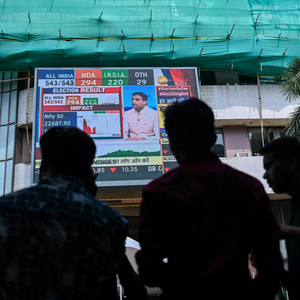
A few years ago, Jane Street discovered a sort of gold mine, a financial glitch in one of the biggest economies in the world that helped them become the envy of Wall Street.
But when they tried to keep that gold mine a secret, things spiraled out of their control.
Today on the show what Jane Street's Indian options trade reveals about the power imbalance between Wall Street juggernauts and everyday traders the surprisingly fine line between taking advantage of an opportunity and market manipulation, and the unintended consequences of trying to aggressively keep a trade secret.
This message comes from Capital One with the Capital One Saver Card.
Earn unlimited 3% cash back on dining and entertainment.
Capital One.
What's in your wallet?
Terms apply.
Details at CapitalOne.com.
Support for this podcast and the following message come from Indeed.
You just realized your business needed to hire someone yesterday.
Indeed's sponsored jobs helps you stand out.
According to Indeed data, sponsored jobs posted directly on Indeed have 45 more applications than non-sponsored jobs.
Speed up your hiring right now with Indeed and get a 75 sponsored job credit to get your jobs more visibility at indeedcom.
Terms and conditions apply.
Hiring?
Indeed is all you need.
So a big part of the trading strategy that Jane Street was so desperate to keep secret seemed to center on three magic words.
Indian options market.
And in any market, on any given trade, there are two sides to the story.
There is the buyer and there is the seller.
In order to understand this market where Jane Street has been playing, we wanted to hear from someone on the other side of the trade.
So we caught up someone who spends a lot of his waking life day trading.
A guy named Venkatesh Upadeya, or Venky, as his friends call him.
Do you have any hobbies?
What do you do for fun?
Fun?
I used to watch YouTube videos, but no other hobbies.
I spend the majority of my time in my home itself.
So this trading, it's like a jail.
Venky is in his early 50s.
He says he first found out about trading after college.
He was taking a course to be able to work in tax and legal compliance for corporations.
But... I tried for one year, but I couldn't complete because I was an average student.
So I thought I would give it up.
It was around that time that Venky discovered the hobby that would eventually come to feel like jail.
In his free time, he would frequent old bookshops.
And one day I came across a book named Business Today.
And in that, there were figures like 5,000 crores, 6,000, 10,000 crores.
Crore means 10 million.
So Venky's reading about like 100 billion rupees.
Hundreds and hundreds of millions of dollars.
I thought, my God, in the world, such figures are there.
And I came to know that through companies.
People are making money.
Venky started learning more about the stock market.
He started making trades of his own.
And a decade or so later, by 2008, he was trading full time.
And eventually, Venky graduated from the stock market to the options market.
An option is a way for investors to bet on a stock.
It's a contract guaranteeing you the option to buy or sell a particular stock at an agreed upon price on or before a specific expiration date in the future.
So if you think Coke stock is going to rise, you can buy an option.
And if it does rise, you can buy that stock at a discount and pocket the difference.
If it doesn't, you can just let your option expire and eat the cost, whatever you spent to buy it.
Benke says for a day trader like him, options were more appealing for a couple reasons.
First, buying an option is generally much cheaper than buying the stock.
And unlike in the U.S., the Indian stock market has way fewer buyers and sellers.
So stocks are just harder to trade.
The attraction of options is that we can do with very little amount of money.
The second reason options were appealing is because they offer the prospect of high returns without needing a lot of money.
If you happen to place a bad bet, you do stand to lose whatever you paid, but your losses are kind of limited.
And if your bet pays off, you can potentially make many multiples of your investment.
In some options, we can make 5x, 10x, even 50x, we can make in some trades.
For a decade or so, Venky was in a relatively rarefied group.
But then a couple things happened that caused the Indian options market to explode.
In 2019, the National Stock Exchange of India, where a lot of this trading was happening, began offering more kinds of options for sale.
Eventually, that meant Indian day traders could place bets on options every single day of the week, and even on options that expired the same day they bought them.
And second was the pandemic.
Remember how, during the pandemic, an enormous horde of retail investors in the US started banding together to pump up the value of meme stocks like GameStop and AMC.
To the moon!
Well, the same thing kind of happened in India for options.
Yeah, while millions of lower and middle income people in India were stuck at home, they started taking to their cell phones and computers to get in on the rapidly expanding options market.
All of a sudden, there was this whole ecosystem of slick financial influencers and options gurus touting their unbeatable investment strategies on YouTube and TikTok.
Hello traders, today we'll be discussing about an excellent and simple option trading strategy.
Your risk is very less, but your profit is unlimited.
In order to achieve financial freedom, many people are choosing for option trading.
Learn tools and achieve the right mindset to face today's market confidently.
With me at how pros trade options and help build strategy from zero.
Over the past few years, millions of newly minted retail traders with little money and zero experience flooded into India's booming options trading casino alongside Venky.
So it was like a jackpot or lottery daily.
We had Monday, Tuesday, Wednesday, Thursday, Friday, all those, all this.
So it became like a gambling spot.
By 2023, India's options market had become one of the largest in the world.
And it was around that time that it became the focus of a secretive Wall Street trading firm called Jane Street.
Global financial institutions are always looking for a new opportunity, a new asset class, a new geography.
This is Rupak Hosh.
He is a longtime corporate strategist and research analyst based in London.
He's followed Jane Street pretty closely for years.
And he says that by the time the options market started taking off, Jane Street had already been trading in India for a couple of years, developing fancy algorithms for identifying promising trades.
And it was around the options boom that they seemed to notice what is known to investors and economists as an arbitrage opportunity.
Arbitrage means taking advantage of a difference in prices for the exact same thing.
So let's say you find out that oranges are selling in New York for $5 a piece.
At the same time, they're selling for $10 in Chicago.
You could spend $50 on New York oranges, sell them in Chicago for $100, and pocket the difference.
That is arbitrage.
But the thing is, these opportunities don't usually last long.
You've bought your oranges in New York because they're cheap.
You've sold the oranges in Chicago because they're expensive.
You believe, over time, as information flow between Chicago and New York is shared, the fundamentals are going to mean that those two prices close.
The key to arbitrage is recognizing a price differential and having the money and ability to trade on that information while the getting is good.
Because eventually, in theory, the act of trading should cause the price difference to disappear.
And when it came to the Indian options market, the price differential, the arbitrage opportunity that Jane Street noticed had to do with the imbalance between the price of some options and the price of the underlying stocks they were betting on.
And this is kind of the key to Jane Street's strategy.
You see, in theory, you should be able to calculate what the value of an option should be based on things like the price of the stock it's betting on, the stock's volatility and the amount of time before the option expires.
But in the Indian options market the option prices kept diverging from where they should be in theory.
Because of all those masses of relatively inexperienced day traders placing bets based on, you know, whatever their favorite finfluencer said.
When they all bought or sold, swarming on one side or another, they often took the price with them.
That means sometimes people were paying more for some options than the options were theoretically worth.
And using high-powered algorithms, Jane Street was able to identify these fleeting windows of opportunity.
Arbitrage.
Hey, that's an arbitrage.
And if Jane Street saw an arbitrage opportunity they could act, because they had the money and the wherewithal to quickly set up shop on the other side of the trade.
They could sell as many of those options at that inflated price as possible until demand came back down.
Rupak says it was like Jane Street had discovered an open ocean filled with schools of tasty, defenseless fish.
They entered, they saw the arbitrage opportunity and they saw that the sharks were not there and the regulators were not there.
Starting at least in 2023.
Jane Street began running variations of this trade dozens of times, month after month, eventually racking up billions of dollars in profits, all without anyone outside the firm any the wiser.
Until, of course, a couple of Jane Street traders decamped for a competitor.
There was a lawsuit.
And last April, on that fateful day, in a Manhattan courtroom, Bloomberg reporter Chris Dolmetsch and the wider world first heard that it was Jane Street who'd been quietly winning all along.
But all of the profits Jane Street was raking in had to be coming from somewhere.
After the break, Indian regulators tally up who had been on the other side of this clever, clever trading strategy and just how badly they had been losing.
This message comes from NPR sponsor, U.S.
Bank.
With U.S.
Bank Business Essentials, you get more than just a bank.
You get a dedicated partner that provides you a powerful combo of checking and card payment processing with quick access to the money you've earned, proving that there is nothing as powerful as the power of us.
Visit usbank.com today to learn more.
Member FDIC.
Copyright 2025 U.S.
Bank.
This message comes from ServiceNow.
People should do the creative work they actually want to do, not boring, busy work.
Now, with AI agents built into the ServiceNow platform, you can automate millions of repetitive tasks in every corner of your business IT, HR and more.
So your people can focus on the work that they want to do.
That's putting AI agents to work for people.
It's your turn.
Get started at servicenow.com slash AI dash agents.
When news broke in April of last year about how Jane Street had minted at least a billion dollars from the Indian options market, the reaction was mixed.
Other Wall Street firms were intrigued, but regulators with the Securities and Exchange Board of India, or SEBI.
They were less than thrilled.
SEBI is basically the SEC of India.
They are in part tasked with protecting Indian investors and ensuring fair play in their markets.
And they'd been concerned about the volatility and rapid growth in the Indian options market for a couple of years.
They knew that having millions of inexperienced day traders gambling with their life savings was a potentially dangerous situation.
So a few years ago, this regulatory agency SEBI, decided to dig into how these lower and middle income Indian day traders were actually faring.
You know, people like Venky.
SEBI completed a report and what they found was that about 90 of everyday retail investors were losing money on options trading.
Nine out of 10 people, which meant about 4 million people had lost money.
On average, they were each losing nearly half the typical annual income in India.
Now it was clear to Sebi and others that a lot of that money was going to sophisticated, well-funded trading institutions lurking under the surface.
But it wasn't until those unexpected courtroom revelations last April that it became clear that Jane Street was the primary winner here.
Jane Street seemed to have been one of the main players helping people like Vankey place their questionable bets in the giant casino of the options market.
It became like a daily jackpot, lottery.
The problem is that when we make quick money, we get carried away.
So we don't see there is an equal chance of losing it.
When you describe the kind of mindset that's gotten you into trouble.
I mean, is it like a sort of gambling mindset?
Yeah, that's right.
That's right.
This gambler's mindset was inside me.
So that's a bad habit, I know.
Venky says for a time he was winning.
At one point, he did manage to make around 25 times his investment in a month.
But he says he quickly lost all of it and even started going into debt.
Once the small debt started, to make up that loss, I again traded.
Then it became a vicious cycle.
I took much bigger risk, much riskier trades, and it started ballooning.
Over the course of a few days in January 2024, Venky had his worst loss ever.
He lost around $12,000 in just a couple trades.
Do you think that some of the money that you lost went to Jane Street?
Definitely, there's no question at all.
They are the people who made money out of us.
In fact, during one of those days in January, Jane Street was allegedly making millions upon millions of dollars from traders like Vankey.
It was those kinds of winnings that led Sebi to open an investigation into Jane Street's trading.
And that investigation painted a very different picture of what Jane Street was up to in the Indian options market.
There are basically two ways of looking at what Jane Street was doing in India.
From the Jane Street perspective, what they were doing in India was just classic arbitrage.
They were just using fancy algorithms to identify momentary price differentials in the options market and meeting market demand, enabling traders to buy or sell whatever options they wanted until eventually, the prices came closer into line with their theoretical value.
And in economics, arbitrage is good for the efficiency of the market because it helps to reveal what prices should really be.
Jane Street was providing a service.
And yes, Jane Street got to make money from this, but it also meant that fewer people were now over or underpaying for options.
But the Sebi view was that Jane Street was manipulating the market.
Now, we reached out to Sebi.
They declined to be interviewed.
But they did release a detailed complaint they brought against Jane Street.
Sebi zeroed in on a few particularly profitable trading days for Jane Street.
Our Jane Street watcher, Rupak Hosh, pointed us to the most lucrative of those days January 17th of 2024.
He says on that day, the options trades in question were focused on an index of the country's largest bank stocks.
So what happened is the options price for the index.
The bank's index was over 1 above the cash price.
So there was an arbitrage.
That morning, the market seemed to be clamoring for options, specifically betting that the stocks were going to go up in value by the time the options expired at the end of the day.
That frothy demand was driving the price some 15 percent above where they theoretically should be relative to the stocks they were tied to.
So, Jane Street started selling everyday day traders like Venky the options they were demanding.
And at the same time, Jane Street started buying up bets that the stocks would go down at the end of the day.
Also as part of their arbitrage play.
That morning, Jane Street appears to have started buying the underlying stocks.
This is the stock whose price at the end of the day would determine which bets won and which ones lost.
And remember the stock market in India doesn't have as many traders, so big purchases can make prices go up a lot.
And, according to Sebi, Jane Street ended up buying somewhere between 15 and 25 percent of the traded value of the underlying stocks.
Sebi argued that Indian day traders saw the underlying stock prices hold or even grow in value and they started pouring more and more of their money into bets that it would go up by expiration.
And the regulator said that enticed traders into making the wrong bets.
That was one part of how Sebi thought Jane Street manipulated the market.
Sebi argues that if Jane Street was simply doing arbitrage, their stock purchases should have been equal in size to their options bets.
But here, Jane Street's options bet was seven times bigger.
Jane Street's second big manipulative tactic.
Sebi alleged was doing something known in the financial world as marking the close.
This is the thing that Sebi seemed really mad about.
Basically, in the final hour of the trading day, Jane Street began to sell their enormous stock holdings.
That sell-off ended up sinking the price of the whole index and since Jane Street had made an options bet that the index price would fall by the end of the day, their options bet paid off big time.
Sebi says Jane Street had essentially fixed the outcome and created the future they bet would happen.
And all the people on the other side of the trade, like Banky, who'd bet that the number would go up.
They lost the money they'd spent on the options.
While Jane Street ultimately netted around 83 million in one day by intentionally misleading day traders, according to Sebi.
Sebi says Jane Street had used similar tactics for over two years, making over 500 million illegally.
This past July, Sebi filed an interim order, a sort of temporary court order, against Jane Street and announced they would be banned from trading on Indian markets.
Rupak Hosh, our Jane Street watcher, says Sebi kind of had to do something.
Because to him, it looked like Sebi and India's National Stock Exchange were playing catch-up.
Well, the Indian regulator was sleeping at the wheel.
This is about the foreign raider against the little guy, because billions of dollars has left the Indian retail investor's pocket and has arrived in Manhattan.
We reached out to Jane Street.
They said they dispute SEBI's claims and will engage with the regulator.
In a leaked memo, they told their own employees that SEBI was misunderstanding some of the fundamental principles of index arbitrage.
They also said that the trading activity was quote unambiguously good for the health of financial markets.
In the absence of participants like Jane Street, there would be no economic link between the Indian derivatives market and the underlying economy.
Close quote.
As for their massive stock purchases, that could be explained as a way to hedge their bet.
As for their stock sell-off, right in the final hour of the trading day that pushed down the price.
James Street actually started selling their stock 30 minutes before the window usually considered marking the close.
So that sell-off could be seen as a routine way of exiting a position at the end of the day.
Jane Street announced they would be defending themselves vigorously in the Indian courts, and they've since filed an appeal against Sebi.
They say an earlier investigation by Sebi's surveillance unit had already looked into this and didn't find any proof of manipulation.
Whether all this will count as regular arbitrage or market manipulation will be up to the Indian legal system to decide.
But Jane Street was able to get the trading ban lifted by forking over half a billion dollars into an escrow account.
But Rupak Hosh says that even if Jane Street does ultimately lose the legal fight and forfeit the fines they've handed over, the firm is still financially way ahead.
Jane Street appears to have made well over $4 billion in this market over the past couple years.
My personal view is the $500 million is chump change.
It's irrelevant.
But there is another kind of potential cost for Jane Street.
The options market gold rush in India is sort of over.
Jane Street no longer appears to be trading options in India like they were.
Indian regulators have cracked down on the frequency of options expirations and they've raised the capital requirements for people to be allowed to trade options.
And maybe more importantly, the revelation of Jane Street's India trade and the regulatory backlash have put them on everyone's radar.
For example, we are talking about them right now.
Hi, Jane Street.
So what do you make of the decision then, on Jane Street's part to sue their former traders in this way that ultimately exposed this trade?
In England, we have a saying, penny wise, pound foolish.
And that was penny wise, pound foolish.
This is not some proprietary algorithm.
This is not Mike whatever Nash, sitting in Princeton in the beautiful mind, mathematical formulas on the wall.
Russell Crowe, Nobel.
This is just plain old school hustling, bullying markets.
For that, this is going to go on for years.
By the way, Jane Street and Millennium ended up settling that lawsuit over stolen trade secrets last year for an undisclosed amount.
As for day trader Venkatesh Upadeya, he has faith that India's regulators will hold Jane Street accountable for what he sees as an unfair and manipulative strategy.
But he also blames those same regulators for letting the market get so out of control.
And he blames himself for making risky bets over and over again.
Bankey says his debts from day trading options have grown to around $350,000.
His wife and children are worried and disappointed in him.
Still, Bankey insists that the only way out of this precarious situation is through the market that brought him there.
So will you continue to trade in the Indian options market?
Definitely, definitely.
There is no option but to only trade in options.
No option but the options market.
Yeah, because trading is the only way that can bring me out of this debt.
Venky knows he will always be swimming with far bigger financial fish with faster and more sophisticated strategies and massive piles of money to take advantage of every opportunity they find.
But he is hoping that if he's disciplined enough, maybe next time he won't come out on the bottom.
If you wanna hear more episodes about the wacky world of finance, we have one about a group of math nerds who thought they found a way to take risk out of investing, and another about how George Soros broke the British pound about three decades ago.
You can find those episodes and links to some source material for this episode in our show notes.
This episode was produced by Eric Menel, with production help from Sam Yellow, Horace Kessler and Cooper Katz-McKim.
It was edited by Jess Jang and engineered by Jimmy Keeley.
Fact-checking by Sierra Juarez.
Our executive producer is Alex Goldmark.
We had invaluable reporting help from Omkar Kondikar.
And special thanks to Robert Jero, Mayank Bonsal, and Noel Saldana.
I'm Alexi Horowitz-Ghazi.
I'm Mary Childs.
This is NPR.
Thanks for listening.
This message comes from NPR sponsor Shopify, the commerce platform behind millions of businesses around the world and 10 of all e-commerce in the US.
Get started with your own design studio.
Sign up for your $1 per month trial at Shopify.com slash NPR.