You're listening to Roundtable with myself, Ha Young.
I'm joined by Steve and Yushun in the studio.
Coming up, humanity's greatest love affair has to be our bond with pets.
We want to be there for them, but life, work, travel, deadlines pulls us away.
Leaving that heavy guilt behind.
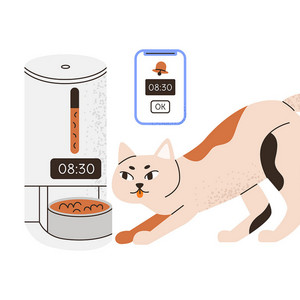
Tech companies have stepped in, promising to ease both our workload and our worries with gadgets that feed water and even play with pets.
But here's the real question.
Are these so-called high-tech helpers a breakthrough for pet care or just a clever way to cash in on our guilt?
And in China, milk tea isn't just a drink.
It's social currency for young people.
And now some...
Shops are taking it to the next level.
The receipts come with a short story ending with to be continued.
Suddenly a simple milk tea becomes a mini cliffhanger.
You don't want to throw that receipt away.
Oh, why, oh, why are milk tea shops doing this?
Our podcast listeners can find us at Roundtable China on Apple Podcasts.
Got something on your mind, whether it's the world of pop culture, technology or something that touches your heart.
We are here to chat.
Drop us a line at roundtablepodcast.qq.com or go big and send us a voice memo.
We'd love to hear your voice and share it in our Heart to Heart segment.
Now let's switch gears.
Our pets give us unconditional love, and yet, as owners, we often feel the sting of guilt when we're stuck in the office or away on a trip.
That's where Smart Pet Tech comes in.
An industry in China already worth billions of yuan, selling devices and gadgets that auto-feed, stream fresh water and even keep pets entertained when we're away.
But do these gadgets truly make life better for pets and owners?
Or are they just another way to profit off anxious pet owners with hidden fees and questionable smart features?
So...
Give us an overview of this market of smart pet tech.
So, aside from all of these smart features that you just mentioned, He Yang, the smart pet products industry is really booming.
And all of these ideal pet keeping lifestyle for today's pet owners are all becoming to real life.
And the data from iMedia Research shows is showing that China's smart pet product market has grown by more than 40 for three consecutive years.
And with smart feeders, cameras and also water fountains, which is the water feeder have become the pet care trio.
The water fountains are for cats, apparently.
Did you know this?
Cats don't like to drink still moving, not moving water, still water.
They don't like that.
They like the water to be moving.
I know.
And also, one trivia is that they don't, They don't even like the water that you provide them.
They just like to drink the water in the bathroom.
It's more than what you give them.
Yeah.
Bonus information.
Whatever you give them, they don't drink it.
I didn't know that.
Anyway, yeah.
But at the same time, there is also a flood of negative reviews.
Listings for secondhand smart pad devices are also appearing more frequently on secondhand marketplaces like Xianyucom.
The main reasons for resells are, some of them saying not easy to use or pointless, and cleaning is even more troublesome than scooping poop.
Yeah, but that being said, it's a growing market and we heard a little bit of evidence from the numbers.
What was it?
40%, more than 40% for three consecutive years here in the Chinese market.
Yeah.
The smart pet products market accounts for about 20% of the overall pet products market, right?
Because everything in the pet products market is not a smart product.
But within that entire market, 20 are these smart tech products and they account for about 102 billion yuan.
That's almost a billion and a half dollars.
And the market size for smart pet products in China reached 50 billion yuan and almost 7 billion globally too.
It's experiencing big, big growth.
It's projected to continue its trajectory over the next 10 years.
They put it at $5.9 billion in 2024, but they project that to be $35 billion plus by 2034.
That's a growth rate of almost 20%.
So even with some of the negative backlash online about some of the products...
People are obviously still super into these products and the market predicts that they will continue to be.
And some of these traditional giants and also pet care giants, are also quite interested in this kind of area, making their products intelligent.
Say traditional pet industry companies such as Raipeng Pet that's a Chinese company and also Mars and Nestle.
Nestle?
Those are food companies, right?
Yes.
That's also what I learned from researching for this topic.
The two companies.
Mars is the company that owns Snickers and MM's and also nestle right, nestle nestle sorry, uh they.
They own a lot of coffee brands and and food company.
They also uh, they're also giants in the pet care industry, so they're actively seeking intelligent transformation.
One example is mars is building a comprehensive food plus health plus technology ecosystem through acquisitions of tech brands and giants from other sectors like domestic home appliance company, media Or smartphone companies, or they manufacture a lot of things.
Xiaomi are also leveraging their supply chains and brand influence to accelerate their entry into the pet care or pet tech market, intensifying the competition in the whole industry.
And listen to this.
Wearable devices and data interaction for pets.
Apparently, this is the new growth point.
We're all used to wearing the smartwatch to count steps and other sleep data and other data gathering.
But for pets, this is happening as well.
And this has been seen as the future.
What are some of the smart pet products that caught your eye.
Some of them are pretty cool, actually.
The pet cameras.
Pet owners really love the pet cameras because it allows them to keep an eye on their puppy or their kitten or whatever, while they're away from home.
And this can be really comforting for the owners because if the dogs you know, some dogs are okay being alone at home by themselves.
Others suffer from separation anxiety.
So their voice can be heard there.
They can keep an eye on them and they can dispense a little treat from the little camera device, which is kind of a cool thing.
That's one of the things that's really popular.
Another one that stood.
Well, actually, there were two more that stood out for me that I thought were really great ideas.
And this is for separation anxiety, too.
There's a little kind of teddy bear thing that your puppy or kitten can sleep with.
And there is a battery inside the teddy bear and it simulates a heartbeat.
So that might be a little fast.
Anyway, there's a lot of coffee that day.
But anyway, it's comforting for the dog because it.
Feels like they're next to, you know, a family member or whatever.
A living creature.
They can actually react or recognize the heartbeat or they can be influenced by the heartbeat.
Because I was thinking they may get comforted by the warmth of your body temperature when they're just getting close to you.
Yeah, but this is a little teddy bear thing, so I don't think it does warmth.
Heat it up.
Heat it up.
Yeah, I don't know.
Put it in the microwave for 20 minutes.
I don't know.
That was one.
Another one.
This is really cool.
So you know how.
Sometimes the door to your house will have a little doggy door or a cat door so the animal can go in and out freely.
Yeah, you don't want other animals coming into your house, or your neighbor's dog or something like that.
So if your animal has a chip, the chip can be linked to the smart door within the door, and then there's a like a little hub that everything connects to electronically, and as the dog approaches the door the doggy door it unlocks so that your dog can go through it or your cat can go through it, but no other animals.
It won't unlock for other animals.
This is all way too high tech for my taste.
It's kind of cool though yeah, and i think if it all pans out, if it works, then it's a fantastic invention.
Um, But what are the problems, since we've mentioned that apparently a lot of the pet owners are not very happy with the amount of money that they've spent on this?
One thing is product homogenizations, because some of these products that Steve mentioned are quite standing out features that they can have, but some of these are just so basic features, such as the food feeder or water fountain or camera, something like that.
These are just basic devices that pet owners may need, but they have so many different brands are using or making these products with a little bit of different small features to attract different pet owners.
So these kind of leading brands engage in these competition to capture market share, resulting in minimal differences in core product functions and ultimately competing on price and also appearance.
Yeah, some of the features too are useless, right?
Like there's a cat litter box thing, which is kind of a cool one, the smart ones but then there's one that tells customers will tell you through an app what time your cat used the bathroom and how much your cat weighs.
So you don't need that, do you?
I don't.
I wouldn't.
So that's why when people are complaining on the internet, some of these features are useless.
Then that's the type of thing that they might be complaining about.
Yeah, that is also another point that some of the industry practitioners are saying is, when you have this information, of course, as a pet owner, maybe you don't necessarily need that kind of information.
But if there are some issues with your pet, maybe some of these information can be useful.
But the thing is that these things need to be connected with some medical institutions.
And when they have the information, they can be useful.
The information also needs to be accurate too, right?
These litter boxes.
Some show that they'll claim sterilization, but the rates of sterilization are actually quite significantly lower than advertised.
Was advertised at 78 sterilization, but it turned out to be only 52.
So false claims is another reason that people are complaining sometimes.
Do you think that these tech companies or manufacturing companies, they've just sort of hit the jackpot by sort of preying on the vulnerabilities or the guilt of the pet owners, because most people can't stay at home the whole day.
And it's a known fact that in China in recent years, there's this growing love for pets.
Yeah.
The number of urban dogs and cats in China has exceeded 120 million, and nearly 70 of households consider pets as family members.
And I don't think These companies are preying on pet owners.
I think they are just marketing to a group that has this kind of interest.
Like I said, the pet cameras before.
People want to check in on their pets when they're not at home with them, right.
They miss them.
They think of them as a family member.
So I don't think they're preying on them.
I think they just discovered this is something that they would enjoy having.
Well, before we close this discussion and go on to the next one, what's the most valuable piece of advice you would have for the smart pet industry going forward?
The industry, right?
Yeah, for smart pet tech yeah, of course.
The thing is that you need to return to basics when you are thinking about designing all of these products.
Of course, some of these pet owners they may thinking about having the image or the video tapes of their pet at home 24 7, but the the deeply cultivate technology and address real user needs is the thing that consumers may actually need.
So they need to prioritize their technical depth over feature proliferation and returning to the essence of their products and focusing on just maximizing their core functionalities instead of chasing some micro innovations.
Coming up next.
Nowadays, your bubble tea order could come with a surprise a short story printed on the receipt with a suspenseful ending.
What's in it for the milk tea shops?
Stay tuned.
Looking for passion?
How about fiery debate?
Want to hear about current events in China from different perspectives?
Then tune in to Roundtable, where East meets West and understanding is the goal.
You're listening to Roundtable with myself, He Yang, joined by Yushun and Steve.
Bubble tea is everywhere among Chinese youth, fueling afternoons and social chit-chats.
With fierce competition in the market, some clever milk tea shops are turning the humble receipt into a sale uh, serialized mini story complete with suspenseful endings.
Order a drink and you might walk away with a chapter of a mini novel instead of just a bill.
Suddenly, your receipt isn't just proof of purchase, it's a tiny page turner you don't want to throw away.
So what's this all about?
So some customers discovered some of these drink brands.
They are using their receipts with printing with short serialized stories.
And I actually received one of these.
Oh, did you?
What did it say?
Like these cheesy stories with no plots, to be honest.
They just give you that sense of this is a.
Like that teenage-oriented cheesy story with alpha president, like alpha CEO.
A domineering CEO.
Yeah, kind of thing.
Do they integrate it into their business?
Like, it was a dark and stormy day, and the domineering CEO walked into a bubble tea shop.
Maybe, but not exactly.
But they actually leave some of the space to let you create the end of the story.
So you can write on the receipt.
Yes, they leave a blank there.
So they kind of feature this special holiday theme chapters or different styles, making it feel like a mini novel series, and let you buy another drink, maybe the next day or next week, to see the sequel of this story.
But I would say For me the first time that I received it because sorry, I bought the bubble tea a lot but I received a lot.
No need to apologize.
But the thing is that the first time that I received this long, long receipt, I didn't even realize that there is a story in it, because I'm not the one that reads that whole bunch of characters in a bubble tea drink receipt.
But for a lot of people, they are.
Some people are coming back to the shops just so they can get the next chapter to the story.
Others are writing and uploading their own sequels themselves to their social media.
Others have offered tips on how the next chapter should be written.
And then some are swapping different chapters.
They're treating them like collectible cards and they're turning these receipts into collectible little novels, instead of just crumpling it up and throwing it in the trash.
So what do you think is in the minds of the business?
They must want to sell more product, right?
Well, the staff said that the receipt design was set by the company, so it wasn't their idea.
It was the company's idea, but some of the contents on the receipts were playful creations by the staff themselves.
So what that means is that it wasn't this huge company campaign, but it did go viral, but it was unexpected.
They weren't really thinking this was going to turn into something big, but it obviously did.
Okay.
I think, of course, they expect it to be viral, but they didn't expect to be this viral or popular.
Degrees of virality.
That sounds like a drama on its own.
Yeah, well, did you go for a second?
You should.
No, I didn't.
But anyway, people are like following this kind of trend and some of these companies are also following this trend.
Some like, let's say, fast food chains, have turned their receipt into colorful collectible passes, and each with a unique number, so that ordering food felt like checking in at a theme park or collecting game cards and making a whole collection of their receipts.
I don't know why, but other beverage shops also use receipts for microassays.
Essays.
Yeah, they explain.
Oh, I know.
They explain everything on the receipt, telling you the ingredients, why you need to consume it within two hours, something like that.
Yeah.
A little creativity goes a long way.
These mini stories turn an ordinary purchase into a memorable experience.
And in a crowded market, that makes all the difference.
And that brings us to the end of today's show.
Thank you so much, Steve and Yushun, for joining the discussion.
Thank you for tuning in.
You can find us on Apple Podcasts at Roundtable China.
I'm He Yang.
We'll see you next time.