Get the unmissable news stories of the day.
This is the Beijing Hour, Examining the events that impact and shape China and the rest of the world.
This is the Beijing Hour, one hour of news and information brought to you every weekday.
Now here's your host.
Shane Bigham with you on this Monday, February 2nd, 2026.
You're listening to the Beijing Hour, coming to you live from the Chinese capital.
On today's program.
The president of Uruguay has arrived in Beijing for a week-long official state visit in China.
Iran's supreme leader has warned that a U.S. attack could lead to a wider regional conflict.
Israel has reopened the Rafah border crossing for foot traffic, allowing Palestinians access for the first time in over 18 months.
In business, surging travel has China's Spring Festival travel rush now underway.
In sports, the youngest career Grand Slam winner in men's tennis.
In culture and entertainment, excitement is building globally for China's Spring Festival holiday.
And now the day's top stories.
Uruguayan President Emmanuel Duarte has become the first Latin American leader to visit China in 2026.
He arrived in Beijing on Sunday morning for a week-long state visit.
Key topics on the agenda include deepening bilateral cooperation, advancing the Belt and Road Initiative and discussing major regional and international issues.
The visit also coincides with the 38th anniversary of diplomatic relations between China and Uruguay.
Cao Qufeng has more.
This marks his first visit to China since taking office in 2025 and makes him the first Latin American head of the state to visit China in 2026.
During the trip, Orsi is expected to visit both Beijing and Shanghai.
In Beijing, he will meet Chinese President Xi Jinping.
China's foreign ministry said that the two leaders will exchange views on deepening the China-Uruguay comprehensive strategic partnership, advancing high-quality Belt and Road cooperation and discussing international and regional issues of shared concern.
In Shanghai, Orsi will meet local officials and take part in a series of business-related events.
Uruguayan media report that around 150 delegates are accompanying the president, including roughly around 100 business leaders.
China has been Uruguay's largest trading partner for over a decade.
Those two countries have yet to sign a free trade agreement.
Therefore, strengthening economic cooperation is a key focus of this visit.
Education and technology cooperation also feature prominently, with reports indicating that new agreements will be signed between universities, research institutions and technology companies.
Overall, Orsi's visit is widely expected to deliver tangible outcomes and further deepen bilateral ties between the two countries across different fields.
That was Zhao Qufeng reporting.
As Uruguay's president visits China with a high-level business delegation, agricultural cooperation is high on the agenda.
Dairy remains a cornerstone of bilateral trade with China, among Uruguay's largest export markets for dairy products.
Yang Chengxi spoke with business insider Gabriel Fernandez-Seco about expanding access to the Chinese market.
This trip is very important for us.
China is very important for us.
It is the most important market in terms of dairy products, and Conabrole exports more than 80 of our production to more than 75 countries.
We have a lot of clients here in China, but we want to improve our participation.
Last year, Conoprole signed a strategic cooperation agreement with a Chinese dairy giant.
What are the most important elements of this strategic cooperation and what does it say about the company's strategy in China?
Basically, the combination between the technical equipment of both companies to improve the quality, health and sustainability of our production.
Conaprole offers a wide range of products, but in terms of international markets, the milk powder is the most important product, not only between Conaprole and the Chinese companies worldwide.
But we export other products to the Chinese market And we think that we can add other products in the near future.
That was Gabriel Fernandez-Seco, the president of Uruguayan Dairy Cooperative.
For more.
Tianyu spoke with Jiang Shishui, director of the Center for Latin American Studies at Shanghai University.
So, Professor, President Orsi is the first Latin American leader to visit China in 2026.
And this trip also marks 38 years of China-Uruguay diplomatic ties.
So how should we read the timing here?
Is this mainly a bilateral visit, or does it send a broader signal about how Latin American countries are recalibrating their China policy?
Well, regarding the time, I think the kind of result after rounds of diplomatic negotiation between our two countries.
But I have to mention that this year, Uruguay will undertake its rotating presidency.
For the group of 77 and the CELAC.
Both organizations, as you know, are very important on the global stage.
So I hope that under its rotating presidency, Uruguay will play an important role in pushing forward world peace and also development, as well as do something for the development of China's relationship with these two organizations.
And secondly, I want to point out that, as you know, the US is very concerned about the rapid development of the relationship between China and Latin America.
As the U.S. always say, it is his backyard.
It is the so-called Western Hemisphere of the US.
So the US has been trying its best to stop this kind of relationship.
And President Orsi's visit can send out a very clear signal to the U.S.
Despite what the US is trying to do, countries in America will continue to have relationship with China.
Right.
And before the trip, President Orsi said that during his time as governor of Catalonia's, He visited China several times and found China's experience in areas like technological innovation very much worth learning from.
So, from your perspective, how does that mindset translate into Uruguay's engagement with China under the Belt and Road Framework?
And what practical areas stand out as realistic points of convergence between the two countries?
The economy of Uruguay is not so well diversified.
It mainly depends on the primary sector producing agricultural products and some other kinds of commodities.
So I believe that Uruguay has realized that, in the age of globalization, it needs to diversify its economy.
For instance, it should pay more attention to the development of its high-tech sectors.
And China has a certain kind of a comparative advantage in pushing forward such high-tech sectors as clean energy and all kinds of things.
And I think that the future should be very bright for the two sides to have more cooperation in the high-tech sectors, such as clean energy and other kinds of sectors.
And also the participation of Uruguay in China's Belt Road will offer a very good opportunity for the two sides to have cooperation in other sectors.
That was Jiang Shishui from the Center for Latin American Studies at Shanghai University.
The global governance initiative proposed by Chinese President Xi Jinping calls for a fair world order guided by principles including sovereign equality, international law and multilateralism.
It also promotes common human values in the defense of international fairness and justice.
In an exclusive interview with CGTN, Uruguay's foreign minister shared his views on the initiative and urged Latin America to play a more active role on the global stage.
I believe that the concept of multilateralism is naturally fundamental, but I would say multilateralism needs a new direction, which I think is what President Xi was referring to when he spoke of developing global concepts.
Because we from Latin America face a set of very intense, very important responsibilities in our first year of management, and it is due to our conviction that Latin America must play a different and much more powerful role in global affairs.
There cannot be cooperation in which one wins and the other loses.
I refer to respect, I refer to sovereignty.
These are all aspects that are permanently on our action agendas between the two countries.
And beyond that, I refer to the multilateral system, for example, within the United Nations.
And in this world so tense, so complicated, being presented with this type of dialogue, action and affirmation of efforts towards greater tension reduction and enhanced cooperation is absolutely crucial if we want to have security in the future.
That was Uruguay's foreign minister speaking in an exclusive interview with CGTN.
Coming up, Iran's supreme leader has a warning for the US amid the ongoing nuclear talks.
You've been listening to programs from CGTN Radio.
We invite you to visit us online for more audio, pictures and in-depth reports.
At 11 minutes past the hour.
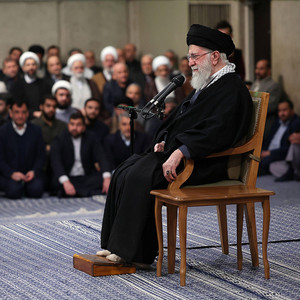
Iranian Supreme Leader, Ayatollah Ali Khamenei, has warned that any attack by the United States would trigger a regional war.
We are not the instigators and we do not seek to attack any country.
But the Iranian nation will deliver a firm blow to anyone who attacks or harasses it.
Americans must be aware that if they wage a war this time, it will be a regional war.
U.S.
President Donald Trump has played down the remarks telling reporters he remains hopeful of reaching a deal with Tehran.
President Iran, the Supreme Leader today said that a U.S. attack could spark a regional war.
Do you have any response to that?
THE PRESIDENT BIDEN Why wouldn't he say that?
Of course he would say that.
But we have the biggest, most powerful ships in the world over there, very close, a couple of days.
And hopefully we'll make a deal.
If we don't make a deal, then we'll find out whether or not he was right.
Despite the standoff, both sides say they're open to resuming talks with Tehran, confirming it's negotiating with Washington.
Meanwhile, Israeli media reports that senior US and Israeli military officials have met at the Pentagon to discuss the possibility of military strikes against Iran.
The United States has also stepped up its military presence in the Middle East following repeated warnings from Trump aimed at pressuring Iran back to the negotiating table.
Iranian Foreign Minister, Sayed Abbas Arachi, says indirect negotiations with the US have been productive.
So I see the possibility of another talk if the US negotiation team follows the what President Trump said to come to a fair and equitable deal to ensure that there is no nuclear weapons.
Would you say that these talks that are going on right now are fruitful and can lead to a de-escalation of the situation to a point where real talks can take place?
Yes, fruitful.
Things like enrichment, things like ballistic missiles, things like proxy forces in the region.
I know that the United States has talked about wanting to negotiate about that as well.
Is that completely out of the question for you, or is that something you could at least talk about?
President Trump said no nuclear weapons, and we fully agree.
We fully agree with that.
That could be a very good deal.
Of course, in return, we expect sanction lifting.
So that deal is possible.
Let's do not talk about impossible things.
That was the Iranian foreign chief speaking on CNN.
In the meantime, life continues largely as normal in Tehran.
However, reporter Saper Seremi warns that beneath the surface, Iranians are grappling with mounting economic hardship, political uncertainty and the possibility of a US attack.
I'm walking in the heart of Tehran, Palestine Square.
I'm walking and I've seen that life is normal and people are shopping, going to work, going home and everything seems normal.
But I have to say Iran is facing different challenges economic challenges, political uncertainty, the looming threat of war.
So everything is very complicated.
But what is striking is that, Even under all this pressure, even when the US is threatening to attack Iran almost on a daily basis, people seem to be becoming more and more unified when it comes to war.
I mean, I believe that Iranians, when it comes to external pressure, prefer to be united.
I don't want to talk more, so I want to hear directly from people how they are feeling these days.
I don't want foreigners to solve our problems.
Honestly, I wish people inside the country had already solved the problems.
The threats from the United States are empty, and they cannot do anything.
IRGC is so strong.
We should listen to our leader in order to succeed.
The United States cannot attack Iran, and even if it does, we young people will respond.
We are victorious.
It is our duty to defend our country, and we are not afraid of the U.S. carriers.
We have no fear of them.
Despite all the challenges Iranians are facing every day the soaring prices inflation, the purchasing power as I talk to Iranians here in Tehran, no one likes this country to be attacked.
No one likes to see a foreign intervention in this country.
And now, yet, Iranians are stressed and they are worried every night about a possible U.S. strike.
That was Saper Sarami speaking with local residents in the Iranian capital.
For more insights.
Zhong Shi spoke with Professor Wang Jin, Director of the Center of International Strategic Politics at Northwest University in Xi'an.
It is a good thing that both sides are talking, although nobody knows for sure what deal if any deal will come out of these talks.
What are the strategic considerations for both parties at this time?
Well, I think for both sides to make the choice of war is easy.
Well, to make the choice of negotiation and, through the negotiation, for the possible deal to end this kind of crisis is difficult.
So if the country I mean both United States and Iran if they want the war, they can make the choice anytime they want.
And they can make the choice under any circumstances.
But if they want the peace, they need much more determinations.
So now they could make the war choice.
But the war choice is not their ultimate goal.
They hope that the war should become the kind of pressure from the United States given to Iran to make the Iran to make the concessions in the United States prefer.
So that's why I think now United States is imposing a kind of more and more pressure through military presence, through the very aggressive remarks against Iran, to hope that Iran could make the concessions.
And also Iran hopes to maintain a kind of rational acts for the response of United States pressure.
So that's why the two sides we could witness that there are more and more positive voices coming out, that they are connecting with each other, they're communicating with each other and they hope to talk with each other through the very peaceful ways, through the dialogue.
Here is what we know what Iran doesn't want.
It doesn't want any curbs or limitations on its national defense development, including missile research and development.
Iran says these are not negotiable.
The U.S. has demanded restrictions on Iran's nuclear program and missile production.
How do you think the two sides can break these deadlocks?
Well, I don't think the dialogue is easy to break, because you know that, as you mentioned, Iran has their own concerns and claims.
They believe that the things the United States should do is go back to the negotiation deal based upon the 2015 Iran nuclear deal.
This is the thing Iran wants immediately.
Well, from the United States' perspective, The 2015 Iran nuclear deal, the so-called JCPOA, is not enough.
It did not include the Iran missile capabilities and didn't include Iran's original influence.
So it's far from enough.
It should be further included into other areas.
So it should be transformed from the very sole Iran nuclear deal to the so-called Iran comprehensive deal.
So the gap between the two sides are very, very difficult to be reached between the two sides within the short term.
But the problem is that now, as we mentioned, the United States is imposing military pressure against Iran.
And also Iran is hoped to respond very assertively through this kind of pressure from the United States.
They could make the choice of war any time they want.
But once the dialogue channel is still open, there were still possibilities for peace.
There were still possibilities for the kind of stability in this region.
So that's why I think that both sides are still trying to try again for the hope of peace.
Maybe the short term and step-by-step peace is, I think, is possible.
Well, if we think about some kind of a very comprehensive peace through once and for all step, I don't think that is likely.
That was Professor Wang Jin at Northwest University in Xi'an.
Iranian officials reportedly denied that the Islamic Revolutionary Guard Corps scheduled military exercises in the Strait of Hormuz.
A Reuters report cited the official as saying that no official announcement was made and media reports of plans for such drills are wrong.
Iranian media earlier reported that the IRGC's Navy would carry out live-fire exercises in the Strait of Hormuz on Sunday and Monday.
The U.S.
Military Central Command warned Iran to conduct its exercises in a safe and professional manner to avoid unnecessary risk.
Dutch airline KLM has resumed flights to several countries in the Middle East, including Israel, the UAE and Saudi Arabia.
On January 23rd, the airline announced it would avoid flying over large parts of the region due to rising tensions.
Last month, the European Union Aviation Safety Agency issued a conflict zone information bulletin formally recommending airlines avoid Iranian airspace at all altitudes until the middle of February.
Meantime the Civil Aviation Organization of Iran says all domestic and international flights are operating as normal.
Elsewhere in the Middle East, Yemen is experiencing one of its harshest winter cold waves in recent years.
Millions of families in displacement camps are enduring freezing conditions in tents that offer little protection.
Ahab Alfandi reports.
In a camp north of Sana'a, The day begins where the night ends, inviting cold.
Inside this tattered tent, Sophia lives with her family of 18.
The shelter cannot keep out the wind or block the rain.
Each winter night turns the tent into a daily struggle for survival.
A family that fled in search of safety now faces a cold that shows no mercy.
We suffer from the cold and the rain.
If it rains, the tent interior is affected.
I have children who cannot bear it and might die from the cold.
So I cover them with plastic bags because of the heavy rain and freezing cold.
Sometimes the bedding is soaked with water.
The place where we sit is flooded, and the mattresses and blankets are also wet.
We don't know where to sit.
We also suffer from hunger and illness.
A severe cold wave this year has intensified the suffering of more than 5 million internally displaced people in Yemen.
Most are living in camps without adequate winter clothing, blankets or proper shelter.
Field reports show that conditions are deteriorating in 45 camps across 12 provinces, with deaths reported particularly among children and the elderly.
As the humanitarian funding declines, winter assistance provided by some organizations remains limited and falls far short of meeting growing needs.
The combination of cold, hunger and lack of basic health services has naturally worsened the situation.
You know that humanitarian aid has become scarce due to US sanctions and the politicization of aid, which directly affects displaced families in the camps, especially in areas facing extreme cold or multiple outbreaks of disease.
But this crisis is not driven by the cold alone.
Years of instability and political complexity in Yemen have undermined long-term humanitarian responses.
While relief organizations have expanded their efforts in the past, aid workers say increasing assistance alone is not the lasting solution.
Addressing the crisis requires tackling its root causes, including political restrictions, fragile infrastructure and declining international commitment to one of the world's longest-running humanitarian emergencies.
As the winter drags on, millions of Yemeni families are caught between the icy grip of the cold and the harsh hand of neglect.
They live in camps not made for life, nor built to withstand the storm.
With international aid falling short, each day of suffering becomes a new battle in the struggle to survive.
That was Ahab Alfandi reporting.
Coming up.
Israel's allowed the partial reopening of the Rafah border crossing between Gaza and Egypt.
Discover the realities and responses to our changing climate with Climate Watch.
Uncover critical issues such as the Maasai Mara's disrupted rotor, beast migration and the drop in the Panama Canal's water levels.
Delve into solutions for a sustainable future.
Tune in to Climate Watch on your favorite podcast platform.
Become more eco-conscious and take action to protect our planet.
24 minutes past the hour.
Israel has reopened the Rafah border crossing between Gaza and Egypt for foot traffic, allowing Palestinians to leave the enclave and others to return under tight security restrictions.
The crossing, seized by Israel in May of 2024, reopened as part of the U.S.-brokered ceasefire.
Israel and Egypt are imposing limits on travel numbers, rather, with security checks in place.
Despite the reopening, Israel is barring foreign journalists from entering Gaza, where most of the territory's 2 million residents are living amid widespread destruction.
Yasser Hakim has more from the scene.
Thousands have applied for permission to travel, but it remains unclear how many will be allowed to cross in either direction.
Sources say the number could be limited to a few hundred people per day.
Operations at the Rafah border crossing are being coordinated by an EU delegation, Palestinian officials and Egyptian authorities, while Israel carries out a three-stage security screening process for those entering Gaza.
Rafah is a vital gateway for both people and humanitarian aid.
It is Gaza's only outlet, as the enclave faces a severe humanitarian crisis, after more than 70000 Palestinians have been killed over just more than two years of war.
The partial reopening comes against the backdrop of renewed Israeli military escalation.
Israeli strikes on Saturday killed dozens of Palestinians, most of them women and children.
The attacks have drawn international condemnation, including from Egypt, which accused Tel Aviv of provocative actions that violated the ceasefire agreement and threatened to derail the US-led peace process.
If anything, the opening of the Rafah border coursing cannot come any sooner for Palestinians, as the acute crisis deepens and the death toll mounts every passing day.
That was Yasser Hakim reporting.
The National Committee for the Administration of Gaza says its members are still unable to enter the territory through the Rafik crossing, citing technical difficulties.
The 15-member committee established last month is designed as a transitional body to manage Gaza's rehabilitation and administrative affairs until the Palestinian Authority fully resumes its role.
Meanwhile, Israel says it'll bar the humanitarian group Doctors Without Borders from operating in Gaza, and after the organization declined to provide a list of its Palestinian staff.
Jonathan Regev reports from Tel Aviv.
Israel is claiming that it asked 37 different organizations, among them the MSF Doctors Without Borders, to provide all of the names of their staff to Israel for approval.
Why so?
According to Israel, after the bad lesson learned with UNRWA, in which Israel claims that some UNRWA members were actually also working for Hamas, for the Islamic Jihad were actually even participating in the October 7th attacks.
Israel wants to have a clear list of all of the names of the personnel to make sure that they have no affiliations with those militant groups.
MSF and other organizations are completely unwilling to provide their names.
They're saying that they're well capable of making sure that their staff are professional staff that have no connections with the militant groups whatsoever.
And this action, has to be said, it was backed by many other countries, not only those known to be hostile for Israel.
France, for example, an Israeli ally Despite the tense relations now but, for instance, a constant Israeli ally, has been very vocal against this Israeli step, calling on Israel to allow these humanitarian aid groups to work.
But for the moment, Israel is insisting on that, receiving all of the names.
And until that happens, MSF and other groups will not be operating, at least as long as Israel is insisting to get all of the names for pre-approval, something that Doctors Without Borders and other organizations as we said, 37 organizations altogether for the moment refuse to do.
That was Jonathan Regev reporting.
Ukrainian President, Volodymyr Zelensky, says talks between Ukraine, the US and Russia will take place on Wednesday and Thursday in the United Arab Emirates.
Zelensky says Ukraine is seeking steps toward what he calls a real and dignified end to the war.
The three countries held their first round of talks in Abu Dhabi in late January.
U.S.
House Speaker, Mike Johnson, says he has enough votes to end a partial government shutdown within days.
On Saturday, Congress failed to approve a deal to keep a wide swath of operations funded.
Democrat lawmakers have demanded changes to immigration enforcement after the fatal shooting of two civilians by federal agents in Minneapolis.
The partial shutdown is expected to have limited impact on the public, with Congress already approving half of this year's funding bills.
Around 29 past the hour.
Checking the forecast ahead of the break.
In Beijing, it's down to minus 5 on Monday evening.
It'll be cloudy and 8 degrees tomorrow.
Nanchang is down to 3 overnight, then cloudy and 14.
Elsewhere in Asia, Islamabad will be overcast and 8 this evening.
Sunny and 17 on Tuesday.
Vientiane is down to 14 and then sunny and 37.
Phnom Penh is overcast tonight and tomorrow.
A low of 21 and a high of 33.
In Africa, Nairobi's getting cloudy conditions in 28 degrees on Tuesday.
Kampala will see moderate rainfall in 18 overnight, then a light rain in 27.
Ajuba's overcast tonight and tomorrow down to 24 degrees this evening, then a high of 38.
And finally to Oceania.
Port Vila will get a light rainfall in 24 overnight, then some more rain in 30.
Apia will see moderate rainfall on Tuesday in 30 degrees Celsius.
It's time for a short break.
So far this hour.
The president of Uruguay has arrived in Beijing for a week-long state visit in China.
Iran's supreme leaders warned that a U.S. attack could lead to a wider regional conflict.
Israel has reopened the Rafah border crossing for foot traffic, allowing Palestinians access for the first time in over 18 months.
Shane Begum with you.
Stay with us here on the Beijing Hour.
Listen up.
Can you hear the heartbeat of our world?
It's vibrant and pulsating with the essence of life itself.
From the stem of trees to the gurgle of rivers.
From the silent strength of mountains to the icy whispers of glaciers.
Even the solid ground beneath our feet.
And right there, in the midst of all, beats the heart of humanity.
What if those other heartbeats were to stop?
Would ours keep on ticking?
Ever wondered what's actually going on in Africa through the perspective of an African?
How are things really going between China and Africa?
What's the narrative of this relationship?
Well, get a perspective with China Africa Talk.
Hear from African diplomats, entrepreneurs, academics, Chinese natives and more.
Get on our wavelength every week to find out what's real with China Africa Talk.
Find us on your favorite podcast.
We'll see you there.
Examining the events that impact and shape China and the rest of the world.
This is the Beijing Hour, one hour of news and information brought to you every weekday.
Now here's your host.
Shane Bigum with you on this Monday.
Still to come.
In business, surging travel has China's Spring Festival travel rush getting underway.
In sports, the youngest career Grand Slam winner in men's tennis.
In culture and entertainment...
Excitements building globally for China's Spring Festival holiday.
To contact us, you can email radio at cgtn.com or follow our ex-account at cgtnradio.
But first of all, check in the day's headline news.
Here's Tianyu.
Thank you, Shane.
China's top diplomat, Wang Yi, has called on the country and Russia to jointly build a more just and reasonable global governance system.
He made remarks while holding a strategic dialogue with Russian Federation Security Council Secretary, Sergei Shoigu, in Beijing.
Wang called on the two countries to maintain close communication on major issues concerning bilateral relations and step up mutual support on matters involving each other's core interests.
He added that China stands ready to work with Russia to open up new prospects for bilateral ties in the new year.
Shoigu said Russia has always upheld the one-China principle and firmly opposed Japan's attempts to accelerate re-militarization.
He said Russia stands ready to enhance cooperation with China and strengthen coordination within multilateral systems such as the UN, the Shanghai Cooperation Organization and BRICS.
Shoigu also called on both sides to jointly build a more just and reasonable multipolar world.
Chinese State Councilor Shen Yiqing will visit Spain on Wednesday and Thursday.
The Chinese foreign ministry says Shen will also attend the opening ceremony of the Olympic Winter Games on Friday and other events in Milan, Italy.
Authorities say China has continued to strengthen the protection and restoration of its wetlands, with the country's total wetland area now ranking first in Asia and fourth worldwide.
That is according to the National Forestry and Grassland Administration.
Monday marks World Wetlands Day, highlighting the vital ecological, social and economic role wetlands play.
In recent years, China has enhanced legal safeguards by enacting and revising wetland protection laws, with 21 provincial-level regions updating local regulations.
The country has established a tiered management system including 82 wetlands of international importance and more than 1200 key provincial-level sites.
China is also home to 22 international wetland cities, the highest number globally.
The Supreme People's Court says China recorded a significant drop in drug-related crimes in 2025 following sustained crackdowns and improved governance.
Data shows courts nationwide concluded over 23700 first-instance drug-related cases last year, a decrease of more than 33.
From 2023 to 2025, Chinese courts handled around 93000 drug-related cases and sentenced 133000 defendants.
Nearly one-fifth received prison terms of five years or longer, a proportion far higher than that for other criminal cases.
Iranian Foreign Minister, Saeed Abbas Aranchi, says a just, fair and equitable nuclear deal with the US remains achievable in the short term, provided Washington abandons its policy of coercion.
He says the negotiations with the U.S. through intermediators have been fruitful.
Aranchi also says Iran agrees with U.S.
President Donald Trump that no nuclear weapons should be developed and that Tehran expects the lift of sanctions in return.
Trump has expressed hope that negotiations will lead to an agreement.
But he also says that his administration will find out whether the Iranian supreme leader is right to warn that a US attack could ignite a regional war if the two sides fail to strike a nuclear deal.
Ali Khamenei said at a meeting in Tehran that it will be a regional war if the US starts a war against Iran.
Laura Fernandez has won Costa Rica's presidential election.
Incumbent President Rodrigo Chavez has congratulated Fernandez on her victory.
And finally, the eldest son of Norway's crown princess goes on trial on Tuesday in Oslo on several charges, including rape, in a case that has embarrassed the royal family.
29-year-old Marius Borg-Hoiby faces 38 counts, including rape violence, drug trafficking and death threats.
Prosecutors say he could face up to 10 years in prison if convicted.
Huobi denies all sexual abuse charges.
The trial is expected to run until mid-March and the royal household says it will not comment during the proceedings.
Thank you, Shane.
Chinese mainland stocks closed lower on Monday with the Shanghai Composite down nearly 2.5%.
The Shenzhen Component fell by almost 2.7%.
Hong Kong's Hang Seng dropped around 2.2%.
In Japan, Tokyo stocks were weighed down by profit-taking in technology stocks.
The Nikkei ended down about 1.3%.
Gold prices continued their sharp decline, with New York gold futures falling roughly 1000 per ounce from last Thursday's peak of 5500.
Silver also saw a steep sell-off, dropping more than 3% to around $74 per ounce.
China's 2026 Spring Festival travel rush kicks off on Monday, driving a surge in travel demand as people return home for the holiday.
The nine-day break beginning February 15 will further boost travel capacity, making the year's holiday one of the busiest on record.
Authorities are anticipating a record 9.5 billion trips during the 40-day travel season.
This highlights the significance of the event for the national economy.
Beijing South Railway Station is one of the busiest hubs in the country.
It will see massive crowds as people begin their journeys.
Zhou Yixin has more.
I am at Beijing South Railway Station.
This year, people can enjoy a nine-day break for the Spring Festival holiday.
That's longer than usual, so it's going to further drive up the travel demand.
And to cope with that surging demand, transportation authorities have also rolled out a series of optimized measures.
For example, the railway department has maximized capacity and on peak days, More than 14000 railway passenger trains are going to be operated daily.
And also I want to highlight that this year, more than 20 new lines and 15 new railway stations have opened, allowing more people to travel around and to get home more easily.
And also, I think it's worth noticing that there are some new travel trends stand out this year.
For example, more and more parents are traveling to the cities where their children work and live.
For example, the city where I'm at right now, Beijing.
As an ancient city, Beijing offers rich cultural and traditional atmosphere for visitors, and that's great for the Spring Festival.
Also, as I talked to people at the station today, many told me that over the years they've witnessed that China's spring festival travel rush has evolved a lot.
And it's getting more and more easier and convenient for people to get home, being together with families and enjoy some quality time together and traveling around during the holiday.
That was Zhou Yixin in Beijing.
Now spending related to the new Chinese style trend is surging ahead of Spring Festival.
With a market worth 220 billion yuan, or nearly 32 billion US dollars.
The trend goes beyond clothing to include beverages like tea, drinks with local flavours.
Businesses are responding by creating culturally rich products and immersive shopping experiences.
The market for China-chic products will exceed 3 trillion yuan by the year 2028.
Authorities are backing this growth with policies that promote Chinese-style products and experiences.
As China's designer toy market expands, localization has become a key business strategy for global brands.
Spring Festival offers a prime opportunity to boost entertainment products.
Many foreign toy manufacturers are now focusing on incorporating cultural elements of the festival into new products to drive sales in the Chinese market.
Daikai Yi takes a closer look at how international toy makers are rethinking their strategies to better connect with Chinese consumers, moving in just one direction.
As Chinese toys go global, overseas brands are going local here in China.
You can feel it here.
Design choices, all these festival details.
Overseas brands are fitting right in with what Chinese consumers recognize.
Take Lego, the Danish toy maker that has been in China for a decade.
This building says they're deeply woven into Chinese culture.
That led me to speak with Maciek Salinski, head of LEGO Group in China.
Chinese New Year and the Spring Festival are obviously the biggest occasion.
In the country we have put a lot of emphasis on making that product locally relevant by weaving in elements of Chinese culture.
And Chinese consumers are buying into it.
Staying for the long haul means overseas brands must keep adapting, especially in a fast-moving market like china's.
What's your take on china's booming designer toy market, over the past year especially?
Yeah, it has been a market which indeed is very vital and very innovative.
That's something we We acknowledge and we actually get inspired a lot from.
Actually, many design elements globally get already inspired by Chinese designers, by Chinese culture, and many of those become very relevant globally.
Always this balance of having the strength of global partnerships but making it here and now relevant for people in China is, I think, the key for many brands, but also very important to us.
Industry data shows that China's designer toy market is set to surpass 110 billion yuan by 2026 almost twice its 2023 size.
For global brands, China is no longer just a market to enter.
It's a culture to understand and a conversation to join.
There was Daikai E reporting.
Xiamen has seen a significant increase in the import of New Year goods ahead of the Chinese New Year.
The southeastern coastal city in Fujian province has established the BRICS freight air route connecting with Sao Paulo, Brazil.
It facilitates the swift delivery of fresh produce from South America.
In January, Xiamen Customs reported a 40 increase in imports, including seafood like lobsters and salmon.
Xiamen is now the largest air import hub in Fujian Province for live seafood, with 16 international air cargo routes.
Local authorities have optimized customs procedures ensuring quick clearance of fresh goods to meet the high demand for the festival.
China's shipbuilding industry maintained the world's largest market share for the 16th consecutive year in 2025.
The country's shipbuilding completion volume reached almost 54 million deadweight tons, making up over 56 of the global market.
New orders totaled around 108 million tons, accounting for 69% of the global total.
Orders on hand reached over 274 million tons, up nearly 32% from the previous year.
According to Secretary-General Li Yanqing of the China Association of National Shipbuilding Industry, the sector has achieved remarkable results.
China's shipbuilding industry achieved remarkable results in 2025, with all three major indicators exceeding expectations.
The future market is expected to experience moderate growth, so it is crucial for China's shipbuilding sector to continue seizing market opportunities, securing orders quickly and ensuring timely deliveries.
China's overall shipbuilding orders on hand can sustain three to four years of work with full production schedules.
China also led the world in new orders among the 18 major ship types.
Li added that the sector will continue growing, with a focus on high quality and intelligent development.
China's high-tech industry saw strong growth in 2025, with sales revenue rising nearly 14%.
High-tech manufacturing grew by over 10%, while high-tech services surged at around 17%.
Strategic industries like next-generation IT, biotechnology and new energy were key drivers.
In Hubei province.
Optical module manufacturer Wuhan Huagong Genuine Optics Technology increased production to meet global demand.
Company manager Xu Qijian said they will achieve higher growth this year.
Our products are exported to North America, Europe, the Middle East and Asia-Pacific region.
We've already positioned ourselves on the most advanced optical module technology roadmap and will further increase our innovation investments, striving to achieve a 5 to 10-fold growth target this year.
The central province's optoelectronic industry surpassed ¥1 trillion, with significant growth in sectors like optical communications and lasers.
And finally, the Organization of the Petroleum Exporting Countries and its allies, known as OPEC Plus, decided on Sunday to continue pausing oil output increases in March.
The decision came after a virtual meeting of eight OPEC Plus member countries to review global market conditions and the economic outlook.
The countries had been raising oil output on a monthly basis since April 2025.
They decided in late November to pause the increases in the first three months of 2026 due to seasonality.
The countries will adopt a cautious approach and maintain full flexibility to adjust output levels as needed in response to market developments.
OPEC said the countries will meet on March 1 to make further decisions.
All right, thank you very much.
That's Wang Ziheng with Business.
You're listening to The Beijing Hour coming up in sports, the youngest career Grand Slam winner in men's tennis.
Sideline Story brings you all things sports-related.
The hottest topics, latest events, juiciest stories, all with a very personal take.
Subscribe to Sideline Story Podcast for heated sports discussions covering events that are happening in China and around the world.
We're at 47 past now and turning to sports.
Here's Yang Guang.
Thank you, Shane.
First in tennis.
22-year-old Carlos Alcaraz showed his excitement after becoming the youngest man ever to win all four major tennis titles.
He achieved this Korea Grand Slam in Australia on Sunday.
You know, it's a great feeling.
Complete the Korea Grand Slam was something that was on my mind.
You know, every time that I come here to Australia, I just made the decision, just with my mind, into this tournament to try to work as hard as I can and to be as well prepared as I can, you know, to play this tournament and trying to get the trophy.
In the previous year, I haven't... having gone, you know, in a good way.
But I'm really happy that I just pushed myself to be better and, you know, finally came this year.
Alcaraz lost the first set quickly against Novak Djokovic, who was seeking a record 25th major win.
But Alcaraz fought back.
He won the match in four sets.
Alcaraz called the victory a dream come true.
Djokovic says Alcaraz's performance was impressive.
Can't think of...
Any other superlatives about him?
I mean, I think, everything he said and he deserves every bit of the praise he gets from his peers, but also the whole tennis community.
I mean, he's a very nice young man, good values, nice family.
And, of course, already a legendary tennis player that made a huge mark in the history books of tennis.
I mean, with only 22 years of age.
So it's super impressive, no doubt about it.
It was the first time that 10-time tournament champion Djokovic had lost a final at Melbourne Park.
Carlos Alcaraz has also sent out a special message to his fans in China.
The Spaniard talked about his gratitude for all the support and expressed his Chinese New Year wishes.
I mean, it's always a pleasure for me.
You know, I enjoy it so much every time that I went to China.
You know, the fans there were unbelievable.
The support were, you know, really, really good.
So just appreciate the love, appreciate the support.
You know, a blessing for everyone in China.
And, you know, I wish you a happy new year there.
Now turning to football.
Manchester City manager Pep Guardiola says his team still has a chance in the Premier League title race.
He spoke after City drew with Tottenham 2-2 on Sunday.
As much as the chance is there, the hopes always will be there.
It happens.
I know that these type of games, always in the past, had the way to capitalize, the way to winning right.
And it didn't happen.
But, yeah, we have difficulties for...
City led at half-time with goals from Ryan Cherky and Antoine Simaniel, but Tottenham's Dominic Solanke scored twice in the second half.
The draw put City six points behind leaders Arsenal.
Manchester United snatched a late winner at Old Trafford to beat Fulham 3-2.
The win extends United interim manager Michael Carrick's record to three wins from three matches, including victories against Man City and Arsenal.
It ends up meaning more.
I think people leave here with more than just, oh, United won today.
And it kind of puts layers on top of that and the connection and the feeling, the emotion.
It's why we all love it so much and especially the supporters.
So it goes a long way.
There's been plenty.
The excitement that's part of this club, and it's not always the easiest way, but We'd like to win games a little bit more comfortably than that, but certainly when they come along it's pretty special.
With the win, United rise to fourth place in the Premier League table.
In La Liga, Kylian Mbappe scored a penalty deep in stoppage time, giving Real Madrid a 2-1 win over Real Vallecano.
The win moves Madrid within one point of league leader Barcelona.
Turning to the torch relay for the upcoming Milano-Cortina 2026 Olympic Winter Games.
The flame has toured the Lombardy region.
Several high-profile athletes carried the torch on this leg, including short track speed skater Arianna Fontana, who won 11 Olympic medals, including two golds, during her legendary career, and Andrea Bonizan, who claimed the rolling silver in Paris in 2024.
The flame also crossed Lake Como on a boat and travelled between the towns of Bellagio, Marina and Monagio, with large crowds gathering alongside the shoreline.
The stage wrapped up in lacquerware, former Italian rower and 1988 Seoul Games champion, Piero Poli, lit the ceremonial cauldron.
The flame also began its journey in Rome in December and is set to cover 12000 kilometers across the host nation before reaching Milan's San Siro Stadium this coming Friday for the opening ceremony.
And finally, in a look ahead to the Milano Cortina Winter Olympics, IOC President Kirsty Coventry spoke highly of the 2022 Beijing Games.
Coventry said the event provided valuable experiences that positively impacted the arrangement of this year's edition, while also expressing her expectations for the upcoming event in Italy.
The Olympic Village in Milan is coming to life, with the first athletes already moving into the buildings built specifically for the Olympic Games.
The village also features several spaces designed for relaxation and well-being, including a gym, a video game area, a bar, makeup areas and a large canteen.
All right.
Thank you very much.
That's Yang Guang with sports.
You're listening to the Beijing Hour coming up in culture and entertainment, excitements building globally for China's Spring Festival holiday.
From north to south, east to west, people in China are chasing their dreams and leaving their mark.
Want to know how they beat the odds and made a difference?
Footprints brings you the true life stories of their journeys.
53 past now.
In culture and entertainment.
The 2026 CCTV Spring Festival Gala promotional video has premiered in Johannesburg.
Local overseas Chinese and South African residents enjoyed the lively preview, which carried festive blessings.
Many overseas Chinese attended the event, taking photos and sharing how heartwarming it was to see the gala abroad.
The event also featured cultural products like the Spring Bowl.
Over 150 guests, including local leaders and media, also joined.
They said the display helped them feel the true warmth and hope of the Chinese New Year.
The Chinese embassy in the U.S. has hosted a China-U.S.
Youth Spring Festival Gala, bringing together more than 500 young people to celebrate the Chinese New Year.
They took part in cultural activities like making rice balls and trying on traditional Hanfu clothing.
American students who have visited China shared their travel stories.
Annabelle Baker from Utah recalled her high-speed train ride and the kindness of local people.
Chinese Ambassador Xie Feng stressed the importance of youth exchanges, calling for more bridges between the two countries.
Many other countries and regions are also holding various activities to welcome Spring Festival.
A Chinese New Year bazaar is taking place in Addis Ababa, Ethiopia.
The bazaar featured exhibition booths and cultural performances, allowing attendees to experience Chinese New Year festivities together.
In Namibia, Windhoek celebrated Spring Festival with a special event on Saturday.
It showcased the strong relationship between the two nations through music, art, and history.
Namibian and Chinese artists performed dances, music, and poetry.
A Namibian politician said the celebration reinforced friendship and cooperation between the countries.
Spring Festival draws near.
Shanghai's historic Longtongs are glowing.
These narrow lane communities that blend eastern and western architectural styles have been central to the city's social fabric for over a century.
Now they shine not only with lanterns, but with the lively mix of old traditions and new international spirit.
Zheng Hong reports.
As the night falls, lights come on inside Longtang, century-old alleyways that once shaped everyday life in Shanghai, now restored as a commercial complex.
For some international residents, this layout offers a unique way to experience the Chinese New Year.
This year I plan to stay here and celebrate the Chinese New Year.
Definitely it's going to be in Hong Kong.
This is a quite new experience for me because I'm used to the traditional way of most indoors.
But having like an outdoor mall like this where you can walk around while you're feeling the fresh air, I think it's an amazing place.
As the Spring Festival approaches, horse-themed installations appear throughout the block, at the entrance and across rooftops, turning the block into a walk-in light show for the Year of the Horse.
Inspired by Song Dynasty traveling vendors, performers walk through alleyways, offering greetings and blessings to passers-by.
More than 100 festive activities will be hosted here, from lantern viewing and themed markets to performances and hands-on crafts.
Visitors can step into theaters, museums and galleries or join board game sessions and sports.
Very beautiful, very young.
I think it's a good also in Italy.
There are a lot of these markets where the people sell different things.
I make like some of a Tai Chi.
Yeah, because it's very good for the health.
I like China, I like the culture, I like medicine, all these things.
According to the operator, cultural and entertainment venues make up 35 of the block, a rare figure for a commercial district nationwide.
That mix of culture, performance and everyday life is what turns this place into more than a shopping destination.
That was Jung Hong reporting.
57 past now.
Checking the forecast before we go.
Beijing down to minus 5 on Monday evening.
It'll be cloudy and 8 degrees tomorrow.
Nanchang's 3 overnight, then cloudy and 14.
Elsewhere in Asia, Islamabad's overcast and 8 this evening.
It's sunny and 17 on Tuesday.
Vientiane's down to 14, then sunny and 37.
Phnom Penh's overcast tonight and tomorrow, a low of 21 and a high of 33.
In Africa, Nairobi's getting cloudy skies in 28 on Tuesday.
Kampala's getting moderate rainfall overnight.
It's down to 18.
That's followed by a light rain in 27 on Tuesday.
Juba's overcast tonight and tomorrow, a low of 24 and a high of 38.
And finally to Oceania Port Vila's getting a light rainfall in 24 overnight, then moderate rain in 30.
That's it for this edition of the Beijing Hour.
Making news today, President of Uruguay has arrived in Beijing for a week-long state visit in China.
Iran's supreme leader has warned that a U.S. attack could lead to a wider regional conflict.
On behalf of the staff.
This is Shane Biggum in the Chinese capital, hoping you'll join us for the next edition of the Beijing Hour and open a window to the world together.
Find The Beijing Hour at precisely 6pm Beijing time.
We meet you on podcast and on air every weekday.
The Beijing Hour, your window on China and the rest of the world.
He can't live without the Yellow River in his eyes.
The Yellow River is so noble and elegant.
Both my grandpa and dad made the living from the river.
Would you like to move away from the Yellow River?
I don't think I will.
I love it so much.
The Yellow River, the second longest river in China, is regarded as a shaping force in the history, economy and culture of northern China.
Today, about 100 million people live within its water basin, making up nearly 9 of the country's population.
How is climate change felt at its headwaters?
And what are the locals doing to cope with it?
What are the descendants of the boatmen doing?
What has kept some people from leaving their home village by the river?
And what has drawn others back?
Could the fading fishing community revive in a time of digital transformation?
From 2021 to 2024.
Our reporters visited the upper, middle and lower reaches of the Yellow River, talked to the herders farmers boatmen, fishermen and eco-activists who share a close bond with the river, and present their stories in pictures, podcasts and videos, or in our 12-part series, The Yellow River Mosaic, available only on CGTN Radio.