Get the unmissable news stories of the day.
This is the Beijing Hour, Examining the events that impact and shape China and the rest of the world.
This is the Beijing Hour, one hour of news and information brought to you every weekday.
Now here's your host.
Shane Begum with you on this Friday, February the 6th, 2026.
You're listening to the Beijing Hour, coming to you live from the Chinese capital.
On today's program, nuclear talks between the U.S. and Iran are now underway in Oman.
Passenger numbers across China continue to surge on day five of the annual Spring Festival travel rush.
Ukraine and Russia have concluded round two of their peace talks in Abu Dhabi without reaching a major breakthrough.
In business, China's services sector is exploring new business models and upgrading tech.
In sports, updating the early Olympic action ahead of the Games opening ceremony.
In culture and entertainment.
China's National Museum in Beijing is showcasing two landmark exhibits from Italy.
Now checking the day's top stories.
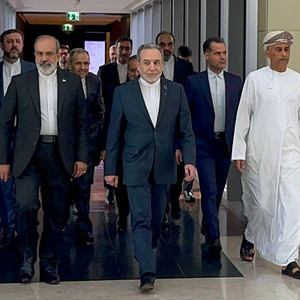
Nuclear talks between Iran and the U.S. are underway in the capital of Oman.
U.S.
Envoy Steve Witkoff and Iranian Foreign Minister Abbas Arachi are leading their delegations.
Prior to the talks, Iran deployed one of its largest advanced long-range missiles to an underground facility, but Washington issued a new warning to Tehran.
Differences remain over the scope of the talks.
Iran's insisted the talks be limited to nuclear issues and the removal of US sanctions, saying that Iran's missile capabilities and regional activities are non-negotiable.
But the White House says President Donald Trump's been clear with his demands of Iran, including zero nuclear capability.
Nadia Swan has more from Muscat.
Well, the United States is really wanting to talk about Iran's nuclear program and it wants some fairly strict limits to that.
It also wants to talk about Iran's ballistic missile program as well.
The United States also wants Iran to stop any support for its regional allies proxies that it has been supporting Hezbollah, the Houthis in Yemen.
And it's also wanting to talk about the treatment of Iranian citizens.
And that follows protests in Iran last month where the regime cracked down on those protests.
However, Iran has said that really it's only prepared to talk about its nuclear program and one of the key things that Iran really wants is lifting of sanctions, which would ease a lot of pressure on the current regime, because the situation in Iran economically has been very dire and that has been one of the reasons why these, why the Iranians have been protesting on the streets.
So there's a little bit of a mismatch between what the Iranians would like out of this meeting, what they're prepared to talk about, and what the Americans want out of this meeting that they want to put on the table.
There's no clarity yet as to whether all those points will actually be discussed.
That was Nadia Swan reporting.
The resumption of the Iran-US nuclear talks aims to reduce tensions threatening a wider Middle East conflict.
The talks face an agenda as challenging as the choice of the venue.
Owen Fairclough reports from Washington, D.C.
The two sides meet with the aim of reducing tensions that have continued to escalate even as Friday's meeting was brokered.
On Thursday, Iran seized two unidentified foreign oil tankers in the Persian Gulf that links the Strait of Hormuz, a route critical for global shipping.
Some one million liters of smuggled fuel, including diesel, was seized and handed over to the National Iranian Oil Refining and Distribution Company.
Fifteen foreign crew members of the two vessels were arrested and are now in custody of judicial bodies.
To speed up the judicial process,
That follows the US shooting down an Iranian drone in the neighboring Arabian Sea, where American naval forces have amassed weapons.
And Trump on Wednesday again threatened Iran's leadership, having pledged unspecified US support for recent mass protests against the government.
Trump last June supported Israel's attack on Iran by bombing its nuclear facilities.
Amid longstanding claims, Tehran is weaponizing its uranium enrichment program.
Tehran has long denied this, and the issue has so far proved irreconcilable.
Trump reportedly wanted Iran to both stop uranium enrichment and developing its ballistic missile program as a precondition for Friday's talks.
Iran rejected this while warning any new U.S. strike would trigger a wider regional conflict.
As Trump's envoy prepares to meet Iran's foreign minister for these talks, on Wednesday, the U.S.
Secretary of State was skeptical about how much progress would be made.
I'm not sure you can reach a deal with these guys, but we're going to try to find out.
And that was a report on the resumed nuclear talks between Iran and the U.S.
Some residents in Tehran have expressed concern over the risk of war with the US and the prospects for negotiations.
They say a military conflict will benefit no one but only worsen lives already strained by economic pressure, and that conflicts must be avoided through dialogue.
If war breaks out, our currency will weaken further against the dollar.
For ordinary people, life will only get harder.
That's why we oppose war. a successful negotiation would be the best outcome.
War serves no one's interest.
That's what I believe.
I believe if a war happens, we will know how to handle the situation.
The US has moved its forces into the region, but I think the actual chance of war is only about 1%.
I'm sure an agreement will be reached.
They cannot afford a confrontation with Iran.
They would face serious consequences too.
Fundamentally, war produces no good results.
We are already in a war, an economic war.
The inflation we're suffering is worse than a military conflict.
I hope our leaders and diplomats can find a way to prevent a military war.
Our nation's territorial integrity is paramount.
They must do everything possible to avert a military war.
Tehran's nuclear program remains at the center of the Iran-U.S. talks in Oman.
Zhongshir reviews the ups and downs of Iranian nuclear negotiations over the years.
Iran's nuclear negotiations have spanned decades, with periods of diplomatic breakthroughs and major setbacks.
It began in the late 1950s, when the US and Western allies supported Iran's nuclear development under the Atoms for Peace program.
But following the 1979 Islamic Revolution, that cooperation came to a halt.
In 1980, the U.S. cut diplomatic ties with Iran after the hostage situations.
Since then, Iran's nuclear program has become a point of contention, especially in the 21st century.
Iran insists its nuclear activities are strictly peaceful, while the West, led by the US, has expressed concern over possible weapons development, which has led to waves of sanctions.
Despite several rounds of talks, a lasting agreement remained elusive.
That changed in 2015.
We've got a historic chance to pursue a safer and more secure world.
This deal offers an opportunity to move in a new direction.
We should seize it.
That deal.
The Joint Comprehensive Plan of Action, or JCPOA, was reached between Iran and the five permanent members of the UN Security Council plus Germany.
Iran agreed to limit its nuclear program and allow extensive IAEA inspections in exchange for lifting economic sanctions.
But the agreement soon unraveled.
I am announcing today that the United States will withdraw from the Iran nuclear deal.
This was a horrible one-sided deal that should have never, ever been made.
In 2018, the Trump administration withdrew from the JCPOA and reimposed harsh sanctions.
In response, Iran scaled back its compliance and ramped up uranium enrichment.
Talks resumed in Vienna in 2021 under the Biden administration, but key disagreements persisted.
Then, in 2025, during Trump's second term, fresh negotiations were launched, this time brokered by Oman.
But after five rounds of negotiations, a consensus has still to be reached.
Iran maintains its nuclear program as civilian in nature.
The U.S. insists Iran must hold all uranium enrichment as part of any new deal.
Tensions rose further on June 12 when the IAEA Board of Governors passed a Western-backed resolution declaring Iran in breach of its safeguard obligations under the NPT.
Tehran slammed the move as politically motivated.
Just one day later, Israel launched airstrikes on Iranian territory, claiming it had targeted military and nuclear-related sites.
Iran, however, accused Israel of killing civilians and launched retaliatory strikes.
As fighting intensified, the United States got involved, targeting Ferdow, Isfahan and Natanz, the most critical and fortified nuclear sites in Iran's nuclear program.
In response to the sudden military escalation, Iran withdrew from upcoming nuclear talks with the US.
In September 2025, Iran and the IAEA signed the Cairo Agreement in Egypt to pave the way for resuming cooperation, including on inspections of Iran's nuclear facilities.
The agency also held off on negative U.N.
Security Council assessments.
In November, the IAEA Board of Governors adopted a resolution proposed by the US, the UK, France and Germany.
It demanded Iran restrict nuclear activities and accept stricter checks.
Iran rejected the resolution and ended the Cairo Agreement.
For now, diplomatic efforts on the Iran nuclear issue remain stagnant.
That was Zheng Shi reporting.
And for more.
Tianyu spoke with Zhou Mi, a senior research fellow with the Chinese Academy of International Trade and Economic Cooperation.
So Professor, Iran insists the talks should be strictly limited to the nuclear issue, while the US wants to include Iran's ballistic missile program.
So, from a negotiation standpoint, how realistic is it for these two sides to reconcile such different definitions of what the talks are actually about?
Well, we know that for both sides, if they are going to talk about some kind of very important issues, first of all they have to reach some framework on what they are going to talk.
Like the topics you know, these two topics are really very important, but they are just having something to do with the different abilities of this country.
So I would say that if they are not able to reach our first of the start of these definitions and the topics, it is really hard for them to make some further progress.
So we know that just for the nuclear issues, there is something already there.
There's a lot of talk about the abilities of Iran and the nuclear ability for the enrichment.
But for the missile issues, I don't think that they are already many talks about that issue.
So if we are looking at this topic, I would say that it's really hard for them just to include so many different areas in such a short time, because they need to prepare more for this negotiation before they can start it.
Right.
An agreement is indeed very hard to reach.
And the US has laid out what it calls three no's on Iran's nuclear program, including no uranium enrichment, while Iran says enrichment for peaceful use is a non-negotiable right.
So, given the breakdown of talks after last year's conflict and US strikes on Iranian nuclear facilities, Is there still any practical middle ground left for diplomacy?
It's very hard in my understanding, especially after Iran suffered a lot from the strike by the United States.
So for the previous decades I can say that Iran has been working very hard to try to improve its abilities in the self-sustainable or self-resilient on the supply of the nuclear power.
I don't think that is something to do with the military usage, but the US put it in a very strict requirement for Iran to be just taken out from this sanction list.
So there are so many differences in this between.
I think that for both sides, if they insisted what they are going to do, I don't think that will be some kind of a middle field for them to reconcile.
But if they can change their attitudes when the process is moving on, I would say that it's possible for them to get some different views.
But it must be on the condition of some of the progress that Iran wants, some promises from the United States.
And I think that is definitely what the U.S. does not want to give to Iran right now.
So there are so many issues, and it's not only just about the technical issues.
That was Zhou Mi with the Chinese Academy of International Trade and Economic Cooperation.
Coming up, surging passenger numbers amid China's annual Spring Festival travel rush.
Post Plus, a selection of the best podcasts in China, covering history customs music, literature and in-depth dialogues.
Find your way to a wealth of Chinese culture and thinking all on Post Plus.
At 14 past the hour.
Friday marks the fifth day of China's Spring Festival travel rush, the world's largest annual human migration.
People working, studying or living away from their hometowns are returning home for the Chinese New Year, the country's most important traditional holiday.
Authorities estimate that passenger trips on Thursday may exceed 190 million, up 34 from the previous day.
Railways carried nearly 12 million passengers, with daily volumes staying above 10 million for four straight days.
Air travel numbers were up over 5%.
Railway authorities have rolled out special services to support migrant workers returning home, such as dedicated trains and free ticket programs.
The Chinese mainland has spoken highly of the resumption of a think tank forum between the Communist Party of China and the Chinese Kuomintang.
Taiwan Affairs Office of the State Council says the forum in Beijing earlier this week demonstrated a shared commitment to peace and people-centered cooperation.
Zhang Yibing has more.
The event trailed attention from both sides of the Taiwan Strait and beyond.
Held on Tuesday in Beijing.
The Communist Party of China, or CPC, think tank forum, jointly held with the Chinese Kuomintang Party, or KMT, aimed to enhance mutual understanding and made ongoing cross-strait tensions.
Addressing more than 100 participants, Song Tao, the Chinese mainland's top Taiwan affairs official, stressed the importance of maintaining dialogue.
He said the common political foundation lies in the adherence to the 1992 consensus and opposition to Taiwan's separatist forces.
The sentiment was echoed by Xiao Xucheng, vice chairman of the Kuomintang, who emphasized the dedication reflected the real voices of the people in Taiwan.
A survey shows that 88 of people in Taiwan agree that both sides of the strait must remain in dialogue.
Even among the supporters of the Democratic Progressive Party, some 75% share the same opinion.
Participants discussed key issues and reached 15 common opinions aimed at restoring normal cross-strait personnel exchanges, strengthening cooperation in emerging industries and advancing exchanges in healthcare, environmental protection and disaster prevention.
We should quarrel less and communicate more.
Let's find our common ground for the benefit of our people.
On Wednesday, top political advisor Wang Huning met with the Taiwan delegation, extending congratulations on the forum's success.
He reaffirmed the mainland's commitment to strengthening exchanges with Taiwan's political parties, including the KMT, and groups across society.
One of the key agendas for the delegation is to visit different sites in Beijing closely related with the theme of the same-time forum.
Now they have come to Tsinghua University, one of the top universities in China, both famous to the mainland and also to Taiwan.
At Tsinghua University's College of AI and Institute for Carbon Neutrality.
The dedication engaged in discussions on expanding prostrate cooperation between industry, academia and research.
Just then, the mainland announced travel for Shanghai residents to Kinmen and Matsu.
Both Taiwan-administered islands will soon resume.
KMT Vice Chairman Xiao welcomed the move.
This announcement is a good start.
With the resumption of party-to-party communication, more industries and people will benefit.
On Thursday, Chen Binghua, spokesperson for the Taiwan Affairs Office, reiterated the mainland will continue strengthening exchanges on the common political foundation of upholding the 1992 consensus and opposing secessionist forces.
Looking ahead, the KMT dedication said the renewed exchange platform will allow more industries and people on both sides of the strait to benefit.
Now is Zhang Yibing reporting.
The Supreme Court of Panama has nullified a Chinese company's contracts to operate two key ports at either end of the Panama Canal.
The ruling raises questions over investment security and geopolitical influence in one of the world's most strategic waterways.
Alistair Baverstock reports on how the decision came about and what it means for the future of the canal.
The Panama Canal, started by the French in the 19th century, completed by the United States in 1914 and, following its handover to Panama in 1999, opened to the world.
However, since his return to office, US President Donald Trump has wanted to go back on the deal.
My administration will be reclaiming the Panama Canal.
We gave it to Panama and we're taking it back.
While Panama controls the canal itself, the ports on either side are operated by private companies, the busiest of them run by a company owned by New York-based US investment firm, Blackstone.
Two others, the port of Cristobal on the Atlantic and the port of Balboa on the Pacific, have been operated by Hong Kong-based Hutchison Ports since the 1990s.
The Panama Canal is vital to our country.
It's being operated by China.
Trump's allegations have been dismissed outright by canal officials.
Panama is in control and there is no reason why the US should be in any way afraid of Chinese running anything here.
Our activity with China is like with activity with anybody else Holland UK, anybody that wants to do business here in Panama, they'll do business.
Nevertheless, with US warships deployed in the South Caribbean as part of Operation Southern Spear, Panama again found itself in a vulnerable position.
The Panama Canal was built for our military.
You are not going to use military or economic coercion?
I'm not going to commit to that now.
It might be that you'll have to do something.
Despite weeks of protests in Panama over the threats, in January 2026 Panama's Supreme Court made a ruling to annul Hutchison Port's contracts, drawing ire from Beijing.
The ruling contravenes the Panamanian laws that approved the concession.
The company will take all necessary legal steps, including litigation.
China will do what is necessary to firmly defend Chinese businesses' legitimate and lawful rights and interests.
For observers around Latin America, the decision was a worrying one.
Central America's governments are fragile and most susceptible to external pressures.
The US has openly expressed its intention to strengthen its influence in our region, but brings no benefit to our countries or people.
Indeed, private industry leaders say the decision could lead to the canal's further physical deterioration.
The Panama Canal is impressive infrastructure, but it's over 100 years old and needs modernization.
China is a global expert in ports and has invested across Latin America.
We should make the most of that experience to lead major infrastructure projects.
And while Trump touts an effort by American firm BlackRock to buy the port infrastructure developed by Hutchison, economists say securing such investments may be challenging.
Investors look for two things, markets and legal security.
Decisions like this one weaken that certainty.
Today, it's the canal.
Tomorrow, it could be another sector.
With this level of external pressure, investors will hesitate to come.
The Panama Canal moves the world's trade, but the politics around it are turbulent.
How the country navigates.
This ruling will define whether legal contracts or geopolitical pressure ultimately guide its future.
That was Alistair Baverstock reporting.
The power cables between China and Laos are officially linked, a breakthrough in energy cooperation under the Belt and Road Initiative.
Most of the project runs through the habitat of wild Asian elephants.
This required the construction team to build cables across rainforest while protecting wildlife at the same time.
Xing Renan has more on how they did that.
China lao's 500 kilovolt power line connects wudong sei province in laos and southwestern china's yunnan province, coming to a total length of 1775 kilometers.
The biggest challenge for the construction team is to build it while harming the local habitat as little as possible.
This means heavy lift drones carrying power equipment so the herds of the wild elephants on the ground stay out of harm's way.
The air moving team includes over 30 types of drone and two helicopters.
Over 5,000 tons of tower components have been successfully transported across the forest.
The Chinese team's innovative use of aerial transport has cut environmental disturbance by more than 90 and reduced the need for road access and deforestation.
From a perspective of environmental protection, using drones and helicopters is definitely worth it.
It reflects our idea of high-quality development.
This dedication to preserving the natural environment has created a whole new role in the team the Elephant Ranger.
Elephant Rangers use an early warning app to locate herds, then combine forest monitoring systems, video surveillance and drones to track their movements and alert construction crews in time.
The China-Laos 500-kilovolt interconnection is a milestone achievement under the Belt and Road Initiative.
After it begins operations, the power grid will be able to transmit 3 billion kilowatt hours of electricity.
The power exchange capacity between the two countries is expected to reach 1.5 million kilowatts.
This green corridor connects the two peoples, protecting nature and highlighting a shared future for humans and wildlife.
That was Xing Renan reporting.
Coming up.
Ukraine and Russia fail to reach a breakthrough agreement following the latest peace talks.
You've been listening to programs from CGTN Radio.
We invite you to visit us online for more audio, pictures and in-depth reports.
At radiocgtncom, you can access a wide range of programs and find your favorite news, talk features, entertainment shows and podcasts.
Hear the difference with CTTN Radio.
At 25 past the hour, Ukraine and Russia have concluded a second round of US brokered talks in Abu Dhabi, failing to reach a breakthrough on key territorial disputes, a ceasefire and security guarantees.
But U.S.
Special Envoy Steve Witkoff says the three countries have reached a consensus on a prisoner swap, the first of its kind in five months.
He says discussions were specific and constructive, but greater efforts are required to advance a settlement of the conflict.
There's no timetable for another round of talks, but Ukrainian President Volodymyr Zelensky says they will be held soon and most likely in the United States.
The latest nuclear arms control treaty between Russia and the U.S. has expired.
It means neither side is bound to any limits on the size or their strategic nuclear arsenals.
The new START treaty was signed in 2010 and was the last in the series of agreements stretching back more than half a century.
U.S.
President Donald Trump has rejected an offer from Russia to extend the deal, saying they should work on an improved one that includes China.
Dasha Chernyshova has more from Moscow.
Well, the Kremlin has said that its position is quite negative, that this was an important treaty that was still in place between Russia and the United States.
And Moscow has been proposing a 12-month extension without the renegotiation of the terms.
So Russia says.
The world is indeed becoming a more dangerous space with the expiration of the new START treaty.
Russia, at the same time, is saying that it will be still acting very soberly on the international arena.
And when it comes to the expansion of its nuclear arsenal, Moscow says it will be looking at the very careful assessment of the overall security situation and stability worldwide.
So Russia says it is going to be very cautious with regards to a possible expansion of its nuclear arsenal.
But at the same time, what Moscow has been saying is that it remains open to further negotiations with the United States, should there be any sort of movement on that track.
But sadly Moscow states that Even though President Vladimir Putin in September proposed an extension to the New START treaty, there has never been any sort of response, any initiative coming from the Americans on that.
And that was Dasha Chernysheva reporting.
The UN's warned of increasing displacement of Palestinians living in the West Bank.
The UN Office for the Coordination of Humanitarian Affairs says more than 900 Palestinians have been forced out of homes or communities since the beginning of the year, mostly due to Israeli settler violence and restrictions.
It documented more than 50 Israeli settler attacks that resulted in casualties and property damage in the two weeks to February 2nd.
The Global Samud Flotilla has announced its plan to sail to Gaza again with humanitarian aid.
The new mission comes less than six months after Israeli forces intercepted a previous attempt.
The organizers described the upcoming mission as the biggest civilian-led mobilization against Israel's actions in Gaza, with around 100 boats and 1000 medics.
The vaccine alliance known as Gavi, along with UNICEF and the World Health Organization, says global cholera vaccine supplies have risen enough to allow the resumption of vaccination campaigns for the first time in more than three years.
Mozambique has become the first country to restart preventative vaccinations after campaigns were halted in 2022 due to global shortages driven by surging cholera cases.
The rule comes as the country battles an ongoing outbreak and recovers from floods that disrupted health and water systems.
An initial 20 million doses are being allocated, including deliveries to Mozambique and the Democratic Republic of the Congo, with Bangladesh next in line.
At 29 past the hour, Beijing cloudy overnight.
It's down to minus 10, have a high of plus 1 on Saturday.
Shanghai will see a light rainfall and a low of plus 1, then overcast in 4.
Chongqing will be overcast in 9 this evening, then a light rainfall in 12 degrees.
Nanchang's getting some rain in 4 overnight, then overcast conditions in 8.
Last is down to minus 6 this evening, it's sunny in 10 tomorrow.
Elsewhere in Asia, Islamabad will get a light rainfall and 7 degrees this evening.
It's overcast with a high of 18 on Saturday.
Vientiane is down to 19, then sunny and 32.
Phnom Penh is getting a light rainfall overnight and tomorrow, a low of 23 and a high of 33.
In Africa, Nairobi is overcast and 28 degrees on Saturday.
It's time for a short break.
So far this hour, nuclear talks between the U.S. and Iran are now underway in Oman.
Passenger numbers across China continue to surge on day five of the annual Spring Festival travel rush.
Ukraine and Russia concluded round two of their peace talks in Abu Dhabi without reaching any major breakthrough.
Shane Begum with you.
Stay with us here on The Beijing Hour.
Shh, listen up.
Can you hear the heartbeat of our world?
It's vibrant and pulsating with the essence of life itself.
From the stem of trees to the gurgle of rivers.
From the silent strength of mountains to the icy whispers of glaciers.
Even the solid ground beneath our feet.
Right there in the midst of all, beats the heart of humanity.
What if those other heartbeats were to stop?
Would ours keep on ticking?
Ever wondered what's actually going on in Africa through the perspective of an African?
How are things really going between China and Africa?
What's the narrative of this relationship?
Well, get a perspective with China Africa Talk.
Hear from African diplomats, entrepreneurs, academics, Chinese natives and more.
Get on our wavelength every week to find out what's real with China Africa Talk.
Find us on your favorite podcast.
We'll see you there.
Examining the events that impact and shape China and the rest of the world.
This is the Beijing Hour, one hour of news and information brought to you every weekday.
Now here's your host.
Shane Bigum with you on this Friday.
Still to come in business.
China's services sector is exploring new business models and upgrading tech.
In sports, updating the early Olympic action ahead of the Games opening ceremony.
In culture and entertainment.
China's National Museum in Beijing is showcasing two landmark exhibits from Italy.
To contact us, you can email radio at cgtn.com or follow our ex-account at cgtnradio.
But now checking the day's headlines, here's Tianyu.
Thank you, Shane.
Chinese Foreign Minister Wang Yi says China stands ready to work with all progressive forces to safeguard peace and the rule of law and promote openness and development.
Speaking at the foreign ministry's New Year reception, Wang also pledged efforts to resolve crisis, deepen understanding and make new contributions to a better world.
He said, history has shown that division and confrontation lead nowhere and solidarity is the right choice.
Nearly 500 people, including diplomats and representatives of international organizations, attended the reception on Thursday.
Chinese Vice Foreign Minister Miao Deyu, has met with his Iranian counterpart and expressed support for Iran's efforts in defending its sovereignty and legitimate interests.
Miao said China opposes unilateral bullying and applying pressure by force and stands against interference in other countries' internal affairs.
He said China is ready to strengthen communication with all countries to safeguard international fairness and justice.
The Iranian diplomat stressed that Tehran is against threats and appreciates China's efforts in maintaining peace and stability.
China is urging Lithuania to adhere to the One China principle and match its words with actions to mend ties.
Foreign Ministry spokesperson Lin Jian made remarks after the Lithuanian Prime Minister called her country's 2021 decision to allow Taiwan to establish a de facto embassy in Vilnius as a strategic mistake.
The door for dialogue between China and Lithuania remains open.
We hope Lithuania will translate its willingness to improve bilateral relations into concrete actions, correct its mistakes as soon as possible, return to the right path of adhering to the One China principle and create the conditions for the normalization of China-Lithuania relations.
China downgraded diplomatic relations with Lithuania to the level of charge d'affaires in 2021 after the Lithuanian government approved the establishment of what it called a representative office by the Democratic Progressive Party authorities in Taiwan.
Friday marks the fifth day of China's Spring Festival travel rush, the world's largest annual human migration.
People working, studying or living away from their hometowns are returning home for the Chinese New Year, the country's most important traditional holiday.
Authorities estimate that passenger trips on Thursday may exceed 190 million, up 334 from the previous day.
Railways carried nearly 12 million passengers, with daily volumes staying above 10 million for four straight days.
Air travel numbers were up over 5%.
Railway authorities have rolled out special services to support migrant workers returning home, such as dedicated trains and free ticket programs.
United Nations officials told the Security Council that UN pleas play a critical role in peacekeeping missions, including supporting political processes and maintaining public order during elections.
Briefing the Council Undersecretary-General for Peace Operations, Jean-Pierre Lacroix, said UN pleas are vital to strengthening whole-state law enforcement institutions and building trust between governments and communities.
United Nations police play a crucial role in supporting political processes, strengthening host state police and other law enforcement institutions, and helping increase trust between communities and the host state.
Further.
United Nations police advisors and mentors are critical to the planning of public order management during electoral cycles.
In missions such as MINUSCA MONUSCO, UNMISS and UNFACIP.
Its work aligns with mission-wide political strategies to advance stability and reconciliation.
UN Police Advisor, Faisal Shaker, warned that misinformation campaigns are increasingly targeting UN missions, complicating community engagement and eroding trust in host state institutions.
The police commissioner with a UN stabilization mission in the Democratic Republic of the Congo said protecting civilians, especially women and children, in displacement-affected areas remains central.
Meanwhile, a UN official in South Sudan said volatile security environment underscores the need for agile peacekeeping and long-term police capacity building.
And finally, UN Secretary General António Guterres has strongly condemned a deadly terrorist attack in Nigeria's in Nigeria's Kora state that reportedly killed more than 100 people earlier this week.
In a statement released on Thursday, Guterres expressed the UN's solidarity with Nigeria's government and people as the country continues to confront terrorism and violent extremism.
He also stressed the need to hold those responsible accountable.
The UN chief also extended his condolences to the families of the victims and wished those injured a swift recovery.
Thank you very much.
That's Tianyu with headlines.
Coming up in business, China's services sector is exploring new business models and upgrading tech.
The Beijing Hour, your window on China and the rest of the world.
37 past now.
In business, stock markets on the Chinese mainland closed lower on Friday.
The Shanghai Composite was down nearly three-tenths of a percent.
The Shenzhen Component also lost more than three-tenths.
Oilfield Services were among the top gainers.
Hong Kong's Hang Seng Index decreased over 1.2%.
In Japan, the Nikkei gained over 0.8%.
Meanwhile, international precious metal prices rebounded from Thursday's fall.
As of the time of writing, the gold spot price stands at around US4850 per ounce, and that's up around 15.
The silver spot price increased nearly 4%.
China's service consumption is set to play a bigger role in the coming years.
According to the Chinese Commerce Ministry, per capita service spending in the country currently accounts for 46 of total consumption and averaged an annual growth rate of 85 between 2020 and 2025.
China released a new plan late January to expand the supply of services in response to COVID, a rising demand.
It targets sectors like transport, the auto aftermarket, and inbound tourism.
Sports events and experience-driven services are also seen as having strong growth potential.
As China continues to expand services consumption, more companies are exploring new business models and upgrading their technology platforms to improve the consumer experience.
Liao Zhu reports.
Before you buy, who do consult?
And in the age of AI, how much can technology actually help people and small businesses make better choices?
This is Wulin Night Market, one of the business night markets in Hangzhou.
Along this 200-meter stretch, you will find restaurants, food vendors and small handicraft shops, packed side by side.
We joined online platforms in 2021, and overall foot traffic is declining now.
Without online platforms, it's very hard to run a restaurant today.
Consumers rely on platforms to make choices.
We're watching to see which ones actually support small businesses.
I am at a technology upgrade launch event.
This is where platforms are testing new technology to bring everyday consumption back to life.
The AMAP Streetstars ranking is the first to be built on real, verified store visits, allowing it to more accurately reflect how businesses are actually operating.
The core of the upgrade is to help users move from online information to real in-store experiences.
As more platforms are rolling out digital tools.
What do these technologies really mean for small and mid-sized restaurants going digital?
Since 2025, competition has intensified for traffic, customers, and price.
After platforms upgraded their rating systems, our revenue rose by about 20%.
This is the kind of change many small businesses are beginning to see.
About 90% of China's 7 million catering outlets are small businesses.
Supporting them matters for jobs and livelihoods, and seeing more local eateries on these rankings makes a real difference.
Platforms used to match supply and demand.
With AI, they're starting to ensure quality.
That means algorithms need to be fair and responsible, protecting both businesses and consumers, in order to support more sustainable consumption growth.
Xinhua data shows that in the first 10 months of 2025, China's retail sales rose 43, service retail grew 53 and online retail was up 96, a sign that service and digital consumption are becoming key engines of domestic demand and supporting economic recovery.
From street markets to digital platforms.
Technology is reconnecting online and offline reshaping service consumption in everyday life.
That was Lao-Chu reporting.
The first meeting of the APEC Subcommittee on Standards and Conformance in 2026 has taken place in Guangzhou.
Chinese participants proposed many cooperation projects and received positive responses from various APEC economies.
Major focus was on the application needs of brain-computer interface technology in the field of rehabilitation and promoting regional coordination of APEC digital rehabilitation standards in testing technologies.
Delegates proposed a new initiative on digital empowerment for green transformation, focusing on the application potential of advanced technologies such as artificial intelligence, blockchain and the Internet of Things in addressing climate change.
The event actively promoted dialogue and cooperation in standards and conformity assessment in the Asia-Pacific region, supporting inclusive, high-quality and sustainable economic growth in the area.
Guangzhou in southern China is hosting the first Asia-Pacific Economic Cooperation senior officials meeting from February 1st to the 10th.
And the event marks the start of the APEC China year.
Zheng Songwu followed one delegate visiting a circular economy industrial park in the city to learn more about its operation and the expectations of international participants.
At Fushan Circular Economy Industrial Park, waste is turned back to useful resources.
With facilities including waste-to-energy plants, water treatment systems and slag recycling, the park plays a key role in addressing Guangzhou's growing waste challenges.
Proper disposal of solid waste is key to protecting the environment, and it's a challenge faced by the world.
But here at this park, over 9000 tons of solid waste are processed every day and converted into renewable energy, including electricity.
The incineration of solid waste generates over 12 billion kilowatt hours of electricity annually, meeting the needs of around 500000 households and reducing carbon dioxide emissions by 13 million tons.
I visited the facilities from waste to energy or electricity.
That's very impressive because the size is amazing.
It's also the place to educate people, especially for children.
As the world looks ahead to the upcoming Asia-Pacific Economic Cooperation or APEC, economic leaders meeting this November in Shenzhen, this site exemplifies the sustainable development that will feature prominently in regional discussions.
Of course, this APEC leaders meeting and ministerial meeting is very unique because a lot of economic leaders, World leaders, come to Shenzhen and discuss about very cutting-edge things.
So we expect the APEC is still relevant to this world event.
The Fushan Circular Economy Industrial Park highlights China's sustainable innovation ahead of the APEC event turning waste into clean energy while engaging the public.
A practical example of solutions that support regional collaboration for economic and environmental progress.
That was Zhang Songwu reporting.
Data from the China Federation of Logistics and Purchasing shows the Global Manufacturing Purchasing Managers Index rose to 51 in January, up 15 points from the previous month.
That ended a 10-month streak below the 50 mark, which separates expansion from contraction.
Regionally, Africa's PMI fell to 49.6, while Europe's rose to 50.
Asia's PMI showed little fluctuation compared to the previous month, remaining at around 51.
Meanwhile, the America's PMI climbed above 51.
China's Lagrange-5 solar observatory mission, dubbed as Shih-2, has entered the development phase.
Approved by the China National Space Administration.
Shih-2 is scheduled for launch between 2028 and 2029.
The mission will, for the first time, deploying artificial spacecraft to the Sun-Earth L5 Lagrange Point, located approximately 150 million kilometers from Earth.
It aims to explore previously uncharted regions of the solar system and to carry out sustained observations of the Sun and the interplanetary space environment.
Canadian Prime Minister, Mark Carney, has unveiled a 3 billion electric vehicle strategy to transform the nation's auto industry through consumer incentives and corporate tax cuts.
Canadians who purchase or lease a battery electric or fuel cell electric vehicle will receive up to 5000 and up to 2500 for plug-in hybrids priced up to 50000.
To support the Canadian auto industry.
This 50000 cap will not apply to Canadian-made EVs or Canadian-made plug-in hybrids.
And those incentives will only apply to vehicles produced in countries with whom Canada has a free trade agreement.
Carney's new strategy for the auto industry's transition focuses on retooling factories and diversifying into new export markets.
An additional $1.5 billion will go towards expanding the electric vehicle charging infrastructure.
He said the country will leverage a recent arrangement with China to attract investment and establish Canada as a global EV leader.
A counter-tariff on US auto imports will be maintained to protect the domestic industry and the 125000 jobs it supports.
You're listening to the Beijing Hour coming up in sports, updating the early Olympic action ahead of the Games opening ceremony.
Sideline Story brings you all things sports related.
The hottest topics, latest events, juiciest stories, all with a very personal take.
Subscribe to Sideline Story podcast for heated sports discussions covering events that are happening in China and around the world.
We're at 47 past the hour now, turning to sports.
And here's Yang Guang.
Thank you, Shane.
Defending Olympic champion Su Yiming of China is through to the men's snowboard big air final at Milano Cortina 2026 Winter Games, but not without a scare.
The 21-year-old only notched 22 points on his opening jump, but came back strongly in the later rounds.
His second attempt scored 8775 and his third 85 points, and that proved enough to secure a place in the final.
It was a tougher day for Su's Chinese teammates.
Ge Chunyu and Yang Wenlong both failed to break into the top 12.
Ge finished 29th with 75.75 points.
Yang placed 19th on 155.75.
Meanwhile, Japan dominated the qualification.
All four of its riders advanced, led by Hiroto Ogivara, who topped the standings with jumps of 905 and 88 points.
Italy's Ian Mattioli opened with the highest single score of the day 9375 and finished second overall 1745.
The final is on Saturday.
Canada and Britain have both extended their unbeaten rounds in mixed doubles curling one day ahead of the official opening of the 2026 Winter Olympics.
Canada's Jocelyn Peterman and Brett Gallant picked up two wins, first defeating Norway's Beijing 2022 silver medalists 6-3.
They then dominated defending Italian champions Stefania Constantini and Amos Mosnia 7-2 in their second match of the day.
Britain is also in impressive form.
Jennifer Dodds and Bruce Mowat recorded back-to-back victories, including a narrow 8-7 win over the Czech Republic.
The United States also collected two wins beating Norway before topping Switzerland 7-4.
After three round-robin matches, Norway, the Czech Republic and South Korea remain winless.
Meanwhile, Italy's Almo Somosania is preparing for a major honor off the ice.
He will serve as one of the country's flag bearers at Friday's opening ceremony in Cortina del Penzo.
Competition continues as teams battle for early momentum at the Milano Cortina Winter Games.
China has named short track skater Zhang Zhutong and speed skater Ning Zhongyan as its flag bearers for the opening ceremony at the Milano Cortina Winter Olympics.
Both athletes are competing at their second Winter Games and say the honor carries special meaning.
I feel so excited and honored to serve as a flag bearer on behalf of China.
I want to display excellent bearings as a Chinese athlete.
That's my first goal.
I also want to send a message of expectations to the future and the new generation of athletes.
I hope they can follow their dreams and continue to perform better and better.
I feel honored and proud to be named a flag bearer for China.
This is a recognition of the speed skating event as well, since our team members have carried the national flag at two Winter Olympics.
I mean, this is such an honor for me.
The two-time world champion Ning and Beijing 2022 bronze medalist Jiang, say they are determined to perform well and make the country proud at the Games.
Chinese freestyle skiing star Gu Ailin says her mindset is different at this year's Winter Games.
I think now I feel a lot lighter and I wrote about this as well.
What I mean by that is, At Beijing 2022, Gu made history, winning big air and halfpipe gold plus slopestyle silver, becoming the first freestyle skier to claim three medals and one win two games.
Relaxed, but still fiercely competitive.
The 22-year-old says her focus remains on progression and representation.
With all preparations completed and the speed skating venue in Milan, China Media Group has deployed its specialized broadcast equipment to capture the action.
The lineup includes the high-speed Liabao or Cheetah, an ultra-high-speed 4K action camera system developed by CMG.
Engineer Liu Huixu says the technology will enhance sports coverage at every level.
We are deploying 17 pieces of special equipment for the speed skating broadcast, including the Liabao camera system trackless, remote-controlled DOLA cameras and several unobstructed self-developed mini cameras, all set up within the venue.
These devices capture the athlete's speed skateboard details and facial expressions to help provide comprehensive and engaging coverage of the events.
The system was also used during the Beijing 2022 Winter Olympics.
Thank you very much.
That's Yang Guang with sports.
You're listening to the Beijing Hour.
Coming up in culture and entertainment.
China's National Museum in Beijing is showcasing two landmark exhibits from Italy.
From east to west, people in China are chasing their dreams and leaving their mark.
Want to know how they beat the odds and made a difference?
Footprints brings you the true life stories of their journeys.
53 past the hour.
In culture and entertainment.
Step into the National Museum of China and travel back in time with two landmark exhibitions from Italy.
One reveals the buried world of Pompeii, frozen in history.
The other showcases the enduring genius of Renaissance architect Andrea Palladio.
Shen Li has more.
A city frozen in time.
For over two millennia, Pompeii has been slowly unearthed, studied and reinterpreted a vital window into antiquity.
This exhibition in Beijing traces the southern Italian city's rediscovery from the 18th century onward, presenting sculptures murals, household items and delicate ornaments that reshape our understanding of daily life in one of Roman Empire's most vibrant centers of commerce and daily life.
The exhibition merges cutting-edge technology with scholarly depth, featuring free immersive installations that guide visitors through how archaeology itself has evolved and humanity's ongoing quest to preserve cultural heritage.
I'm deeply drawn to the murals, rich in detail and full of character.
Further in a striking bronze sculpture captures two hounds attacking a wild boar with remarkable vitality.
Apart from all these relics, we also get to see how the excavation work in Pompeii has evolved from treasure hunting for masterpieces to a multidisciplinary endeavor.
Today archaeologists engineers, botanists and anthropologists collaborate, studying even fragmented pottery, to reconstruct the true fabric of ancient life.
Meanwhile, the Palladio exhibition presents 110 works from China and Italy, showcasing a conversation across civilizations through architecture.
Though Eastern and Western forms differ, both share a commitment to order, harmony and spatial logic, a testament to a connection that still resonates today.
Italy and China have built strong cooperation in protecting cultural heritage, from fighting illicit art trafficking to restoring precious relics.
I'm also pleased that the 2027 Venice Architecture Biennale has invited two Chinese curators, deepening our cultural exchange further.
From Pompeii to Palladio.
These exhibitions build a bridge between civilizations, reminding us that cultural dialogue, much like these ancient wonders, is timeless.
That was Shen Li reporting.
Beijing Tianqiao Performing Arts Center is hosting a series of traditional Chinese opera performances.
Opera troupes will present classic and contemporary works.
One highlight is The Life of Mine, a 50-minute production adapted from a novella by renowned writer Lao Tzu and performed by a cast of young artists.
The event also features folk art markets, flash mobs and workshops, creating a festive atmosphere ahead of Spring Festival.
The ASEAN Secretariat Headquarters in Jakarta has held its first ever Chinese New Year celebration.
The event took place just days before the Year of the Horse begins, on February 17th, and during a milestone year marking 35 years of China-ASEAN dialogue relations.
The celebration featured cultural exhibitions, hands-on activities and performances, underscoring growing people-to-people exchanges between China and ASEAN.
In a video address, the ASEAN Secretary General highlighted shared cultural traditions across the region, noting that UNESCO added Spring Festival to its intangible cultural heritage list in 2024.
Blanc de Chine, the famed white porcelain from Fujian province, is on display in Serbia.
Produced in Doha County since the 10th century.
The porcelain is known for its pure white color and delicate texture.
The exhibition is part of a global tour celebrating the craftsmanship of Blanc de Chine and its historic role in maritime trade.
57 past the hour, Beijing's cloudy overnight.
It's down to minus 10, have a high of plus 1 coming up on Saturday.
Shanghai will see a light rainfall and a low of 1 overnight.
It's overcast and 4 tomorrow.
Chongqing's overcast and down to 9 degrees, followed by a light rain and 12.
Nanchang's getting a light rain overnight a low of 4, a high of 8 degrees, under overcast skies tomorrow.
Last is down to minus 6 this evening, then sunny and 10 degrees.
Elsewhere in Asia, Islamabad will be getting a light rainfall and a low of 7 this evening.
That's followed by overcast conditions and 18 degrees on Saturday.
And that's it for this edition of the Beijing Hour.
Making news today, nuclear talks between the U.S. and Iran are now underway in Oman.
And passenger numbers across China continue to surge on day five of the annual Spring Festival travel rush.
On behalf of the staff.
This is Shane Biggum in the Chinese capital, hoping you'll join us for the next edition of The Beijing Hour and open a window to the world together.
Find The Beijing Hour at precisely 6 p.m.
Beijing time.
We meet you on podcast and on air every weekday.
The Beijing Hour, your window on China and the rest of the world.
He can't live without the Yellow River in his eyes.
The Yellow River is so noble and elegant.
Both my grandpa and dad made a living from the river.
Would you like to move away from the Yellow River?
I don't think I will.
I love it so much.
The Yellow River, the second longest river in China, is regarded as a shaping force in the history, economy and culture of northern China.
Today, about 100 million people live within its water basin, making up nearly 9 of the country's population.
How is climate change felt at its headwaters?
And what are the locals doing to cope with it?
What are the descendants of the boatmen doing?
What has kept some people from leaving their home village by the river?
And what has drawn others back?
Could the fading fishing community revive in a time of digital transformation?
From 2021 to 2024.
Our reporters visited the upper, middle and lower reaches of the Yellow River, talked to the herders farmers boatmen, fishermen and eco-activists who share a close bond with the river, and present their stories in pictures, podcasts and videos, or in our 12-part series, The Yellow River Mosaic, available only on CGTN Radio.