Discussion keeps the world's turning.
This is Roundtable.
You're listening to Roundtable.
With myself, Huyang, I'm joined by Li Yi and Brandon Yates in the studio.
Coming up, a new trend is emerging in online communities.
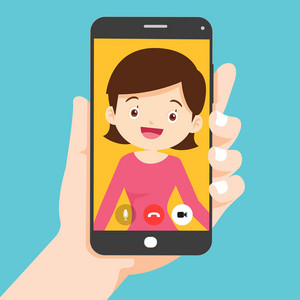
What's called Internet moms providing maternal care to strangers.
While this offers a unique form of emotional support,
what potential risks might arise from these virtual parent child relationships?
By the way, while we see the emergence of digital mothers,
where are the digital fathers in this equation?
And we invite you to join our special segment, Motivational Monday.
We will give you that adrenaline shot for the start of the week.
Our podcast listeners can find us at Roundtable China on Apple Podcast.
If you have questions that you want us to answer on social issues,
like business, technology, or whatever moves your spirit,
you can send those our way.
There's a place to do it.
EZFM aroundtableatfoxmail.com.
Emails are fine, but voice memos are always better,
because we're a radio show slash podcast after all.
Now on Roundtable, as we move on to our next topic of discussion today.
In today's digital world, many people turn to the Internet
for emotional support from virtual friendships to online counseling.
Now, what about parental comfort?
There's this cozy corner of the web called Mom for a Minute,
where you can get just that.
It's like a virtual mom away from mom,
for when you need a quick pep talk or some sage advice.
I can relate to that.
I mean, obviously being a foreigner based in China,
when I call my mom, she's basically been an online mom for the last year.
So, you know, I speak to my mom on a daily basis,
and sometimes it is just Mom for a minute,
or sometimes we have a 30 minute conversation.
So, I think, you know, obviously I'm speaking directly to my actual mother,
but I can definitely relate to this topic,
and it definitely is helpful if you don't, for example,
for people that aren't able to connect with their parents or whatever.
I can definitely see how it would be helpful to deal with day-to-day situations
if you can speak to someone online that is a motherly figure that can help you.
Well, you bring up something interesting.
That is, I think we all kind of took it for granted,
as least what's visible in mainstream media.
That is, moms are always sacrificing so much for us.
Oh, yeah.
They are always their unconditional love,
and when we talk about moms, it's warm, fuzzy, almost brings a tear to the eye.
But you know what?
With the rise of digital mothers that we're talking about here,
possibly it's because that a lot of folks don't have that real-life mom
to do all that for them.
And therefore, there are many of these tragic,
if not not so happy family stories and upbringings.
And now, with the rise of digital mothers,
it's maybe a feeling of void,
but it's also directing our attention to the lack of proper or healthy mother-child relationships in families.
So tell us what's going on here.
Sure, I was actually quite impressed by how widely this participation is
in terms of this digital mother campaign online,
because this mother for a minute tag originated on Reddit,
specifically within a subreddit designed for individuals who seek emotional support and guidance,
that similar to what one might really receive from a caring mother figure.
So basically, the idea is that users, which is the post,
and the attack to share their personal struggles and also their seeking advice on various life issues,
or simply their expressing feelings in a quite nurturing environment.
And now, this situation here on social media platforms in China,
and this concept has also spread to other social media platforms and online communities.
For example, on Doba, which is a media review platform,
but meantime also a social networking platform here in China,
one Doba user named the cycle, really the cycle,
has created a group on January 17, 2024,
where members can share their life experiences or confusions in a way that really mimic asking their mom for advice,
and each responder can act as a nurturing mother figure.
And so far, it really has over 3,000 active members in that community.
That's a very good question.
That's the question, where are the actual moms?
I think it's because of Eskoyang's plan.
Maybe some of those people who might already see a proper,
especially emotional support from their family in real life.
So that's why they're turning to this digital mother figure online,
or some young people, they're saying that I can't really, generally connect to my real mom.
This seems to be, this is something that I've sort of noticed,
and I don't know how far reaching it is,
but a lot of the men and women that I've interacted with away from work definitely have deep reverence for their parents
and respect their parents greatly,
and often do what they're told and don't question things,
but they don't seem to have very close relationships with their parents.
A lot of their parents disagree with their lifestyle choices or disagree with their work choices.
And I think a lot of young people hide their day-to-day lifestyles or choices from their parents.
And I think that's quite troubling.
It seems like there is a disconnect in terms of honesty and openness among a lot of young people and their parents,
which is maybe something that's contributing to this trend.
Well, if this person feels that you can't speak your truth to your parents,
and there are various case scenarios.
A lot of cases.
And also, sometimes some say that it's just too difficult to communicate,
because, you know, intergenerations,
there are very different understandings and perceptions towards,
let's say, what's important in life?
What do you see as important for your future?
There's definitely a disconnect there, I think, between all the parents and, you know,
some of their kids or grandkids or whatever.
There definitely seems to be not necessarily cultural differences,
but difference in opinions about what, like you said, what's important in life,
what choices can be made, and what is more important in modern life,
as opposed to what was important to their parents when they were the same ages their kids.
Yes. And also just to explain that,
to get over this generational shift, sometimes could be difficult.
And for some families, they manage to work it out.
For some people when you're, especially when you're not living nearby to your parents,
and then, you know, look at so many Chinese young people,
they've moved to different cities, different provinces, or abroad, or, you know, all that jazz.
And then it's sometimes just working it out can be difficult.
And I'll give you a quick example for what I heard from my American friend,
just over the weekend when we were chatting.
So he was talking about how difficult it is to afford housing in America.
Yeah. And then he was like, oh, I had this conversation with my dad,
who's like kind of not agreeing with,
but his dad wouldn't necessarily poke his nose over his son's business,
but saying that, hey, you're 35, and shouldn't you be thinking about getting property?
And that's common in South Africa too, where parents can't understand why people in their,
you know, late 20s or early 30s don't already have their own home,
aren't married, settled down with kids where, you know,
economic situations have changed.
And it's a lot more with inflation and that sort of thing in America
and South Africa and a lot of countries in the West, where the settling down period
in people's lives in terms of finding that partner, owning your own home, etc,
is becoming a lot more difficult and be it seems to be happening a lot later in life
than it did in our parents' generations.
But that being said, we can talk to our parents about that sort of thing
and make them understand and eventually they do get it.
And they does seem to, I don't know, for example, in South Africa,
I think there's a lot more openness and open lines of communication and a lack of fear
in terms of what we discuss with our parents, etc.
Whereas I've noticed in a lot of situations in China,
the kids are very afraid of disappointing their parents
and they would rather actually be dishonest towards their parents
to avoid disappointing them rather than being honest with them.
And that creates like this anxiety, I think, in young people.
Yeah, I think that just, of course, that's just one situation you're talking about
in the time my observation is that for this younger generation,
we do have, or they do have this sort of part of that kind of new perception
that we and our parents were individuals that are separate
so we don't already have to be responsible for each other's emotional state
or what kind of expectation they want from us.
So that's, I mean, there's like a change from the younger generations nowadays.
But meantime, I get what you're saying because...
It sounds like a disconnect, don't you think?
There is a disconnection in the way that maybe traditional parents
they have their certain conception of what is success and what should...
And what's important.
What's important.
So some of them can be quite stubborn in terms of their own values
and they are trying to, you know, persuade their kids to act in the way that are in line with their own values.
So that really happened.
That's true.
We're not necessarily being aware of modern life
and what's important in modern times, I suppose,
because what is important to them might not necessarily...
and what was important to them when they were young might have changed
in terms of what we're seeing now.
And I guess, obviously, a disconnect between kids and parents,
I think is inherently a negative thing.
One of the positives about that is that I think it also allows younger people
to create their own identities and it probably also makes them more independent,
whereas I think in the West, for example,
I think because of our very deep reliance on our parents,
I think it makes us less likely to become independent sooner.
That's like contrary to all of my preconceived conception.
No, I think it's a big problem.
In the States, for example, there's a lot of people that are living at home
for much longer periods of time now,
because of their close relationship with their parents
and the incredible environment that their parents created for them,
they don't want to go out there and become independent.
And like you said, they can't afford housing
and their jobs are necessarily able to sustain the lifestyle
that they've been accustomed to while living with their parents.
So there's definitely a lag in terms of younger people becoming independent
from what I've seen in the West compared to what we see in China,
where yes, there is seemingly a disconnect between generations of kids and parents,
but those kids are also becoming independent
and their own versions of themselves more successfully and sooner.
That's interesting, because the E take it away.
I think there can be like different aspects
in terms of the understanding of independence,
because what just mentioned just strikes me in a way that maybe some people
who are using this sort of digital mom surveys online,
they might just have a means of understanding the definition of independence,
because many of them think that,
okay, I really want to be independent from my parents' control,
whether judgment, in the way that, of course,
I have my own place to live in.
In the meantime, I also don't want to be emotionally independent,
in the way that I don't really want advice or support from my parents,
so that I can really be self-sufficient.
That just might be one possible reason that people are returning to this sort of community.
It's a little bit sad, too, I think, because yes,
I think it is very important to be independent in terms of getting your own property
and identifying who you are and what's important to you.
But I also think that there should be open lines of communication
between children and parents,
and like you've mentioned, sometimes parents are very stuck in their ways
and very stubborn and will never agree with their kids' way of life,
and that sort of thing.
But I think, ultimately, if you're a child and you're financially independent
and you have your own life going on,
then you can still have those conversations with your parents and disagree with them,
but it doesn't really matter because you're not dependent on them.
So I think maybe that's why we're seeing a lot of people turning to these online communities
because yes, they are still in touch with their actual parents,
but maybe not necessarily receiving the love and support that they want to receive from their parents,
and maybe they're getting that from these online communities,
which is great for the kids.
But I mean, ultimately, it's a little bit sad,
I think, that there is such a disconnect in not all circumstances,
but many circumstances, between young people and their parents.
Well, I think that's part of it, but also there are just, you know,
every unhappy family have their own stories.
And then what I appreciate from this is,
I suppose that this could be seen as one of those positive and promising examples
of what the internet has to offer.
That is, in the old days, without the internet,
I can imagine in the Chinese society,
there are so many of these people who simply have no place to voice their grievances.
Because, like in real life, let's say, when you talk about families,
our preconceived conceptions here in China is basically,
oh, families are supposed to be happy, parents are supportive.
And then when other people are talking about that,
how would you feel when you're...
If you don't have that.
If you don't have that.
And also, let's face it.
I mean, hopefully this doesn't happen a lot,
but there are families with abusive relationships with...
I mean, mentally and physically, yeah.
Yes, and troubling scenarios.
And then, in the past, I suppose it's just very difficult for people to find a place to vent
to even tell your story,
but with the online space with anonymity,
you can just go on as more and more.
You don't have to reveal your true name,
identity, any of that, and you can start talking.
And then, with this...
My reservation for the digital moms or what...
whatever, here, is not necessarily always one person giving a mentoring advice.
Sometimes it is, but sometimes it's more like,
oh, there's a community of people here,
and then they're all just talking about what they think of the situation.
And mostly they're positive there,
but there's gotta be bad apples too.
And, yeah, so how do you feel about this?
Is it like more benefits?
Are presented here, or do you see some of the issues that might arise as well?
I think there's definitely benefits for people that aren't able to have open, honest conversations
with their parents about day-to-day struggles that they are having.
If they can find an avenue to have those conversations online with a stranger,
then I think that's incredibly positive.
But I think something that we've touched on that I think needs to be examined
on a nationwide scale, almost I would say,
is that it does seem like this emergence of disconnect between parents and children is growing.
And I think that's what boosted this internet mom trend.
So maybe rather than focusing on the internet mom trend,
maybe we need to be looking at this disconnect amongst generations in China
that can be potentially solved, not in every case,
but in great leaps and bounds,
if that particular topic is focused on.
Well, actually, I would beg to defer, is there a rise of disconnect between generations?
I'm not so sure about that.
But then what's boosting this internet mom's trend?
Well, you didn't even use to have the internet for this to happen.
So now there's the avenue.
So I wonder whether it is that people truly have more varied versions of what they want in life
and then there's this breaking down between generations.
Or is it more like people have the avenues to say that,
hey, I disagree and have the means to say that.
I think one reason is that more than ever,
we have more discussion about parental relationship than before,
especially in recent years.
There is so much discussion about yuan sheng zianting.
So especially young people, they start to have this reflection on their original families
and also their relationship between themselves and also their parents.
Especially when you look at this trend, I mean, there's online communities.
I mean, of course, we can analyze different reasons why people are asking help,
I mean, moderately comfort from this online communities.
But it really was more interesting is that there are some young people who act as modern to other people
because they want to really heal them.
Of course, one part reason could be they just simply be caring themselves.
But meantime, some of them also want to heal themselves in the process of offering help to other people.
And that help exactly what kind of support they want to receive from their own parents.
So that's also a very interesting angle because people are starting to have this reflection
on what kind of expectation and what kind of support we want to receive from our families.
But meantime, you also mentioned some potential risk or challenges.
I think that's also the exact challenge we might just face with this kind of digital model or digital father online
because people might just have too much expectation.
I mean, extremely excessively high expectation from their mom or their parents
because sort of people are somehow like idealizing their role of their parents
just to offer in their families.
Literature always, the mom is seen as always the year providing unconditional love, always supportive.
But that is realistic. My mom is all of those things.
But not all moms are like that.
Maybe not all moms have to be like that.
Or that could just also lead to extra pressure for parents themselves.
And also for two B moms. Yes. Look at what you know today's birth rates and things.
Like there is just a lot of pressure on women to behave a certain way.
Can you live up to the standard of being an awesome mom?
I guess that's where the question comes in, we'll them in while the dad is trying to leave.
Exactly. I'm waiting to get to that part.
Like even online when these internet users, when they are having this discussion without revealing their true identities
and then nobody's saying, hey, where's the dad?
Where's the dad?
There's still last days.
Come on dad.
Mommy. Don't you think that there's something wrong about that?
But also, let me just raise one point before we...
Yeah, we need to move on very soon.
That is, I don't really want to put an exact age on this.
But let's say after you've reached 35 or 40 or a certain age,
I mean, what I'm going to say probably sounds a little bit not sympathetic.
But I just feel we'll all be a lot happier if we forgive our parents and stop blaming them.
And then it's your life to build.
And then no matter how unhappy it is or what traumatizing experience we might have had with our original families,
this is your life to march on and use your perseverance and creativity and build a life that you are happy about.
Because you can do that. You know, you can every day and you can start today.
It's another example of a balancing act because we do really need to respect our parents
but we also have our biggest, contentious points with our parents.
So it's a fine balancing act of loving them and respecting them,
but also being able to approach them for advice when you need it and being and being kind to them.
And coming up next, Motivational Monday.
Motivational Monday.
Motivational Monday.
Lee, what do you have for us?
Well, I actually want to recommend a film today, which I consider as Motivational because we are celebrating the Olympic spirit today, I guess.
And this film is called Young Woman and the Sea.
It's a 2024 American Biographical Sports Drama film that really tells the story of Trudea Adley, an American swimming champion.
Also a rare female swimmer in 1920s, New York, who would first represent her country into Olympics and then attempt to be the first woman to swim across the English Channel.
So when I just watched this film, I feel like this is the truly Olympic spirit that we are talking about.
Although female at that time might just consider this not proper or not appropriate athletes because they were considered as weak and not as powerful.
As men used to be, yet it is because this female athletes, they try to push the boundaries.
They try to achieve what they want to treat.
And in the end, they let the public know that women can also have their presence in the whole sports sector.
So that, so I also really find the quadrace inspiration.
Great. And I have a song to recommend to you as we celebrate Olympic Day.
This song encourages us to embrace our own moments of glory, whether on the global stage of the Olympics or our personal lives.
Reminding us that with passion, dedication and belief, we can all achieve our dreams and leave our mark in the world if we have the courage to reach for it.
One moment in time performed by the comparable Whitney Houston for the 1988 Solar Olympics.
So let's hear Whitney and this very powerful ballad.
And that brings us to the end of today's roundtable.
Thank you so much, Lee and Brandon for joining the discussion.
I'm her young. We'll see you next time.
Each day I live, I want to be a day to give the best of me.
I'm only one but not alone.
My final day.