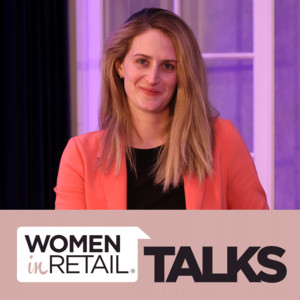
Hello and welcome to Women in Retail Talks, the podcast where C-suite executive women in the retail space share their stories of professional growth leadership development, personal journeys and more.
I'm Marie Albages, Managing Editor of Women in Retail, a membership-based community of executive women at leading retailers and brands.
Today, I'm thrilled to be joined by Kirsten Spatel-Sloan, the Head of Global Marketing at iFit, a global health and fitness subscription technology company with brands you might know, such as NordicTrack, ProForm and FreeMotion.
So Kirsten and I talk about how she leads her teams, how she really sees the fitness subscription tech landscape today, and how she's using AI in her daily life.
So Kirsten, I'm going to bring you in.
Thank you so much for joining me.
Thanks for having me, Marie.
Pleasure to be here.
Yeah.
So I'd love to just jump right in and hear a little bit about you know what a typical day looks like for you as the head of marketing.
Yeah, for sure.
So let me paint the scene a little bit for you.
I fit.
We are a hybrid remote first work culture.
So first and foremost, my home is my office.
As the nature of my global role, I have some meetings some days start as early as six or seven a.m.
So I'm on with our European colleagues.
Others may go a little bit longer into the day, just given I've got a touch base with Australia and China.
I love that about the job.
It can be a little hectic at times, but it really does give me a lot of different touch points with the team across the board and see how we're showing up in different regions around the world.
A little bit about me personally.
So with the work from home comes also mom duty.
So I'm a mom to an almost three-year-old little boy, super high energy, super fun.
He keeps me on my toes.
And sometimes our days look like daycare drop-offs, followed by walking the dog and taking some of my calls while I'm literally on the road or on the go.
But that said, I think that kind of speaks to the nature of what we do at iFit, right?
We're here to support you, to keep you moving, to keep you healthy and help you really think about how you balance in your fitness goals with everything else in your life.
I love that.
I'm so glad you brought that up.
Now you know I had a question reserved for the end on you know how you kind of maintain that work-life balance.
What are your non-negotiables?
But, you know, let's jump right into it.
With you.
You know crossing oceans.
You know on Zoom and working.
You know at all hours.
What does that flexibility look like?
How do you kind of manage your teams?
How do you encourage that flexibility to walk your dog in the middle of the day or pick up your kid from daycare when you've got all of those other competing priorities, you know when do you stop.
Yeah, yeah.
So I think let's talk about team first.
So the way that I like to lead teams and the way I like to work on teams is in high trust environments.
So I trust that my teammates are showing up, they're getting the work done, they're being open and honest about when they do have the other things that they need to balance and work into their day and they're solving around it right um, and so we do that in marketing and my leadership teams.
We talk about okay, where do you, where do you need the you know puts and takes, how do you think about what you need to balance in your plate this week?
Um, we are we've just started, because it's nice enough now in north america um, not mandating, but heavily pushing walking meetings as a leadership team to really get folks outside get some vitamin d.
I live in seattle.
It's a bit of a problem for us here in general, and so That's really just a bit of team culture that we're trying to drive.
For me on the where do you stop?
Yeah, it's a great one.
I have a built in break, which is called mom duty.
And so, you know, from five to about eight, eight thirty p.m. every day, I'm offline.
You can if it's a dumpster fire and I really need to be on.
Everyone has my cell phone and they can call me.
But ultimately, that's my family time.
That's when I'm spending time with my kid, with my husband, and ensuring that you know we're able to connect and have that safe space that's ours every day.
And then for me, that's like a non-negotiable.
I think we have to build that in, especially if we're in a remote first environment, because otherwise it just blends too easily.
Yeah.
I mean, you know, it has to be that that hard stop, that non-negotiable.
I love it.
You said that you operate in high trust environments and you lead your teams in high trust environments.
How do you create that?
Yeah.
Well, first you have to start by being vulnerable yourself to create safety.
So trust does not happen overnight.
It has to be earned.
And so I find that the fastest way to earn that, especially when you're new or newer coming into a place, is to show how you expect to be trusted by opening space to trust.
I think that means being candid about what goes on outside of work.
You don't have to divulge all the details, of course, but you know I share with my teams when I have rougher days, so that they know like I'm not.
You know a hundred percent.
I think the other part of trust is delivering on it too.
So you know, when you're creating a high trust environment, not only are you creating a safe space, but you also need to make sure that you show the return on it.
So for me, that's, you know, hey, here's my work product.
Here's how I'm helping the teams.
Here's the thought leadership, the strategy, all of those things that we're to go execute against, and the results tied to it.
And I think you know, as you're balancing both, it will naturally come to a point where it's like OK, everyone is understanding expectations, understanding how to work together, because you've talked about it and you've shown what it looks like.
Yeah, I love that.
So I want to go into a little bit about your background, because you've kind of worked in a lot of different environments.
So you know consulting, you've got some nonprofit board work.
You completed your MBA.
You know how have those experiences landed you to where you are at iFit and how have they kind of helped evolve your strategic thinking.
Yeah, I've worn a lot of hats.
But the common thread throughout has always been how do I help the end user, whoever that is, really get the best experience possible?
And how do I help them along that journey?
So prior to, I thought I was at McKinsey for almost five years.
There I was consulting companies on go-to-market strategy for tech and tech adjacent products.
So thinking a lot about You know, how do we take a pretty complex problem?
These are large companies, large corporates and distill it down into something that they can go in action on as teams.
A lot of that comes from the days I spent in startups and nonprofits, where you wear three hats at one time and you're not given a lot of resources to do your job, and you just got to kind of figure it out.
And the good news about growing up in startups and nonprofits for me was that I learned to fail fast.
And I know that's kind of like a buzzword. comment, but there is some truth to it.
Learning to de-risk things and to be calculated about, where you, you know, try something different, versus where you sort of stay the course because you know there's gonna be a lot more value tied to it.
I think is a muscle that's better built than learned.
And one that I had some, you know, years in the trenches just to finalize that war metaphor for a little bit further.
I think the other piece of it is Because I've been in so many different industries and I've seen so many different needs across the board.
It's given me really great perspective.
I appreciate that a lot and I think I take it for granted sometimes probably.
I did my MBA at INSEAD, which is a business school in Europe, and they have a campus in Singapore too.
So I spent time in both France and Singapore during that.
And I intentionally picked the MBA because of its global purview.
And because it was going to give me just something completely out of my element in the day to day.
I was in D.C. for, gosh, more than a decade at that point.
And D.C. is great.
It is a very international city, but it was still very much the American perspective that I was using to approach any problem solving I did.
And so for me, I wanted to really go and challenge that and also expand my network further.
So now I'm fortunate to be able to say oh, I've got friends in most major cities across the globe.
If folks need a connection or a restaurant recommendation,
That's so cool.
Yeah.
I mean, do you feel like that kind of global perspective combined with you know?
You said throughout your career you learned to fail fast.
Do you feel like that makes you more uh, prone to taking greater risks and, if so, how?
What does that look like?
It's a good question.
I think i have a better framework to start answering it.
So i i think risk for me always depends on the situation and the potential reward.
Um, i would say, actually overall i'm a pretty risk averse person when it comes to things because i'm very calculated.
But it's because I have the tools, partially from the learned experience just doing it and partially from consulting, because a lot of consulting is, let's do, problem solving frameworks about how we break things down into actionable initiatives.
And so for me, it's you know I, I guess I don't get frightened by a risky problem or a risky perspective, because I have ways to make it rational and to be able to discern.
Okay, if I choose A versus B, here's how I would measure against each other and why I believe A is better than B.
So sometimes yes, it means that I am willing to take more risk, and sometimes not.
Well, and then it also goes back to not fearing that failure, right?
And then, by nature, your team is going to see you acknowledging your failures, taking risks, learning from them, and they too will, you know, thrive in an environment where failure is.
I don't know if you know celebrated is the right term, but But acknowledged and, and I guess, encouraged.
Yeah.
And it's not personal.
I think that's the other piece of it.
Right.
Oftentimes, because humans are emotional creatures.
Right.
And it's very easy for us to say, oh, man, like that thing didn't work out and it's my fault.
When you might actually have nothing to do with the outcome of why it didn't work out.
But you were the primary stakeholder on it, so you're going to assume that, which is a very logical thing as you think about the emotional side, right?
But I think, particularly as you look at people who are younger in their careers, who maybe don't have as many reps under their belt, being able to detach it and make it not personal is a really important thing.
It doesn't mean you're not accountable.
There's still an accountability aspect, but the actual failure itself is a learning, and that's how I like to approach it.
Yeah, it's interesting that you brought up that being present in a younger generation.
I was going to say do you feel And I don't know the makeup of your teams whether it's more male or female dominated, but this is a women podcast.
So automatically my brain goes to, oh, women are more susceptible to thinking that way as well.
I think we're...
I think we're a bit like conditioned for it.
Right.
We're typically given more responsibility earlier in our lives.
If you just look at sort of developed childhood development and things that are societal norms and pressures.
But I think also just you know, if we're going to use the generic women for a moment like we look at multiple facets of an idea and we like to like make sure we've understood all of them.
Versus and this is true.
And if you look at salary negotiation, that's the number one thing that gets cited in research, right?
Like women and men approach salary negotiation differently.
And it's because we're weighing all the things as potentially even and equal versus like managers can be very like.
Oh, it's these two things that are important.
I don't care about the rest.
And like that decision happens and then it's moved on.
And I think that that's the difference in failure.
Now what I've seen in my career is I've seen both men and women across the board have like a fear of failure, and it's not necessarily a gendered thing.
But I think the approach and conditioning, particularly in career mentorship and things like that, is definitely one where there is an imbalance and that's proven in research time and again.
Yeah, I've definitely learned that, you know, the later part of my career.
So that really resonated with me.
You said something else that I want to come back to.
You said you know the goal throughout your career has always been how to help the end user have the best experience possible.
And I think about where you said at iFit, which is almost by nature, it's an experience, right?
That, you know, more so than any other retailer that we get on this podcast a lot.
So how would you kind of describe that fitness subscription tech landscape today, especially through the lens of making sure that the user has the best experience possible?
Yeah, I love this question because we look at the market every day and it is a crowded space.
When you talk about fitness technology, right?
You know, for us, we differentiate in two ways.
We differentiate with personalization because we have not just the app, but the equipment as well.
But as I look at the landscape, I think there's a tool, or going to be a tool with, you know, AI becoming the big booming thing right now, for any use case.
But the question is, how good is it?
How sustainable is it in terms of it being a longer term solution?
And like, does it actually fit the individuals who need it?
And I think for us...
So one, we were an early mover in terms of AI and launching our AI coach last January.
We did that because we believe that personalization comes down to not just like is your equipment articulating?
Our equipment is cool.
It articulates and makes your workouts easier or harder depending on you and your workout history.
But you know, to take it a step further, we said well, what types of workouts should people get recommended?
Right,
Like, Let's give them a coach that's helping them along their journey.
And let's make that more accessible because, you know, we could all go and get private coaches.
But is that something that's sustainable over time?
No, not necessarily.
Not for everybody, at least.
So I think there's that.
And then the second is you know we really think about how do you get consistent fitness to drive results?
So I was a college athlete.
I rode in college.
I rode for a couple of years afterwards too as an adult.
And in that sport, you can go and do it as an independent athlete.
It's called the single.
That's the boat that just one person rows by themselves.
It's the loneliest boat and all the coaching is just directed at you.
So it's also like a deeply personal experience versus the team boat.
The eight is one where you have seven other people who are going through the pain cave with you.
They're getting the same coaching.
You have that consistency and rigor over time, but you also get to develop it as a team.
So think about long-term results.
Like in both instances, without a coach, without a teammate, even without a coach, you're not going to stay on that path.
And so for us, as we look about the landscape, there's a lot of noise And what we believe is you know, when you invest and you become a subscriber with us, you're investing that long term.
You know, solve to help you along your journey and not just be a quick solve to whatever you're trying to do right now.
Yeah, it's interesting because you've got the the tech fitness part of it and then you've got the subscription part of it.
Right.
Both of which are taking off in different ways and have kind of become their own beasts, you know separately.
So do you see it as kind of two separate buckets that you all are, you know, trying to improve and work on?
Or do you see it as kind of one conglomerate?
So I'm going to flip the answer to it's different use case needs from like who it is, right?
So the way that we look at it with ifit, the subscription ifit goes with you whether you're working at a home, in the gym or on the go right, so it's with you across the way.
Now, if you happen to have space and resources to have you know equipment in your home, we help you there with our nordic track and pro form equipment um.
So it's not an or to me, but it's like what's your use case and i think we've been really good at what i just described, which is in the home with equipment and the ifit subscription.
Um, we're now looking at okay, that's great.
We're going to continue to do that and to do that well.
But let's broaden who we can help on their fitness journeys, as we think about, you know, the on the go and the at the gym point.
It sounds like you guys were really early adapters to AI and now that it really has become part of the mainstream conversation and I think most folks are familiar with AI at least superficially at some point, is there anything AI related that you guys aren't willing to touch right now?
Anything that you're kind of looking at the horizon and being like I don't know if this would be applicable to us.
I don't think we know is the short answer, but what I will say and it kind of goes back to my prior point on just like so much noise in the market, In the same way there's so many different tools out there.
There's so many different use cases.
I think for us, we've focused on AI coach being how we're using AI in the product primarily as our main use case.
On the marketing side, we're looking at how we just work as marketers, with lots of different AI solutions and those we're continuously testing and learning, but I think it's just so nascent.
We're still so early on the exponential curve of it that it's really hard to answer that question.
Yeah.
So I'd love to hear maybe one or two marketing campaigns that you've worked on at iFit that you want to share your success on.
Yeah.
So the big one is that we announced a product called Ultra One.
Ultra One is our luxury treadmill.
So NordicTrack has been a leader in the industry for treadmills, number one in the US for years.
And we're celebrating our 50th anniversary this year.
So we launched Ultra One as part of that celebration, to showcase something that is not just functional and represents all the greatness of 50 years of treadmill innovation, but it's also really beautiful.
This is a piece that is designed to be the centerpiece of your home not just your home gym of your home and really stand out.
It's been one that is also just a new way of working for us.
And so we're learning a lot, kind of back to my point on test and learn or learn and fail.
That one has been one where the go-to-market is both a consumer and a commercial play.
And so those two business units for us have not necessarily been running in parallel before.
And so this is really a different way that we're doing it.
Um, and the way we went to market with it was a bit more bespoken, our approach.
So um we did some events um earlier this year.
We were at Maison Auger in France and we were at um Art Basel in Miami with it.
And we've been taking in a little bit of a roadshow.
So we've got a few more events coming up this summer, um just to to bring it to light in places that normally we didn't show up.
Um, The other campaign that I'll touch on is our current one, and it's more of a sort of brand moment than it is a campaign, I would say, which we're calling Internally Epic Women of iFit.
And it's really showcasing athlete storytelling in a way that we haven't done in a while.
So it's, of course, you know, was part of our Mother's Day campaign and things like that, but it's starting to show the results and the benefits of working out with iFit. across the devices, across platforms and things like that, and really bringing to life, you know, a different perspective and a bit more emotion than we've done in the last couple of years.
Cool.
And that brings me to my next question, which is around.
You know that brand storytelling and the user engagement.
I mean, you know 10, 15 years ago, that experiential retail, those events weren't, you know, happening.
So How do you kind of see brand storytelling as a marketer and user engagement kind of working together?
How do you see that landscape changing compared to where you were 10 years ago?
Yeah, I mean, 10 years ago, I think it would have been go run a big commercial, right?
What's your big moment with billboards and commercials and things like that?
Today it's much more nuanced because there's more channels, quite frankly, and the speed of change is much higher.
So I think we've, we're actually embarking right now.
We've kicked off some work around the iFit brand in particular, because majority of our awareness is in NordicTrack.
We need to work on iFit a little bit now.
And so, as part of that, we're really starting to explore well, what are the big channels that we believe are going to be most effective for storytelling?
We've seen the in the last we'll call it 18 months, the influencer channel which is all of our social media.
You know platforms, just blow up.
Like it's been our biggest, um, channel to date, um, this year.
And it's one where I think that's where we can do storytelling fastest and iterate on it fastest.
Um, so we'll do some stuff there, uh, coming up.
We are gonna have some cool things later this year that I can't tell you about, but uh will be our bigger brand moments, more in the traditional sense.
Um, and, and those I'm excited about because it is just a new way to elevate us.
So I think you have to do both.
You have to still have like a couple of big moments, maybe not a billboard, um, or a commercial.
Um, but you also need to think about what's your always on storytelling and like how many different folks can you do that with, and do it authentically with um?
For us, that's a really important thing, not just to like, build it up from a brand awareness standpoint, but to differentiate in the market.
Hmm.
You mentioned your influencer channel kind of blew up over the last 18 months.
Was that organic or were you already putting marketing dollars in that channel?
And now it's made the case for you to put even more marketing dollars behind it?
Yeah, it's certainly the latter.
So we had already been investing in it for a couple of years.
I think we just got a lot tighter in terms of the storytelling that we wanted to do and the cadence and things like that.
And then also we've got a great team who works on that within marketing and they've just built a really good reputation with some agents and that helps.
It goes a long way, right?
To be bringing in sort of the new folks coming into the pipeline who are emerging influencers in the space, and getting in early with them.
What's a marketing trend that you're particularly excited about for, you know, the rest of the year?
Yeah.
So I think longer form is having a little bit of a moment in certain areas.
And what I mean by that is, like you've seen, Reddit and substack becoming more prominent channels where folks are spending time reading learning, etc.
For us that's great because it means that we can actually get into some of the detail of like who we are, why it matters, like what we do.
And so we've done a couple of things on Reddit recently with some of our iFit trainers that have performed really well and built a lot of good rapport for us in the space.
And sort of back to my point on storytelling, like that's really exciting to me because it's a place where we can do things authentically but have more space and time to tell it in.
Yeah.
Oh, there's so much.
You're right.
There's so many channels.
There's so much noise.
How do you, you know, decide when you go to your leadership, what's going to be a priority?
I mean, you've got a tough job.
We've got, yeah, there's a lot going on.
I think what we, the nice thing is behind marketing, there's a lot of data.
And so we take a look at that on the regular, right?
We do a ton of measurement.
We've got modeling behind the scenes.
We're looking at attribution and what channels do what in terms of driving folks through the funnel.
But at the same time we're entering into channels that we haven't before, and so they're harder to measure.
And that's part of the risk-taking that we talked about.
You see how it lands and if it doesn't, you go.
Okay, let's recalibrate and see if this is really the right channel for us.
No, I'm glad you brought up data because I mean, there must be a treasure trove based on what you're capturing from your customers and And when you think about the personalization you know that's so nuanced, what would you say is kind of the best process that you found for, I guess, operationalizing that data you know, making sure that the data that you're capturing you are then acting upon to make, you know, significant improvements.
Yeah, I think this is the ever on question, right?
How do you How do you think about data in a digital world?
For us, we really look at the use cases and the product of how it's going to benefit the user.
So for our members, there's multiple ways that they can integrate smartwatches or the tracking in their Apple Health things like that into iFit.
So that's one area where we've really said okay, let's make sure that that data is usable and helpful to the user.
I think another is for us in the marketing side.
How do we personalize and customize journeys so that we're telling folks information that's helpful to them at the right time?
And because we have a library of over 10000 workouts and counting on iFit, that becomes really important when it's like what do we serve them up and how do we tell them about it?
And so yeah, I think we were constantly just calibrating, like what's the best way to use that and what's going to drive the most value, depending on sort of how well baked or not it is in our current flow?
Yeah.
Right.
So I've asked you a lot of kind of business related questions.
But I want to know, you know you said you were an athlete.
How are you?
What's your preferred method of of working out?
Assuming you enjoy, you know, the products that you are marketing?
Yeah um, so i have a bike at home, that's i currently have a bike.
Um i, i couldn't get the rower, i just didn't have it in me.
After so many years of doing the sport, i needed a break.
Um i, i do a lot of walking, so i i live in seattle proper and there's so many parks and just cool areas.
Um plus, it's for me like the easiest with my, my kiddo and my dog in tow.
I've got like the big Bob stroller that I've got pushing.
And so, um, we'll go on family walks all the time and that's my main form of exercise.
Um, but I do hop on the bike every now and then um as well.
Uh, just to get some miles in um and honestly test out our new content.
We did some cool drops earlier this year, which we called our train for a tour series with some well-known cyclists um, from who've you know written and won the Tour de France.
And so that was fun.
Um and then yeah, just something where I try to make sure I engage with the products that our members use, so that I'm you know well aware of how their experience is, because I am one myself.
Great.
So the last question I want to ask you.
You know you're speaking to an audience of women in retail, a lot of whom are in the marketing field.
Any advice for those women who are looking to kind of move up into that higher executive role in marketing?
Especially given your background, that's not exactly traditional.
You haven't been in retail marketing your whole career but you've learned all these lessons along the way and learned to apply yourself what you learned at McKinsey.
You know all the way to IFIT.
So any, any kind of words of advice for the next generation of female leaders?
Yeah, I think three things.
One is get a coach.
If you're trying to make any transition in your career, whether it's changing fields, moving up, whatever it is learning to manage a team for the first time, go and find yourself a coach.
A coach can look like a bunch of things.
They can be someone who's you know, a mentor who's willing to put in a couple extra hours with you to like work through some of those problems.
It can be someone that you go and contract with.
I've done that.
Um, shout out to my coach.
She's awesome.
Um, and, uh, it can be somebody who's just even up here, you know, in a, in a similar business.
And there's forums for that.
I'm a member of wise, for example, and that's just, it's women in sports and entertainment.
Um, I am actually a passive member more than anything right now.
And so I'm just digesting from the forums.
But it's great because it's just another perspective on things, which is helpful.
Two is talk about what your goals are.
Figure out what your passion is like.
Start to like, get externalize your narrative of what you want to do.
Because I think the more clear you can be on that, the easier it's going to be, especially as you move up.
Because as you move up to, people are going to ask you well, what do you stand for?
What are you trying to solve for how?
How are you helping me?
So the more clear you can get about that sooner the better.
And then the last is go and find you know peers if you haven't already outside of the space that you work in.
I think kind of back to my point on perspective taking.
It's always good to get out of your bubble and it's really good to hear how other people do things so that It doesn't feel like it's all on your shoulders to solve.
I love that.
The last point, because we often think of networking as this big scary thing that you know we're going to have to ask them for something or we're going to have to give them something in advance.
And, you know, the only time we're going to network is when we need something.
But phrasing, framing it as You know.
Just, I want to learn something that's outside of my perspective, that I wouldn't normally come across on the day to day, is such a great reframe for attacking that scary networking.
Totally, totally.
Yeah.
And it is hard because, especially now that there's a lot more digital forms, which seems like it would make it easier
It actually, I think, adds pressure, because you're like oh, I have to be super polished when I show up because I only have five minutes and I'm in this little Zoom box.
So yeah, try to de-escalate the pressure you put on yourself is probably advice number four to your point.
Figure out what you like, what you're solving for, and then be curious.
I love that.
Well, thank you so much, Kirsten.
It was lovely talking to you.
I can't wait to see what surprises iFit has in store for the next couple of months.
But I really enjoyed talking to you.
Thanks again for coming on the podcast.
My pleasure, Marie.
Thanks so much for having me.
Thanks for listening.
For more information on this podcast, please go to womeninretail.com podcast for show notes.
Women in Retail Talks is available on Apple Podcasts, Google Podcasts, Stitcher and Spotify.
Make sure to subscribe on our podcast channel page as well.
If you've enjoyed this episode, please take a few moments to rate and review our show.
Lastly, if you're a female retail leader interested in joining our community at Women in Retail Leadership Circle, visit womeninretailcom.
Slash apply.
Thanks and until next time, this has been Women in Retail Talks.