This message comes from Progressive Insurance and the Name Your Price tool.
It helps you find car insurance options in your budget.
Try it today at progressive.com.
Progressive Casualty Insurance Company and affiliates.
Price and coverage match limited by state law.
Not available in all states.
Rose Byrne has spun comedic gold for years, from Bridesmaids to Neighbors to Botanic.
But in the new movie If I Had Legs I'd Kick You she shows her dramatic chops and she's fantastic.
She plays a therapist, shouldering all the responsibility of caring for her ill daughter while her emotionally absent husband is away for work.
And that's only the beginning. other disastrous life events begin to accumulate and wear her down.
Yes, it's extremely stressful, but it's also a highly absorbing melodrama.
I'm Ayesha Harris, and today, on NPR's Pop Culture Happy Hour, we're talking about If I Had Legs, I'd Kick You.
This message comes from Carvana.
The Carvana value tracker shows you your car's worth.
Check it anytime, track changes, and sell when the timing feels right.
Use Carvana value tracker to track your car's value today.
This message comes from NPR sponsor Adobe.
Introducing the all new Adobe Acrobat Studio, now with AI powered PDF spaces.
Need to turn 100 pages of market research into five insights with a click.
Templates for a sales proposal that'll close that deal, or an AI specialist to tailor the tone of your market report.
You can do all that with the all-new Adobe Acrobat Studio.
Learn more at adobe.com slash do that with Acrobat.
NPR connects you to music you love and a community to share it with.
That's a mission worth celebrating.
It's Public Radio Music Day.
Amplify the sound of this community with a donation today at donate.npr.org.
And thank you.
It's Robin Hilton from All Songs Considered.
Finding a new favorite song or artist is such a deep specific joy.
And it's all the more special to find that joy on public media where people, not algorithms, invite you in.
NPR is your personal portal to music discovery.
Keep the door open with a donation this Public Radio Music Day.
Visit donate.npr.org and thank you.
Joining me today is Walter Chow.
He's a writer, critic, and film instructor at the University of Colorado.
Hello, Walter.
Welcome back.
Hi, thanks.
I'm so happy to be here.
Great to have you.
Also with us is entertainment journalist Christina Escobar.
She's the co-founder and editor-in-chief of Latina Media Punto Co.
Welcome back to you too, Christina.
It's great to have you.
Thanks.
I'm happy to be here.
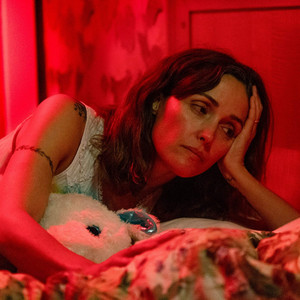
Well, if I had legs, I'd kick you stars Rose Byrne as Linda.
Her young daughter is extremely sick, needs a feeding tube, constant monitoring and regular treatment at a children's hospital.
One day the ceiling in her apartment caves in, forcing Linda and her daughter to move into a motel while the problem is fixed.
Except, as these things often do, it takes much longer than she anticipates.
Linda's a therapist and at work her patients have their own issues and sometimes they don't grasp the meaning of boundaries.
And her relationship with her own therapist slash co-worker who's played by Conan O'Brien, weirdly is messy.
To add to all the stressors, Linda's husband Charles, is away for work, only reachable by phone and is, to put it lightly, a jerk.
Linda's got no support system, and so she begins to crash out hard.
If I Had Legs, I'd Kick You was written and directed by Mary Bronstein.
It's in theaters now.
Walter, I'm going to start with you.
How did you react to this, as I've already noted, very stressful to watch movie?
I really loved this unpleasant movie.
I really kind of threw both arms around a thing that doesn't want to be hugged.
It's really prickly.
I found it to be The most stressful movie I've seen all year, I think, including that one with the little kid that bites a knife.
Oh, Bring Her Back.
Bring Her Back, thank you.
I found it to be so difficult in some places to watch, and yet I loved it.
I think I finally maybe understood why people go cave diving or – mountain climbing.
It must be horrible while it's happening.
And then I felt a sense of real exhilaration afterwards.
And I think I need to come to terms with a certain part of my personality that I had never come to terms with before.
But there's something about this movie that I really felt like was bracing.
I found it to be exciting and courageous about showing ugly characters and having heroes that you can't really root for.
Yeah, you know, in a very strange way, I felt seen at this point in my life by it.
Maybe that speaks to self-loathing that I'm confessing to.
But there's something about this that really excited me as a viewer.
Even as I acknowledge it's really not for everyone.
Yeah.
Comparing it to some sort of extreme sport or extreme adventure feels very, very accurate.
That's a great descriptor.
Christina, how are we feeling about this?
I would not say I loved it.
I thought it was artfully done.
Rose Byrne is amazing.
The choices in cinematography and shots were clear, clearly very artistic and telling us something about this difficult woman who's, I would say, maybe going through a psychotic break and all of the things that she's experiencing her lack of support system and how the stressors add up.
It was a very stressful film.
But as a mom with actually a daughter the same age as the fictional one here, I did not feel seen by this film in a way that I have by other movies that delve into some of the trials and tribulations of motherhood, because this is not about the trials and tribulations of motherhood.
This is about like an extreme trauma this woman is experiencing.
Thank you so much for having me.
Maybe it's for cinephiles like Walter, but for like moms who want to have their problems seen and understood, for people who relate to moms and could do a better job supporting us and parents in general.
I'm not sure that this landed or didn't land for me.
Yeah, I think I fall somewhere in the middle of you both in terms of how I responded to this.
Unlike you, I am not a parent and I have made that deliberate choice not to be.
And if I'm going to be frankly honest here, this just kind of reinforced my decision.
You know, Christina, as you said, this is a very extreme case.
And again, the little daggers, they just add up over this entire.
It's not even just.
The fact that she's a therapist, and of course the idea of making someone a therapist means that you are also taking on other people's traumas on top of whatever you have going on in your life.
So that's an extreme thing to have this, plus your child is very, very sick.
Then on top of it, your husband... does nothing for you.
Like, he is not there physically or emotionally.
There's a recurring action that happens in this movie, where every time she's always late to take her daughter to the hospital but then she can't find parking and she has like an antagonistic relationship with the guy monitoring the park.
Like every little thing that could go wrong goes wrong.
And to me that just kind of reinforced that like parenthood issue.
It just makes all of those things that if you were to face them, even if you're not a parent, it makes those things even more extreme.
But at the same time, I did love Rose Byrne in it.
I mentioned she's been a comedian.
That's what we know her primarily for.
But there's always a little bit of darkness bubbling underneath every role that she plays.
And I think just now she's kind of dialed one aspect of her toolbox back and she's bringing the other one more forward.
And I really loved seeing that here.
I also just really appreciated.
One of the choices that is made in this movie is the fact that we do not see the child's face.
Yeah.
And it kind of reminds me of the inverse of the Muppet Babies where like we never see Nanny's face.
It's just like it just adds to the mystery.
But it also I'm not sure what it's trying to say, but I liked it.
And I thought it was a nice touch in a way because it makes it more about the mother.
I mean, yes, it's about the child.
But I think there's a way that using the child's face can turn it into maybe sort of treacly or more heavy.
In fact, it could turn you against the child.
Yes.
Because the child is so whiny and needy and insinuating and i think if we looked at her while they're doing all of that, i think it's a really strong strategy to say this is just an element of noise in her life.
This is an extraordinary irritation until you know you get to a certain point where we're ready to accept you know her as a different thing.
I think Yeah, it's a really interesting strategy, because not only do we not see her face, we're at extreme close-up to Rose Byrne's face.
For what seems like the first hour and a half of the movie.
You almost can't see anything around her face.
It's so close.
There's a scene where she eats a piece of pizza that's fallen on the floor, something that just really needs like something to feel good about in that moment, i think.
So she stuffs like a whole piece of pizza in her mouth and she's just chewing.
It feels like forever, and that really drives me crazy To hear other people chewing.
You know, I don't even like to hear myself chewing.
So I'm watching this.
And to both your points, Rose Byrne is so amazing in this.
Not the least of which is like she's very unafraid to be ugly in this.
I don't think anybody looks okay two inches from their face in high definition.
There's something about this that's so invasive for me.
And I feel like it's almost got a hand coming out of the screen, forcing me to look at something.
I'm really selling this movie.
But it's...
You can't look away.
And it really reminded me of a movie by Chantal Ackerman.
Her first short film called Blow Up My Town is just about a woman doing sort of domestic things.
And then she sets everything on fire and blows up an apartment.
Yeah.
I kind of feel like this is sort of the same thing.
It's rejecting pleasure.
It's rejecting our sense of – or ability – to look at this periodically or for a male viewer, or whatever.
It kind of rejects all of that.
And it says, this is what she's going through when she has no support systems.
This is what this woman is going through.
She's a full-time mother.
She's a full-time therapist.
She also has to deal with all these domestic issues with her apartment falling apart.
Where is the husband?
The kid's difficult.
Her patients are difficult.
Her own therapist is difficult.
You know it's just a movie about for me, the sort of like being a grown-up kind of, And it's not always like this.
Thank goodness.
But there are times in my life certainly, that I felt like, if there's one more thing, one more thing and it could be a little thing, I'm going to completely crack.
Michael Douglas falling down it.
I just can't take it.
And so the movie for me captures that.
I see that.
I think the decision not to show the daughter's face takes away any of the reward of being a mom.
What is she doing all of this for?
If you can't see the daughter, it doesn't really feel like she's doing it for anything.
Like when you see the beautiful babies, and they're beautiful, and it doesn't matter if it's this kid or somebody else's.
There's an inherent sense of possibility and joy and hope, right.
And this film tells a story of motherhood without that.
And man, it is just a slog.
Yeah, I think that's so, so interesting, that aspect of joy, because I can totally understand your point of view Christina, of like, who is this for?
What is this movie for?
Like, what are we trying to say here?
And I think that's an important question to ask.
But I also have to wonder, like, is that the point, which is that?
This is a character we're not supposed to necessarily... I mean, the Rose Byrne character.
This is someone we're not actually supposed to like necessarily.
Even if you can relate to the sort of like pain and all of the things that are happening to her and feeling unsupported, even if you can relate to that, she's still make some decisions that you have to say you don't have to make.
Like we always have choices and sometimes they're better than others.
But she does make some life choices, some individual personal choices, where I'm just like you're actually making it worse for yourself or harder for yourself.
So why are you doing that?
You know, look, cinematic history is littered with bad mothers.
There are so many of them.
It is a trope.
And I think some lean more heavily on the evilness than others.
But for me, what I found interesting about this movie is that she is both a woman of circumstance, but also sometimes of her own making.
And that is almost always ugly.
And I kind of...
It didn't make me love this movie, but it felt different from a lot of other movies I have seen.
I think there's something to be said for showing bad mothers like this.
Like she's not necessarily actually a bad mother.
She's just, I felt overcome by such terrible support systems, whether it's her daughter's doctor or her therapist, her husband, her housing situation.
Like there's so much and nobody comes to help her.
And, yeah, she definitely makes a lot of decisions that make things worse.
Contrary even to some of the good advice she gets.
Like at one point Conan O'Brien's like, just get a good night's rest.
And she like can't do it.
She can't like lay down.
Yeah.
Which is in some ways is human.
Like she's overwhelmed with all the stuff that's happening for the day.
It's really hard to rest.
It's really hard to take care of yourself when you're dealing with all those other things that I understand.
But I think in like the movie canon, there are bad moms, which this mom is not evil.
I didn't think in any way.
I felt like she was a woman who was pressed and that there is a real importance in showing moms who are.
You know, like there's been this project to say like look, there is some stuff about motherhood that's really hard.
It's not all joy at all.
There's a lot of slog and particularly in our modern society that really leaves moms alone and kind of out to dry that.
I think 100% deserves and needs to be critiqued in film and elsewhere.
I think what's hard about this film is that while it certainly critiques that.
Because her situation is so extreme it to me didn't feel universal like some of the other films that are tackling this subject do, and also because it is just so, so difficult.
I agree that while you're watching it you can't look away, but I'm not sure many people are going to want to look.
Yeah.
I just want to clarify really quickly.
When I say bad mother, I mean that in air quotes like the very general scope of like mothers who either do bad things or do things that are not great.
Or even just aren't fulfilled by motherhood.
Like, that's the thing, right?
It's supposed to, like, make you a whole person and make you glow and shine and complete you.
And, like, when it doesn't, and in this case, it doesn't, and she has...
I thought like one of the most meaningful parts is when she's saying like I think I'm the person who's not supposed to be a mom.
And it's like, That feels really, really powerful.
Although that actually felt pretty universal.
I think in many ways that, like many a parent I don't want to say all, but many a parent has had that doubt.
But all the things that combine to make her say that, you know, they're extreme.
Yeah.
I think, even as I'm listening to you talk, I'm liking the film more in the sense that it doesn't valorize or romanticize motherhood in a way that our culture is really bred to do.
And it doesn't valorize nor romanticize the role of women in such a way.
Their expectations are placed on women.
In our culture, I'm the last person who should be talking about this.
But just the idea that I'm not used to seeing this at all.
I'm used to, to your point, Christina, seeing a woman who's, oh, you're glowing.
I am glowing.
It is the best thing.
It takes away all of that.
In the process of presenting the story, yeah, I think it goes a little bit over.
It's like, you know, satires go a little bit high, I think.
You turn up the heat in order to feel the heat, I guess.
But there's something about this that's so shocking, I think, to our sensibilities and our culture.
We're not raised on this.
We're raised on, you know, I Love Lucy and Modern Family.
We're raised on certain ideals of what women should be able to do and should be able to endure, to such a damaging degree that we still don't see like being a housewife necessarily as a vocation.
We don't see any of that.
And that's what the husband kind of represents in this film, right?
Why can't you do this?
Why can't you do this and this?
And she's like, what did you do today?
I played tennis or I played golf.
Because he's on some kind of business trip forever.
And I love that.
Because it is really courageous to say she's a complicated person who's having a really rough time with their kid right now and juggling her job and everything.
And yeah, you know, it's a series of unfortunate events are a little bit extreme.
I grant you that.
Including a demonic hamster, which is one of the...
Best sequences in any movie in this year.
But in the course of that exaggeration, I think what we are finding is a lot of things that are kind of universal.
There is this frustration with like, Why do I have to do 10 different things?
You get to do one thing.
Yeah.
You don't appreciate that.
The only joy that I get is to stay up at night after the kids are asleep and drink hotel wine.
Yeah.
Not even hotel.
Motel wine.
Motel, yeah.
Motor Lodge wine, Motor Lodge hooch in the middle of the night.
And I think that element of it, I think, is universal.
The underlying message that we're placing an undue burden on just one partner in this film.
And that must feel familiar, hopefully, to some people.
I just feel like, yeah, this is what life kind of feels like.
It's hard and it's struggle and it's almost uninterrupted.
Again, you're both right.
I don't know who to recommend this to exactly.
It's one of those movies that I love, that I can never recommend, but it did feel seen in a very kind of hard for me to pin down kind of way.
I felt like I'm usually the one that's making jokes at the support group.
I'm usually the one that has to be kicked under the table for being cynical about someone's happiness.
I'm the one that has to be corrected all the time.
And I feel forgiven by this movie in a way.
To say yeah, we do spend a lot of our energy and time right now walking around pretending like everything's okay.
It's sort of like performative okayness.
And this is a movie that kind of openly rejects that and says, you know what?
Things are kind of rough, actually.
And you have good reason to be upset.
Yeah.
I think that might be who it's for.
They say there is something for everyone and everyone can find something.
And if our conversation sounds like something that at least piques your interest, then maybe this is the movie for you, if you haven't already seen it.
But if you have seen it, tell us what you think about If I Had Legs, I'd Kick You.
Find us on Facebook at Facebook.com slash PCHH and on Letterboxd at Letterboxd.com slash NPR Pop Culture.
We'll have a link to that in our episode description.
There's a lot to talk about.
So I'm sure if you do get a chance to see it, there'll be plenty to talk about with your friends.
I'm still thinking about this all these weeks later, so...
That brings us to the end of our show.
Walter Chow, Christina Escobar, thanks so much for being here.
This was fun to wrestle over, even if the movie itself was not the most fun thing in the world.
Thank you.
Happy to stare into the void with you, Aisha, anytime.
It was better than therapy.
Well, just a reminder that signing up for Pop Culture Happy Hour Plus is a great way to support our show and public radio.
And you get to listen to all of our episodes sponsored free.
So please find out more at plus.npr.org or visit the link in our show notes.
This episode was produced by Carly Rubin, Janae Morris, Mike Katzeff and edited by our showrunner, Jessica Reedy.
Hello, Come In provides our theme music.
Thanks so much for listening to Pop Culture Happy Hour from NPR.
I'm Aisha Harris.
We'll see you all next time.
I'm Ira Glass.
On This American Life, we tell real-life stories, really good ones.
My mother said I'm sorry that you weren't here, because Father Sager was here visiting and he found a very nice orphanage for you.
And I said, but I'm not an orphan, Ma.
Surprising stories in your podcast feed.
This American Life, all while supporting NPR and never having to pull an all-nighter.
Or if you work on one of the news shows, an all-morninger.
Sign up at plus.npr.org.
On the ThruLine podcast from NPR, the story of the undersea cables that run the internet.
Other historians have compared it to the Apollo missions of going to the moon.
Listen to ThruLine in the NPR app or wherever you get your podcasts.