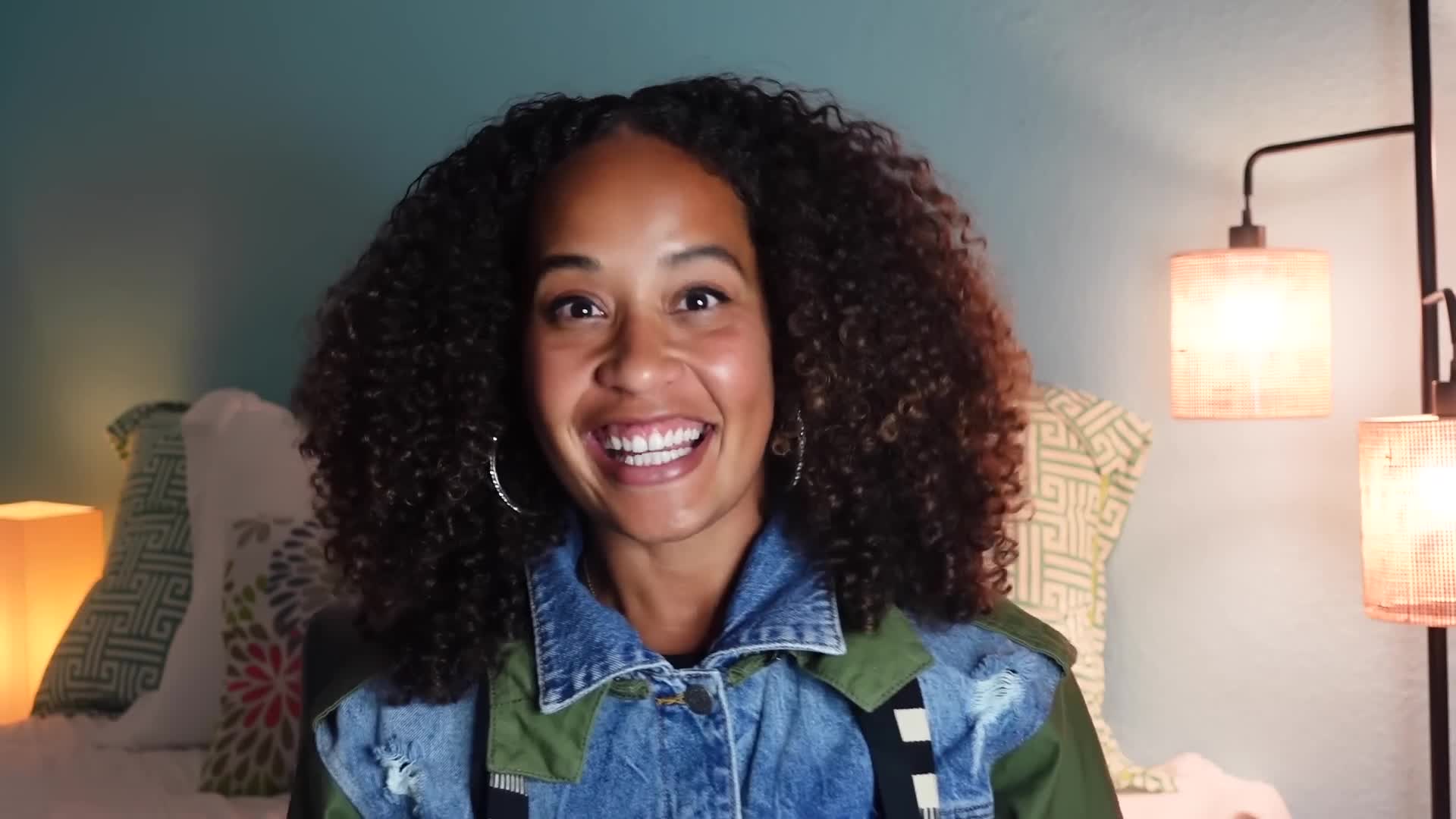
Hi, it's Dani.
Check this out.
This is Beyonce singing a song you probably know.
It's a simple song, but she sounds incredible singing it.
Someone named Liliana has a question about how we make amazing music like this.
Let's call Liliana now.
Hi Danny.
Hi Liliana.
I have a question for you.
How can we sing?
Ooh, that's a great question.
Watching an incredible singer sing can seem like magic.
They open their mouth and beautiful music comes out, but we can't really see how that happens.
To understand how people make music with their voices.
It might help to look at how we make music with instruments.
This instrument is called a gong.
You might already know how to make a gong make sound.
You strike it with a mallet like this.
But why?
What is it about hitting a gong that makes sound?
Let's see if we can figure out what's going on.
Watch the gong again.
How did the gong change after the mallet hit it?
Why do you think hitting a gong makes sound?
Now would be a good time to pause the video and discuss.
Okay, are you ready?
Maybe you notice that the gong shakes when it's struck.
If you put your hand near the gong, you might feel it shaking too.
Those tiny shakes are called vibrations.
When you look closely, you can see the gong vibrating.
But there's more going on you can't see.
As the gong vibrates, it makes the air around it vibrate too.
That's what sound is, vibrations.
Once those vibrations reach your ears, you might hear sound.
You might also feel sound as the vibrations reach other parts of your body.
But it all starts with a vibration.
So all musical instruments have some piece that vibrates.
This is a guitar.
See if you can spot where the vibrations start when it's played.
Did you spot it?
When a musician plucks the strings, they vibrate.
Let's try another instrument.
See if you can spot what vibrates when this trumpet is played.
Tricky, right?
This one can be tough.
The trumpet player holds the trumpet to their lips and look at that face they're making.
What are they doing?
Let's see what it looks like if the trumpet player does the same thing without holding up the trumpet.
See that?
They fold their lips together and blow air through them.
When they do this, their lips flap together and buzz.
That's what starts the vibration that makes the sound.
So we can use our bodies to help musical instruments make music.
But how do we make music with just our voices?
Let's take a look at some singers getting ready to sing.
Pay attention to what they do right before they start singing.
They all take big breaths in, right?
You might have noticed this in your own body too.
Before you sing, you might take a breath in.
And as you sing, you breathe out.
When you breathe in, air fills your lungs.
And when you breathe out, air travels from your lungs out through your nose and mouth.
As it does, it passes through your throat.
These V-shaped flaps here are called vocal folds.
As air from your lungs passes your vocal folds, they flap together and buzz, kind of like a trumpet player's lips do.
This creates vibrations.
So whether sound comes from an instrument or our voices, it starts with something vibrating.
But what happens next?
Listen to this phone play music.
Now listen to what it sounds like when you put it inside a bowl.
Really different, right?
When an instrument starts vibrating, the vibrations move outwards.
When the phone was on its own, the vibrations had lots of open air around it.
But in the bowl, the vibrations quickly hit the hard walls of the bowl.
When vibrations hit surfaces around them, sometimes they soak into the surface they hit.
Sometimes they bounce off those surfaces.
And sometimes the surface a vibration hits starts to vibrate too.
All of these things change the vibrations and make the sound sound different.
The same is true for singing.
Look around.
If you started singing, what would the vibrations from your voice bump into?
Maybe the hard surface of a desk?
A soft rug?
Is there a lot of open space?
Or would the vibrations bump into things right away?
The spaces around us make a big difference in how our voices sound.
But it's not just the spaces and surfaces outside of our bodies that make a difference.
You know your singing voice sounds different than your friends.
There can be a lot of reasons for those differences, but one is that the spaces and surfaces inside our throats and heads shape the sound our voices make too, because every person's body is shaped differently.
Every person's voice is unique.
So in summary, how do we sing?
Well, air passes through our vocal folds, causing vibrations.
Those vibrations travel outwards through space, hitting surfaces around them.
When those vibrations reach our bodies, we can hear and sometimes feel them as sounds.
This is the same way instruments all around the world make music.
The only difference is this instrument is inside our bodies.
Your body is a one of a kind musical instrument.
That's all for this week's question.
Thanks for asking Liliana.
We want to know what you're curious about.
It's time to cast your vote.
We picked three questions that we're thinking about answering.
When this video's done playing, click on the one you're most excited to see answered.
Your vote will help us plan for future mini lessons.
There are mysteries all around us.
Stay curious and see you next week.