This message comes from Amazon One Medical.
When you're sick and your doctor can't see you for three weeks, well it might as well be three years.
Amazon One Medical has 24 -7 virtual care.
They know that colds can't wait.
Healthcare just got less painful.
Amazon One Medical.
Wait, wait. Don't tell me.
Fresh air up first. NPR News Now, Planet Money, Ted Radio Hour, Thru Line, the NPR Politics podcast, Code Switch, Embedded, Books We Love, and Wildcard are just some of the podcasts you can enjoy sponsor free with NPR+.
Get all sorts of perks across more than 20 podcasts with the bundle option.
Learn more at plus .npr .org.
You're listening to life kit from NPR.
Hey, everybody, it's Marielle.
There are some tasks that we know as adults we're supposed to do to prepare for some possible or even inevitable event.
But we keep pushing them off because we don't want to think about that event happening.
It's too bleak. Preparing for possible illness or death comes to mind here.
Writing a will, choosing a health care proxy, estate planning.
Who wants to think about that stuff?
Another task I would add to this category is emergency planning.
It's terrifying to think about a disaster like a hurricane, a flood, or a wildfire hitting your neighborhood or your home.
And so especially when it's all blue skies and sunshine outside, we just kind of go la la la la la, nothing's happening, nothing's ever going to happen.
You may have a forecast, but it's not really going to strike you until the moment is upon you.
And by then it's too late.
Elissa Provencio is a professor at the University of Central Oklahoma.
Her teaching and research focus is emergency and disaster management.
And she says, yeah, those blue skies can change.
And you don't want to be caught without a plan.
It's a matter of when and not if.
And I think that the more people are empowered and have a plan, the better the outcomes will be.
So I know none of us want to think about a situation where we might have to flee our homes.
But it's important to do it anyway.
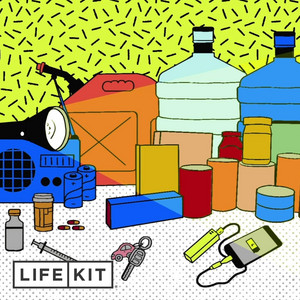
And one way to get started is to put together a go bag.
A go bag isn't just about a go bag.
Creating a go bag is another way to have conversations with your family members about what your plan is when severe weather happens or extreme events happen.
And this is just another step that a family can take to be able to take care of one another.
On this episode of Life Kit, reporter Andy Tegel talks with Alyssa about the basics of building a go bag, how to pack for your specific needs, and how you can get started in your junk drawer.
Want to know what's happening in the world?
Listen to the State of the World podcast. Every weekday, we bring you important stories from around the globe.
In just a few minutes, you might hear how democracy is holding up in South Korea or meet Indian monkeys that have turned to crime.
We don't go around the world.
We're already there.
Listen to the State of the World podcast from NPR.
A couple months ago here at Planet Money, we stumbled across our favorite kind of economic mystery.
? What is this? A deal that seemed way too good to be true.
What I'm seeing here, at least, is that it's very high clarity.
Join us on our adventure to find out exactly how much a diamond is worth.
Planet Money from NPR, wherever you get your podcasts.
Having news at your fingertips is great, but sometimes you need an escape.
And that's where shortwave comes in.
We're a joy -filled science podcast driven by wonder and curiosity that will get you out of your head and in touch with the world around you.
Listen now to Shortwave, the science podcast from NPR.
On this week's episode of Wildcard, actress Elizabeth Olsen reflects on being a Marvel superstar.
I think I haven't always successfully made choices in my work that are aligned with my personal taste.
And that is something I feel like I'm still trying to prove.
I'm Rachel Martin. And join us for NPR's Wild Card podcast, the show where cards control the conversation.
What exactly is a go bag?
I've heard it called by a lot of different names.
I've heard a go bag, I've heard a bug -out bag, I'd heard a 72 -hour bag.
So how do you define one?
What exactly is a go bag?
So a go bag is a kit that could be readily mobilized in case of an emergency.
in terms of size and scale, it could be something quite small that, you know, a child could carry, or it could be something that is quite big that an adult could carry.
I think the key here is that it needs to be mobile and the person carrying it needs to be able to carry it.
Now, the generally agreed upon guidance is enough food and water for about 72 hours and equipment that kind of complements that 72 -hour time frame.
Ideally, how many of these should you have?
Like do I need one for every place that I could potentially be, you know?
One for home, one for the garage, one for my office.
You know, if you have five different go bags, you may not remember where you put all of them.
So my best sort of recommendation is that you keep one that is accessible for you or you keep, you know, the go bags that are prepared for your family members all in one place and just make sure that everybody kind of knows where they are and what the plan is.
It's supposed to be all use, right?
Like, it's not like, in the case of earthquake, grab this one.
In the case of flood, grab this one.
Correct. So So, we use the term all hazards approach. So this means that a go bag should be ready for any and all hazards.
We've recently had wildfires in Oklahoma and there were families within miles of where I live who had to evacuate from their homes very quickly.
And some had go bags, I'm sure, some did not.
And they were scrambling at the last minute to fill their cars with things that they would need.
So it can be for any event where you're told to evacuate.
Who should be involved in the Go BAG Planning Emergency Plan process?
So it sounds like it should be a whole family affair.
It shouldn't just be Mom throwing items in a bag when she can.
So I would say the whole family, at least those that are old enough to participate, should be involved in the planning process.
And you should talk about go bags.
But you should also talk about other things, like if you were to be separated at the point of an extreme event happening where would you meet up?
Is there a gathering location?
Do you know what the evacuation routes are?
And so this also makes things a little less scary for kids.
If they know that there is a plan and they know what their role is in that plan, then they feel more empowered during the event itself.
So if that means writing the plan together and each having a copy of it or maybe even taking a screenshot of it and having it in your phone is great.
If it's even just key phone numbers or information, places where you can get information, that might be helpful as well.
So anything, any steps that you can take for everybody to be aware and know what the plan is, I think are good steps.
So, takeaway one, building your go bags, just like emergency preparedness overall, should be a household affair.
Anyone in your home, including pets and small children, should be accounted for and included in this process as much as makes sense.
So, sit down and talk about your general emergency plan.
Make sure everyone knows where the go bags will be, and then work on building or restocking them together.
This is something you should do at least once a year.
Maybe put it in your calendar like you would spring cleaning, to ensure that you can swap out any expired foods for fresh ones or re -stockpile any Band -Aids you might have swiped from the First Aid Kit.
You get the picture.
Now, moving on to the go bags themselves.
You're aiming for three days of essentials, so you'll need to pack smart and light.
We're not going to list off every item you could potentially include in this episode.
Instead, we're going to walk through the major categories and give you some helpful tips and things to think about.
To start, water. It's at the top of every emergency checklist because, well, it's essential to human survival, and it can also be hard to come by during a disaster.
General wisdom says to account for one gallon per person per day.
So you'll want to have at least three gallons of water for each member of your household on hand.
But, obviously, that could get heavy fast, not to mention take up a lot of space.
So… Sometimes that might not be water itself.
It could be a filtration system.
It could be a hydration bag.
It could be water purification tablets.
…or maybe some combination of that.
As much water as you feel you could comfortably carry around with you for a while, plus those water filtration straws you might have seen for camping and such. Next, food.
At least three days worth of non -perishables.
You want to aim for a shelf life of six months to a year so you don't have to constantly restock and throw stuff away.
So if you have ready -to -eat meals, those can work.
Granola bars, things that are also easily portable and lighter weight, you want to pay attention to calories, so a higher number of calories packed into a small container.
A lot of people might think right away of canned goods here, but Provencio actually advises against this, because they're heavy.
If you do want to pack, say, canned tuna or chicken noodle soup, make sure you pack the tools you'll need to go with them, like a mess kit, manual can opener or a camping stove if you really mean business.
Then, clothing. You want at least one full change of clothes, appropriate for the climate and the seasons.
And a pro tip I saw online, vacuum seal them to make more space in your Parenzio says a raincoat or poncho is a good idea for everyone, plus gloves, a hat, an extra jacket if you live in a place with snow or where it gets extra cold.
And then a pair of sturdy walking shoes.
I keep the pair of walking shoes in my trunk and usually they're just an old pair of sneakers or something that I'm not currently wearing very often.
So that way, if I'm wearing sandals, I can switch into those tennis shoes or walking shoes if I need to.
And then, of course, there's first aid and more general disaster preparedness.
A lot of lists call for things like whistles, emergency blankets, but your actual first aid kit doesn't have to be anything super extensive.
So if you're on any prescriptions and you can afford an extra set, pain relievers, antiseptic wipes, a little bottle of alcohol, bandages, gauze are some good key ones.
Some wet wipes and then this is getting into more personal hygiene, but toothbrush, toothpaste and then women should also think about feminine hygiene products if they use them because those may be hard to come by.
Keep in mind through this process that the point of a go bag is to be able to get up and go with those three days of food, water, and supplies quickly.
This isn't a shelter in place, hunker down throw in everything you can bag, that's a stay kit.
And there are an infinite number of checklists online, by the way, for both types of bags.
Staying and going. You can go to ready .gov or the American Red Cross, just to name a few if you need help with that.
How thorough and wilderness ready does the average go bag packer need to be?
Especially if you don't know how to use a lot of camping equipment or medical equipment.
I would say that there's five basic items that every go bag should have. Oh, thank goodness.
You should have a multi—so you should have a multitool or knife, something to cut with.
Okay. have a rope or paracord, some duct tape, a flashlight or headlamp with extra batteries, and some kind of fire starting tool.
So that could be a fire starter, lighter, matches, but something to start a fire with.
So those are kind of the five categories of tools that I would say are must -haves.
I think anything in addition to that It's kind of extra.
And if you don't know how to use something, it probably shouldn't be in your go -back.
Then there's communication.
Most of us are pretty reliant on cell phones, so...
You're gonna want to make sure you have a backup phone charger or power bank.
And in terms of communication, if you can't get through by calling your family member, you might be able to get through with a text.
because sometimes they prioritize cell tower communication for first responders.
Portable radio is also good just to listen to updates about where shelters are, where you can get different resources if you don't have access to your cell phone or other communication device.
Let's talk about the paper parts of your go bag.
I know we should have both digital emergency items and also physical paper.
Can you talk to me about why that is and also just the most important documents to carry with you?
So in emergency management we talk a lot about redundancy, and what that means is that you should always have backups and potentially backups of backups.
So the first thing that I would tell people is make sure that your information is backed up to the cloud.
This could be things like health insurance or copies of account information that are important.
Maybe a deed to your house that might be important if there is flooding, for example.
Then you could also carry a flash drive with the same information, and then last but not least, paper copies of anything that you may wish to have with you as well.
And you can put these in a folder or something that is waterproof if there is a chance of wet weather, but redundancy is really important.
Making sure that you're able to access that key information when you need to.
I would also include in paper items a map of your local area, and cache.
Because if there is a power outage, you may not be able to access an ATM.
And if you need to buy things while you're away from your home, then you may need to have cash on hand.
Super helpful, yeah.
I want to talk a little bit about obvious limitations to some of these things.
We talked about weight, for example, with water.
I'm thinking about specific medications, or if you have pets, any other considerations that people should take when thinking about the specifics of their go bags.
Definitely. So you mentioned some of them.
I think that if you have any kind of access and functional need, including specific medications or mobility issues, your go bag may look different than your other family members or someone you know.
Particularly when we talk about evacuation, ensuring that people who do not have vehicles know if there is a public evacuation plan.
So where, you know, buses may have pick -up points there are also some registries I know that some cities have started putting up registries for like people who do have mobility issues or maybe are elderly and live alone and need assistance.
If you have pets, you need to think about what you're going to do in the case of an evacuation with pets.
So that might be having a carrier ready for cats, or having leash at the ready for dogs.
If you have children, your bags may look different as well.
So you may have a very specific toy that your child needs to sleep, or if they're a little older, maybe a small portable board game would be helpful, just to keep comfort and sort of their mind at ease during the process.
Takeaway 3. Once you've got the absolute necessities covered, think about your specific needs, including the logistics particular to your area, as well as any items that are critical to you or your family's mobility or health, like medications, a walking cane, or glasses.
And then, should you have the luxury of time, there are the sentimental things.
After the Southern California wildfires this year, I saw a post on LinkedIn from a woman who said she was really grateful to have had a go bag ready, but in the future, what she was going to do was keep a list in that bag of all the special things she would grab if she had a few extra minutes.
Her grandmother's necklace, her daughter's baby books.
So just something else to keep in mind.
That's really great but I would say that's also a really great idea for people who can't assemble a go bag for any reason.
You know perhaps they can't afford to put a go bag together and so having a list of items that you already have in your home that you can grab at the Ready is really important in those situations.
So you don't need to have one ahead of time if you can't afford one but knowing what you do have available and the resources that you do have available I think is really important.
So you're saying if you don't have excess funds, one way to get some of those items on your checklist is just to have that checklist, like to put it on your fridge so that when an emergency comes, you know, we have these, we have this food here, we have this water here, we have that blanket here.
Correct, yeah. Takeaway four, you don't need a big budget to start building a go bag.
You can simply put that checklist on your fridge and start checking things off one by one as you're able.
Provencio says when prioritizing what to buy or set aside first, start with critical survival needs.
So that's kind of, you know, food, shelter, water, warmth.
And then start building out from there.
So you can start thinking about setting aside things for first aid and then maybe extra clothing, tools, utility, those kinds of things.
People can you know go to their local thrift store or go to garage sales or go on eBay.
You can start sort of building out your kit a little at a time and using these resources you know as they're available to you.
And that's not just for people who can't afford full price, that's for everyone.
So thinking about you know the environment and thinking about So buying used is always a great idea no matter what your income bracket is.
Yeah, absolutely. I also just, you know, I just started looking at my house.
I started looking in my own closet in all of my junk drawers with an eye for this specifically.
And I was really surprised by all of the things I found, you know.
Surprised or not surprised by the 42 extra lighters just laying around, you know.
Yeah. We all have these junk drawers, right?
And they all have lighters, batteries, maybe an extra pocket knife or something that you haven't used in 10 years.
Just put them all in one place and call them a go -bag.
Finally, takeaway 5.
Connect with local resources and your local community.
You can often find emergency management services on your town's government website.
So, for example, if you need to know what your evacuation routes are, there might be links to maps or other resources for finding out what those evacuation routes are.
They also may be able to tell you where your closest shelter would be if there were shelters that were stood up during an event.
and often, your county or your city fire departments and law enforcement agencies have information on their websites as well.
And if you do have access to social media when these happen, you can also follow your local emergency management.
That can help you stay informed in the wake of an oncoming threat to your area, alert you to vital resources.
And also, it never hurts to be a good neighbor.
Remember, as Provencio says, it's a matter of when, not if, you'll have to use that go back.
You never know when you're going to need one.
And you never know if the local authorities are going to be able to help.
If your whole state is being affected by wildfires, or if your whole state is being affected by flooding, those authorities may not be able to help you specifically.
So really having ownership over what your plan is and how to respond is going to be helpful to not only you and your family, but also to the people around you.
And so people often think about the family unit and they think only about the family unit, but you also have neighbors.
And your neighbor may be in the apartment next to you, or your neighbor may be a mile away if you're in a rural area.
But we know from research that people who have strong social ties and social connected networks often do better in extreme events.
So get to know your neighbors, know what their plans are.
So it's not just about the resources you have, it's also about what your neighbors have and what your community has.
So don't be afraid to rely on other people.
Okay, let's recap. Take away 1.
Emergency preparedness is a family affair, so make sure to account for and include every member of your household in go -bag planning.
Build or maintain a go bag for each person or pet at least once a year to make sure supplies stay fresh.
Keep your go bags in an easy to access location, and make sure everybody knows exactly where that place is.
And the plan should you ever need them.
Take away two, remember the point of a go bag is to be able to get up and go with it at a moment's notice.
Provencio says a common mistake with these bags is trying to put too much in them.
So three days of food, water and essentials.
Take away three, make sure to account for your family's specific needs like extra medications, favorite toys, pet food, or accommodations for mobility or transportation.
If you've already covered all the bases for your family's needs and still have a little time, you might consider your keepsake list, those sentimental items you'd like to take with you like family heirlooms or photo albums. Takeaway four.
You don't need a big budget to start building a go bag.
You can put a checklist on your fridge and either start squirreling these away one by one as you're able, or if you can't spare things, Please make note of where items are in your home.
So you can quickly compile a bag in the event of an emergency.
And take away five, connect local resources and your local community.
You never know exactly where or when disaster will strike, but the better connected you are the better off you and your go bag will be.
Remember, emergency preparedness is a team sport.
That was LifeKit reporter, Andee Tagel.
For more LifeKit, check out our other episodes.
There's one about what to do after a flood and another about how to prepare for a hurricane.
You can find those at npr .org slash lifekit.
And if you love life kit and you want even more, subscribe to our newsletter at npr .org slash lifekit newsletter.
Also we love hearing from you so if you have episode ideas or feedback you want to share, email us at lifekit at npr .org.
This episode of Life Kit was produced by Sam Yellow vs. Kesler.
Our visuals editor is Bec Harlan and our digital editor is Malika Gareve.
Megan Kane is our supervising editor and Beth Donovan is our executive producer.
Our production team also includes Clare Marie Schneider, Margaret Serino, and Sylvie Douglas.
Engineering support comes from Jimmy Keeley and David Greenberg.
I'm Mariel Segarra.
Thanks for listening.
Shortwave thinks of science as an invisible force showing up in your everyday life, powering the food you eat, the medicine you use, the tech in your pocket.
Science is approachable because it's already part of your life.
Come explore these connections on The Shortwave Podcast from NPR.
Hey, it's Martinez.
Even as the host of a news show, it can be hard to keep up with the headlines.
That is why we make the UpFirst Podcast. Every morning in under 15 minutes, we cover three major stories with context and analysis from reporters around the world.
So you can catch up on Lo que esta pasando while getting ready, making desayuno, or going to work.
So listen to the Up First Podcast from NPR.
The crackdown on immigrants in the US without legal status has left many unsure what to do.
In the Up First feed, how some immigrants are responding to the clear message the Trump administration is sending.
Leave now. If you don't, we will find you and we will deport you.
A look at the blanket of fear affecting many immigrant communities.
Listen to the Sunday story in the Up First Podcast from NPR.